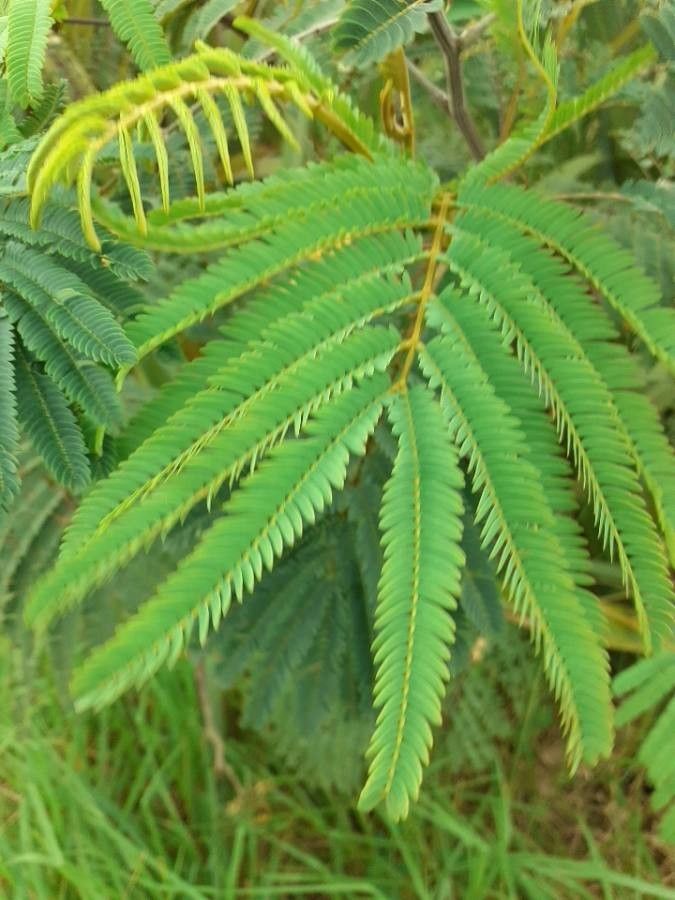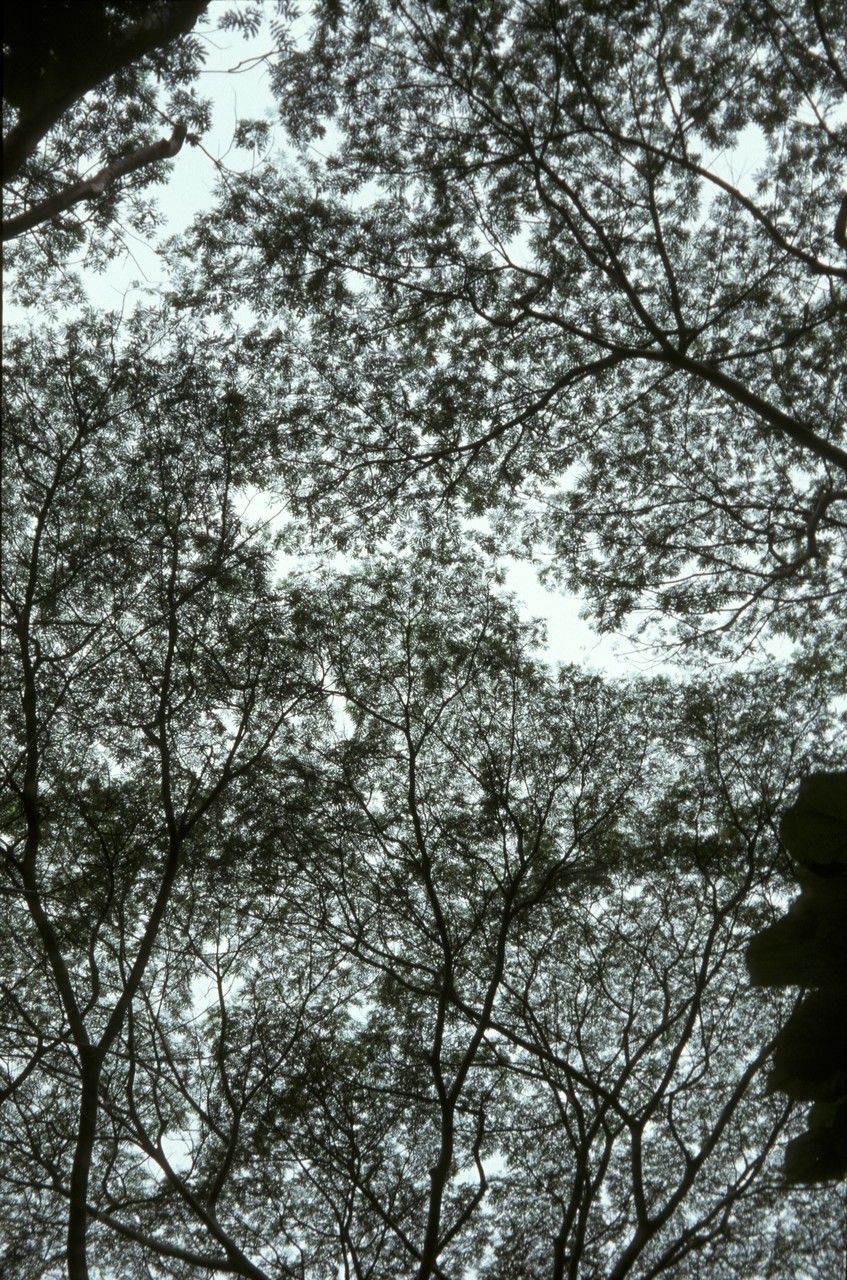
Falcataria falcata (syns. Albizia falcata, Falcataria moluccana and Paraserianthes falcataria), commonly known as the Moluccan albizia, is a species of fast-growing tree in the family Fabaceae. It is native to the Maluku Islands, New Guinea, the Bismarck Archipelago, and the Solomon Islands. It is cultivated for timber throughout South Asian and Southeast Asian countries. This tree is considered to be invasive in Hawaii, American Samoa and several other island nations in the Pacific and Indian Oceans. It reaches about 30 m (100 ft) tall in nature, and has a massive trunk and an open crown.
Molucca albizia has strong resistance to disease and is generally not susceptible to illnesses. Regarding care, this plant is fairly low-maintenance. When grown outdoors it needs little watering, and larger plants typically do not require pruning. However, smaller plants should be pruned after they have bloomed. Molucca albiziat is suitable for anyone with an outdoor area, such as a garden or deck, and does not demand much care experience.
How to keep Paraserianthes Falcataria.
Light
The molucca albizia plant flourishes optimally when it is subjected to sunlight for most of the day, indicating its requirement for substantial light intensity. Its usual environment is characteristic of regions with plentiful sunlight. Any shortage or surplus of light exposure might detrimentally affect its robust growth.
Temperature
The Molucca albizia originates from a region where temperatures range between 68 and 100.4 °F (20 to 38 ℃), indicating a preference for hotter environments. Its health could be negatively affected by colder conditions. During the cooler seasons, the application of supplementary heating may be necessary.
Fertilizer
It's vital to the care of Molucca albizia to provide regular fertilization. Maintaining consistent nutrients during its growth period is essential for vibrant leaves and promoting overall growth. Ignoring the need for fertilization may lead to unhealthy leaves, reduced decorative attractiveness, and impeded or frail growth susceptible to damage.
Pruning
The white albizia is a rapidly growing tropical tree known for its feathery leaves. To encourage growth and maintain its shape, prune the tree in early spring. Focus on removing dead or crossing branches and thinning the canopy to allow more light to reach the tree. Be careful not to over-prune, and always use clean, sharp tools to prevent the spread of disease.
Botanical profile.
- Plant Type
- Tree
- Life Cycle
- Perennial
- Genus
- Paraserianthes
- Family
- Fabaceae
- Hardiness Zone
- 10-12
- Mature Height
- 29.87 m
- Mature Spread
- 14.94 m
- Leaf Color
- Light Green
- Leaf Type
- Evergreen
- Flower Color
- White
- Flower Size
- 20.32 cm
- Bloom Time
- Late spring, Summer
- Planting Time
- Spring, Summer, Autumn
- Harvest Time
- Late summer, Fall
- Native Area
- Papua New Guinea, Indonesia, Solomon Islands, Malaysia