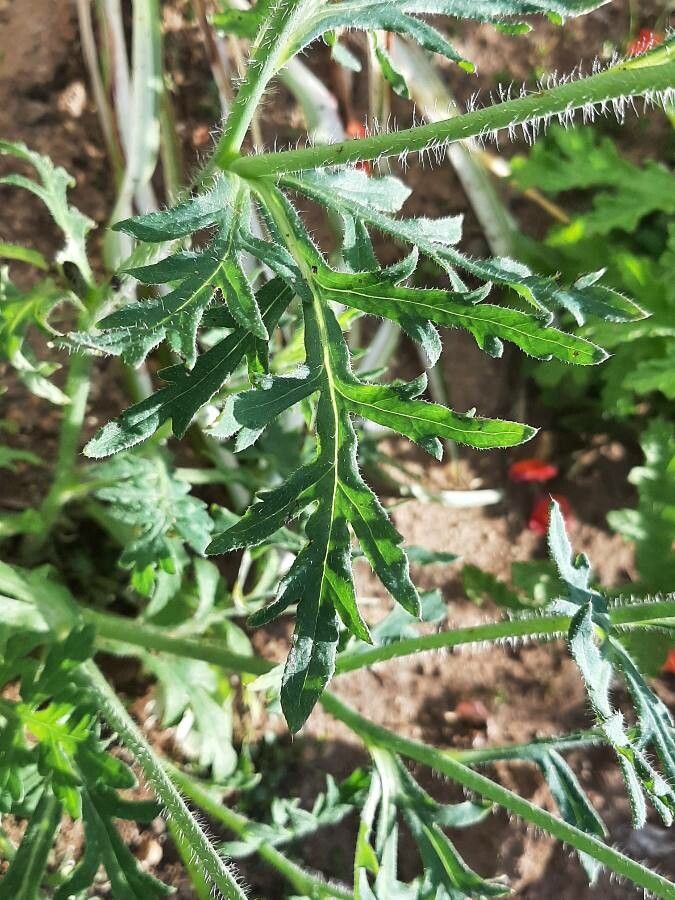
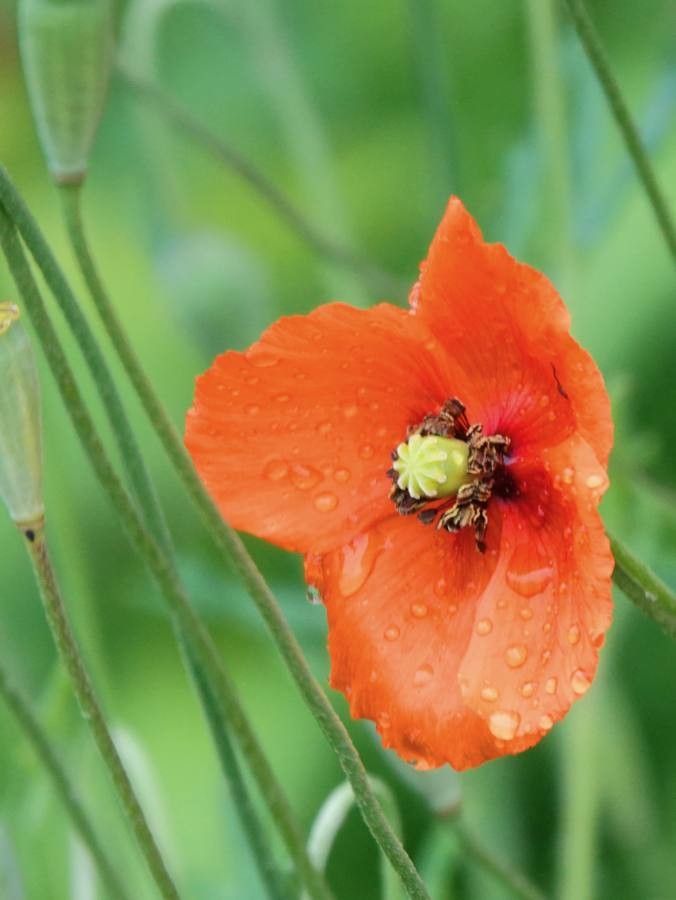
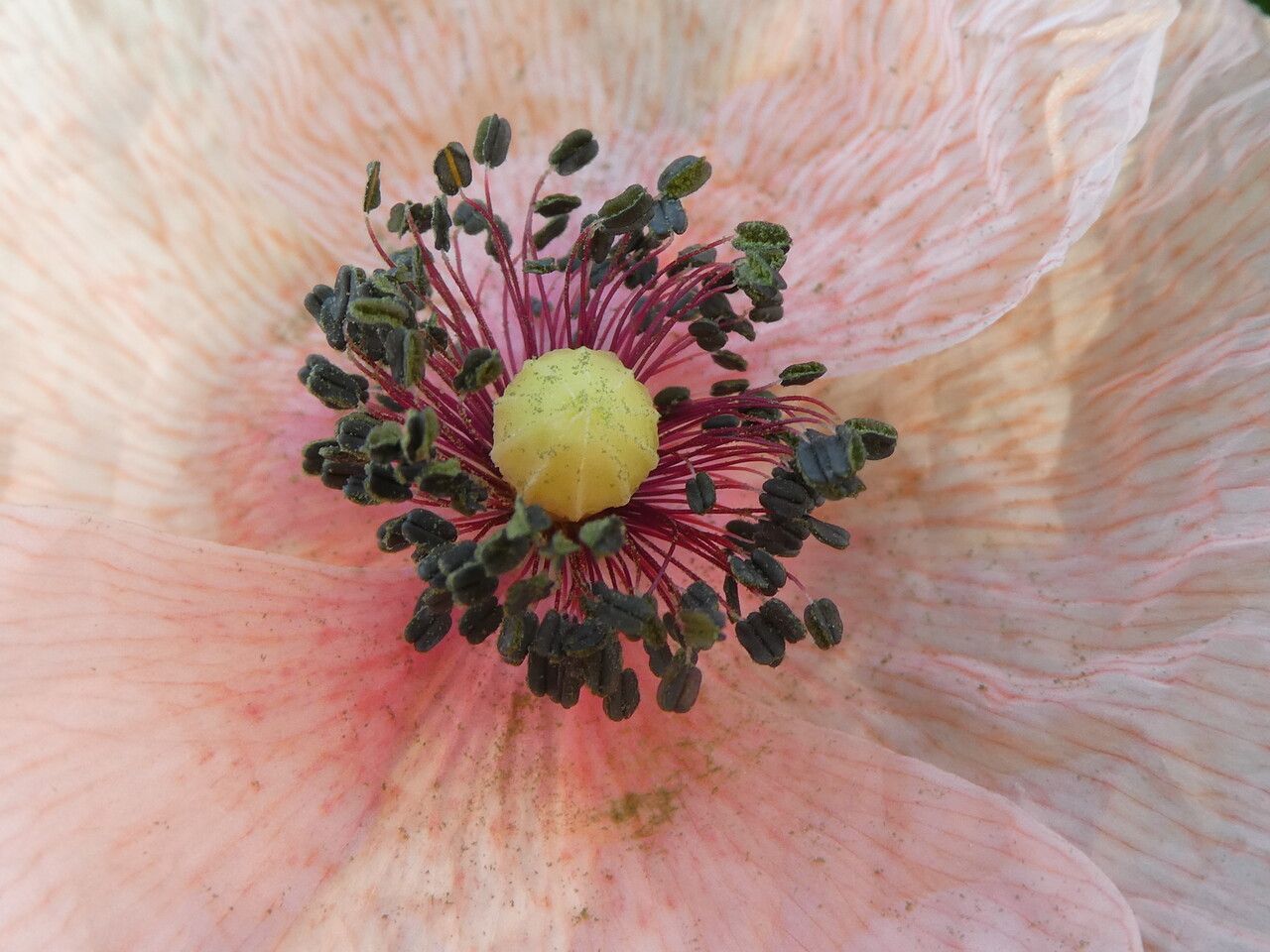
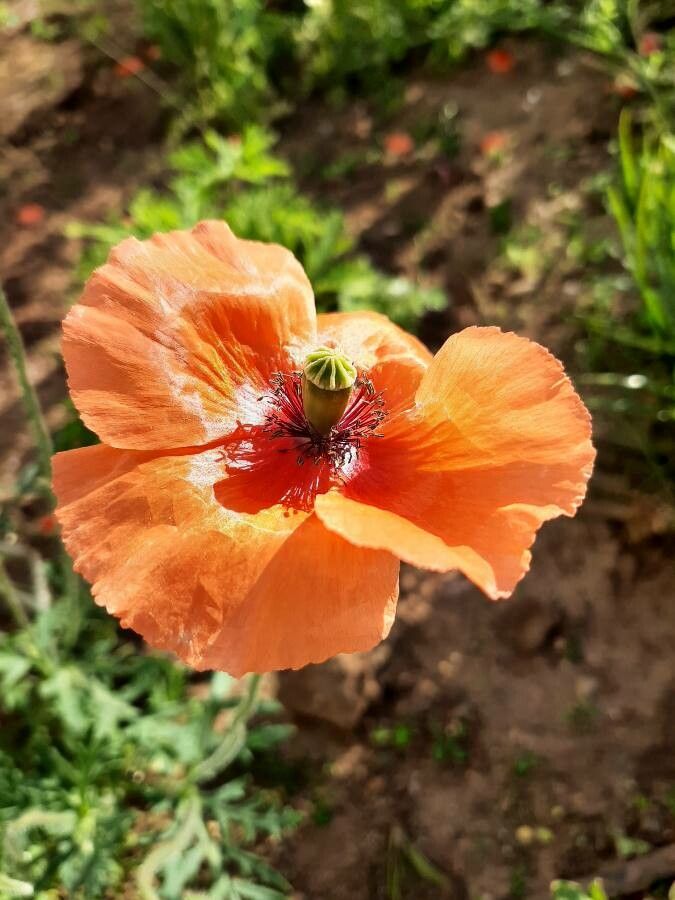
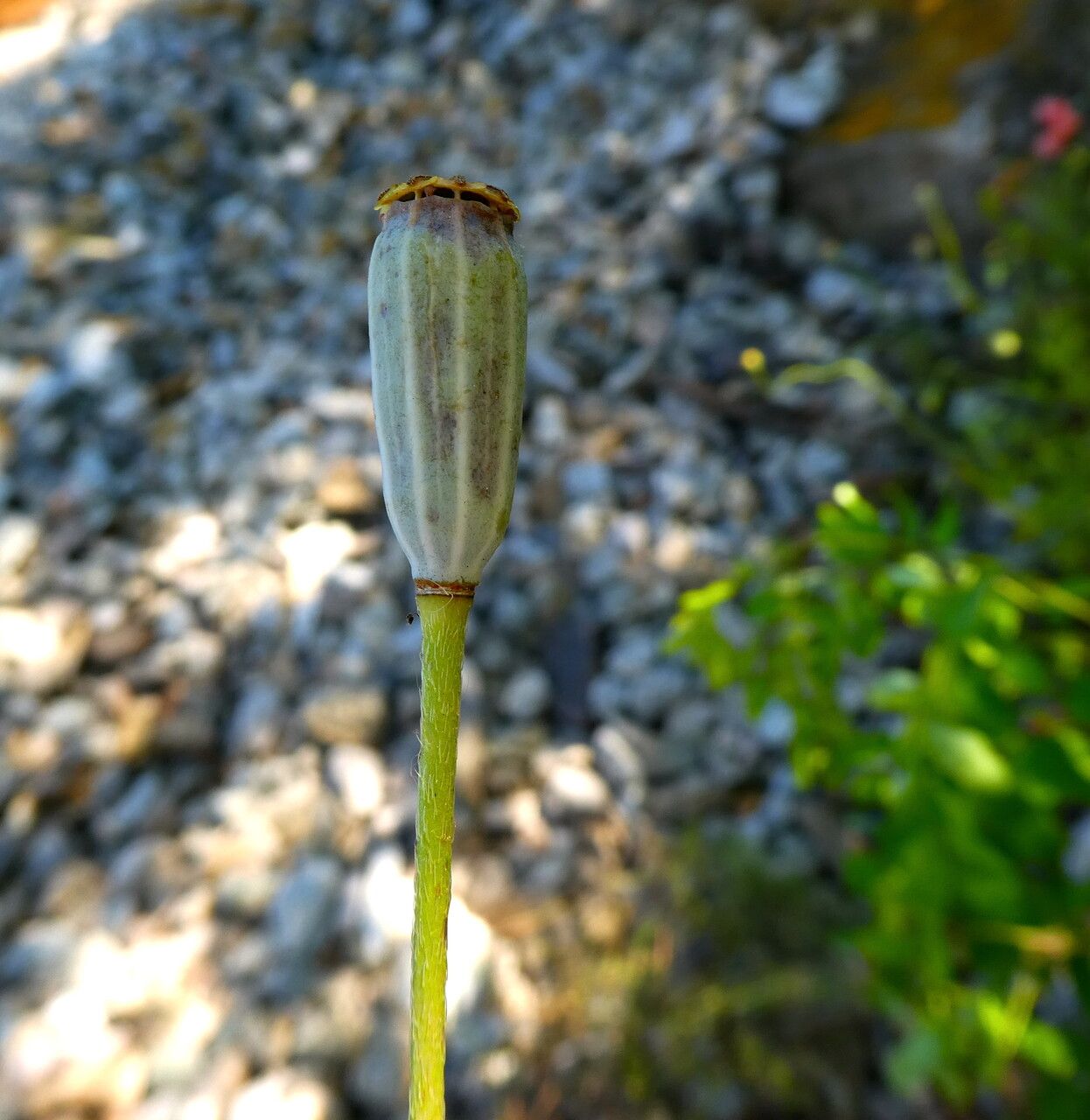
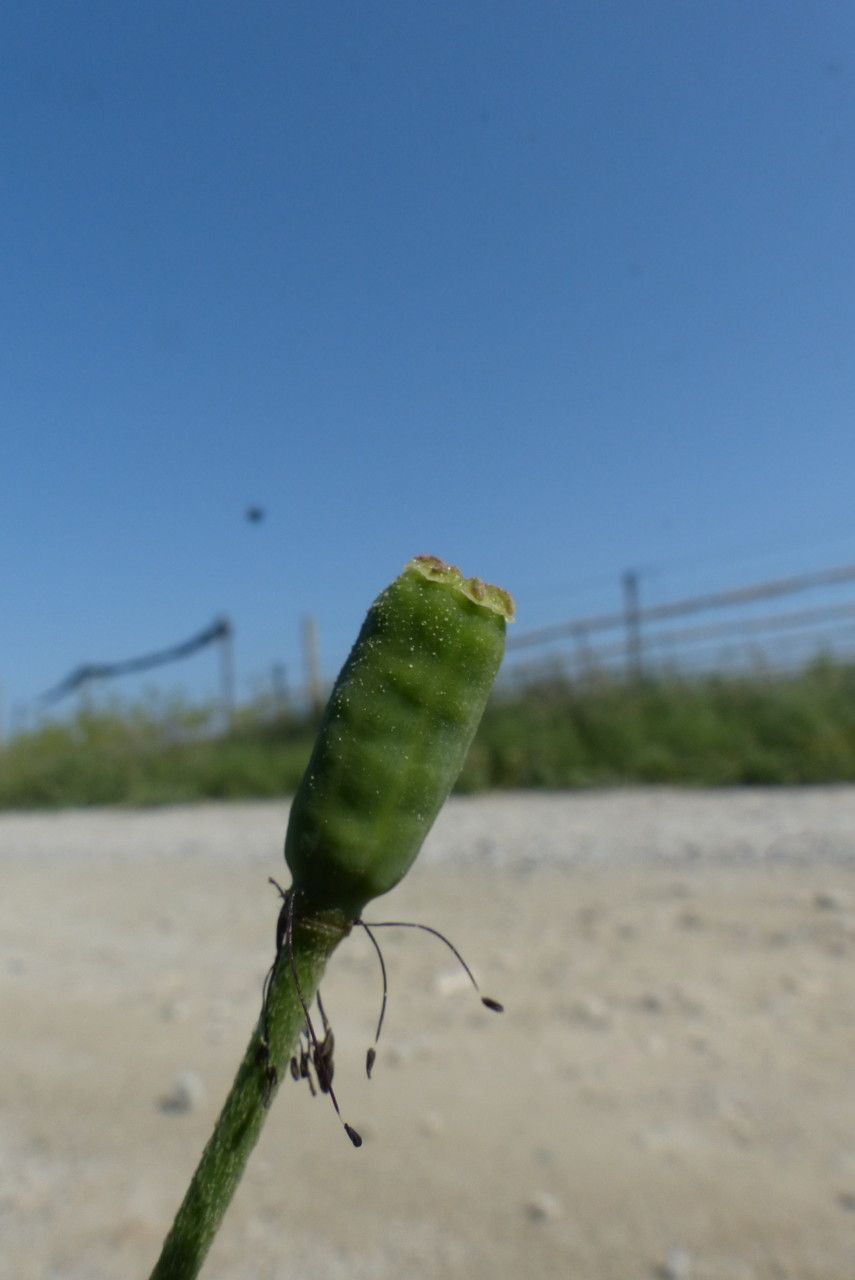
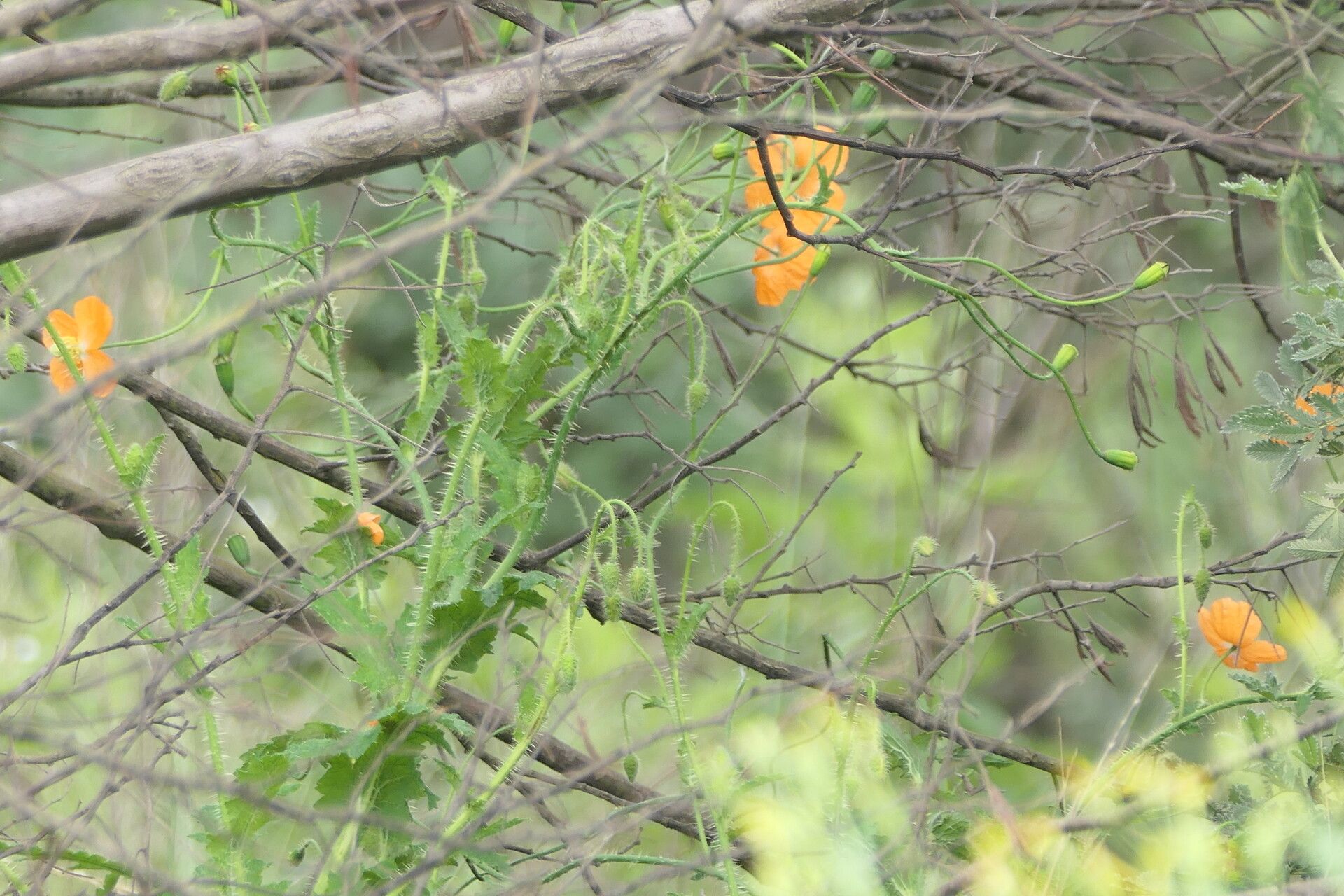
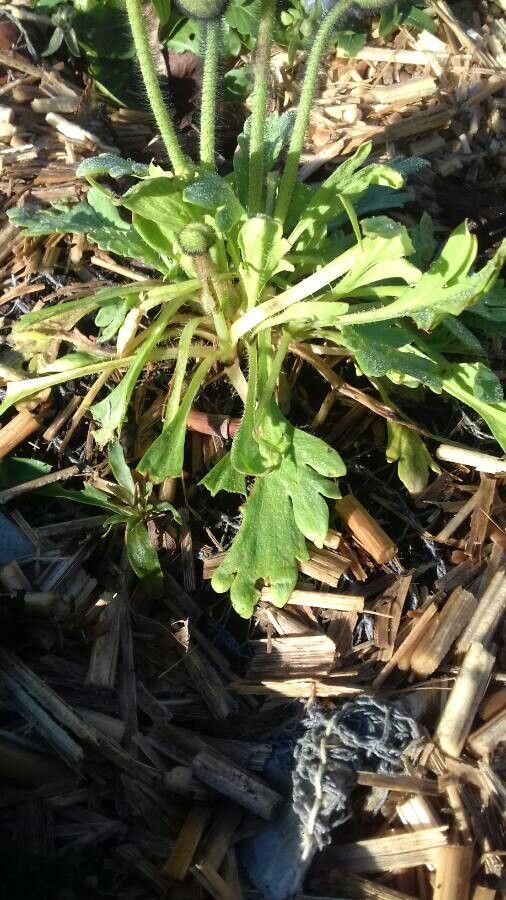
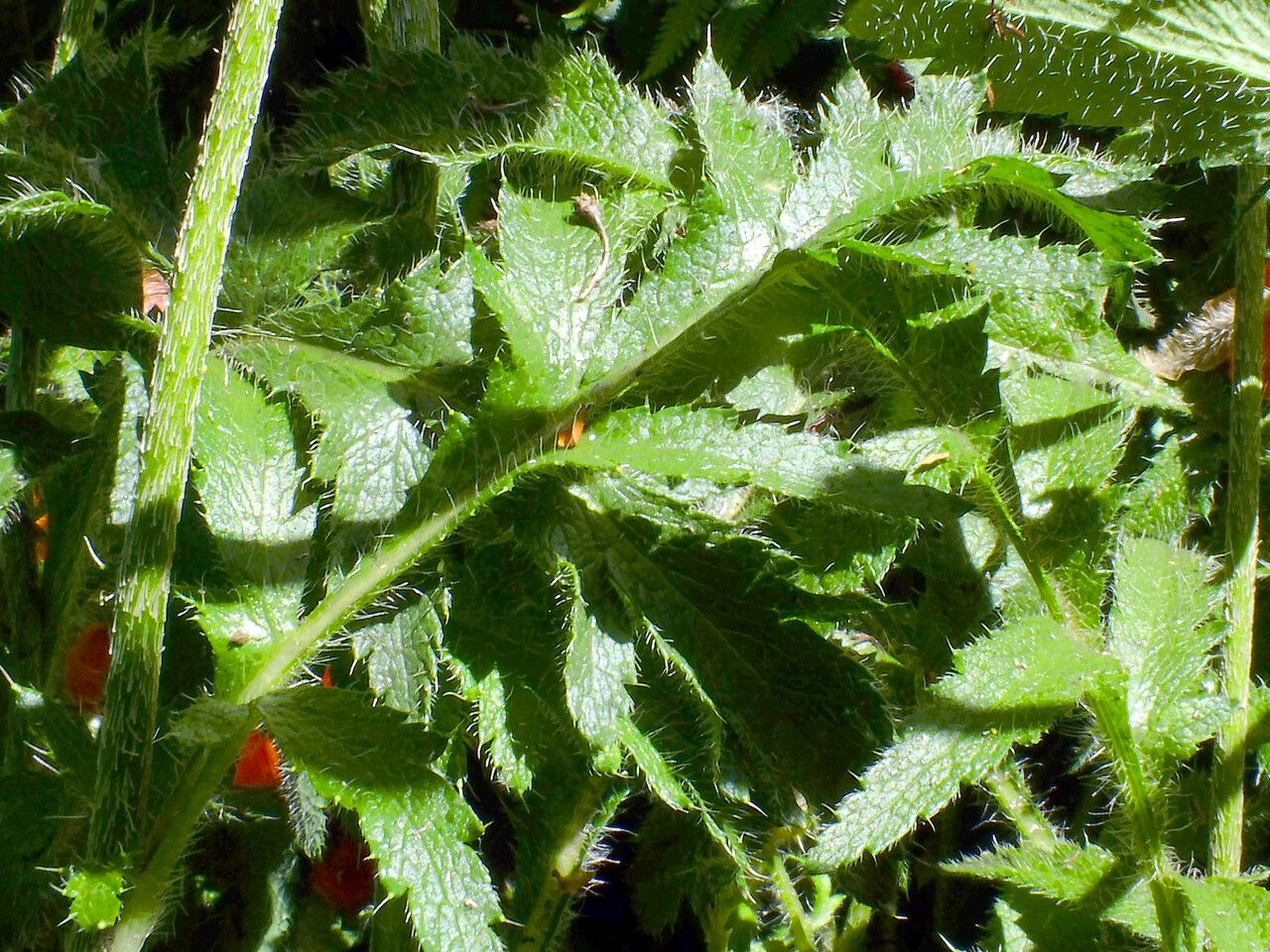
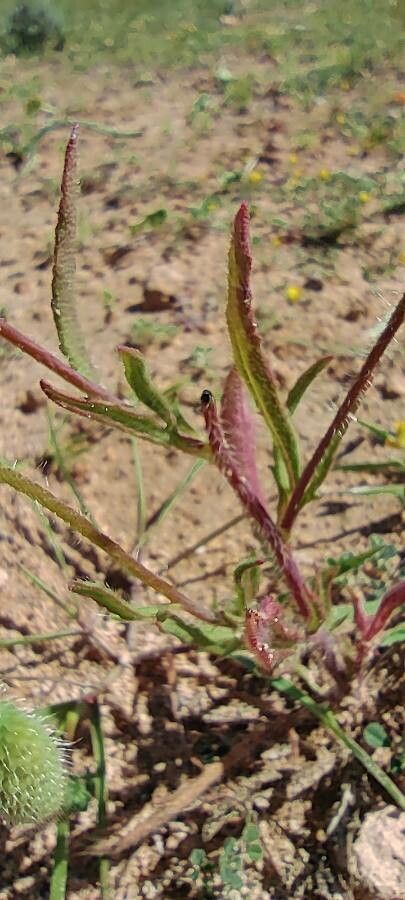
Papaver dubium, commonly known as the long-headed poppy or blushing poppy, is a flowering plant in the Papaveraceae family. This annual herb can grow up to 60 cm tall, featuring a slender stem with few branches. The leaves are finely divided and exhibit a bluish-green color.
The flowers of Papaver dubium are bright orange-red with four petals and a black center. They bloom from May to August and are typically found in open fields, meadows, and disturbed areas such as roadsides or waste grounds.
Native to Europe, this plant has also been introduced to other parts of the world, including North America, where it has become naturalized. It thrives in well-drained soils with full sun exposure.
Papaver dubium is toxic to mammals, but only in large amounts. However, the seeds are safe to eat. FUN FACT · FROM THE LIBRARY
Papaver dubium contains alkaloids such as morphine, which have been used for medicinal purposes for centuries. However, it is important to note that these alkaloids can be toxic if ingested in large quantities.
Overall, Papaver dubium is an attractive wildflower that adds color to natural landscapes, but should be handled with care due to its potential toxicity.
Blindeyes is aptly named due to the presence of numerous chemicals that can cause severe eye irritation. The term "Dubium," meaning "doubtful," highlights the plant's potential to be mistaken for the common field poppy (Papaver rhoeas). The most noticeable distinction between these two plants is the shape of their seed capsules.
Blindeyes is fairly disease-resistant and usually not prone to illnesses. Nevertheless, it can be vulnerable to pests and diseases present in its environment. These problems are typically not serious. Regarding care, the plant needs moderate maintenance. Regular pruning is required to keep a neat appearance and support healthy growth. Fertilizing can also help encourage flowering. Blindeyes is suitable for anyone with outdoor space, such as a garden or patio, and does not need extensive care experience. It may need more attention when cultivated indoors.
How to keep Papaver Dubium.
Light
Blindeyes do best with plenty of sunlight for healthy growth. They come from environments that are exposed to abundant sun. Both too much and too little light can impede their development, and the species does not show any particular tolerance for different light conditions.
Water
Blindeyes thrives in its native habitat, where it benefits from periodic rainfall and manages its water reserves efficiently. Although it prefers consistent moisture, it can tolerate short dry spells. For optimal growth, water blindeyes once a week. Its growth and the vibrancy of its blooms greatly depend on water availability.
Humidity
This plant prefers dry conditions, so don't mist it. However, watering it less often can also thrive in higher humidity.
Temperature
Blindeyes is native to regions where temperatures fall between 68 and 95°F (20 to 35℃). It prospers in temperate conditions, favoring the warmer end. Depending on the season, shifting its environment toward the warmer limit is beneficial.
Fertilizer
When most of Blindeyes' blooms have fully opened, resume fertilizing. At the peak of bloom production, apply fertilizer every three to four weeks, as the weather allows. Then, once Blindeyes begins to produce fewer new blooms, stop fertilizing; there's no need to feed the plant when it can no longer produce more blooms.
Pruning
Blindeyes are adorned with delicate red-orange flowers and have slender, hairy stems. It's best to prune them from early to late spring, removing any dead or damaged stems to promote growth and shape the plant. Be sure to use clean, sharp tools to prevent disease, and avoid heavy pruning to preserve the plant's delicate structure.
Pot & Repot
When repotting Blindeyes, choose a pot 1–2 inches (2.5–5.1 cm) larger in diameter that provides good drainage. Use a well-draining potting mix and consider adding perlite for extra drainage. Repot in spring or early summer, water thoroughly afterward, and keep it in a shady spot at first.
Botanical profile.
- Plant Type
- Herb
- Life Cycle
- Annual, Biennial
- Genus
- Papaver
- Family
- Papaveraceae
- Hardiness Zone
- 3-8
- Mature Height
- 61 cm
- Mature Spread
- 61 cm
- Leaf Color
- Green
- Leaf Type
- Deciduous
- Flower Color
- Red
- Flower Size
- 3.05 cm to 6.35 cm
- Bloom Time
- Late spring, Early summer
- Planting Time
- Winter
- Harvest Time
- Early summer, Mid summer
Other names.
Reader questions.
How should I water my Blindeyes?
Blindeyes can be watered using various tools including a garden hose with a spray nozzle or a watering can. They are not too fussy about the type of water they receive, as they can thrive on rainwater, tap water, or filtered water. It is generally recommended to avoid watering this plant from overhead to prevent leaf and flower damage and potential diseases. Using a drip irrigation system is often the preferred method for watering Blindeyes as it provides even and direct water to the soil. For Blindeyes grown in containers, a similar watering approach can be used but with different tools such as a cup, watering can, or tap water directly applied to the soil.
Why should I put fertilizer on my Blindeyes?
Not all plants require additional fertilizers because they have the ability to obtain the necessary nutrients. Blindeyes, similar to other plants, rely on these nutrients for growth and internal functions. The main nutrients that plants need (nitrogen, phosphorus, and potassium) play a role in various essential plant functions. Specifically, nitrogen is vital for foliage development. However, Blindeyes often struggle to obtain sufficient nitrogen from the soil alone. Consequently, many gardeners choose to supplement Blindeyes with external sources of nitrogen.
What are the sunlight requirements for Blindeyes plants?
Blindeyes plants require more than 6 hours of sunlight daily to thrive. Watching how sunlight moves through your garden helps in choosing spots that provide the perfect balance of light and shade, ensuring the plants' happiness. Originating from environments bathed in abundant sunlight, Blindeyes thrives best under generous sun exposure. Both overexposure and insufficient sunlight can negatively affect its growth, although this species shows resilience in varying light conditions.
What is the native temperature range for Blindeyes?
Blindeyes is indigenous to regions where the temperature fluctuates between 68 and 95°F (20 to 35°C), favoring temperate conditions leaning towards the warmer spectrum. To optimize growth, it is beneficial to adjust its environment towards the warmer end of its temperature range depending on the season.
What should I do if I give my Blindeyes too much or too little water?
The remedy for underwatering Blindeyes is straightforward - simply water it more often when you notice it lacks moisture. On the other hand, overwatering can have serious consequences, such as disease and eventual death for your plant. To prevent this, it is important to choose a suitable location for your Blindeyes that receives ample sunlight to help dry the soil and has good drainage to prevent waterlogging. If you have overwatered your potted Blindeyes, consider changing to a new pot with better soil drainage and sufficient drainage holes. When repotting, make sure to use loose soils and a pot that drains efficiently.
When should I fertilize my Blindeyes plants?
Blindeyes generally grows well and benefits from a monthly application of fertilizer during its active growth period. This period lasts from spring to summer, while it rests during fall and winter and requires fewer nutrients. You will know it's time to start fertilizing Blindeyes when you see signs of new growth. It doesn't matter if the plant is grown outdoors or indoors in a container - the fertilization schedule remains the same. However, if your Blindeyes is in a container, you likely won't need to fertilize for the first one to two months. Container plants are usually potted in nutrient-rich soil, so you should only start fertilizing after your plant has been in the same soil for a while.
How can artificial lighting support Blindeyes plant growth indoors?
Indoor Blindeyes plants require adequate lighting for optimal growth, especially when natural sunlight is insufficient, such as in winter or less sunny spaces. Artificial lights, particularly LED, are beneficial as they can be customized to provide specific wavelengths needed by the plant. For full sun plants, 30-50W/sq ft of artificial light is recommended, 20-30W/sq ft for partial sun plants, and 10-20W/sq ft for full shade plants. It's important to place the light source 12-36 inches above the plant and mimic natural daylight hours, with most plants needing 8-12 hours of light per day.
How cold-tolerant is Blindeyes?
Blindeyes possesses strong cold resistance, rendering special frost protection measures generally unnecessary during winter months. However, in the event winter temperatures are expected to dip below -35°C, providing cold protection is crucial. Covering the plant with soil or straw and watering it abundantly before the first freeze in autumn can help, ensuring the soil remains moist throughout the winter and early spring to avert drought and water scarcity.
How much water should I give my Blindeyes?
Blindeyes requires regular watering throughout the growing season. In the spring, water the plant approximately once a week. As the weather becomes warmer, you may need to increase watering to two to three times per week. However, it is important not to exceed this frequency as it can harm the plant. It is also crucial to maintain moist soil without making it overly wet, regardless of how often you water. Watering Blindeyes in a pot is slightly different. In general, potted plants require more frequent watering as the soil can dry out faster compared to plants in the ground. For container-grown Blindeyes, plan to water a few times per week, whereas for in-ground plants, once a week is sufficient.
When is it better not to add fertilizer to my Blindeyes?
To ensure the well-being of your Blindeyes plant, avoid fertilizing it if it is unhealthy due to disease or insect pests. Additionally, refrain from fertilizing a dehydrated plant, as this can exacerbate the issue. Only apply fertilizer to healthy plants. When watering, be cautious not to splash fertilizer onto the leaves or stem, as this can cause burns. Unless using a specific foliage-friendly fertilizer, avoid direct contact between the plant and the fertilizer.
What are the symptoms of inappropriate lighting on Blindeyes plants?
Symptoms of inadequate lighting in Blindeyes plants include smaller new leaves, leggy or sparse growth, faster leaf drop, slower or no new growth, lighter-colored new leaves, chlorosis (leaves turning yellow due to chlorophyll breakdown), sunscald on plant tissues, leaf curling as a defense mechanism, wilting from excess water loss, and leaf scorching characterized by brown, dry edges. These symptoms indicate either too much or too little exposure to light.
What should be done if Blindeyes experiences low temperatures?
Blindeyes can tolerate cold conditions and ideally should be kept in environments above 20°C. During winter, it is essential to maintain temperatures above 0°C. Should temperatures plunge below -35°C, although no visible changes might be noticeable in winter, a decrease in sprouting or a complete lack of sprouting can occur in spring. If this happens, removing any parts that fail to sprout is recommended.