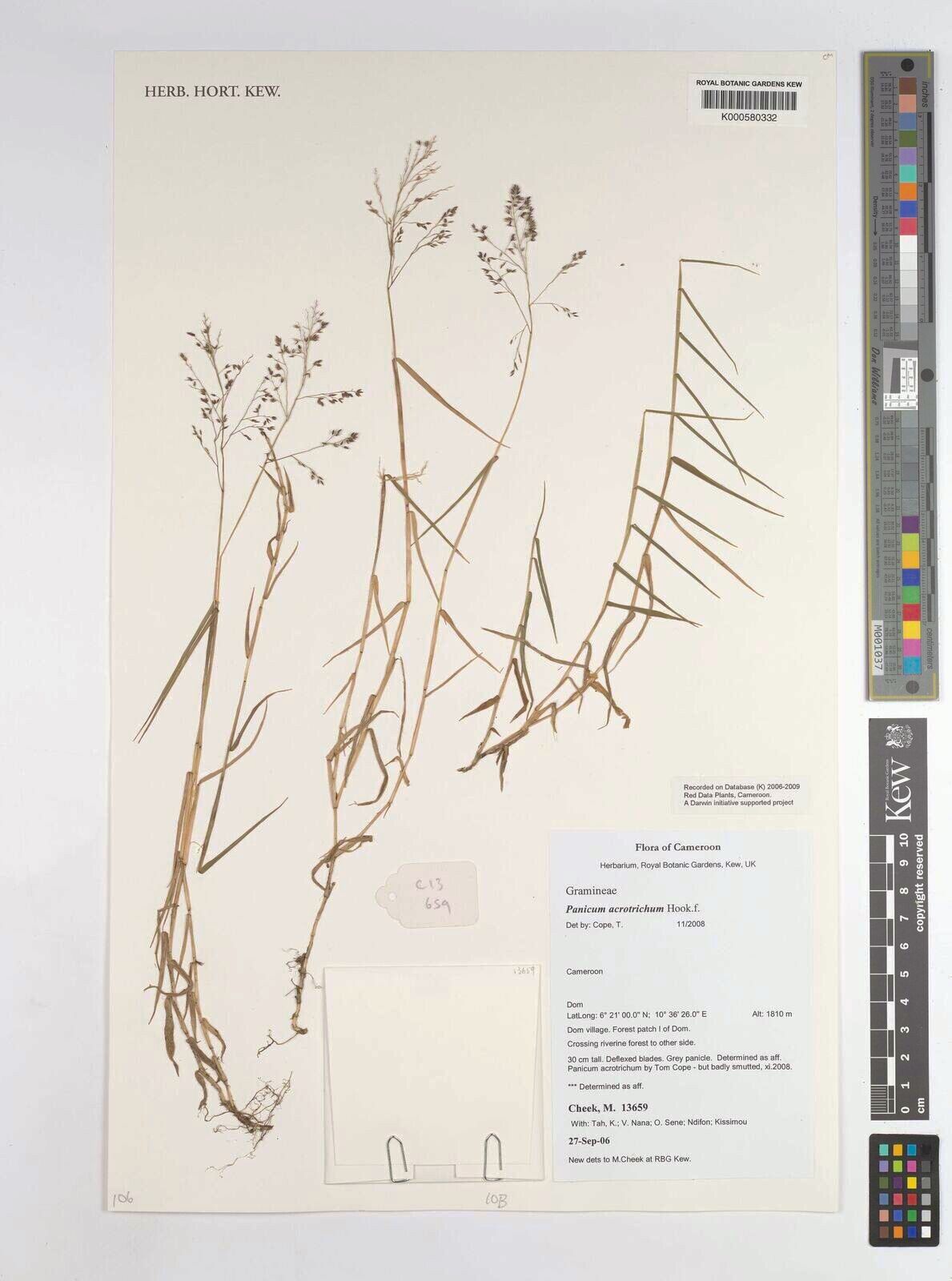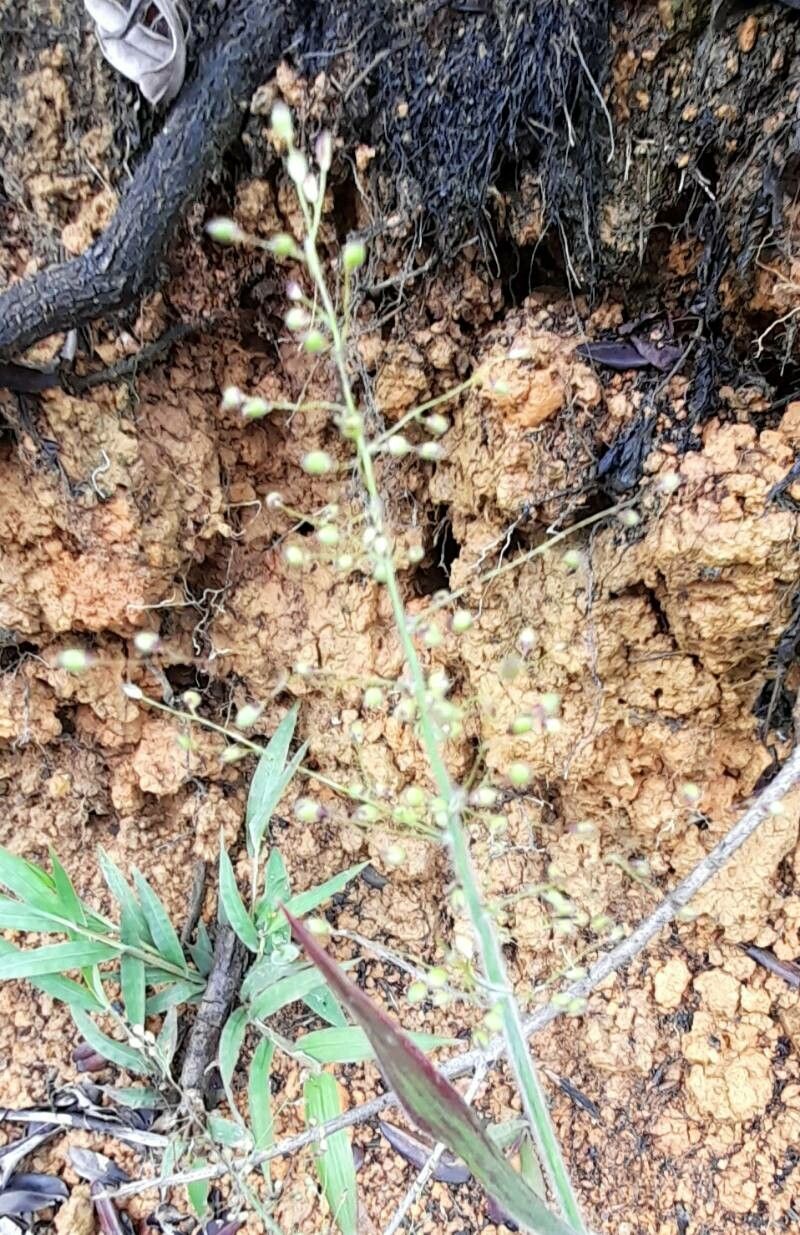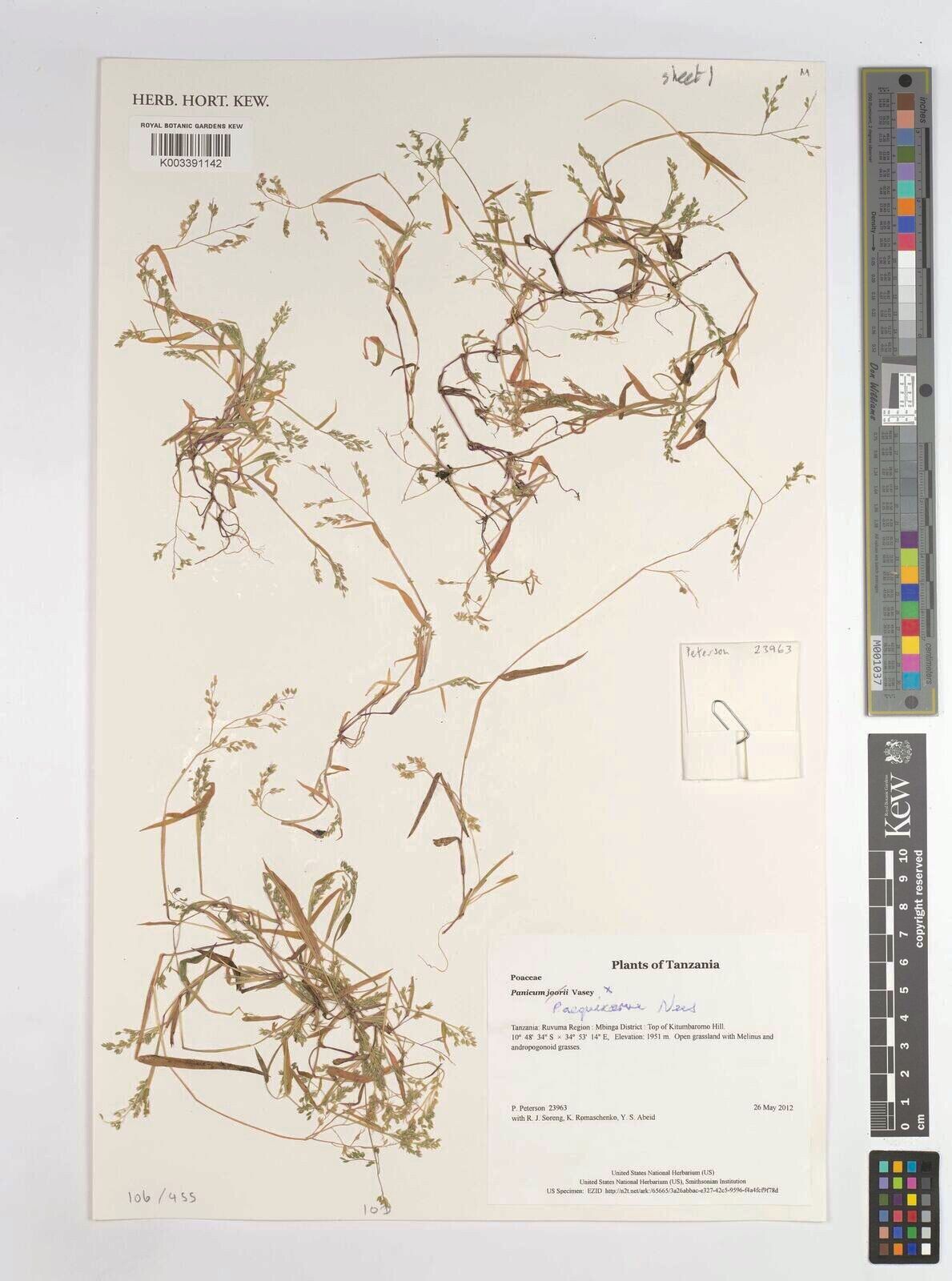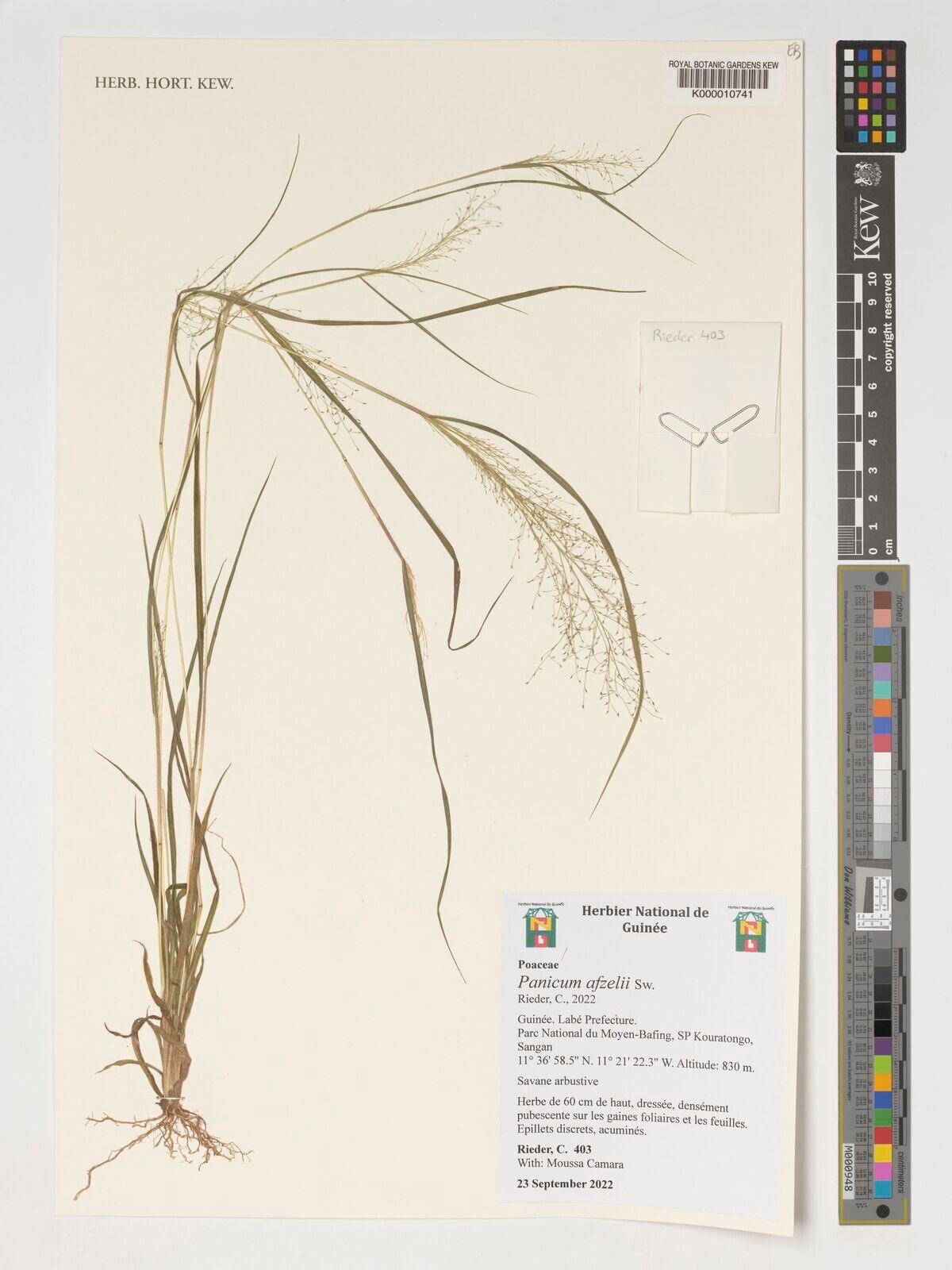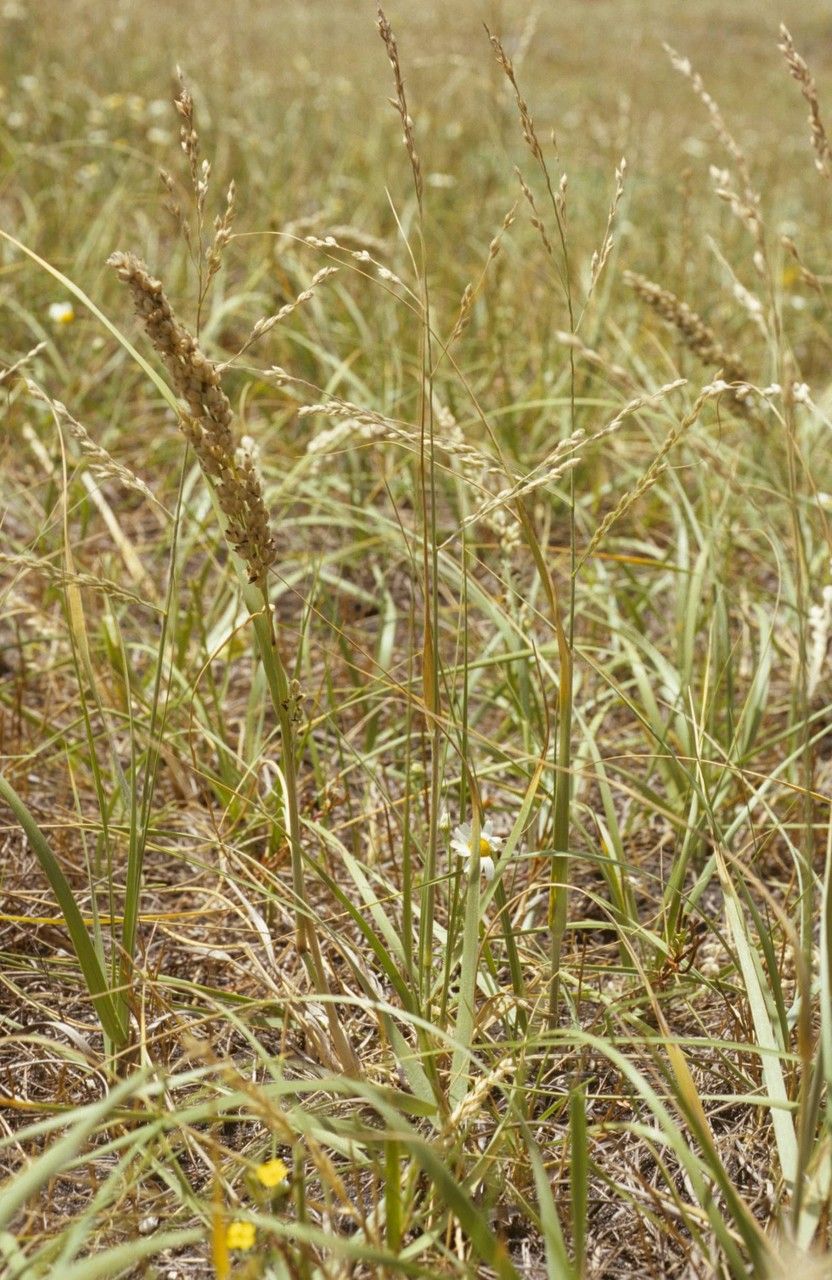
Panicum urvilleanum is a species of grass known by the common names desert panicgrass and silky panicgrass. It is native to the southwestern United States and northern Mexico, where it grows in sandy habitat, including the dunes of the deserts. It is also known in parts of South America. This is a stoloniferous perennial grass growing up to a meter tall with hairy leaves up to 45 centimeters long. The inflorescence is a branching, spreading panicle up to 35 centimeters long bearing oval-shaped spikelets coated in downy white or silvery hairs.
Desert panicgrass is resistant to disease and typically does not tend to suffer from illnesses. As for maintenance, this plant is fairly low-maintenance. Outdoors it needs only light watering, and larger plants usually do not require pruning. Smaller plants, however, should be trimmed after they have finished blooming. Desert panicgrasst is appropriate for anyone with an outdoor area, like a garden or deck, and does not demand much plant-care experience.
How to keep Panicum Urvilleanum.
Light
Desert panicgrass is a perennial herbaceous plant that loves sunlight and originates from open environments. It often flourishes in meadows and grasslands. While its ideal conditions are full sunlight, it can also withstand areas with partial sun exposure.
Water
Desert panicgrass is well adapted to arid environments, thriving with minimal moisture due to its high drought tolerance. It should be watered sparingly, ideally just once a week. Perfect for xeriscaping, this plant requires well-draining soil to prevent root rot, reflecting its evolution in dry regions.
Temperature
Desert panicgrass flourishes in frosty regions and elevated locations. This plant favors chillier temperatures, sufficient airflow, and a damp habitat. During the summertime, several steps must be followed to keep it cool, due to its high sensitivity to warmth, which can, unfortunately, lead to its death. Arid conditions can also negatively affect the plant. During winter, no special actions are needed to protect it from cold, but ensuring the soil remains moist is crucial.
Fertilizer
To encourage robust new growth, desert panicgrass needs extra nourishment. During the spring season, applying compost near the plant's stem can successfully offer the essential nutrients it requires. Using fertilizers contributes to sustaining energetic development and enhances the plant's ability to fend off diseases and infestations.
Pruning
Desert panicgrass is a drought-tolerant plant that thrives in a variety of conditions. To promote healthy growth and remove any damaged stems, it is best to prune this grass in early spring, cutting back to the base to improve air circulation. Regular pruning not only increases the plant's density but also helps in controlling erosion. Additionally, it's important to keep your tools clean during the process to prevent any infections.
Botanical profile.
- Plant Type
- Grass
- Life Cycle
- Perennial
- Genus
- Panicum
- Family
- Poaceae
- Hardiness Zone
- 6
- Mature Height
- 91 cm
- Mature Spread
- 30 cm to 61 cm
- Leaf Color
- Light Green, Pale Green
- Leaf Type
- Evergreen
- Flower Color
- Yellow, Green, Brown
- Flower Size
- 0.25 cm to 0.51 cm
- Bloom Time
- Early summer, Mid summer
- Planting Time
- Summer, Autumn
- Harvest Time
- Mid summer, Late summer, Early fall
- Native Area
- Mexico
Other names.
Reader questions.
What are the essential care tips for Desert panicgrass?
Desert panicgrass, or Panicum urvilleanum, flourishes in cold regions and high-altitude areas, preferring cool temperatures, ample ventilation, and moist environments. It is crucial to implement cooling measures during summer, as it is highly susceptible to heat, which can be fatal. Moreover, maintaining soil moisture is vital, especially before the first freeze in autumn, to prevent drought and water scarcity during winter and early spring. Despite its high tolerance to cold, it doesn't require additional frost protection measures.
How does Desert panicgrass react to low temperatures?
Desert panicgrass is tremendously cold-tolerant, capable of enduring winter temperatures above -25°C. If temperatures fall below this threshold, it may not show immediate damage but could lead to reduced or even absent sprouting in spring. To address any lack of sprouting, it is advised to remove the parts of the plant that have failed to sprout once spring arrives.
What should be done if Desert panicgrass is exposed to high temperatures?
Desert panicgrass struggles in high temperatures, particularly when they exceed 25°C, leading to halted growth and increased susceptibility to rot. To mitigate damage from high temperatures, it's recommended to trim any sunburned or dried parts of the plant, relocate it for midday and afternoon shade, or use a shade cloth. Furthermore, watering the plant in the morning and evening helps maintain soil moisture and supports its overall health.