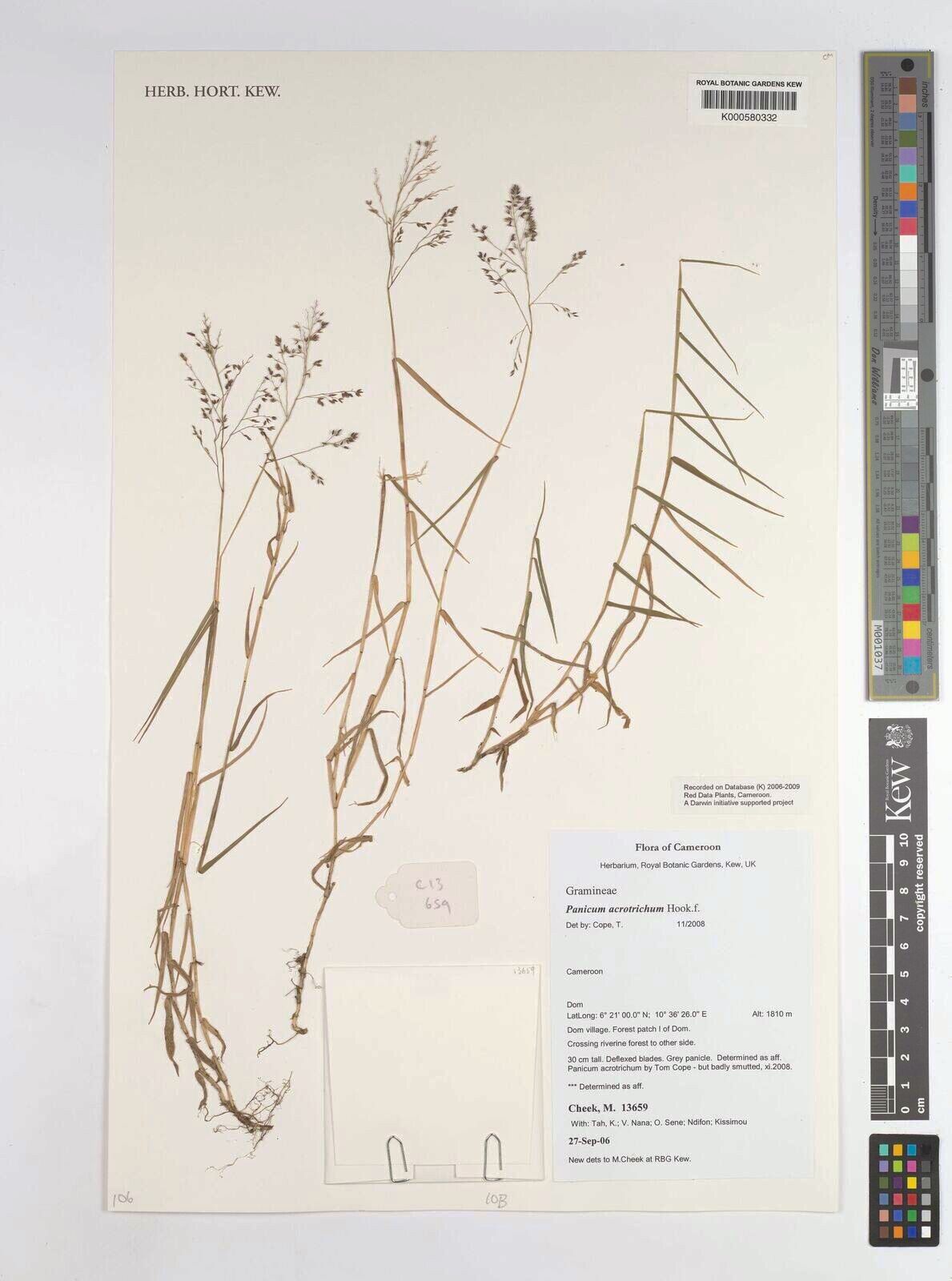
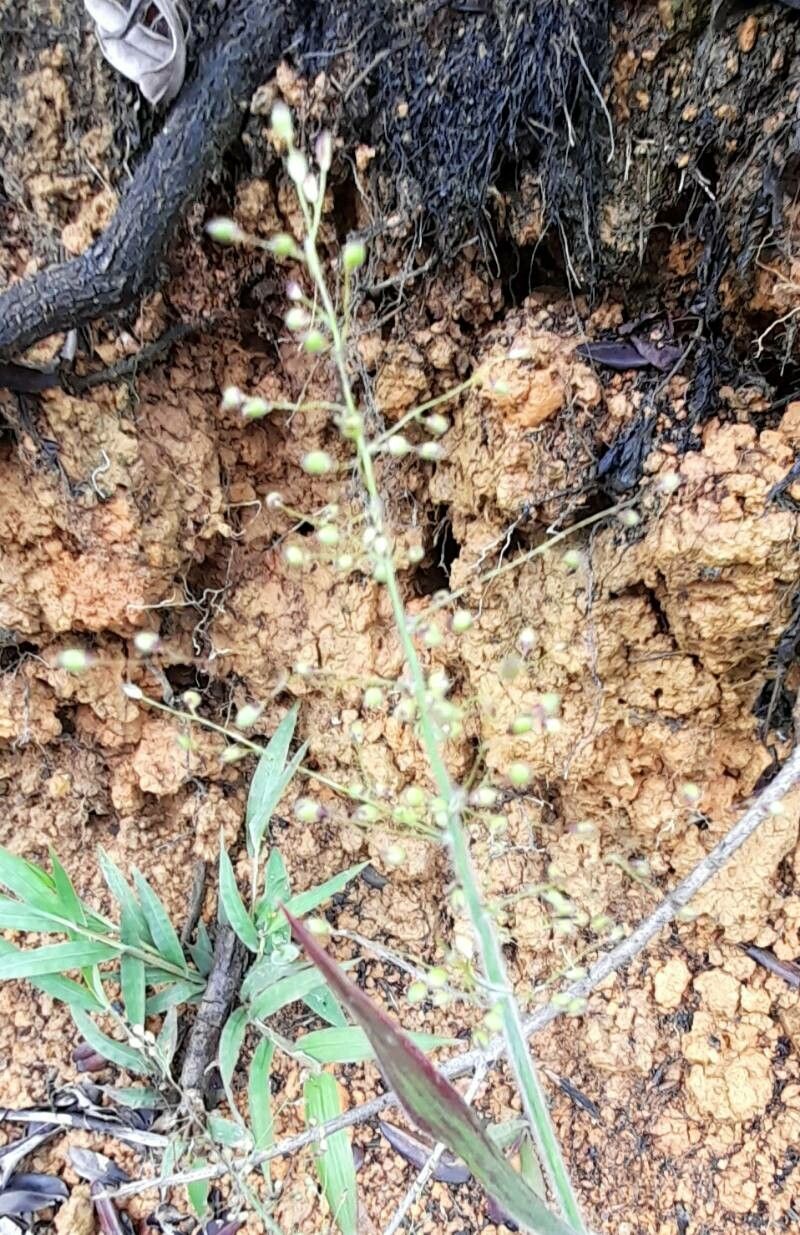
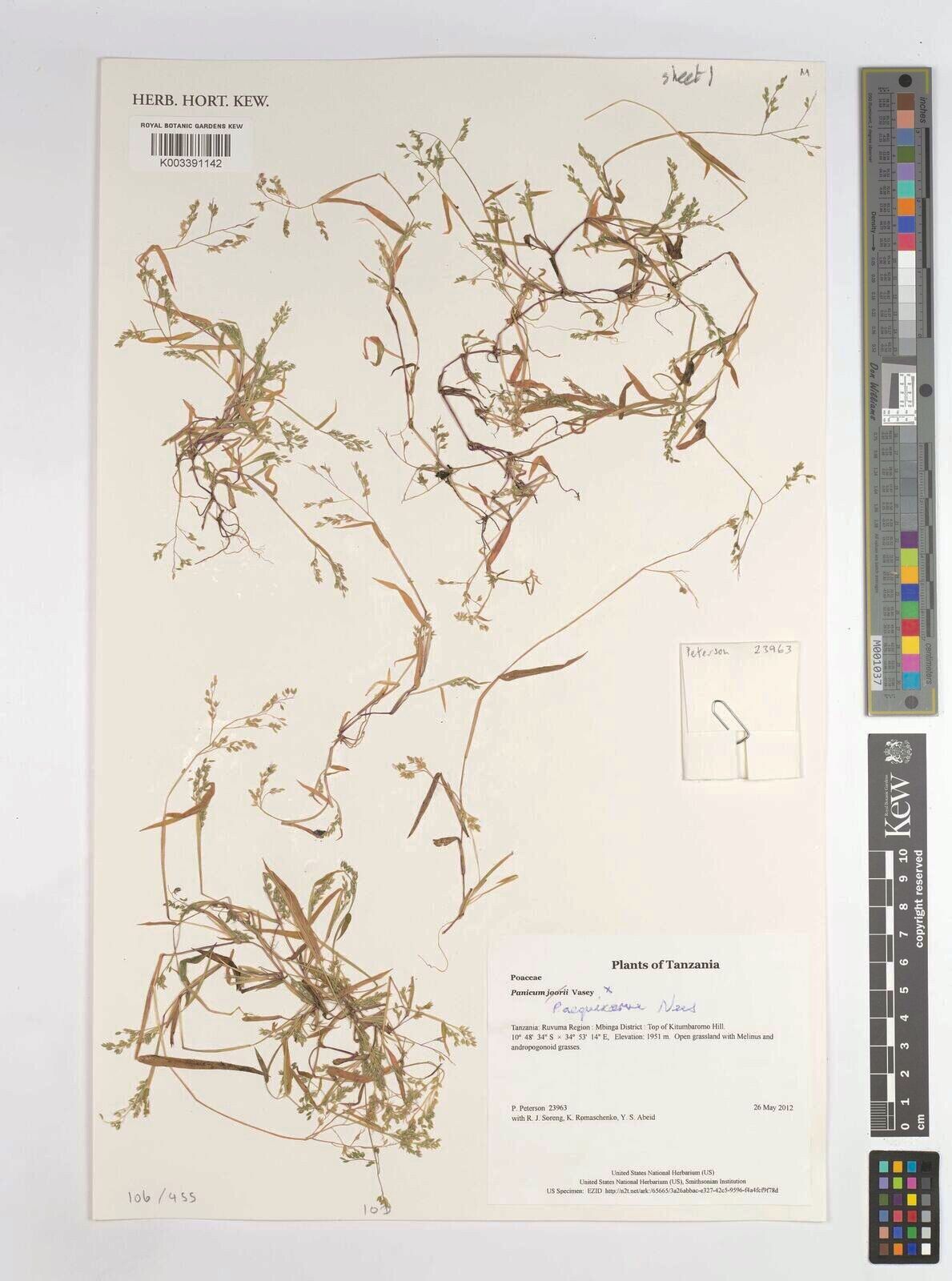
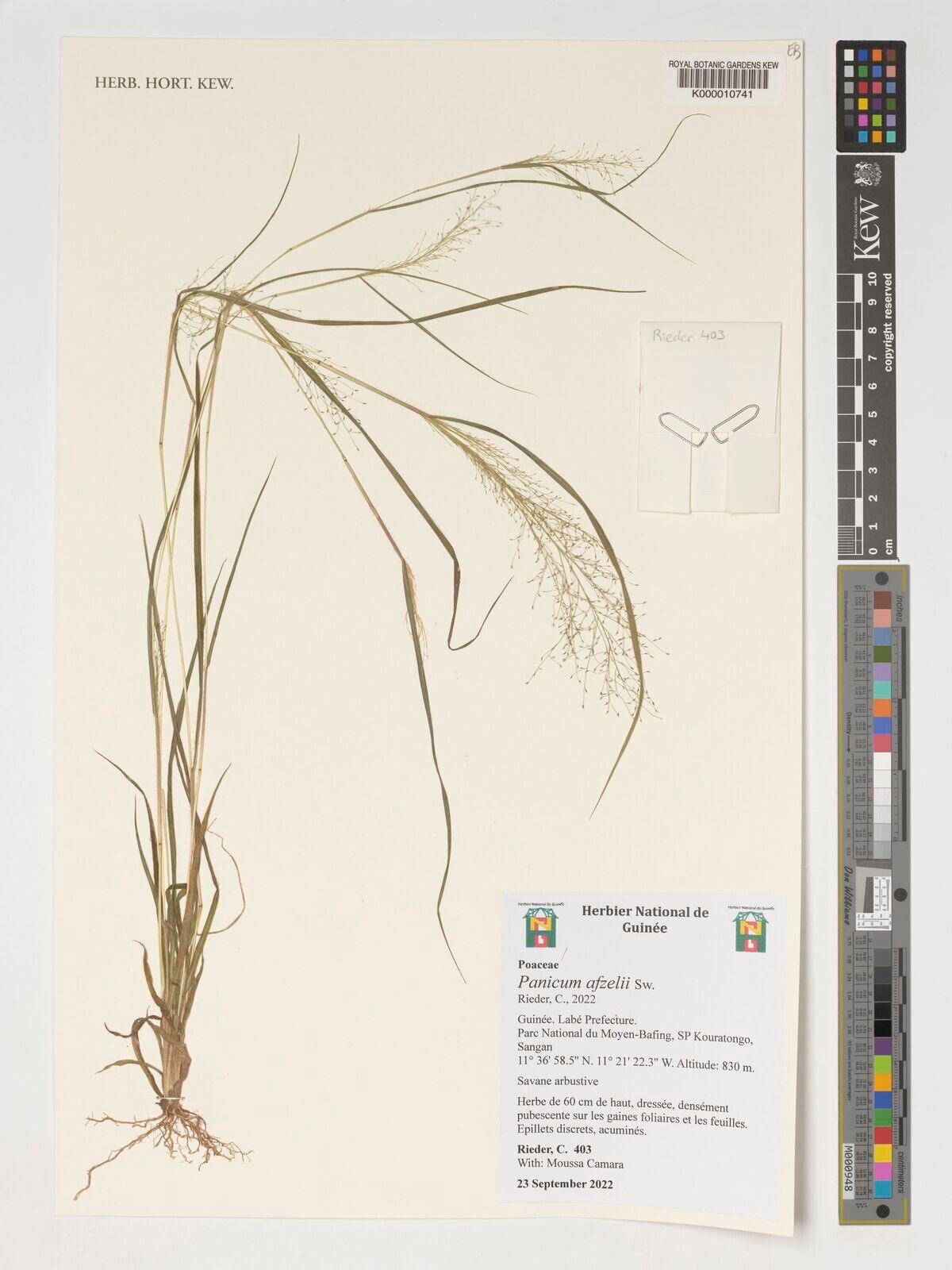
Panicum anceps is a species of grass known by the common name beaked panicgrass. It is native to the southeastern United States, where it occurs as far north as New Jersey and as far west as Kansas and Texas.This species is a rhizomatous perennial grass with stems growing up to 1.3 meters tall. The leaves have erect blades up to half a meter tall. The inflorescence is a panicle up to 40 centimeters long bearing pale green or yellowish spikelets. The grass produces an abundance of seed. The seed is curved like the beak of a bird, giving the plant its common name.In the wild this plant grows in moist areas such as swampland and wet woodland habitat.This grass provides a good graze for cattle and horses throughout most of the year. It does not tolerate overgrazing. Deer also graze the plant and the seed provides food for birds. The plant is also used for revegetation efforts on disturbed land such as mine spoils and roadsides. It is best grown in moist to wet soils.
Beaked panicgrass is resistant to disease and is generally not prone to illnesses. Regarding care, this plant is fairly low-maintenance. When grown outdoors it needs little watering, and larger specimens usually do not require pruning. Smaller plants, however, should be pruned after they finish blooming. Beaked panicgrass is suitable for anyone with an outdoor space, such as a garden or deck, and does not require a lot of gardening experience.
How to keep Panicum Anceps.
Light
Beaked panicgrass flourishes with a generous amount of sunlight, and can manage pretty decently in moderately sunny environments. However, being overly exposed could potentially harm its health. From sprouting to full growth, it necessitates abundant sunshine. Having its roots in ecosystems with significant sunlight exposure, it becomes compatible in areas where other species might have difficulty.
Temperature
Beaked panicgrass is native to environments with mean temperatures between 41 and 100.4 °F (5 to 38 ℃). It is vulnerable to severe cold, but can offer some shield during particularly cold winter spells.
Fertilizer
Extra nourishment is necessary for the healthy new development of Beaked panicgrass. In the spring season, depositing compost around the plant's foundation can sufficiently supply the required nutrients. Fertilization boosts strong growth and strengthens the plant's immunity against diseases and pests.
Botanical profile.
- Plant Type
- Grass
- Life Cycle
- Perennial
- Genus
- Panicum
- Family
- Poaceae
- Hardiness Zone
- 4-11
- Mature Height
- 0.4 m to 1.22 m
- Mature Spread
- 1.22 m
- Leaf Color
- Green, Light Green
- Leaf Type
- Evergreen
- Flower Color
- Yellow, Green, Brown
- Flower Size
- 15.24 cm to 36.58 cm
- Bloom Time
- Summer
- Planting Time
- Spring, Summer, Autumn
- Harvest Time
- Late summer, Early fall, Mid fall