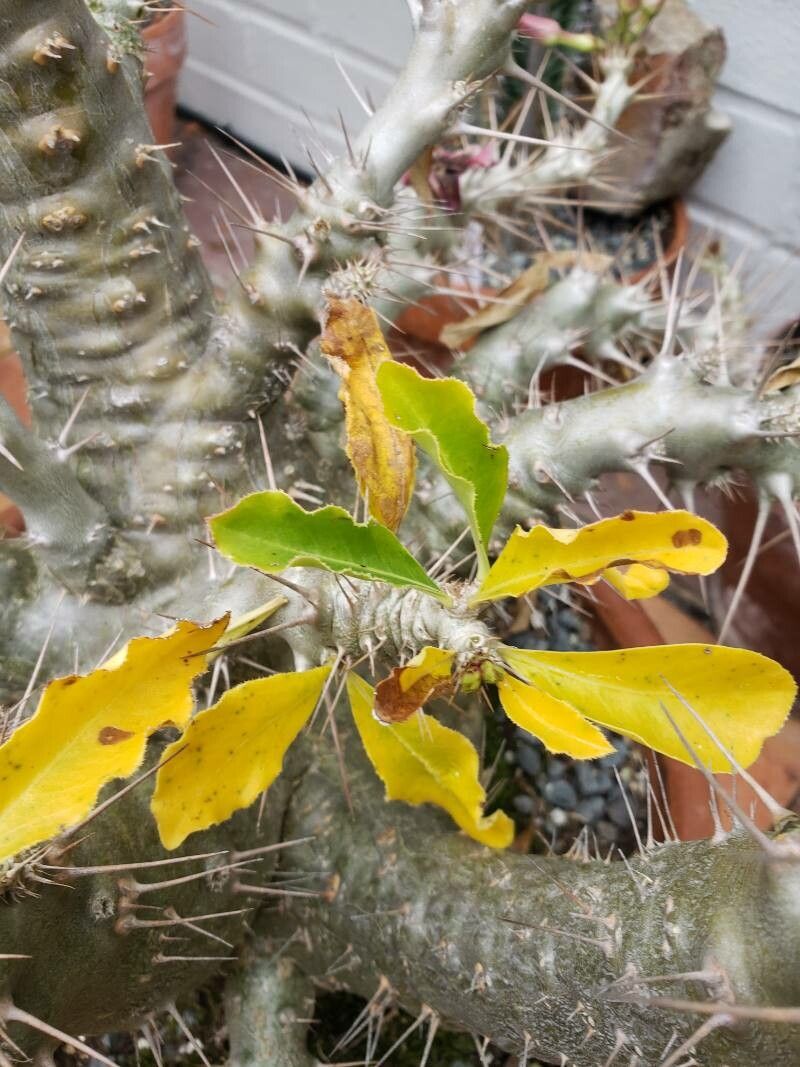
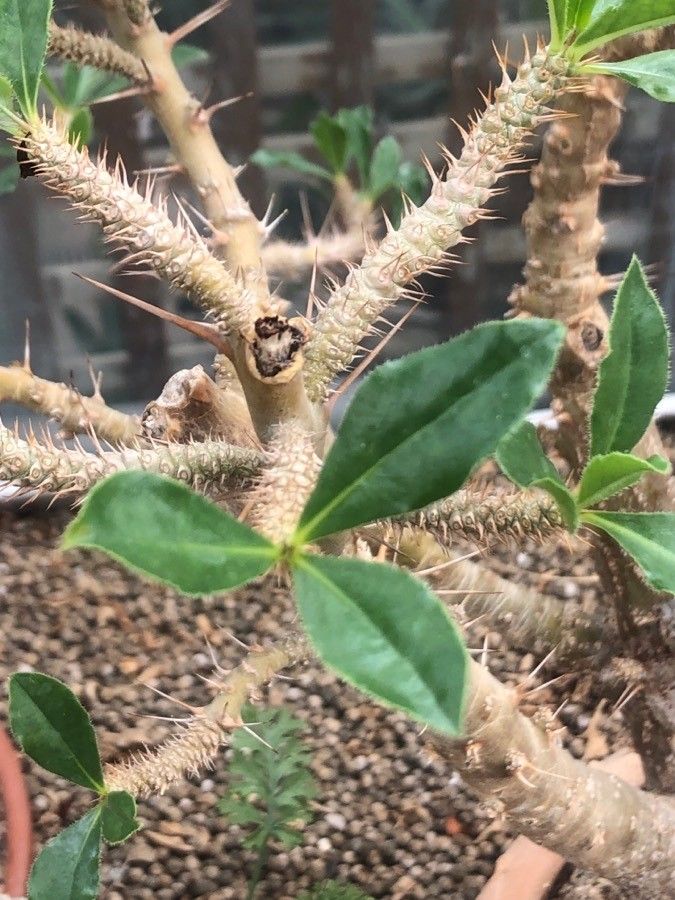
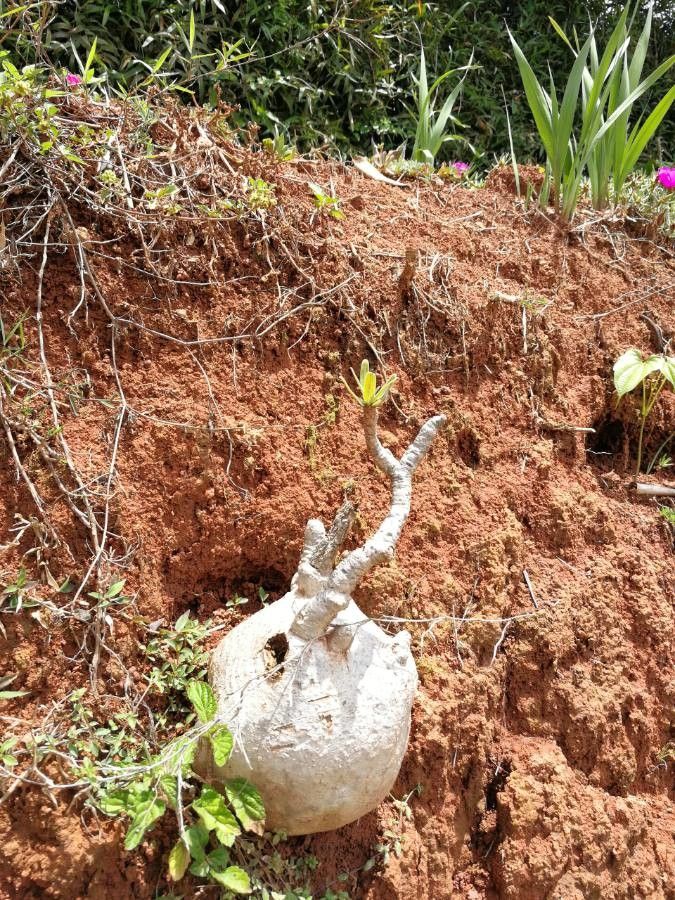
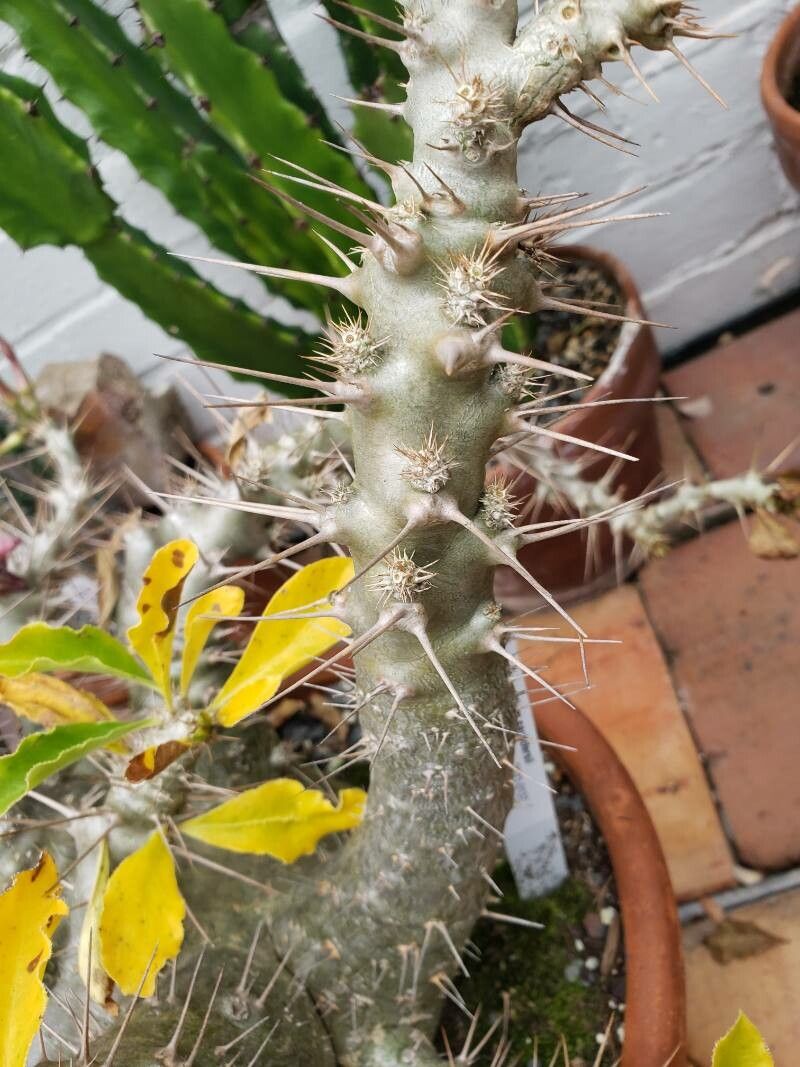
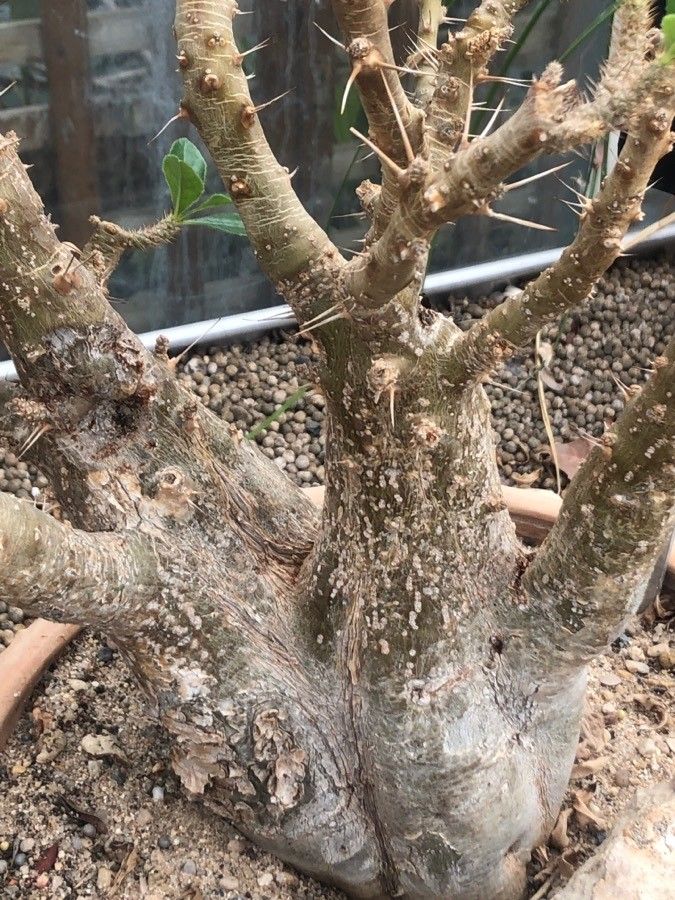
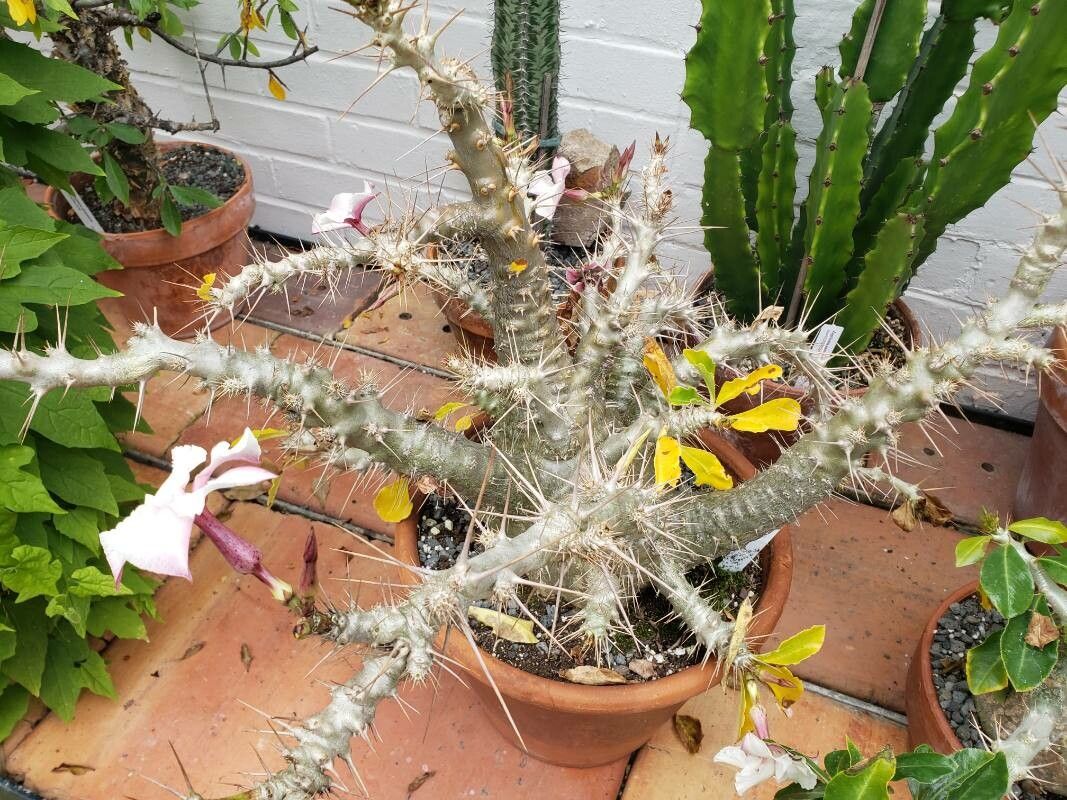
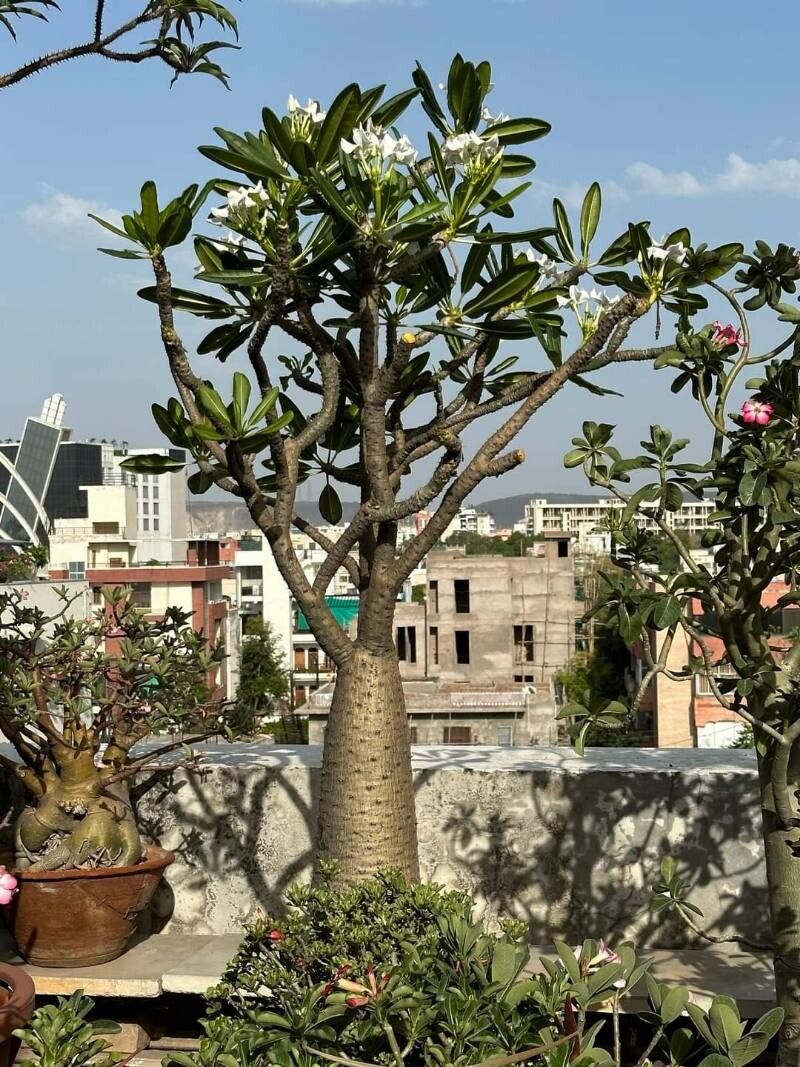
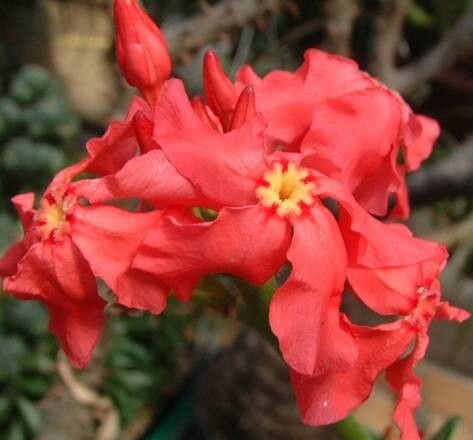
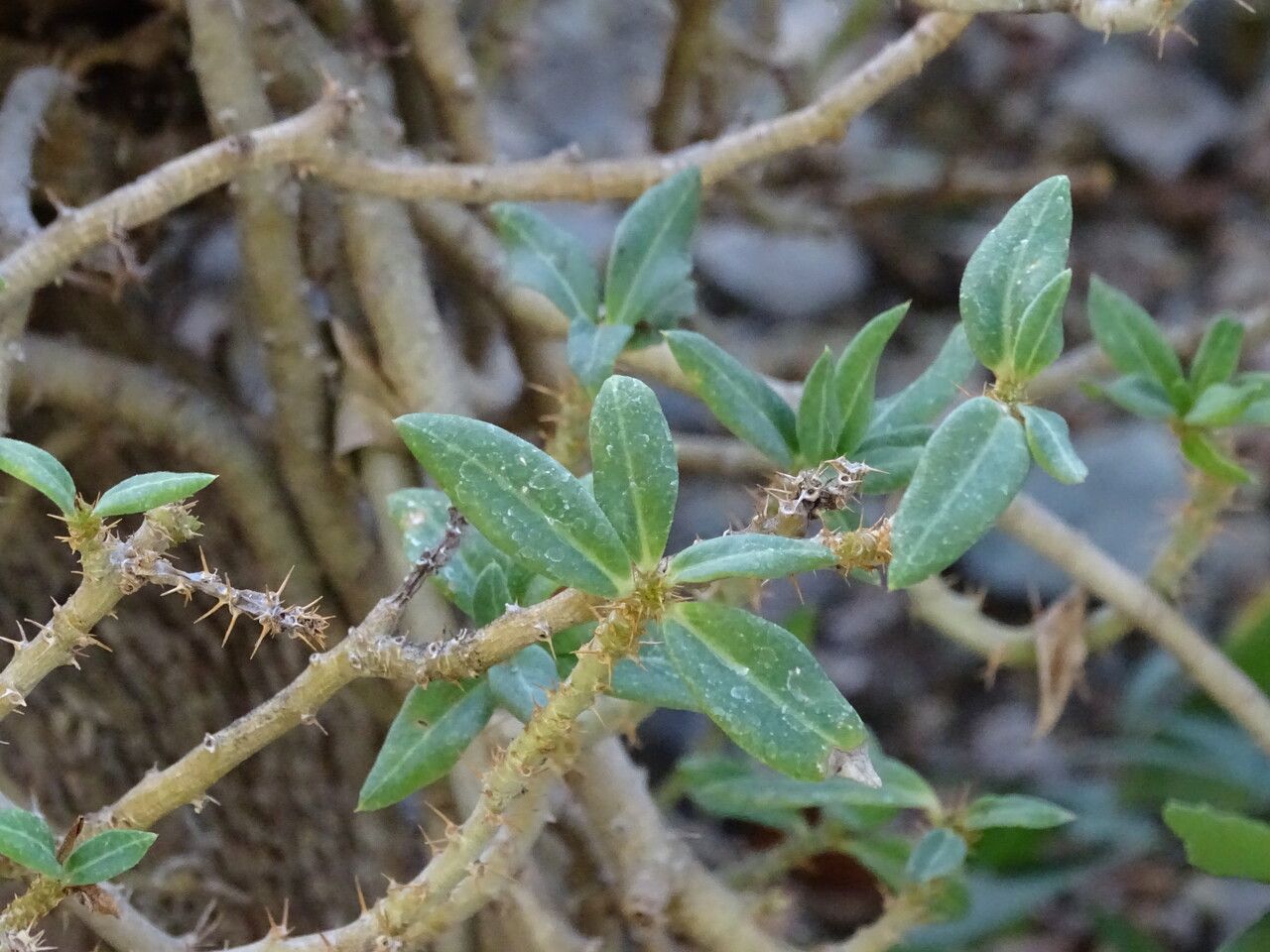
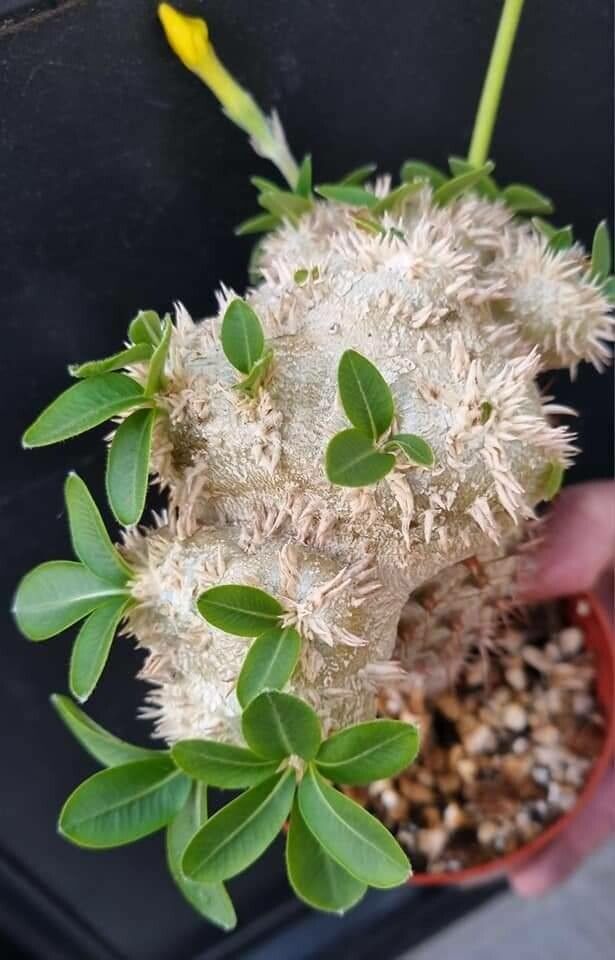
Pachypodium saundersii is a succulent plant species in the family Apocynaceae. Native to Madagascar, this plant can reach heights of up to 6 meters. It has a thick, woody stem that stores water, enabling it to thrive in arid environments.
The plant's leaves are long, narrow, and glossy green. During the summer months, it produces large clusters of white or yellow flowers.
Often grown as an ornamental plant due to its unique appearance and striking flowers, Pachypodium saundersii requires well-draining soil and plenty of sunlight. This makes it a perfect choice for gardens or indoor spaces with bright light.
While its specific care requirements can be challenging for novice gardeners, Pachypodium saundersii is a rewarding addition for those willing to put in the effort. With proper care, this fascinating succulent can thrive for many years, serving as an eye-catching centerpiece in any garden or home.
Kudu lily has moderate resistance to disease but is more sensitive to high humidity and excessive watering. It is also likelier to develop diseases if grown in low light and overwatered. Regarding care, Kudu lily tolerates drought and can go long periods without water. It needs little fertilizer and only occasional pruning. Because of this, it is appropriate for gardeners of all experience levels, especially those who prefer to spend less time on plant care and who may sometimes be away from home for extended periods. It’s a good option for people who don’t want to devote much time to maintenance but still want an easy-to-care-for plant.
How to keep Pachypodium Saundersii.
Light
Kudu lily's growth is aided by ample exposure to sunlight. It does best when situated in continual sun. In its natural habitat, it is commonly found in areas that receive sunlight for most of the day. Both too little and too much sunlight can have a negative effect on its health.
Water
The Kudu lily is a drought-tolerant succulent native to arid regions. It typically requires watering only once every three weeks. Although it thrives outdoors, providing slightly more water during its active growth period can help support its development.
Temperature
Kudu lily naturally occurs in habitats with temperatures between 68 and 100 °F (20 and 38 ℃). It performs best in warm conditions, which reflects its temperate origin. During different seasons, minor adjustments to these conditions may be needed to maintain health year-round.
Fertilizer
For Kudu lily, light applications of fertilizer once or twice a year during the growing season are enough. Avoid feeding in winter and in summer, when the plant is dormant. Cut back on fertilizer for repotted plants and wait a couple of months after repotting before you start fertilizing. Fertilizing helps maintain healthy growth and promotes flowering.
Pot & Repot
Repot your kudu lily every 2 to 3 years in the spring to promote root growth. Choose a well-draining pot and place it in bright light after repotting. Water sparingly until you see new growth to ensure your kudu lily continues to flourish and showcase its unique beauty.
Botanical profile.
- Plant Type
- Shrub
- Life Cycle
- Perennial
- Genus
- Pachypodium
- Family
- Apocynaceae
- Hardiness Zone
- 10-11
- Mature Height
- 46 cm
- Mature Spread
- 30 cm
- Leaf Color
- Green, Dark Green
- Leaf Type
- Deciduous
- Flower Color
- White
- Flower Size
- 3.05 cm to 5.08 cm
- Bloom Time
- Summer
- Planting Time
- Spring, Summer, Autumn
- Harvest Time
- Late summer, Early fall, Mid fall
- Native Area
- South Africa, Eswatini, Mozambique, Zimbabwe
Other names.
Reader questions.
What is the best way to water my Kudu lily?
To properly water this species, it is recommended to water from the bottom. This allows the water to be absorbed by the roots and distribute nutrients throughout the plant. Avoid spilling water on the top part to prevent the development of diseases and fungi. If you have an irrigation system, use small sprinklers for Kudu lilies in your garden. Opt for revolving sprinklers that can be adjusted to change the water delivery patterns. Don't use sprinklers on windy days. Whether in pots or in the garden, use the soak and dry method to evenly distribute moisture to the root systems for healthier growth. Some owners might consider installing a built-in drainage system for their succulents using porous materials like recycled glass or hydro stones. These materials will serve as reservoirs for excess water, but be cautious not to overwater the plants in these systems.
Why should I put fertilizer on my Kudu lily?
Fertilizing the Kudu lily helps add nutrients to the growing medium. While the plant does store water and nutrients, applying plant food during the growing season supports healthy growth and can also encourage mature specimens to produce blooms.
How much sunlight is required for Kudu Lily to thrive?
Kudu Lily requires generous exposure to sunlight to thrive, favorably influenced by being under continuous sunlight for most of the day. In its natural habitat, Kudu Lily is found in regions where it enjoys abundant sunlight. It's crucial for the plant to receive more than 6 hours of sunlight daily to ensure healthy growth. Observing your garden's sunlight pattern can help you choose spots that balance light and shade, ensuring your Kudu Lily's happiness.
What is the ideal temperature range for Kudu lily?
The Kudu lily thrives in environments with temperatures ranging from 68 to 100°F (20 to 38°C), reflecting its temperate origin. It is important to provide warm conditions for the Kudu lily to ensure its year-round health. However, during the winter, the plant enters a dormant state and requires special care if outdoor temperatures drop below 5°C, including being moved indoors to a south-facing window for sufficient sunlight, or using supplemental lighting if natural light is inadequate.
What should I do if I give my Kudu lily too much water or too little water?
- The Kudu lily turning yellow may be due to underwatering or overwatering. If the soil is too wet, it can lead to fungal infections. To fix this, let everything dry and avoid overwatering. - Browning and dropping of leaves indicate excessive moisture. Yellow tips on stems and branches suggest inadequate watering. - Before buying a Kudu lily, check if the soil drains properly. Insufficient drainage can lead to future watering problems. - Overwatering and excessive rain can cause the Kudu lily to die. Use rainwater or distilled water with fewer minerals. - Signs of too much moisture include squishy stems, drooping growth, and discolored parts. Give the plant time to recover by allowing the pot to dry. Transferring it to a different container can prevent root rot. In winter, consider moving it into a pot if it's planted outside to aid in recovery.
What is the ideal time to fertilize my Kudu lily?
The Kudu lily only requires a small amount of fertilizer during its growing season. It is recommended to fertilize it 1-2 times a year, in the spring and autumn. Avoid fertilizing it in the winter or summer when it is dormant. When repotting, use less fertilizer, and wait a few months before resuming fertilization.
What should I do if my Kudu Lily isn't getting enough natural sunlight?
If your Kudu Lily isn't receiving sufficient natural sunlight, particularly during winter or in less sunny spaces, consider using artificial lighting. Artificial lights, such as LED lights, offer a vital solution by providing the specific wavelengths of light needed for optimal growth. For full sun plants like Kudu Lily, aim for 30-50W/sq ft of artificial light. Ensure the light source is placed 12-36 inches above the plant to mimic natural sunlight, and mimic natural daylight hours by keeping the light on for 8-12 hours per day.
How should I care for Kudu lily in cold temperatures?
In cold temperatures, particularly when the temperature drops below 20°C, the Kudu lily's growth slows, and it is advisable to reduce or stop watering to prevent root rot. If outdoor temperatures fall below 5°C, the plant should be brought indoors and placed near a south-facing window for sunlight. During lower temperatures, outdoor watering should be completely stopped, and you may consider insulating the plant with a temporary greenhouse or wrapping materials like plastic film or fabric to protect it from the cold.
How often should I water my Kudu lily plant?
Watering frequency for succulents can vary depending on the season. In the summer and spring, you typically only need to water them once every two to three weeks. However, during the winter and fall, it's best to reduce or avoid watering altogether since these plants become dormant. It's important to let the soil dry completely before watering again. It's better to slightly underwater than to overwater. When potted, deep watering at intervals promotes healthier soil growth. When planted outdoors, avoid watering lightly as this encourages shallow root growth. Instead, wait a few weeks and only water when the surrounding soil is too dry.
When is the best time to not fertilize my Kudu lily plant?
The Kudu lily, like other plants, goes through a dormancy period. During this time, it is best to avoid using fertilizer. This dormancy period occurs in the summer and winter, when the plant stops growing. It is also recommended to refrain from fertilizing for a few months after repotting in the spring.
What are the symptoms of insufficient or excessive light exposure in Kudu Lily?
Kudu Lily may exhibit several symptoms if it's receiving either insufficient or excessive light. Symptoms of insufficient light include smaller leaves, leggy growth, faster leaf drop, slower or halted growth, and lighter-colored new leaves. On the other hand, symptoms of excessive light exposure include chlorosis, sunscald, leaf curling, wilting, and leaf scorching. These symptoms can significantly impact the plant's health and growth, so it's important to monitor your plant's light exposure closely.
What are the symptoms of low temperature damage in Kudu lily, and how can it be treated?
Kudu lily is sensitive to low temperatures and prefers conditions above 20°C. If exposed to temperatures below 5°C, and especially under 1°C, the plant may weaken, wilt, and become prone to root rot. Frost damage may not show immediately, but affected plants will gradually wither. In such cases, frostbitten areas and possibly the rotted roots should be trimmed off. The plant can then be propagated through cuttings if necessary. Moving the plant indoors to a warmer environment near a south-facing window or providing supplemental lighting can help it recover.