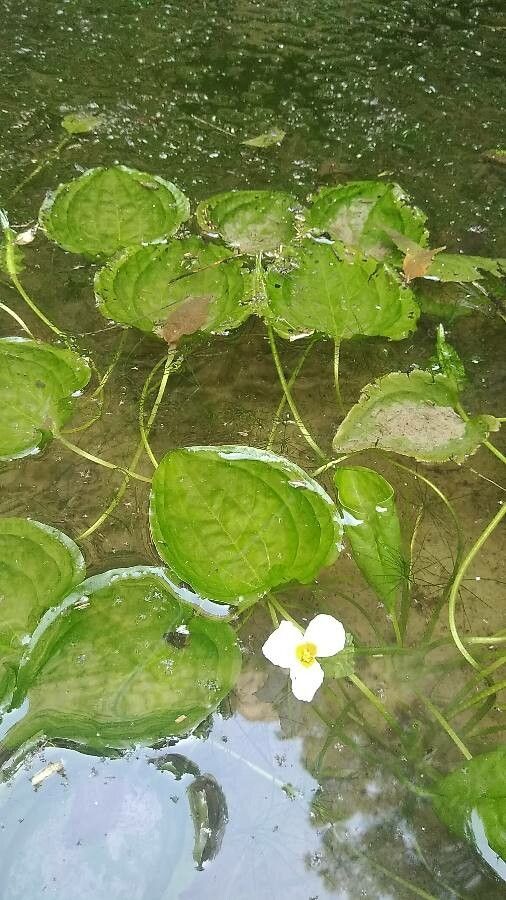
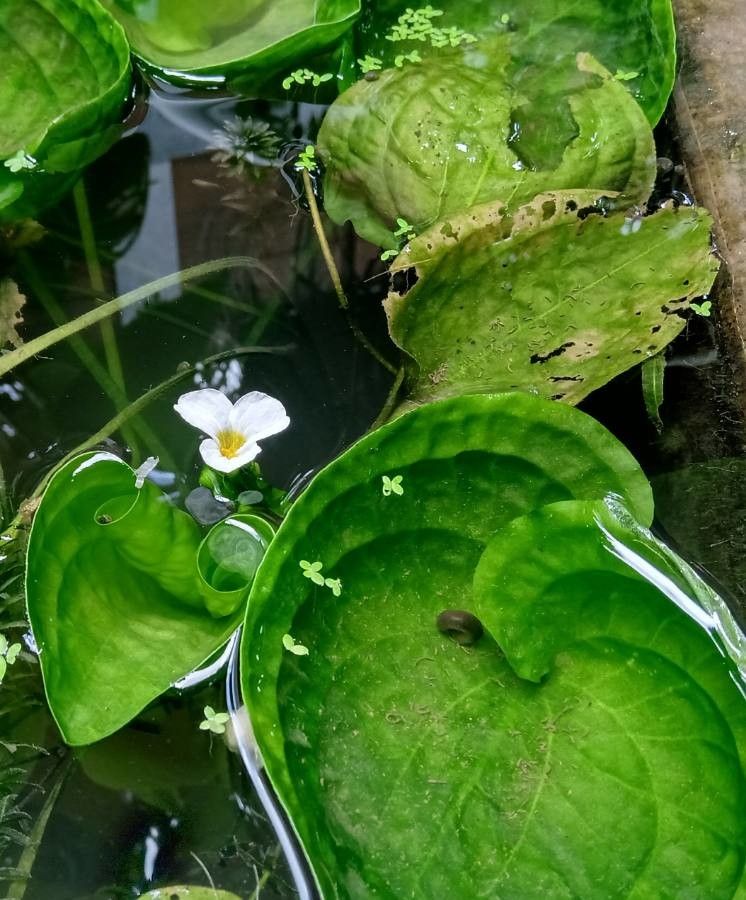
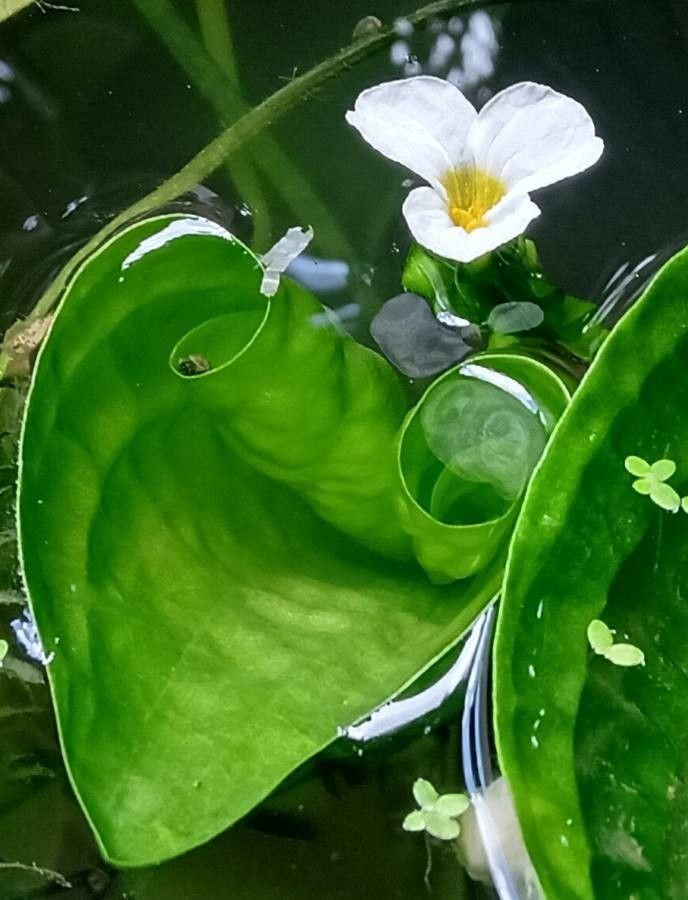
Ottelia alismoides, commonly known as duck lettuce or water mimosa, is an aquatic plant belonging to the family Hydrocharitaceae. Native to Asia, including China, India, and Southeast Asia, this plant features long stems that can grow up to 1 meter in length, adorned with small leaves resembling those of lettuce or a mimosa tree.
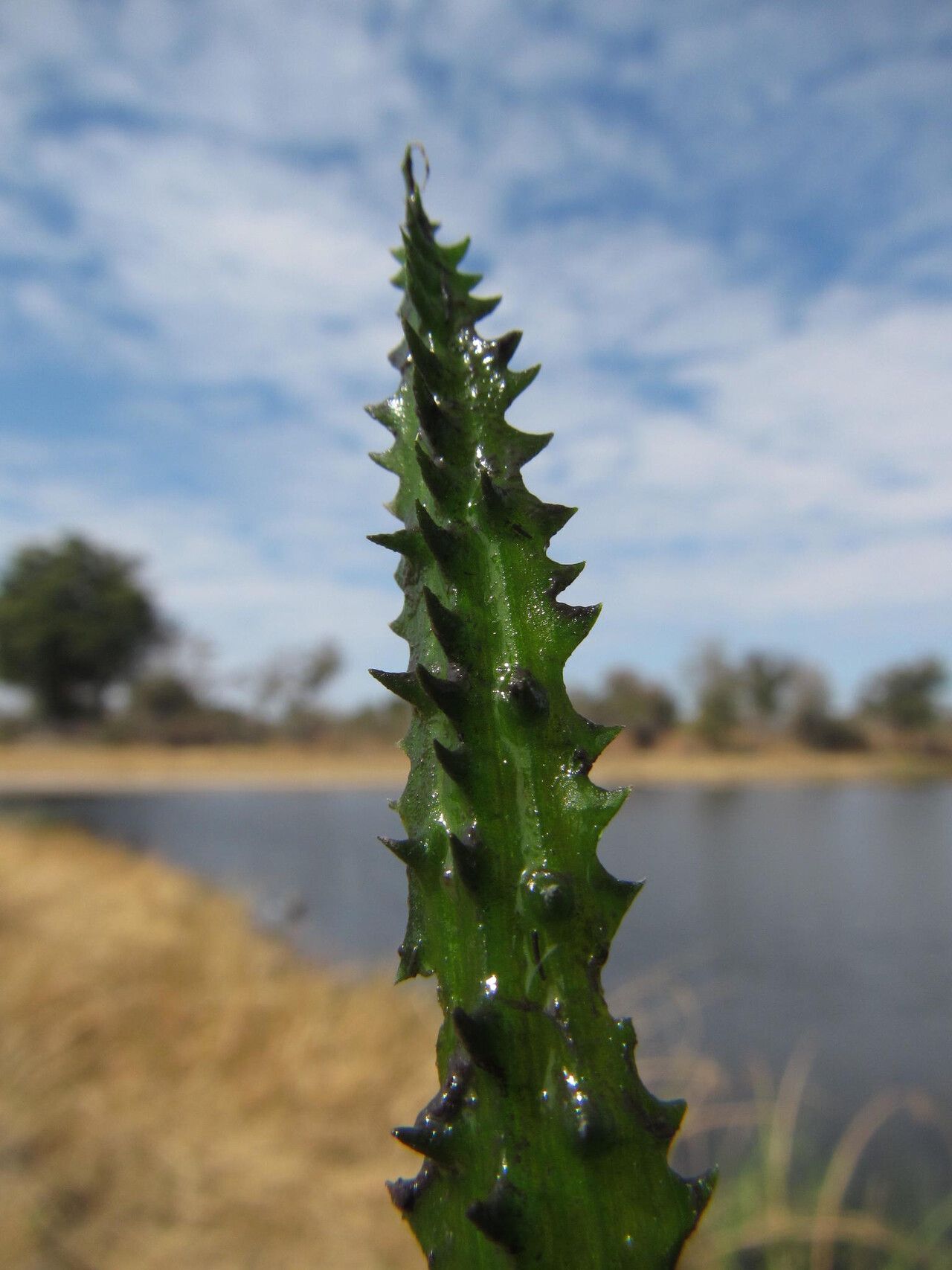
The green, glossy leaves of Ottelia alismoides can reach up to 10 centimeters in length. During the summer months, the plant produces small flowers that are either white or yellowish-green. These flowers have six petals arranged in two whorls.
Ottelia alismoides thrives in shallow water bodies such as ponds, lakes, marshes, or slow-moving streams, where it can receive ample sunlight. While it prefers nutrient-rich soils, it is also capable of tolerating poor soil conditions.
This plant serves multiple purposes. It is often used as an ornamental aquatic plant in landscaping due to its attractive appearance. Additionally, it provides food for ducks and other waterfowl species. Its roots have medicinal properties and are used to treat various ailments such as fever. Furthermore, Ottelia alismoides helps improve water quality by absorbing excess nutrients from its surroundings.
Overall, Ottelia alismoides is an important aquatic species with several ecological benefits, making it a vital component of many freshwater ecosystems across Asia.
Duck lettuce is fairly disease-resistant and typically does not suffer from many illnesses. Nonetheless, it can be affected by pests and pathogens found in its environment. Such infections are generally minor. Regarding care, the plant needs moderate maintenance. Regular pruning is necessary to keep its appearance tidy and support healthy growth. Applying fertilizer can also encourage flowering. Duck lettuce is appropriate for anyone who has outdoor space, like a garden or patio, and does not demand extensive gardening experience. When grown indoors it may need extra attention.
How to keep Ottelia Alismoides.
Light
Duck lettuce comes from habitats with plenty of sunlight, such as the shallow edges of ponds and lakes. It prefers full sun but can also tolerate partial sun.
Water
Duck lettuce, a plant native to the warm, stagnant waters of Asia and Africa, flourishes in high humidity. It has the ability to regulate its water content when submerged. The plant needs weekly watering to maintain consistent moisture levels and is commonly grown outdoors. With unique adaptations, duck lettuce optimizes photosynthesis underwater and stays well-hydrated.
Temperature
Duck lettuce comes from tropical areas, where the weather is generally warm and humid. Consequently, it is well suited to high heat and humidity. It dislikes abrupt temperature shifts and favors a consistent temperature, so preventing indoor temperature fluctuations is important. It typically cannot withstand cold and needs relatively warm conditions to grow. If the surrounding temperature falls too low, growth may halt or the plant could die.
Fertilizer
For optimal growth of duck lettuce, apply a balanced-nutrition fertilizer once a month during the growing season, but use only half of the recommended dose intended for aquatic plants. In winter, reduce the frequency of fertilization as the growth rate slows down. To improve the health and appearance of the duck lettuce, dilute the fertilizer and distribute it near the roots.
Pruning
Duck lettuce thrives in aquatic environments and benefits from careful pruning between early and late spring. By removing dead leaves, you can enhance water quality and prevent disease. Regular maintenance promotes healthy growth and allows optimal sunlight access, preserving both the plant's beauty and the ecological balance in water gardens.
Botanical profile.
- Plant Type
- Herb
- Life Cycle
- Perennial
- Genus
- Ottelia
- Family
- Hydrocharitaceae
- Hardiness Zone
- 9-11
- Mature Height
- 76 cm
- Mature Spread
- 30 cm to 49 cm
- Leaf Color
- Green, Light Green
- Leaf Type
- Deciduous
- Flower Color
- White
- Flower Size
- 2.03 cm to 4.06 cm
- Bloom Time
- Summer, Early fall, Mid fall
- Planting Time
- Spring, Summer
- Harvest Time
- Late summer, Fall, Early winter
- Native Area
- Nepal, Sri Lanka, India, Malaysia, Philippines, Sudan, Bangladesh, Pakistan, Laos, Tanzania, China, Russia, Indonesia, Cambodia, Vietnam, Myanmar, Japan, Koppen, South Korea, Thailand
Other names.