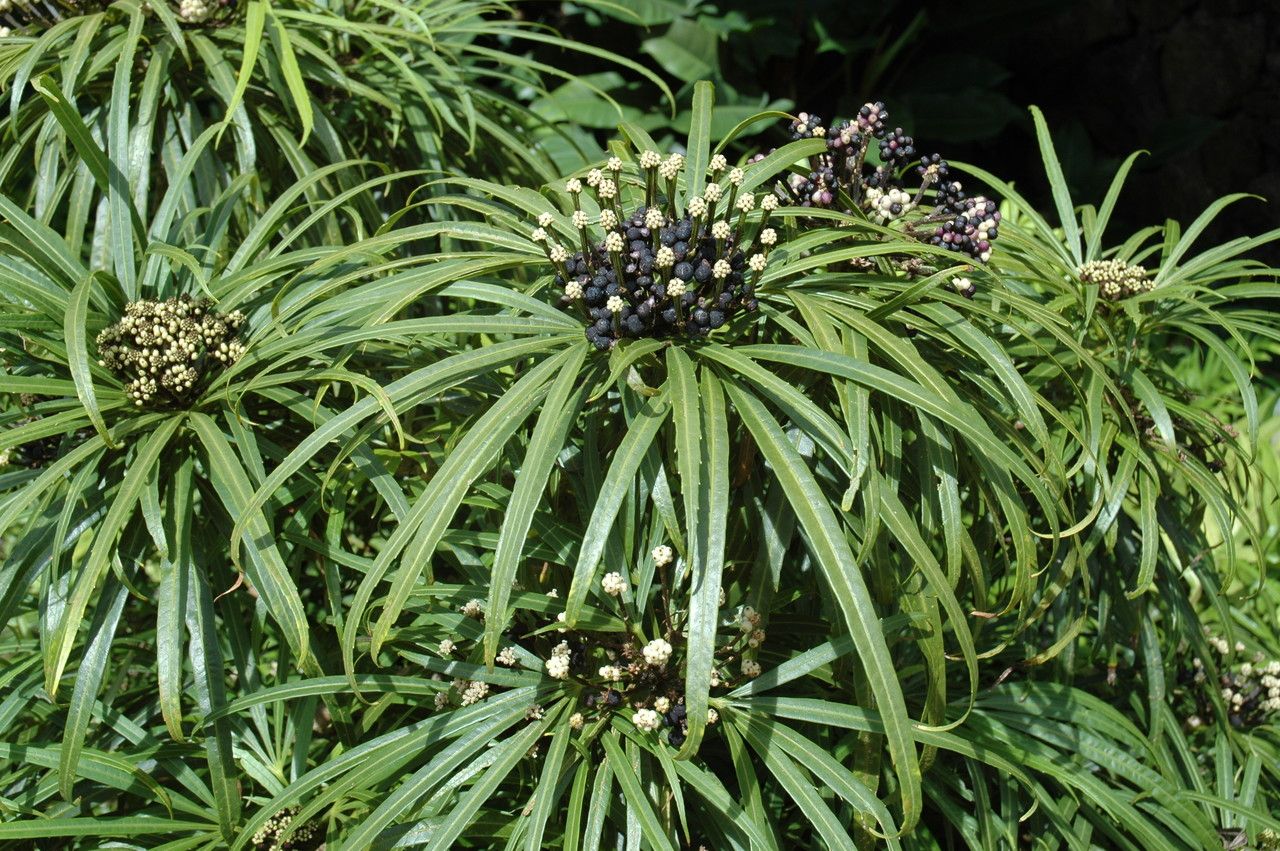
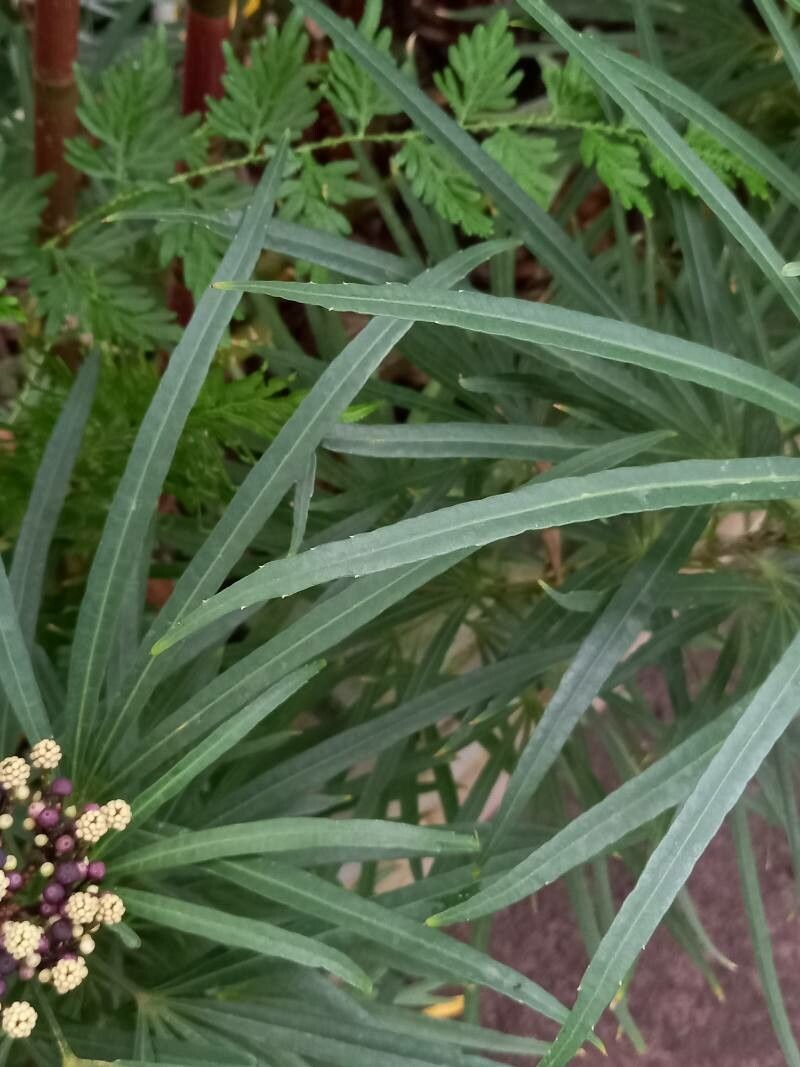
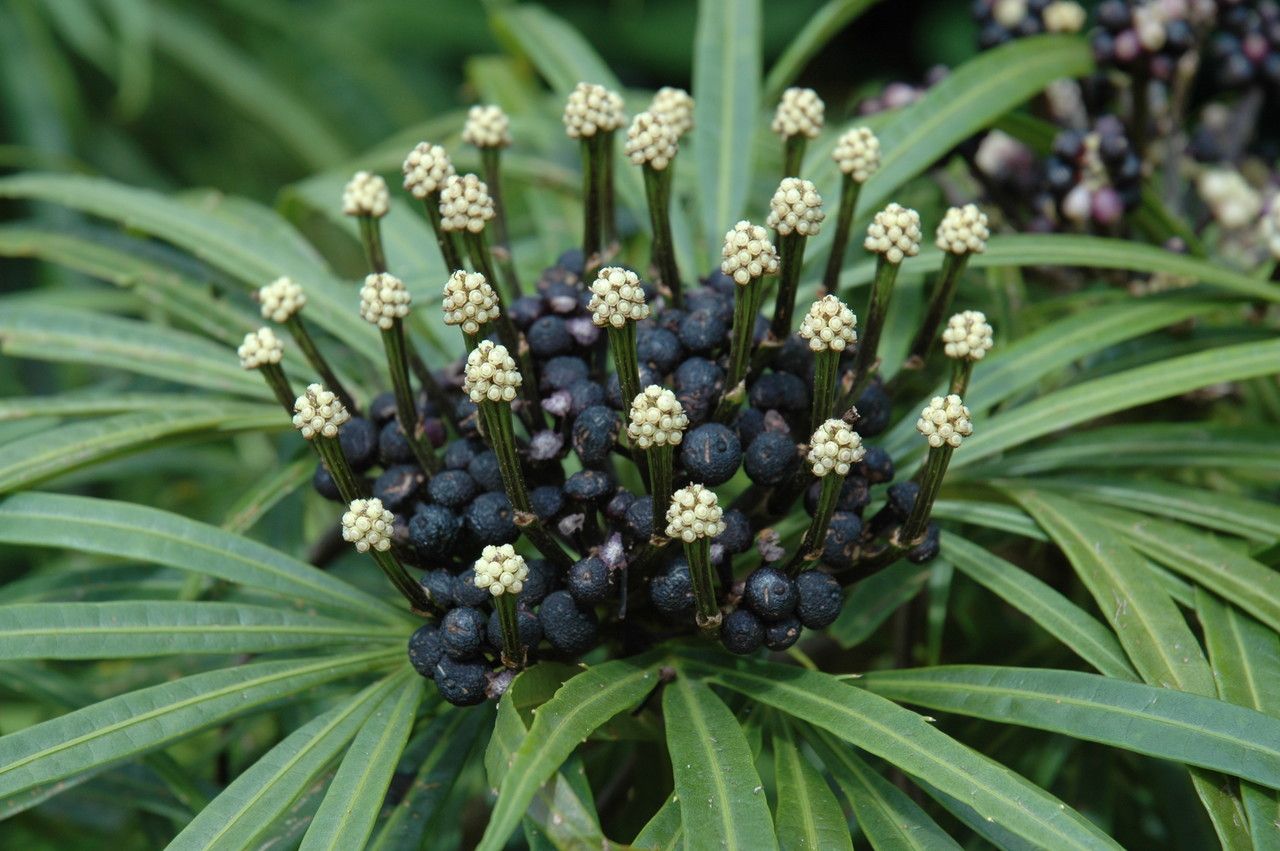
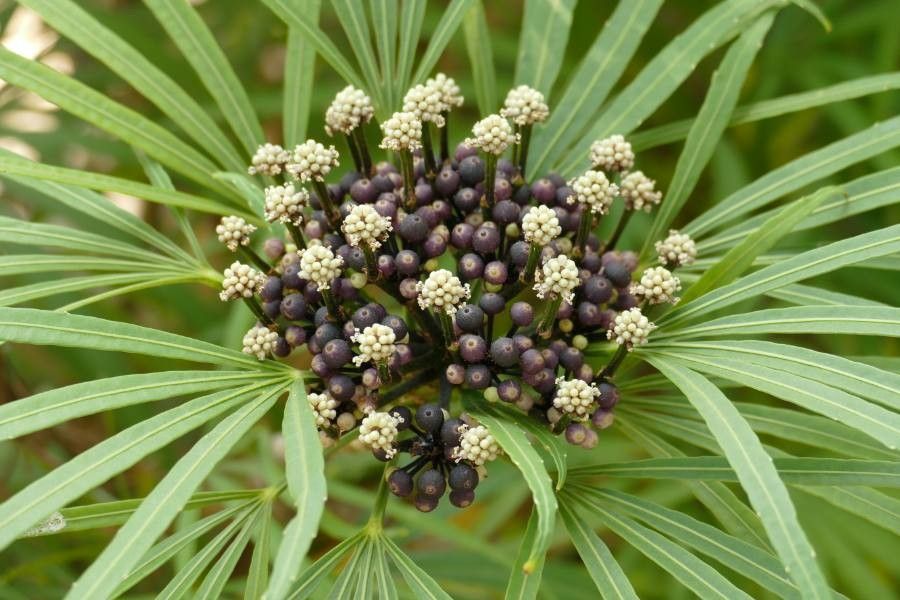
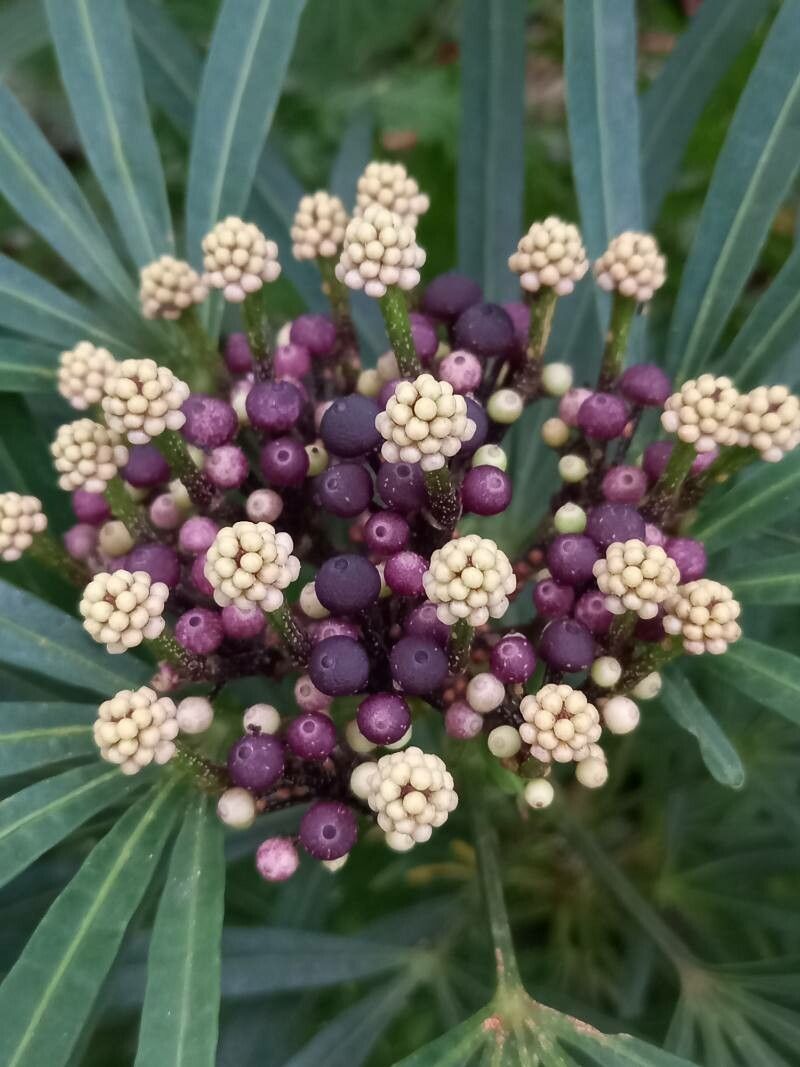
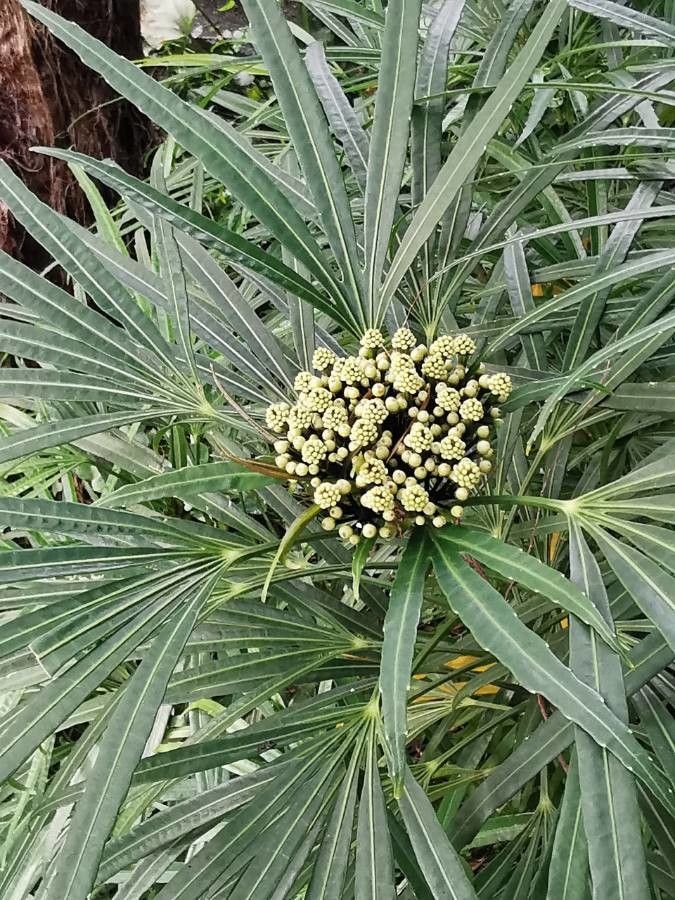
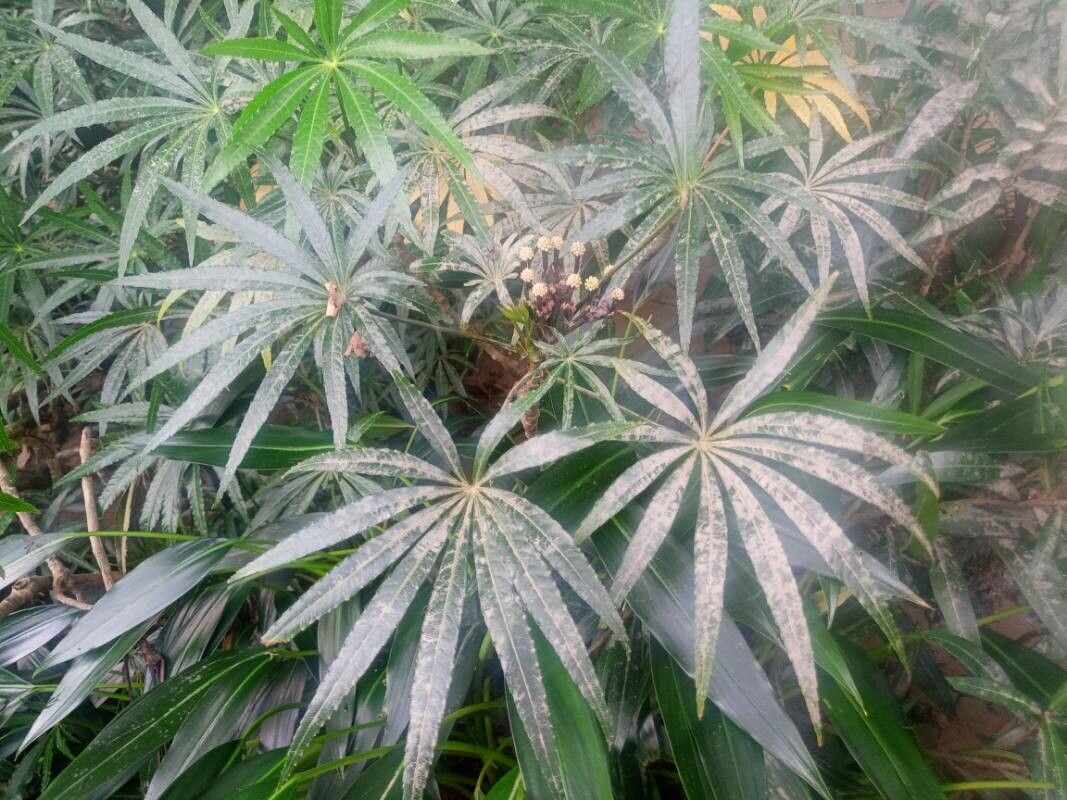
Osmoxylon lineare is a tropical evergreen plant from the Araliaceae family, native to Southeast Asia, particularly Malaysia, Indonesia, and the Philippines. This plant can reach up to 10 meters in height and features a slender trunk with smooth bark. Its leaves are linear in shape, which is reflected in its name "lineare," and can grow up to 30 centimeters in length. Osmoxylon lineare is often cultivated as an ornamental plant due to its attractive foliage. The leaves are glossy green with prominent veins, adding texture and depth to any garden or indoor space. The plant prefers well-draining soil and regular watering but can tolerate brief periods of drought. In traditional medicine, Osmoxylon lineare has been used to treat ailments such as fever, coughs, headaches, and rheumatism due to its anti-inflammatory properties. Overall, Osmoxylon lineare is a visually appealing ornamental plant that enhances both indoor and outdoor environments. Additionally, it offers potential medicinal benefits for those who utilize it in traditional health practices.
El arbusto Miagos presenta buena resistencia a las enfermedades y, por lo general, no suele ser propenso a ellas. En cuanto a los cuidados, esta planta necesita poco mantenimiento. Plantada en exteriores requiere riegos mínimos y las plantas de mayor tamaño, por lo general, no necesitan poda. Sin embargo, las plantas más pequeñas deben podarse después de que hayan florecido. El arbusto Miagos es adecuado para cualquier persona que disponga de un espacio exterior, como un jardín o una terraza, y no exige mucha experiencia en el cuidado.
How to keep Osmoxylon Lineare.
Light
The Miagos bush does best in spots that get direct sun all day, though it can tolerate locations that receive sunlight for only part of the day. Excessive sun may cause leaf burn, while insufficient light can limit growth and harm the plant's overall health.
Water
The miagos bush, native to tropical rainforests, flourishes in high humidity and needs regular watering, ideally once a week. This evergreen plant is popular for indoor growth, as it thrives in a humid environment that promotes its lush foliage and vitality.
Temperature
The Miagos bush is native to regions with moderate climates where temperatures commonly range from 68 to 100 °F (20 to 38 ℃). The plant prefers these warmer conditions, so it is recommended to adjust the environment across seasons for optimal growth.
Fertilizer
The best time to fertilize a Miagos bush is in early spring as it breaks dormancy. This encourages overall growth and the development of flowers. Fertilization improves the foliage, stems, and branches, and supports large, vibrant, long-lasting blooms. It helps transfer nutrients from the roots to the flowers and enhances the plant's health and resistance to disease.
Pruning
The Miagos bush, with its linear leaves, thrives in warm tropical climates. To maintain its shape and promote healthy growth, prune the bush from early to late winter. During pruning, remove any damaged branches, thin out crowded areas, and deadhead to encourage more blooms. Always use clean tools to prevent the spread of disease.
Pot & Repot
Repot a miagos bush every 2 to 3 years in early spring, using a container that is 2 inches larger in diameter than the current one. Ensure the pot has good drainage and fill it with high-quality potting mix. After repotting, water the plant thoroughly and place it in a location with bright, indirect light to help it recover. Provide consistent care to encourage robust growth.
Botanical profile.
- Plant Type
- Shrub
- Life Cycle
- Perennial
- Genus
- Osmoxylon
- Family
- Araliaceae
- Hardiness Zone
- 10-11
- Mature Height
- 1.22 m to 2.44 m
- Mature Spread
- 0.91 m to 1.22 m
- Leaf Color
- Green
- Leaf Type
- Evergreen
- Flower Color
- White
- Flower Size
- 2.54 cm
- Bloom Time
- Late spring, Summer, Early fall
- Planting Time
- Autumn
- Harvest Time
- Late summer, Fall
- Native Area
- Philippines
Other names.
Reader questions.
How should I water my Miagos bush?
When watering your Miagos bush, you have a lot of options for tools. You can use watering cans, hoses, or even cups. It's important to water directly onto the soil and make sure all parts of the root system get enough water. Using filtered water is a good idea, as tap water can have harmful particles. It's also best to use water that is at or slightly above room temperature to avoid shocking the bush. Overall, the Miagos bush is not too picky and usually does well with any kind of water.
Why should I put fertilizer on my Miagos Bush?
Miagos bushes require regular fertilization because their showy leaves require a significant amount of energy to both produce and maintain. It is important for the bush to allocate enough energy not only for the leaves but also for the growth of its stems, branches, roots, and other important structures. Neglecting fertilization can lead to two likely outcomes. Firstly, the leaves of the Miagos bush will lose their natural color and texture, making them look unhealthy and diminishing their ornamental appeal. Secondly, the overall growth of the bush will slow down or produce weak growth that may be susceptible to breakage.
What are the sunlight requirements for a Miagos bush?
The Miagos bush thrives in full sunlight but can also manage in partial sun conditions. Full sun exposure means the plant should receive above 6 hours of sunlight daily, while partial sun refers to about 3-6 hours of sunlight. It's vital to observe the movement of sunlight through your garden to place your Miagos bush in an ideal location that ensures its health and happiness by providing the right balance of light and shade.
What is the native climate for Miagos bush?
Miagos bush is native to regions with moderate climates, thriving in temperatures that frequently range from 68 to 100 °F (20 to 38 °C). These warmer climates are ideal for the bush, and it is recommended to adjust its environment accordingly across different seasons to ensure optimal growth.
What do I need to do if I give my Miagos bush too much or too little water?
Outdoor plants, especially newly planted ones or seedlings, can easily suffer from a lack of watering. It's important to remember to water them sufficiently, especially during the first few months when they are small or recently planted. Once the roots are established, Miagos bush plants can largely rely on rain for their water needs. However, when Miagos bushes are planted in pots, overwatering is often a more common issue. If you accidentally overwater your Miagos bush, it's important to act quickly to fix the situation. First, stop watering the plant immediately to minimize the impact of overwatering. Then, you should inspect the roots by removing the bush from its pot. If there are no signs of root rot, you can return the plant to its container. But if you do find signs of root rot, trim away the affected roots and consider applying a fungicide to prevent further damage. Finally, repot the Miagos bush in well-draining soil. On the other hand, if your Miagos bush is underwatered, the solution is simple: water it more frequently. When a Miagos bush is underwatered, its leaves may become droopy, dry out, and fall off. However, the leaves should quickly regain their fullness after sufficient watering. It's important to correct your watering frequency as soon as you notice signs of underwatering.
When should I fertilize my Miagos bush?
To ensure the optimum growth of your Miagos bush, occasional feedings are beneficial, eliminating the need for a fixed feeding schedule when initially planting the plant. A convenient method to fertilize your Miagos bush is to apply the fertilizer while watering it intermittently. Throughout the growing season, the bush also requires a considerable amount of water. It is advisable to feed the plant every two to three weeks, consistently maintaining this frequency as long as the plant is producing new growth.
How do artificial lighting conditions affect the growth of indoor Miagos bush plants?
For indoor Miagos bush plants, especially during winter or in less sunny spaces where natural sunlight is inadequate, artificial lighting becomes essential for optimal growth. It's recommended to use LED lights, as they can be customized to provide specific wavelengths needed for the plant. Full sun plants require 30-50W/sq ft, partial sun plants need 20-30W/sq ft, and full shade plants need 10-20W/sq ft of artificial light. The light source should be placed 12-36 inches above the plant to mimic natural sunlight, and plants generally require 8-12 hours of light per day.
How should Miagos bush be cared for in colder temperatures?
During the colder months, particularly in autumn, it is advised to bring outdoor-grown Miagos bushes indoors to protect them from the cold. Placing them near a bright window helps to provide sufficient light, but they should be kept at a safe distance from heaters to avoid harm. Maintaining temperatures above 20°C and avoiding exposure to temperatures nearing 5°C are crucial for the bush's well-being during winter.
How many days should I water my Miagos bush?
To ensure the healthy growth of most outdoor plants, natural rainfall is typically sufficient. However, if your area experiences low rainfall, it's important to provide adequate watering. In the spring and fall, watering every two weeks should be sufficient, while in the summer, more frequent watering is necessary. Conversely, in the slower-growth winter months, it's best to water sparingly or not at all. If you have a young or newly planted Miagos bush, it will benefit from more frequent watering to establish itself and become more adaptable to drought. For potted plants, there are two main methods to determine watering frequency for your Miagos bush. The first is setting a regular watering schedule, such as weekly or every other week. However, this approach may not account for the specific growing conditions of your Miagos bush. Alternatively, you can adjust the watering frequency based on the moisture level of the soil. Typically, it's best to wait until the top two to four inches of soil, or about one-third to one-half of the pot's depth, have completely dried out before watering again.
When shouldn't I put fertilizer on my Miagos bush?
For most of the year, you can stick to a regular fertilization schedule for your Miagos bush. This involves fertilizing during the active growing season, which includes spring, summer, and early fall. However, you should avoid fertilizing during the winter. During this time, the Miagos bush enters a dormant growth phase, where it either doesn't produce any new growth or just a little. Since the plant is not actively growing, it requires less energy and therefore does not need fertilization.
What are the signs of light deficiency in a Miagos bush?
When a Miagos bush is not receiving sufficient light, it may exhibit symptoms such as smaller new leaves compared to older ones, leggy or sparse growth, faster leaf drop, slowed or halted growth, lighter-colored new leaves indicating a lack of chlorophyll, and symptoms of overexposure like chlorosis, sunscald, leaf curling, wilting, and leaf scorching. These signs help indicate whether the plant needs more or less light.
What are the signs of low temperature damage in Miagos bush, and how can it be treated?
Miagos bush shows signs of distress when exposed to low temperatures, evident when the leaves lighten in color as temperatures fall below 1°C. Frost damage can cause the leaves to turn brown or black, accompanied by wilting and drooping. To treat this, trim off the frost-damaged parts and move the plant indoors to a warmer environment, preferably near a south-facing window for ample sunlight. It's important to avoid placing the plant near heaters or air conditioning vents to prevent the air from becoming too dry.