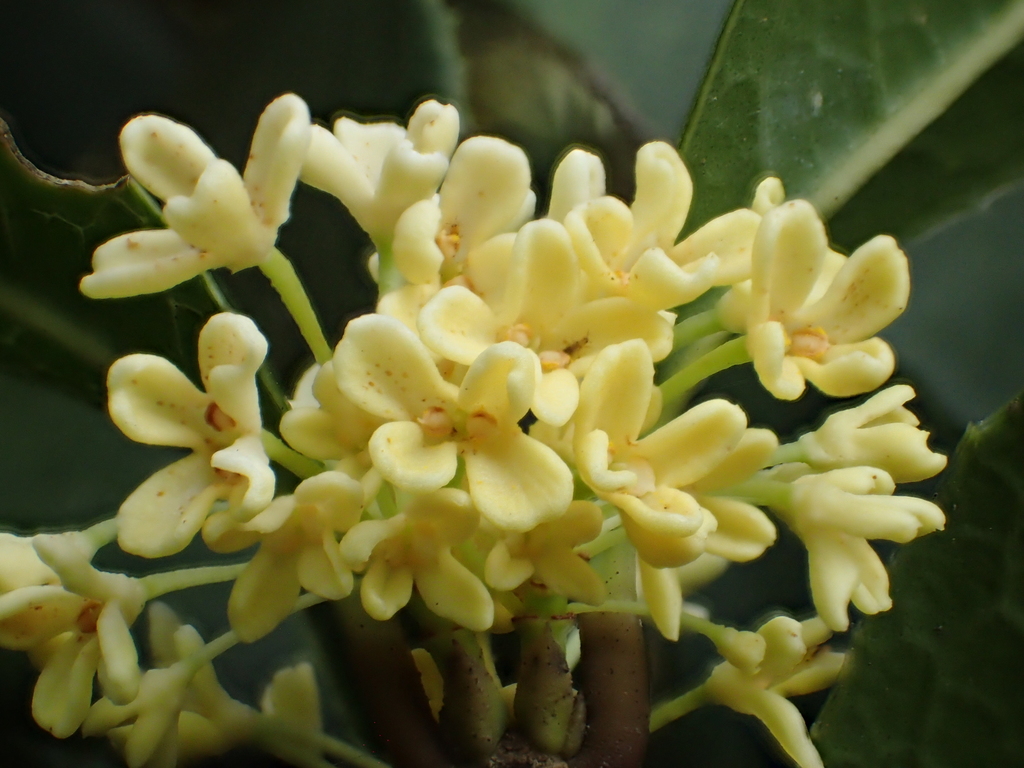
Osmanthus fragrans, commonly known as sweet osmanthus or fragrant olive, is a flowering plant native to Asia. This small evergreen tree or shrub can grow up to 10 meters tall. It produces small, highly fragrant white or yellow flowers that bloom in the fall.
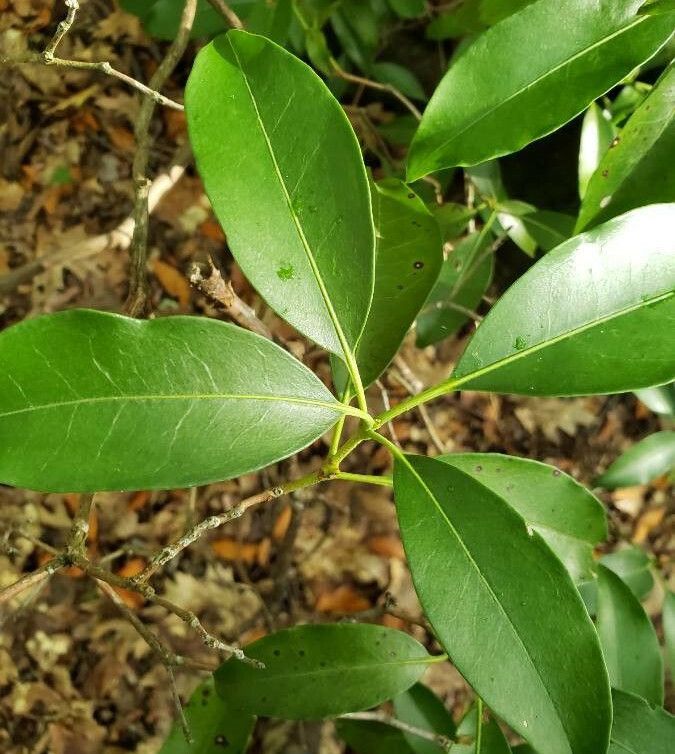
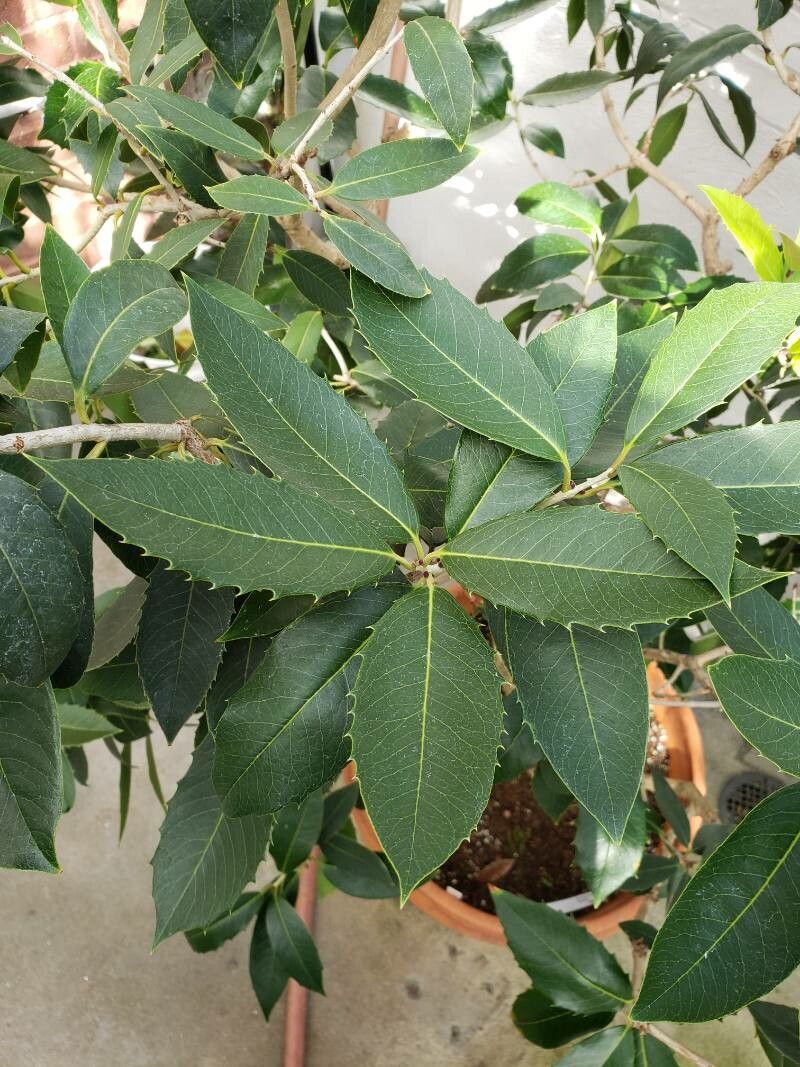
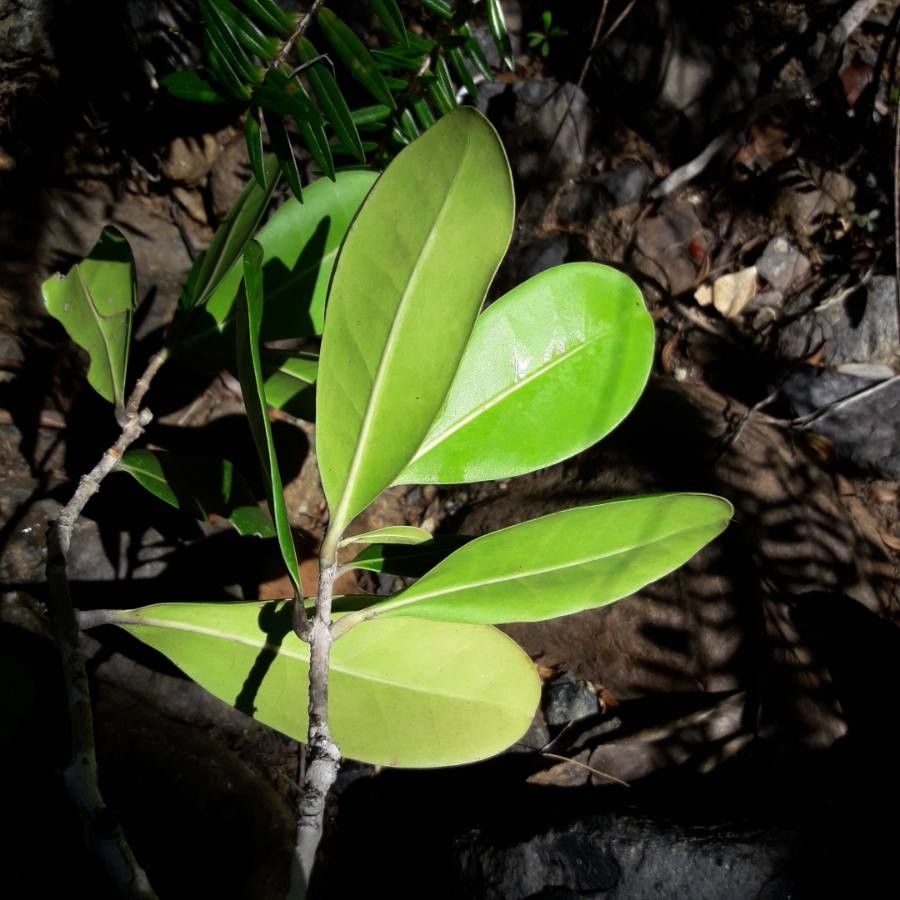
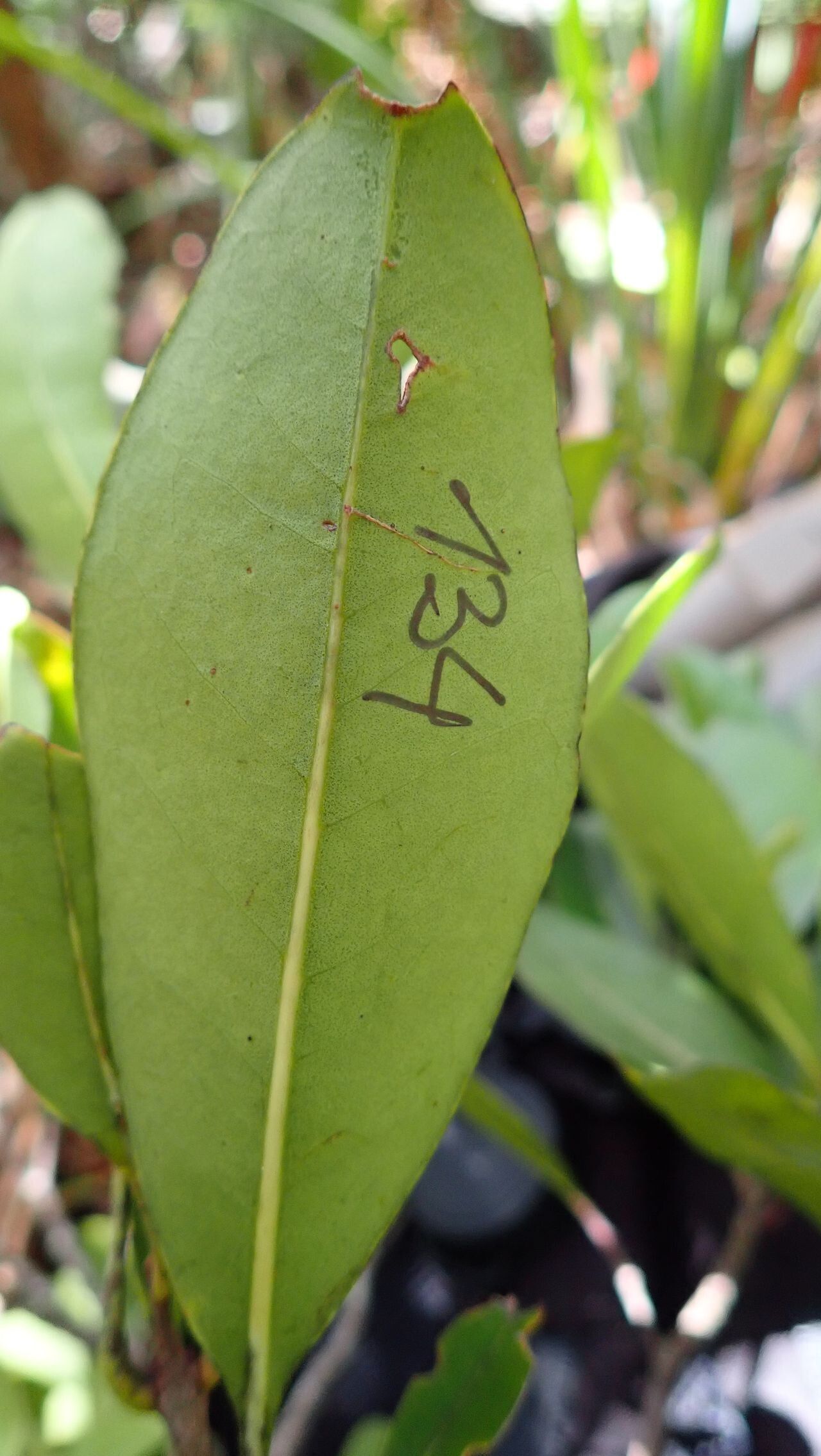
The leaves of Osmanthus fragrans are dark green, glossy, and have a leathery texture. They are arranged in opposite pairs along the stem and feature toothed edges.
The plant is widely cultivated both for its ornamental value and its essential oils, which are used in perfumes and aromatherapy products. Additionally, the flowers are used to flavor tea, wine, and desserts in Chinese cuisine.
In Chinese mythology, the sweet osmanthus tree grows on the moon. In the myth, this tree is repeatedly cut down by the mythical figure Wu Gang, only to heal itself each time. Wu Gang is fated to cut the tree for eternity as a form of divine punishment. If he were to stop, the tree would block the moon's light. FUN FACT · FROM THE LIBRARY
Osmanthus fragrans thrives in well-drained soil with full sun exposure but can also tolerate partial shade. It requires regular watering during the growing season, though it should be allowed to dry out slightly between waterings during the winter months.
Overall, Osmanthus fragrans is an attractive ornamental plant with beautiful autumn-blooming flowers that emit a sweet fragrance. It also has practical uses such as flavoring food products and producing essential oils for perfumes.
Sweet Osmanthus: The genus name "Osmanthus" is derived from the Greek words "osma," meaning "fragrant," and "anthos," meaning "flower." Osmanthus fragrans truly embodies its name with its beautifully scented flowers. Due to this delightful fragrance, it is often referred to as sweet osmanthus.
Sweet olive is resistant to disease and is generally not susceptible to illnesses. In terms of care, this plant is fairly low-maintenance. When grown outdoors it needs only light watering, and larger plants typically do not require pruning. Smaller plants, however, should be pruned after they finish blooming. Sweet olive is suitable for anyone with outdoor space, such as a garden or deck, and does not demand extensive plant care experience.
How to keep Osmanthus Fragrans.
Light
Sweet olive grows best with plenty of light, though it tolerates areas with moderate illumination. Native to regions with abundant light, it can also adjust to environments with lower light levels. Still, insufficient light limits growth, and too much exposure can cause stress and possible damage.
Water
Sweet osmanthus, a plant native to subtropical regions of Asia, thrives best in well-drained soil with consistent moisture and high humidity. It's important to water the plant every 1 to 2 weeks, allowing the soil to dry out slightly between waterings. Typically grown outdoors, sweet osmanthus benefits from rainwater during the growing season, which promotes both growth and flowering.
Humidity
This plant will thrive in moderate humidity, which is probably the level in your home. However, misting it a few times a week can be very beneficial. Make sure the room has good ventilation.
Temperature
Sweet olive is a temperate woody plant that prefers temperatures from 59 to 100 ℉ (15 to 38 ℃). It needs warm conditions for healthy growth and blooms best when temperatures are between 60 and 65 ℉ (15 to 18 ℃). In winter it can tolerate lows of 14 ℉ (-10 ℃), but if temperatures fall below that it requires indoor protection and insulation.
Fertilizer
Fertilize your Sweet olive in early spring to encourage healthy growth. Regular feeding boosts overall vigor, producing strong growth, increased tolerance to harsh conditions, and improved resistance to diseases and pests. Keep a specific fertilization schedule for your Sweet olive to maintain foliage that is vibrant, richly colored, and lush in appearance.
Pruning
To keep sweet osmanthus healthy and beautifully shaped, it's important to prune it during the winter. Start by removing any dead wood, then thin out the plant to improve air circulation, and finally shape it to control its size and enhance its blooms. Regular pruning not only boosts the plant's beauty but also increases its flowering potential, resulting in a strong and appealing sweet osmanthus.
Pot & Repot
When repotting Sweet olive, select a pot 1-2 inches (2.5–5.1 cm) larger with good drainage. Use a well-draining potting mix. Repot in spring or fall, making sure the root ball sits slightly below the rim of the flower pot. Water thoroughly after repotting and place it in a warm spot with indirect sunlight.
Botanical profile.
- Plant Type
- Tree, Shrub
- Life Cycle
- Perennial
- Genus
- Osmanthus
- Family
- Oleaceae
- Hardiness Zone
- 7-11
- Mature Height
- 3.05 m to 17.98 m
- Mature Spread
- 3.05 m to 4.27 m
- Leaf Color
- Green
- Leaf Type
- Evergreen
- Flower Color
- White, Orange
- Flower Size
- 2.54 cm
- Bloom Time
- Mid summer, Late summer, Early fall
- Planting Time
- Spring, Autumn
- Harvest Time
- Early spring, Fall, Winter
- Native Area
- Nepal, India, Indonesia, Cambodia, Vietnam, Myanmar, Japan, Thailand, China
Other names.
Reader questions.
How should I water my Sweet osmanthus plant?
Your Sweet osmanthus is not difficult to water, as you can use any common watering tool. Watering cans, hoses, and even cups will all do the job. When watering, it's important to apply the water directly to the soil and make sure all areas are equally moistened to meet the needs of the entire root system. Using filtered water is advised, as tap water may contain harmful particles for the plant. Additionally, it's better to use water at or slightly above room temperature, as extremely hot or cold water may shock the Sweet osmanthus. However, this plant generally responds well to any type of water.
Why should I put fertilizer on my Sweet osmanthus plant?
No matter what type of Sweet osmanthus you have, regular fertilization will optimize its health. Providing the right nutrients promotes strong growth, increases resilience to difficult conditions, and enhances the plant's ability to combat diseases and pests. The foliage of Sweet osmanthus is particularly appealing, so it's important to maintain it. To achieve this, follow a consistent fertilization schedule tailored to your specific Sweet osmanthus. This will encourage the development of vibrant leaves and an overall lush appearance.
What are the sunlight requirements for Sweet Osmanthus?
Sweet Osmanthus requires full sun, meaning it should receive above 6 hours of sunlight a day, though it can also grow in partial sun, which is about 3-6 hours of sunlight. It's important to monitor the movement of sunlight through your garden to find spots that offer a mix of light and shade, ensuring the plants grow healthy and happy.
What is the preferred temperature range for growing Sweet Osmanthus?
Sweet osmanthus, botanically known as Osmanthus fragrans, thrives in a temperature range of 59 to 100°F (15 to 38°C). It grows best and blooms optimally when temperatures are between 60 and 65°F (15 to 18°C). Although sweet osmanthus has strong cold resistance and can tolerate winter temperatures down to 14°F (-10°C), it requires indoor protection and insulation if temperatures drop below this level to ensure healthy growth and blooming.
What should I do if I give too much or too little water to my Sweet osmanthus plant?
Outdoor plants, especially newly planted ones or seedlings, are prone to lack of watering. Remember to water them enough for the first few months, until their roots are established and they can rely on rain. When Sweet osmanthus is planted in pots, overwatering is common. If you accidentally overwater your Sweet osmanthus, you should take immediate action. Stop watering the plant to minimize the effect of overwatering. Remove it from the pot to inspect the roots. If there is no root rot, you can return it to the pot. If you find root rot, trim away the affected roots and apply fungicide to prevent further damage. Repot the Sweet osmanthus in well-draining soil. In case of underwatering, simply water the plant more frequently. Underwatered plants will have drooping, dry leaves that may fall off. They will recover quickly after sufficient watering, so adjust your watering frequency as soon as you notice underwatering.
When should I fertilize my Sweet osmanthus plant?
To ensure healthy growth, it is recommended to fertilize your Sweet osmanthus during late winter or early spring. This provides the necessary nutrients for the plant to thrive once the weather turns warmer. Additionally, if you live in a warm climate, it is beneficial to provide another round of fertilization in early fall. This not only adds nutrients for the next growing season, but also helps the plant endure the winter without damage to its foliage. Fertilizing earlier in the fall allows enough time for new branches to grow and withstand the cold winter.
How does Sweet Osmanthus adapt to different lighting conditions?
Sweet Osmanthus thrives under ample sunlight but can adapt to moderate light zones. Originating from brightly lit areas, it can adjust to less intense light, although insufficient light might hinder its growth, and too much exposure could cause stress and damage. For indoor plants in low-light conditions, especially during winter or in darker spaces, artificial lighting can be a crucial support for healthy growth, including options like LED lights tailored to provide specific light wavelengths needed by the plant.
What are the cold protection measures for Sweet Osmanthus in winter?
Despite its strong cold resistance, if winter temperatures are expected to drop below -15°C, Sweet Osmanthus requires special cold protection measures. To safeguard the plant, you can wrap the trunk and branches with non-woven fabric or cloth. Additionally, it’s beneficial to water the plant abundantly before the first freeze in autumn. This ensures the soil remains moist and enters a frozen state, which helps prevent drought and water scarcity for the plant during the winter and early spring.
How often should I water my Sweet osmanthus plant?
Most outdoor plants can rely on natural rainfall for their water needs. However, if your area doesn't get enough rainfall, you should water your plants every two weeks in the spring and fall, and more often during the summer. In winter, when plant growth slows down and water requirements decrease, you can water less frequently or even not at all. If you have a young or newly planted Sweet osmanthus, it's important to water it more often to help it establish and become drought tolerant as it matures. When it comes to potted plants, there are two main approaches to determine the watering frequency for your Sweet osmanthus. The first is to follow a set schedule, such as watering once a week or every other week. However, this may not always be reliable as it doesn't consider the specific conditions of your plant's environment. Alternatively, you can adjust the watering frequency based on soil moisture. It's generally best to wait until the top two to four inches of soil (about 1/3 to 1/2 of the pot's depth) have completely dried out before watering again. This method takes into account the plant's actual needs and prevents overwatering.
When should I not put fertilizer on my Sweet osmanthus?
There are a few times during the year when you should avoid fertilizing your Sweet osmanthus for optimal results. First, during the early and mid-winter months when the plant is dormant and does not require feeding. Additionally, it is not recommended to fertilize the plant in late spring and throughout summer due to the hotter and drier weather conditions. Both the heat and dryness can have a negative effect on the plant if fertilized. To avoid any issues, it is best to follow a fertilization schedule that involves feeding only in early spring and early fall.
What are the potential symptoms of inadequate lighting for Sweet Osmanthus?
Sweet Osmanthus may show various symptoms if it's not receiving enough light, such as smaller new leaves, leggy or sparse growth, faster leaf drop, and slower or halted new growth. Pale new leaves or those with chlorosis indicate a lack of chlorophyll and essential nutrients, while sunscald, leaf curling, wilting, and leaf scorching are signs of damage from excessive sunlight.
How does low temperature affect Sweet Osmanthus and what are the solutions?
Sweet osmanthus is cold-tolerant and generally thrives when the temperature remains above 15°C. However, during winter, it’s crucial to keep the temperature above -10°C. When the temperature falls below -15°C, the plant might not show immediate changes during winter, but in spring, its branches can become brittle and dry, failing to produce new shoots. The solution to this issue is to prune away any dead branches in spring that have not produced new leaves.