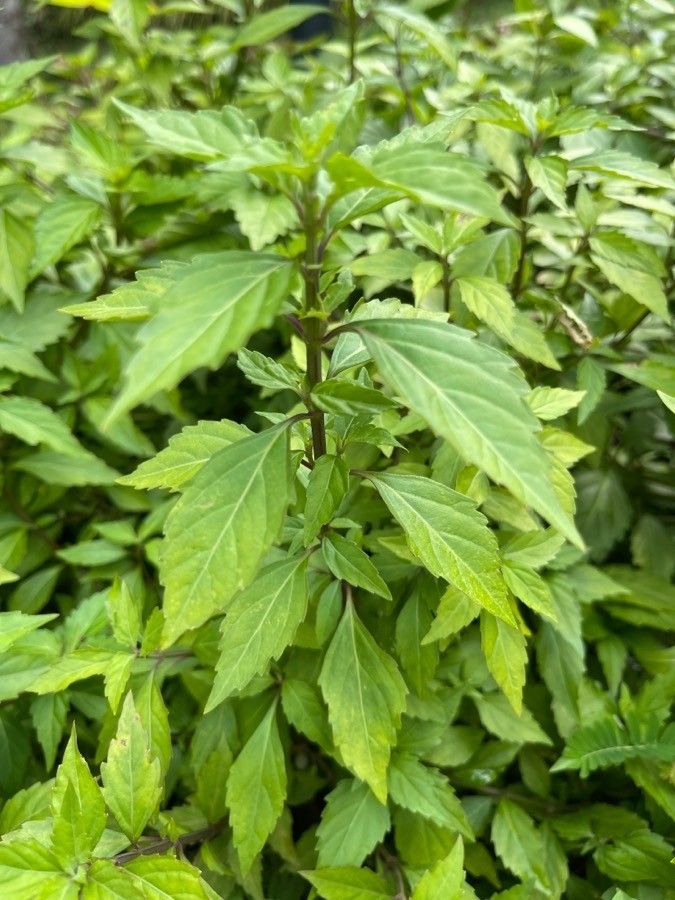
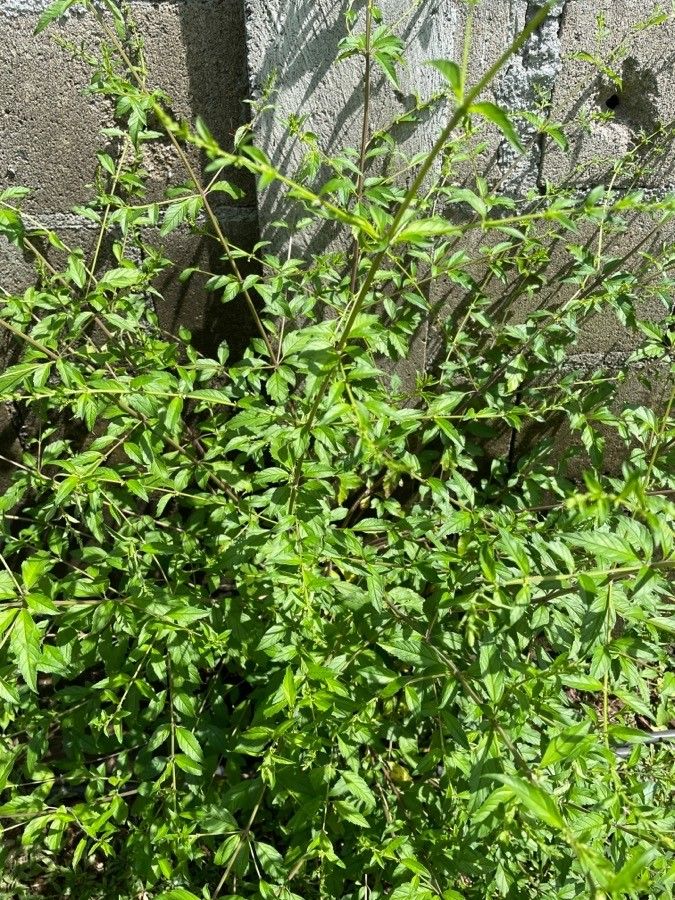
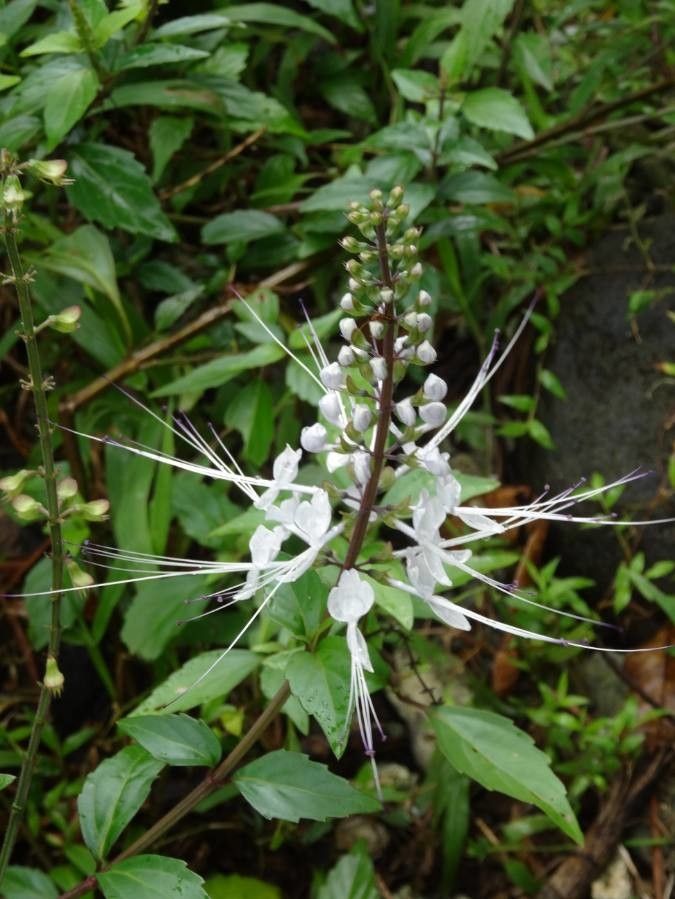
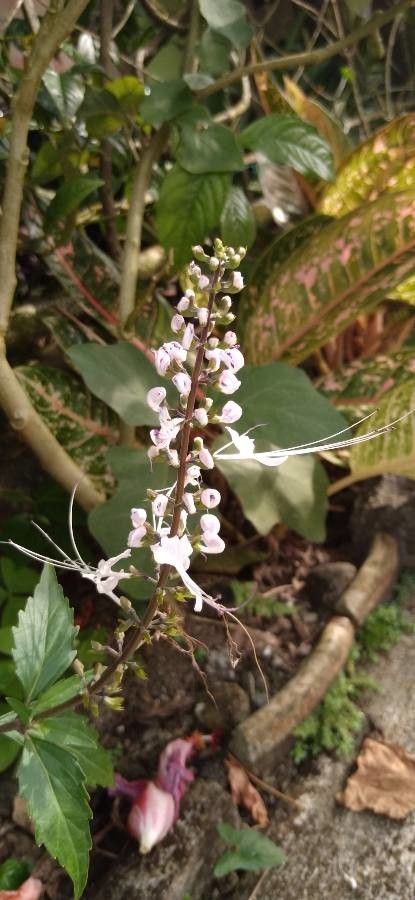
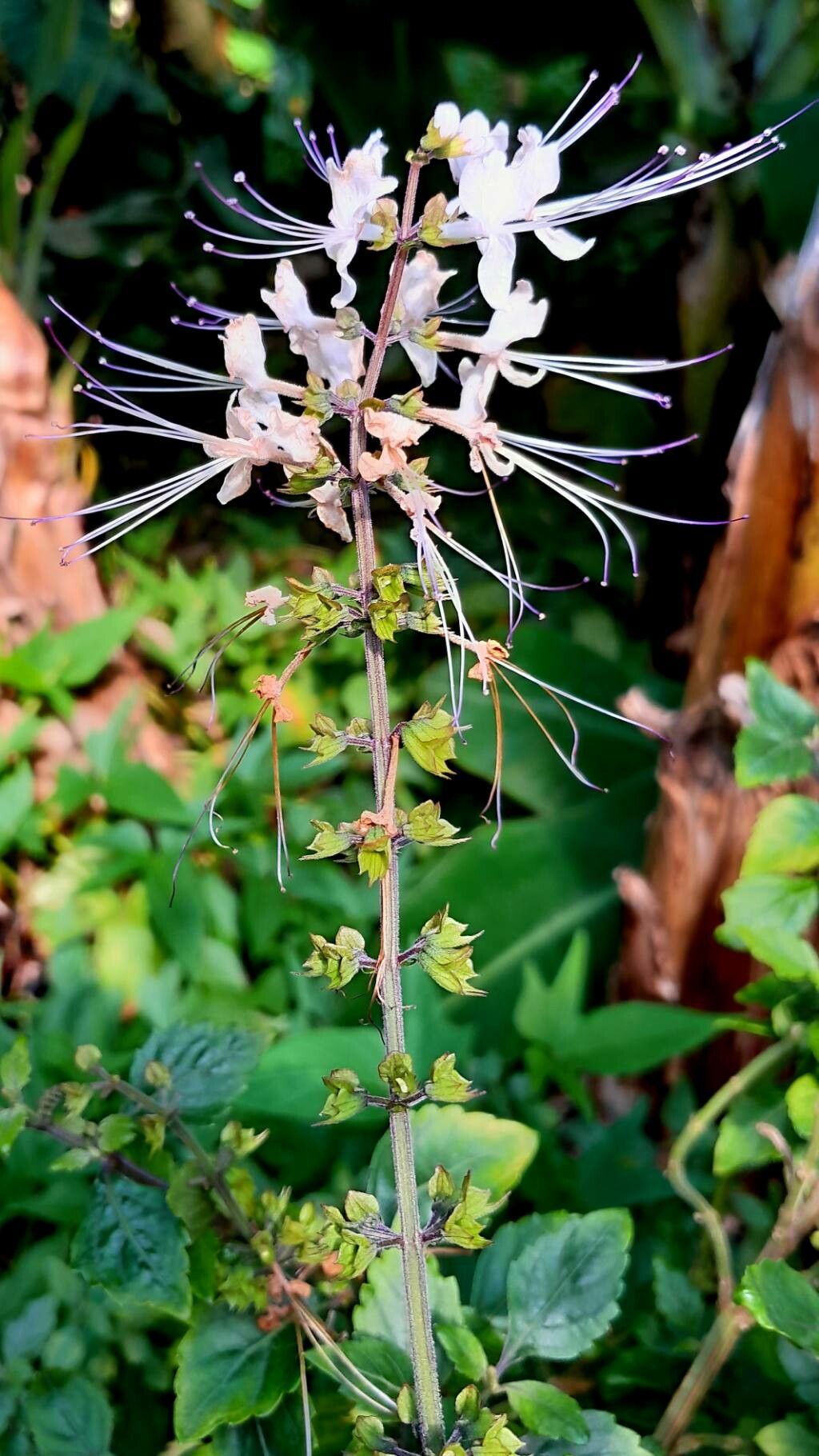
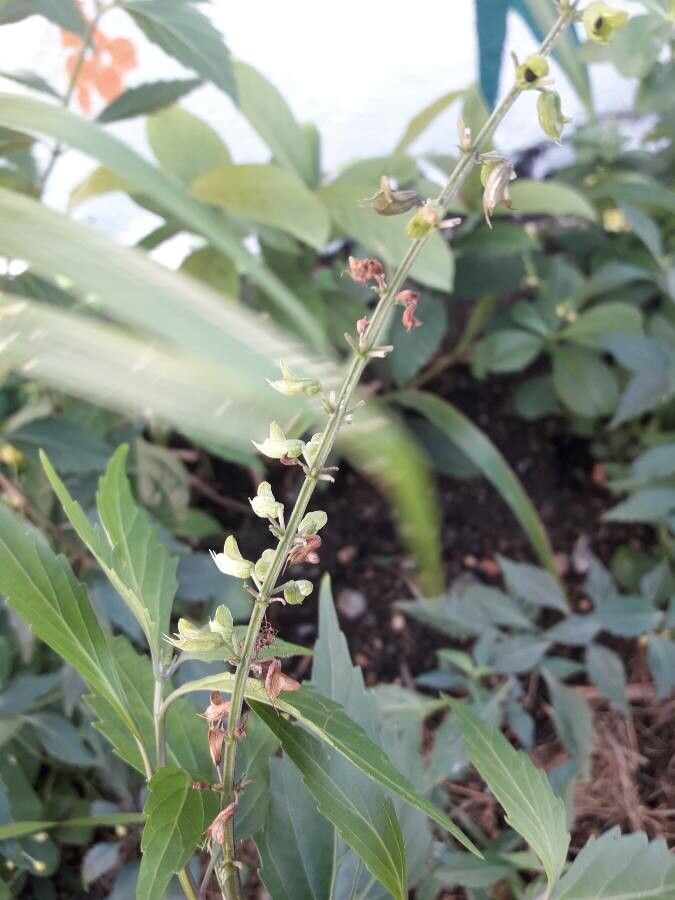
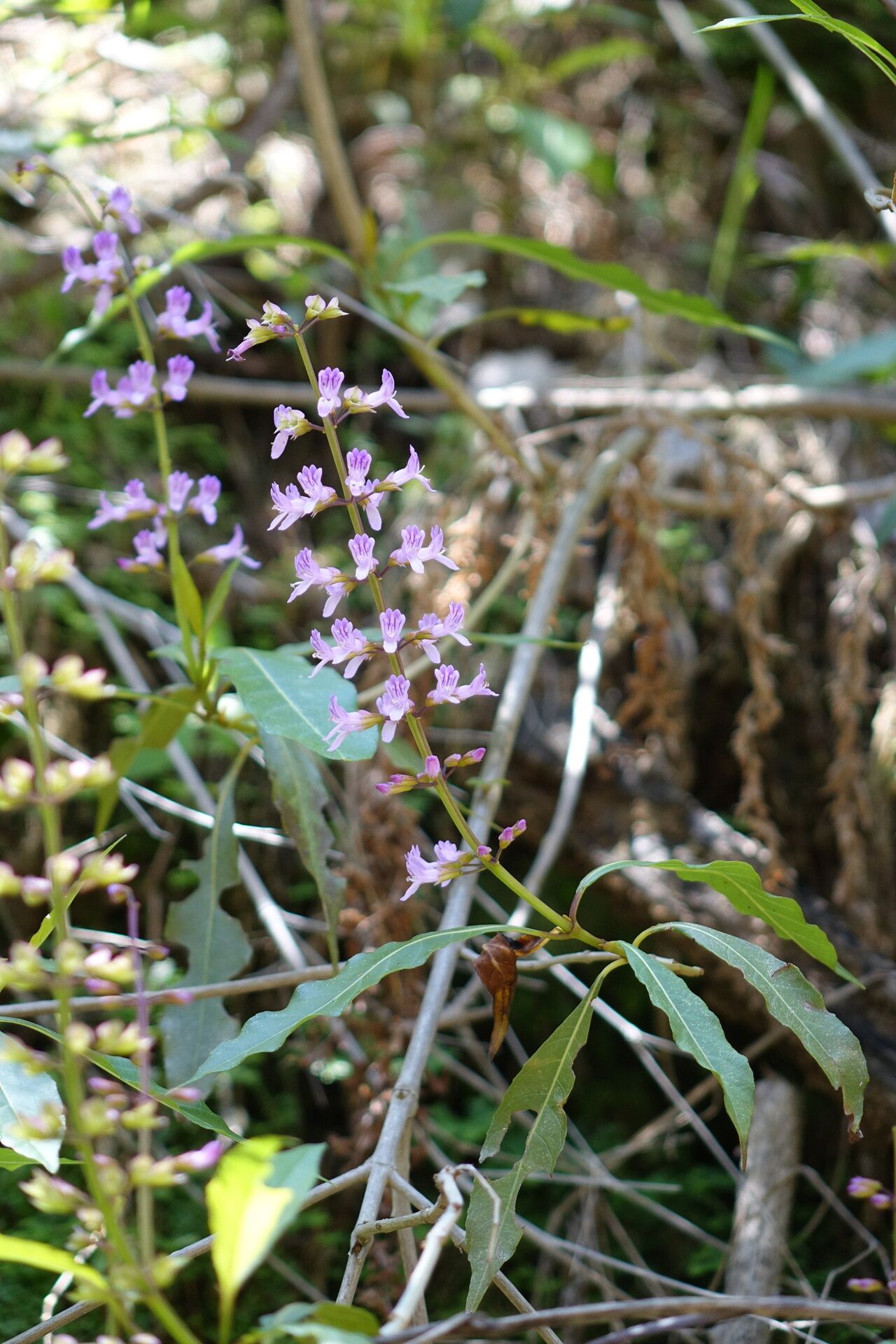
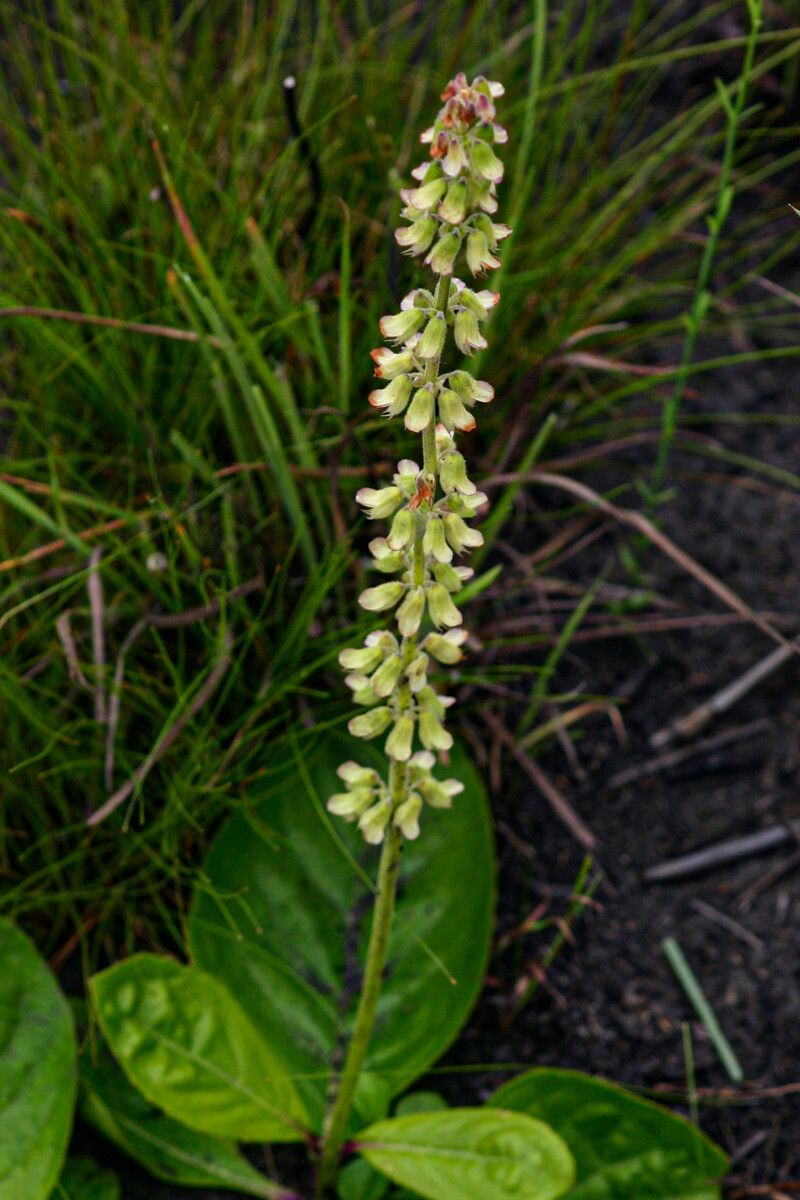
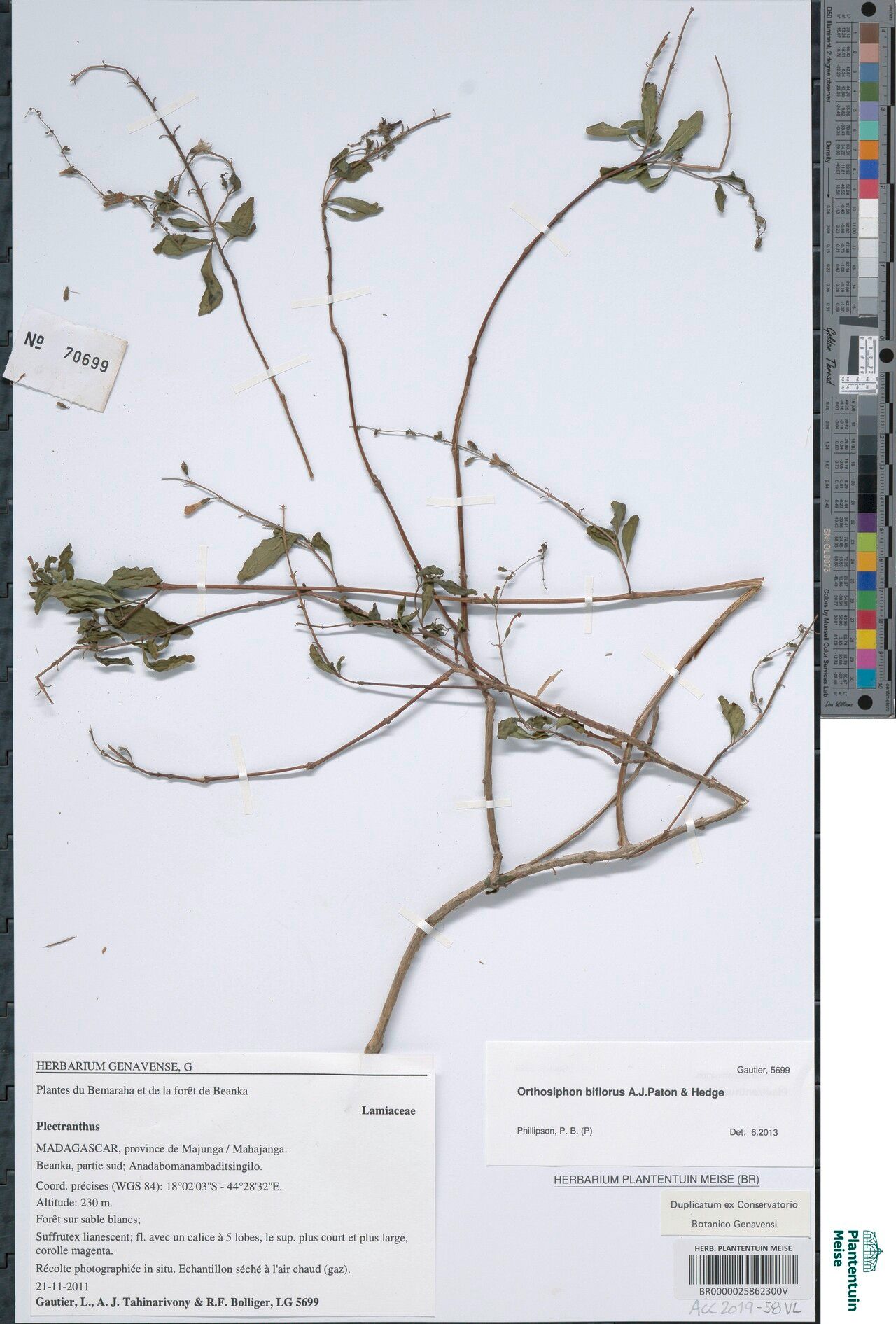
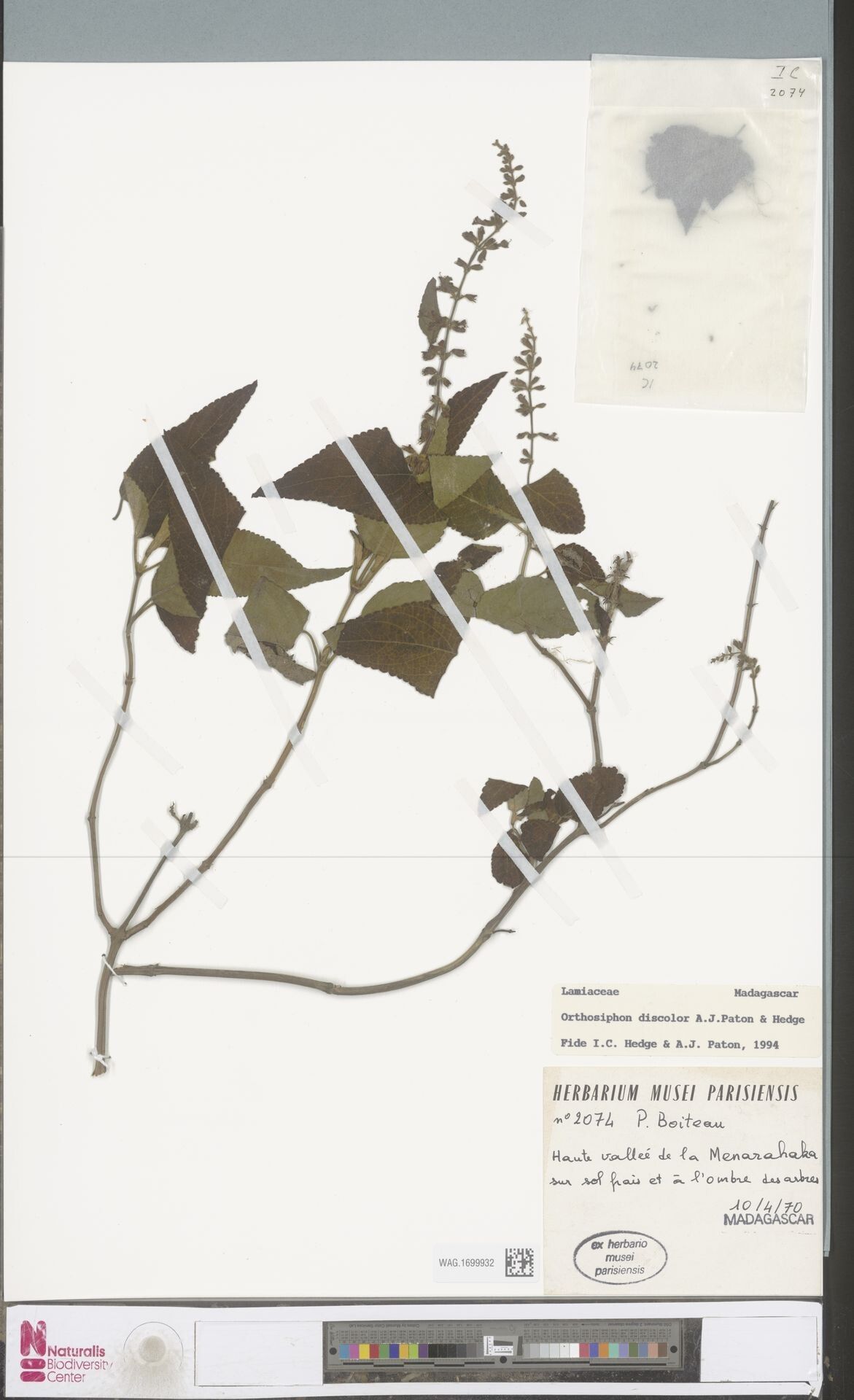
Orthosiphon aristatus, commonly known as cat's whiskers or Java tea, is a plant species in the family Lamiaceae (also known Labiatae). The plant is a medicinal herb found mainly throughout southern China, the Indian Subcontinent, South East Asia, and tropical Queensland. It is known as kumis kucing in Indonesia and misai kucing in Malaysia, both of which translate to cat's whiskers. Orthosiphon aristatus is used in landscaping to attract bees, butterflies and hummingbirds to its nectar. VarietiesOrthosiphon aristatus var. aristatus - most of species range Orthosiphon aristatus var. velteri Suddee & A.J.Paton - Vietnam
Cat's whiskers exhibits strong resistance to diseases and is generally not susceptible to them. However, it can be vulnerable to pests and illnesses present in its environment. Such infections are typically mild. Regarding care, the plant needs moderate maintenance. Regular pruning is necessary to keep a tidy appearance and encourage healthy growth. Applying fertilizer can also aid in promoting blooms. Cat's whiskers is suitable for people who have outdoor areas like a garden or patio, and it does not demand extensive gardening experience. It may need more attention if cultivated indoors.
How to keep Orthosiphon Aristatus.
Light
Cat's whiskers does best with plenty of sunlight but can tolerate partial shade. During its growth stages, ample light encourages vigorous development and flowering. Native to sunny habitats, too little light can impede growth, while too much exposure can scorch the leaves.
Water
Cat's whiskers is native to tropical regions, where it thrives in environments with high humidity and consistently moist conditions. To keep its soil adequately moist, it requires weekly watering. When grown outdoors, it especially benefits from rainwater, which supplies essential nutrients and replicates the precipitation of its natural habitat.
Humidity
This plant needs special care because it loves high humidity levels of 60-80% or more. The best way to achieve this is by placing a humidifier near the plant. Daily misting is also essential! Make sure the room has good ventilation.
Temperature
Cat's whiskers does best in its native growing environment, where temperatures range from 68 to 100 °F (20 to 38 ℃). The plant prefers warm conditions and may need adjustments during cooler seasons to maintain its health.
Fertilizer
Correct fertilization is vital for the health and appearance of Cat's whiskers. Fertilize Cat's whiskers in summer, applying fertilizer monthly throughout the season. Nutrients drive growth and preserve the plant's structures. Fertilization improves Cat's whiskers' flower display, ensuring the best blooms.
Pruning
Cat's whiskers produce elongated, whisker-like flowers. To keep the plant healthy, prune it between early and late spring. Remove any dead or overcrowded branches to improve air circulation and reduce the risk of disease. Make sure to clean your tools to prevent infections. Regular pruning encourages denser foliage and more vibrant blooms, which in turn promotes the plant's overall health.
Botanical profile.
- Plant Type
- Herb
- Life Cycle
- Perennial, Annual
- Genus
- Orthosiphon
- Family
- Lamiaceae
- Hardiness Zone
- 9-12
- Mature Height
- 1.52 m
- Mature Spread
- 30 cm to 91 cm
- Leaf Color
- Green
- Leaf Type
- Semi-evergreen
- Flower Color
- White, Purple
- Flower Size
- 7.62 cm to 11.43 cm
- Bloom Time
- Summer, Early fall, Mid fall
- Planting Time
- Spring, Summer, Autumn, Winter
- Harvest Time
- Late summer, Fall, Early winter
- Native Area
- Sri Lanka, India, Malaysia, Indonesia, Cambodia, Vietnam, Myanmar, Philippines, Bangladesh, Laos, Thailand, China
Other names.
Reader questions.
How should I water my Cat's whiskers in the best way?
To properly water the Cat's whiskers plant, follow these steps for optimal care: 1. Use filtered water at room temperature: Tap water may contain harmful particles, so filtered water is best for this plant's health. 2. Avoid cold water: The Cat's whiskers plant is accustomed to warm environments, so cold water can be shocking. Stick to room temperature or slightly warmer water. 3. Don't water from above: Overhead watering can lead to issues with the foliage. Instead, focus on applying filtered room temperature water directly to the soil. 4. Ensure thorough soaking of the soil: By fully saturating the soil, you benefit the plant's roots. This helps them spread through the soil and absorb the necessary nutrients.
Why should I put fertilizer on my Cat's whiskers?
Fertilizer and soil nutrients are important for the healthy growth of your Cat's whiskers. Plants, including Cat's whiskers, rely on these nutrients in the soil to develop new plant material and maintain their existing components. Fertilization is particularly crucial for Cat's whiskers to enhance the appearance of its flowers, which are the main attraction of the plant. To ensure the best blooms, most gardeners prioritize fertilization as a reliable method for maximizing the potential of their Cat's whiskers.
What are the sunlight requirements for Cat's whiskers?
Cat's whiskers thrives in full sun, requiring more than 6 hours of sunlight daily. However, it can also grow in partial sun, with about 3-6 hours of sunlight. It's essential to observe how sunlight moves through your garden to place your plants in spots that offer a good balance of light and shade, ensuring optimal growth and blooming.
What is the ideal temperature range for Cat's whiskers to thrive?
Cat's whiskers thrives best in its native growth environment, ideally within a temperature range of 68 to 100 °F (20 to 38 °C). This plant prefers warm conditions and may require adjustments in cooler seasons to maintain its health. It's extremely heat-loving, and exposure to cold temperatures can harm the plant. During the autumn, it is advisable to bring outdoor-grown Cat's whiskers indoors, placing them near a bright window but at a certain distance from heaters to avoid damage. Keeping the temperature above 20°C during the winter is beneficial for its growth. Temperatures approaching 0°C or lower are detrimental to the plant.
What should I do if I give my cat's whiskers too much water or too little water?
Caring for your Cat's whiskers requires caution when it comes to watering. Both overwatering and underwatering can harm your plant, but overwatering is more commonly an issue. Overwatering can cause wilting, yellowing leaves, and potentially fatal diseases like root rot, mold, and mildew. While underwatering is less common, it can make the leaves dry and brown. It's important to recognize the signs of overwatering early to prevent irreversible damage. Reduce watering if you notice signs of overwatering and consider the soil's drainage quality. If the soil drains poorly, replace it with a loose, well-draining potting mix. If your Cat's whiskers lacks water, simply increase the frequency of watering until the signs improve.
When should I put fertilizer on my cat's whiskers?
The Cat's whiskers plant has two main phases throughout the year. The first phase is the dormant phase, which occurs in the winter and results in minimal new growth. The second phase is the active growth phase, happening in spring and fall, when the plant requires more fertilization. In general, it is recommended to start fertilizing the Cat's whiskers in spring and continue once a month until most of the summer. As fall approaches, you can decrease the frequency of fertilization.
How do I care for my Cat's whiskers plant?
Caring for Cat's whiskers involves ensuring it gets ample sunlight while being able to endure semi-shade conditions. Originating from sunny habitats, this plant needs abundant light for vigorous growth and blooming. Artificial lighting can be used to supplement natural sunlight, especially for indoor plants or during less sunny periods. LED lights are recommended, with full sun plants needing 30-50W/sq ft, partial sun plants 20-30W/sq ft, and full shade plants 10-20W/sq ft of artificial light. Position the light source 12-36 inches above the plant and provide 8-12 hours of light per day to mimic natural daylight hours.
How should you care for Cat's whiskers in low temperatures?
Cat's whiskers prefers warm temperatures and does not tolerate cold well. It thrives when temperatures are maintained above 20°C and should be kept above 0°C during winter. Exposure to temperatures below -5°C may result in lightening of the leaves, which gradually turn brown or black after frost damage, alongside wilting and drooping symptoms. In such cases, trim off the frost-damaged parts and immediately move the plant indoors to a warmer environment for protection. Positioning the plant near a south-facing window ensures ample sunlight while avoiding placement near heaters or air conditioning vents to prevent the air from becoming too dry.
How many times do I need to water my Cat's whiskers?
If your Cat's whiskers plant is in a pot, the most precise way to determine if it needs water is to stick your finger into the soil. If the top two to three inches of soil are dry, it's time to water it. If you have your Cat's whiskers plant outdoors in the ground, you can use a similar method to check the soil. Again, if the top few inches of soil are dry, it's time to water it. In the spring and early fall, you'll typically need to water the plant about once a week using this method. When it's extremely hot, you might need to water it twice or more per week. However, mature and well-established Cat's whiskers plants can usually withstand drought well.
When should I not put fertilizer on my cat's whiskers?
To promote the growth of Cat's whiskers, it is important to provide the right nutrients without causing root burn. During the spring and summer, when the plant is actively growing, extra nutrients are beneficial. However, in the fall and winter, when the plant enters its dormancy stage, fertilizing should be stopped.
What are the symptoms of inadequate lighting in Cat's whiskers?
If your Cat's whiskers is not getting enough light, you may notice small leaves, leggy or sparse growth, faster leaf drop, slower or no new growth, lighter-colored new leaves, symptoms of chlorosis, sunscald, leaf curling, wilting, and leaf scorching. These symptoms indicate that the plant is struggling with light deficiency and needs more sunlight or artificial lighting to thrive.
What should you do if Cat's whiskers experiences high temperatures?
During summer, it's important to ensure that Cat's whiskers is kept below 38°C to prevent heat stress. Should the temperature exceed 43°C, the plant's leaves may lighten in color, increasing susceptibility to sunburn. To mitigate this, trim away the sunburned and dried-up parts of the plant and relocate it to a spot that offers shade from the intense midday and afternoon sun. Additionally, watering the plant in the morning and evening helps keep the soil adequately moist and supports the plant's well-being under high temperature conditions.