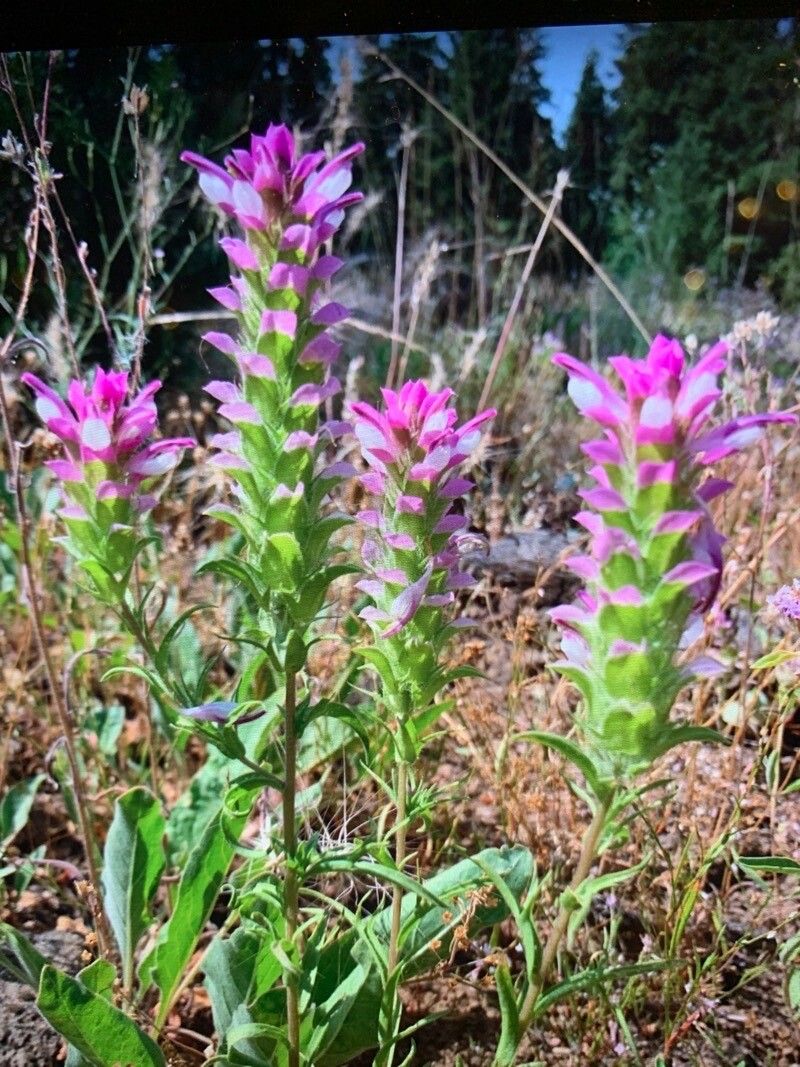
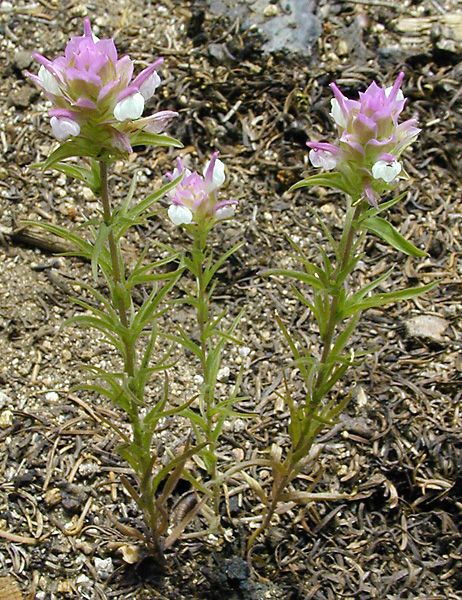
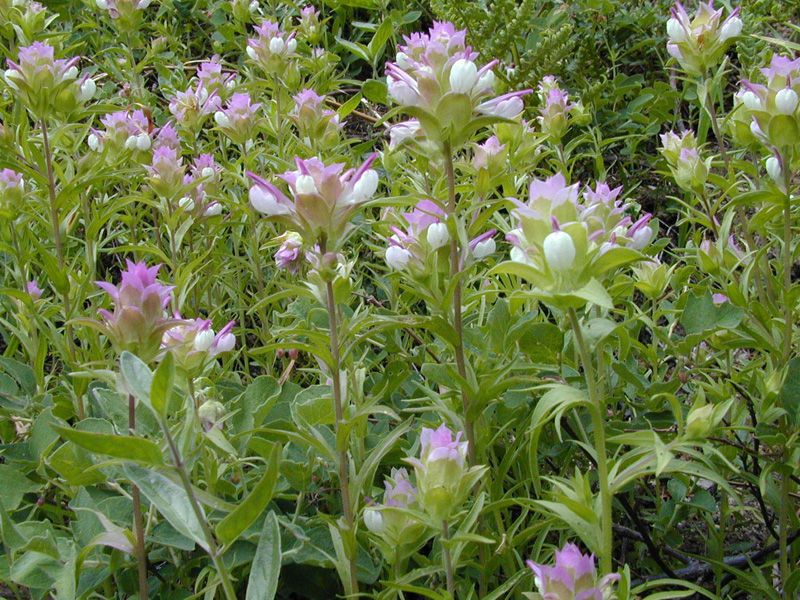
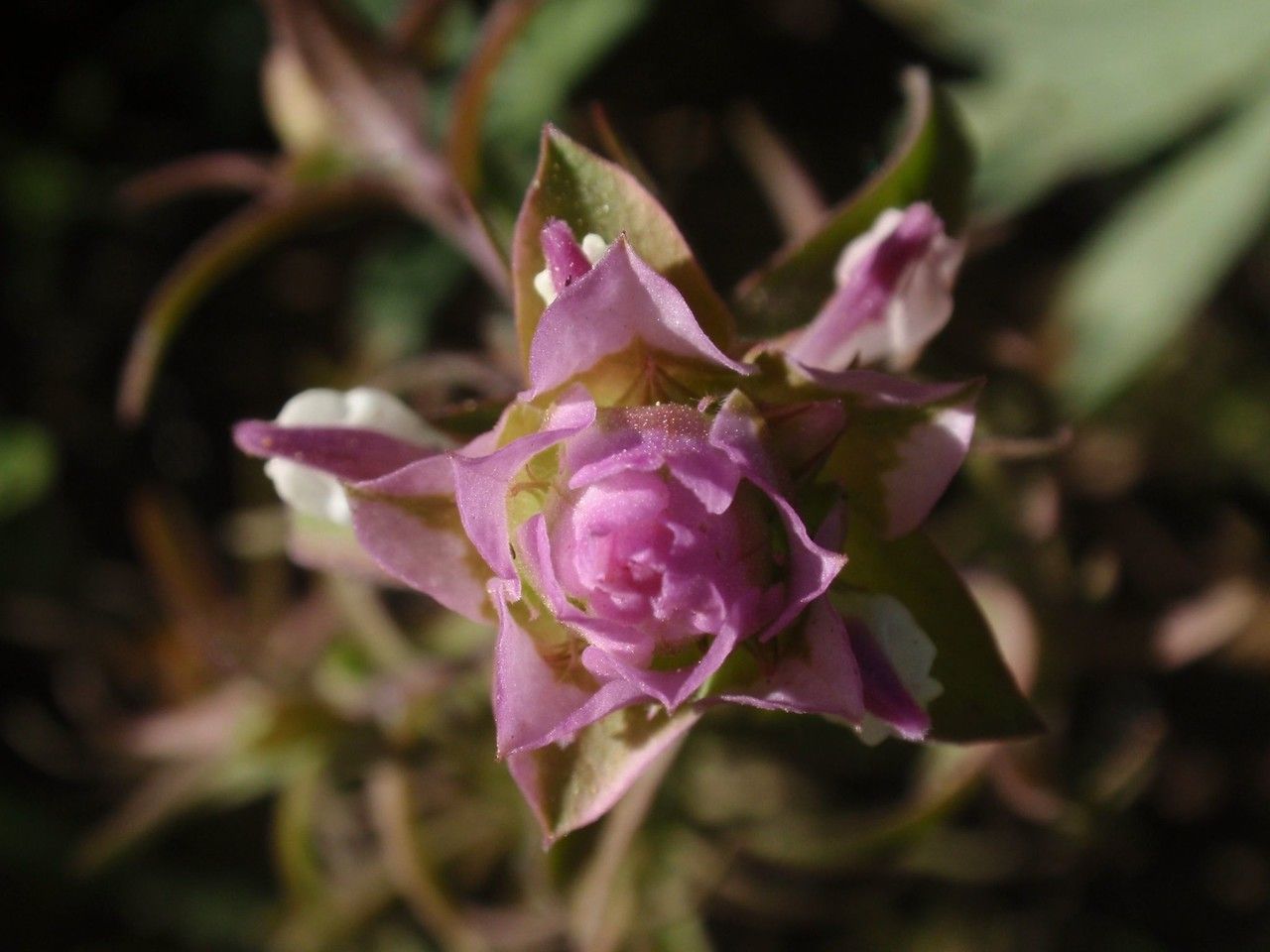
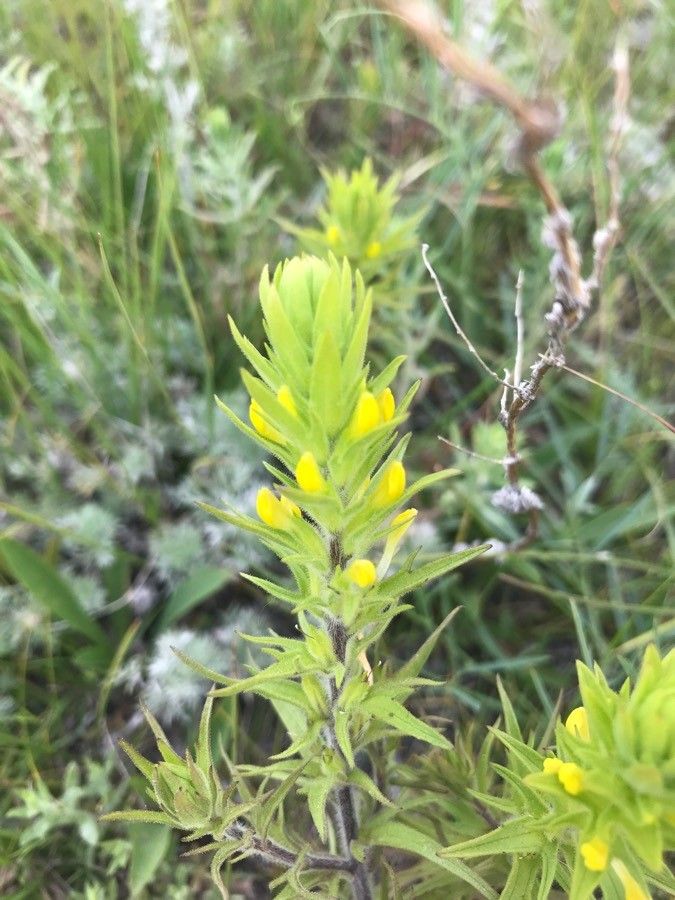
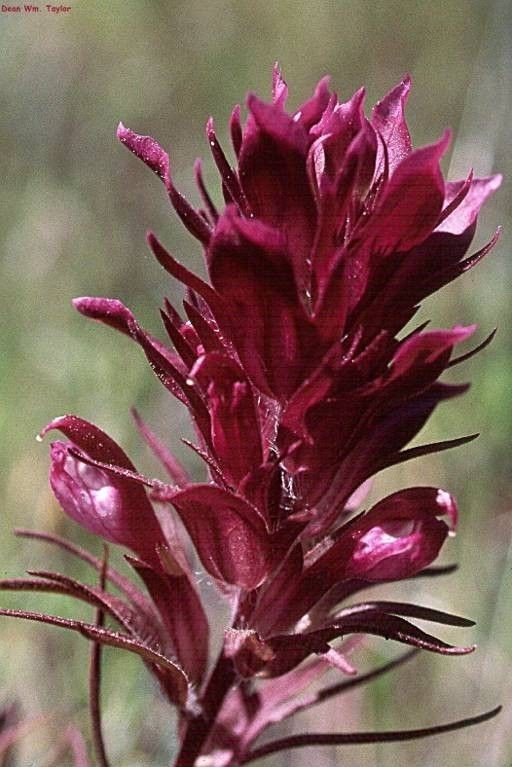
Orthocarpus cuspidatus is a species of flowering plant in the broomrape family known by the common names Copeland's owl's clover, Siskiyou Mountains orthocarpus, and toothed owl's-clover. It is native to mountain and plateau habitat in Oregon, California, and Nevada. It is an annual herb producing a slender, glandular, hairy, purple-green stem up to about 40 centimeters tall. The narrow leaves are up to 5 centimeters long, the upper ones deeply divided into three linear lobes. The inflorescence is a dense cylindrical spike of wide, oval green bracts with pinkish points. The flowers emerge from between the bracts. Each purple-pink flower is fuzzy in texture and club-shaped, the lower lip an expanded pouch and the upper lip a narrow, straight beak.
Copeland's owl's clover is quite disease-resistant and generally not prone to illnesses. However, it can be vulnerable to pests and diseases present in its surroundings. These problems are usually mild. For care, the plant requires moderate maintenance. It should be pruned regularly to keep a neat appearance and support healthy growth. Fertilizing can also help encourage flowering. Copeland's owl's clover is appropriate for anyone with an outdoor area, such as a garden or patio, and does not demand extensive experience in plant care. It may need more attention when grown indoors.
How to keep Orthocarpus Cuspidatus.
Light
Copeland's owl's clover comes from sunny, open habitats and does best in full sun. It will tolerate partial sun but favors direct sunlight for optimal growth. This plant, which can be annual or biennial, is known for its sun-loving nature.
Water
Copeland's owl's clover thrives in areas with consistent rainfall and requires a balanced watering schedule, with watering once a week for optimal growth. It prefers herbaceous outdoor settings and flourishes in temperate climates, benefiting significantly from rainwater. This makes it an excellent choice for gardens.
Temperature
Copeland's owl's clover can handle a wide range of temperatures, but its distribution may still be restricted by various combinations of moisture and heat. It does best in warm summer climates with sufficient rainfall or watering. Long periods of cloudy, rainy weather or prolonged high temperatures can increase the chance that Copeland's owl's clover will die. In winter, protecting it from the cold can improve its survival rate.
Fertilizer
When most of Copeland's owl's clover's blooms have fully opened, it's time to start fertilizing again. At the peak of blooming, resume fertilizing every three to four weeks, weather permitting. When the plant begins producing fewer new blooms, stop fertilizing; there's no point in fertilizing once it can no longer produce additional blooms.
Pruning
Copeland's owl's clover is known for its vibrant flowers and distinctive shape. To encourage growth and flowering, prune the plant in early to late spring, removing any dead stems. Ensure good air circulation to help prevent disease, which will promote vigorous blooming in subsequent seasons. This will keep your Copeland's owl's clover thriving and attractive year after year.
Botanical profile.
- Plant Type
- Herb
- Life Cycle
- Annual
- Genus
- Orthocarpus
- Family
- Orobanchaceae
- Hardiness Zone
- 7-10
- Mature Height
- 10 cm to 20 cm
- Mature Spread
- 5 cm to 15 cm
- Leaf Color
- Green
- Leaf Type
- Semi-evergreen
- Flower Color
- Yellow, White
- Flower Size
- 1.02 cm to 2.03 cm
- Bloom Time
- Mid spring, Late spring, Early summer
- Planting Time
- Spring, Summer, Autumn
- Harvest Time
- Summer
Other names.