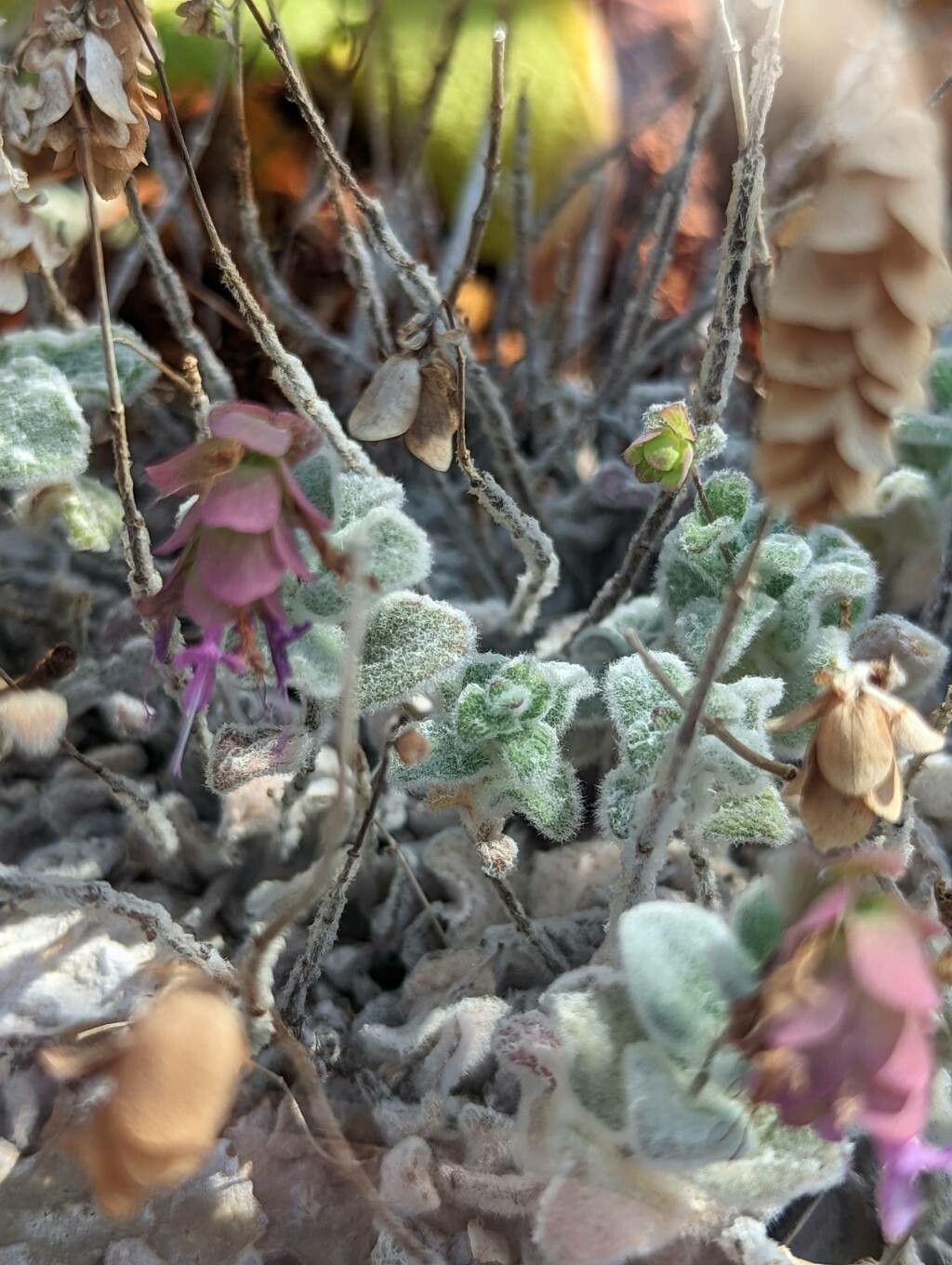
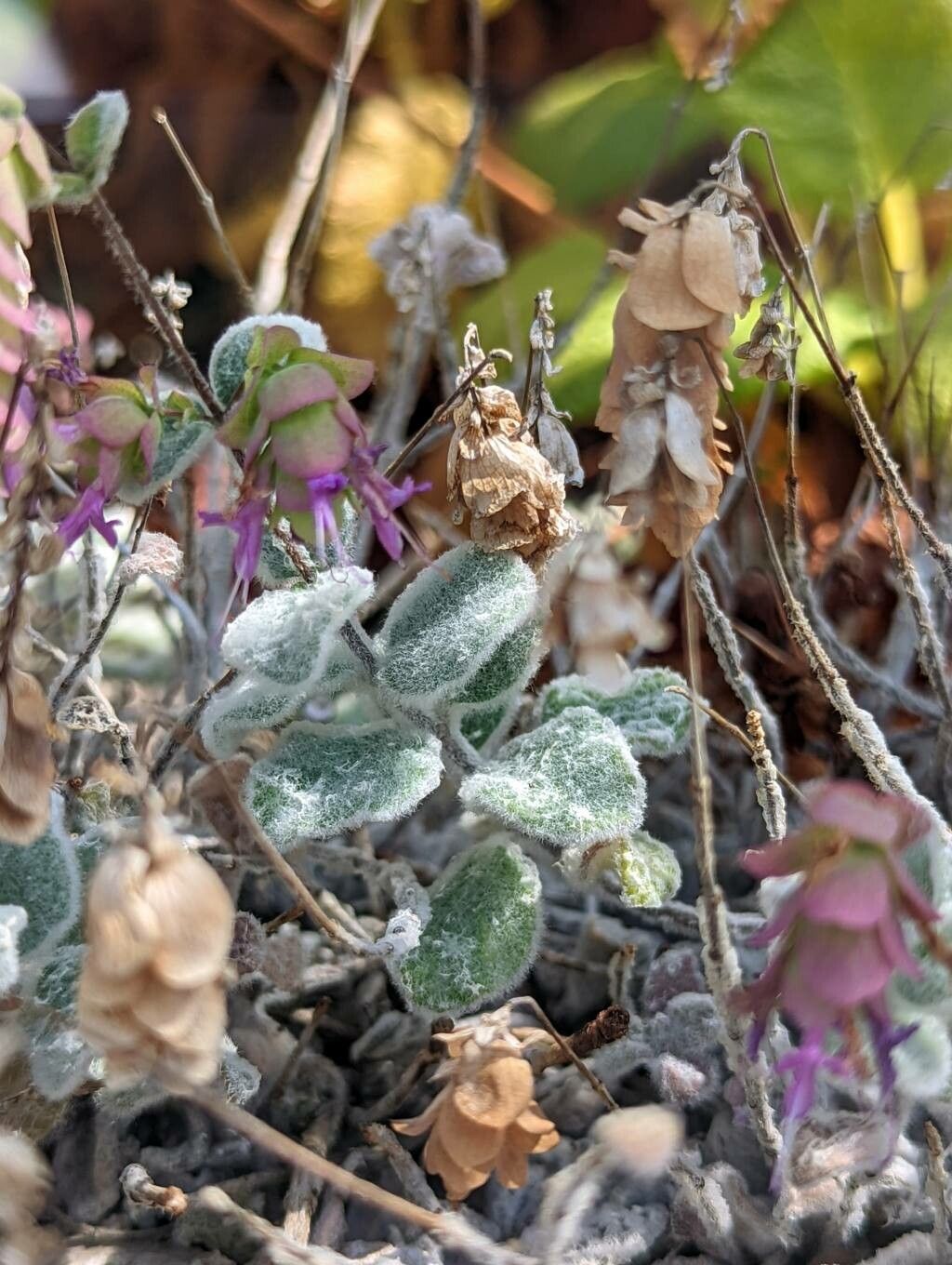
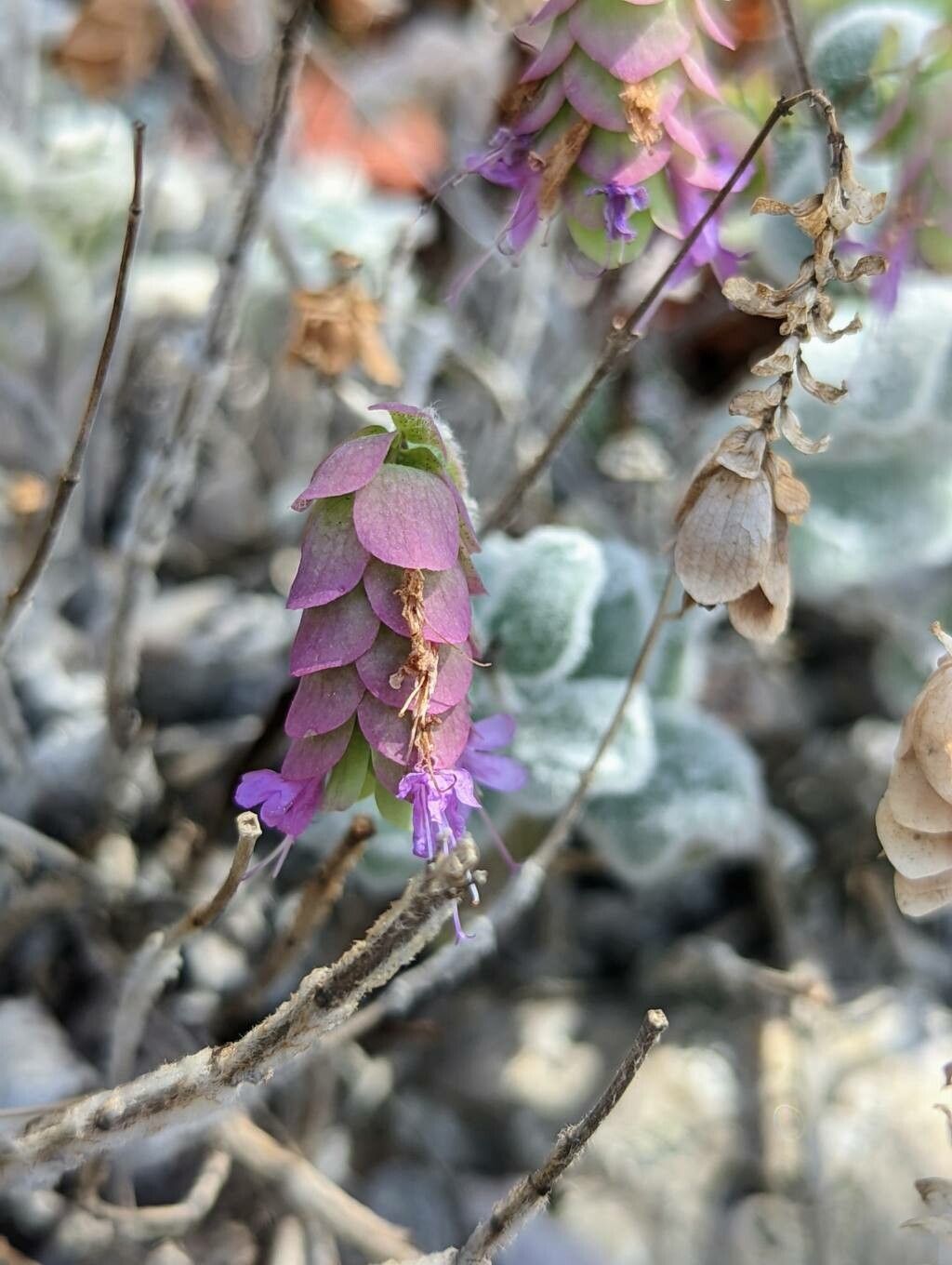
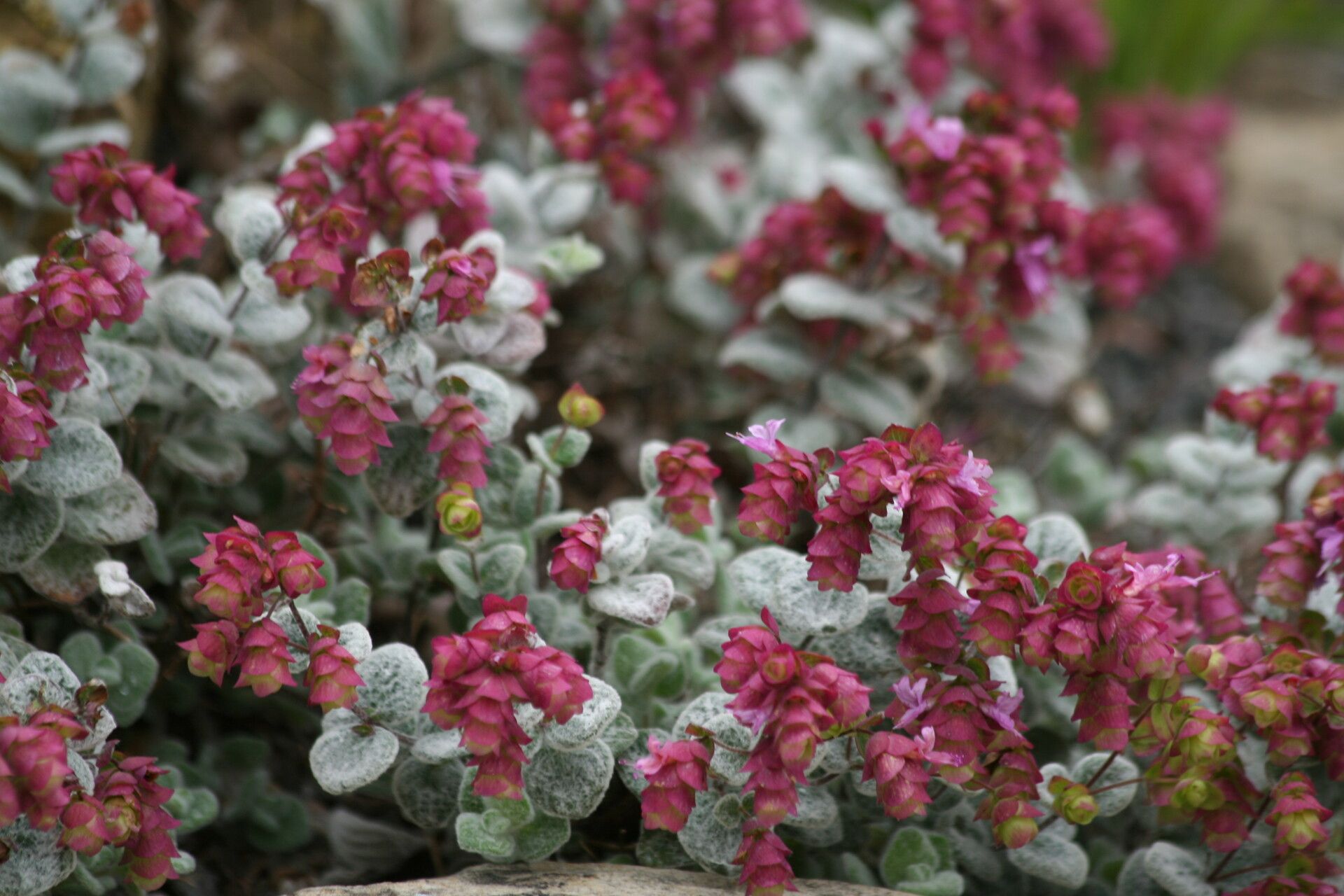
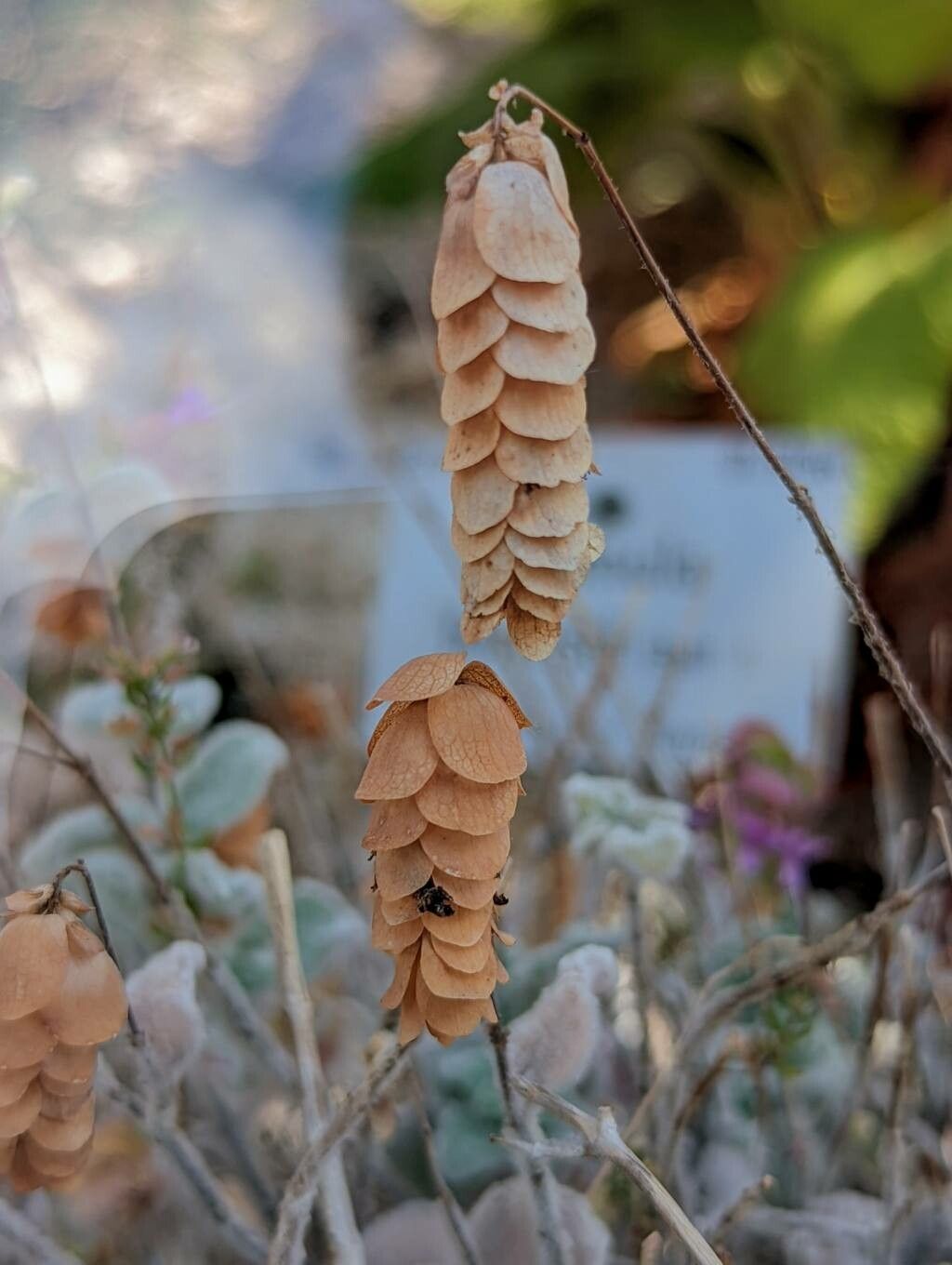
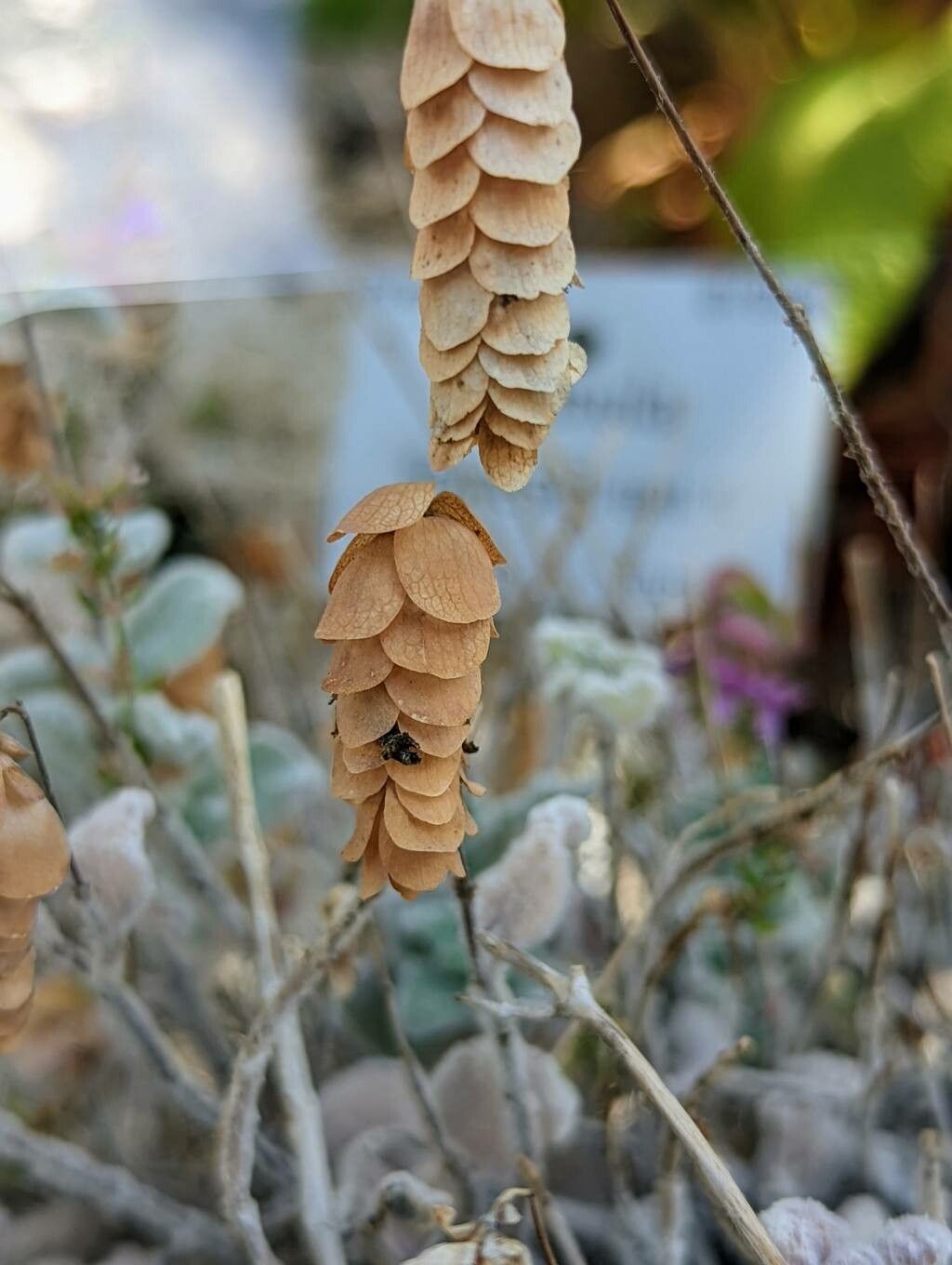
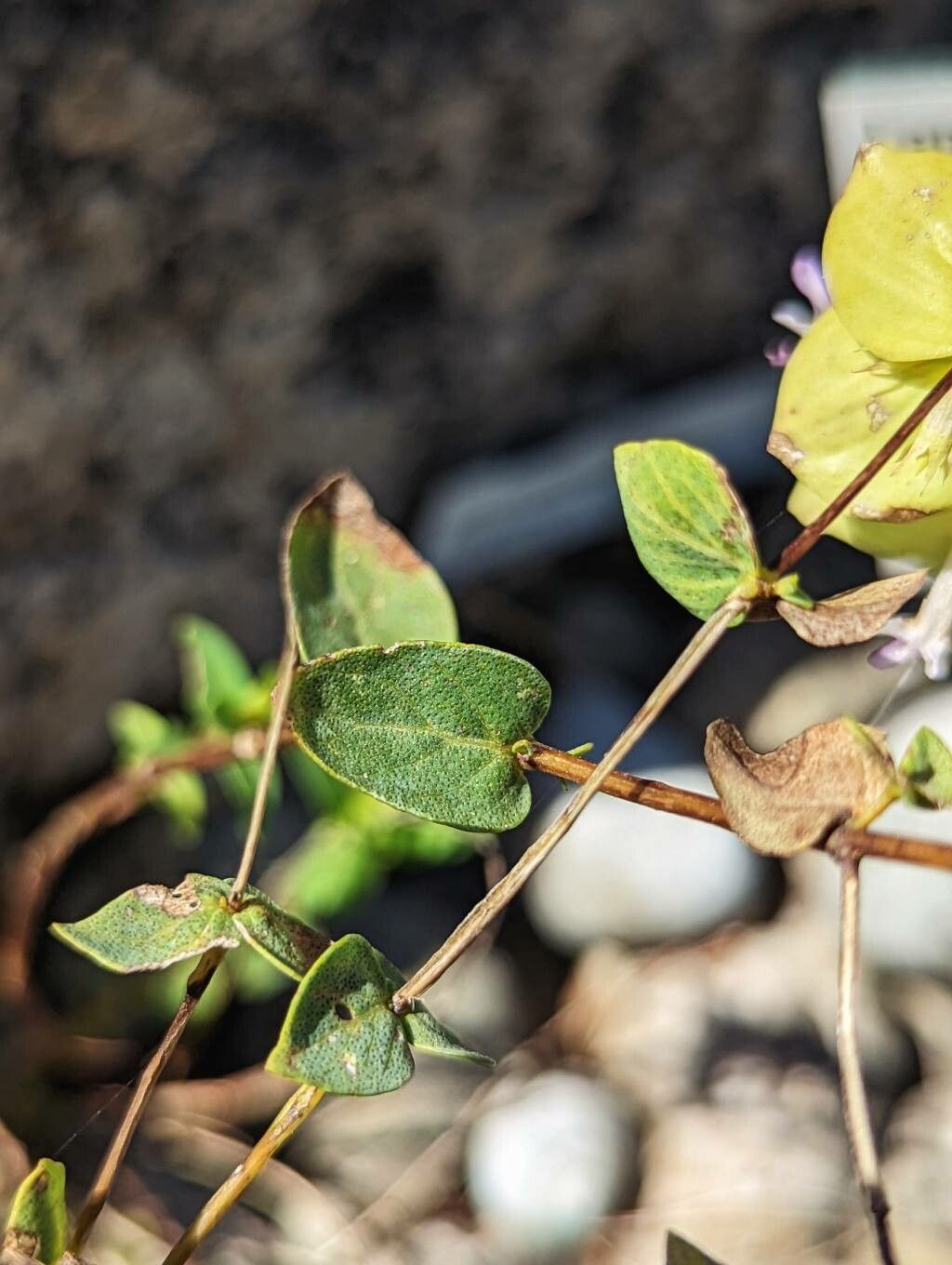
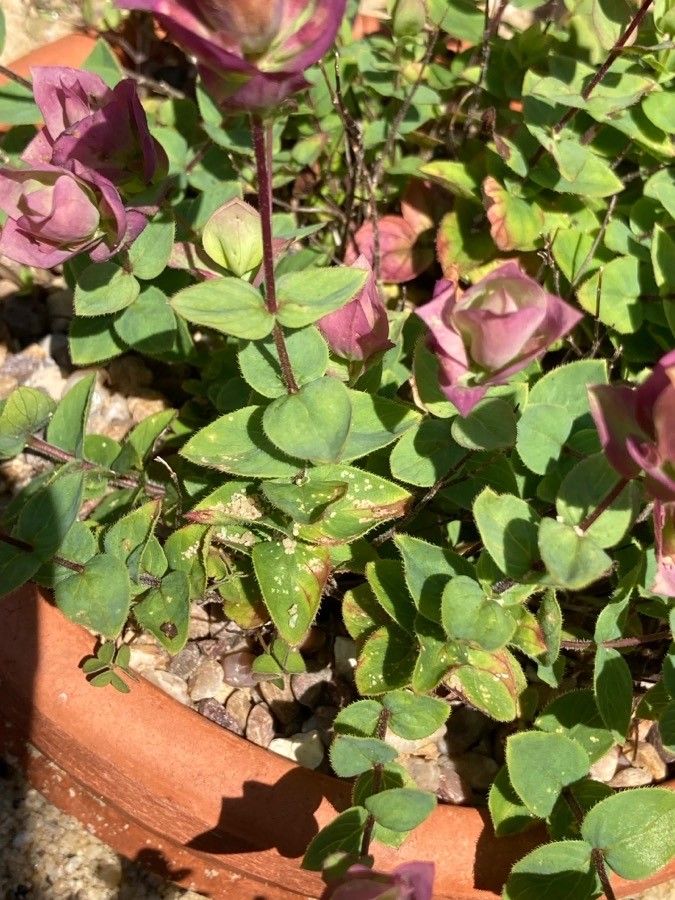
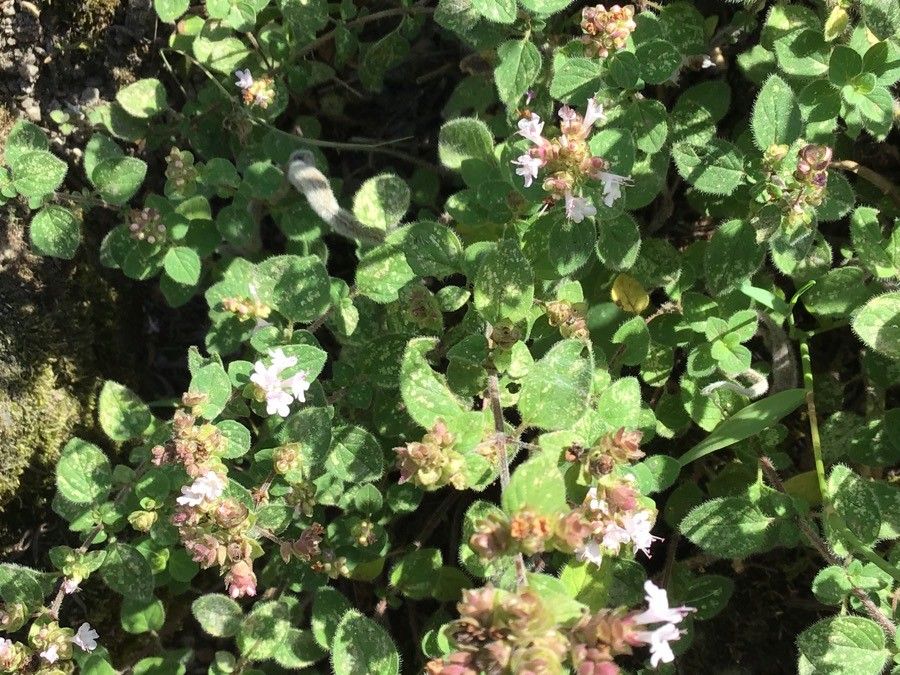
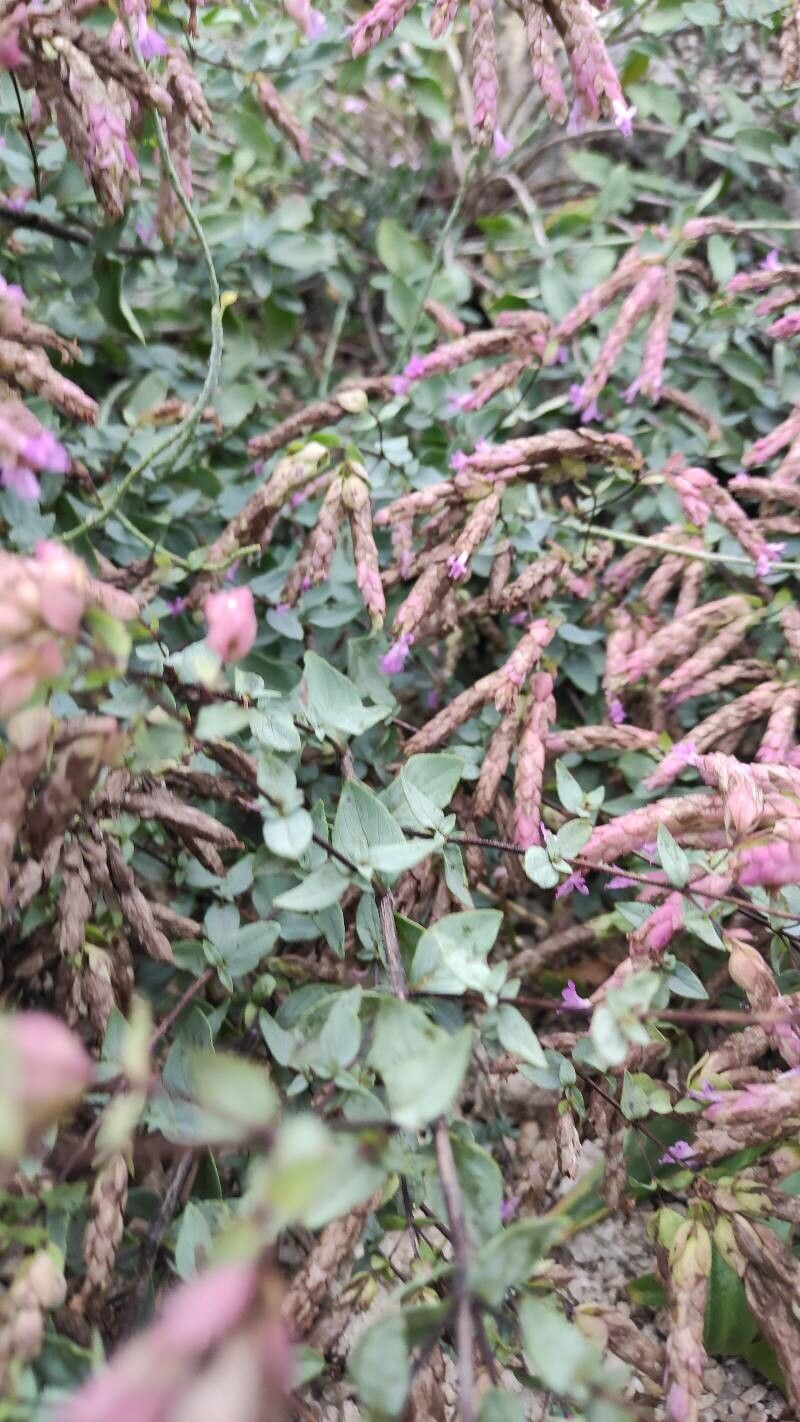
Origanum dictamnus, the dittany of Crete, Cretan dittany or hop marjoram, is a tender perennial plant that grows 20–30 cm high. It is known in Greek as δίκταμο (díktamo, cf. "dittany") or in the Cretan dialect as έρωντας (erontas, "love"). It is a therapeutic and aromatic plant that grows wild only on the mountainsides and gorges of the Greek island of Crete. It is widely used for food flavouring and medicinal purposes, in addition to featuring as an ornamental plant in gardens. This small, lanate shrub is easily recognised by the distinctive soft, woolly covering of white-grey hair on its stems and round green leaves, giving it a velvety texture. Tiny rose-pink flowers surrounded by brighter purple-pink bracts add an exuberant splash of colour to the plant in summer and autumn. The dittany is classified as vulnerable on the IUCN Red List of Threatened Plant Species 1997.
Dittany of crete has strong disease resistance and is generally not prone to illnesses. However, it can be susceptible to pests and diseases present in its surroundings. These infections are usually mild. Regarding care, this plant requires moderate maintenance. It needs regular pruning to maintain a good appearance and healthy growth. Fertilization can also help promote flowering. Dittany of crete is suitable for anyone with outdoor space, such as a garden or patio, and does not demand much care experience. It may need more attention when grown indoors.
How to keep Origanum Dictamnus.
Light
Dittany of crete är en solälskande, flerårig örtsläkting som härstammar från öppna miljöer och ofta växer i ängar och gräsmarker. Den föredrar full sol men kan också tåla halvskugga.
Water
Dittany of Crete, native to the Mediterranean region, thrives in environments with moderate humidity and occasional dry spells. It needs balanced moisture, so watering once a week is ideal. As an evergreen plant, it grows best outdoors where it has access to plenty of light and good airflow, which help improve its water regulation and overall resilience.
Temperature
Dittany of crete shows good adaptability to temperature, being able to tolerate higher heat and broader temperature swings. In hot conditions, attention must be paid to watering and suitable shading provided to avoid sunburn. However, Dittany of crete is relatively poorly tolerant of low temperatures. While it can endure some cold, excessively low temperatures can cause frost damage.
Fertilizer
The best time to fertilize a Dittany of crete is in early spring, when it is coming out of dormancy and starting active growth. Fertilization supplies essential nutrients needed for healthy development. Although Dittany of crete has relatively low fertilizer requirements, an annual application can boost its survival and encourage better, longer-lasting blooms.
Pruning
Prune dittany of Crete from early to late spring to encourage new growth and improve airflow. Trim any dead stems and shape the plant as desired. Regular pruning helps prevent the plant from becoming leggy, resulting in a fuller appearance. Be sure to use sterilized tools to make clean cuts, which will help prevent disease.
Pot & Repot
To care for dittany of Crete, repot the plant every 2-3 years during the spring. Use a slightly larger pot filled with well-draining soil. Ensure consistent watering, but be careful not to overwater. Placing the plant in a sunny location will help support its recovery and growth.
Botanical profile.
- Plant Type
- Herb
- Life Cycle
- Perennial
- Genus
- Origanum
- Family
- Lamiaceae
- Hardiness Zone
- 7-10
- Mature Height
- 15 cm to 30 cm
- Mature Spread
- 30 cm
- Leaf Color
- Green, Gray
- Leaf Type
- Evergreen
- Flower Color
- Pink
- Flower Size
- 1.02 cm to 1.52 cm
- Bloom Time
- Summer
- Planting Time
- Spring, Summer, Autumn
- Harvest Time
- Late summer, Early fall, Mid fall
- Native Area
- Greece
Other names.
Reader questions.
How should I water my Dittany of Crete plant in the best way?
When watering the Dittany of Crete, it's best to use filtered water that is at room temperature or slightly warmer. Tap water may contain harmful particles, so filtered water is preferred. The Dittany of Crete is native to warm environments, so cold water can be a shock to its system. To avoid foliage complications, it's recommended to not water the plant from above. Instead, water the soil with filtered room temperature water until it is entirely soaked. This helps moisten the roots and supports their spread through the soil to collect necessary nutrients.
Why should I put fertilizer on my Dittany of Crete plant?
The main structure of the Dittany of Crete consists of its leaves. Fertilization plays a crucial role in ensuring that these leaves are both aesthetically pleasing and functional. By providing the proper fertilization, you can ensure that the leaves of your Dittany of Crete maintain a consistent color and healthy texture. Furthermore, fertilization also benefits the plant beneath the surface by promoting the growth of new roots and preserving existing ones. This not only aids in the plant's current health but also enhances its ability to absorb nutrients from the soil in the long run.
What are the sunlight requirements for Dittany of Crete?
Dittany of Crete requires full sun, meaning it needs more than 6 hours of sunlight daily. However, it can also thrive under partial sun conditions, with about 3-6 hours of sunlight. It's important to watch how sunlight moves through your garden to find the perfect spots that offer a balance of light and shade, ensuring your plants remain happy and healthy.
What is Dittany of Crete?
Dittany of Crete, known botanically as Origanum dictamnus, is a plant recognized for its significance and uses. Unfortunately, specific essential information, content, and additional details related to its uses, symptoms it addresses, or any other particular attributes were not provided.
What should I do if I give my Dittany of Crete plant too much or too little water?
Overwatering is a more common issue that can harm your Dittany of Crete. It causes wilting, yellowing leaves, and can lead to diseases like root rot, mold, and mildew, which can kill the plant. Underwatering is less common but still possible. It can make the leaves brittle and brown. It's important to identify signs of overwatering early and reduce watering immediately. If the soil doesn't drain well, replace it with a loose, well-draining mix. If signs of underwatering are present, water more regularly until the plant improves.
When should I fertilize my Dittany of Crete?
If you grow your Dittany of Crete outdoors each year, it will start new growth in early spring. This is the signal to begin fertilizing for the year. Normally, one application of fertilizer is enough for the Dittany of Crete to thrive. However, if you want to maximize its growth, you can fertilize multiple times during spring and early summer. In that case, you can feed it once every month to a month and a half.
What essentials should I know about growing Dittany of Crete?
Dittany of Crete is a sun-loving perennial herb that thrives in open habitats like meadows and grasslands. It prefers full sun but can tolerate partial sun. For indoor plants, artificial lighting can be a crucial solution to provide adequate light, especially in less sunny spaces or during winter. LED lights are favored for indoor plants, as they can be adjusted to offer the wavelengths needed for growth. The lighting should range from 10-20W/sq ft for full shade plants, 20-30W/sq ft for partial sun plants, to 30-50W/sq ft for full sun plants. The artificial light source should be placed 12-36 inches above the plant and kept on for 8-12 hours per day, mimicking natural daylight hours.
How much water does my Dittany of Crete need?
If your Dittany of Crete plant is in a pot, you can determine if it needs water by sticking your finger into the soil. If the top two to three inches of soil feel dry, it is time to water it. If you have planted your Dittany of Crete outdoors in the ground, you can use the same method to test the soil. Once the top few inches of soil have dried out, it is time to water it. Typically, during the spring and early fall, you will need to water this plant about once a week using this method. However, in extremely hot weather, you may need to water it twice or more per week. It is worth noting that mature, well-established Dittany of Crete plants can withstand drought well.
When should I not put fertilizer on my Dittany of Crete plant?
During the late fall and winter, your Dittany of Crete goes into a dormant phase and stops producing new growth. During this time, it's best to avoid fertilizing it. In the spring and summer, if you do choose to fertilize, start reducing the frequency as summer nears because the plant's growth rate slows down. In general, it's not a good idea to fertilize your Dittany of Crete when it's really hot or when the soil is very dry, as this can cause stress and premature death for the plant.
What are the symptoms of insufficient light for Dittany of Crete?
When Dittany of Crete doesn't receive enough light, it may show various symptoms indicating light deficiency. These include smaller new leaves, leggy or sparse growth, early leaf drop due to conservation of resources, delayed or halted growth, lighter-colored or pale new leaves, chlorosis leading to yellowing leaves, sunscald, leaf curling as a defense against extreme sunlight, wilting, and leaf scorching. These symptoms highlight the plant's struggle under inadequate lighting conditions.
How much water does my Dittany of crete plant need?
When watering your Dittany of Crete, don't be afraid to give it a good amount of water. Make sure the first few inches of soil are dry before watering, and when you do, water thoroughly so that the soil is completely soaked. You should add enough water so that it drains through the bottom of the pot. If you don't see excess water draining, you haven't watered enough, but be careful not to let water accumulate inside the soil, as this can harm the plant. If there is no water draining, it could mean that the soil doesn't drain well, which is not good for the plant's health. If the plant is outside, it should receive about 1 inch of rain per week.
What kind of fertilizer does my Dittany of Crete plant need?
Choosing the best fertilizer for a Dittany of Crete is an easy task. These plants thrive on a general-purpose garden fertilizer with equal amounts of nitrogen, phosphorus, and potassium, preferably in a 10-10-10 ratio. Avoid fertilizers with high nitrogen levels when unsure. Granular fertilizers, particularly slow-release ones, are recommended for Dittany of Crete, as they are convenient for soil application. Additionally, using organic soil amendments like compost can also benefit these plants.