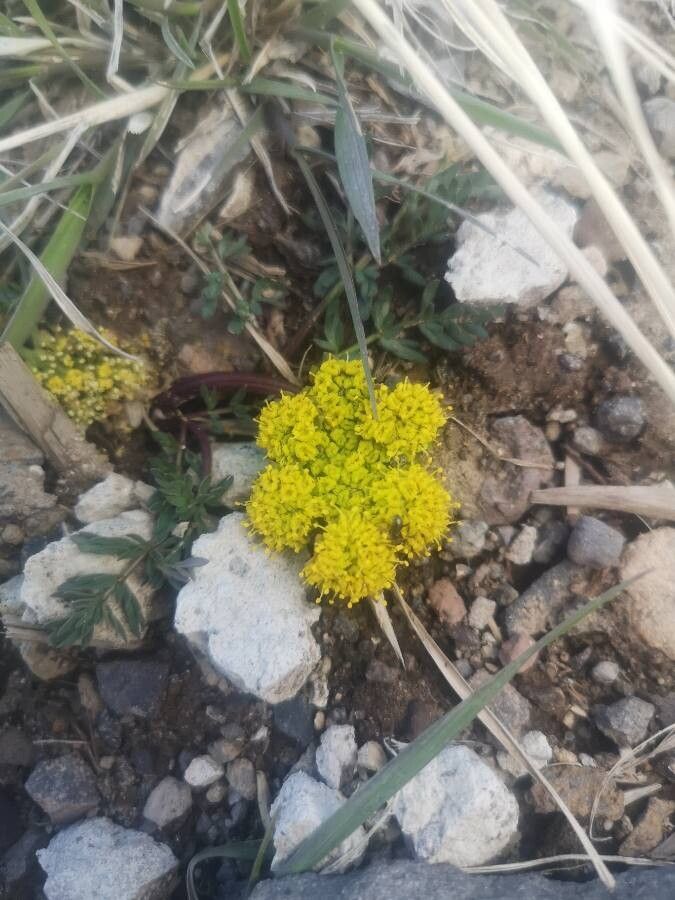
Oreoxis alpina, commonly known as the alpine mountain daisy, is a perennial plant belonging to the Asteraceae family. This species is native to high-altitude regions of the Himalayas, Tibet, and western China. It typically reaches a height of up to 30 cm and features a basal rosette of deeply lobed leaves with toothed edges. The flowers are small, yellow or white, and form clusters at the tips of long stems. Adapted to harsh mountain environments, Oreoxis alpina thrives in cold temperatures, withstands strong winds, and tolerates low oxygen levels. It is commonly found on rocky slopes or meadows at elevations between 3,000 and 5,000 meters above sea level. Local communities have traditionally used this plant for medicinal purposes, treating ailments such as fever and respiratory issues. Its leaves contain essential oils with antimicrobial properties, adding to its medicinal value. Due to its unique adaptation to high-altitude environments, Oreoxis alpina has become a significant model organism for studying physiological adaptations under extreme conditions, such as hypoxia (low oxygen levels). This research holds potential implications for human health. Overall, Oreoxis alpina is a fascinating species with unique adaptations, making it an essential component of high-altitude ecosystems and a promising candidate for medicinal research.
Alpine oreoxis shows good resistance to disease and is generally not prone to illnesses. Still, it can be affected by pests and diseases present in its environment. Such infections are generally mild. Regarding care, this plant demands a moderate level of maintenance. It should be pruned regularly to preserve an attractive appearance and support healthy growth. Applying fertilizer can also encourage flowering. Alpine oreoxis is appropriate for anyone with outdoor areas like a garden or patio and does not need extensive plant-care experience. It may, however, need more attention when cultivated indoors.
How to keep Oreoxis Alpina.
Light
Alpine oreoxis is a sun-loving perennial herbaceous plant native to open habitats, frequently thriving in meadows and grasslands. It prefers full sun but can also tolerate partial sun.
Fertilizer
A single spring application of fertilizer is generally adequate for Alpine oreoxis, though repeated feedings can maximize growth. Feed every one to one and a half months. Fertilization improves the leaves' appearance and function, maintaining uniform color and a healthy texture. It also promotes root development and nutrient uptake, supporting the plant's long-term health.
Pruning
Alpine oreoxis features low-growing foliage and bright yellow flowers. To maintain its shape and encourage growth, prune the plant from early to late spring. Removing dead stems and excessive growth will improve air circulation, enhance its appearance, and increase its resistance to disease. This aligns with the growth cycle of alpine oreoxis, minimizing stress on the plant.
Botanical profile.
- Plant Type
- Herb
- Life Cycle
- Perennial
- Genus
- Oreoxis
- Family
- Apiaceae
- Hardiness Zone
- 3-7
- Mature Height
- 5 cm to 15 cm
- Mature Spread
- 10 cm to 20 cm
- Leaf Color
- Green, Dark Green
- Leaf Type
- Evergreen
- Flower Color
- Yellow
- Flower Size
- 0.25 cm to 0.51 cm
- Bloom Time
- Late spring, Early summer
- Planting Time
- Spring, Autumn
- Harvest Time
- Mid summer, Late summer