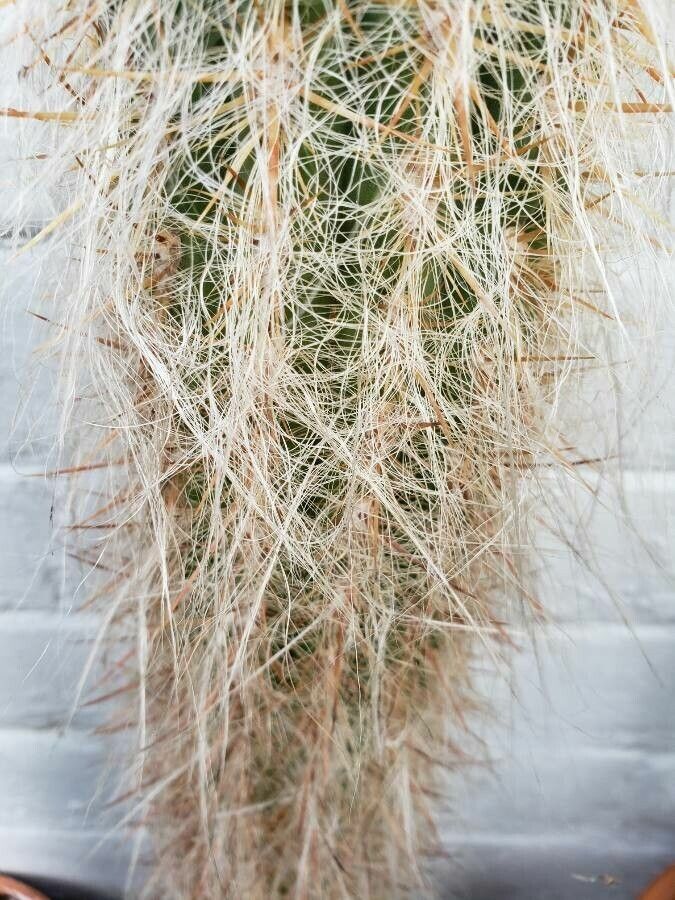
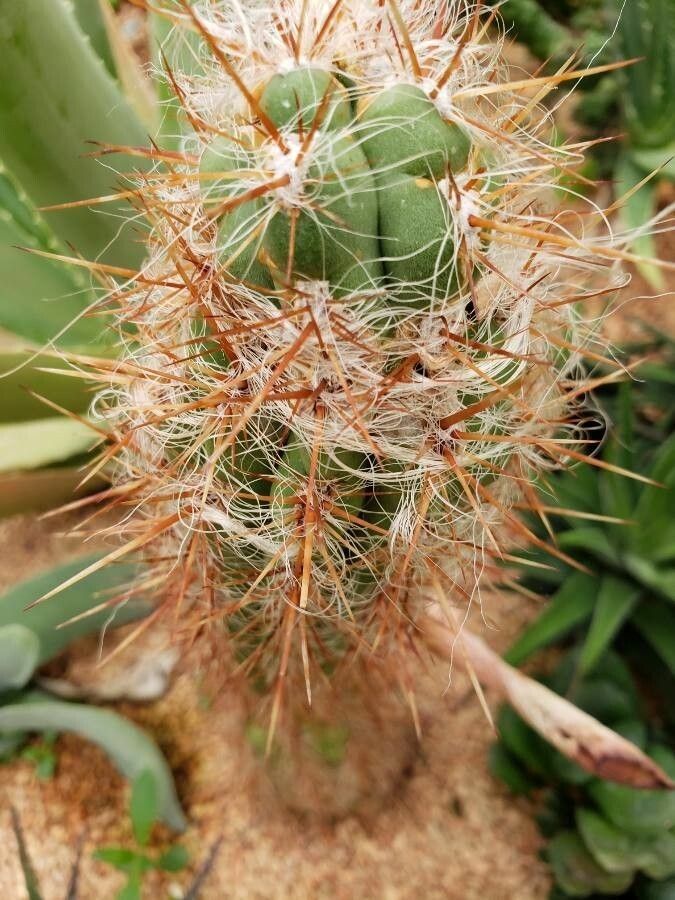
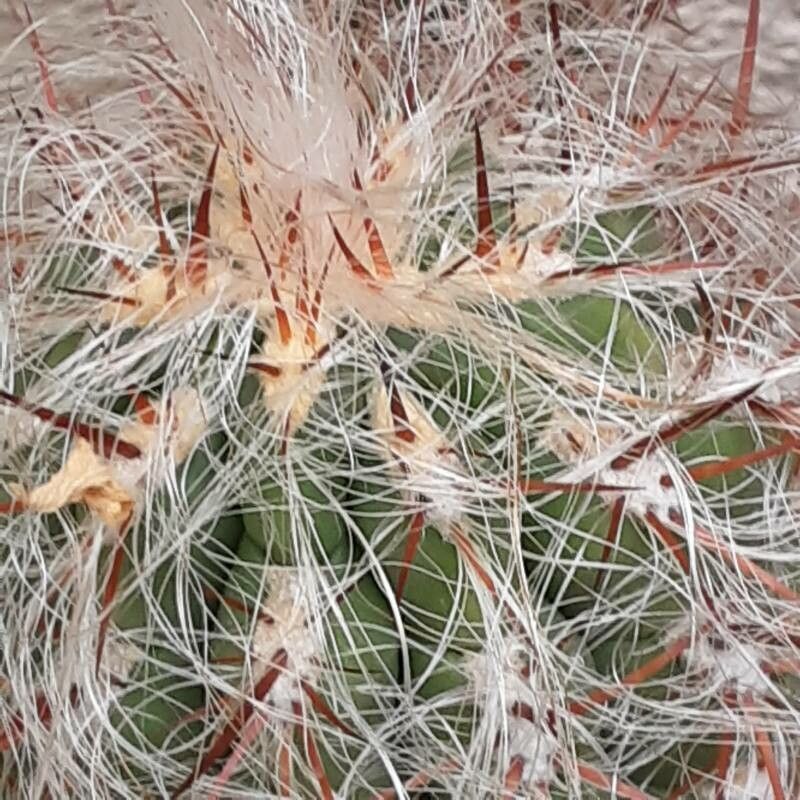
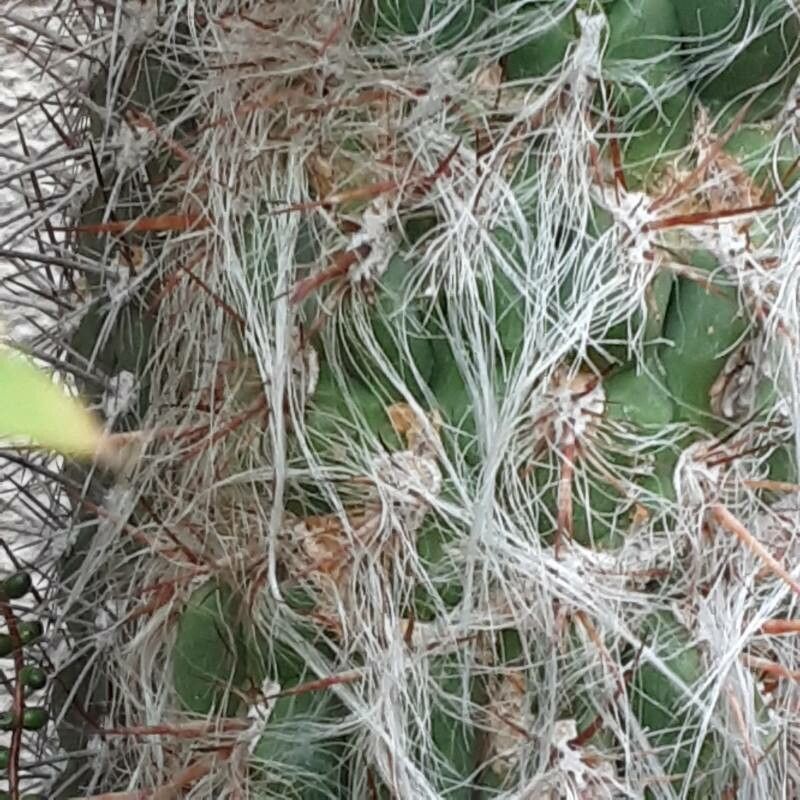
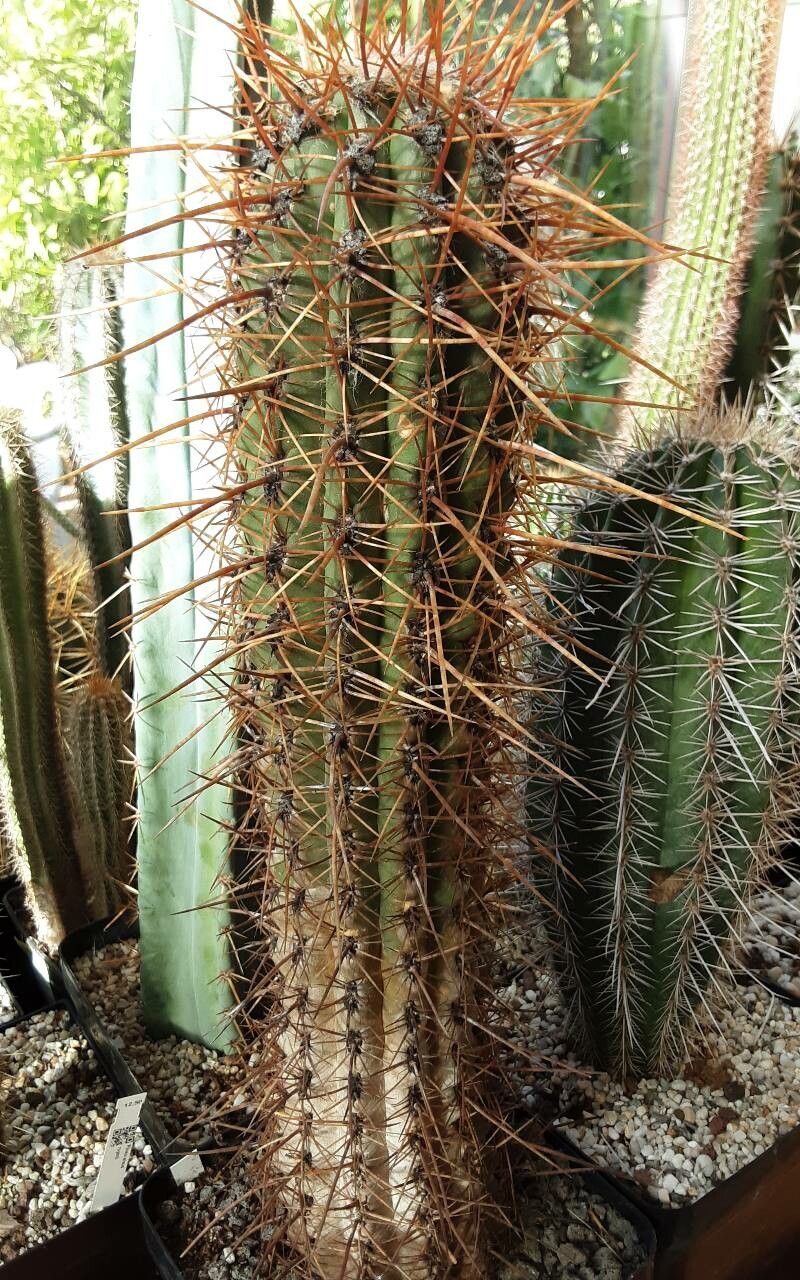
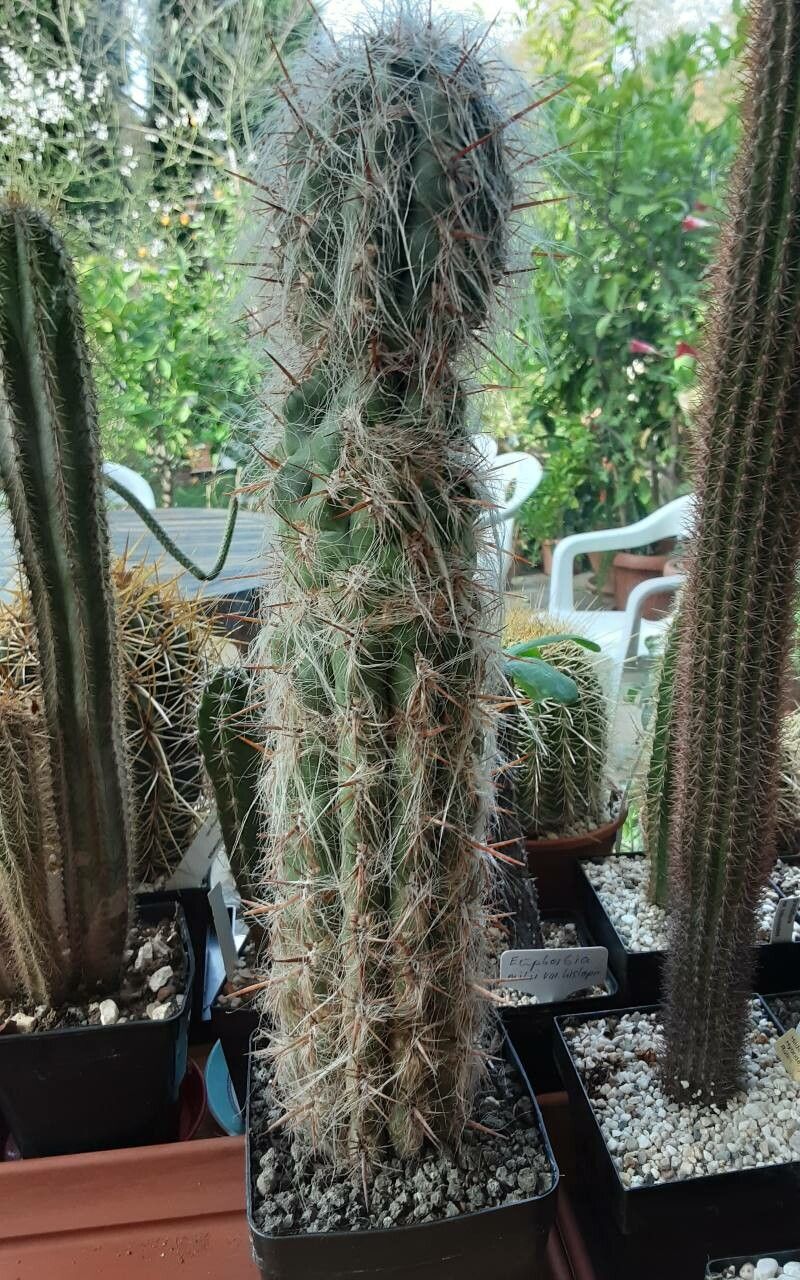
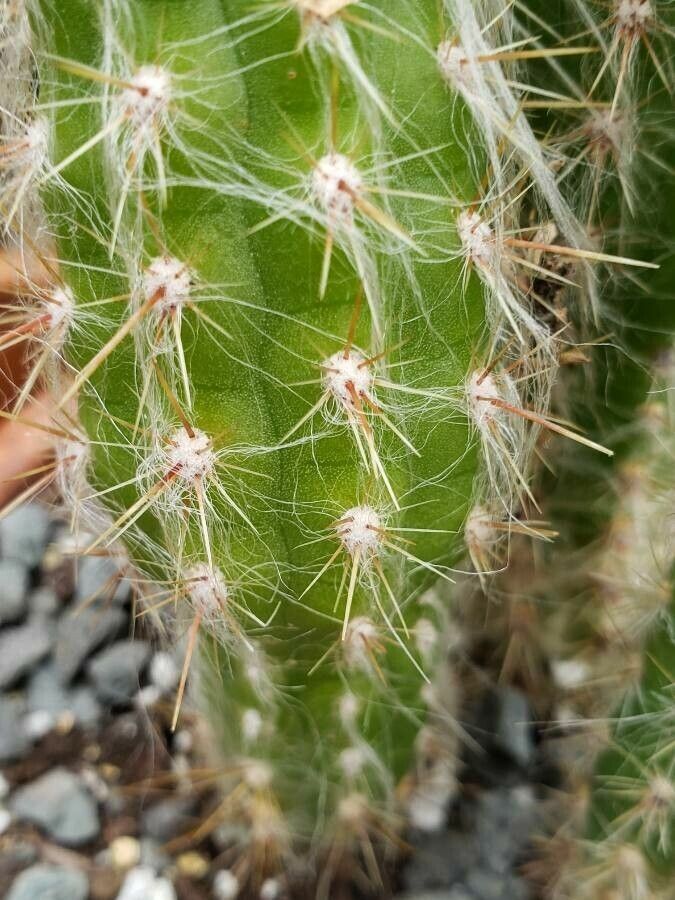
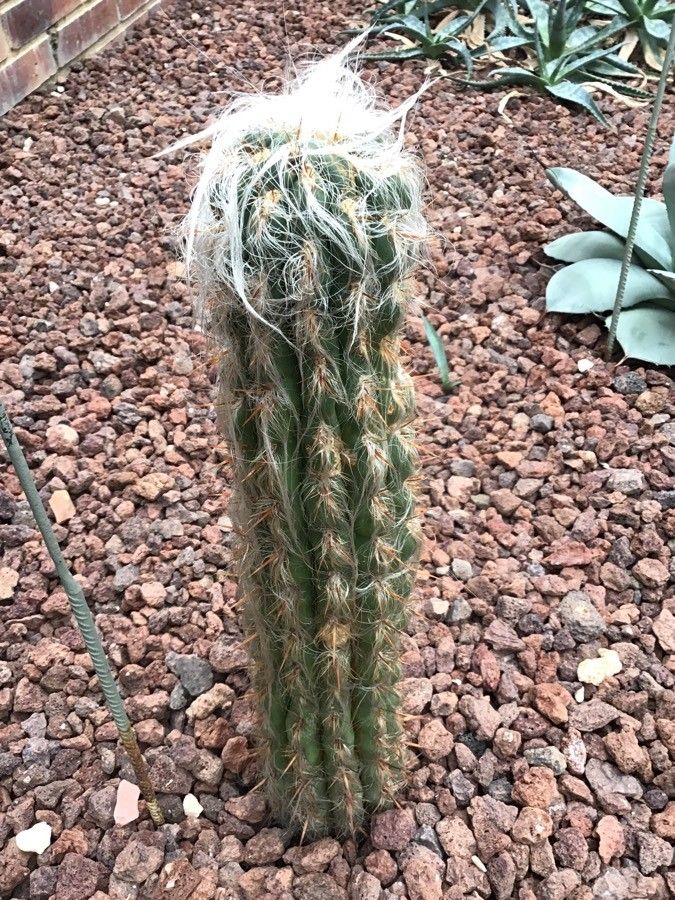
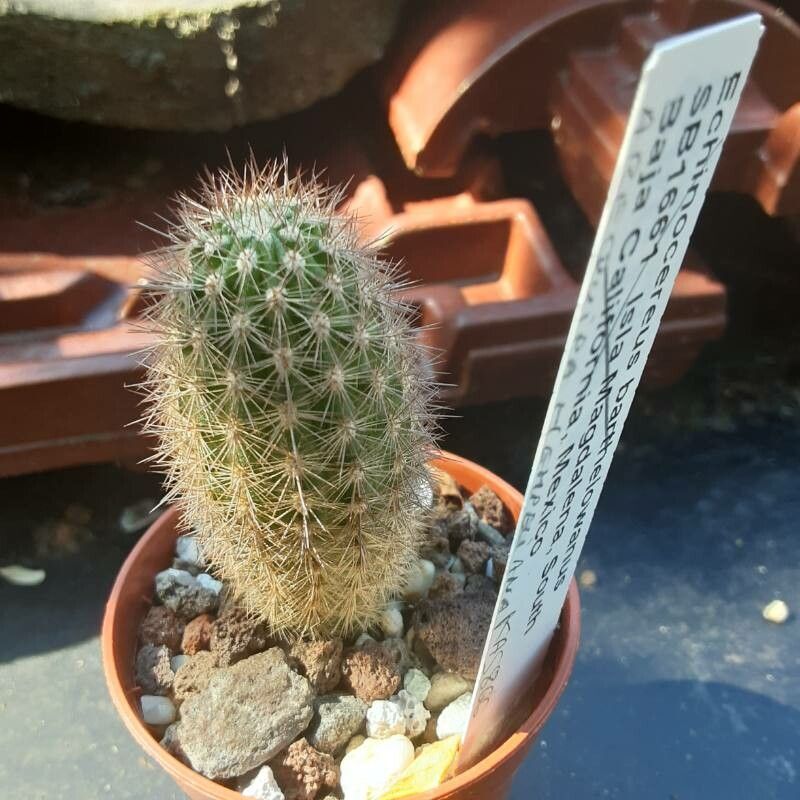
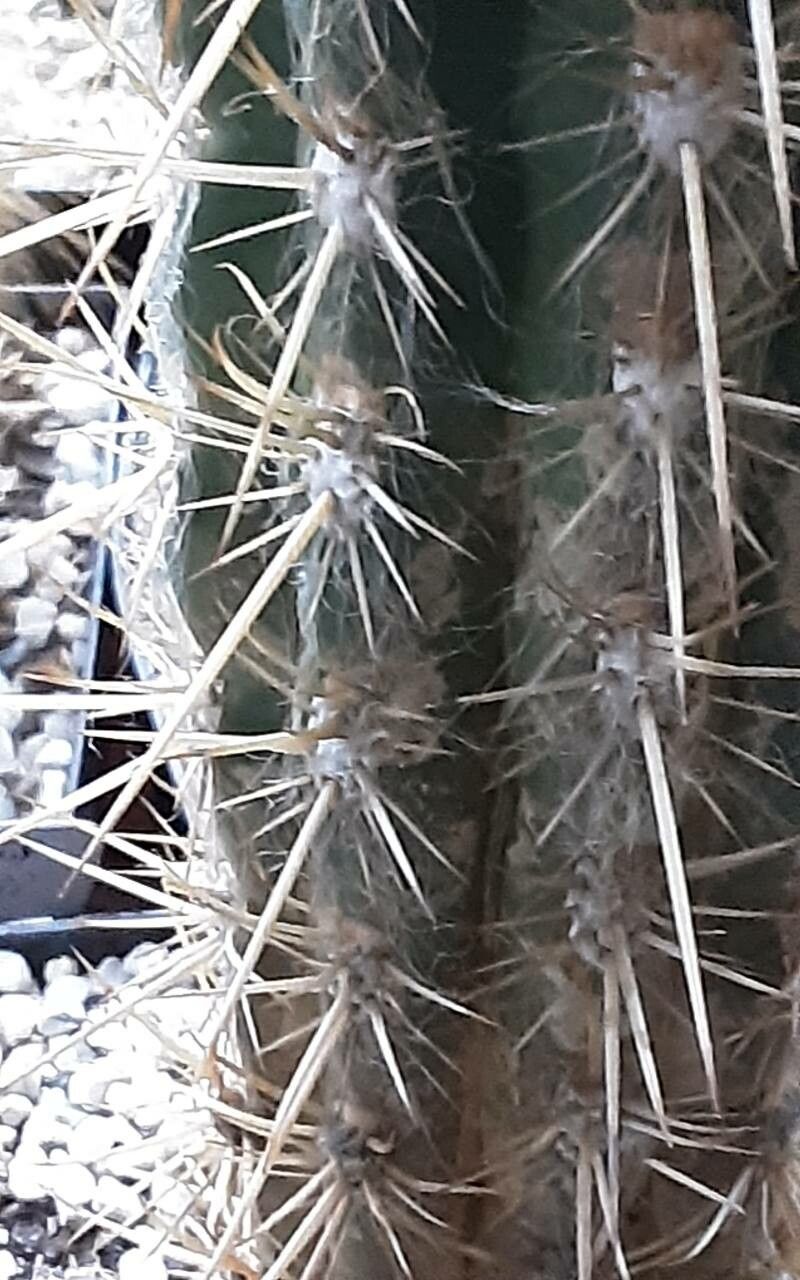
Oreocereus celsianus, commonly known as the "Old Man of the Andes," is a cactus species native to South America. This slow-growing plant can reach heights of up to 3 meters and a diameter of 30 centimeters. It has a cylindrical shape with numerous ribs and dense white spines that give it its distinctive "old man" appearance. During the summer months, Oreocereus celsianus produces large pink or purple flowers, which can grow up to 10 centimeters in diameter. These flowers are followed by small red or green fruits. This cactus is typically found at high altitudes, up to 4,000 meters above sea level, thriving in rocky areas and on slopes. It requires well-draining soil and full sun exposure for optimal growth. Indigenous communities have used Oreocereus celsianus for medicinal purposes, such as treating fever, inflammation, and digestive issues. However, it is important to note that consuming any part of this plant can be toxic if not properly prepared. Overall, Oreocereus celsianus is an intriguing addition to any succulent collection, offering a unique appearance and resilience in harsh growing conditions.
Old man of the andes resists disease well and tolerates normal care conditions without becoming sick easily. It can, however, be vulnerable to mealybugs; these pests may cause some damage but are generally not a serious threat. Regarding care, Old man of the andes is drought tolerant and does not require frequent watering. It can handle long periods without water and needs little fertilizer. It is, however, highly prone to root rot if lighting is poor and it is overwatered. Overall, Old man of the andes suits people who want to spend less time caring for their plants, but it is important to understand and meet its basic needs. It is particularly well-suited to those who are often away for long periods and may forget to water their plants regularly.
How to keep Oreocereus Celsianus.
Light
Originating from arid areas, the Old Man of the Andes prospers in full sun, its native habitat marked by intense sunlight and minimal shade. It will also tolerate partial sun, providing some adaptability in its growth.
Temperature
Old man of the andes does best in warm surroundings and needs higher temperatures during the growing season to encourage growth and metabolism. It prefers abundant sunlight, proper moisture levels, and good ventilation. However, it is vulnerable to damage from very low temperatures and from overwatering. It's important to maintain a balance and to avoid both excessively high temperatures and overly dry conditions.
Fertilizer
For Old man of the andes, only light applications of fertilizer once or twice a year during the growing season are needed. Do not fertilize in winter or in summer when the plant is dormant. Use less fertilizer for plants that have been repotted and wait a few months after repotting before you start feeding. Fertilizing promotes healthy growth and helps encourage flowering.
Botanical profile.
- Plant Type
- Succulent
- Life Cycle
- Perennial
- Genus
- Oreocereus
- Family
- Cactaceae
- Hardiness Zone
- 8
- Mature Height
- 3.05 m
- Mature Spread
- 11 cm
- Leaf Color
- Silver, Gray
- Leaf Type
- Evergreen
- Flower Color
- Pink, White
- Flower Size
- 5.08 cm to 6.35 cm
- Bloom Time
- Summer
- Planting Time
- Spring, Summer, Autumn
- Harvest Time
- Late summer, Early fall, Mid fall
- Native Area
- Bolivia, Peru
Other names.