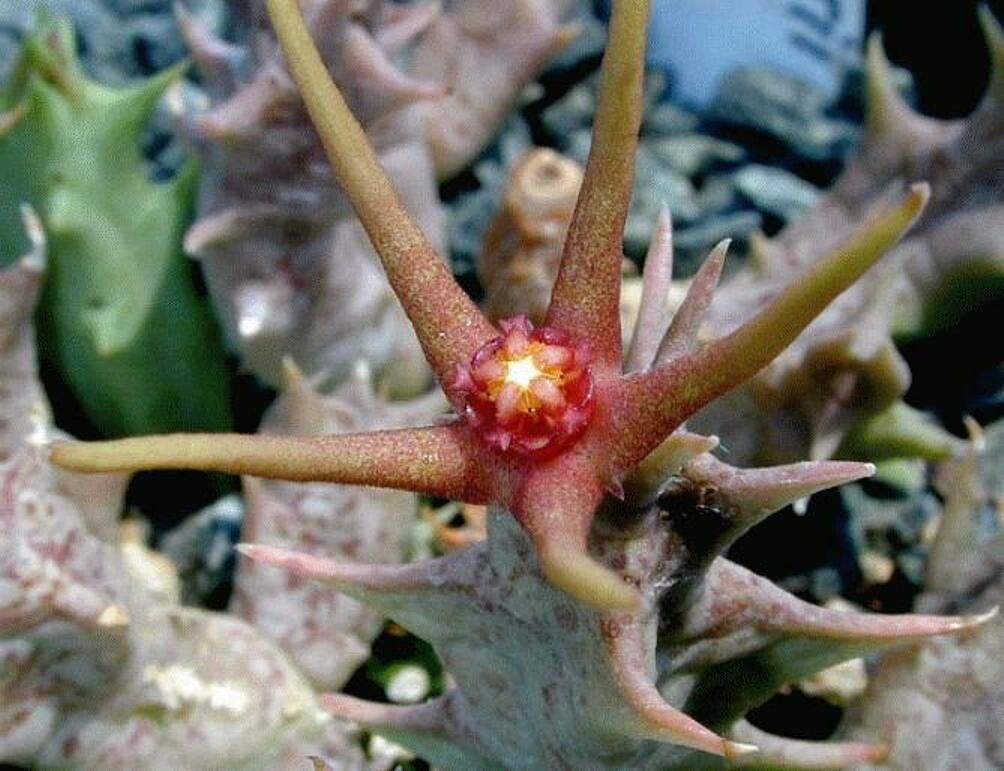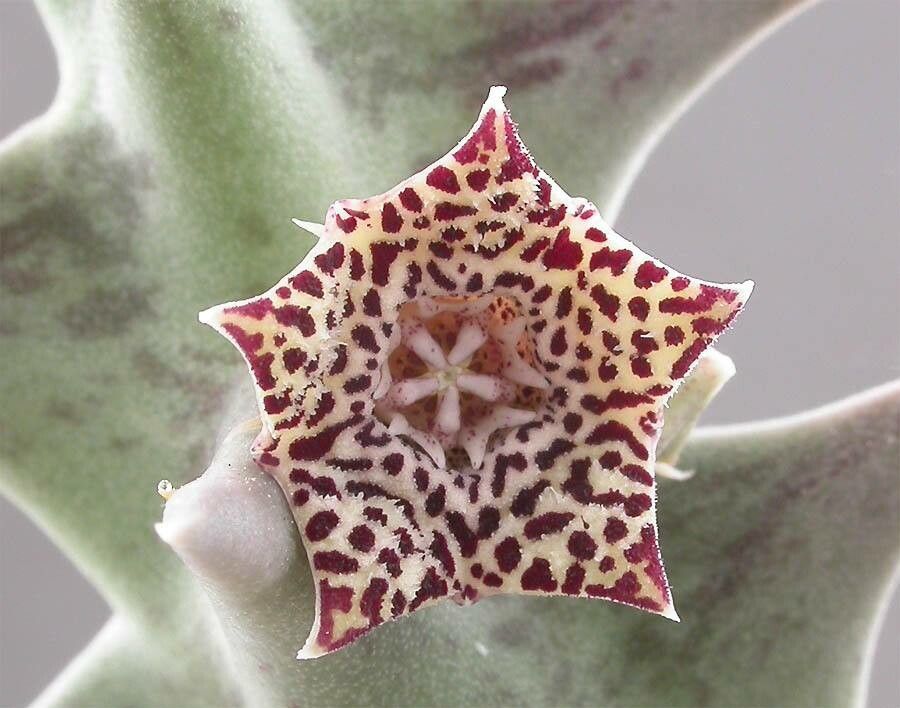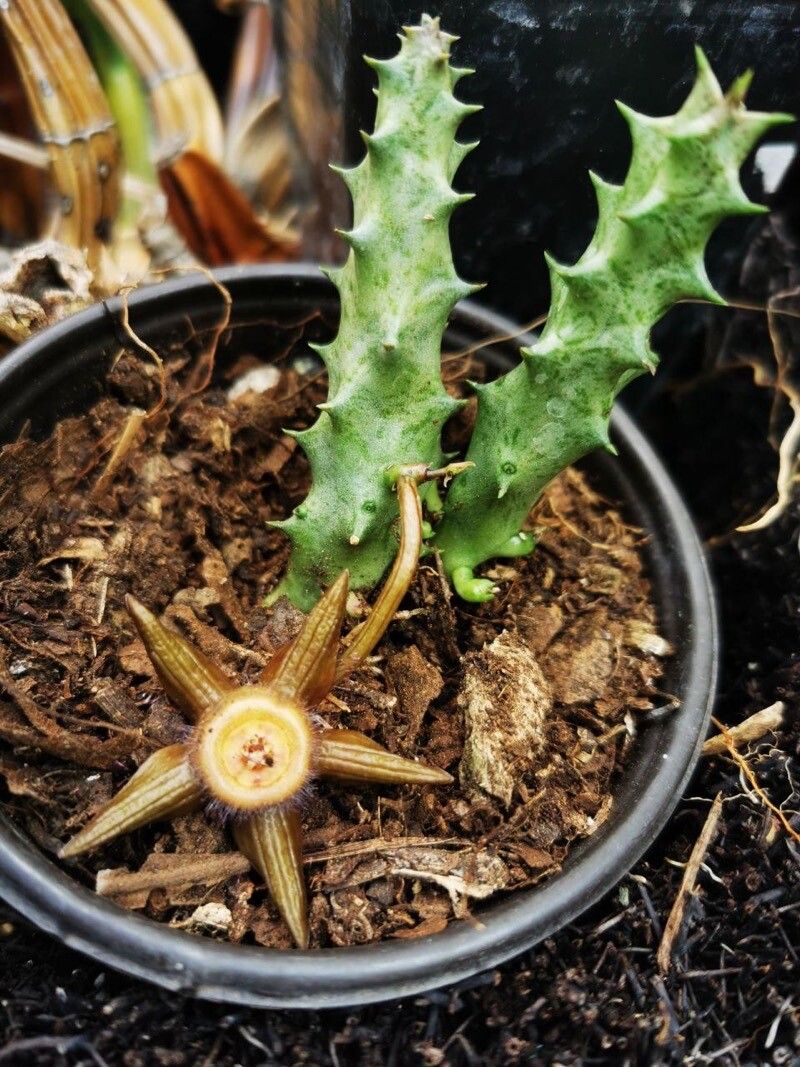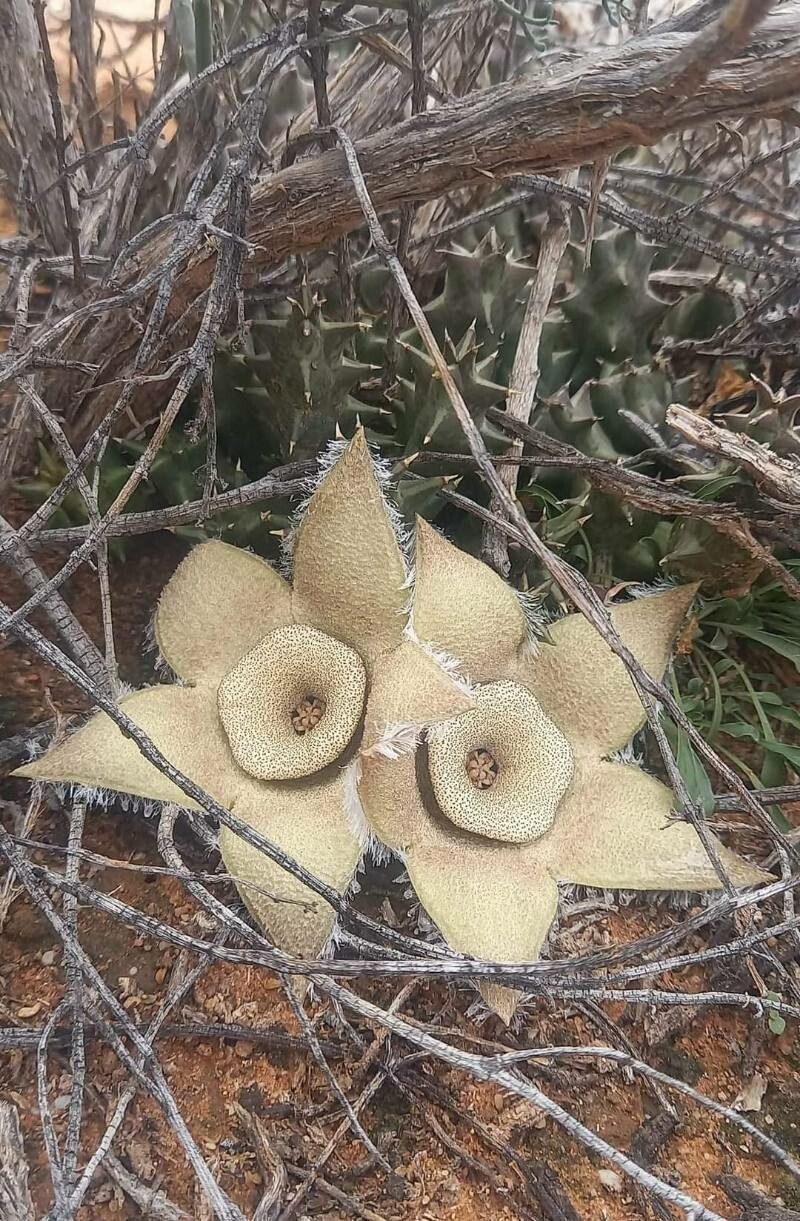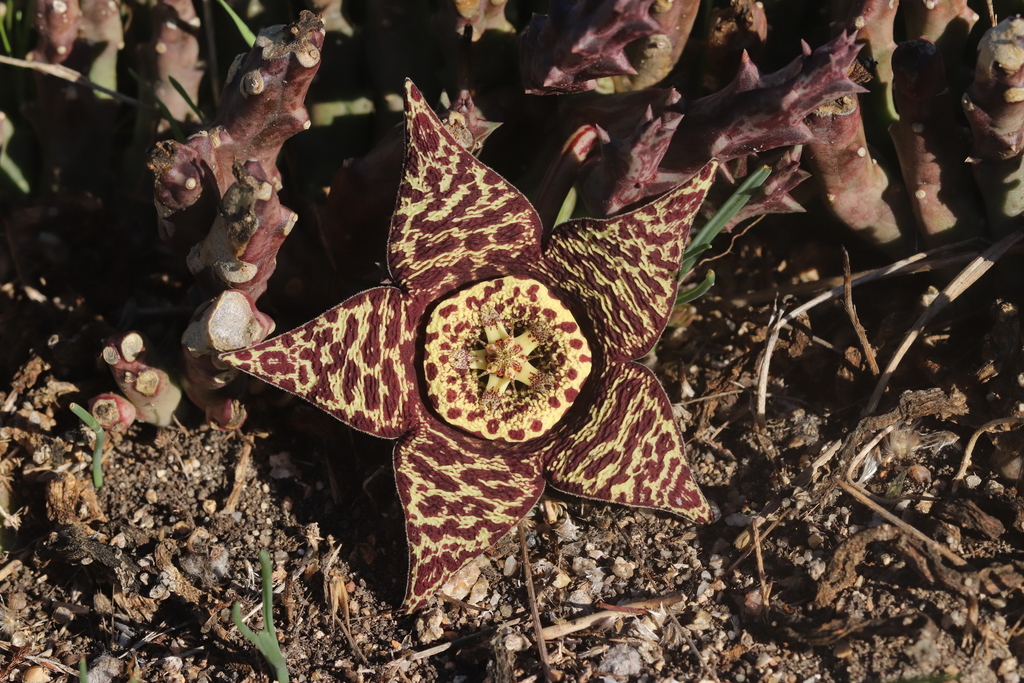
Orbea variegata is a succulent plant within the Apocynaceae family, native to South Africa. Commonly referred to as the Starfish Cactus due to its star-shaped flowers, this plant features thick, fleshy leaves that grow in opposite pairs and form a rosette at the base of each stem. The green, four-angled stems can reach up to 30 cm in length.
The star-shaped flowers of Orbea variegata have five pointed petals fused at their base, creating a tube-like structure. These flowers emit a distinctive odor reminiscent of rotting meat, which attracts flies for pollination.
Orbea variegata thrives in well-draining soil and requires moderate watering during its growing season in spring and summer. During its winter dormancy, it needs minimal water. Propagation can be achieved through stem cuttings or seeds.
Thanks to its unique appearance and low maintenance requirements, this plant is an excellent addition to both indoor and outdoor gardens. However, it is toxic if ingested by humans or pets, so caution is advised when handling it around children or animals.
Starfish Cactus has moderate disease resistance but is more sensitive to humidity and overwatering. It becomes more prone to disease when it receives little light and is overwatered. In terms of care, Starfish Cactus is drought-tolerant and can withstand long periods without watering. It needs little fertilizer and only occasional pruning. These traits make it appropriate for people of all experience levels, especially those who prefer to spend less time on plant care and who may sometimes be away from home for extended periods. It’s a good option for people who do not want to devote much time to plant care yet still want an easy-to-maintain plant.
How to keep Orbea Variegata.
Light
Starfish Cactus does best with full sun but can tolerate situations where sunlight is scarcer. In its natural environment it thrives in abundant sunshine. Too little light stunts growth, while too much can cause leaf scorch.
Water
Water this plant thoroughly, but allow the soil to dry out in between watering. In the winter, water even less often, just enough to keep the leaves from shriveling. Orbea variegata is quite drought-tolerant and can survive long periods without water. All of the soil should be dry before watering. If the soil is still moist, you risk giving this plant too much water which can make it start to rot. When you water this plant, water well and then allow the soil to dry out completely before you water it again.
Humidity
This plant prefers dry conditions, so don't mist it. However, watering it less often can also thrive in higher humidity.
Temperature
Starfish Cactus originates from areas with moderate temperatures and prefers a canopy-like habitat. Its preferred temperature range is 59 to 100.4°F (15 to 38℃). During colder months, consider increasing indoor ambient temperatures to match.
Fertilizer
For Starfish Cactus, light applications of fertilizer once or twice a year during the growing season are sufficient. Avoid fertilizing in winter and summer when the plant is dormant. Reduce fertilization for repotted plants and wait a couple of months after repotting before applying fertilizer. Fertilizing supports healthy growth and encourages blooms.
Pot & Repot
When repotting a Starfish Cactus, pick a pot slightly larger than the current one that provides good drainage. Use a gritty, well-draining cactus or succulent mix. Carefully lift the plant out of its old container, brush away excess soil, and plant it at the same depth. Wait several days before watering so any root injury can heal. Repot in spring or fall, and place it in a brightly lit spot.
Toxicity
Orbea variegata has no toxic effects reported.
Further reading →
The toxicity and danger assessments provided are for reference only. We do not assure their accuracy, so it's crucial not to depend on them. Seek professional advice when necessary for accurate guidance.
Botanical profile.
- Plant Type
- Succulent
- Life Cycle
- Perennial
- Genus
- Orbea
- Family
- Apocynaceae
- Hardiness Zone
- 7-12
- Mature Height
- 10 cm to 20 cm
- Mature Spread
- 76 cm
- Leaf Color
- Green, Dark Green
- Leaf Type
- Evergreen
- Flower Color
- Yellow, Purple
- Flower Size
- 5.08 cm to 7.62 cm
- Bloom Time
- Mid summer, Late summer, Early fall
- Planting Time
- Spring, Summer, Autumn
- Harvest Time
- Fall, Winter
- Native Area
- South Africa, Botswana