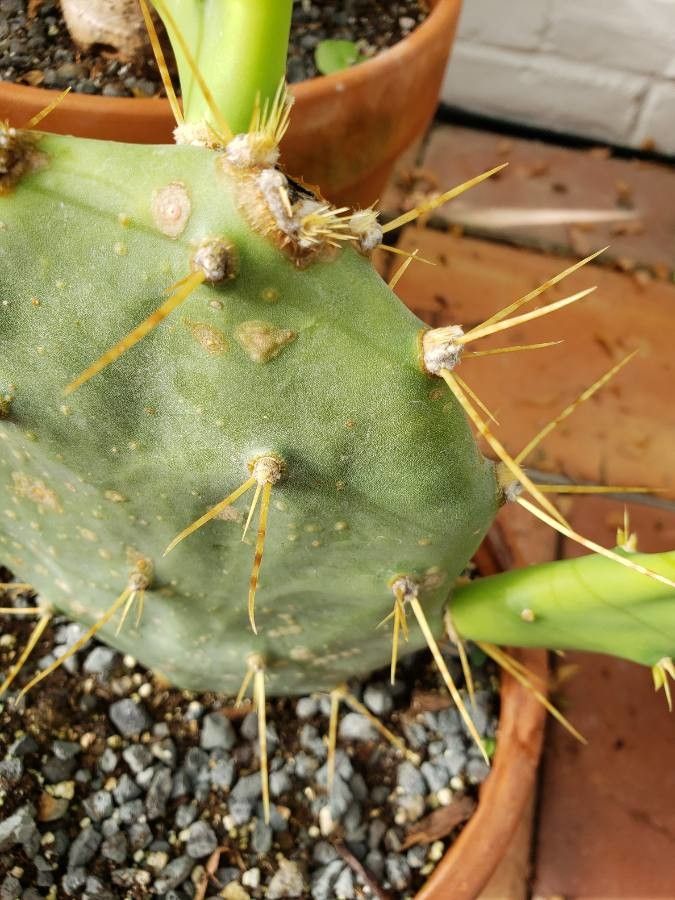
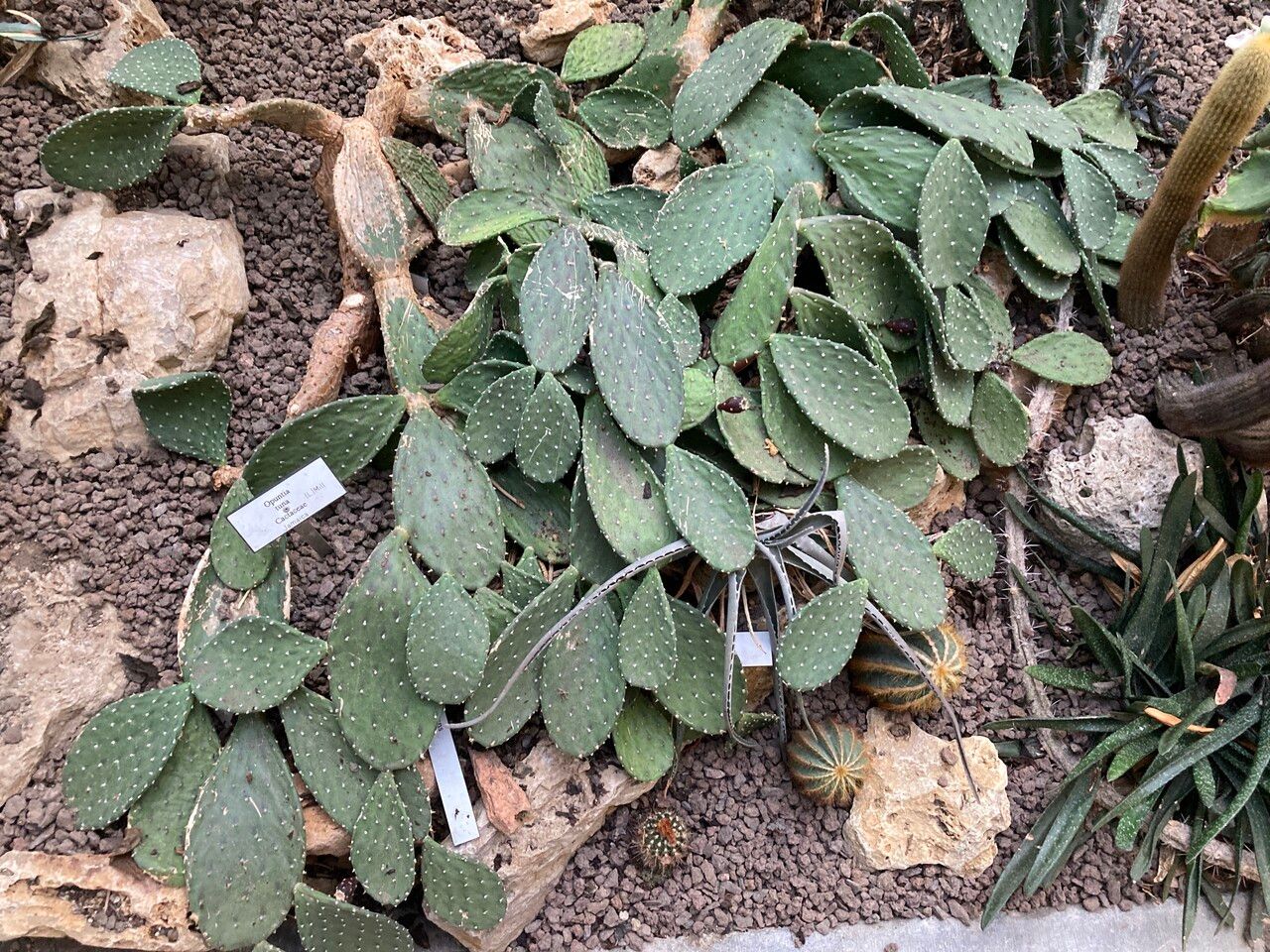
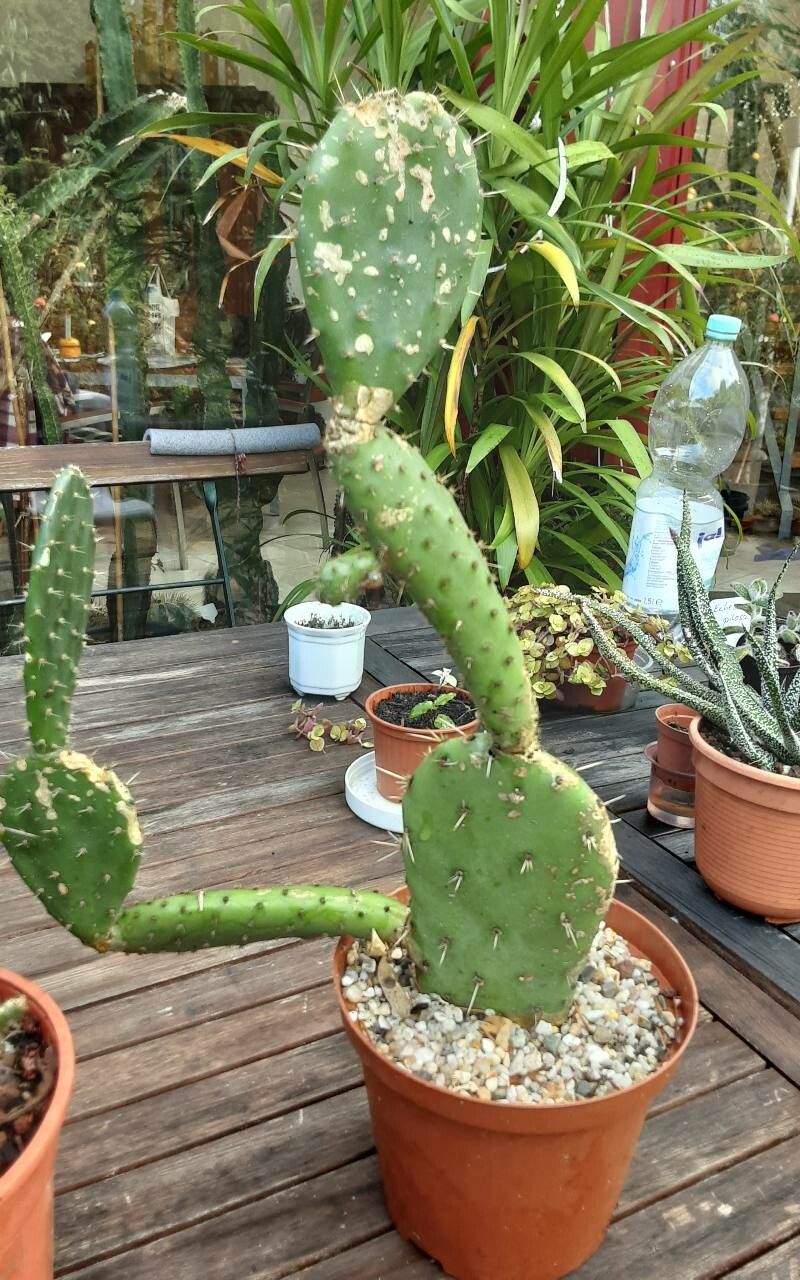
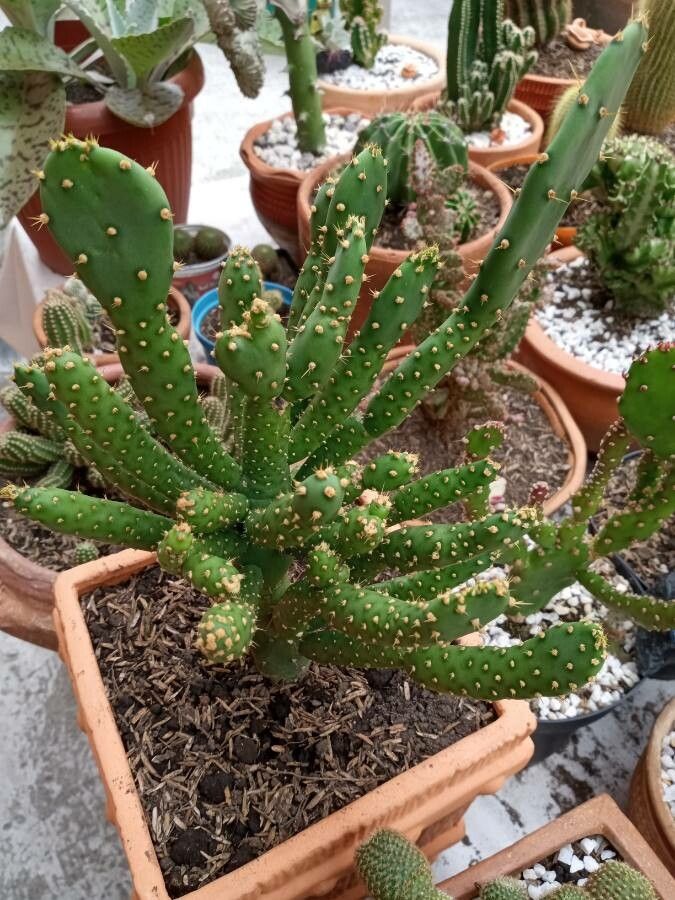
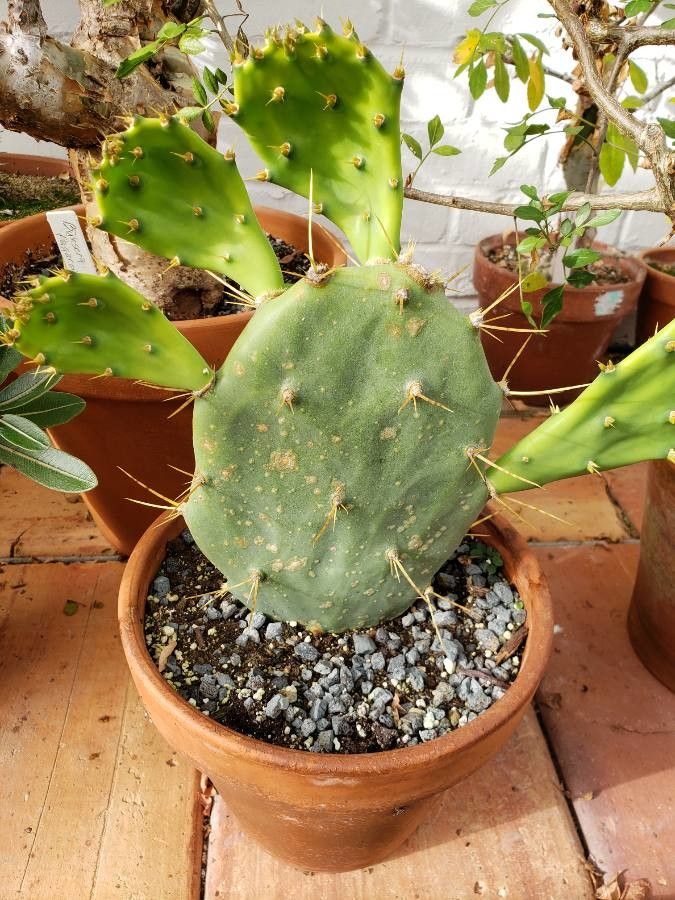
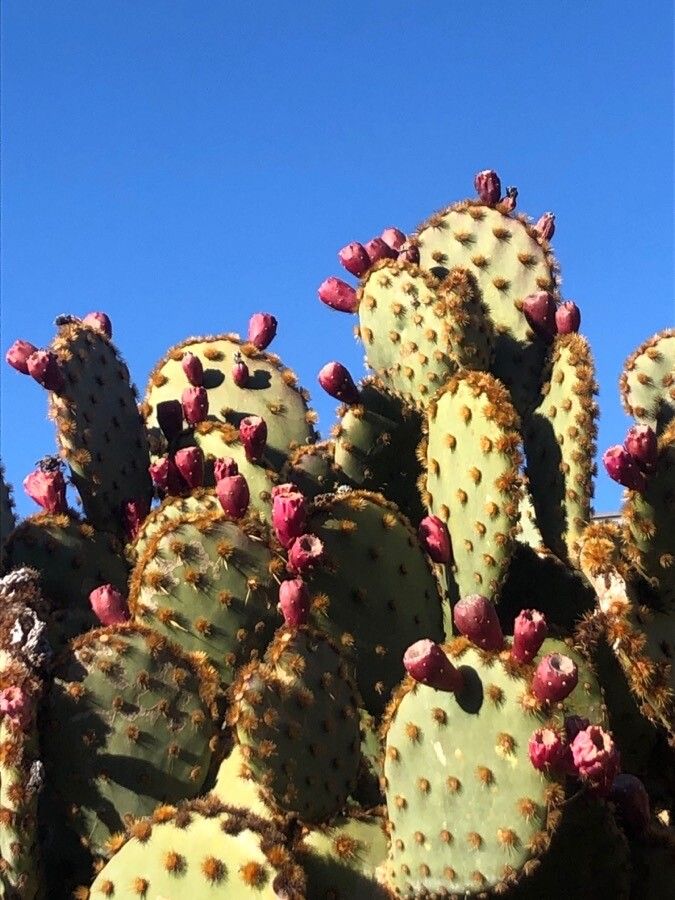
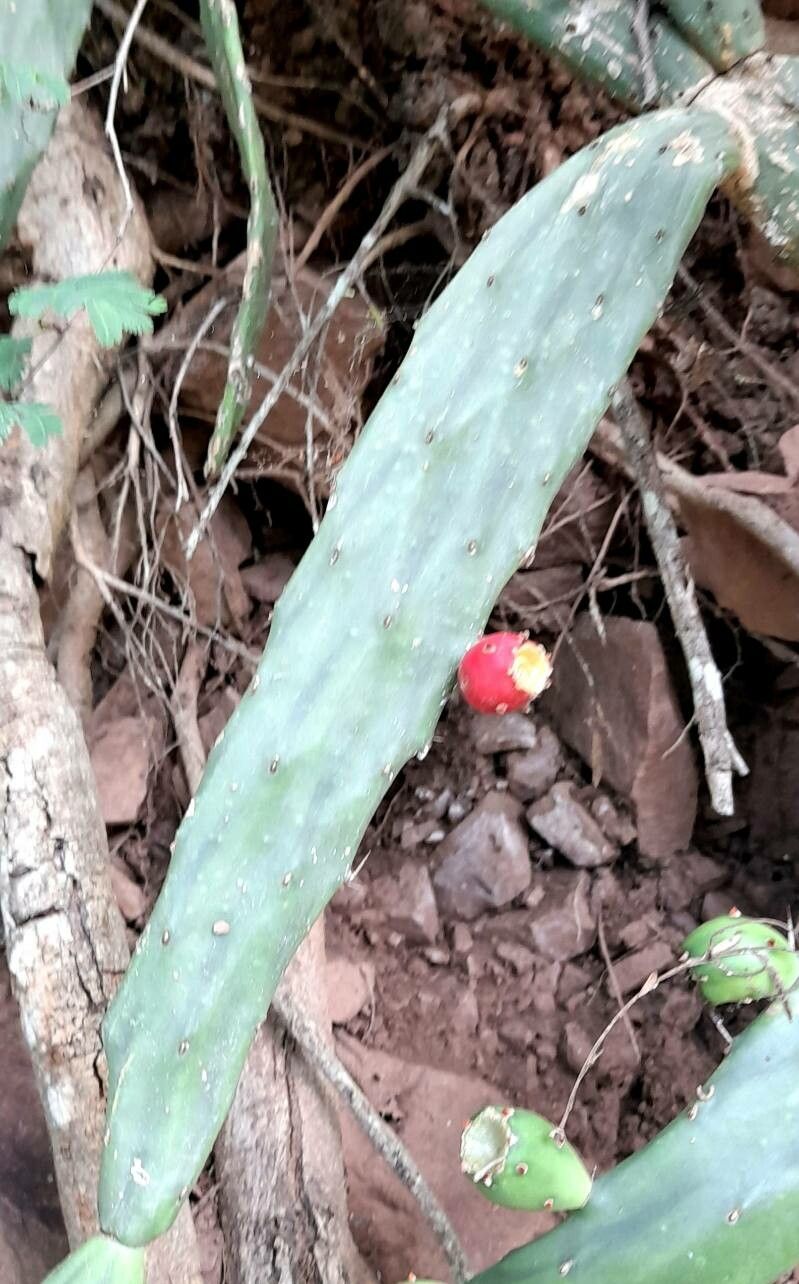
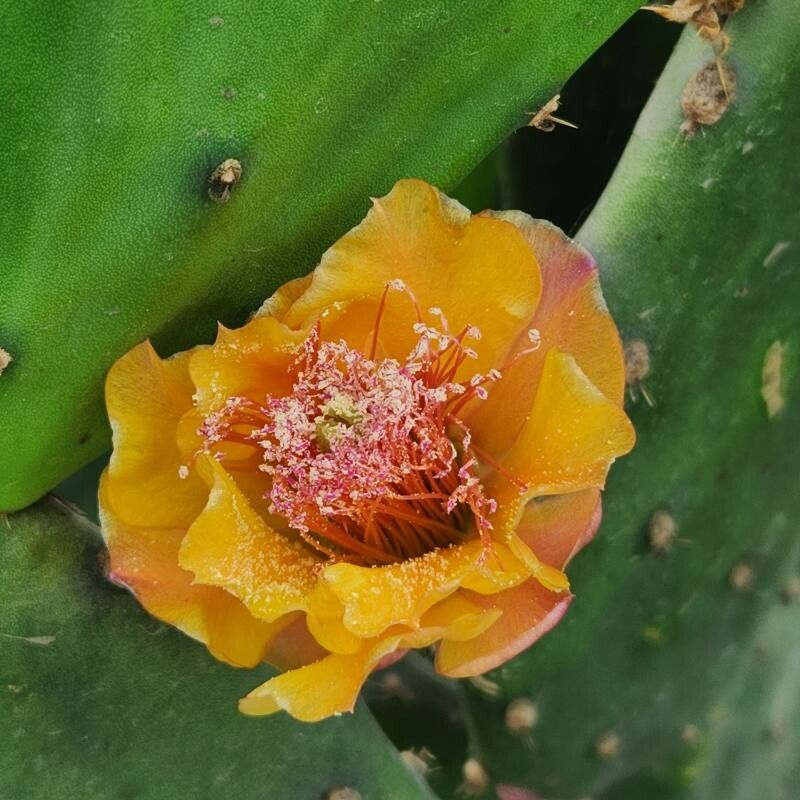
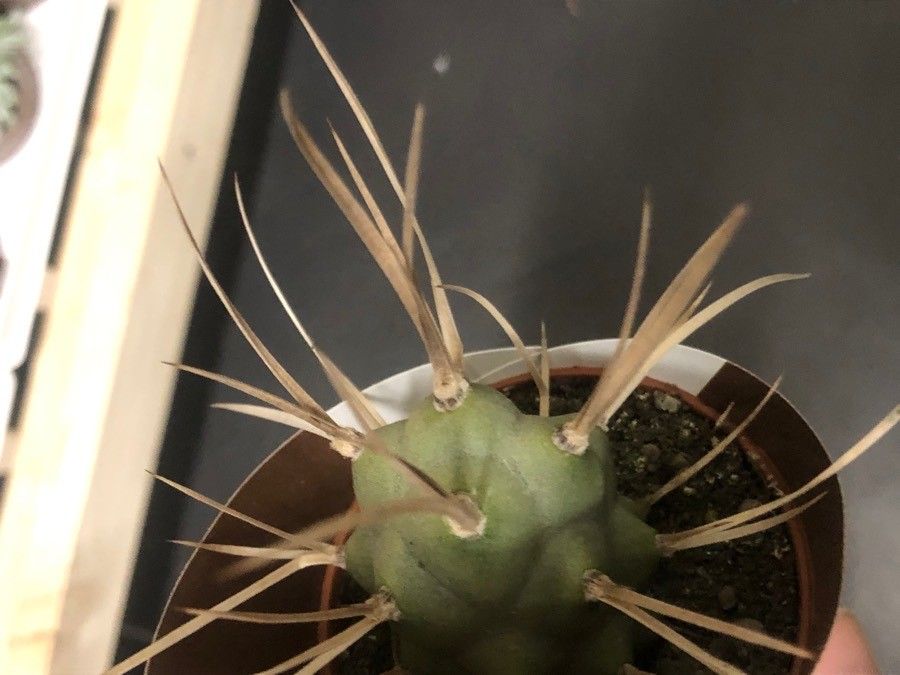
Opuntia tuna is a species of cactus in the genus Opuntia. It is endemic to Hispaniola (in the Dominican Republic), Jamaica and other Caribbean Islands. The first description was in 1753 by Carl Linnaeus as Cactus tuna. Philip Miller described it as Opuntia tuna in 1768. It has one taxonomic synonym.
Elephantear pricklypear has strong disease resistance and typically tolerates normal care without getting sick easily. It can still be prone to mealybugs, which may cause some damage but are generally not a serious danger. In terms of care, Elephantear pricklypear is drought-tolerant and does not need frequent watering. It can handle long stretches without water and requires little fertilizer. However, it is very susceptible to root rot if lighting is poor and it is overwatered. Overall, Elephantear pricklypear suits people who prefer to spend less time on plant care, though it’s important to know and meet its basic needs. It is especially well-suited to those who are away for extended periods and might forget to water their plants regularly.
How to keep Opuntia Tuna.
Light
Native to arid regions, the Elephantear pricklypear prospers in full sun, its native habitat marked by intense sunlight and very little shade. It will also tolerate partial sun, giving it some flexibility in how it grows.
Temperature
Elephantear pricklypear does best in warm conditions and needs higher temperatures during the growing season to support growth and metabolic processes. It prefers plenty of sunlight, suitable moisture levels, and good air circulation. However, it can be damaged by excessively low temperatures and by overwatering. It’s important to maintain a balance and also avoid very high temperatures and excessively dry conditions.
Fertilizer
For Elephantear pricklypear, light applications of fertilizer once or twice a year during the growing season are sufficient. Avoid fertilizing in winter and in summer, when the plant is dormant. Reduce the amount of fertilizer for recently repotted plants and wait a couple of months after repotting before you start feeding again. Fertilizing promotes healthy growth and helps produce blooms.
Botanical profile.
- Plant Type
- Shrub, Succulent
- Life Cycle
- Perennial
- Genus
- Opuntia
- Family
- Cactaceae
- Hardiness Zone
- 10-11
- Mature Height
- 0 cm to 8 cm
- Mature Spread
- 2.13 m to 3.96 m
- Leaf Color
- Green
- Leaf Type
- Evergreen
- Flower Color
- Yellow, Orange
- Flower Size
- 6.35 cm to 10.16 cm
- Bloom Time
- Summer
- Planting Time
- Spring, Summer, Autumn
- Harvest Time
- Late summer, Fall
Other names.