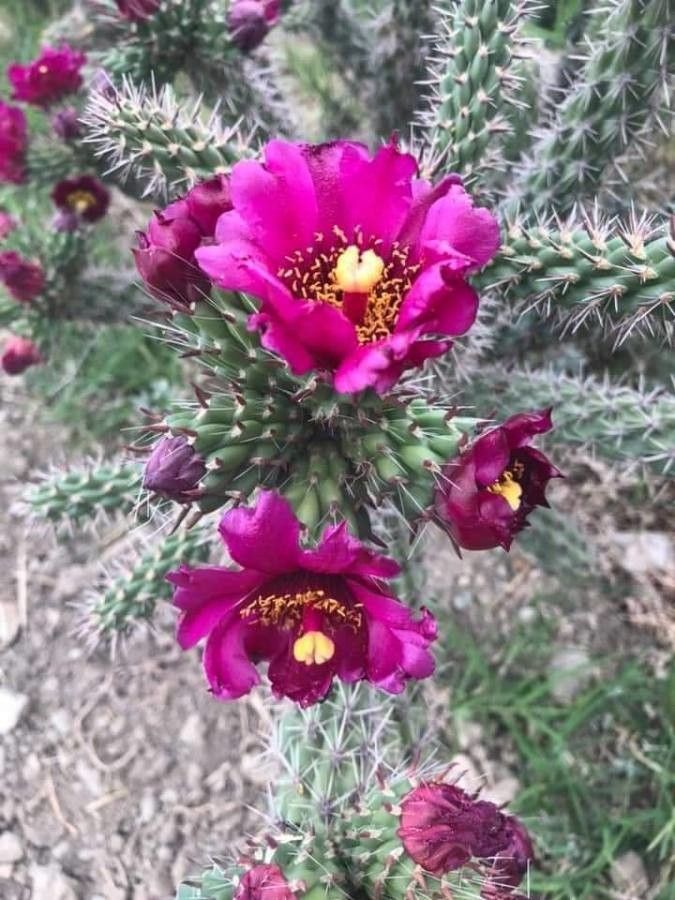
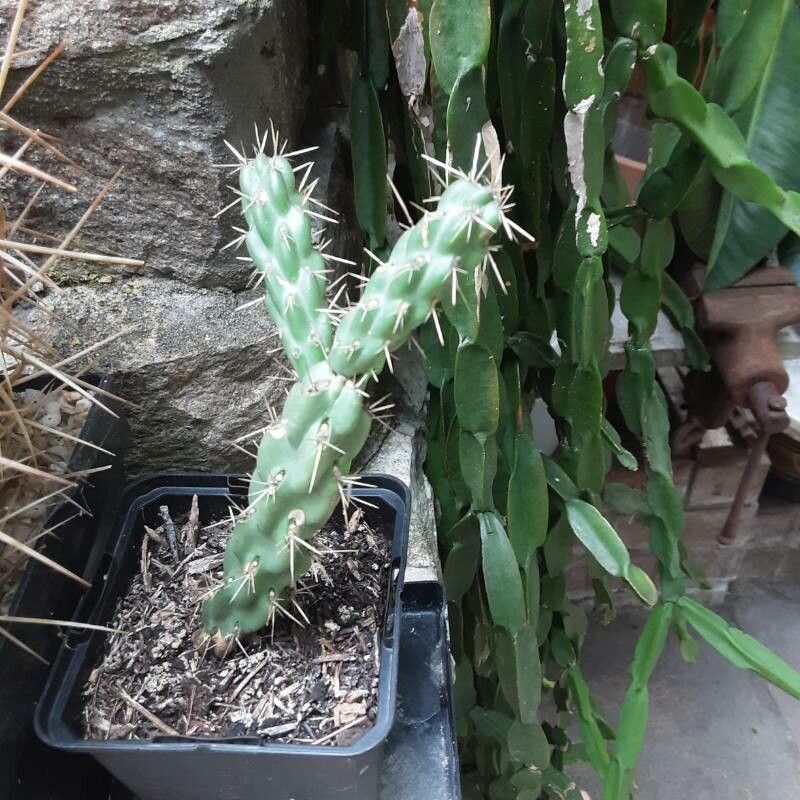
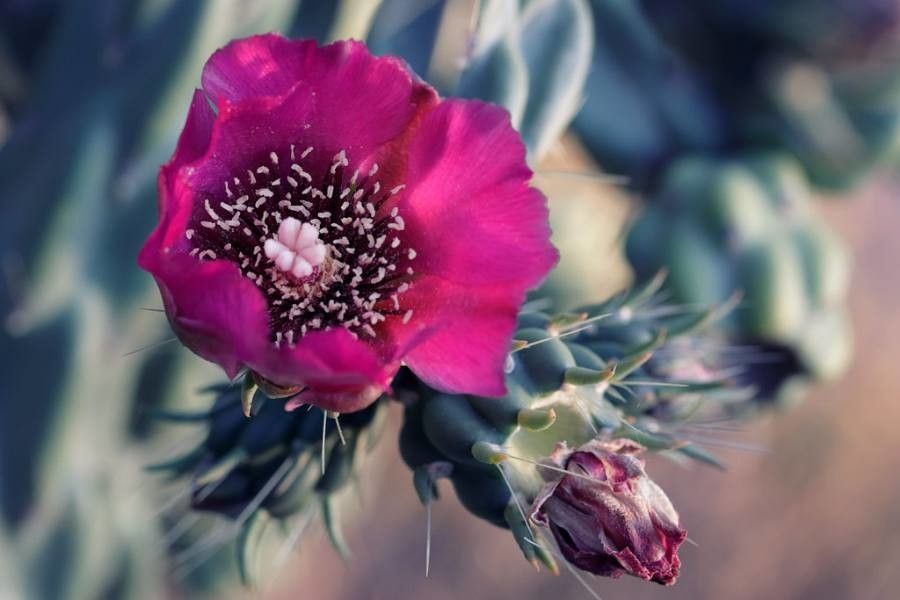
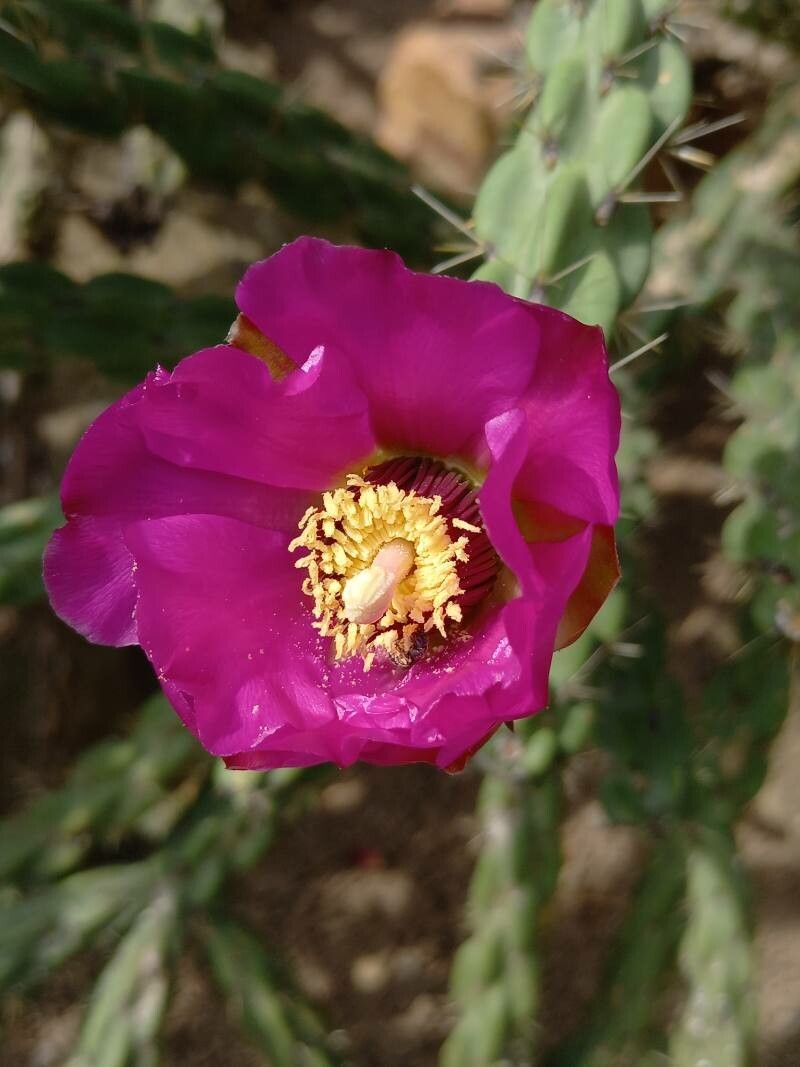
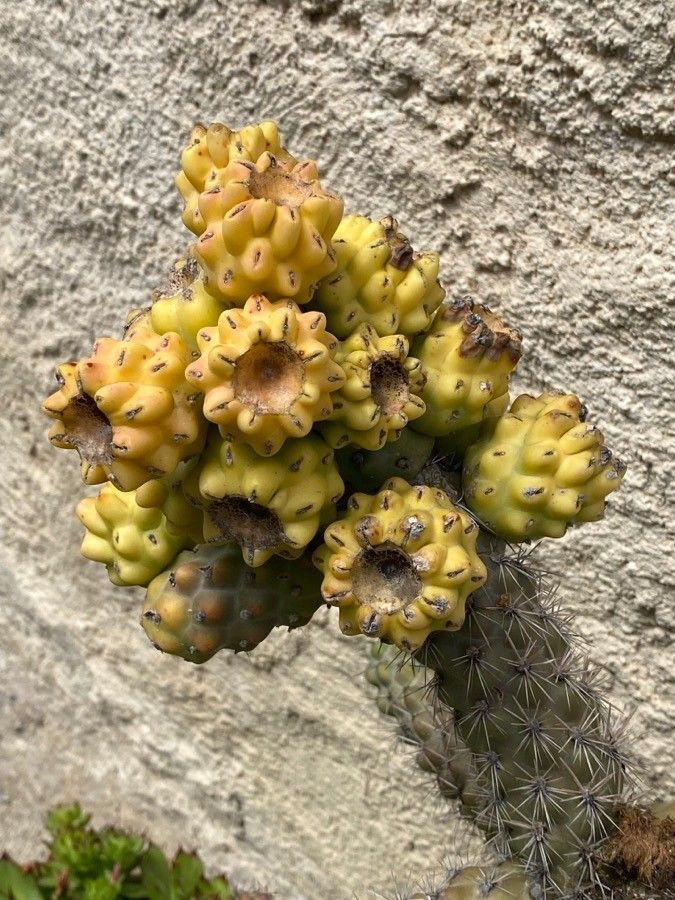
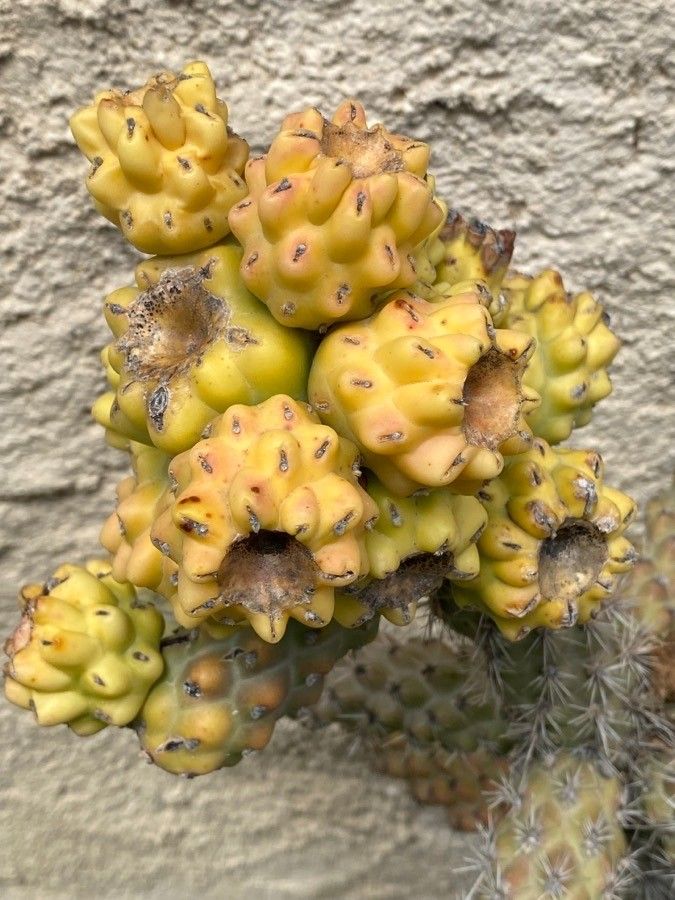
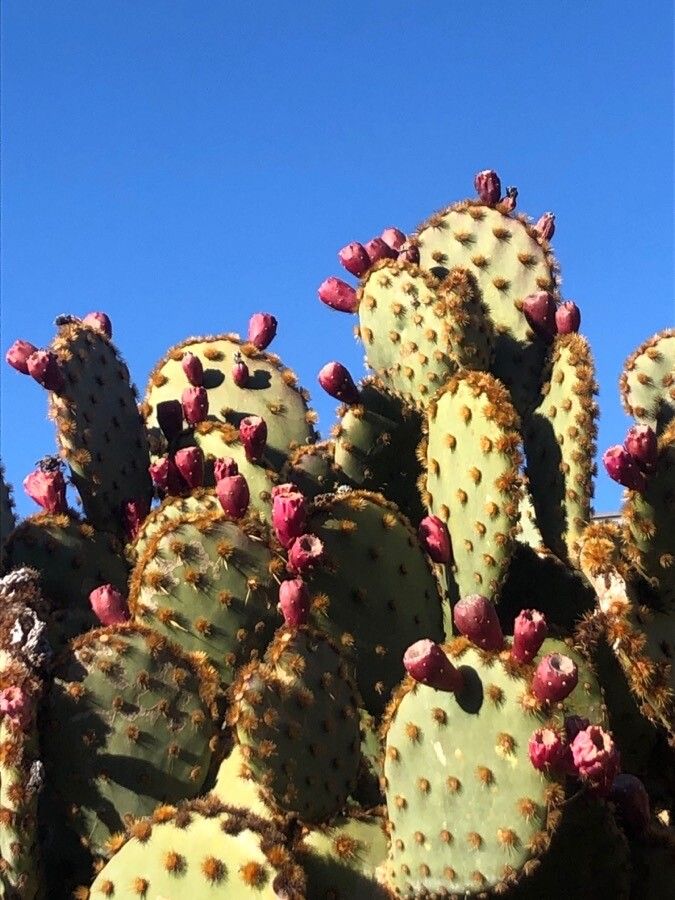
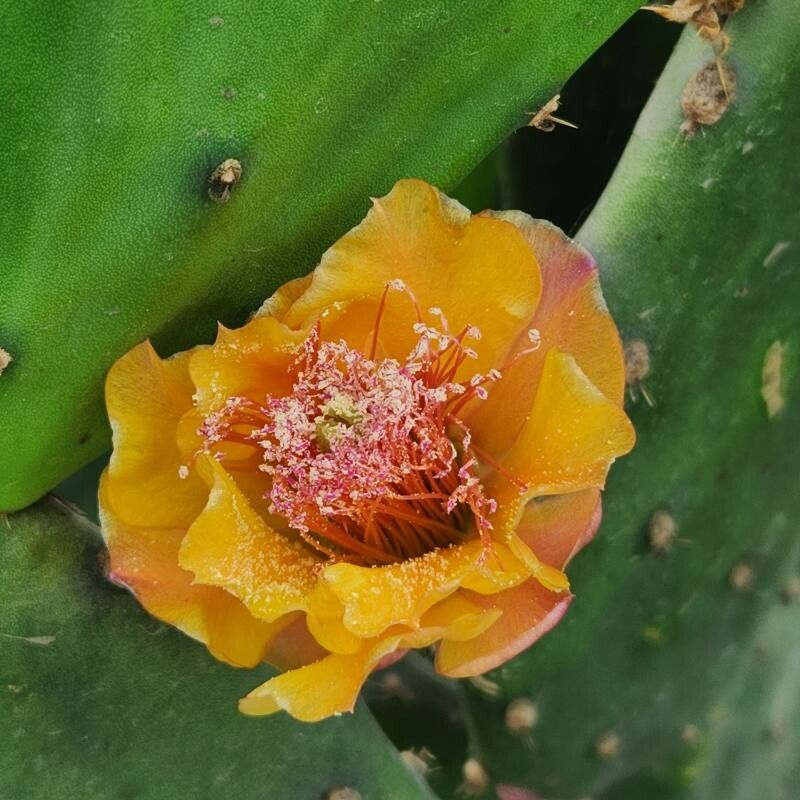
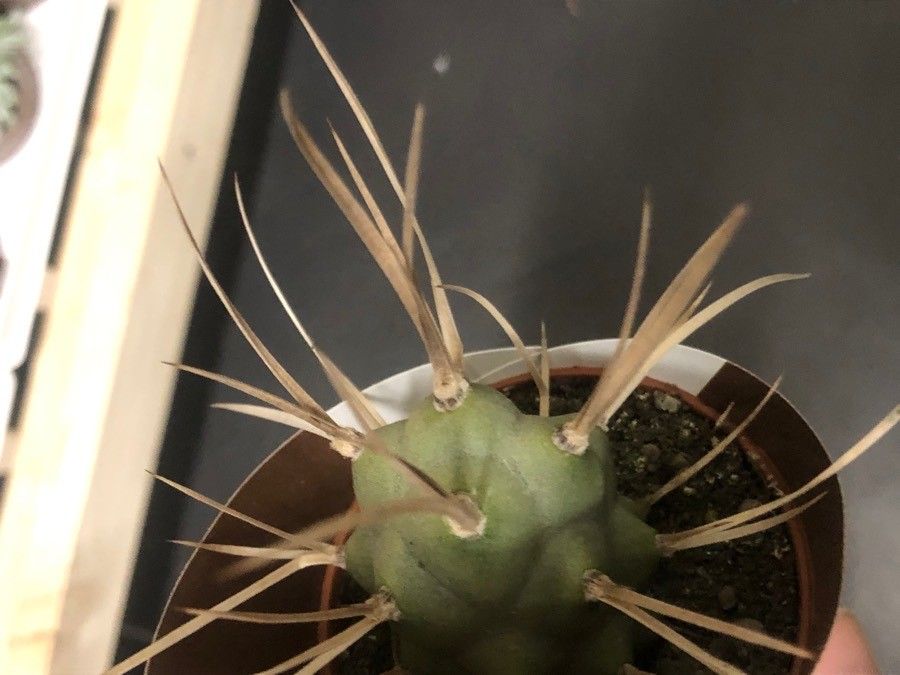
Cylindropuntia imbricata, the cane cholla (or walking stick cholla, tree cholla, chainlink cactus, etc.), is a cactus found in the Southwestern United States and northern Mexico, including some cooler regions in comparison to many other cacti. It occurs primarily in the arid regions of the Southwestern United States in the states of Kansas, Oklahoma, Texas, New Mexico, Arizona, Colorado, and Nevada. It is often conspicuous because of its shrubby or even tree-like size, its silhouette, and its long-lasting yellowish fruits.
Tree cholla shows strong resistance to diseases and generally copes well under typical care without becoming ill easily. That said, it can be vulnerable to mealybugs; these pests may cause some harm but are usually not a major danger. Regarding care, Tree cholla is tolerant of drought and does not need frequent watering. It can endure extended stretches without water and requires minimal fertilization. However, if it receives poor light and is watered too much, it becomes very prone to root rot. In summary, Tree cholla is a good choice for people who prefer low-maintenance plants, though it’s important to meet its basic needs. It is especially appropriate for those who are away for long periods and might forget to water regularly.
How to keep Opuntia Imbricata.
Light
The tree cholla thrives beneath an unobstructed clear sky, receiving abundant light. It tolerates partial shade and can withstand diffused sunlight. Still, plentiful light encourages healthy, vigorous growth, particularly during important growth stages. Native to sunny habitats, the tree cholla can be harmed by insufficient light or by too much light, which may lead to sunscorch.
Temperature
Tree cholla prospers in areas similar to its native habitat, needing temperatures between 59 and 100 °F (15 and 38 °C). In cooler seasons it can tolerate brief cold spells but should be protected from prolonged cold.
Fertilizer
For Tree cholla, small amounts of fertilizer applied one to two times a year during the growing season are sufficient. Avoid fertilizing in winter and in summer when the plant is dormant. Reduce fertilizer for repotted plants and wait a couple of months after repotting before fertilizing. Fertilizing supports healthy growth and encourages blooms.
Botanical profile.
Other names.