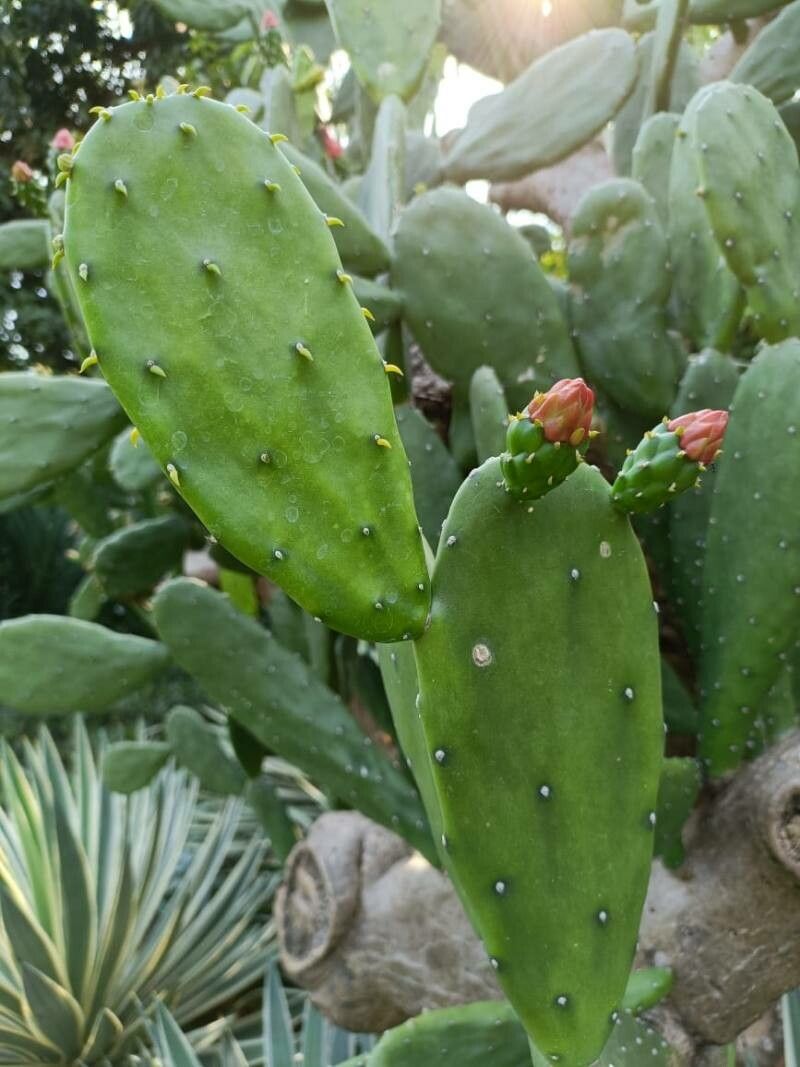
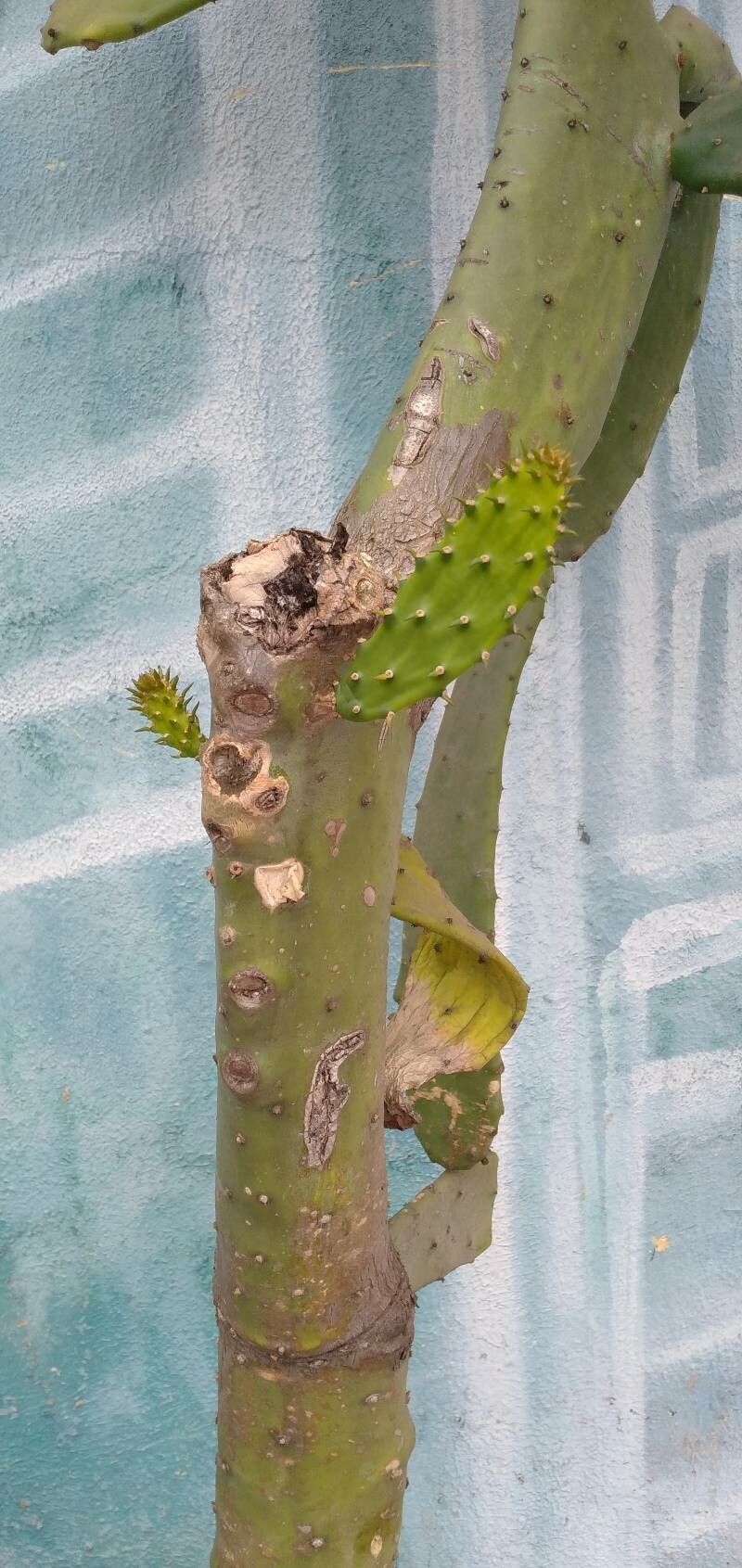
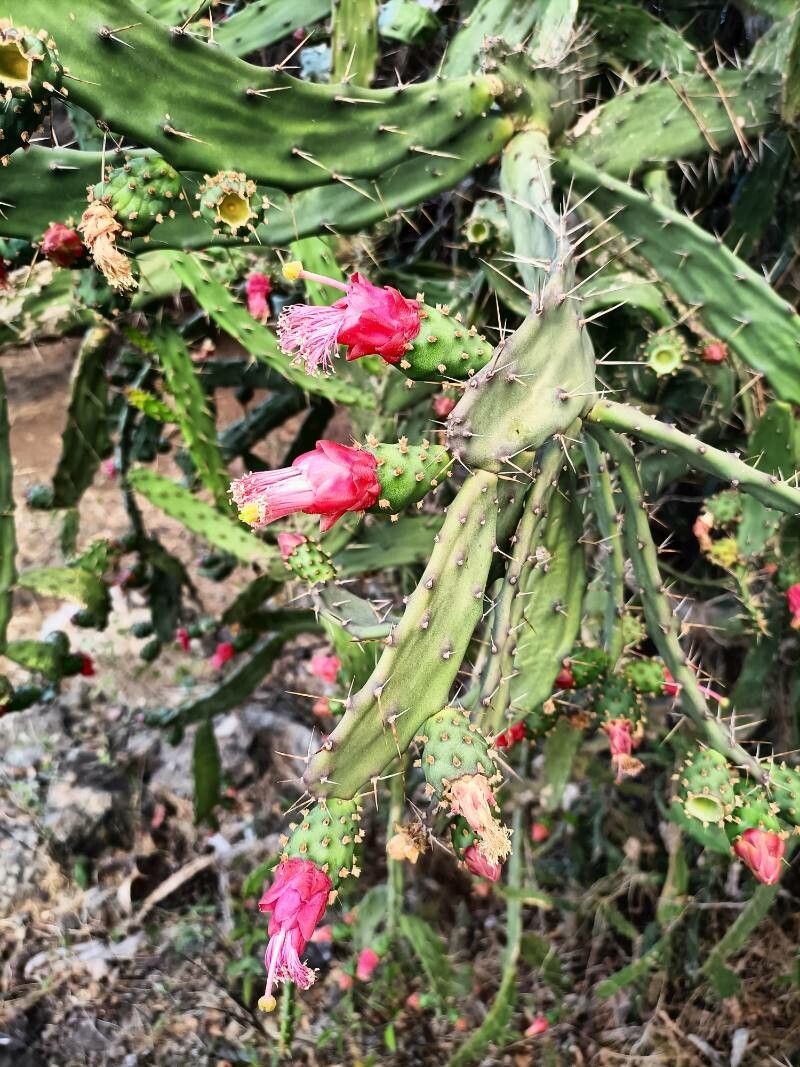
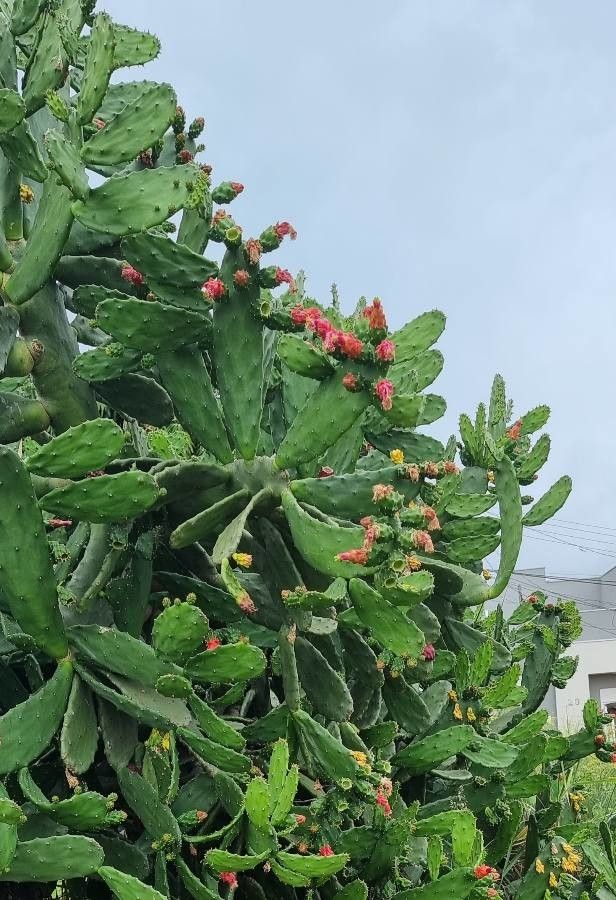
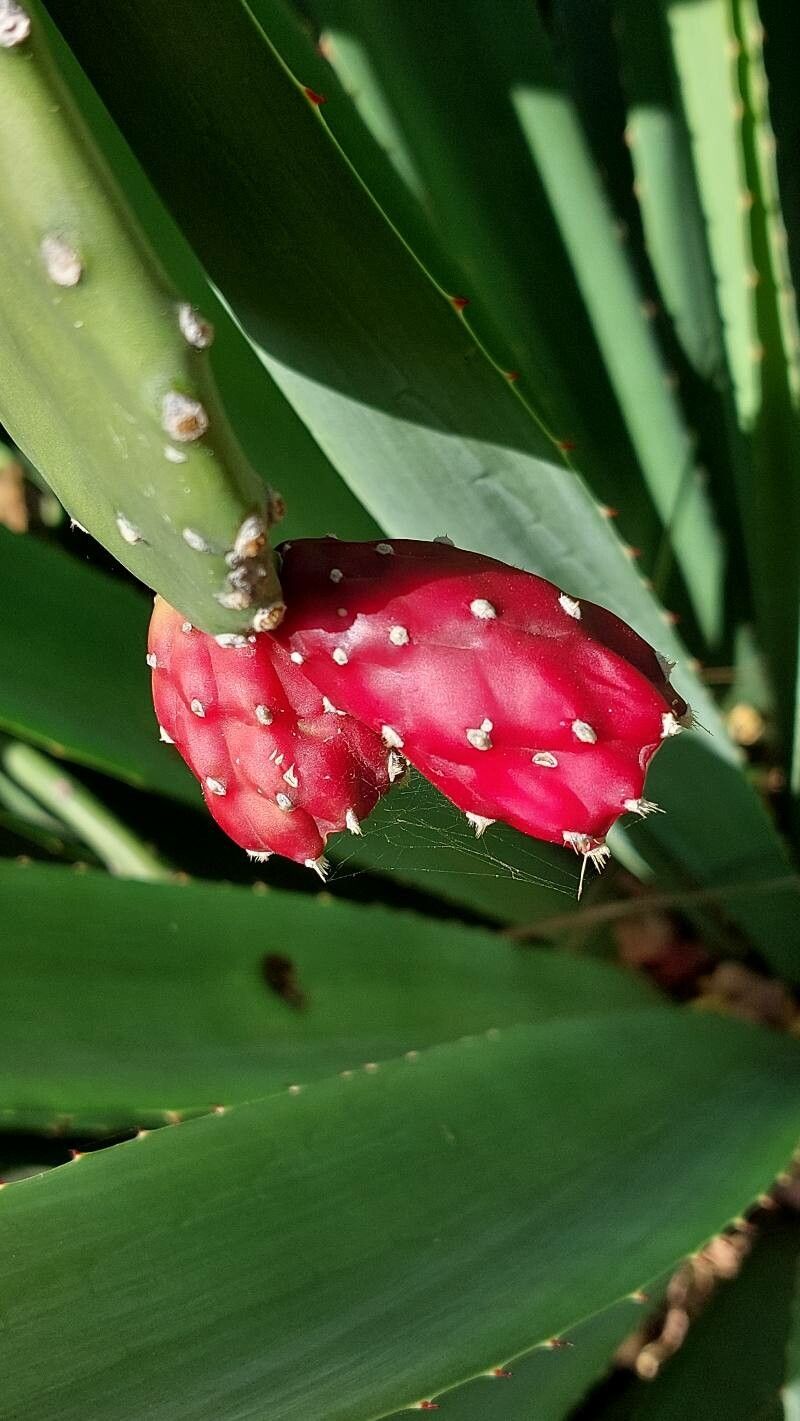
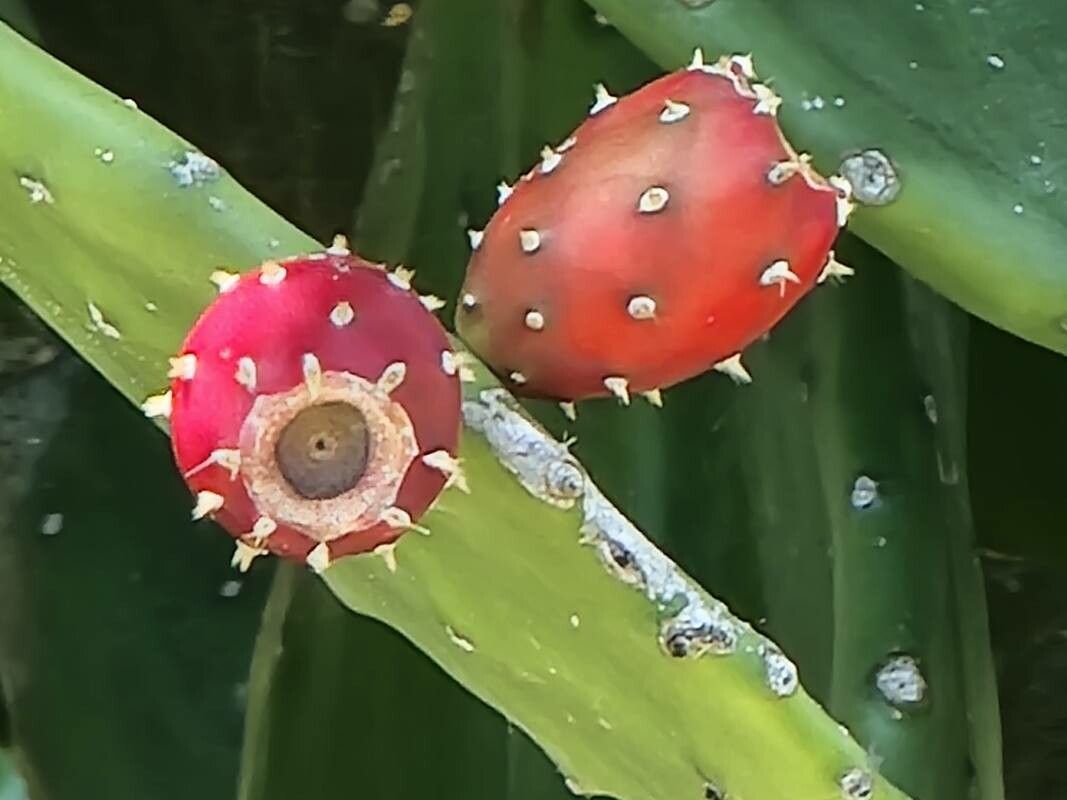
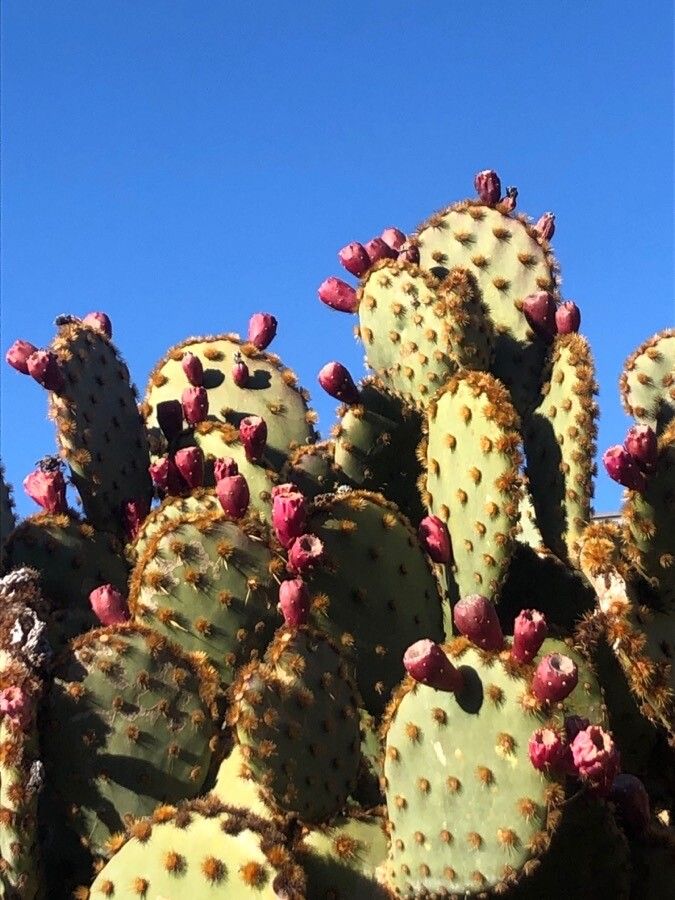
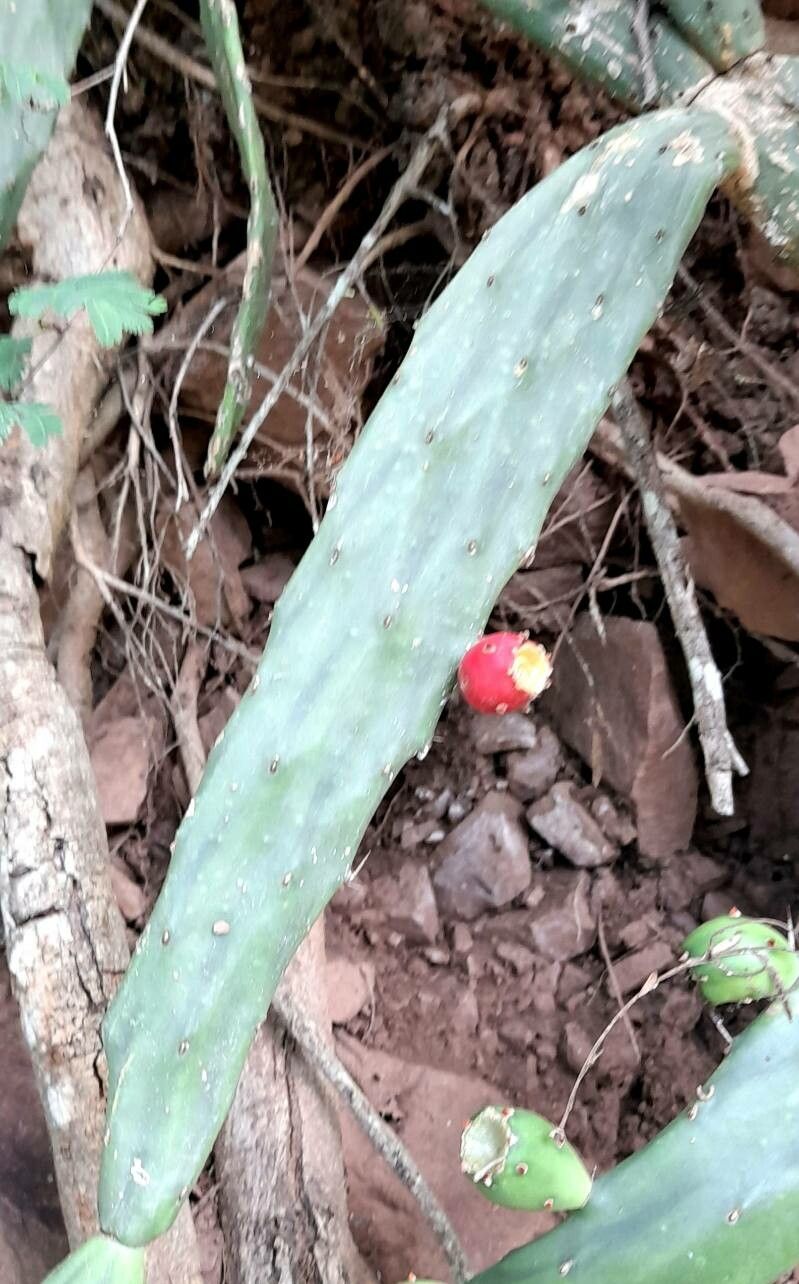
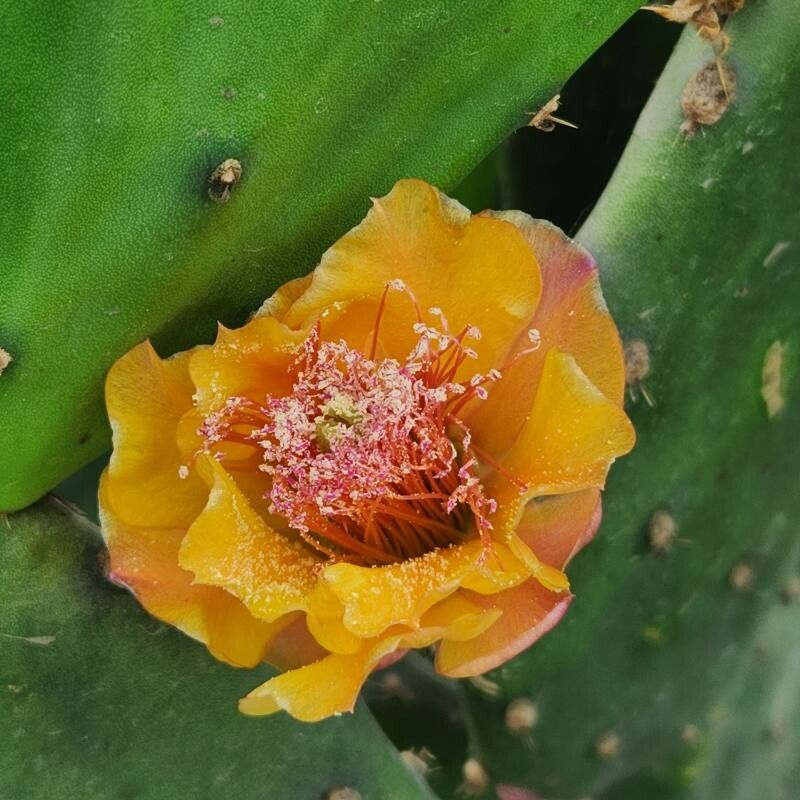
Opuntia cochenillifera, commonly known as the cochineal cactus, is a cactus species native to Mexico and Central America. This shrubby plant can grow up to 3 meters tall and 2 meters wide. Its flattened, segmented stems are lined with spines along the edges. The plant yields bright red or purple fruits that are edible but have a sour taste.
One of the most fascinating aspects of Opuntia cochenillifera is its role in producing cochineal dye. Cochineal insects feed on the sap of this cactus and produce carminic acid, which can be extracted to create a vibrant red dye used in food coloring and cosmetics.
In traditional Mexican medicine, Opuntia cochenillifera is used for its medicinal properties to treat various ailments, including inflammation, fever, and gastrointestinal issues.
This plant thrives in hot climates with well-draining soil and can tolerate some drought conditions once established. It requires full sun exposure for optimal growth.
Overall, Opuntia cochenillifera is a remarkable plant with cultural significance due to its use in dye production and traditional medicine practices.
The Cochineal Nopal Cactus is generally resistant to disease and tolerates standard care without becoming ill easily. That said, it can be vulnerable to mealybugs; these pests may cause some damage but are typically not a serious threat. Regarding care, the Cochineal Nopal Cactus is drought-tolerant and does not need frequent watering. It can endure long stretches without water and requires little fertilizer. However, if light is inadequate and it is overwatered, it is highly prone to root rot. Overall, the Cochineal Nopal Cactus is well suited to people who want to spend less time tending their plants, though it is important to understand and meet its basic needs. It is particularly appropriate for those who are away for long periods and may forget to water regularly.
How to keep Opuntia Cochenillifera.
Light
The Cochineal Nopal Cactus does best in bright, unfiltered light. It tolerates moderate shade, but vigorous growth requires plenty of illumination. The plant comes from areas with abundant sun throughout the day, which produces sturdy development. Too little light can result in weak growth, while too much exposure can cause damage.
Humidity
This plant will thrive in moderate humidity, which is probably the level in your home. However, misting it a few times a week can be very beneficial. Make sure the room has good ventilation.
Temperature
The cochineal Nopal Cactus originates from tropical areas and prefers temperatures between 68 to 100 ℉ (20 to 38 ℃). It can endure temperatures as low as 50 ℉ (10 ℃), although its growth may slow. In summer, it is best kept in a shaded spot to avoid sunburn and sun damage. In winter, the cochineal Nopal Cactus should be maintained at temperatures above 50 ℉ (10 ℃) for optimal growth.
Fertilizer
For the Cochineal Nopal Cactus, small amounts of fertilizer applied once or twice a year during the growing season are sufficient. Do not fertilize in winter or summer when the plant is dormant. Reduce fertilizer for recently repotted plants and wait a couple of months after repotting before feeding. Fertilizing supports healthy growth and helps encourage blooms.
Pot & Repot
Repot the Cochineal Nopal Cactus in spring or summer, choosing a pot slightly larger than the current one with good drainage. Use a well-draining, sandy or gritty cactus mix. Handle it carefully to avoid spikes. Let the cactus dry out before repotting to reduce the chance of root rot. After repotting, wait one week before watering to allow the roots to heal.
Botanical profile.
- Plant Type
- Succulent, Shrub
- Life Cycle
- Perennial
- Genus
- Opuntia
- Family
- Cactaceae
- Hardiness Zone
- 9-12
- Mature Height
- 4.88 m
- Mature Spread
- 1.83 m
- Leaf Color
- Light Green
- Leaf Type
- Evergreen
- Flower Color
- Pink
- Flower Size
- 5.08 cm to 7.62 cm
- Bloom Time
- Late spring, Early summer, Mid summer
- Planting Time
- Spring, Summer, Autumn
- Harvest Time
- Mid summer, Late summer, Fall
- Native Area
- Mexico
Other names.