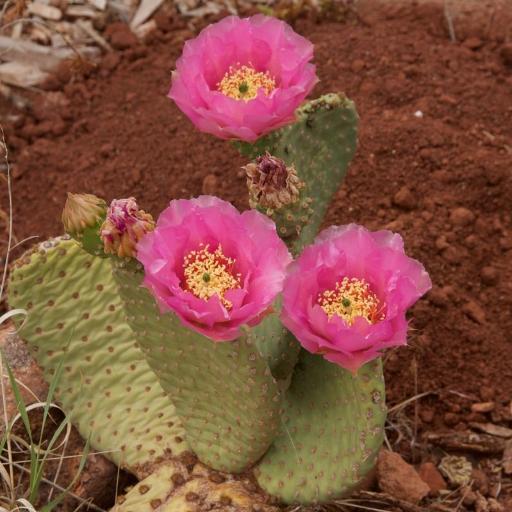
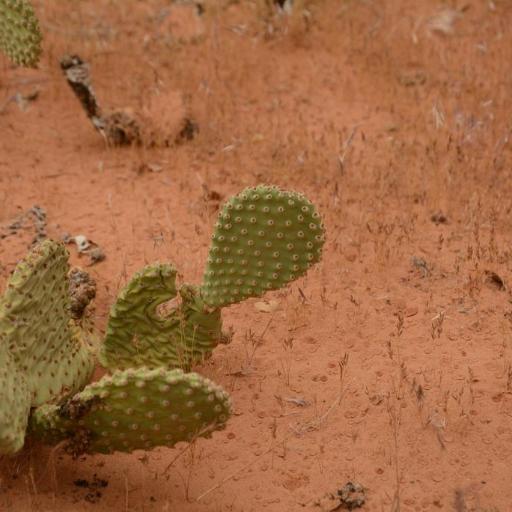
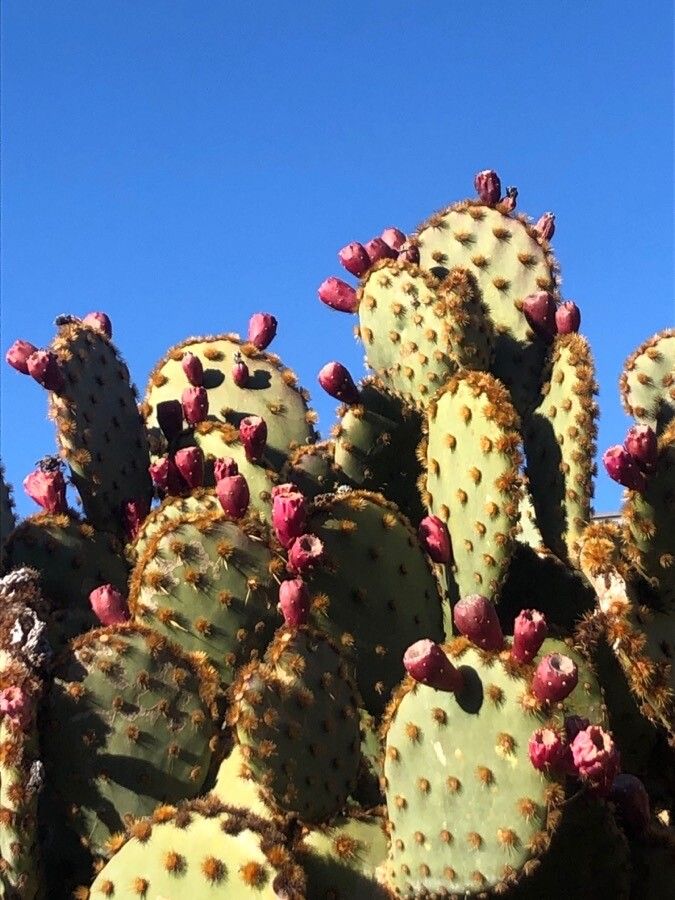
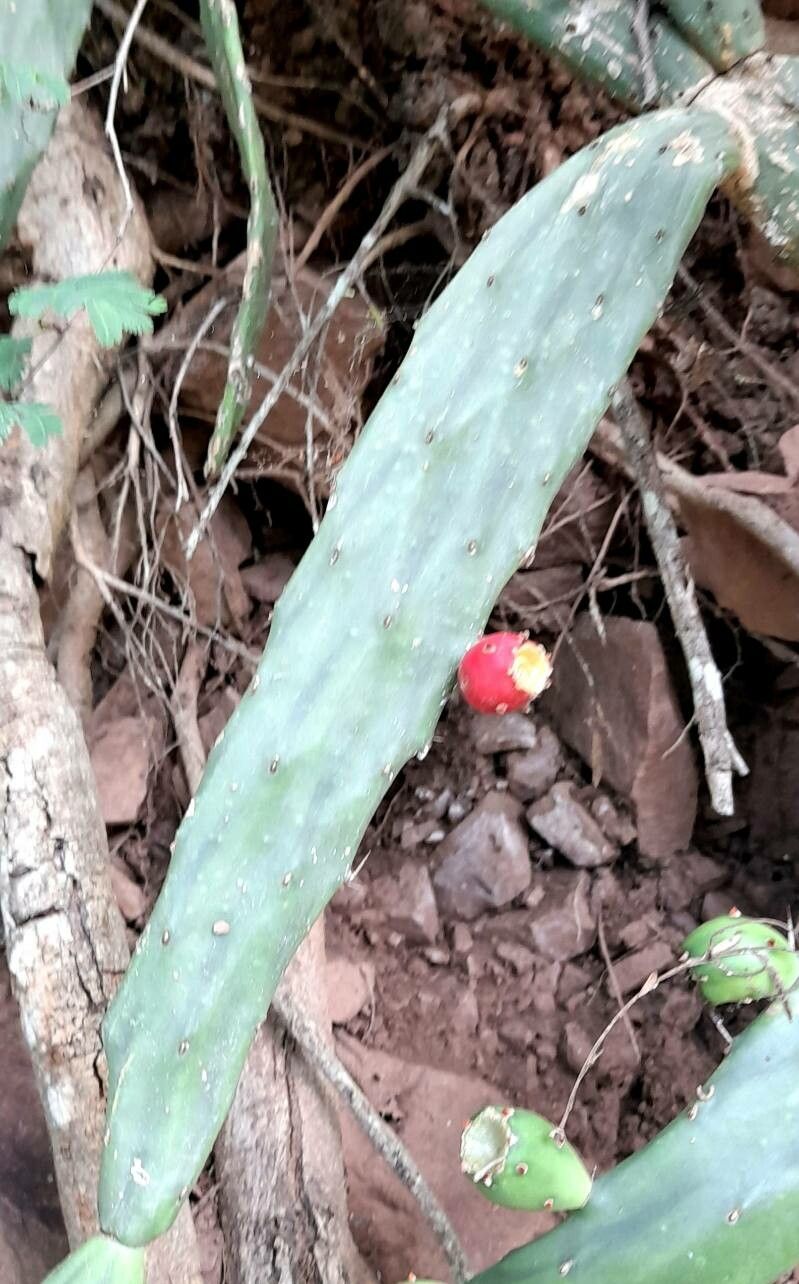
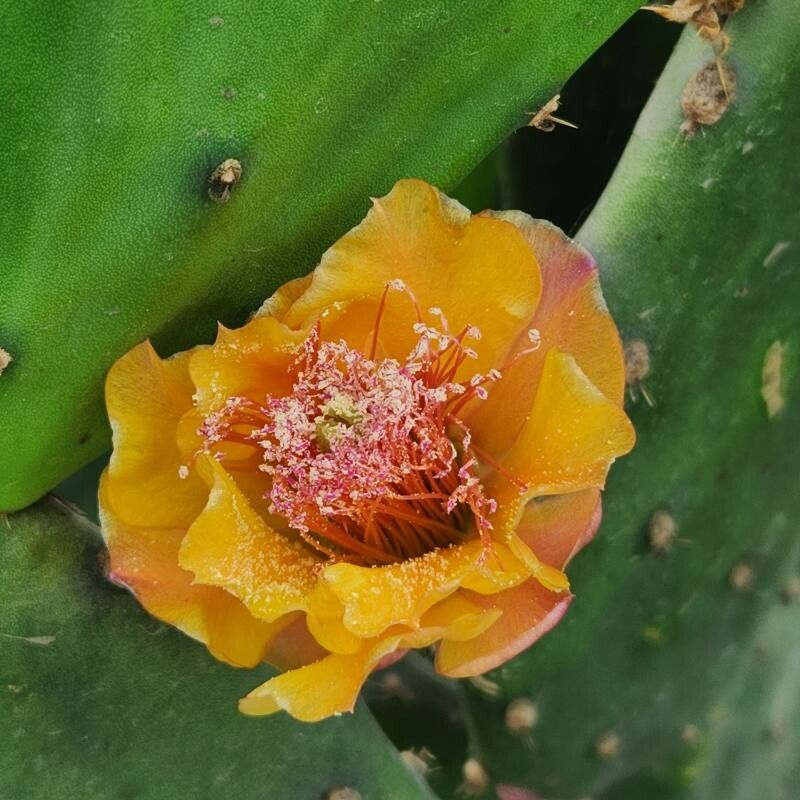
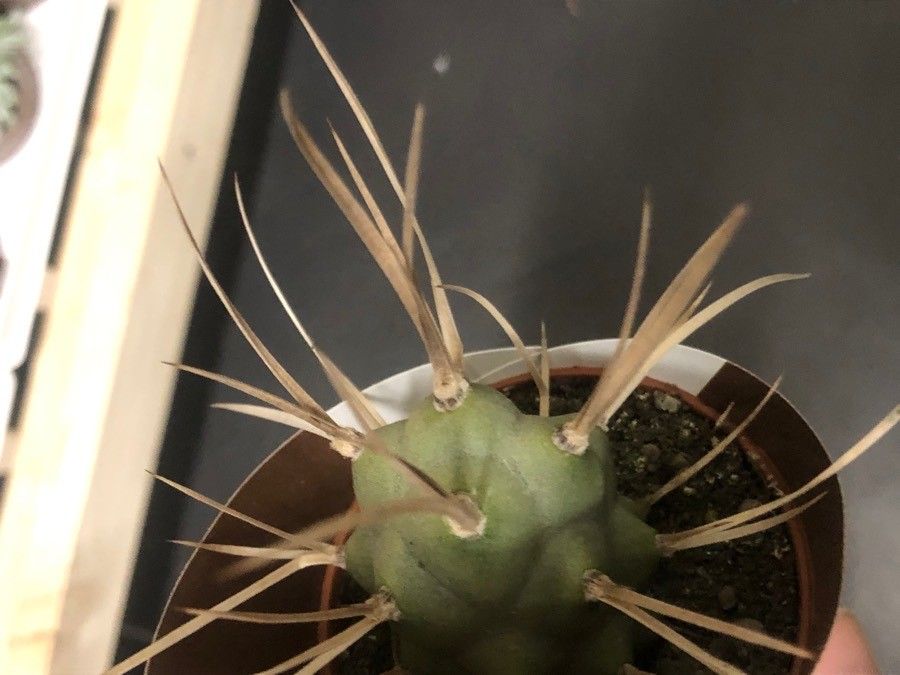
Opuntia aurea is a cactus that grows in Southern Utah and perhaps Northern Arizona. It is prostrate and forms irregularly sprawling plants to about three feet across. Occasionally a single pad may grow upright. The cactus can be spineless, have a few spines or have multiple spines. Spines may be in the distal areoles only.
Golden prickly pear has strong resistance to disease and can tolerate typical care routines without becoming ill easily. That said, it can be vulnerable to mealybugs; these pests may inflict some damage but are usually not a major threat. Regarding care, Golden prickly pear is drought-tolerant and does not need frequent watering. It can handle extended periods without water and requires little fertilizer. However, it is highly susceptible to root rot if kept in poor light and given too much water. In general, Golden prickly pear is a good choice for people who prefer low-maintenance plants, though it remains important to know and satisfy its basic needs. It is especially suitable for those who are often away for long stretches and might forget to water regularly.
How to keep Opuntia Aurea.
Light
Native to arid regions, the Golden prickly pear prospers in full sun; its natural habitat is marked by strong sunlight and minimal shade. It can also tolerate partial sun, providing some adaptability in its growth.
Water
The golden prickly pear is a drought-tolerant plant that requires careful watering every one to two weeks. It thrives in sandy, fast-draining soil, making it well-suited for outdoor environments in desert climates.
Temperature
Golden prickly pear grows best in warm conditions and needs relatively high temperatures during the growing season to encourage growth and metabolic activity. It prefers plenty of sunlight, suitable moisture, and good airflow. However, it can be harmed by excessively low temperatures and by overwatering. It’s also important to maintain balance and avoid extreme heat or very dry conditions.
Fertilizer
For Golden prickly pear, small amounts of fertilizer once or twice a year during the growing season are enough. Avoid fertilizing in winter and in summer when it's dormant. Cut back on fertilizer for plants that have been repotted and wait a couple of months after repotting before applying any fertilizer. Fertilizing helps maintain healthy growth and promotes blooms.
Pruning
The golden prickly pear is a low-maintenance plant that thrives with minimal care. For optimal growth and shape, it is important to prune it in early spring. Use sanitized tools to remove any damaged pads, but be careful not to over-prune, as this can affect sunlight exposure. Properly pruning the plant not only encourages blossom production but also improves its overall health.
Botanical profile.
- Plant Type
- Succulent, Shrub
- Life Cycle
- Perennial
- Genus
- Opuntia
- Family
- Cactaceae
- Hardiness Zone
- 8-11
- Mature Height
- 30 cm to 91 cm
- Mature Spread
- 0.91 m to 2.13 m
- Leaf Color
- Pale Green, Yellow Green
- Leaf Type
- Evergreen
- Flower Color
- Yellow, Gold
- Flower Size
- 5.08 cm to 6.35 cm
- Bloom Time
- Early summer, Mid summer
- Planting Time
- Spring, Summer
- Harvest Time
- Late summer, Early fall, Mid fall
Other names.