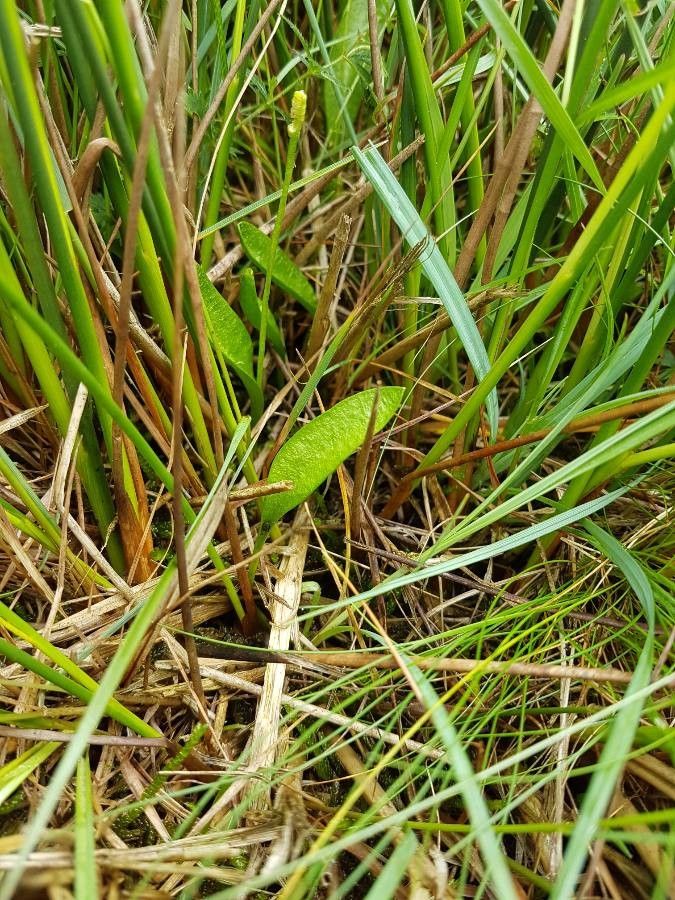
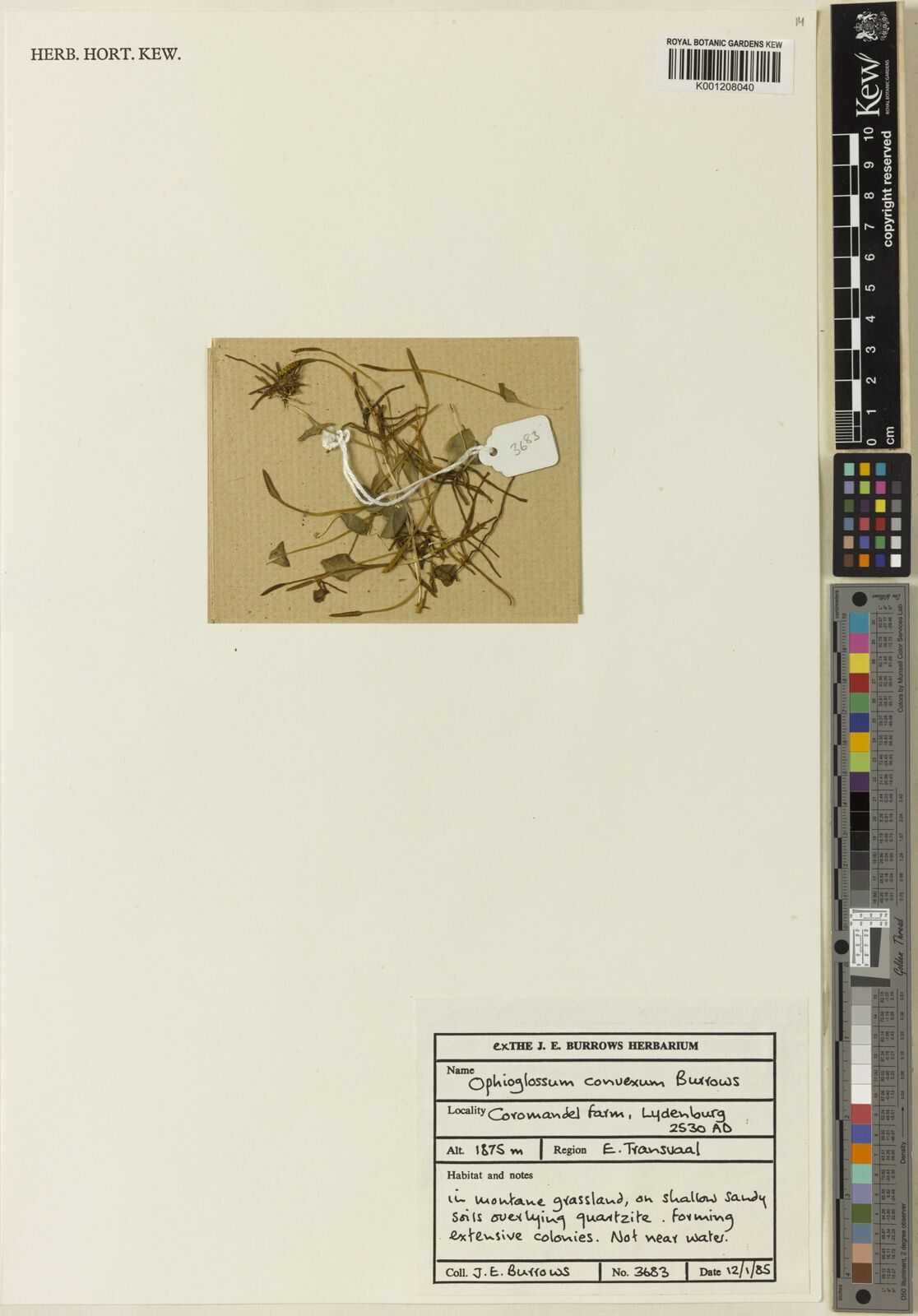
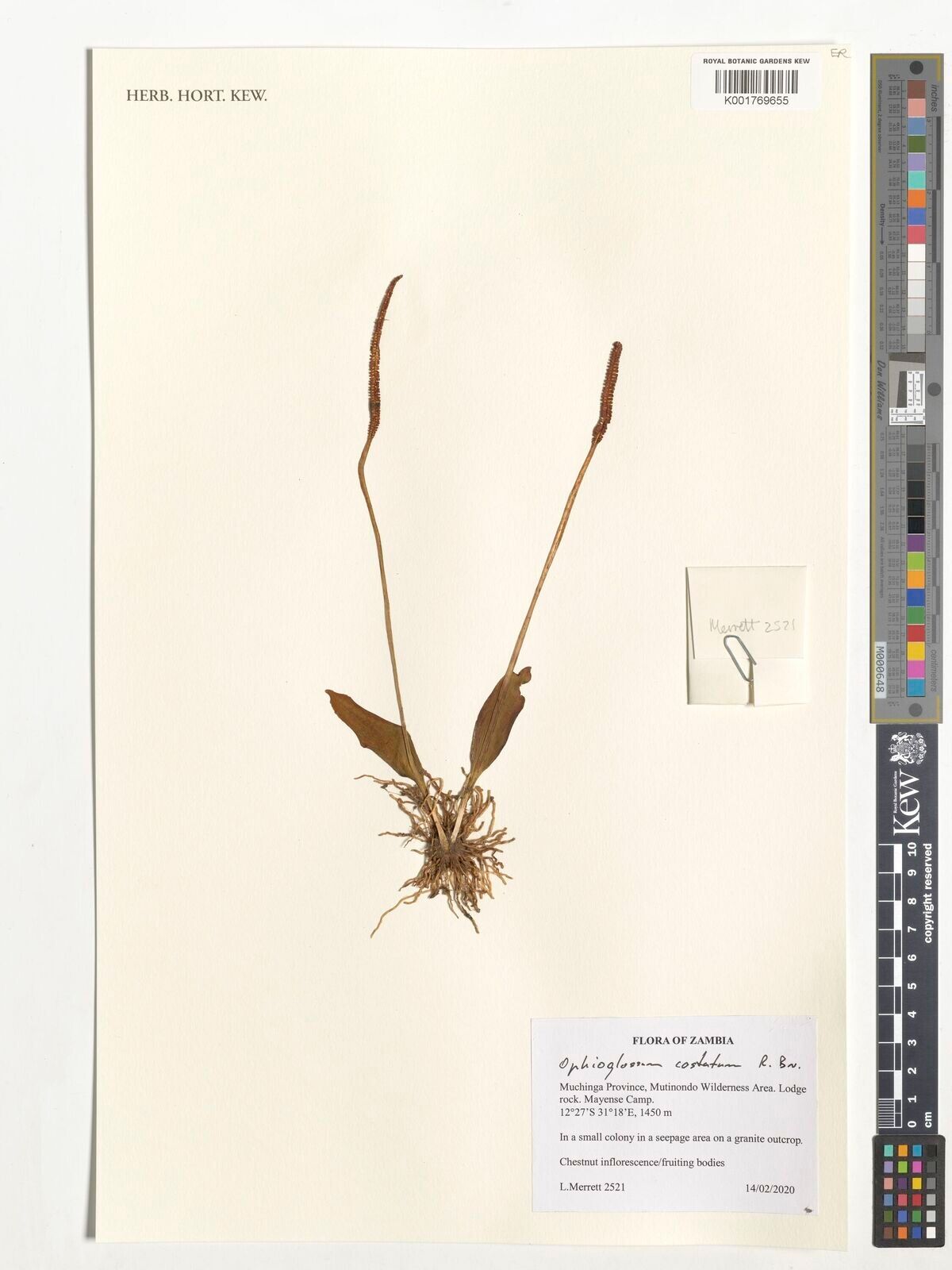
Ophioglossum pusillum, commonly known as the adder's tongue fern, is a small fern species belonging to the family Ophioglossaceae. Native to North America, it thrives in moist habitats such as wet meadows, bogs, and swamps. This plant has a distinctive appearance: a single frond that can grow up to 10 cm long, with a narrow shape and pointed tips. The frond is divided into two parts: a sterile blade at the base and a fertile spike at the top, which contains spores for reproduction.
The adder's tongue fern prefers acidic soils rich in organic content and requires consistent moisture for optimal growth. It plays a significant role in its ecosystem by providing habitat for various insects, including moths, butterflies, and beetles, which feed on its leaves or use it as shelter during different stages of their life cycles.
Despite its small size, Ophioglossum pusillum holds considerable ecological value due to its unique morphology and its role within the wetland ecosystems of North America.
Northern adder's-tongue has strong resistance to disease and is generally unlikely to suffer from illnesses. Nevertheless, it can be vulnerable to pests and diseases present in its environment. Such infections are generally mild. Regarding care, this plant needs a moderate level of upkeep. It should be pruned on a regular basis to keep a neat appearance and encourage healthy growth. Applying fertilizer can also encourage flowering. Northern adder's-tongue is well suited to anyone with an outdoor area, like a garden or patio, and does not demand extensive gardening experience. It may need more attention when cultivated indoors.
How to keep Ophioglossum Pusillum.
Light
Northern adder's-tongue is native to habitats such as forest understories or rocky areas, where it grows in natural shade. Its preferred light condition is partial sun, but it can adjust to full sun or full shade, showing its versatile and hardy nature.
Water
The Northern adder's-tongue flourishes in moist environments but also shows moderate drought tolerance because of its water-retaining adaptations. For the best growth, it should be watered once a week, and it particularly benefits from rainwater during its growing season, which mimics the conditions of its natural habitat.
Temperature
Northern adder's-tongue can tolerate a wide range of temperatures, but its distribution may still be restricted by various combinations of moisture and heat. It grows best in warm summer climates with adequate rainfall or watering. Extended periods of cloudy, rainy weather, as well as prolonged high temperatures, can raise the chance of Northern adder's-tongue dying. In winter, appropriate protection from cold can enhance the plant's survival rate.
Fertilizer
One fertilizer application in spring is usually enough for Northern adder's-tongue, though additional feedings can maximize growth. Feed once every month to a month and a half. Fertilization improves the leaves' appearance and function, helping maintain consistent color and a healthy texture. It also promotes root growth and nutrient absorption, supporting the plant's long-term health.
Pruning
The northern adder's-tongue requires minimal pruning, which is best done from early to late spring. Remove any dead fronds but avoid cutting the live parts to preserve its natural structure. Thinning out crowded areas can enhance air circulation, boost photosynthesis, and prevent diseases, all of which contribute to healthier growth.
Botanical profile.
- Plant Type
- Herb
- Life Cycle
- Perennial
- Genus
- Ophioglossum
- Family
- Ophioglossaceae
- Hardiness Zone
- 3-8
- Mature Height
- 10 cm to 20 cm
- Mature Spread
- 2 cm to 5 cm
- Leaf Color
- Light Green, Yellow Green
- Leaf Type
- Deciduous
- Flower Color
- Yellow, Purple
- Planting Time
- Spring, Summer, Autumn