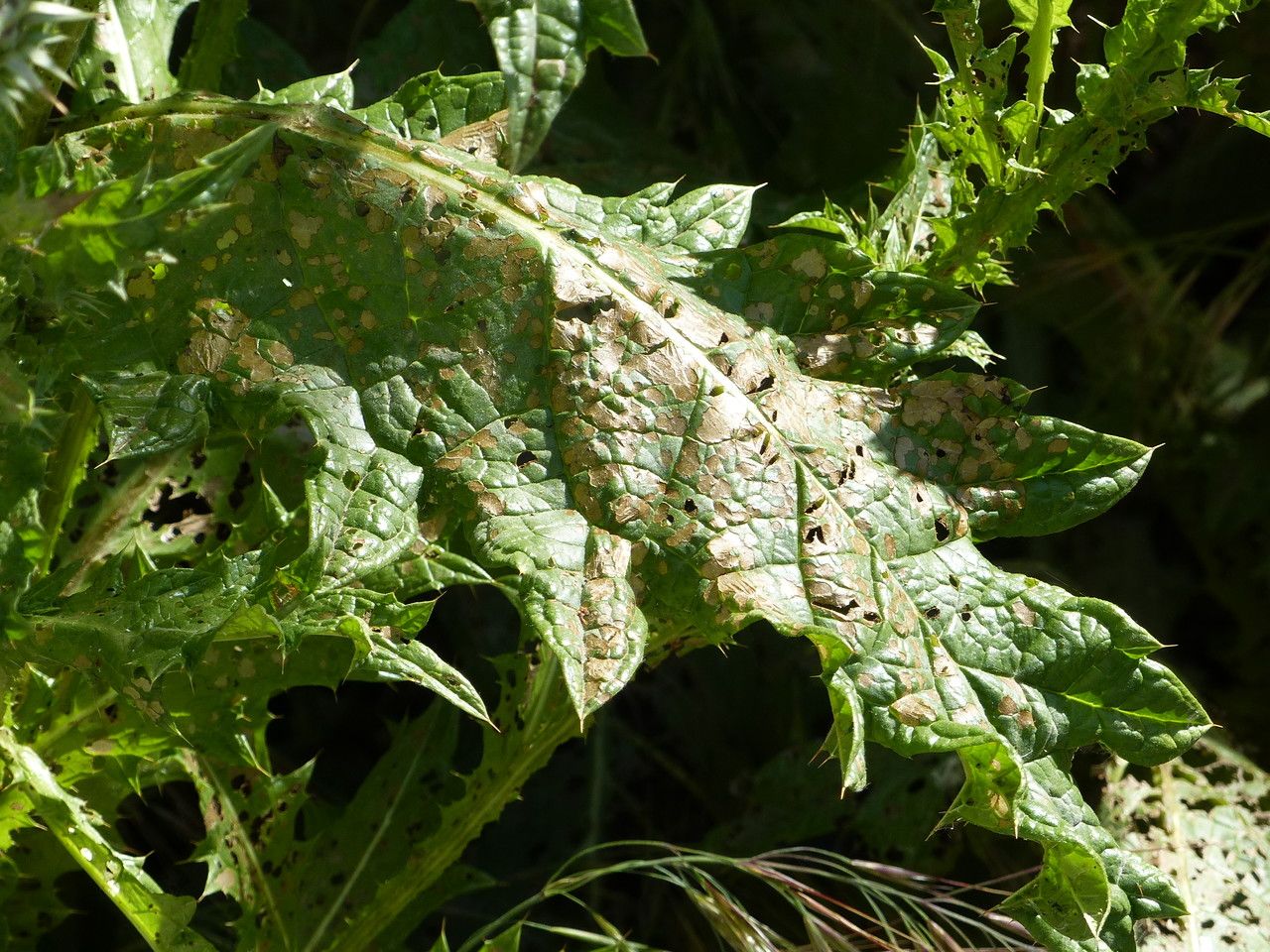
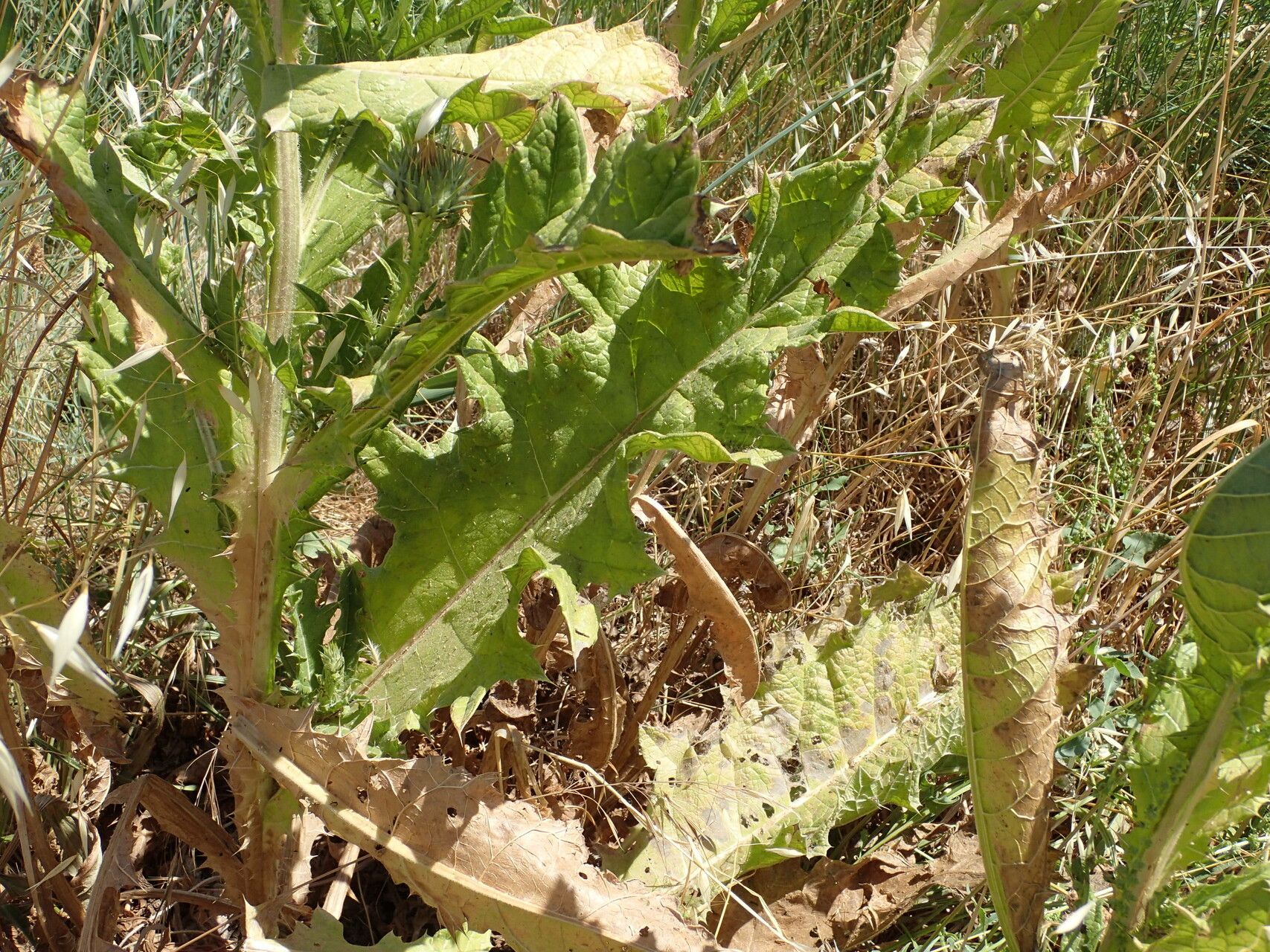
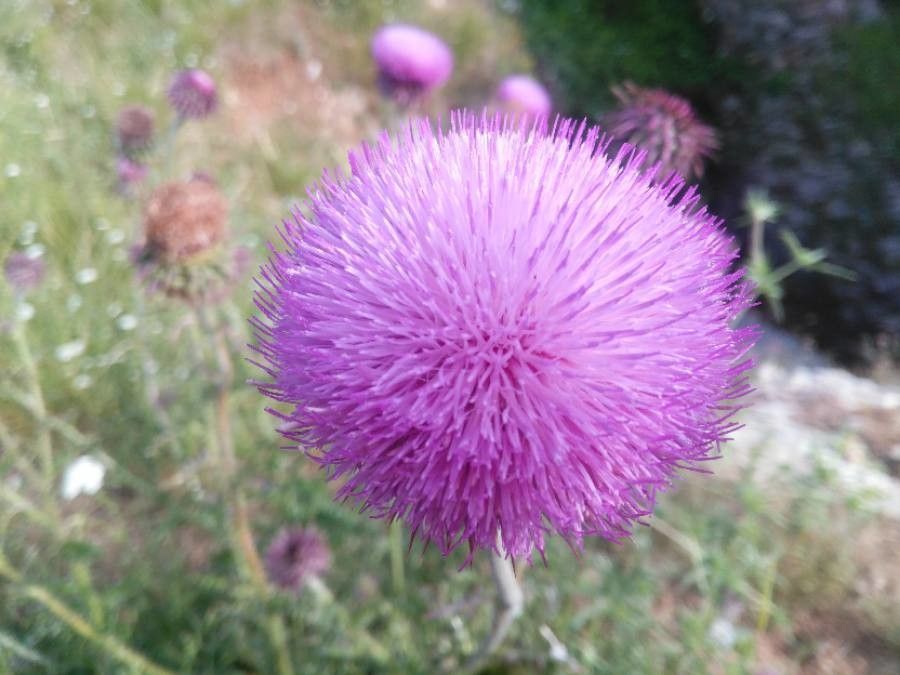
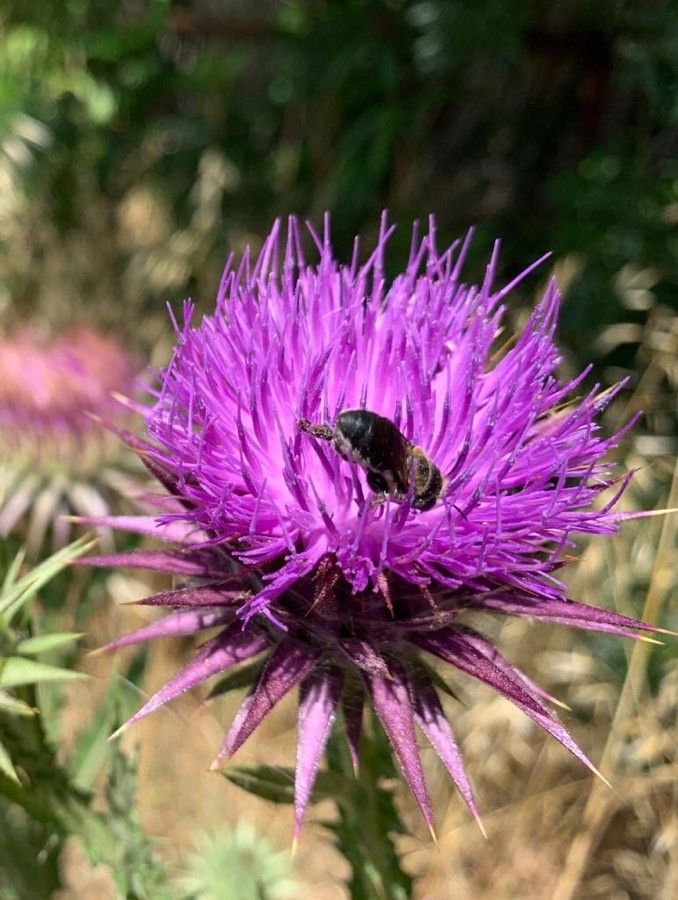
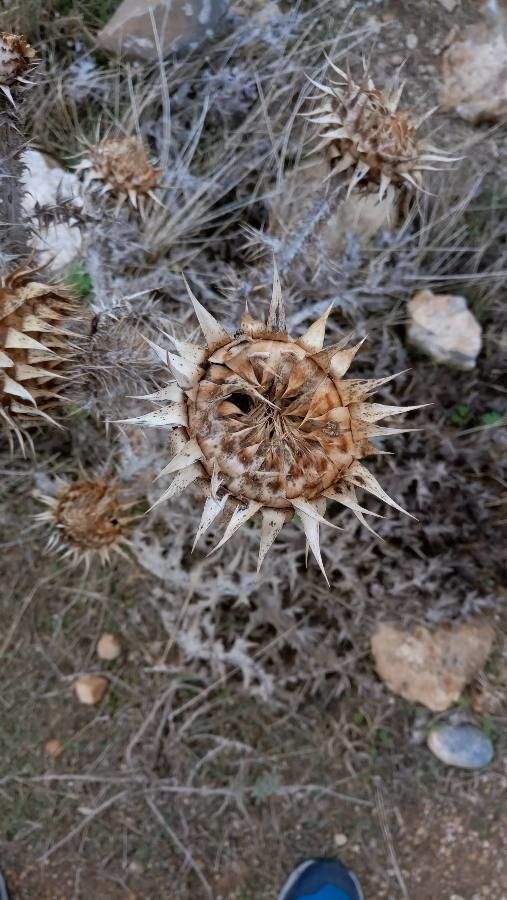
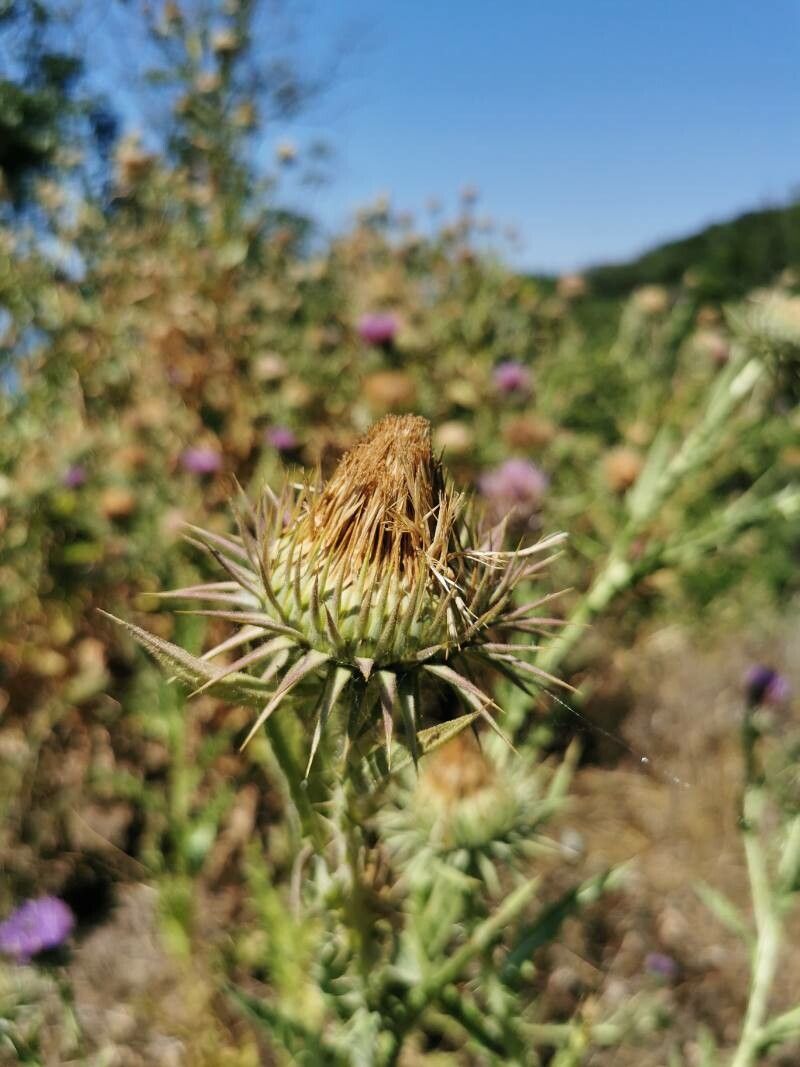
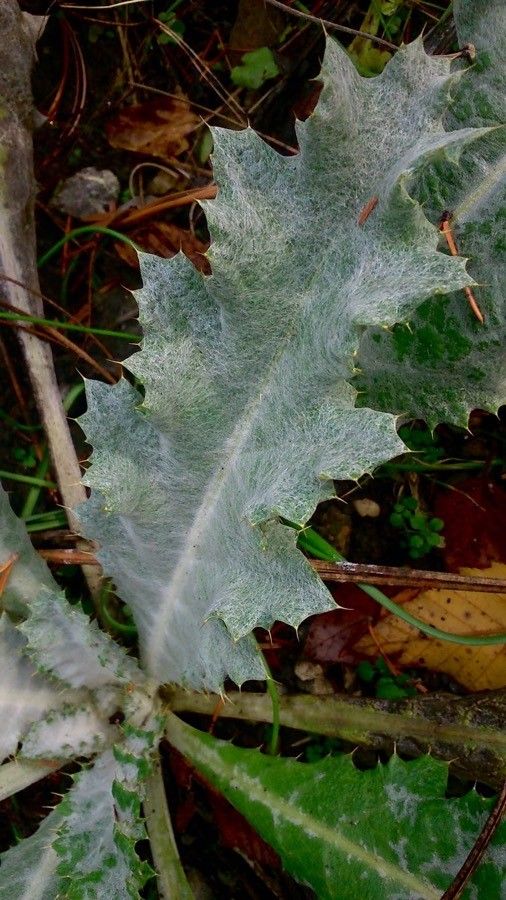
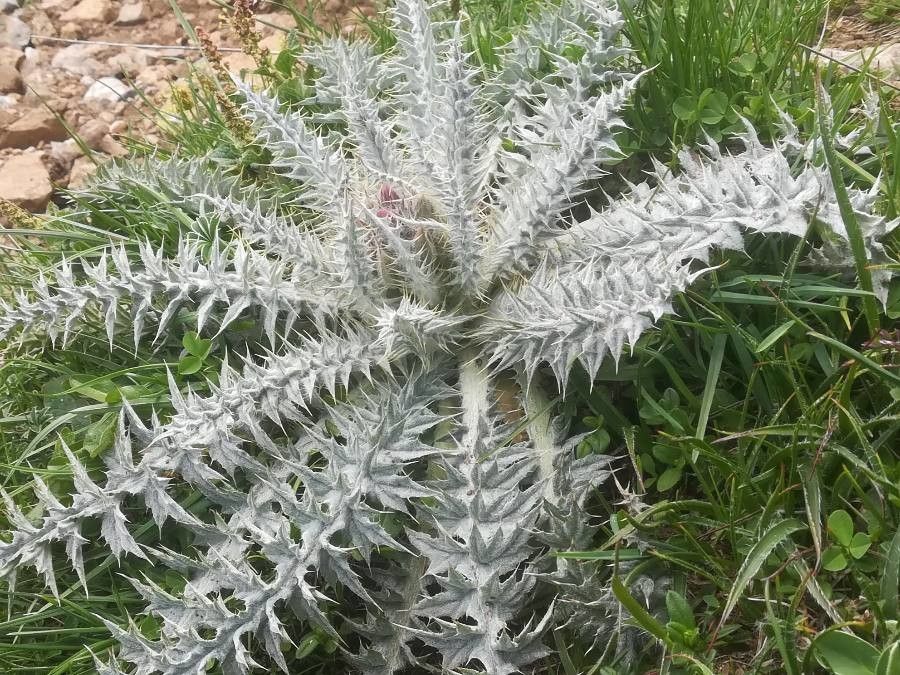
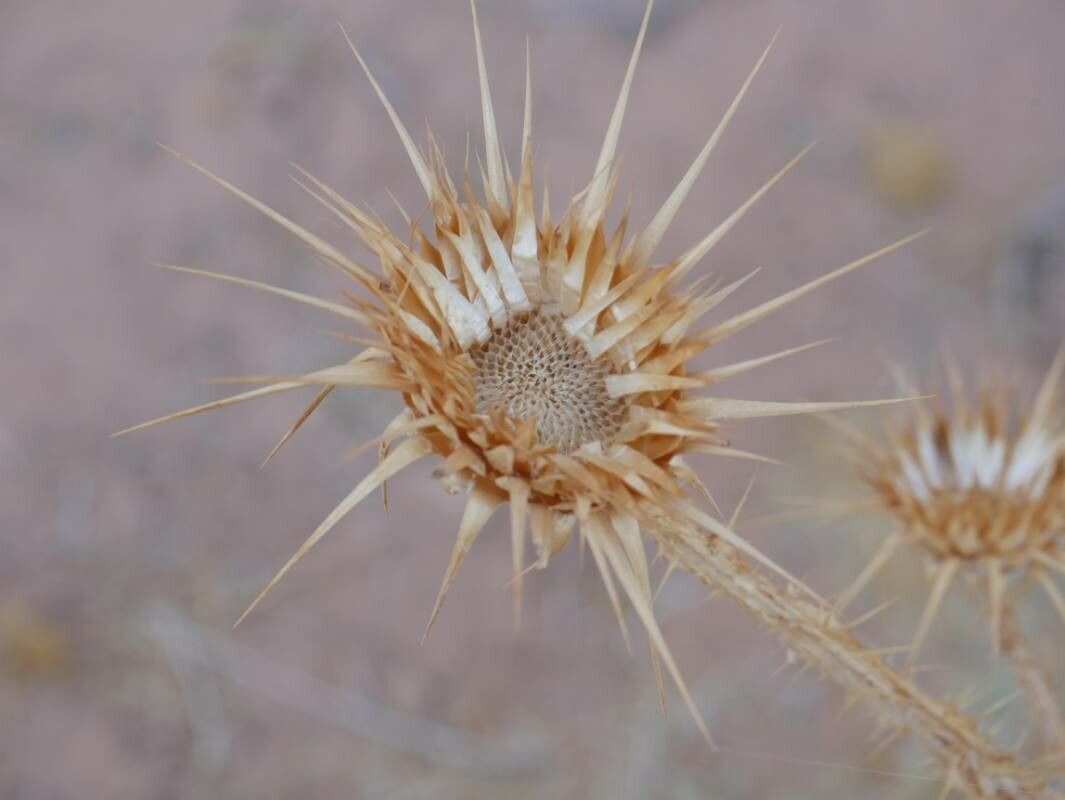
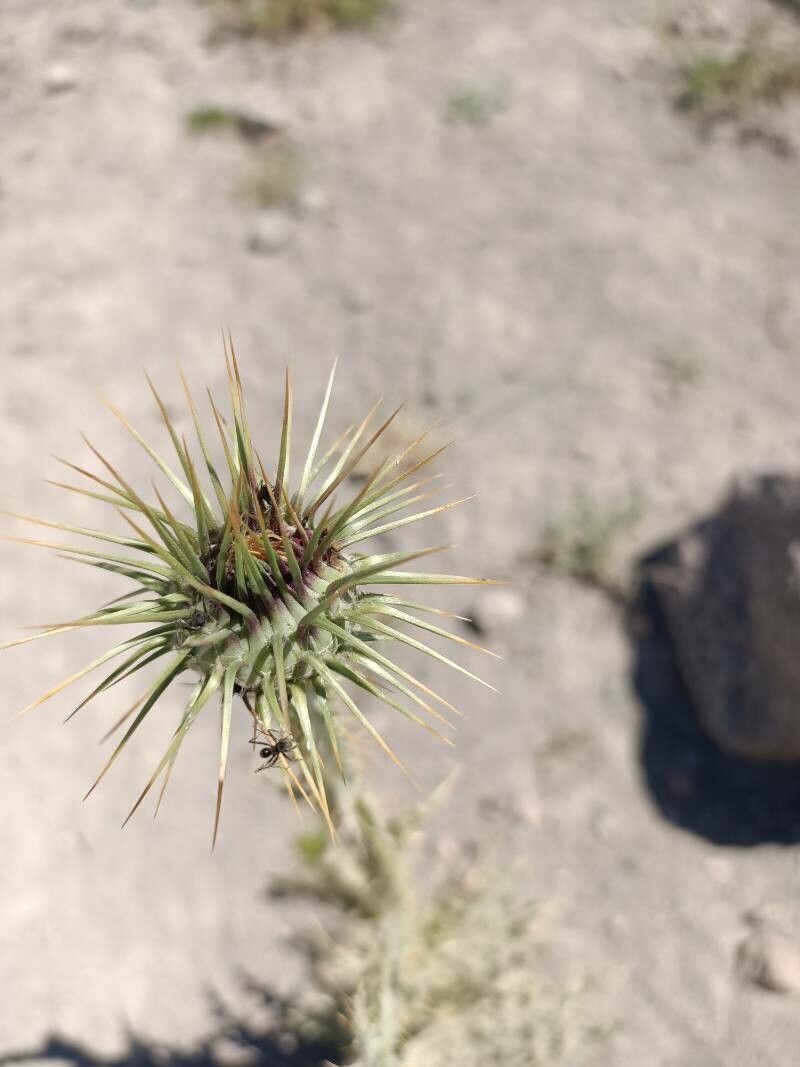
Onopordum tauricum, the Taurian thistle or bull cottonthistle, is a species of thistle. It is native to Eurasia and is known in Australia and the western United States as an introduced species. It easily becomes a noxious weed, similar to its relative, Onopordum acanthium. This is a biennial herb producing a sticky, glandular, very spiny stem up to 2 meters tall. The spiny, bright light green leaves are up to 25 centimeters long and are divided into triangular lobes. The inflorescence is made up of several large flower heads each up to 7 centimeters wide. They are lined with long, spiny phyllaries and bear pink-purple tubular flowers up to 3 centimeters long.
Bull cotton thistle has strong resistance to disease and usually does not suffer from illnesses. However, it can be vulnerable to pests and diseases present in its surroundings. Such infections are typically mild. As for care, the plant is medium-maintenance. It should be pruned regularly to preserve appearance and support healthy growth. Fertilizing can also help encourage flowering. Bull cotton thistle is suitable for anyone with outdoor space, such as a garden or patio, and does not require extensive experience in plant care. It may need more attention when grown indoors.
How to keep Onopordum Tauricum.
Light
Bull cotton thistle comes from bright, open habitats and does best in full sun. It can tolerate some shade but prefers direct sunlight for ideal growth. This plant, which grows as an annual or biennial, is known for its sun-loving habit.
Water
Bull cotton thistle, native to Mediterranean regions, flourishes in dry climates with low humidity. Despite its drought-tolerant nature, it benefits from weekly watering. Typically grown outdoors, this plant is ideal for xeriscaping in arid areas, demonstrating its resilience and adaptability to irregular moisture conditions.
Temperature
Bull cotton thistle is native to regions with temperatures ranging from 68 to 95 °F (20 to 35 ℃). It performs best in those warm conditions. In cooler seasons, move it indoors or provide supplemental heat as required.
Fertilizer
Bull cotton thistle requires regular fertilization to encourage flowering but is sensitive to excess. It needs small, frequent applications of fertilizer throughout its life cycle, especially during the peak of active growth and while it is flowering. You should continue feeding your Bull cotton thistle until it stops blooming.
Pruning
Bull cotton thistle, known for its spiny leaves and vibrant purple flowers, benefits greatly from annual pruning. Key practices involve removing dead stems and trimming back old growth from early to late spring to encourage new growth. Effective pruning improves airflow, reduces the risk of disease, and enhances the plant's appearance.
Botanical profile.
- Plant Type
- Herb
- Life Cycle
- Biennial
- Genus
- Onopordum
- Family
- Asteraceae
- Hardiness Zone
- 3-4
- Mature Height
- 2.13 m
- Mature Spread
- 49 cm to 91 cm
- Leaf Color
- Green Yellow, Light Green
- Leaf Type
- Semi-evergreen
- Flower Color
- Pink, Purple
- Flower Size
- 6.35 cm
- Bloom Time
- Summer
- Planting Time
- Spring, Summer
- Harvest Time
- Late summer, Early fall, Mid fall
- Native Area
- Russia, Germany, Turkey, Italy, Greece, France, Bulgaria, Albania, Lebanon, Romania, Ukraine, Serbia
Other names.
Reader questions.
How should I water my Bull cotton thistle plant to keep it healthy?
To properly water the Bull cotton thistle, it's best to use filtered water at room temperature. Tap water may contain harmful particles for the plant, so filtering it is important. Additionally, because the Bull cotton thistle is accustomed to warm environments, it's important to use water that is room temperature or slightly warm to avoid shocking the plant. Instead of overhead watering, which can cause issues with the foliage, you should apply the filtered, room temperature water directly to the soil until it is completely soaked. This method helps to moisten the roots and promote their growth and nutrient absorption.
What are the sunlight requirements for Bull Cotton Thistle?
Bull Cotton Thistle thrives best in full sun, requiring more than 6 hours of sunlight daily, but it can also tolerate partial sun, which is about 3-6 hours of sunlight. It's crucial to observe how sunlight moves through your garden, ensuring that you select locations providing the ideal balance of light and shade for the plants' optimal growth. This plant originates from bright, open environments, making it well-suited to conditions with ample direct sunlight.
What is the native environment of Bull cotton thistle?
Bull cotton thistle, known botanically as Onopordum tauricum, is native to environments with temperatures ranging from 68 to 95 °F (20 to 35 °C). It thrives best under these warm conditions. When the temperature cools off, it's either necessary to move the plant indoors or provide additional heat sources to maintain its preferred climate.
What should I do if I give my Bull cotton thistle too much water or too little water?
Overwatering can harm your Bull cotton thistle more than underwatering. When this plant gets too much water, its stems and leaves wilt and turn yellow. It can also develop diseases like root rot, mold, and mildew, which are dangerous to the plant. Underwatering is less common because the Bull cotton thistle can handle drought, but it can still happen. If your plant is underwatered, the leaves will become brittle and brown. It is important to recognize the signs of overwatering early and take action immediately. Some diseases caused by overwatering, like root rot, can't be fixed if left untreated for too long. If you notice early signs of overwatering, reduce your watering schedule and check the soil. If the soil drains poorly, replace it with a loose, well-draining potting mix. If your Bull cotton thistle appears to be receiving too little water, simply increase your watering frequency until the signs improve.
Can I use artificial lighting for indoor Bull Cotton Thistle plants?
Yes, artificial lighting is beneficial for Bull Cotton Thistle plants grown indoors, especially when natural sunlight is insufficient. Indoor plants require appropriate lighting for optimal growth. LED lights are recommended as they can be customized to provide specific light wavelengths needed by the plants. Full sun plants need 30-50W/sq ft, partial sun plants need 20-30W/sq ft, and full shade plants need 10-20W/sq ft of artificial light. The light source should be positioned 12-36 inches above the plant, mimicking natural sunlight, and plants typically need 8-12 hours of light per day.
What are the winter care instructions for Bull cotton thistle?
Despite its high tolerance to cold, Bull cotton thistle does not require additional frost protection measures during winter. To prepare for the first freeze in autumn, it's recommended to water the plant generously, ensuring the soil remains moist and enters a frozen state. This process helps prevent drought and water scarcity for the plant during the winter and early spring.
How often should I water my Bull cotton thistle plant?
If you have a potted Bull cotton thistle, you can check if it needs water by sticking your finger in the soil. If the top two to three inches of soil feel dry, it's time to water the plant. The same method applies if you are growing the Bull cotton thistle outdoors in the ground. During spring and early fall, watering once a week based on this soil test is often sufficient. However, in extremely hot weather, you may need to water the plant two or more times per week. Keep in mind that mature, well-established Bull cotton thistles have a good tolerance for drought.
What are the symptoms of light deficiency in Bull Cotton Thistle?
When Bull Cotton Thistle is grown indoors or under inadequate light, several symptoms may indicate light deficiency. These include smaller new leaves compared to mature ones, leggy or sparse growth, faster leaf drop, slower or stopped growth, and lighter-colored new leaves. Additionally, chlorosis can cause leaves to lose their green color, turning yellow, and sunscald may cause damages like pale, bleached, or necrotic areas on plant tissue. Overexposure can lead to leaf curling as a defense mechanism, wilting due to increased water loss, and leaf scorching, identified by brown, dry edges or patches on leaves.
How does Bull cotton thistle react to low temperatures?
Bull cotton thistle exhibits extreme cold tolerance, with the ability to withstand winter temperatures above -35°C. If temperatures drop below this threshold, there may not be noticeable changes during the winter, but it could lead to a decrease in sprouting or failure to sprout in the spring. The solution is to remove any parts of the plant that have failed to sprout.
How much water does my Bull cotton thistle plant need?
When watering your Bull cotton thistle, don't hold back on the amount of water you give. Make sure the first two to three inches of soil are dry before watering, and then give it a good, thorough soak. The water should be enough to saturate the soil completely, causing excess water to flow out of the pot's drainage holes. If you don't see excess water draining, you may not have given enough water. However, be careful not to let water accumulate inside the soil, as this can harm the plant. On the other hand, if water isn't draining properly, it may be a sign of poorly draining soil, which is bad for the plant's health. If the plant is outside, receiving 1 inch of rain per week should be enough.
How can I treat my Bull Cotton Thistle if it shows signs of light deficiency or excessive sunlight?
For indoor plants, gradually increase light exposure to ensure they receive at least 6 hours of direct sunlight daily. Positioning them near a south-facing window and keeping curtains open during the day is advisable. If the plant is large or difficult to move, consider artificial lighting, keeping a desk or ceiling lamp on for at least 8 hours a day, or investing in grow lights. For outdoor plants, acclimate them to sunnier spots gradually to avoid sunburn. Remove obstructions that block sunlight, like pruning tree branches. If necessary, especially for smaller plants, consider transplanting during their dormant period to a sunny location with good drainage. Note, while parts of the plant that suffered due to insufficient light may not recover, new growth should be healthy after improving light exposure.
What should be done if Bull cotton thistle is exposed to high temperatures?
Bull cotton thistle is not tolerant of high temperatures. Exposure to temperatures above 35°C can halt its growth and increase susceptibility to rot. To mitigate this, you should trim away sunburned and dried-up parts and move the plant to an area with shade during the midday and afternoon, or use a shade cloth to protect it. Additionally, watering the plant in the morning and evening can help keep the soil moist and prevent heat stress.