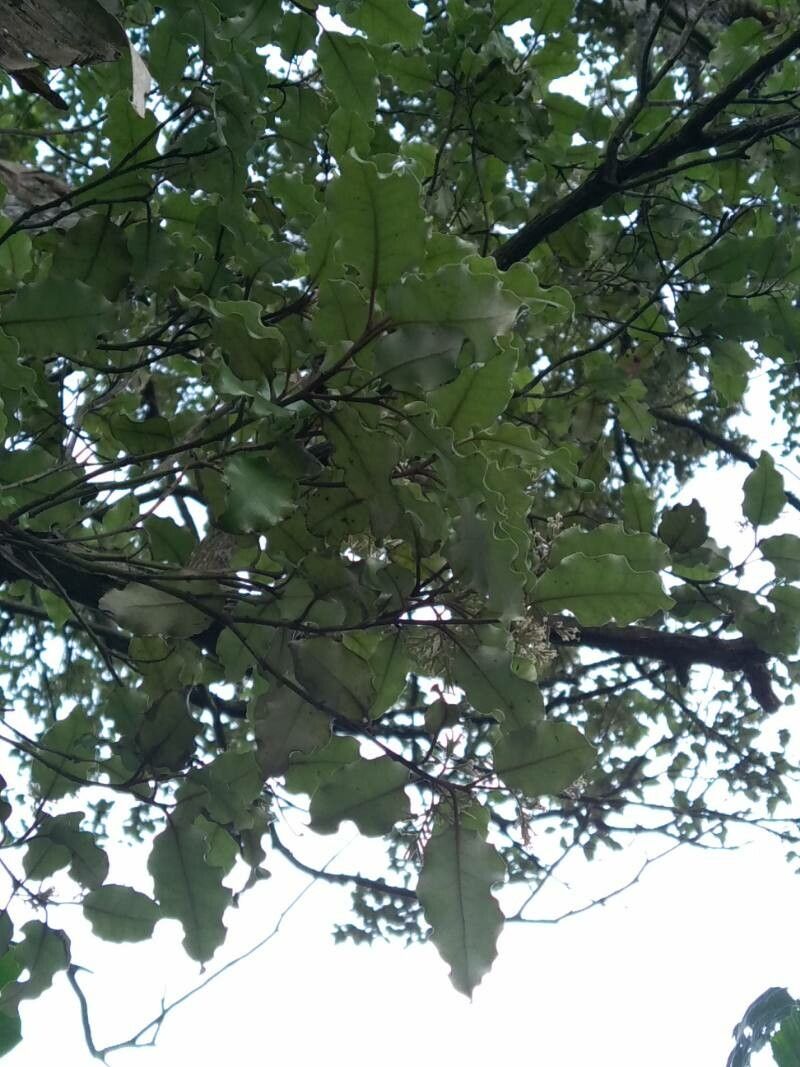
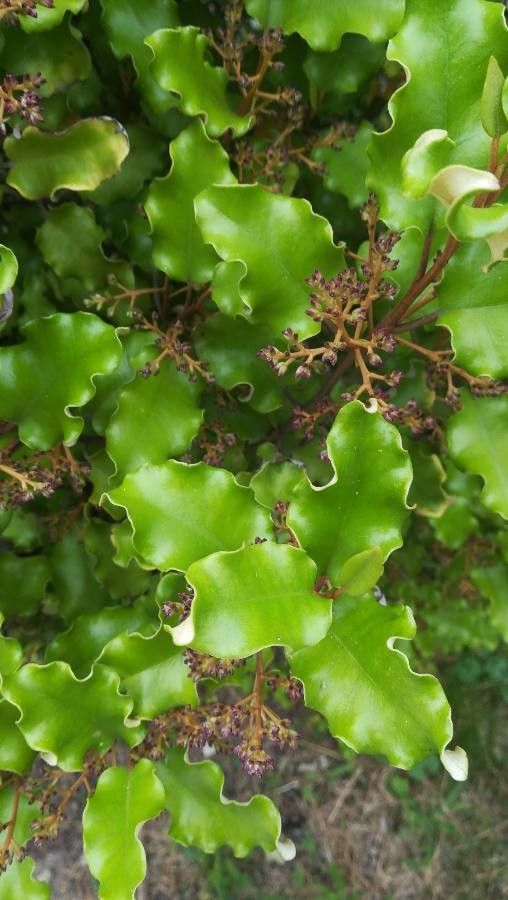
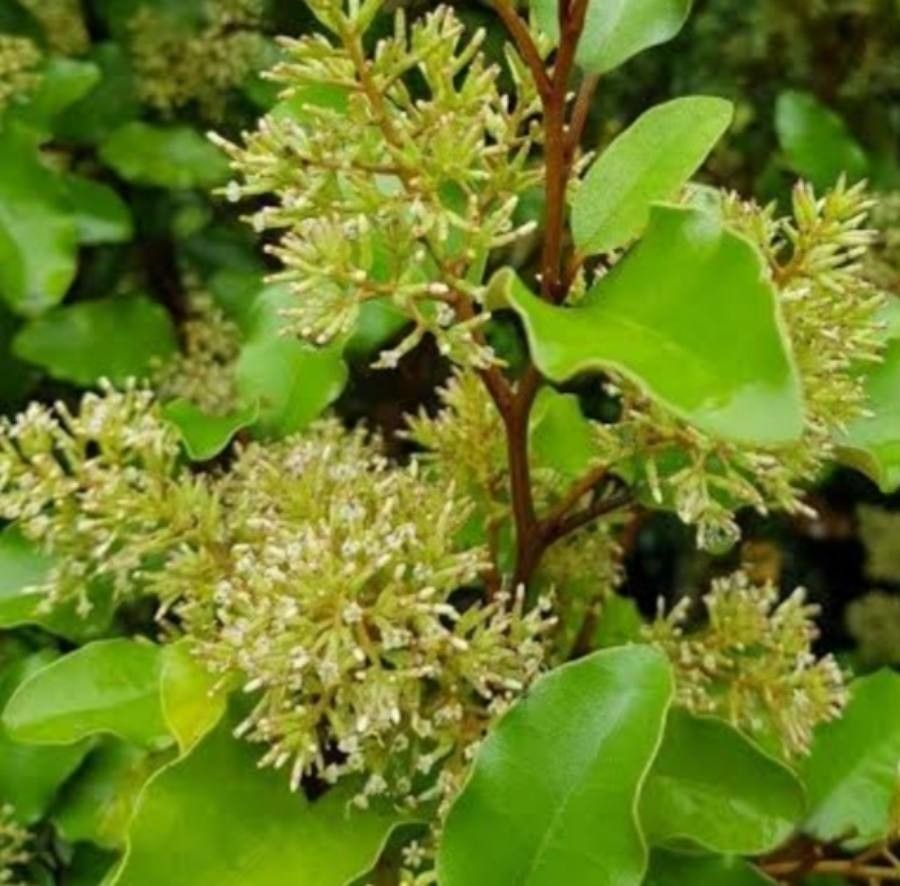
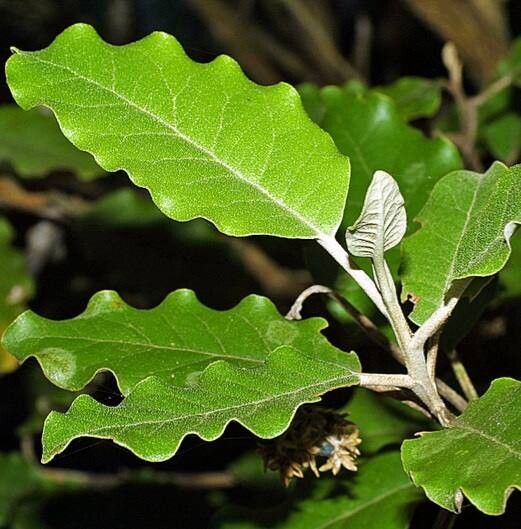
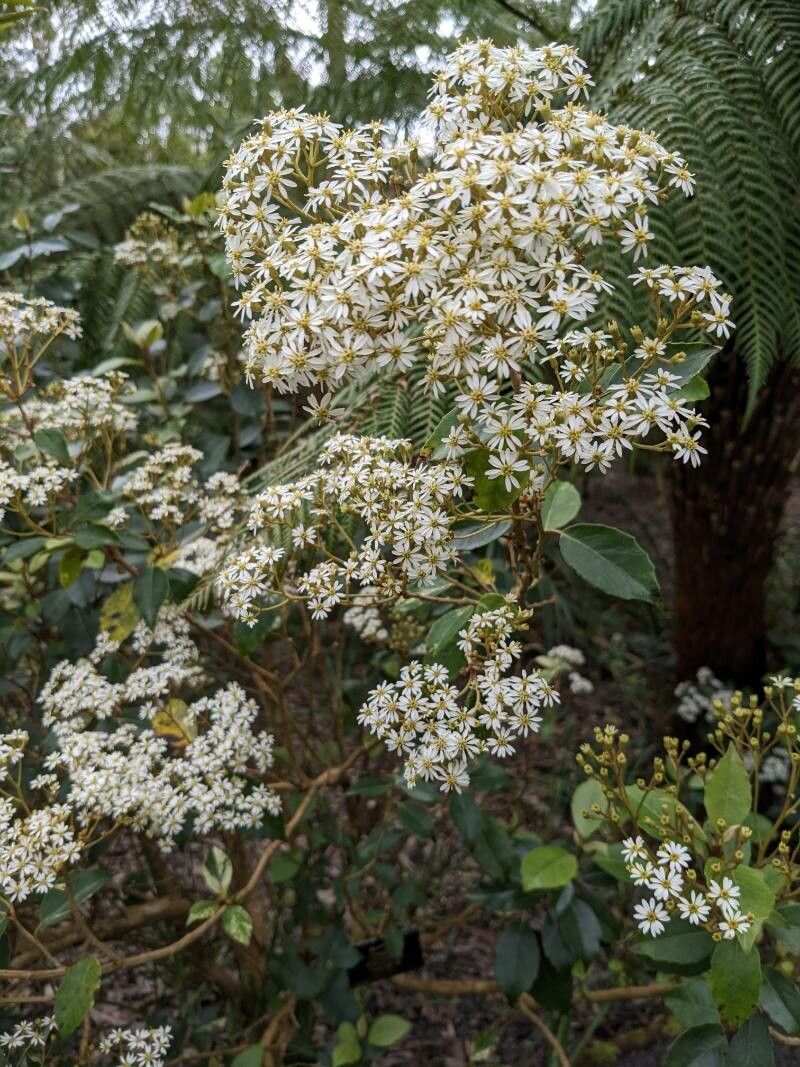
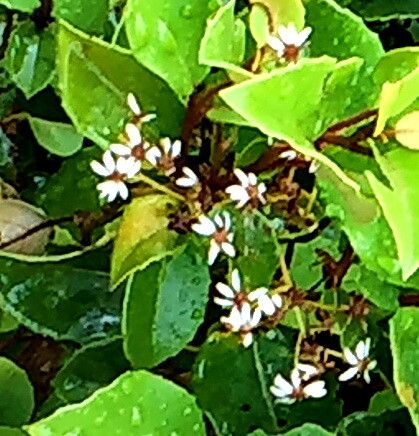
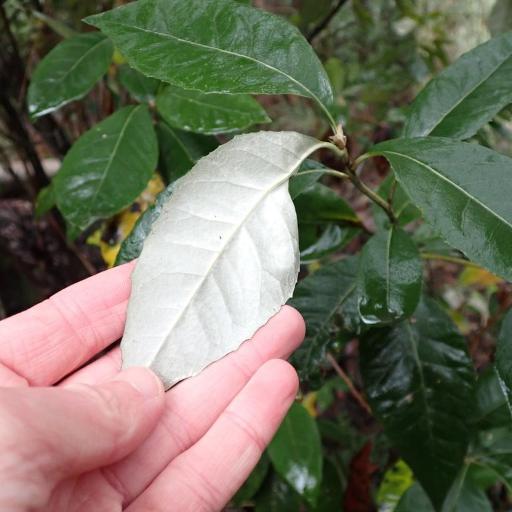
Olearia paniculata, commonly called akiraho, is a species of shrub or tree in the family Asteraceae, found only in New Zealand. The tree can grow to 6 metres high, and has yellow-green, oval-shaped leaves, with white undersides and wavy margins. Olearia paniculata produces clusters of daisy flowers in late autumn.
Akiraho is resistant to diseases and is generally not prone to them. Regarding care, this plant is fairly low-maintenance. Planted outdoors, it needs only light watering, and larger specimens typically do not require pruning. Smaller plants, however, should be pruned after they finish blooming. Akirahot is suitable for anyone with an outdoor area, like a garden or deck, and does not demand extensive care experience.
How to keep Olearia Paniculata.
Light
Akiraho prefers settings where sunlight is strong throughout the day. Its growth may be aided by the intensity of sunlight typical of its native habitat. However, too much sun can stress Akiraho, while too little can hamper its growth.
Water
Akiraho is well-adapted to changing moisture levels, displaying moderate drought tolerance. It requires watering every 2-3 weeks, with the soil needing to dry out between watering sessions. This plant thrives in well-draining soils and is resilient in temperate outdoor climates, taking advantage of natural, sporadic rainfall conditions.
Temperature
Akiraho is native to areas with temperatures from 59 to 100.4 °F (15 to 38 ℃). It is most comfortable within this range, doing best in warm conditions where lows do not fall below 59 °F (15 ℃). Seasonal adjustments may be necessary if the temperature fluctuates significantly.
Fertilizer
The timing of fertilizing Akiraho is important. Apply fertilizer in early spring and continue once a month until early summer. Fertilizer promotes attractive blooms and supplies energy during both dormant and active growth periods.
Pruning
Akiraho is a bushy plant known for its fragrant yellowish flowers. To keep it healthy and looking tidy, prune it during the winter. This helps remove dead branches and improves air circulation, leading to healthier blooms. When pruning, make sure the cuts are clean and angled to reduce the risk of disease and enhance the plant's ornamental value.
Botanical profile.
- Plant Type
- Tree, Shrub
- Life Cycle
- Perennial
- Genus
- Olearia
- Family
- Asteraceae
- Hardiness Zone
- 8-11
- Mature Height
- 6.1 m
- Mature Spread
- 6.1 m
- Leaf Color
- Green, Silver, Brown, Gray
- Leaf Type
- Evergreen
- Flower Color
- White
- Flower Size
- 0.51 cm
- Bloom Time
- Mid spring, Late spring
- Planting Time
- Spring
- Harvest Time
- Early summer, Mid summer
- Native Area
- New Zealand
Other names.
Reader questions.
How should I water my Akiraho plant in the best way?
When watering your Akiraho, you have flexibility in choosing the watering tool. Watering cans, hoses, or even cups can be used. It's important to water the plant by applying water directly to the soil, ensuring that all areas are evenly moistened to reach all parts of the root system. Using filtered water is recommended, as tap water may contain harmful particles. Water temperature is also worth considering, as water at or slightly above room temperature is best to avoid shocking the Akiraho. However, the plant generally responds well to any type of water.
Why is it necessary to fertilize my Akiraho plant?
No matter what kind of Akiraho you own, regular fertilization is important for promoting overall plant health. Providing the right nutrients will result in stronger growth and increased resilience to harsh conditions, as well as improved ability to resist diseases and pests. The foliage of your Akiraho is particularly attractive, so it's essential to maintain it. This includes a consistent fertilization schedule tailored to your specific Akiraho, which will encourage the development of vibrant, lush leaves.
How many hours of sunlight should Akiraho get every day for healthy growth?
To ensure healthy growth, Akiraho should receive a minimum of 3-6 hours of sun daily. While this is the bare minimum requirement, plants that can tolerate partial sunlight can actually thrive in full sunlight because they need less light for photosynthesis. These plants are more adaptable compared to those that require either full sunlight or partial shade.
What is the best temperature for Akiraho?
Plants are affected by colder temperatures because they adjust to the temperature of the air around them. When exposed to sunlight, they can warm up again, but this doesn't happen in winter. The ideal temperature range for the Akiraho plant is typically 70~85℉ (21~30℃). It can tolerate temperatures as low as 20~30℉ (-6~0℃), and even 15℉ (-10℃) for a short time, but prolonged exposure can lead to frost damage. To ensure their well-being, it is important to keep their maximum temperatures around 70~85℉ (21~30℃), while also providing occasional water sprays and some shade to prevent wilting.
What should I do if I give too much or too little water to my Akiraho?
Outdoor plants, especially newly planted ones or seedlings, are prone to lack of watering. It is important to remember to water them enough for a few months when they are small or just planted. Once the roots are established, Akiraho can rely on rain most of the time. When your Akiraho is planted in pots, overwatering is more likely. If you accidentally overwater your Akiraho, act immediately to remedy the situation. Stop watering the plant right away to minimize the effect of overwatering. Take out the Akiraho from its pot to check its roots. If there is no root rot, you can return the plant to its container. If you find signs of root rot, trim affected roots and apply a fungicide to prevent more damage. Finally, repot the Akiraho in well-draining soil. In the case of underwatering, simply water the Akiraho more frequently. Underwatering is easy to fix - the plant's leaves will droop, dry out, and fall off, but they will quickly regain fullness after sufficient watering. Adjust your watering frequency as soon as you notice underwatering.
When should I fertilize my Akiraho?
To ensure the healthy growth of your Akiraho, it is recommended to fertilize during late winter or early spring. This provides the necessary nutrients for growth when the weather becomes warmer. If you live in a warm climate region, it is beneficial to provide an additional fertilizer feeding during early fall. This helps supplement the soil with nutrients for the upcoming growing season and makes the Akiraho more resilient to winter cold, preventing foliage damage. Fertilizing earlier also allows enough time for new branches to grow and withstand the cold winter.
What kind of sunlight does Akiraho need?
Akiraho thrives in areas that receive full or part sun. It flourishes when it is exposed to direct morning light. However, in the summer, it is important to shield it from the intense afternoon sun. Excessive hot afternoon sun in temperate environments can cause leaf damage, impacting the plant's overall health and visual appeal.
Should I change the temperature for Akiraho when it's growing at different stages?
When growing Akiraho, it is important to research and ensure that the temperature is suitable. Some growers may choose to lower the plants' thermostats during the growing season to save on HVAC costs. However, it is crucial to understand that temperature can impact the flowering, pest management, and overall quality of the plants. During winter, there is a point where Akiraho growth stops, especially for species that go into a dormant state. As the seasons change and the base temperature increases, Akiraho can grow faster. Species naturally found in warm habitats have higher optimum temperatures compared to those that thrive in cooler climates. Cool temperatures can negatively affect seed uniformity and cause delays, so it is important to avoid exposing Akiraho seeds to such conditions. Lowering the temperature during flowering may be beneficial, but it should not be done during other phases. And keep in mind that cooler temperatures at night will require less water, so irrigation should be adjusted accordingly.
How often should I give water to my Akiraho plant?
If your area doesn't get enough rainfall, you'll need to water your outdoor plants every two weeks in the spring and fall. In the summer, you'll need to water them more often. In the winter, when plants need less water, you can water them less frequently or not at all. If your Akiraho is young or newly planted, you should water it more often to help it establish and grow. For potted plants, there are two ways to determine watering frequency. One way is to have a set schedule, such as once a week or every other week. However, this may not always work because it doesn't take into account the specific conditions of your Akiraho's growing environment. Another way is to check the soil moisture. Wait until the top two to four inches of soil have completely dried out before watering again. This is usually about one-third to one-half the depth of the pots. Adjust watering frequency based on the season and the plant's water needs, especially during the summer when it needs more water.
When is the best time to not fertilize my Akiraho?
There are certain times of the year when it is not recommended to fertilize your Akiraho plant. The first instance is during the winter months, specifically early and mid-winter when the plant is dormant and does not require any feeding. It is also advised to avoid fertilizing the plant in late spring and throughout the summer. This is because the weather during this period tends to be hotter and drier, which can negatively affect the plant's response to fertilization. To prevent any potential problems, it is best to stick to a fertilization schedule that involves feeding the plant only in early spring and early fall.
Can the sun harm Akiraho? How can we keep Akiraho safe from sun and heat damage?
When moving Akiraho plants indoors to outdoors, they can be harmed by direct sunlight. To avoid sunburn, it's best to gradually move the pots from a shaded area to a brighter location. However, even plants that are used to the sun can still be damaged by extreme heat. During a heatwave, it's important to keep the soil consistently moist to help the plants handle the excessive heat. To protect sensitive Akiraho during extreme weather, consider moving potted plants to areas with afternoon shade or covering them with a shade cloth.
How can I make sure Akiraho stays warm during cold seasons?
To ensure the plant's readiness for colder temperatures, stop feeding it so that new growth is discouraged and the existing growth can become stronger. In order to protect the Akiraho from the cold, consider constructing structures like cages or trellises around it. Another option is to use heat mats that gently warm the soil, maintaining a consistent and ideal temperature range for the Akiraho.