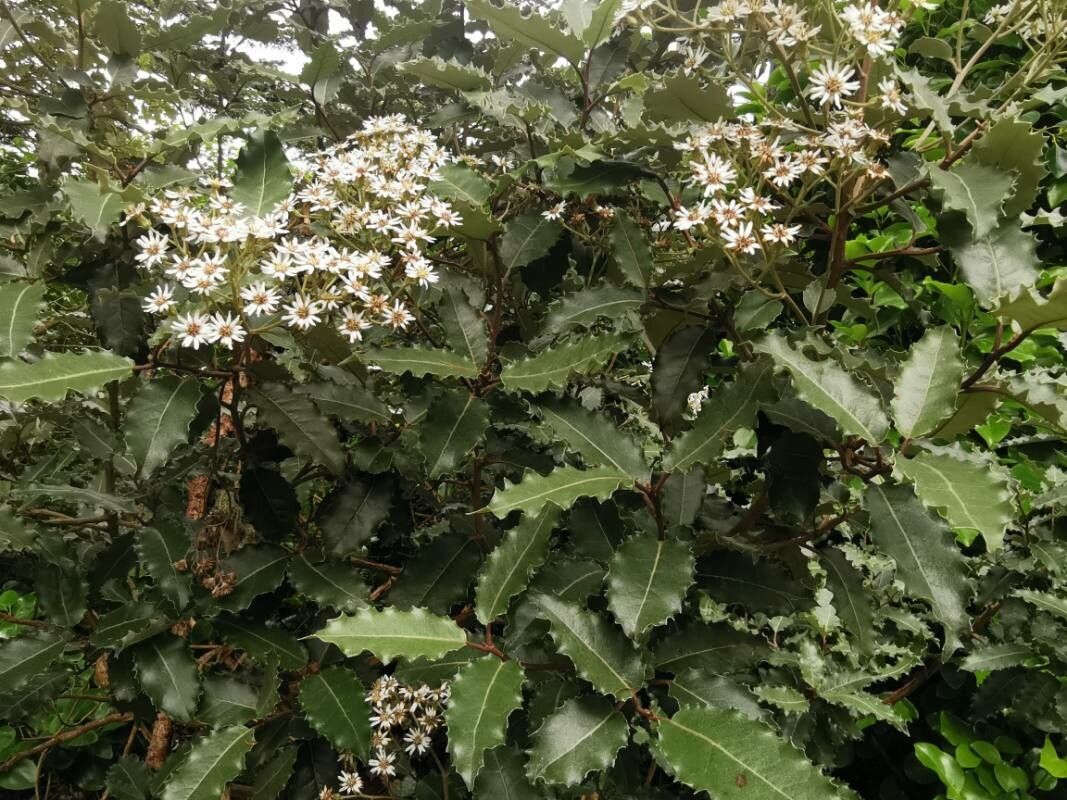
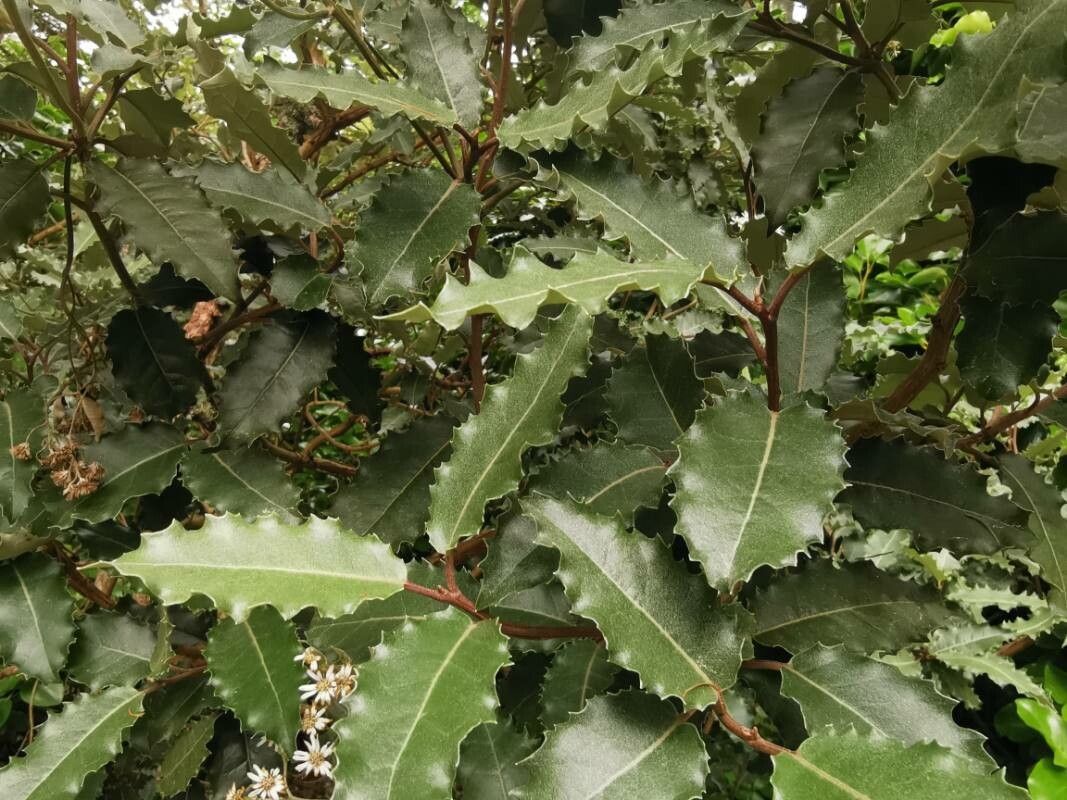
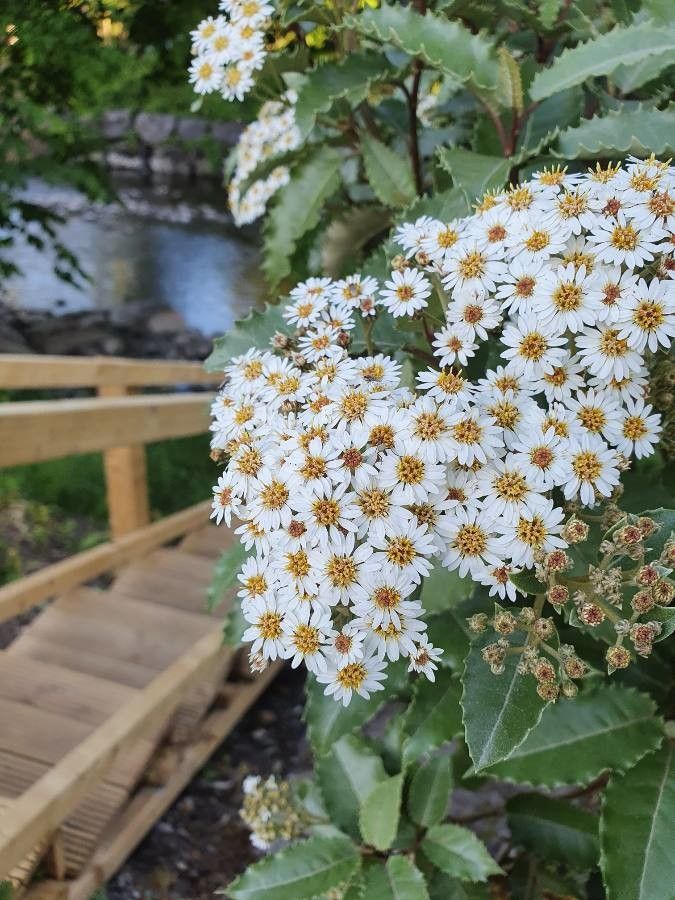
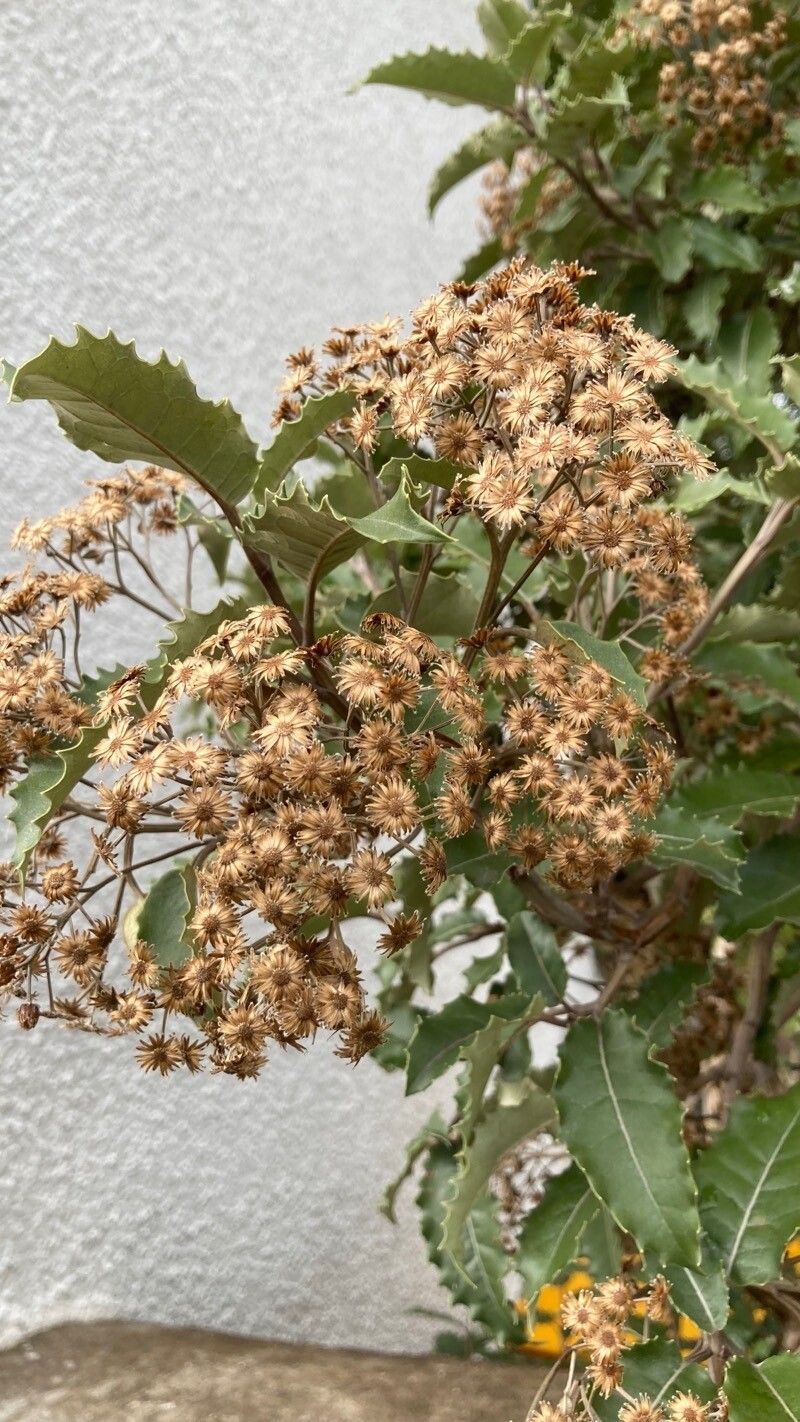
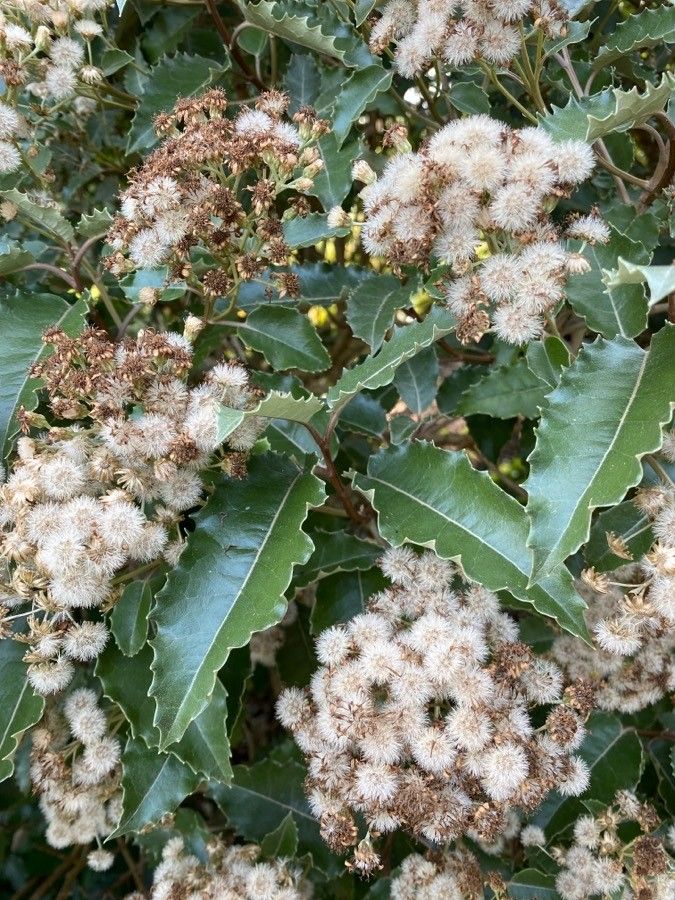
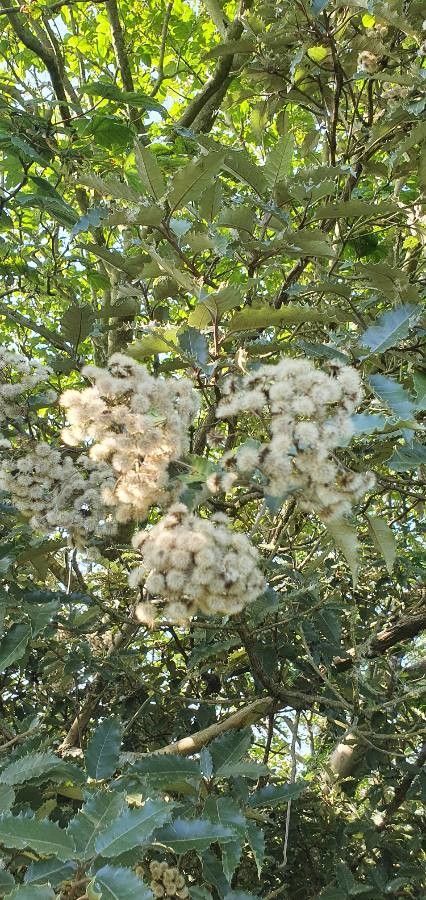
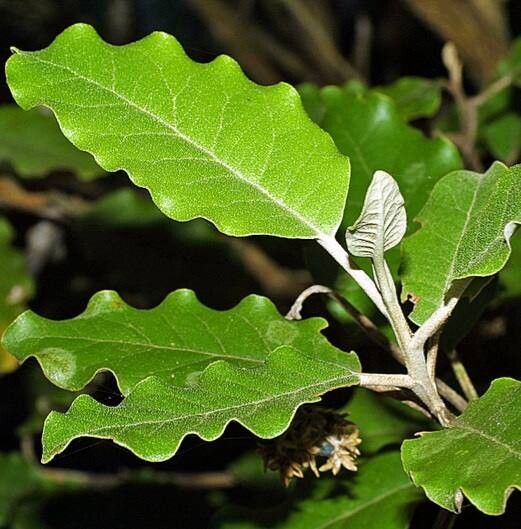
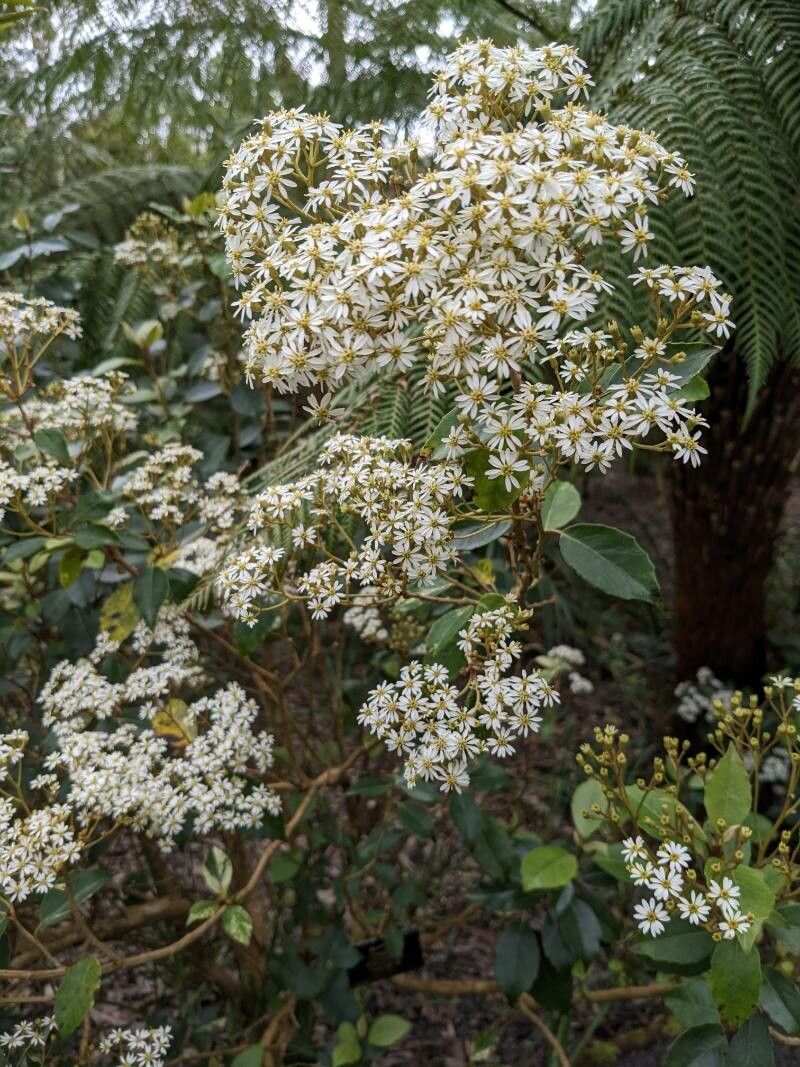
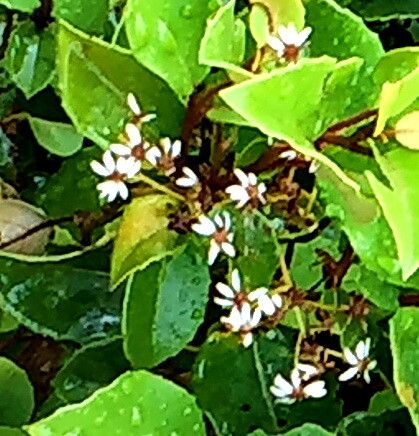
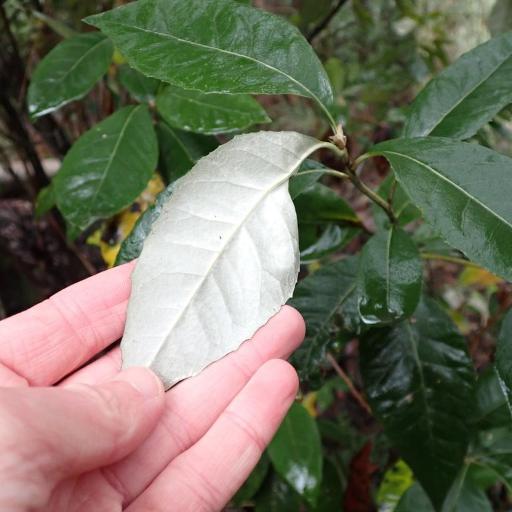
Olearia macrodonta (mountain holly or arorangi in New Zealand, or New Zealand holly elsewhere) is a small sub-alpine evergreen tree endemic to New Zealand, from the plant family Asteraceae. It is closely related to the narrow-leaved Olearia ilicifolia, with which it shares several characteristics including largely undulating and serrated grey-green leaves. These common characteristics mean the two species are often confused with one another. It is found in lowland to sub-alpine forests from the East Cape of the North Island of New Zealand southwards throughout the South Island and Stewart Island, at 450–1,200 metres (1,480–3,940 ft) in altitude. Olearia macrodonta is a shrub to spreading small tree that grows 1.5–6 metres (4 ft 11 in – 19 ft 8 in) tall. Its leaves are 5–10 centimetres (2.0–3.9 in) long, 2.5–4 cm (0.98–1.57 in) wide, with undulating and coarsely serrated margins, greyish green above. Its daisy-like composite flowers are white with yellow centres and grow in large, rounded, much-branched corymbs.Despite its common name, O. macrodonta is not closely related to the true hollies Ilex. The specific epithet macrodonta means "large-toothed", referring to the leaves.This plant has gained the Royal Horticultural Society's Award of Garden Merit.
New zealand holly is resistant to disease and is usually not susceptible to illnesses. As for care, this plant is fairly low-maintenance. When grown outdoors it needs little watering, and larger plants typically do not require pruning. Smaller plants, however, should be pruned after they have finished blooming. New zealand holly is suitable for anyone with outdoor space, such as a garden or deck, and does not demand much experience in plant care.
How to keep Olearia Macrodonta.
Light
New Zealand holly does best when it receives the maximum amount of light during the day. Its natural habitat mirrors these light requirements. Insufficient sunlight can result in stunted growth, and likewise, extended exposure can cause harm. However, sun requirements can differ at various stages of growth.
Water
New Zealand holly is moderately drought-tolerant and does well in areas with varying levels of moisture. It thrives best with moderate humidity and needs watering every 1 to 2 weeks to prevent the soil from becoming waterlogged. The plant's waxy leaves help retain moisture, making it adaptable to different climate zones.
Temperature
New zealand holly shows strong adaptability to a range of climate conditions, whether enduring scorching summers or cold winters. However, it does have an optimal temperature range for growth. If temperatures rise too high, the plant can experience heat and humidity stress, which may lead to its death. In areas where temperatures approach the lower limit of its cold tolerance, it's important to take insulating measures to protect the plant.
Fertilizer
The timing is important when fertilizing New zealand holly. Apply fertilizer in early spring and continue monthly through early summer. Fertilizer encourages attractive blooms and supplies energy both during dormancy and in periods of active growth.
Pruning
New Zealand holly is an evergreen shrub featuring holly-like leaves and white flowers. To encourage better airflow, more light, and increased blooms, prune dead branches and thin out dense areas in late winter. Make sure to use clean, sharp tools to prevent disease and support healthy growth in the spring.
Botanical profile.
- Plant Type
- Shrub
- Life Cycle
- Perennial
- Genus
- Olearia
- Family
- Asteraceae
- Hardiness Zone
- 7-10
- Mature Height
- 1.52 m
- Mature Spread
- 1.52 m
- Leaf Color
- Green, White, Gray, Silver
- Leaf Type
- Evergreen
- Flower Color
- White
- Flower Size
- 2.03 cm to 3.05 cm
- Bloom Time
- Early summer, Mid summer
- Planting Time
- Spring, Summer, Autumn
- Harvest Time
- Late summer, Early fall
- Native Area
- New Zealand
Other names.