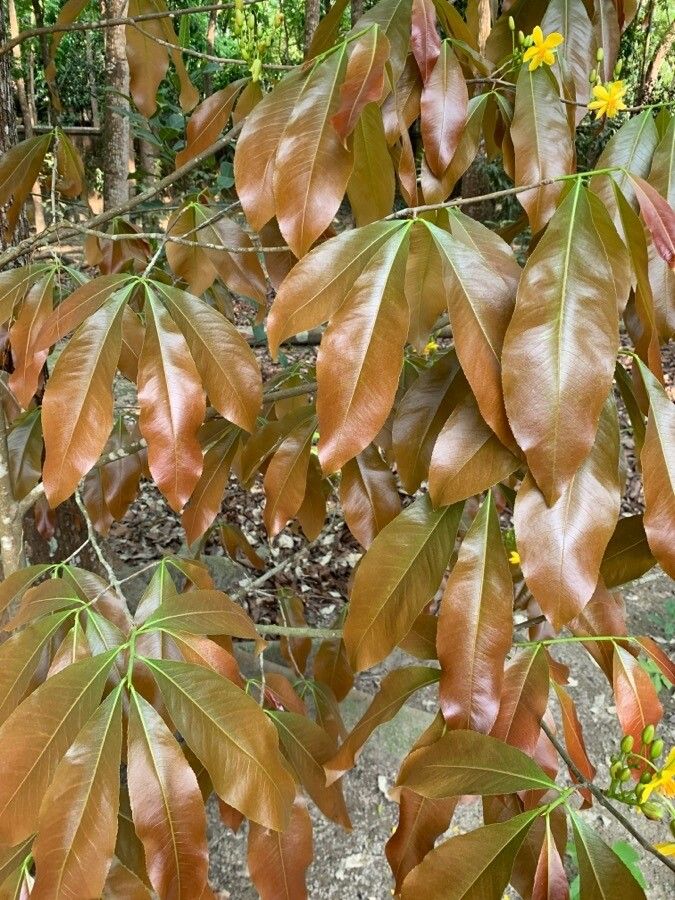
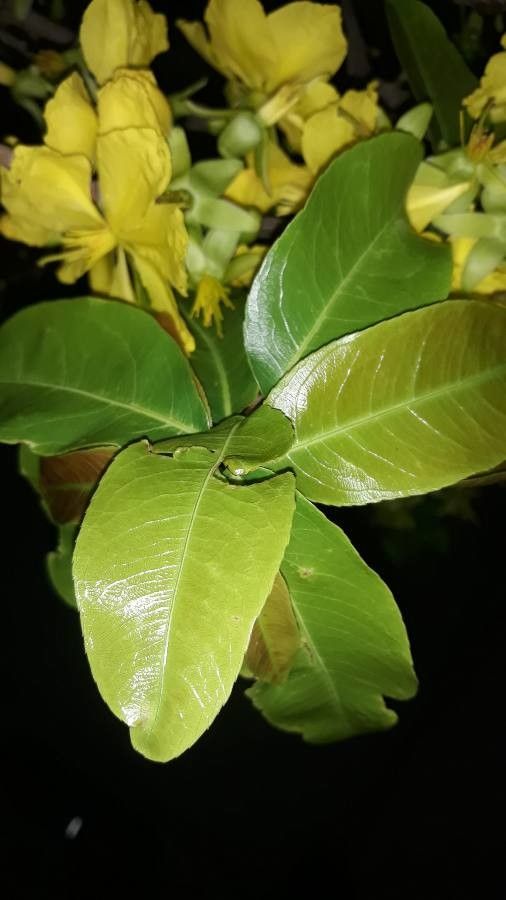
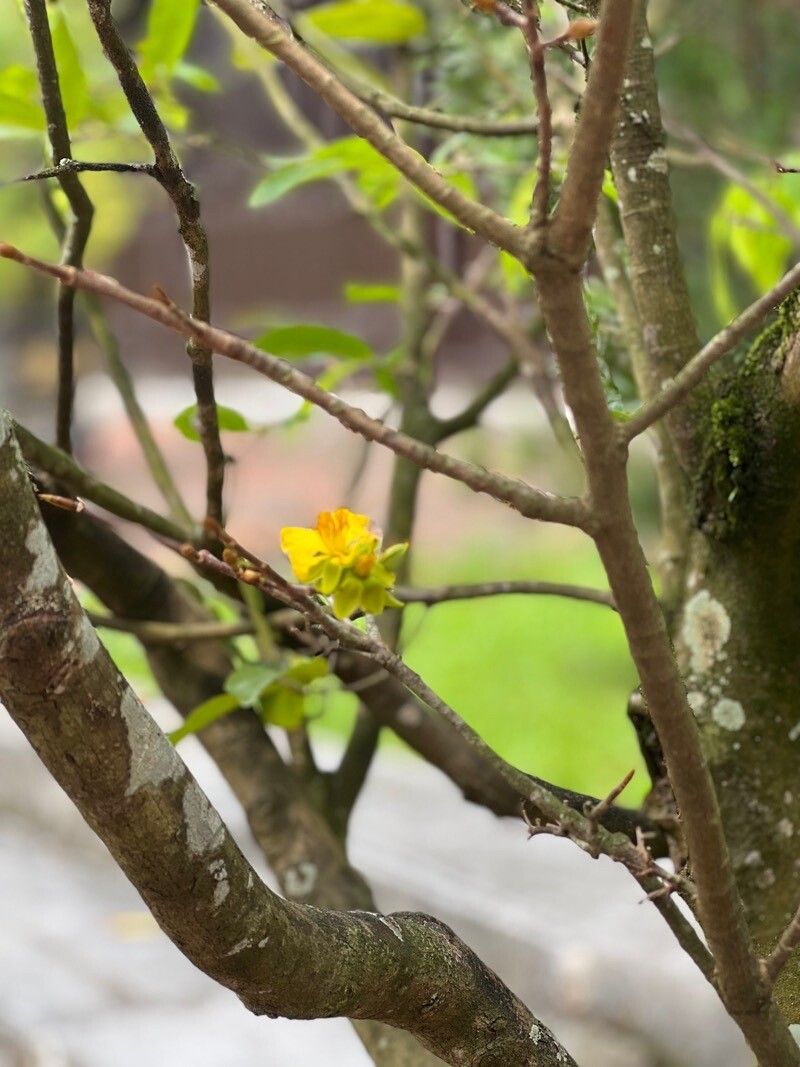
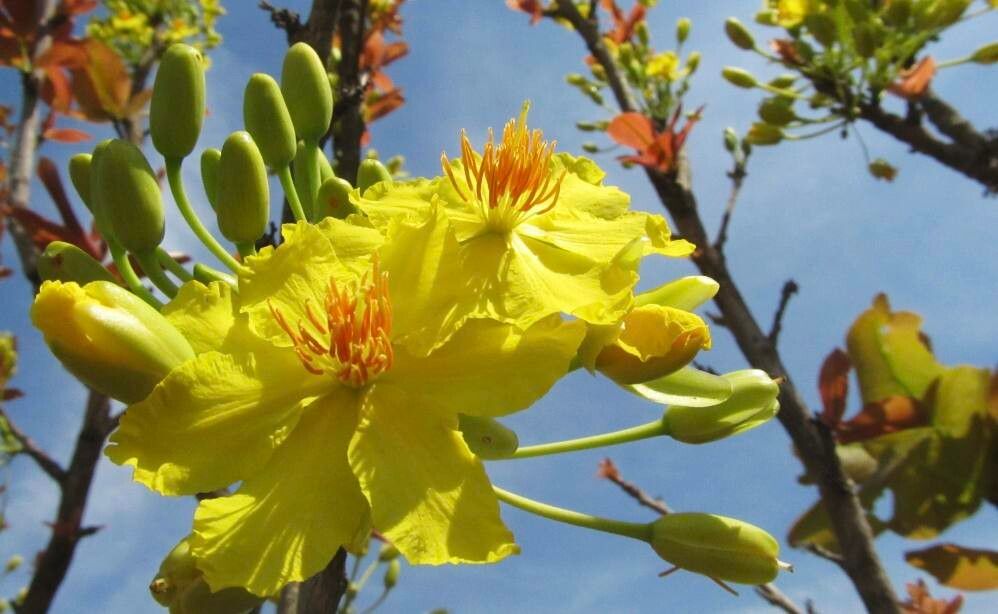
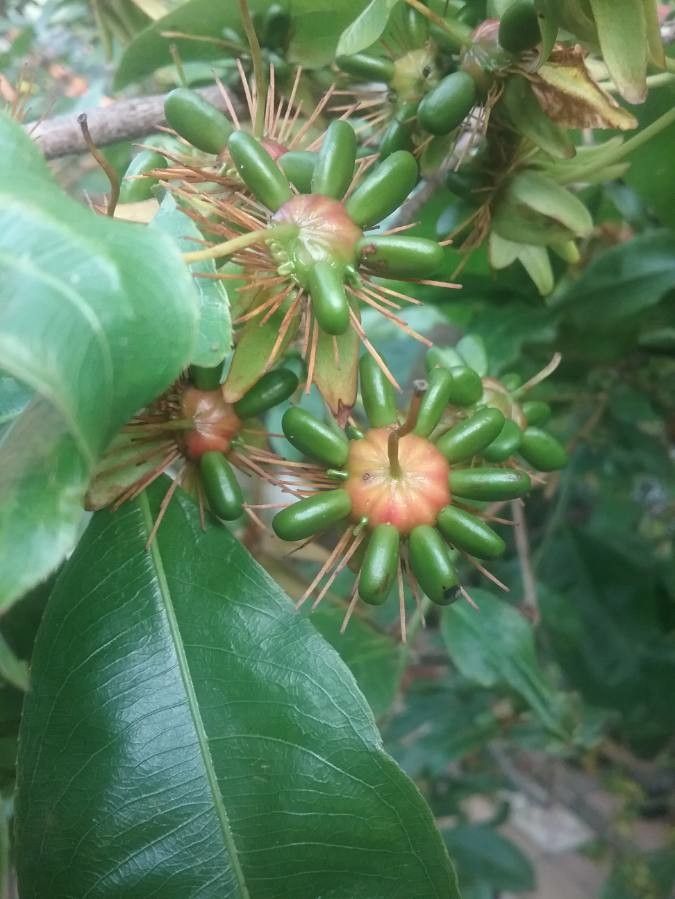
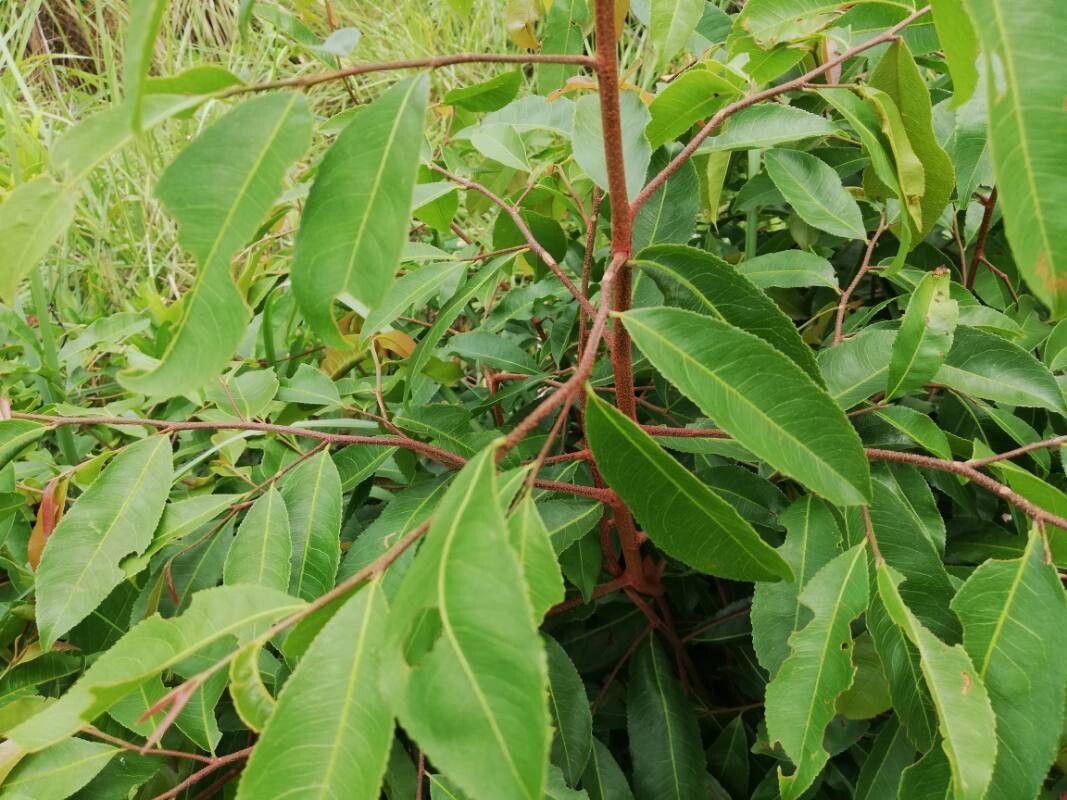
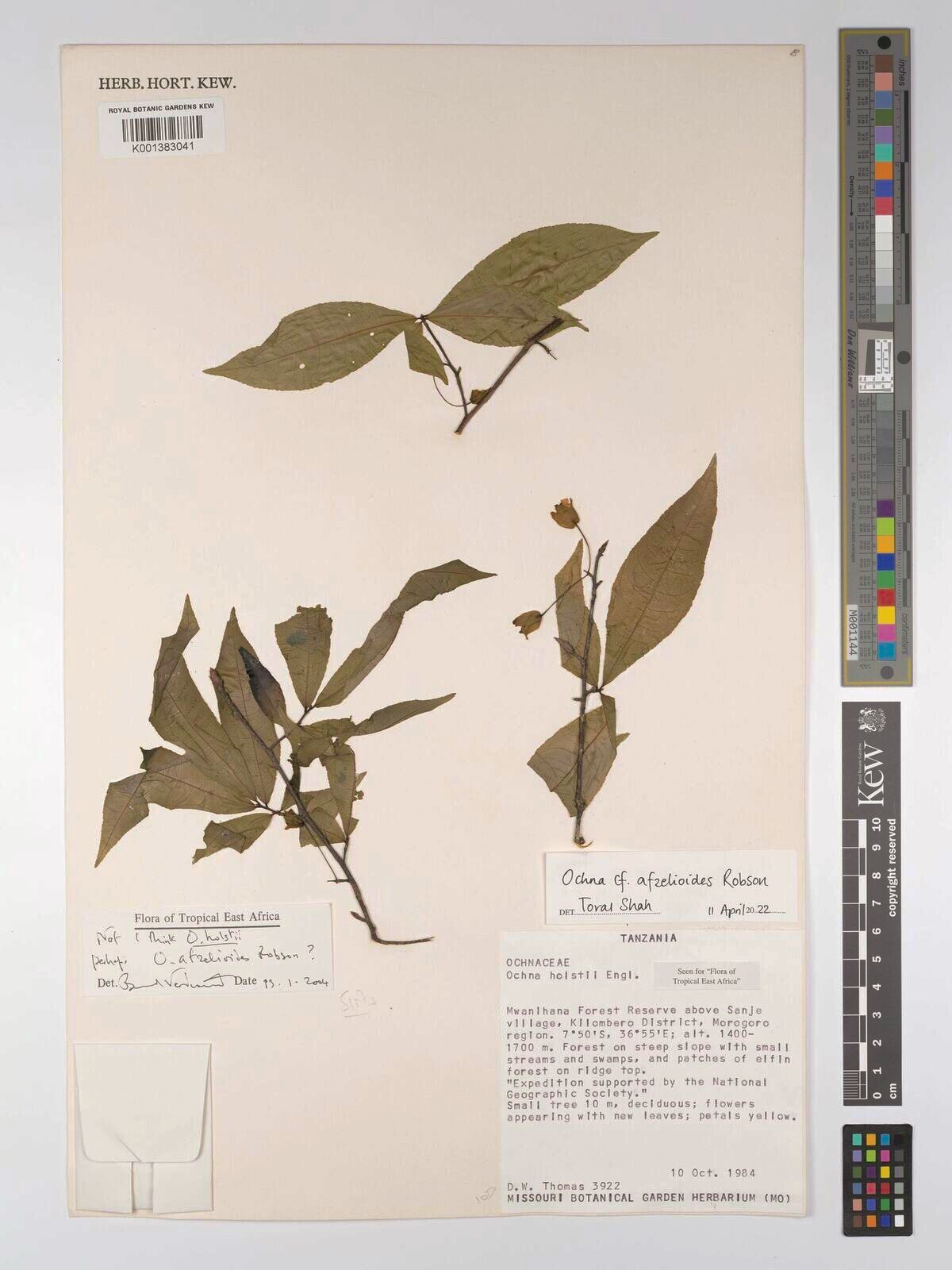
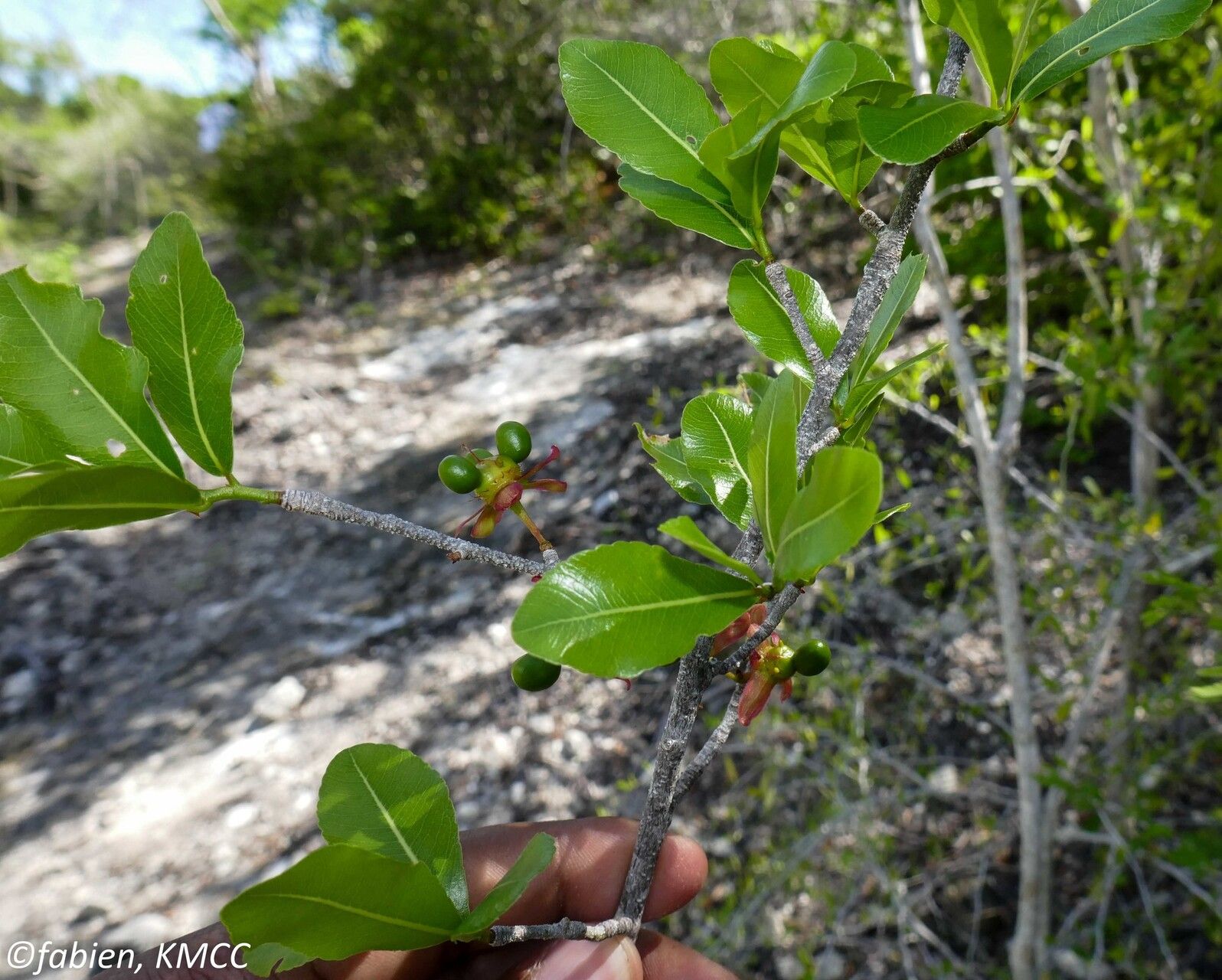
Ochna integerrima, popularly called yellow Mai flower (Vietnamese: mai vàng, hoa mai, hoàng mai in southern Vietnam, although in the north, mai usually refers to Prunus mume), is a plant species in the genus Ochna () and family Ochnaceae. In the wild, it is a small tree or shrub species (2-7 m tall). The timing of the yellow flowers of this plant make it very popular in southern Vietnam, where (often bonsai-style) plants are purchased during Tết.
In Vietnam, the variety of O. integerrima whose flowers have five petals is called mai vàng (yellow mai), whereas mai núi (mountain mai) flowers have between five and nine petals. In Cambodia, it is called angkea (អង្គា), angkeasel (អង្គាសីល), angkea loeung អង្គាលឿង or kongkea គង្គា.Ochna integerrima (Thai: ช้างน้าว Chang nao) is the provincial flower of Mukdahan province, Thailand.
The Mickey mouse plant has strong resistance to disease and is typically not susceptible to illnesses. Regarding care, this plant is fairly low-maintenance. When grown outdoors it needs only minimal watering, and larger plants usually do not require pruning. Smaller plants, however, should be pruned after they finish blooming. The Mickey mouse plant is appropriate for anyone with outdoor space, such as a garden or deck, and does not call for extensive care experience.
How to keep Ochna Integerrima.
Light
The Mickey Mouse plant flourishes in regions where the sunlight isn't too strong. It prefers being exposed to the sun without having to withstand its full force. Excessive or insufficient lighting can obstruct its proper growth. Being native to environments with plenty of soft sunlight, it expects comparable sun exposure circumstances to prosper.
Water
The Mickey Mouse plant is adapted to changing moisture conditions and shows moderate drought tolerance. It thrives with watering every 1-2 weeks. While it is known for its spring blooms, maintaining consistent moisture during the growing season is essential for maximizing its floral display.
Temperature
The Mickey mouse plant originates from environments with temperatures between 68 and 100°F (20 to 38℃). It performs optimally in these temperature ranges, though it can sustain a bit lower or higher. Care modifications should be in line with seasonal variances, confirming warmth during cooler seasons.
Fertilizer
The optimal period to apply fertilizer to a Mickey mouse plant falls at the beginning of spring, when it is just coming out of dormancy. This helps to encourage both overall growth and the maturation of its flowers. Application of fertilizer improves the leaves, stems, and branches, and supports the production of sizable, bright, and enduring flowers. Additionally, it assists in moving nutrients from the roots to the flowers and boosts the plant's wellness and ability to resist diseases.
Pruning
The Mickey Mouse plant showcases striking yellow flowers and distinctive black and red berries. To encourage growth and flowering, prune the plant from early to late winter using sharp, sterilized shears. Regular pruning helps improve the plant's shape and promotes better light and air circulation, while also reducing the risk of pests and diseases.
Botanical profile.
- Plant Type
- Tree, Shrub
- Life Cycle
- Perennial
- Genus
- Ochna
- Family
- Ochnaceae
- Hardiness Zone
- 9-11
- Mature Height
- 7.01 m
- Mature Spread
- 3.05 m
- Leaf Color
- Green
- Leaf Type
- Evergreen
- Flower Color
- Yellow
- Flower Size
- 3.05 cm
- Bloom Time
- Late winter, Early spring, Mid spring
- Planting Time
- Spring, Summer
- Harvest Time
- Late spring, Early summer, Mid summer
- Native Area
- India, Malaysia, Vietnam, Myanmar, Bangladesh, Laos, Thailand, China
Other names.
Reader questions.
What kind of sunlight requirements does the Mickey mouse plant have?
The Mickey mouse plant thrives best in conditions where it receives partial sunlight, about 3-6 hours of sunlight daily. It prefers spots with a perfect balance of light and shade, ensuring its optimum growth without enduring the full intensity of the sun's rays. Originating from habitats with abundant but gentle sunlight, this plant flourishes under similar sun exposure conditions.
What is the native climate for the Mickey Mouse plant?
The Mickey Mouse plant is native to climates where temperatures range from 68 to 100°F (20 to 38°C). It thrives best within these temperature ranges, tolerating slightly lower or higher temperatures. Seasonal adjustments in care are crucial, with an emphasis on maintaining warmth during colder seasons. This plant is extremely heat-loving, making cold temperatures harmful. To protect it from cold, it is advised to bring outdoor-grown Mickey Mouse plants indoors during autumn and place them near a bright window but at a safe distance from heaters, ensuring temperatures stay above 20°C during winter. Temperatures nearing 0°C can be detrimental to the plant.
What is the warning about sunlight for the Mickey mouse plant?
The warning emphasizes the importance of observing how sunlight moves through your garden to choose spots that provide a balance of light and shade. This careful selection ensures the happiness and health of your plants by mimicking their natural habitat conditions.
How does low temperature affect the Mickey Mouse plant and what should I do?
The Mickey Mouse plant prefers warm temperatures and struggles in the cold, thriving best when temperatures are above 20°C. It's critical to keep it above 0°C during the winter, as temperatures below -5°C can cause the leaves to lighten in color. Following frost damage, leaves may turn brown or black, and the plant may exhibit wilting and drooping. In such cases, trim off the frost-damaged parts and move the plant to a warmer indoor environment promptly. Positioning the plant near a south-facing window can ensure ample sunlight and avoid placing it near heaters or air conditioning vents to prevent air dryness.
How can artificial lighting benefit indoor Mickey mouse plants?
Artificial lighting is crucial for the growth of indoor Mickey mouse plants, especially when natural sunlight is insufficient. LED lights, being a popular choice, can provide specific wavelengths of light needed by plants. Depending on the plant's sunlight needs, the required artificial light intensity varies from 10-50W/sq ft. To mimic natural sunlight, the light source should be placed 12-36 inches above the plant for 8-12 hours per day, ensuring faster, healthier growth.
What should I do if the Mickey Mouse plant is exposed to high temperatures?
During summer, it's important to ensure that the Mickey Mouse plant is kept under 38°C. Exposure to temperatures above 43°C can lighten the leaf color and make the plant more susceptible to sunburn. If this happens, trim away the sunburned and dried-up parts of the plant. Relocate the plant to an area that is shaded during the midday and afternoon sun. Additionally, watering the plant in the morning and evening can help keep the soil moist and support the plant's health in high temperatures.
What are some important symptoms of sunlight deficiency or overexposure in Mickey mouse plants?
Symptoms of light deficiency in Mickey mouse plants include small, mature leaves, leggy or sparse growth, faster leaf drop, slower or no new growth, and lighter-colored new leaves. Overexposure symptoms comprise chlorosis, sunscald, leaf curling, wilting, and leaf scorching. These indicate either a lack of sufficient sunlight or damage from excessive sunlight, affecting the plant's ability to photosynthesize and maintain healthy growth.
What are some solutions for managing sunlight exposure for Mickey mouse plants?
To manage sunlight exposure, gradually adapt your Mickey mouse plant to changing light conditions by shifting it to sunnier spots each week, ensuring it receives 3-6 hours of direct sunlight daily. Use artificial light if necessary, keeping lamps on for at least 8 hours daily. For outdoor plants, move them gradually to avoid sunburn. Remove any obstructions like tree branches that block sunlight. If needed, transplant smaller plants during their dormant period to a location with ample sunlight and good drainage to promote healthy new growth.