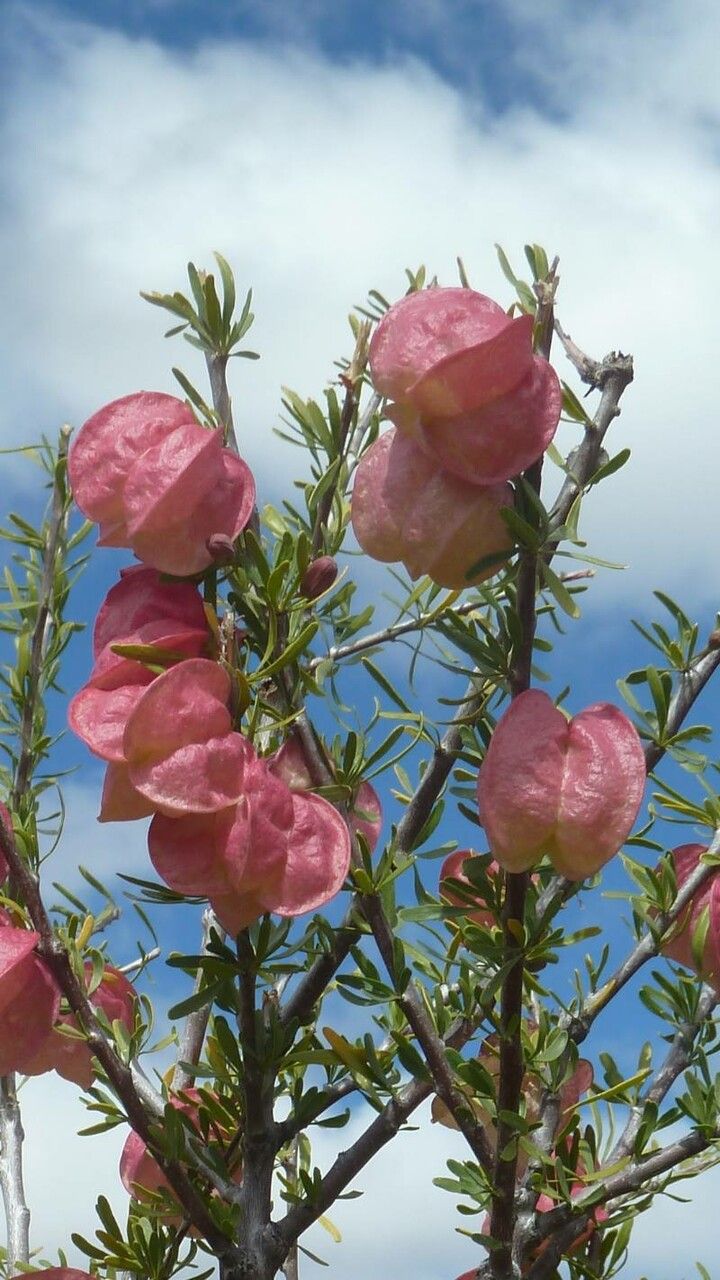
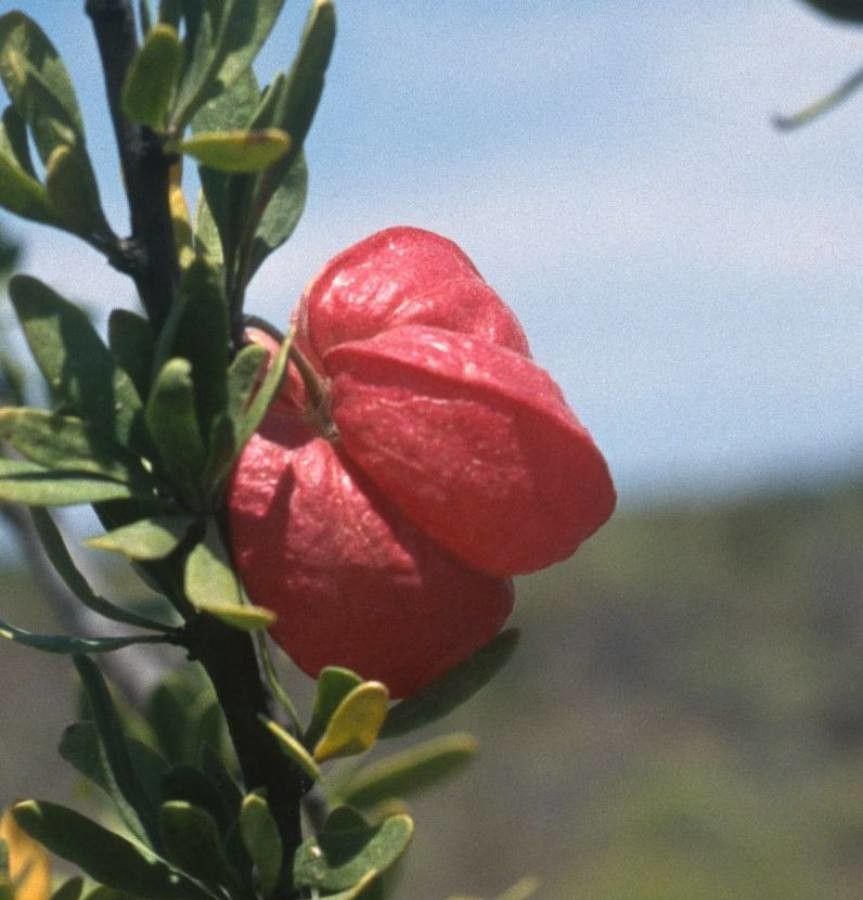
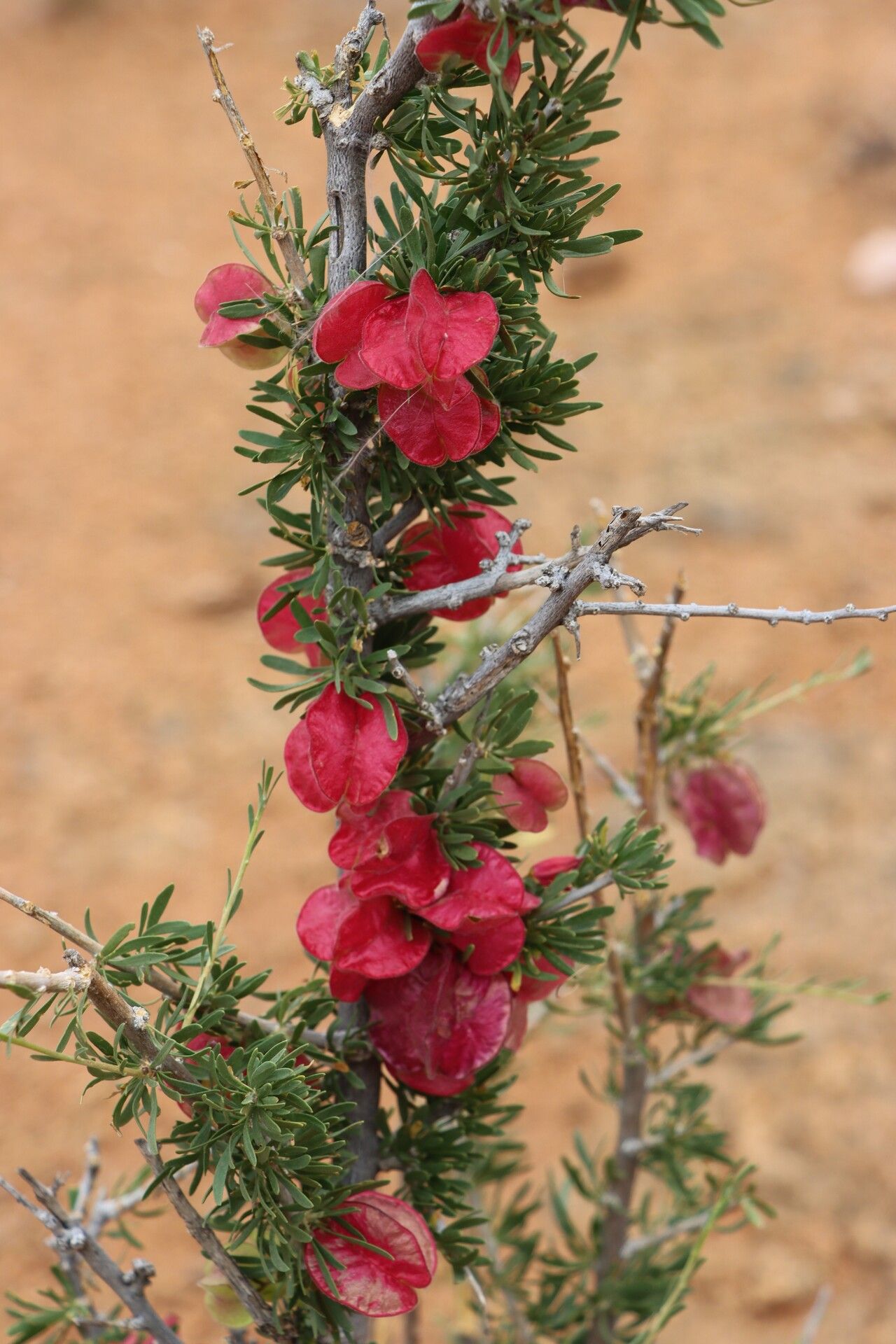
Nymania capensis is a species of plant known in English as "Chinese lantern" because of the shape of its bright, colourful fruit, and in Afrikaans as "klapper" (meaning "firecracker" because children sometimes pop the capsules for fun). It is the only species in the genus Nymania. It is a spare, scrubby, woody shrub or small tree, typically ) 0.5–3 m tall. It is endemic to South Africa and some closely bordering territories, especially inland regions in central, northern and eastern parts. It grows mainly in Karooid regions, among the scrub of gorges, but also in open veld and river banks in the Great and Little Karoo, Namaqualand and Kalahari. The leaves are alternate and fascicled. They are simple and more or less linear. The flowers are solitary, born on pedicels in axils. The corolla and calyx have four lobes each, with eight stamens inserted at the base of the disc, the filaments being connate at their base. The ovary is superior and sessile; it has four lobes and four locules, each containing two collateral ascending ovules. The stigma is simple and the style extends further than the stamens. The fruit is an inflated membranous capsule, 3–5 cm across, each locule forming a distinct lobe. The ripe seeds are hard and rounded, some 2–4 mm in diameter. A locule may contain less than two seeds, due to abortion.The capsules are too heavy to be windborne, but when ripe they sometimes are blown over the veld, bearing their seeds in the manner of miniature tumbleweeds.Carl Peter Thunberg originally described the species as Aitonia capensis in honour of William Aiton, but John Lindley later renamed it to Nymania in honour of Carl Fredrik Nyman. Nymania capensis is the only species in the genus Nymania Lindb. Another species, "Nymania insignis K.Schum." (in the junior homonym genus Nymania K.Schum.; Euphorbiaceae) is a synonym of Phyllanthus clamboides. The genus has variously been assigned to the families Sapindaceae, Aitoniaceae, and Meliaceae. The correct assignment also is under review. Some characteristics, such as the pollen type, still are giving taxonomists pause.Though the plant currently is valued as an ornamental, it is not easy for the amateur to germinate and it does not seem to have been of much material importance in other respects; it has been reported to have been used in folk medicine for the treatment of convulsions. Goats will browse it, but it is seldom plentiful enough to be important as a major source of forage.
Chinese lantern has strong disease resistance and is typically not susceptible to illnesses. Regarding maintenance, this species is fairly easy to care for. When grown outdoors it needs little water, and larger specimens usually do not require pruning. Smaller specimens, however, should be trimmed after they finish blooming. Chinese lantern is appropriate for anyone who has an outdoor area, like a garden or a deck, and it does not demand extensive gardening experience.
How to keep Nymania Capensis.
Light
Chinese lantern grows best in full sun. Its photosynthesis and metabolic activity that support healthy growth are adapted to the intense sunlight of its native habitat. Proper light balance is essential: too much can scorch the leaves, while too little can cause stunted growth.
Water
The Chinese lantern plant, which originates from arid regions, thrives with minimal moisture due to its high drought tolerance. It adapts well to infrequent rainfall, requiring watering only every 2-3 weeks. As an outdoor plant in xeriscapes, the Chinese lantern is designed to conserve water in its tissues, making it well-suited for environments with low precipitation and high temperatures.
Temperature
Chinese lantern is native to regions with temperate climates and does best in temperatures from 59 to 100 °F (15 to 38 ℃). As temperatures fall in colder seasons, providing some protective warmth can help ensure the Chinese lantern's health.
Fertilizer
The timing of fertilization is important for Chinese lantern. Apply fertilizer in early spring and then once a month through early summer. Fertilizer promotes attractive blooms and supplies energy during both dormant periods and active growth phases.
Pruning
To keep your Chinese lantern plant healthy and thriving, it requires pruning in early spring. Start by removing any dead or diseased branches and thinning out overly crowded areas to improve air circulation. Shaping the plant not only enhances its appearance but also encourages growth, resulting in more abundant flowering and fruiting. By taking these steps, your Chinese lantern will become a standout feature in any garden.
Botanical profile.
- Plant Type
- Tree, Shrub
- Life Cycle
- Perennial
- Genus
- Nymania
- Family
- Meliaceae
- Hardiness Zone
- 8-11
- Mature Height
- 0.91 m to 3.05 m
- Mature Spread
- 0.91 m to 3.05 m
- Leaf Color
- Light Green
- Leaf Type
- Deciduous
- Flower Color
- White, Yellow, Pink, Green
- Flower Size
- 1.02 cm to 2.03 cm
- Bloom Time
- Mid fall, Late fall, Early winter
- Planting Time
- Spring, Summer
- Harvest Time
- Winter
- Native Area
- South Africa, Namibia
Other names.
Reader questions.
What are the sunlight requirements for Chinese Lantern plants?
Chinese Lantern plants, scientifically known as Nymania capensis, require full sun, which means they need above 6 hours of sunlight daily to flourish. It is essential to watch how sunlight moves through your garden to find spots that offer the perfect balance of light and shade, ensuring the plants' happiness and healthy growth. However, it's crucial to manage this exposure carefully, as too much sun can lead to leaf scorching, while too little can cause stunted growth.
What is the native climate for Chinese lantern plants?
The Chinese lantern, botanically known as Nymania capensis, thrives in regions that have a temperate climate. It grows best in a temperature range between 59 to 100 °F (15 to 38 °C). These conditions are ideal for the plant to maintain its health and continue growing optimally.
How important is sunlight for the growth of Chinese Lantern plants?
Sunlight is crucial for the growth of Chinese Lantern plants. These plants thrive best under complete exposure to the sun, with their photosynthesis and metabolism leading to healthy growth deeply rooted in their origin habitat's immense sun exposure. A balance of light is critical; excess sunlight can cause leaf scorching, and insufficient sunlight can result in stunted growth. For indoor plants struggling with natural light availability, artificial lighting serves as a significant aid, promoting faster, healthier growth. LED lights, for instance, are recommended for their ability to provide customizable wavelengths of light essential for plants, with specific wattage based on the plant's sunlight needs.
How does the Chinese lantern plant react to cold weather?
The Chinese lantern plant possesses some degree of cold tolerance, managing well without additional care when temperatures are above -5°C. However, if temperatures are forecasted to dip below -5°C, it's crucial to implement temporary cold protection strategies. This can include wrapping the plant in plastic film, fabric, or other suitable materials to insulate it against the cold. Once temperatures rise, these protective covers need to be removed to prevent any potential damage to the plant.
What symptoms indicate a Chinese Lantern plant is not receiving enough sunlight?
Several symptoms can indicate a Chinese Lantern plant is not getting adequate sunlight. These include the growth of smaller new leaves compared to previous ones, a leggy or sparse growth appearance due to longer spaces between leaves or stems, early leaf drop to conserve resources, slower or halted new growth, paler new leaves indicating a lack of chlorophyll, and several issues related to excessive sunlight like chlorosis, sunscald, leaf curling, wilting, and leaf scorching. Each symptom highlights the plant's struggle with either insufficient or too much sunlight, affecting its overall health and growth.
What are the symptoms of cold stress in Chinese lantern plants, and how can it be managed?
When exposed to temperatures below 15°C, Chinese lantern plants may start showing signs of cold stress, especially if temperatures fall below -10°C, resulting in leaves drooping. Initially, the plant might recover from mild cold stress, but with severe frostbite, leaves will wilt and eventually drop. To manage cold stress, trim off the frost-damaged parts. Then, to prepare for future low temperatures, wrap the plant with materials like non-woven fabric or cloth and set up a wind barrier to shield it from cold winds.
What solutions can help Chinese Lantern plants get enough sunlight?
To ensure Chinese Lantern plants receive enough sunlight, gradually move them to sunnier locations each week until they achieve at least 6 hours of direct sunlight daily. For indoor plants, use south-facing windows and keep curtains open during the day, or consider using artificial light sources like desk or ceiling lamps for at least 8 hours daily. Outdoor plants should also be moved gradually to avoid shock. For plants blocked by obstructions like trees, consider pruning to allow more sunlight to reach the plants. If necessary, transplant smaller plants during their dormant period to a location with better sunlight and drainage, ensuring new growth is healthy despite the past signs of insufficient light.
How should a Chinese lantern plant be cared for in high temperatures?
During the hot summer months, it's crucial to ensure that the Chinese lantern plant's environment remains below 38°C to prevent heat stress. Symptoms of exposure to temperatures above 43°C include lighter leaf color, dry and withered leaf tips, curling leaves, and an increased risk of sunburn. To combat these effects, remove any sunburned or dried parts of the plant. Relocate the plant to a shaded area or use a shade cloth to protect it from the intense midday and afternoon sun. Additionally, watering the plant in the morning and evening helps keep the soil adequately moist.