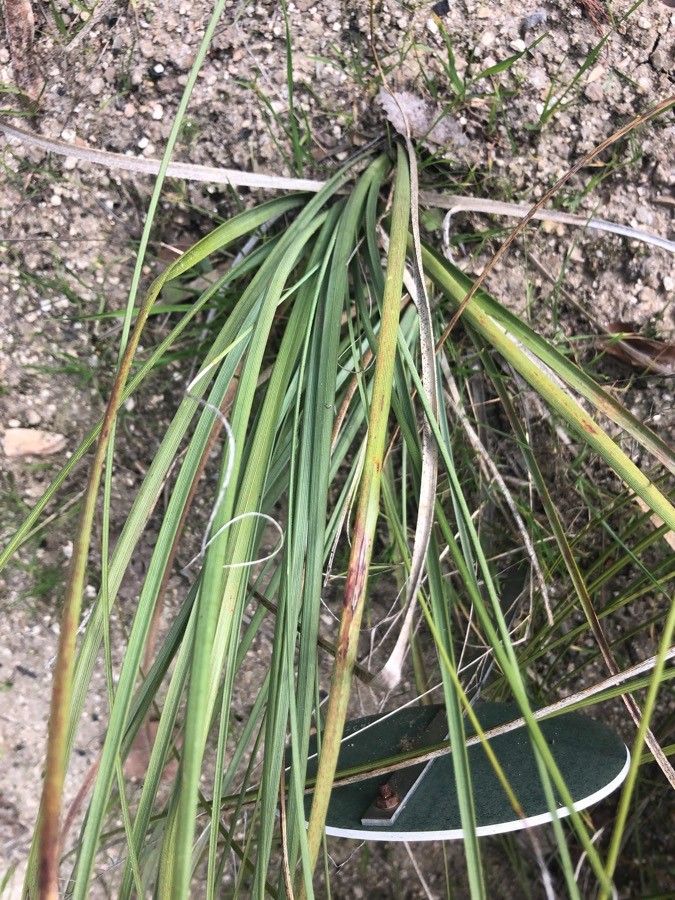
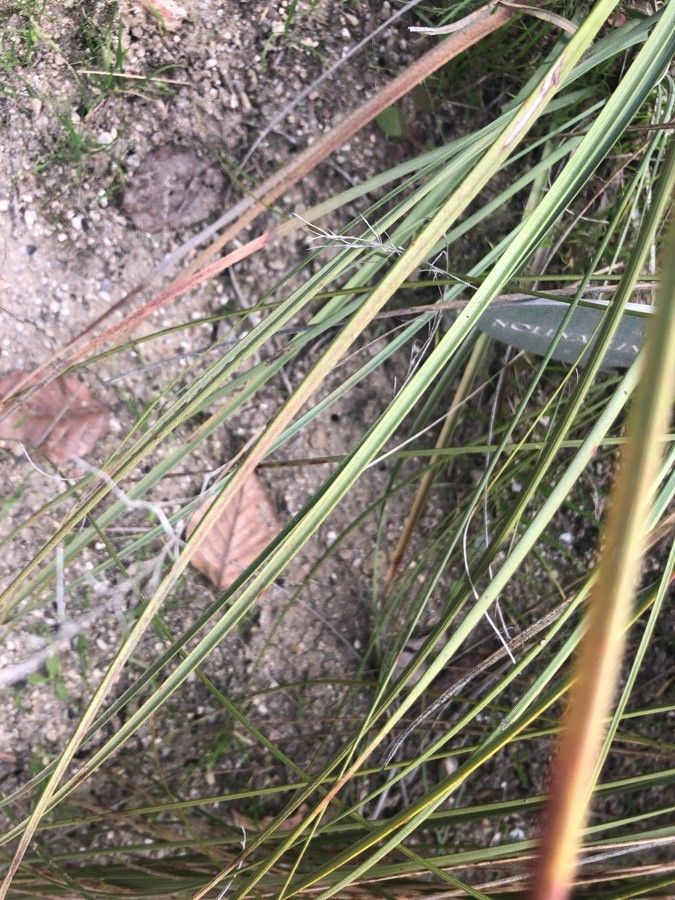
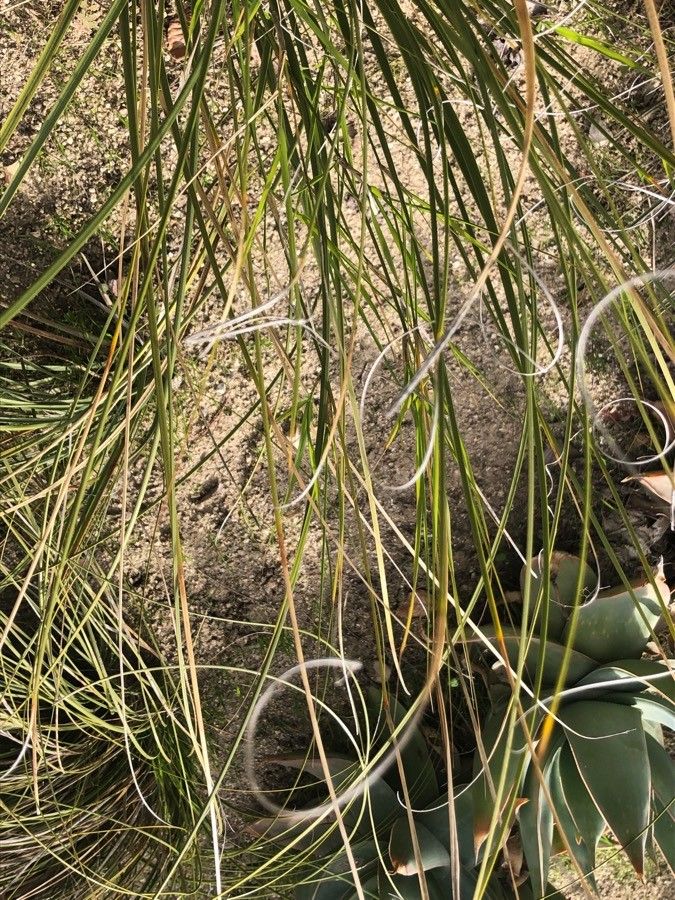
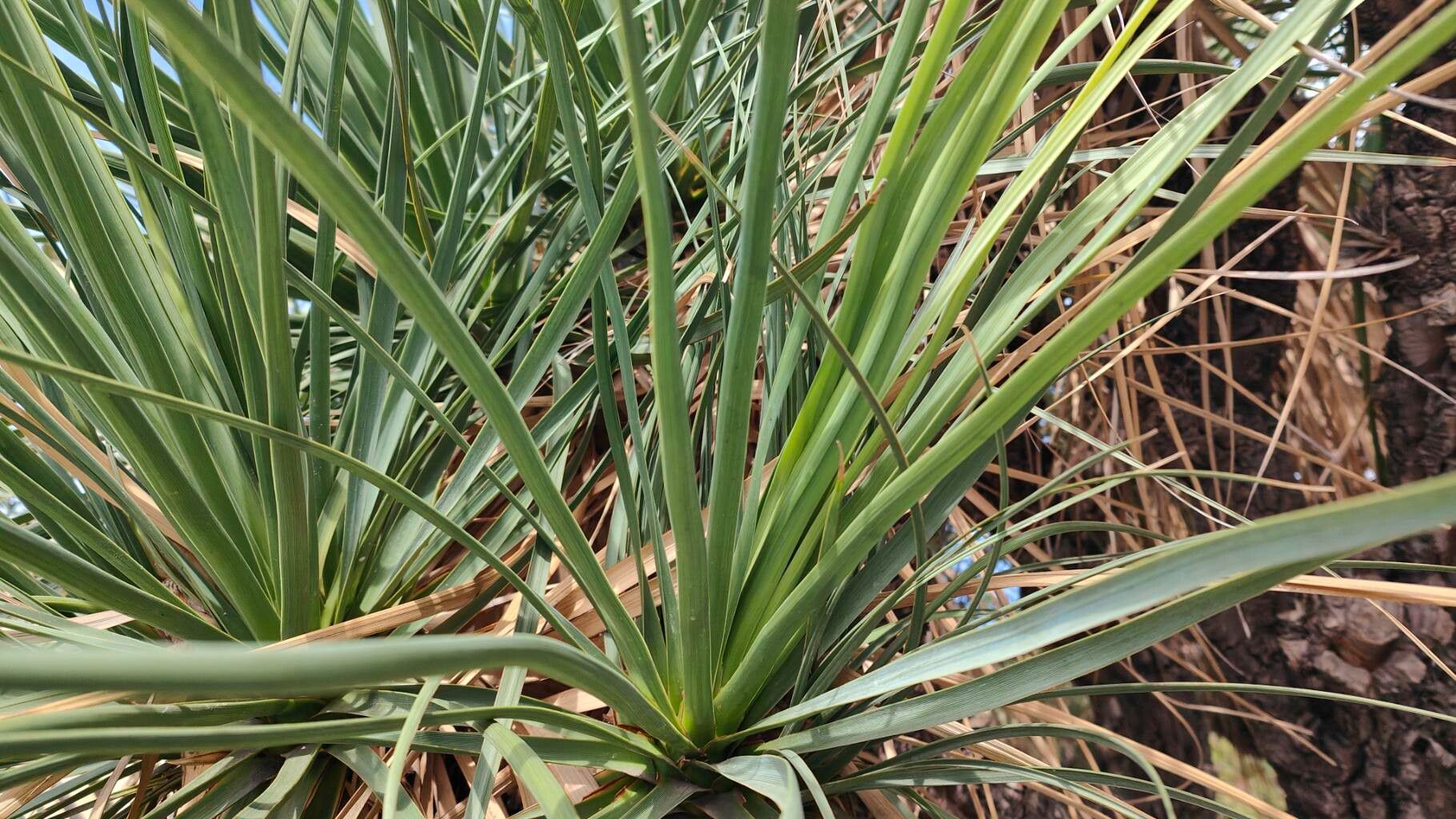
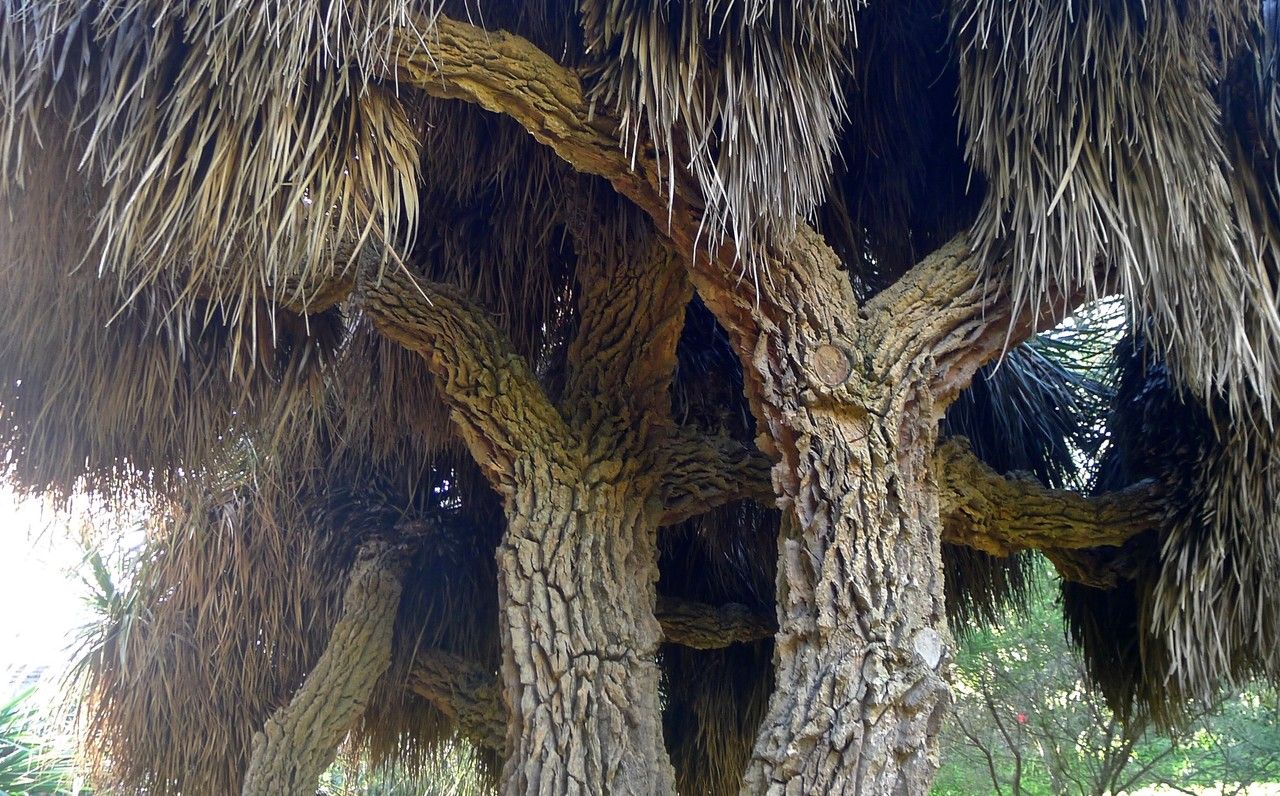
Nolina lindheimeriana, commonly known as Devil's Shoestring or Lindheimer's beargrass, is a perennial plant native to the southern United States. It belongs to the Asparagaceae family and is distinguished by its long, narrow leaves that form a rosette pattern. These green leaves can grow up to 3 feet in length. During the summer, the plant produces tall spikes of small white flowers, which are subsequently followed by small brown fruit capsules. Nolina lindheimeriana thrives in well-drained soils and is highly drought-tolerant once established. It is commonly found in rocky or sandy areas such as hillsides, prairies, and woodlands. Native American tribes have used the plant for medicinal purposes, particularly for its anti-inflammatory properties. In landscaping, Nolina lindheimeriana is valued for its unique appearance and low maintenance requirements. It is often featured in rock gardens or used as a border plant along walkways and driveways. Overall, Nolina lindheimeriana is a fascinating native perennial with distinctive foliage that adds texture to any landscape design. Additionally, it provides ecological benefits such as erosion control on slopes due to its deep root system.
Devil's shoestring has moderate disease resistance and is relatively more sensitive to humidity and overwatering. It is also more prone to disease when it receives insufficient light and is overwatered. Regarding care, Devil's shoestring is drought-tolerant and can go long periods without watering. It requires little fertilizer and only occasional pruning. These qualities make it suitable for people of all experience levels, especially those who want to spend less time on plant care and who may sometimes be away from home for extended periods. It is a good option for anyone who does not want to devote much time to maintenance but still wants an easy-to-care-for plant.
How to keep Nolina Lindheimeriana.
Light
Native to dry regions, Devil's shoestring does best in full sun, as its natural habitat has strong sunlight and scarce shade. It can also tolerate partial sun, which provides some flexibility in its growth.
Water
Devil's shoestring is highly drought-tolerant and thrives with very little water. It requires watering only about once a week and does best in well-draining soil, which mimics its natural arid environment. This makes it an excellent choice for outdoor settings.
Temperature
Devil's shoestring thrives in warm conditions and requires higher temperatures during the growing season to support growth and metabolism. It prefers ample sunlight, proper moisture levels, and good ventilation. However, it is vulnerable to damage from excessively low temperatures and from overwatering. It's important to maintain a balance and avoid both excessively high temperatures and overly dry conditions.
Fertilizer
For Devil's shoestring, light applications of fertilizer once or twice a year during the growing season are adequate. Avoid fertilizing in winter and in summer when the plant is dormant. Reduce fertilizer for repotted plants and wait a couple of months after repotting before feeding. Fertilizing helps maintain healthy growth and encourages blooms.
Pruning
Devil's shoestring features long, grass-like leaves and is highly drought-tolerant. To maintain its health, prune it in early spring. This helps remove dead foliage and encourages new growth. Use sharp tools to minimize the risk of disease. The plant thrives with minimal intervention, but regular pruning is beneficial for improving air circulation and reducing the risk of disease.
Botanical profile.
- Plant Type
- Shrub, Succulent
- Life Cycle
- Perennial
- Genus
- Nolina
- Family
- Asparagaceae
- Hardiness Zone
- 7-10
- Mature Height
- 30 cm to 91 cm
- Mature Spread
- 61 cm to 91 cm
- Leaf Color
- Green, Dark Green
- Leaf Type
- Evergreen
- Flower Color
- White
- Flower Size
- 0.25 cm to 0.51 cm
- Bloom Time
- Mid spring, Late spring
- Planting Time
- Spring, Summer, Autumn
- Harvest Time
- Early summer, Mid summer
Other names.