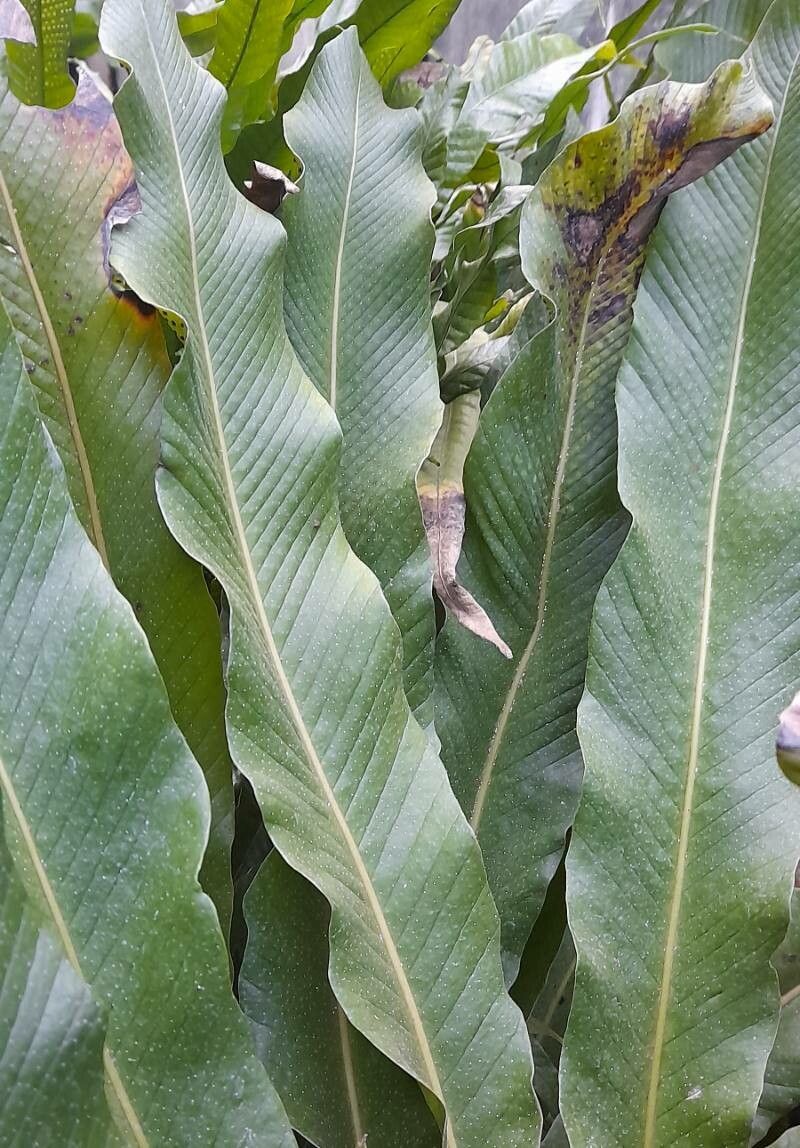
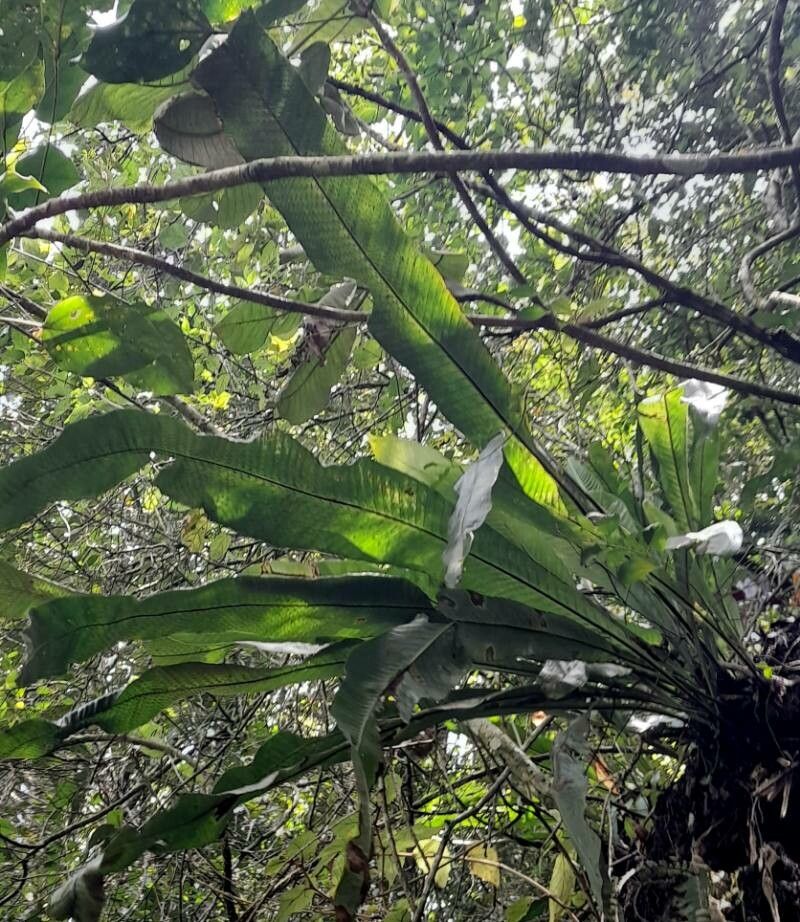
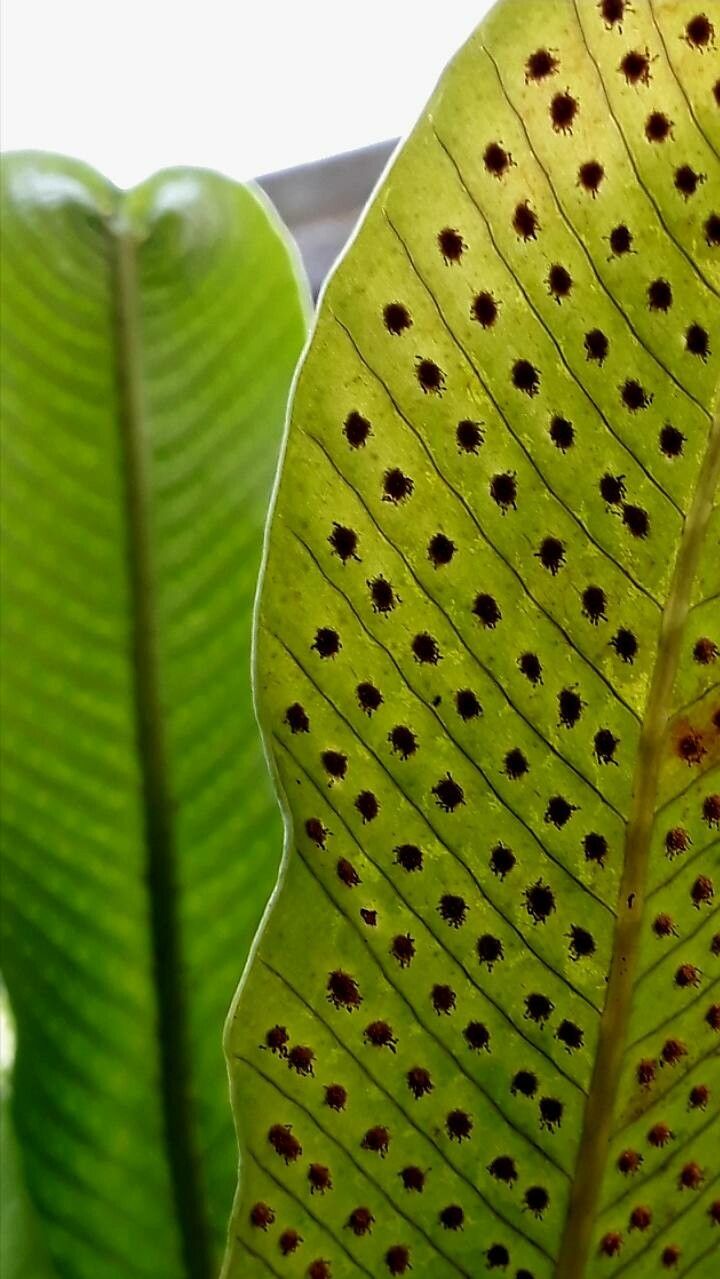
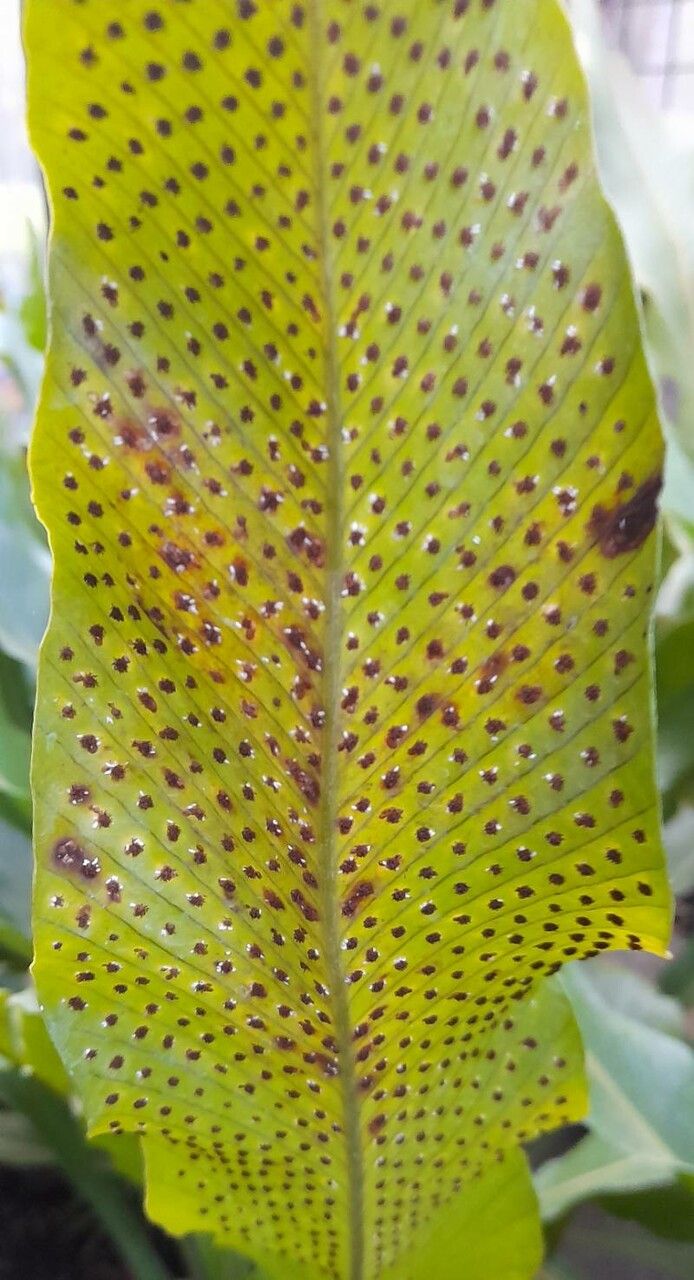
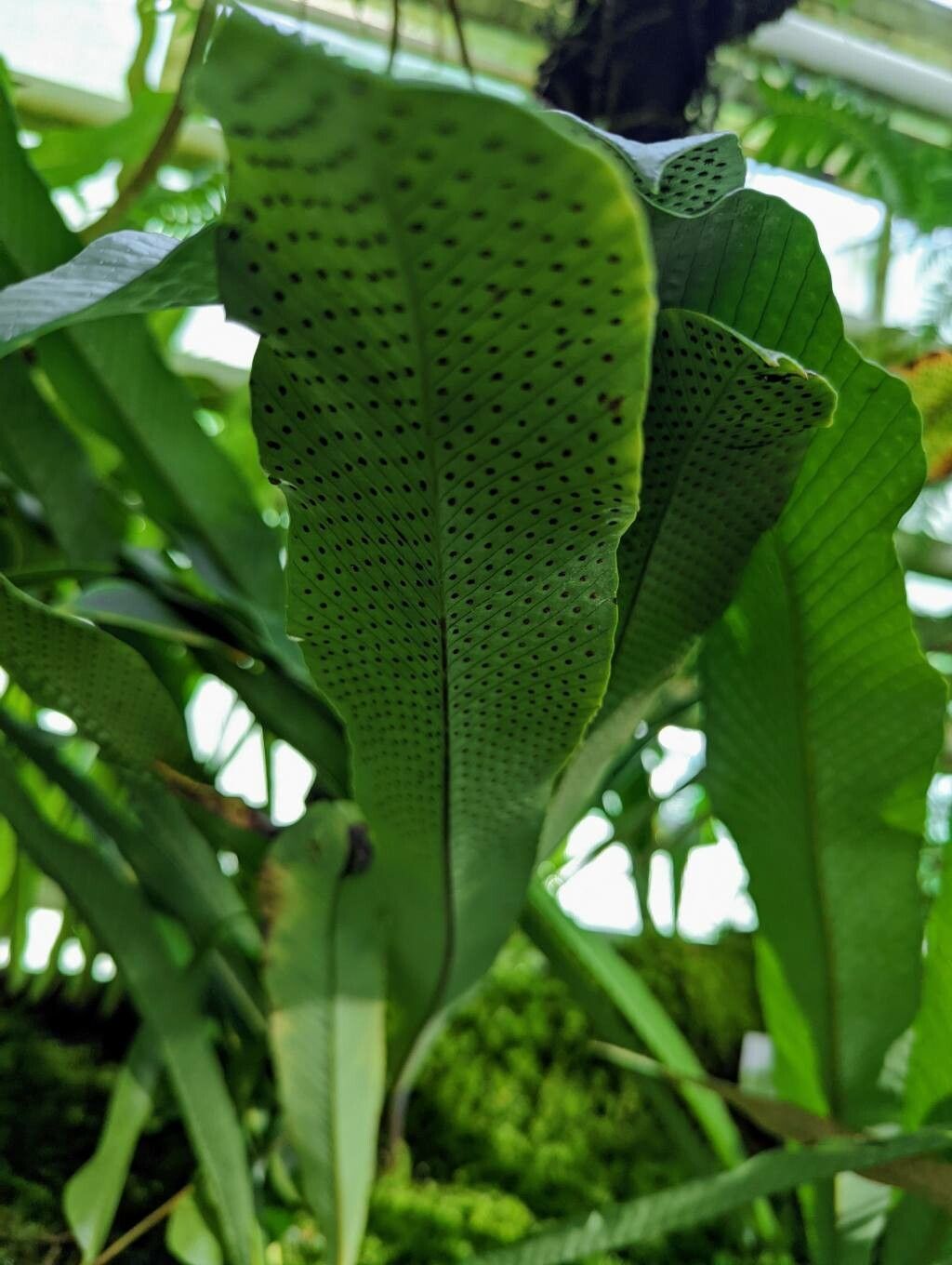
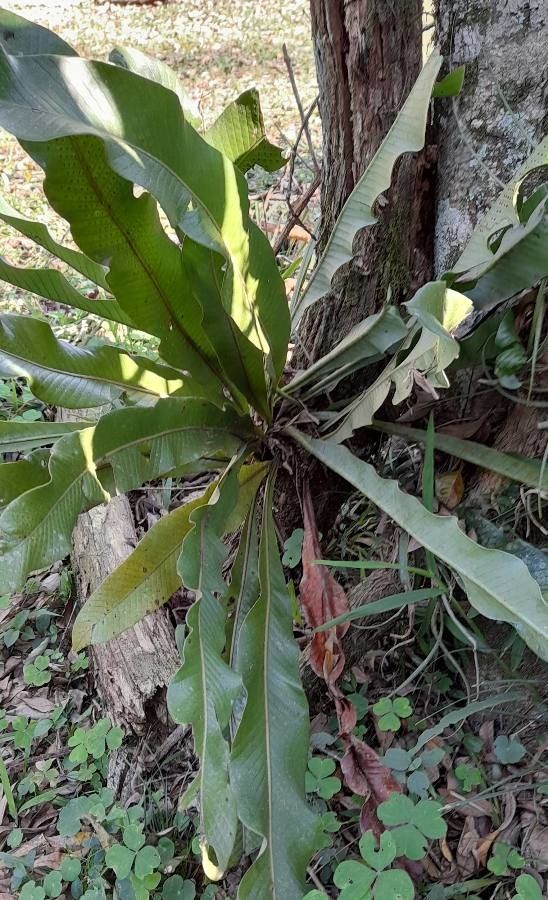
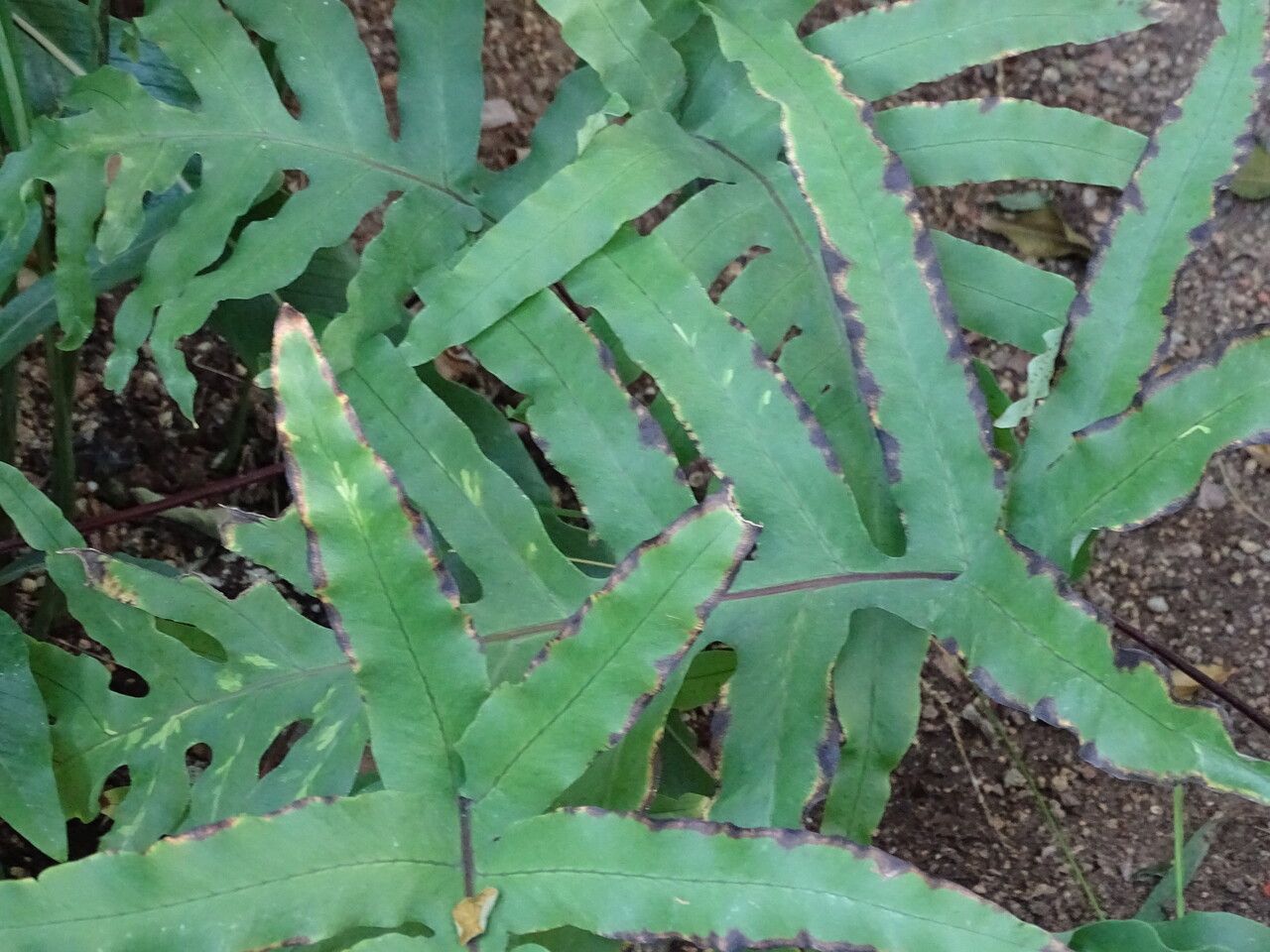
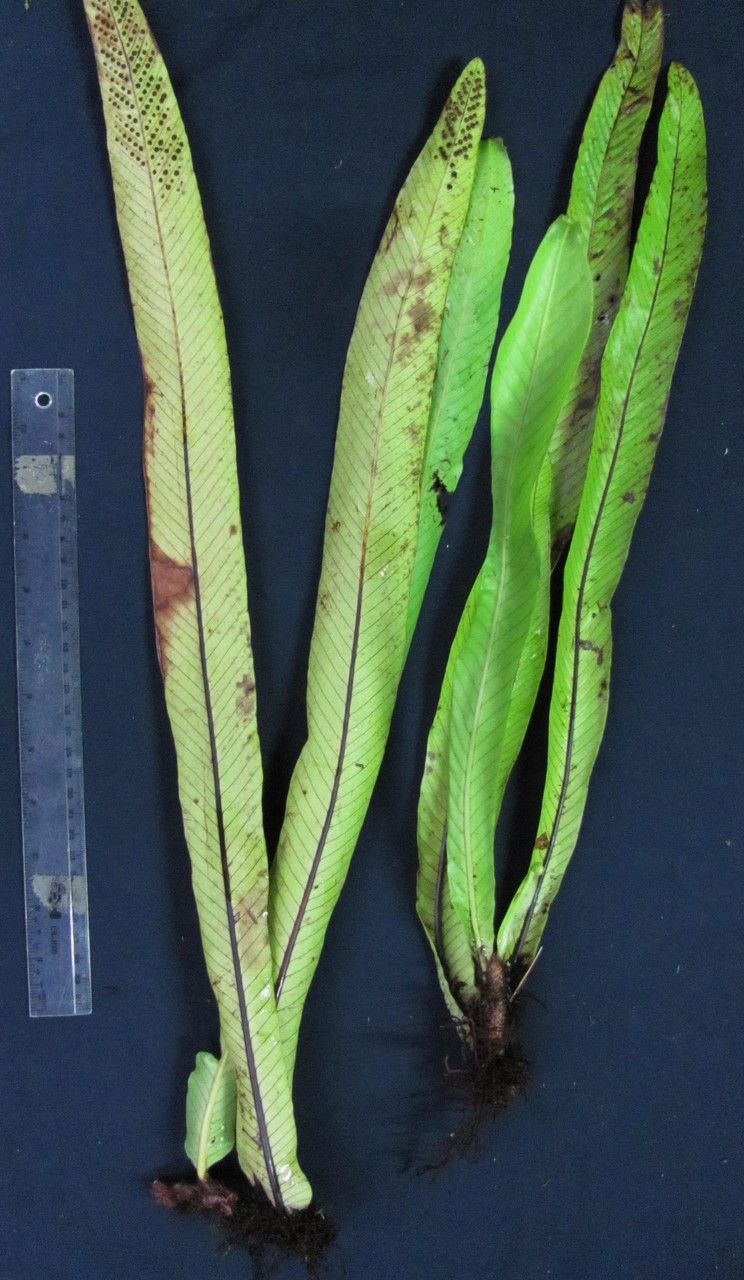
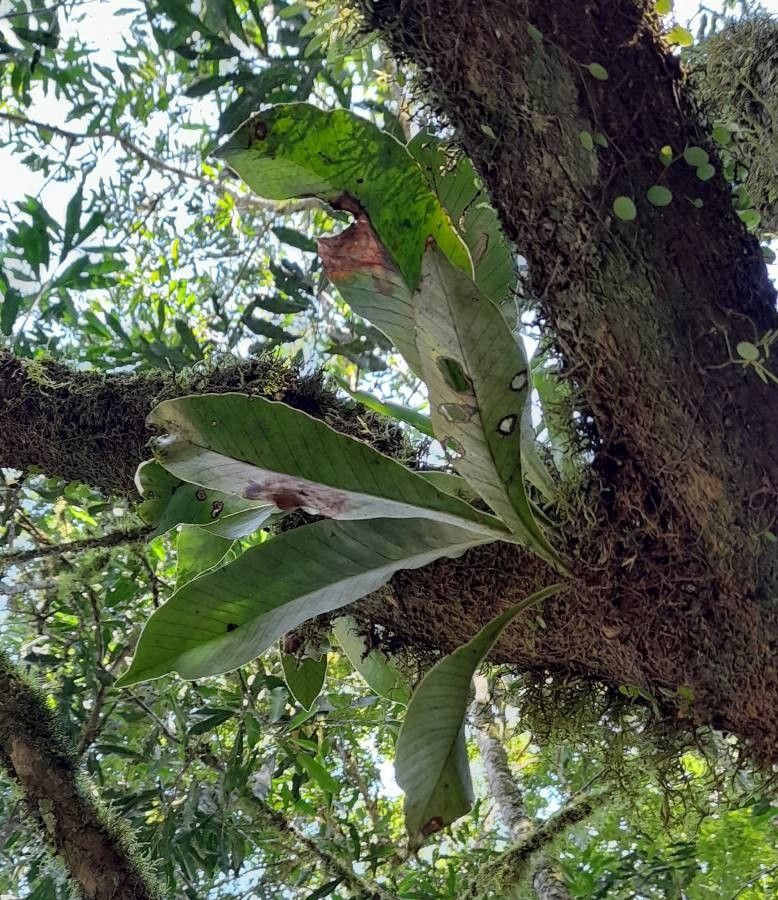
Niphidium crassifolium, commonly known as the graceful fern, is a species of fern in the family Polypodiaceae found in Central and South America. It is predominantly epiphytic, growing on other plants—for example, in the canopies of trees—but occasionally grows on rocks or on the ground, particularly at higher altitude. It has a rhizome from which many fine rootlets covered in dark reddish-brown scales grow. Together they form a root basket that, when growing on trees, helps to trap leaf litter and dust, forming a nutrient-rich soil that holds water. Its leaves are simple in shape, 13–85 centimetres (5–33 in) long and 3–5 centimetres (1.2–2.0 in) wide and when dry, and covered by a wax-like film. The sori are round and large, occurring in single rows between veins at the far end of the leaf.
Graceful fern is fairly resistant to disease and usually does not suffer from many illnesses. However, it can be vulnerable to pests and diseases present in its environment. These problems are typically not serious. For care, this plant requires moderate maintenance. It should be pruned regularly to keep a neat appearance and support healthy growth. Fertilizing can also encourage flowering. The graceful fern is suitable for anyone with outdoor space, like a garden or patio, and does not need extensive care experience. It may need more attention when kept indoors.
How to keep Niphidium Crassifolium.
Light
The graceful fern grows best in places with limited sunlight. Its native surroundings are dominated by tree canopies that create heavy cover, greatly reducing the sun's intensity. Excessive sun exposure can dry the leaves, while lower light levels still allow for healthy growth. Its light requirements do not change much between different growth stages.
Water
The graceful fern flourishes in high humidity and needs consistent moisture, as it cannot tolerate drought. To keep the soil evenly moist, but not waterlogged, water it weekly. When grown indoors, frequent misting helps mimic its preferred humid environment, promoting lush growth even far from its tropical origins.
Temperature
Graceful fern does best in its native warmer climates and requires temperatures between 68 and 100 °F (20 and 38 °C). Seasonal adjustments to maintain this temperature range may be necessary for optimal growth and vitality.
Fertilizer
The graceful fern needs the most fertilizer during its active growth period, which occurs mainly in spring, summer, and early fall. Fertilization is necessary to supply essential nutrients the soil may lack, encouraging healthy root and stem growth and attractive foliage, a key characteristic of this plant.
Pruning
Graceful ferns have resilient fronds and should be pruned from early to late spring. To encourage new growth, trim away the dead fronds and remove the oldest ones to enhance air circulation. Make sure to sterilize your tools to prevent disease and keep your graceful fern vibrant all season long.
Botanical profile.
- Plant Type
- Herb
- Life Cycle
- Perennial
- Genus
- Niphidium
- Family
- Polypodiaceae
- Hardiness Zone
- 10-11
- Mature Height
- 30 cm to 61 cm
- Mature Spread
- 40 cm to 76 cm
- Leaf Color
- Dark Green
- Leaf Type
- Evergreen
- Planting Time
- Summer
- Native Area
- Belize, Honduras, Mexico, Guatemala, Peru, Dominican Republic, Panama, Jamaica, Colombia, Cuba, Paraguay, Argentina, Haiti, Bolivia, Venezuela, Brazil, Guyana, El Salvador, Nicaragua, Ecuador, Suriname, Costa Rica
Other names.
Reader questions.
What are the sunlight requirements for a Graceful fern?
Graceful fern requires less than 3 hours of sunlight, thriving best in full shade environments. Its natural habitat is densely canopied areas where the sunlight is significantly filtered, leading to a reduced intensity of light reaching the plant. It's essential to monitor the movement of sunlight through your garden to ensure that your fern is placed in an area where it can receive the right balance of light and shade. Too much sun can dry out its leaves, whereas lower light levels support healthy growth without significantly changing its needs across different growth stages.
What temperature conditions are best for the Graceful fern?
The Graceful fern thrives best in warmer climates, with optimal temperatures ranging from 68 to 100°F (20 to 38°C). To ensure its optimum growth and vitality, seasonal adjustments may be necessary to maintain this temperature range. It's a heat-loving plant, and exposure to cold can be harmful. Thus, in autumn, it's advisable to bring outdoor-grown Graceful ferns indoors, placing them near a bright window but at a distance from heaters to avoid damage. Keeping the temperature above 20°C during winter benefits the plant's growth, while exposure to temperatures near 5°C or lower is detrimental.
How can artificial lighting benefit indoor plants like the Graceful fern?
When natural sunlight is insufficient, artificial lighting can be a crucial supplement for indoor plants, including the Graceful fern. Adequate lighting is vital for optimal growth, especially during winter or in less sunny spaces. LED lights are a popular choice as they can be customized to provide specific light wavelengths needed by plants. For indoor gardening, full sun plants need 30-50W/sq ft, partial sun plants require 20-30W/sq ft, and full shade plants need 10-20W/sq ft of artificial light. The light source should be placed 12-36 inches above the plant to mimic natural sunlight, and most plants benefit from 8-12 hours of light per day.
How should you care for a Graceful fern in low temperatures?
Graceful ferns prefer warm temperatures and do not tolerate the cold well, thriving best when the temperature is above 20°C. During winter, it's crucial to keep them above 5°C to avoid damage. If the temperature falls below 1°C, the leaves may lighten in color, turning brown or black after frost damage, accompanied by wilting and drooping. To care for a Graceful fern in low temperatures, trim off the frost-damaged parts and immediately move the plant to a warm environment indoors. Position it near a south-facing window for ample sunlight, but ensure it's not placed near heaters or air conditioning vents to avoid air dryness.
What are the symptoms of light deficiency in Graceful fern?
Light deficiency in Graceful fern can lead to several symptoms, indicating that the plant is not receiving adequate light for optimal growth. These symptoms include smaller new leaves compared to the older ones, leggy or sparse growth, faster leaf drop, slower or no new growth, and lighter-colored or irregularly patterned new leaves. Chlorosis, or the loss of green color in leaves, sunscald, leaf curling, wilting, and leaf scorching are also signs that a plant is either receiving too much sunlight or not enough, affecting its overall health.
What steps should be taken if a Graceful fern experiences high temperatures?
During the summer, it is important to keep the Graceful fern's temperature below 38°C. Exposure to temperatures above 43°C can lighten the color of the leaves and make the plant more prone to sunburn. To care for a Graceful fern experiencing high temperatures, trim away the sunburned and dried-up parts of the plant. Relocate the plant to an area with shade from the midday and afternoon sun to prevent further damage. Watering the plant in the morning and evening helps keep the soil moist and supports the plant's health under high temperature conditions.
What solutions are available for indoor and outdoor Graceful ferns experiencing insufficient sunlight?
For indoor Graceful ferns, moving them to spots where they can receive ample filtered light, including brief periods of direct morning sunlight, is beneficial. Place them 1-2 meters away from a window or use artificial lighting like desk, ceiling lamps, or professional plant grow lights for at least 8 hours daily if they're large or not easily movable. Outdoors, gradually adapt your plants to receive more sunlight by shifting them to sunnier spots each week, avoiding sudden intense exposure to prevent sunburn. If physical obstructions like trees block sunlight, consider pruning to increase light penetration or transplant smaller plants to sunnier locations during their dormant period for better growth and health.