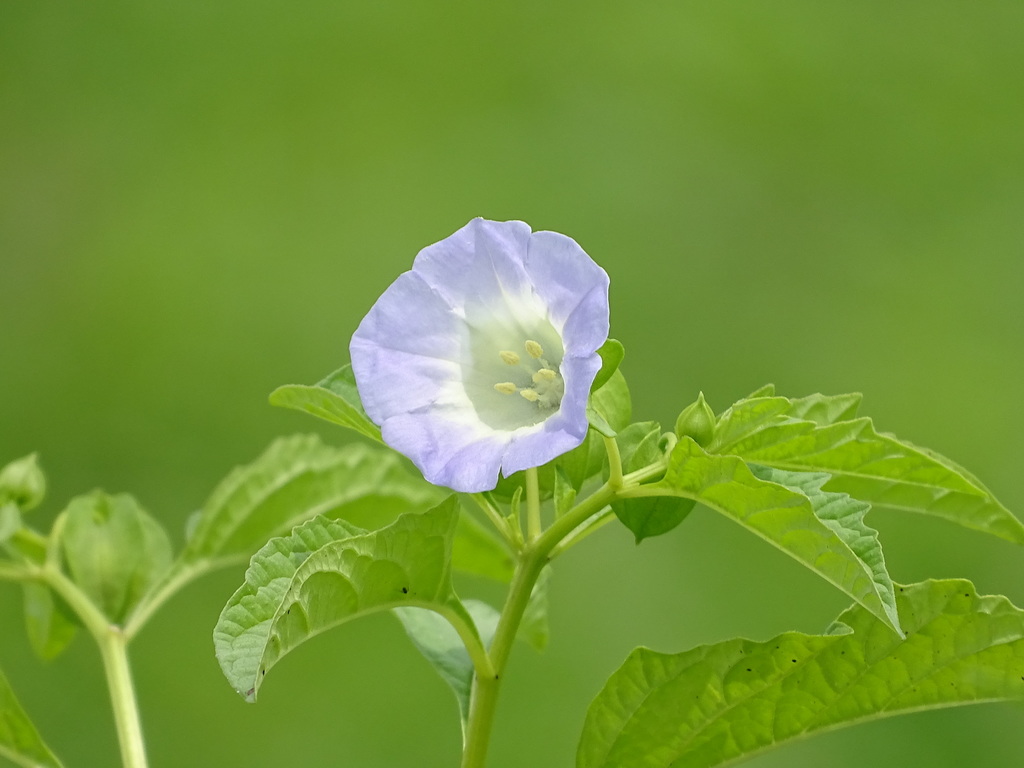
Nicandra physalodes, commonly known as the shoo-fly plant, is a flowering species in the nightshade family, Solanaceae. Native to South America, it has also been introduced to other parts of the world for ornamental purposes. The shoo-fly plant can reach a height of up to one meter and features large, heart-shaped leaves that are green on top and purple underneath. Its bell-shaped flowers range in color from white to pale blue and have dark purple centers. The fruit is a small green berry enclosed in a papery husk, resembling a Chinese lantern.
The plant gets its name from its ability to repel flies with its strong scent, making it popular for use around outdoor dining areas or livestock pens. However, all parts of the shoo-fly plant are toxic if ingested by humans or animals, potentially causing symptoms such as vomiting and diarrhea.
In traditional medicine, Nicandra physalodes has been used to treat various ailments, including fever reduction and pain relief, due to its anti-inflammatory properties.
Overall, Nicandra physalodes is an interesting ornamental species with unique features, but it should be handled with caution due to its toxic potential if ingested by humans or animals.
Apple-of-peru is fairly disease-resistant and generally not prone to illness. However, it can be vulnerable to pests and diseases present in its environment. These problems are usually not serious. For care, this plant requires moderate maintenance. It should be pruned regularly to maintain an attractive appearance and healthy growth. Fertilizing can also help encourage flowering. Apple-of-peru is appropriate for anyone with outdoor space, such as a garden or patio, and does not demand extensive gardening experience. It may need more attention when grown indoors.
How to keep Nicandra Physalodes.
Light
Apple-of-peru prefers plenty of sunlight for optimal growth but can tolerate some shade for a short period. Native to sunny environments, it may experience slower growth or fail to produce fruit if light is insufficient. Conversely, too much light can cause leaf scorching.
Water
Apple-of-Peru, native to the temperate regions of South America, thrives in moderately moist soil. It requires weekly watering but can tolerate short periods of dryness. This plant prefers full sunlight and benefits from mulching, which helps retain moisture and reduces the need for frequent watering.
Temperature
Apple-of-peru originates from areas where temperatures range from 68 to 95°F (20 to 35 ℃). It does best in moderate to warm climates, and if temperatures fall below that range, consider relocating the plant to a warmer spot.
Fertilizer
When most of the Apple-of-peru's blooms have opened to full size, resume fertilizing. During the period of peak bloom, apply fertilizer every three to four weeks, as weather allows. Once the Apple-of-peru begins producing fewer new blooms, stop fertilizing; there is no need to feed the plant when it can no longer produce more flowers.
Pruning
The Apple-of-Peru plant is known for its striking purple-blue flowers and lantern-like seed pods. For optimal growth and appearance, it's important to prune the plant from early to late spring. This process helps remove dead stems, improve air circulation, control the plant's size, and encourage abundant blooming. Be sure to use clean, sharp tools for the best results, as this promotes healthy and attractive growth.
Botanical profile.
- Plant Type
- Herb
- Life Cycle
- Annual
- Genus
- Nicandra
- Family
- Solanaceae
- Hardiness Zone
- 7
- Mature Height
- 91 cm
- Mature Spread
- 30 cm to 40 cm
- Leaf Color
- Green
- Leaf Type
- Semi-evergreen
- Flower Color
- Lavender
- Flower Size
- 5.08 cm
- Bloom Time
- Early summer, Mid summer
- Planting Time
- Spring
- Harvest Time
- Mid summer, Late summer
- Native Area
- Colombia, Bolivia, Venezuela, Peru
Other names.
Reader questions.
How should I water my Apple-of-peru plant?
To water Apple-of-peru, you have several options – a garden hose with a spray nozzle, a watering can, or any other common watering tool. Apple-of-peru is not overly particular about the type of water it receives – rainwater, tap water, or filtered water will do just fine. However, it's generally best to avoid watering this plant from above, as it can harm the leaves and flowers and potentially lead to disease. Using a drip irrigation system is often the most effective way to water Apple-of-peru, as it delivers water evenly and directly to the soil. If you're tending to a potted Apple-of-peru, you can follow a similar watering method, but instead of a hose or can, simply use a cup or your tap to water the soil directly.
Why should I add fertilizer to my Apple-of-peru plant?
Not all plants require additional fertilizers as they are capable of obtaining the necessary nutrients for growth. Apple-of-peru, like other plants, relies on nutrients for growth and internal processes. Nitrogen, phosphorus, and potassium are the main nutrients that plants need, with nitrogen being particularly important for foliage development. Apple-of-peru may struggle to acquire sufficient nitrogen from the soil, so many gardeners choose to provide supplemental nitrogen to support its growth.
What are the sunlight requirements for Apple-of-Peru?
Apple-of-Peru (Nicandra physalodes) thrives in conditions where it can receive ample sunlight. For optimal growth, it requires full sun, which is defined as more than 6 hours of direct sunlight per day, but it can also tolerate partial sun, receiving about 3-6 hours of sunlight. It's essential to observe how sunlight moves through your garden to find spots that offer a balance of light and shade, ensuring your plant's well-being.
What is the native climate for Apple-of-Peru?
Apple-of-peru thrives in environments where the temperature ranges between 68 to 95°F (20 to 35°C). It prefers moderate to warm climates, indicating its resilience and adaptability to a range of thermal conditions. The plant has strong cold resistance, making special frost protection measures usually unnecessary during winter. However, if temperatures are expected to plunge below -15°C, it is crucial to provide cold protection using materials like soil or straw and to water the plant abundantly before the first freeze in autumn to ensure the soil stays moist and enters a frozen state. This preparation aids in preventing drought and water scarcity for the plant during winter and early spring.
What should I do if I give my Apple-of-peru plant too much or too little water?
If you notice that your Apple-of-peru plant lacks moisture, the solution is simple: water it more regularly. Overwatering, on the other hand, can be more serious if not noticed early. It can lead to disease and ultimately, the death of the plant. To prevent this, choose a suitable location with ample sunlight and good drainage. If you overwater an Apple-of-peru in a pot, consider changing it to a new pot with better drainage. When repotting, make sure to use loose soil and a pot that drains well.
When should I put fertilizer on my Apple-of-peru plant?
Apple-of-peru generally grows well. To give it an extra boost while it's actively growing, you can apply a fertilizer once a month. However, you should only fertilize it during the spring and summer months. In the fall and winter, when it becomes less active and doesn't need as many nutrients, you should refrain from fertilizing. Look for signs of new growth to determine when to start fertilizing Apple-of-peru. Whether you're growing it outside or in a container indoors, the fertilization schedule remains the same. However, if it's in a container, you may not need to fertilize for the first one to two months. The potting soil made for container plants already contains enough nutrients. So, start fertilizing only after your plant has been in the same soil for a while.
How does Apple-of-Peru react to different lighting conditions?
Originating from sun-rich habitats, Apple-of-Peru prefers an abundance of solar exposure for ideal growth, although it can endure some shade for brief periods. Lack of sufficient light can result in slower growth and a decrease in fruiting. Conversely, too much direct exposure can lead to leaf scorching. During winter or in less sunny spaces, artificial lighting can be a vital solution for indoor plants, providing the necessary light spectrum for healthy growth.
How does low temperature affect Apple-of-Peru and what are the solutions?
Apple-of-peru is cold-tolerant and performs best when the temperature remains above 20°C. It should be kept above 0°C during winter. At temperatures falling below -15°C, there may not be noticeable changes during the winter season itself, but there could be a decrease in sprouting or even a failure to sprout during springtime. To address this issue, in spring, gardeners should remove any parts of the plant that have failed to sprout, encouraging new growth and ensuring the health of the plant.
How often should I water my Apple-of-peru plant?
Apple-of-peru requires regular watering throughout the growing season. In spring, it is best to water once a week. As the season progresses and temperatures rise, you may need to increase watering to two or three times a week. However, be careful not to exceed this rate as it can harm the plant. Regardless of frequency, make sure the soil remains moist but not overly wet. Watering potted Apple-of-peru is slightly different. Due to faster drying, you will generally need to water container-grown plants a few times per week, compared to just once for plants in the ground.
When is the best time to not add fertilizer to my Apple-of-peru?
To ensure the best results, it's important to follow these guidelines for fertilizing your Apple-of-peru plants. First and foremost, avoid fertilizing plants that are not in good health, such as those with diseases or insect pests. Additionally, refrain from fertilizing dehydrated plants, as this can exacerbate the issue. Only apply fertilizer to healthy plants. When watering your Apple-of-peru, take care not to splash fertilizer onto the leaves or stem, as this can cause burned spots. Lastly, unless you are using a specialized foliage fertilizer, avoid direct contact between the plant and the fertilizer.
What are some artificial lighting tips for indoor plants?
For indoor plants, particularly in winter or less sunny areas, artificial lighting can promote faster, healthier growth. LED lights are recommended for indoor plant lighting as they can provide specific wavelengths needed by plants. Full sun plants should have 30-50W/sq ft, partial sun plants 20-30W/sq ft, and full shade plants 10-20W/sq ft of artificial light. The artificial light source should be placed 12-36 inches above the plant, mimicking natural sunlight as closely as possible, with most plants benefiting from 8-12 hours of light per day.
How does high temperature affect Apple-of-Peru and what are the solutions?
In the summer, Apple-of-peru should ideally be kept below 35°C. When temperatures exceed 38°C, it can negatively impact the plant, causing the leaves to become lighter in color, prone to curling, susceptible to sunburn, and in severe cases, leading the entire plant to wilt and dry out. To mitigate these effects, gardeners should trim away sunburned and dried-up parts of the plant. Moving the plant to a shaded location or using a shade cloth to protect it from the midday and afternoon sun can also help. Additionally, watering the plant in the morning and evening will help keep the soil moist and reduce stress on the plant.