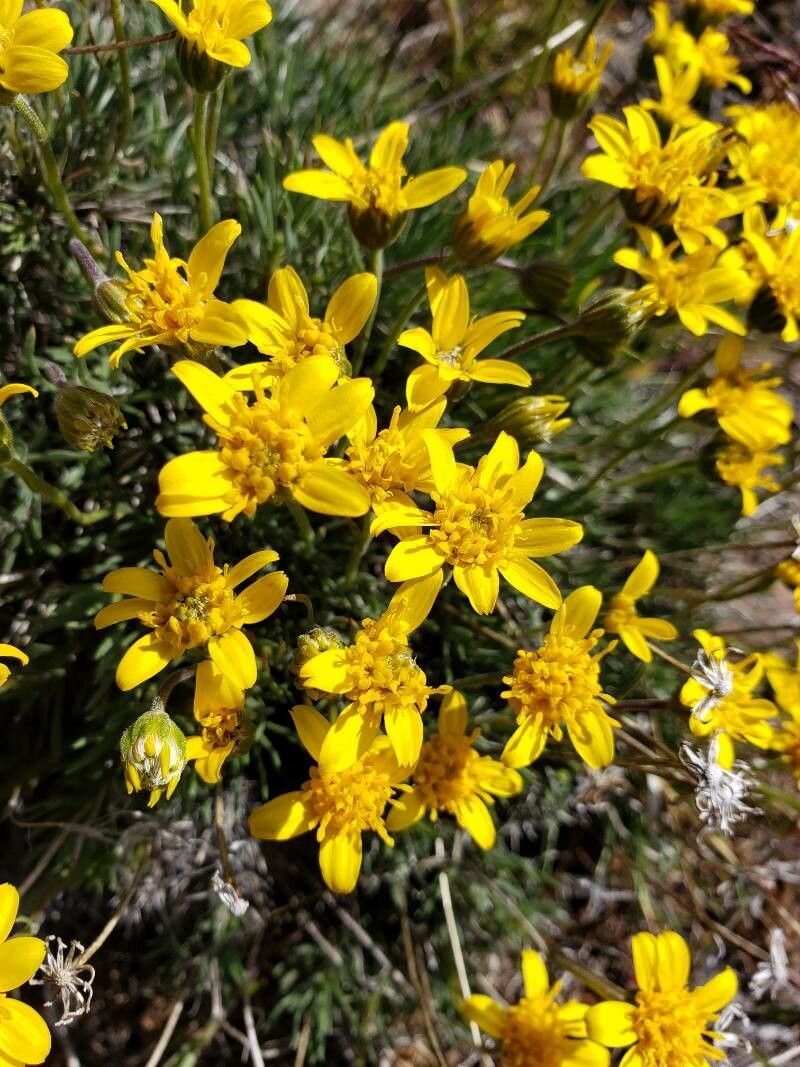
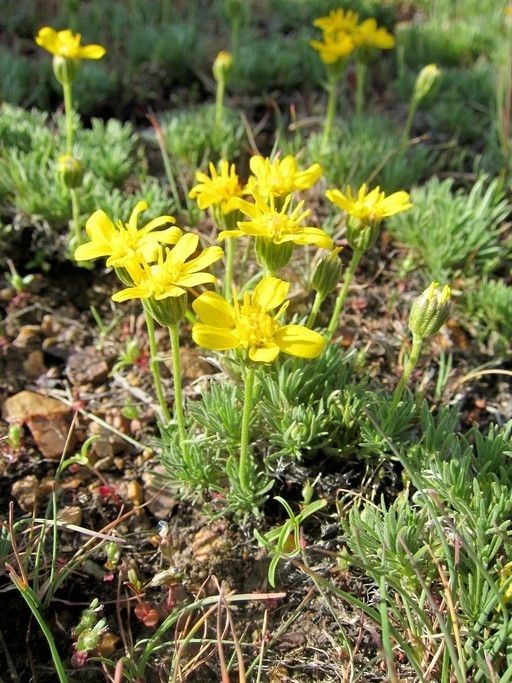
Nestotus stenophyllus is a species of flowering plant in the family Asteraceae known by the common name narrowleaf mock goldenweed. It is native to the western United States, especially the inland Pacific Northwest and northern Great Basin, where it grows in sagebrush habitat. It is a small, clump-forming perennial herb growing up to about 12 centimeters tall. The rough-haired, glandular leaves are 1 or 2 centimeters long and linear to lance-shaped. The inflorescence is a solitary flower head atop an erect peduncle. The hairy head has several yellow disc florets each around a centimeter long and at the center many yellow disc florets. The fruit is a silky-haired achene tipped with a white pappus.
Narrowleaf mock goldenweed has good resistance to disease and is generally unlikely to develop illnesses. However, it can be vulnerable to pests and diseases present in its environment. These outbreaks are typically not severe. Regarding care, this plant needs moderate maintenance. It should be pruned regularly to preserve a neat appearance and healthy growth. Applying fertilizer can also help encourage flowering. Narrowleaf mock goldenweed is appropriate for anyone with outdoor space, such as a garden or patio, and does not demand extensive gardening experience. It may need more attention if grown indoors.
How to keep Nestotus Stenophyllus.
Light
Narrowleaf mock goldenweed is a perennial, herbaceous plant that prefers sunlight and is native to open habitats, commonly found in meadows and grasslands. It favors full sun but can also tolerate partial-sun conditions.
Water
Narrowleaf mock goldenweed, native to dry regions, thrives with minimal moisture and is highly drought-tolerant. It only requires weekly watering, ensuring it is never overwatered. Typically grown outdoors, this plant is excellent for conserving water, making it an ideal choice for xeriscaping in arid climates.
Fertilizer
One fertilizer application in spring is generally enough for Narrowleaf mock goldenweed, though repeated feedings can maximize growth. Apply fertilizer every month to six weeks. Fertilizing improves leaf appearance and function, helping maintain even color and a healthy texture. It also promotes root development and nutrient uptake, supporting long-term plant health.
Pruning
To ensure the healthy growth and shape of narrowleaf mock goldenweed, regular pruning should be done from early to late spring. Begin by removing any dead stems and thinning out crowded areas to improve air circulation. Always use clean tools to prevent the spread of infections. Be careful not to over-prune, as it is important to retain enough foliage for photosynthesis and flowering.
Botanical profile.
- Plant Type
- Herb, Shrub
- Life Cycle
- Perennial
- Genus
- Nestotus
- Family
- Asteraceae
- Mature Height
- 15 cm
- Leaf Type
- Semi-evergreen
Other names.