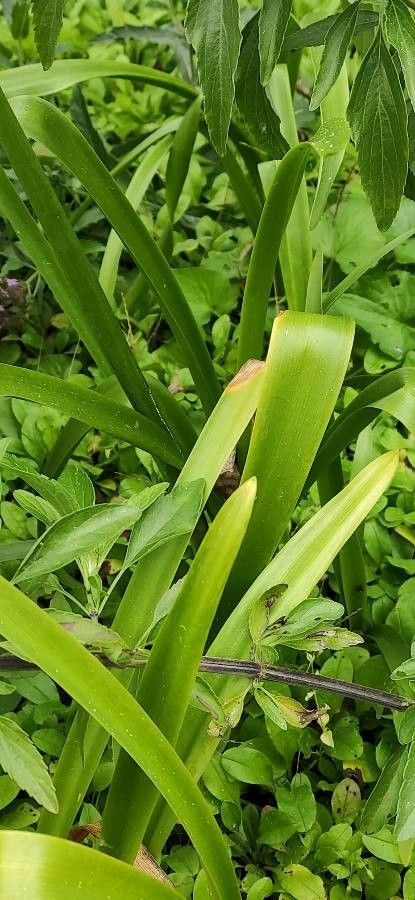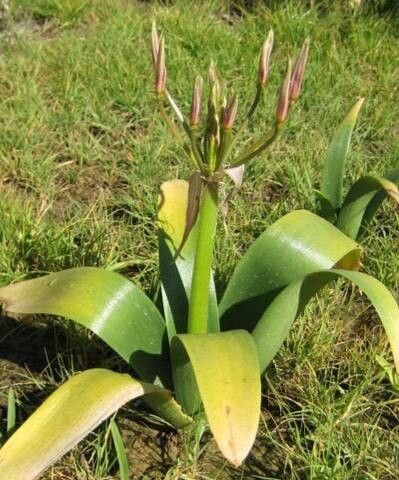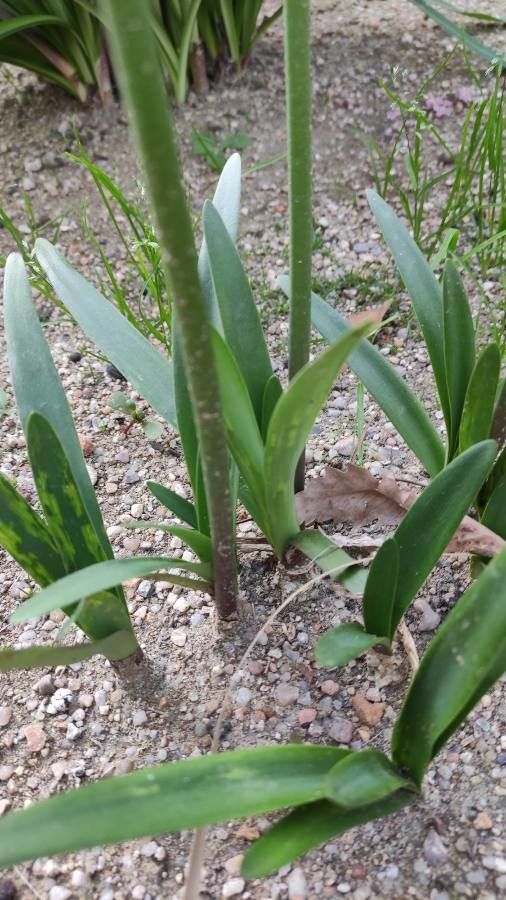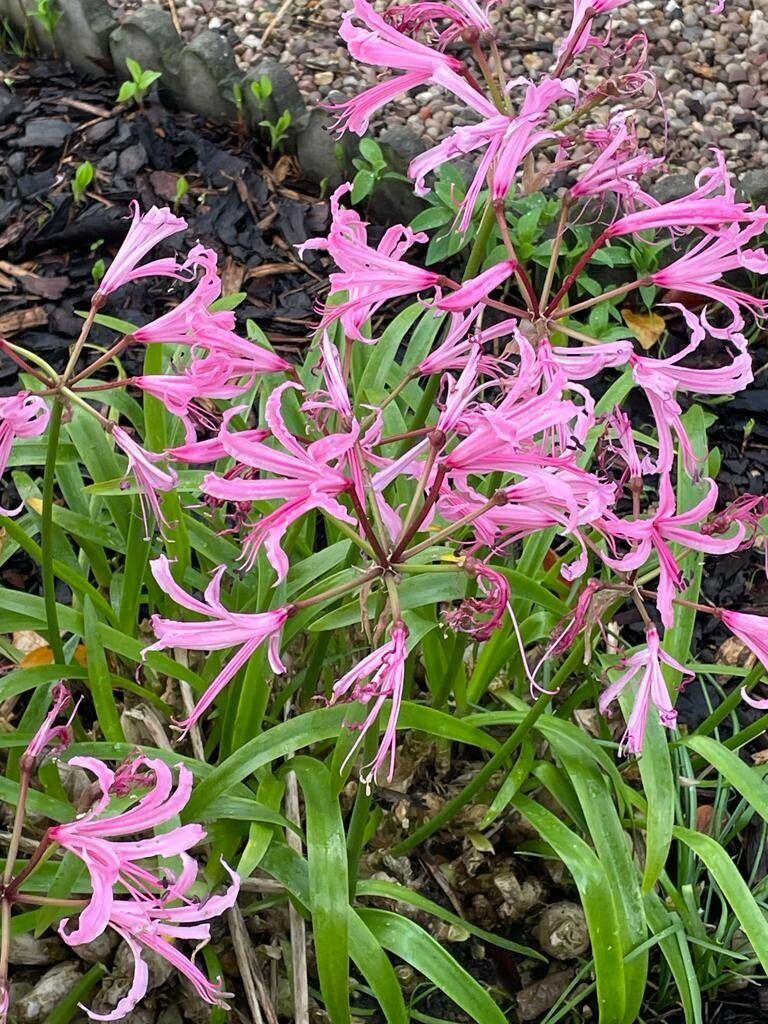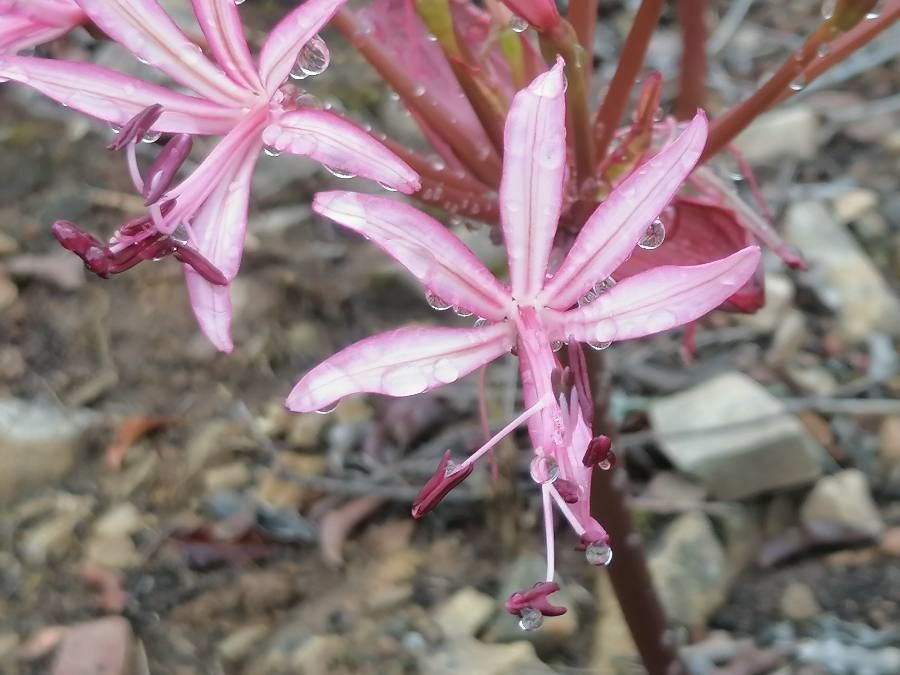
Nerine humilis, commonly known as dwarf nerine, is a species of flowering plant in the subfamily Amaryllidoideae of the family Amaryllidaceae, native to the Cape of South Africa. Growing to 40 cm (16 in) tall, it is a variable (polymorphic) bulbous perennial with narrow leaves appearing at the same time as umbels of 1-12 slender, crenellated flowers in shades of pink, in autumn. It is a summer dormant deciduous species, meaning that the top growth disappears for a period during summer months. Plants can be found in large colonies in their native habitat, the Fynbos of the Cape Floristic Region, appearing to respond well to the frequent fires in the area.The Latin specific epithet humilis means “dwarf” or “low-growing”. The plants are more likely to be dwarf in habit towards the western end of their range. This plant has been given the Royal Horticultural Society’s Award of Garden Merit. It does not tolerate being frozen, so requires some protection during the winter months. In cooler temperate zones it is best grown in a pot. Overcrowding of bulbs in a pot also improves flowering.
Berg Lily has strong resistance to disease and is generally unlikely to suffer from illness. Nevertheless, it can be vulnerable to pests and diseases that exist nearby. Such infections are typically mild. Regarding maintenance, this plant needs a moderate amount of care. It should be pruned on a regular basis to keep a tidy appearance and encourage healthy growth. Applying fertilizer can also aid in boosting bloom production. Berg Lily is appropriate for anyone with outdoor areas like a garden or patio and does not demand extensive plant-care experience. It may need extra attention if cultivated indoors.
How to keep Nerine Humilis.
Light
Berg Lily is a sun-loving perennial herbaceous plant that comes from open habitats and commonly flourishes in meadows and grasslands. It favors full sun but can also tolerate partial sun exposure.
Water
Nerine humilis grows best in environments with balanced humidity and consistently moist conditions. For optimal health, water the plant every 1-2 weeks. As a bulbous plant, Nerine humilis stores water in its bulbs, which helps it withstand drier periods.
Temperature
Berg Lily can tolerate a wide range of temperatures, but its occurrence may still be restricted by different combinations of water and heat. It does best in warm summer climates with sufficient rainfall or watering. Extended periods of cloudy, rainy weather or prolonged high temperatures can increase the risk of Berg Lily dying. In winter, adequate protection from cold can enhance the plant's chances of survival.
Fertilizer
The primary time to fertilize Berg Lily is in early spring, as the flowers are beginning to form. The proper fertilizer promotes fuller blooms and helps the plant produce attractive flowers. Fertilizing at this time ensures strong flowering during the season and supplies energy for dormant growth phases.
Pruning
Pruning Nerine humilis in early spring helps enhance growth and blooms by removing old or damaged foliage. Deadheading these plants directs energy back to the bulb. It is important to avoid pruning late in the season to ensure proper winter dormancy. Using proper pruning techniques can improve airflow and sunlight exposure, reduce the risk of disease, and ensure the overall vigor of the plant. For more specific care instructions, consult reliable horticultural sources.
Botanical profile.
- Plant Type
- Herb
- Life Cycle
- Perennial
- Genus
- Nerine
- Family
- Amaryllidaceae
- Hardiness Zone
- 8-10
- Mature Height
- 30 cm to 46 cm
- Mature Spread
- 20 cm to 30 cm
- Leaf Color
- Green
- Leaf Type
- Deciduous
- Flower Color
- Pink
- Flower Size
- 5.08 cm to 6.35 cm
- Bloom Time
- Late summer, Early fall, Mid fall
- Planting Time
- Spring, Summer, Autumn
- Harvest Time
- Late fall, Early winter, Mid winter
- Native Area
- South Africa