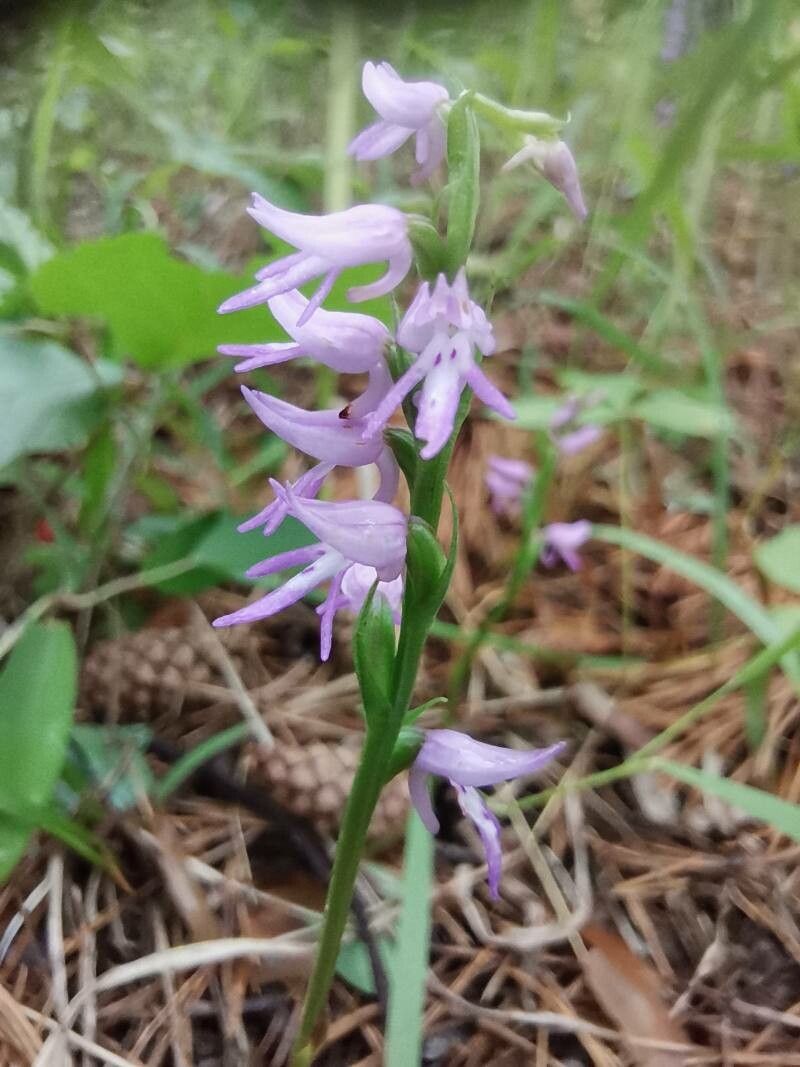
Hemipilia cucullata is a species of flowering plant in the family Orchidaceae, native to temperate Eurasia from Poland to Japan, and also to the Himalayas. It is terrestrial, growing from tubers, to a height of up to 30 cm, with pinkish flowers arranged in a one-sided spike. It was placed in several different genera before being placed in its present genus.
Hooded neottianthe typically shows strong resistance to disease and is affected by relatively few insect pests. Its care is rated difficult, since it needs a high-humidity but well-ventilated setting with minimal harmful pathogens. Too much watering may result in root rot. Although anyone can cultivate Hooded neottianthe, keeping it healthy and inducing it to flower again requires more growing experience.
How to keep Neottianthe Cucullata.
Light
Hooded neottianthe comes from the understory of tropical forests or from rocky areas that provide natural shade. It prefers partial sun but can tolerate full sun, adapting well to a range of light conditions.
Temperature
Native to temperate regions, hooded neottianthe thrives at temperatures ranging from 68 to 100.4 °F (20 to 38 °C). Although it adapts well to seasonal changes, it performs best when temperatures remain within this range.
Fertilizer
Correct fertilization is essential for the wellbeing and visual appeal of a Hooded neottianthe. You should supply Hooded neottianthe with fertilizer during summer, and continue this on a monthly basis until the end of summer. Nutrients are responsible for promoting growth and preserving various parts of the plant. The process of fertilization boosts the flower exhibition of Hooded neottianthe, guaranteeing the most impressive blossoms.
Botanical profile.
- Plant Type
- Herb
- Life Cycle
- Perennial
- Genus
- Neottianthe
- Family
- Orchidaceae
- Hardiness Zone
- 9-11
- Mature Height
- 10 cm to 30 cm
- Mature Spread
- 10 cm to 20 cm
- Leaf Color
- Green, Dark Green
- Leaf Type
- Deciduous
- Flower Color
- Pink, Purple
- Flower Size
- 0.25 cm to 0.51 cm
- Bloom Time
- Early summer, Mid summer
- Planting Time
- Spring
- Harvest Time
- Late summer, Early fall