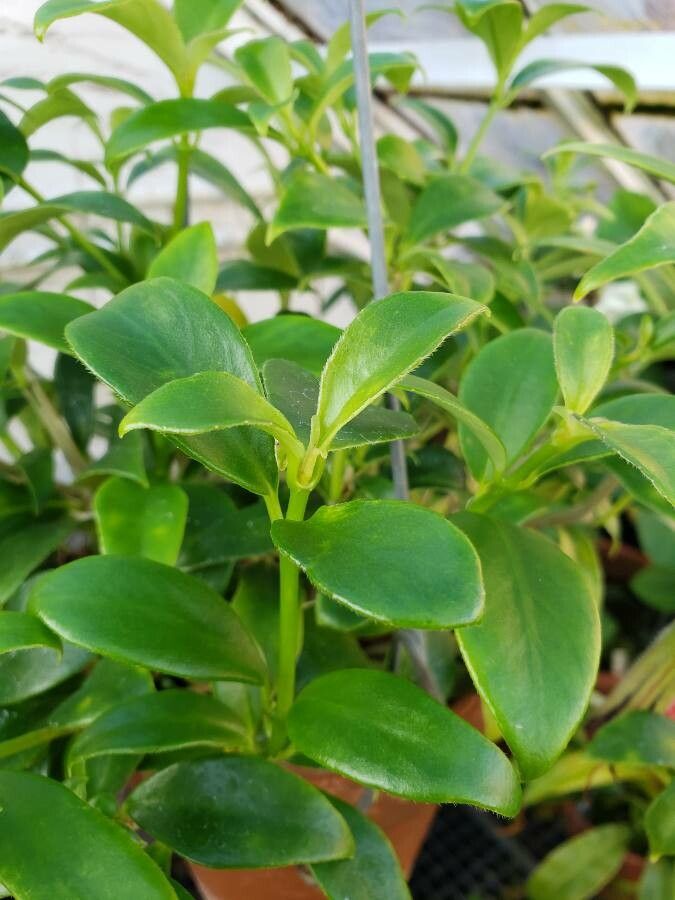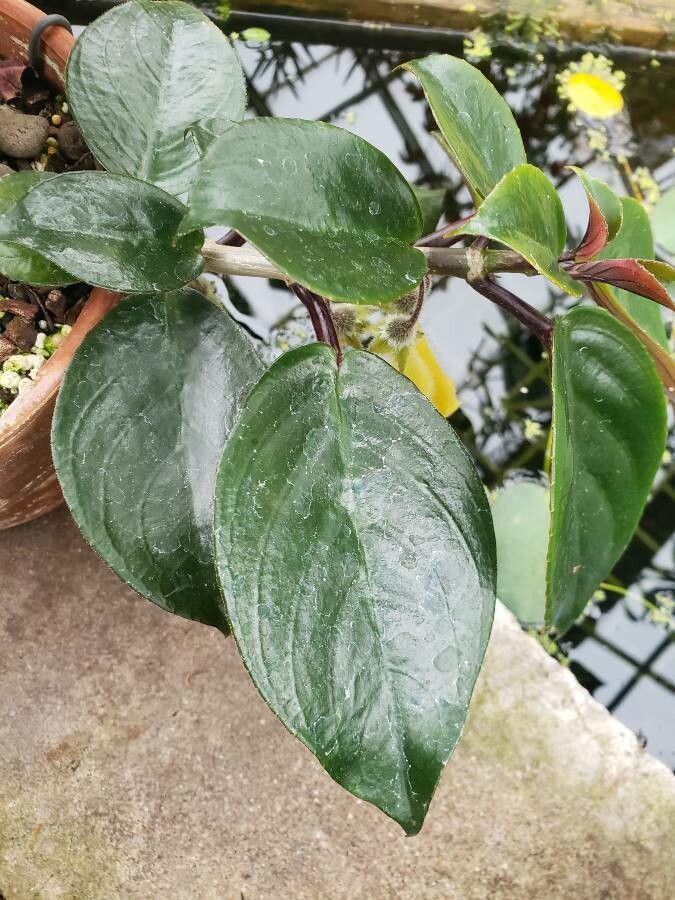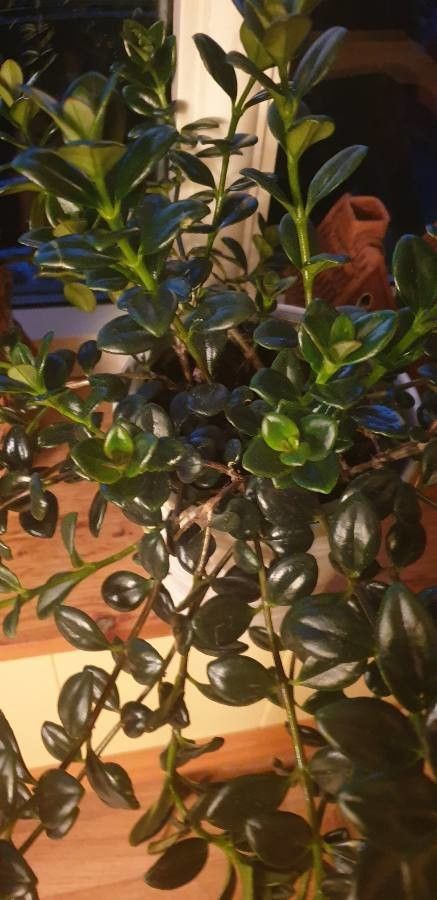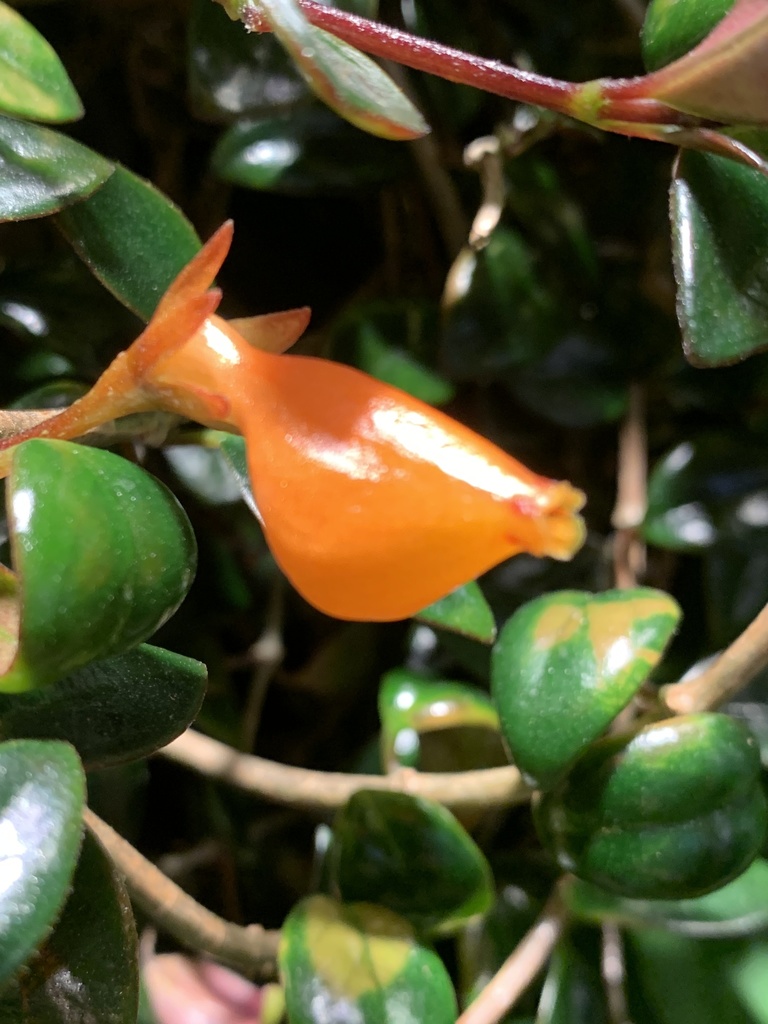
Nematanthus gregarius, commonly known as the Goldfish Plant, is a tropical species native to Central and South America. It belongs to the Gesneriaceae family and is renowned for its distinctive foliage and vibrant orange-yellow flowers that resemble goldfish. The plant features trailing stems that can grow up to 2 feet long, adorned with dark green, oval-shaped leaves marked by prominent veins.
This plant thrives in bright, indirect light and well-draining soil. It prefers warm temperatures ranging from 60 to 80°F (15 to 27°C) and high humidity levels. While regular watering is necessary, overwatering should be avoided as it can lead to root rot.
Due to its low maintenance requirements and unique appearance, Nematanthus gregarius is a popular houseplant. It can be easily propagated through stem cuttings or by dividing the root ball.
In summary, the Goldfish Plant is an excellent addition to any indoor garden, offering a striking appearance coupled with ease of care.
The Goldfish plant is fairly disease-resistant and generally not prone to illnesses. Still, it can develop leaf spots if light and airflow are poor or if it is overwatered. Its care level is rated as easy, since it mainly needs regular watering and little else. The Goldfish plant is a good choice for people who lack the time and energy to provide frequent care.
How to keep Nematanthus Gregarius.
Light
The Goldfish plant, also known as the goldfish plant, generally thrives with moderate sunlight, though it can tolerate stronger light. Originating from an area with abundant sunshine, it can handle varying light levels. Still, too much light can burn the leaves, while too little light may stunt the plant's growth.
Water
The goldfish plant thrives in humid environments and needs balanced moisture levels to grow well. For optimal vitality, it is best to water it weekly. Typically grown indoors as an evergreen, the goldfish plant flourishes in high humidity that mimics its native rainforest habitat.
Humidity
This plant will thrive in moderate humidity, which is probably the level in your home. However, misting it a few times a week can be very beneficial. Make sure the room has good ventilation.
Temperature
The goldfish plant is suited to temperate climates, preferring conditions similar to its native habitat. It thrives at 68 to 100 °F (20 to 38 ℃). To achieve optimal growth, adjust temperatures as the seasons change.
Fertilizer
Correct feeding is essential for the Goldfish plant's health and appearance. Feed the Goldfish plant in summer, applying fertilizer once a month throughout the season. Nutrients supply growth and help maintain the plant's components. Fertilizing improves the Goldfish plant's flower display, ensuring its best blooms.
Pruning
Goldfish plants are known for their trailing stems and bright, fish-shaped flowers. To keep them healthy and promote bushier growth, it's best to prune them from late winter to early spring. This helps remove dead parts and enhances their overall bloom vigor. Regular maintenance encourages vibrant growth and makes the plant look more attractive.
Pot & Repot
When repotting a Goldfish plant, select a pot 1-2 inches (2.5–5.1 cm) larger with good drainage. Use a well-draining potting mix. Repot in spring or fall, making sure the root ball sits slightly below the rim of the flower pot. Water thoroughly after repotting and place in a warm spot with indirect sunlight.
Botanical profile.
- Plant Type
- Herb
- Life Cycle
- Perennial, Annual
- Genus
- Nematanthus
- Family
- Gesneriaceae
- Hardiness Zone
- 10-11
- Mature Height
- 30 cm
- Mature Spread
- 0.61 m to 1.22 m
- Leaf Color
- Green
- Leaf Type
- Evergreen
- Flower Color
- Orange, Red
- Flower Size
- 2.54 cm to 5.08 cm
- Bloom Time
- All year round
- Planting Time
- Spring
- Harvest Time
- All year round
- Native Area
- Central America, Caribbean
Other names.
Reader questions.
What are the sunlight requirements for plants?
Plants have varying sunlight requirements to thrive. Partial sun plants need about 3-6 hours of sunlight daily, while full sun plants require more than 6 hours of sunlight. It's essential to observe the movement of sunlight through your garden to choose the best spots that offer a balance of light and shade, ensuring your plants' happiness and health.
What are the optimal temperature conditions for a Goldfish plant?
The Goldfish plant thrives in temperate climates, with optimal growth temperatures ranging from 68 to 100 °F (20 to 38 °C). It is a heat-loving plant, sensitive to cold temperatures. During the autumn, or when temperatures begin to cool, it's advisable to bring outdoor plants indoors, placing them near a bright window but away from direct heat sources. To promote growth, maintaining temperatures above 20°C during the winter is beneficial, while exposure to temperatures nearing 5°C can be harmful.
How does sunlight affect the Goldfish plant?
The Goldfish plant thrives in moderate sunlight but can adapt to more intense light conditions due to its origin in sunny environments. While the plant can endure variable light conditions, too much direct sunlight may cause leaf burn, and insufficient light could lead to stunted growth. It's crucial to find a suitable balance to maintain the plant's health.
How should I care for my Goldfish plant during winter?
In winter, it is important to keep the Goldfish plant in a warm environment since it prefers temperatures above 20°C. Exposure to temperatures below 5°C is detrimental. If the temperature falls below 1°C, the plant's leaves may lighten in color, leading to browning or blackening after frost damage, along with wilting and drooping symptoms. To mitigate cold damage, trim off the frost-affected areas and relocate the plant to a warm spot indoors, ideally near a south-facing window for ample sunlight, while avoiding places near heaters or air conditioning vents to prevent air dryness.
What artificial lighting requirements do indoor plants have?
Indoor plants require adequate lighting to grow optimally, especially when natural sunlight is lacking. Artificial lights, such as LED lights, are beneficial for providing the specific wavelengths needed by plants. The requirements vary by plant type: full sun plants need 30-50W/sq ft, partial sun plants 20-30W/sq ft, and full shade plants 10-20W/sq ft. The light source should be placed 12-36 inches above the plant, and the duration of light exposure should mimic natural daylight hours, typically 8-12 hours per day.
What steps should I take if my Goldfish plant is exposed to high temperatures?
During the summer, ensure that the Goldfish plant's environment does not exceed 38°C to avoid heat stress. Temperatures above 43°C can cause the leaves to lighten and increase the risk of sunburn. To remedy this, trim away the sunburned and dry parts of the plant. Relocate the plant to a shaded area, particularly away from the intense midday and afternoon sun. Additionally, watering the plant in the morning and evening can help maintain soil moisture and prevent overheating.
What are the symptoms of inadequate light for a Goldfish plant?
Symptoms of inadequate light for a Goldfish plant include smaller new leaves, leggy or sparse growth, faster leaf drop, slower or no new growth, lighter-colored new leaves, chlorosis, sunscald, leaf curling, wilting, and leaf scorching. These symptoms indicate that the plant is not receiving the correct amount of light, which can affect its growth and overall health.
How can I address light-related issues for my Goldfish plant?
To address light-related issues for your Goldfish plant, ensure it gets adequate light by gradually moving it to sunnier spots until it receives 3-6 hours of direct sunlight daily. Use artificial lights if your plant is large or immobile, with a desk or ceiling lamp on for at least 8 hours a day, or invest in professional plant grow lights. Outdoor plants should be moved gradually to avoid sunburn. Reduce obstructions like trees by pruning, and for smaller plants, consider transplanting during the dormant period to a location with ample sunlight and good drainage. Note that parts of the plant already affected may not recover, but new growth will be healthy with improved light conditions.