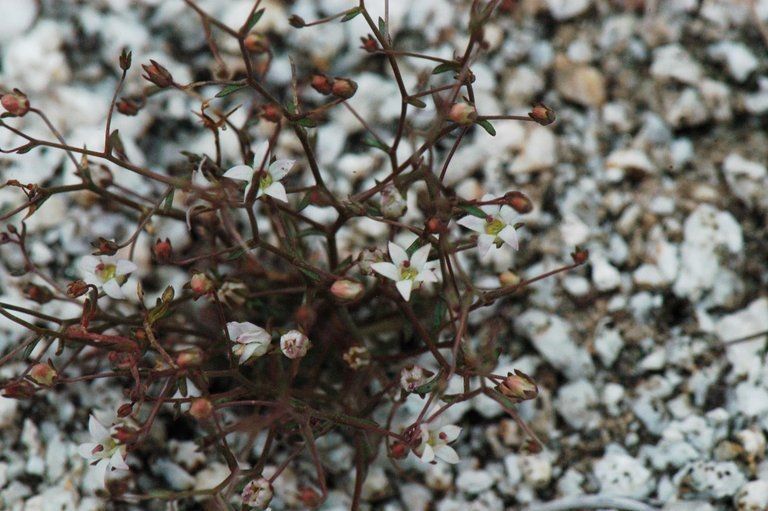
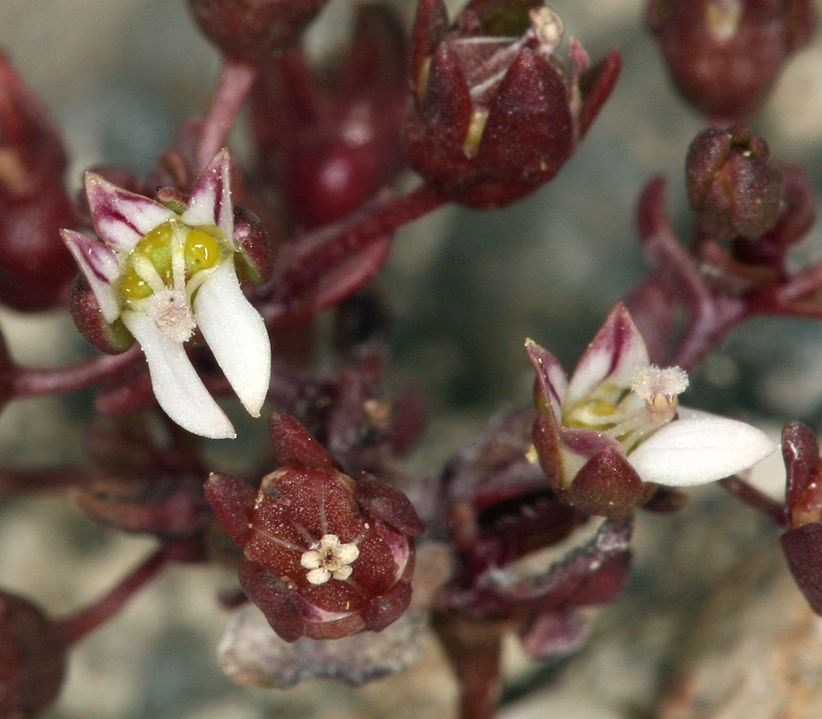
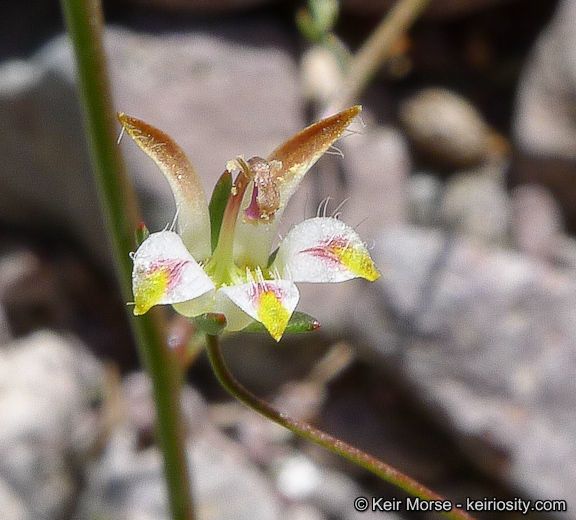
Nemacladus glanduliferus, commonly known as the glandular threadplant, is a small annual belonging to the Campanulaceae family. This plant is native to the southwestern United States, particularly thriving in California, Nevada, and Arizona. It typically grows up to 10 cm tall and has thread-like stems covered in small hairs.
The leaves of Nemacladus glanduliferus are narrow, linear, and pointed at the tips. They grow alternately along the stem and exhibit a grayish-green hue due to their hairy surface. The flowers, although only 3-4 mm in diameter, are plentiful and borne on long stalks that emerge from the leaf axils.
The petals of these flowers are white or pale pink with purple veins. Each petal has five lobes that curl back toward the base when fully open. Similarly, the stamens also curl back when mature.
This species prefers dry habitats, such as rocky slopes or sandy soils, at elevations ranging from 300 to 2000 meters above sea level. It typically blooms from March to June, depending on the location.
Native Americans have traditionally used Nemacladus glanduliferus for medicinal purposes, particularly to treat stomach ailments and skin irritations caused by poison oak. The plant's leaves contain flavonoids like quercetin glycosides, which are known for their anti-inflammatory and antioxidant properties, offering support for overall health.
Eastern glandular nemacladus has good resistance to disease and is generally not prone to illness. Still, it can be vulnerable to pests and diseases present in its surroundings. These infections are typically not severe. Regarding care, this plant requires moderate maintenance. It should be pruned regularly to preserve a neat appearance and support healthy growth. Applying fertilizer can also encourage flowering. Eastern glandular nemacladus is appropriate for anyone with outdoor space, such as a garden or patio, and does not demand extensive gardening experience. It may need more attention if grown indoors.
How to keep Nemacladus Glanduliferus.
Light
The Eastern glandular nemacladus hails from well-lit, open spaces where it flourishes under full sun exposure. It can withstand semi-shade conditions but it favors direct sunlight for the best growth. This plant, which completes its life cycle in one or two years, is famously fond of sunny conditions.
Water
The Eastern glandular nemacladus is a drought-tolerant plant that thrives with minimal moisture. While it prefers full sun and does exceptionally well outdoors, it only needs watering about once a week. Additionally, it adapts well to container settings as long as the watering routine mimics its natural dry periods.
Fertilizer
Eastern glandular nemacladus can prosper from regular, mild applications of fertilizer to encourage robust leaf development. It is advisable to provide fertilization to Eastern glandular nemacladus roughly every month throughout the summer season. Nitrogen is essential for leaf growth, and using nitrogen-dense supplements aids the thriving of Eastern glandular nemacladus.
Pruning
The Eastern glandular nemacladus is characterized by its delicate flowers and glandular hairs. To maintain the health and appearance of this plant, it's best to prune from early to late spring. During pruning, focus on removing dead branches to improve airflow and stimulate growth. Make sure to thin congested areas while keeping the plant's natural shape intact. Regular pruning not only enhances blooming but also reduces the risk of pests. For the best results, always use clean, sharp tools.
Botanical profile.
- Plant Type
- Herb
- Life Cycle
- Annual
- Genus
- Nemacladus
- Family
- Campanulaceae
- Leaf Type
- Semi-evergreen
- Flower Color
- White, Purple, Red
- Bloom Time
- Spring, Winter
- Native Area
- Mexico
Other names.
Reader questions.
What are the sunlight requirements for Eastern glandular nemacladus?
Eastern glandular nemacladus requires full sun, meaning it thrives in locations that receive above 6 hours of sunlight daily, although it can tolerate partial sun with about 3-6 hours of sunlight. It's important to observe how sunlight moves through your garden, selecting spots that offer the right balance of light and shade, ensuring the plants' well-being.
How should indoor Eastern glandular nemacladus plants be provided with adequate lighting?
Indoor Eastern glandular nemacladus plants need sufficient lighting for optimal growth. When natural sunlight is insufficient, particularly in winter or less sunny spaces, artificial lights become essential. LED lights are recommended as they can be customized to emit specific light wavelengths necessary for the plant. Full sun plants require 30-50W per square foot of artificial light, while partial sun plants need 20-30W per square foot. The artificial light source should be placed 12-36 inches above the plant to simulate natural sunlight, with most plants requiring 8-12 hours of light per day.
What are the symptoms of light deficiency in Eastern glandular nemacladus when grown indoors?
When Eastern glandular nemacladus is cultivated indoors under inadequate light, several symptoms can emerge, including: smaller new leaves, leggy or sparse growth, faster leaf drop, slower or halted growth, lighter-colored new leaves, chlorosis (yellowing leaves due to chlorophyll breakdown), sunscald, leaf curling as a defense against extreme sunlight, wilting from excessive water loss, and leaf scorching indicated by dry, crispy leaf edges.
How can I ensure my Eastern glandular nemacladus receives adequate sunlight, both indoors and outdoors?
To ensure optimal growth for Eastern glandular nemacladus, gradually transition plants to sunnier areas to receive at least 6 hours of direct sunlight daily. For indoor plants, use south-facing windows or provide additional light with artificial lighting, keeping lamps on for a minimum of 8 hours daily. Outdoor plants should also be moved gradually to avoid sunburn. If sunlight is obstructed by objects like trees, consider pruning to improve light access. For smaller, easy-to-move plants, transplanting during the dormant period to a sunnier location with good drainage can be effective.