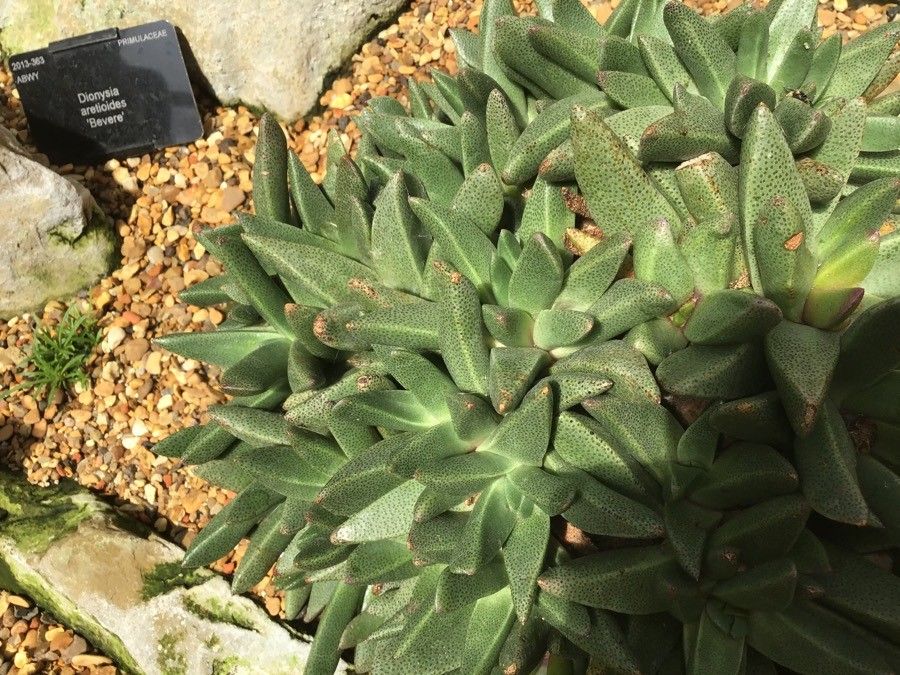
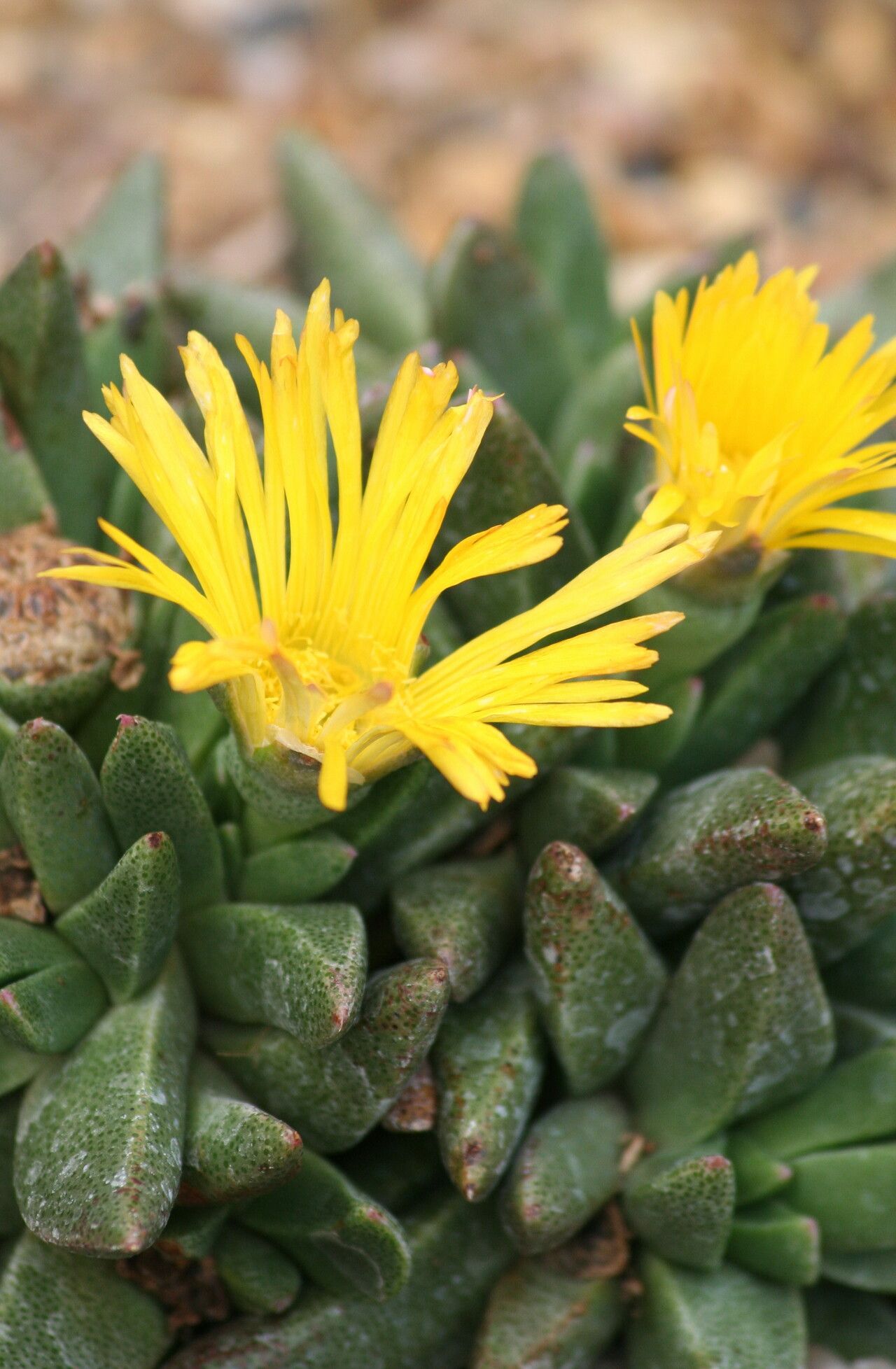
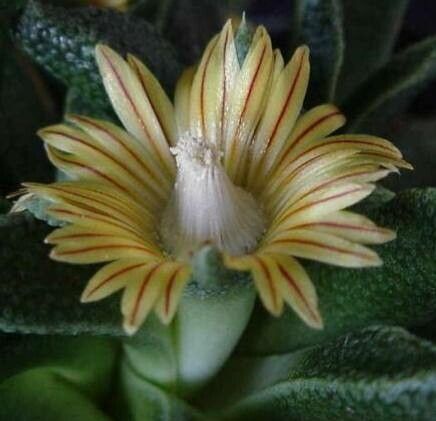
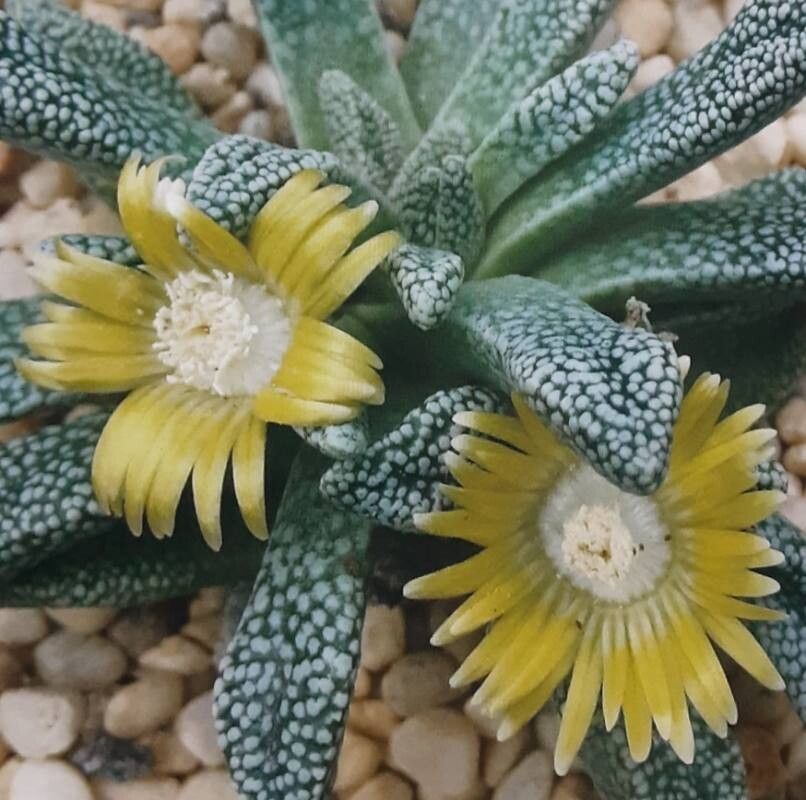
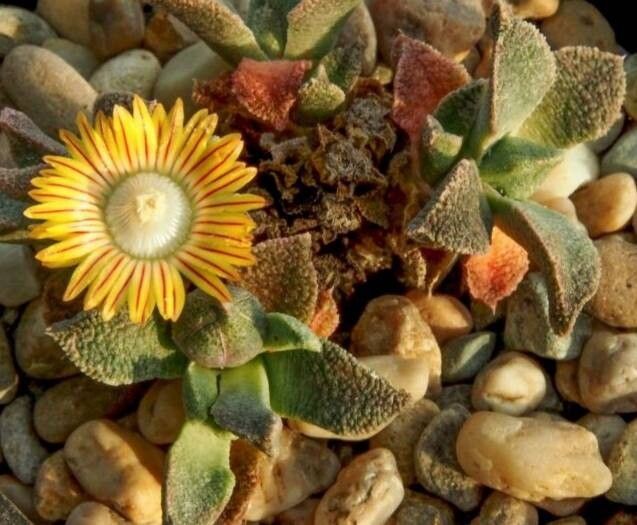
Nananthus vittatus, also known as the banded nananthus in English and the brakveldvygie and stryvygie in Afrikaans, is a perennial, succulent plant that is part of the Aizoaceae family. The species is endemic to the Northern Cape, North West and the Free State.
Transvaal iceplant has moderate resistance to disease but is more vulnerable to humidity. It becomes prone to illness when humidity levels are high and can develop root rot while dormant. Regarding care, Transvaal iceplant tolerates drought yet requires increased watering during its active growth. Watering should be significantly cut back or halted entirely throughout the dormant period. Transvaal iceplant is best for growers with some experience, as it can be challenging to maintain, especially during dormancy. It is particularly appropriate for those who can spend time caring for it in the winter months.
How to keep Nananthus Vittatus.
Light
Transvaal iceplant grows best when it gets abundant light throughout the day. It comes from sun-drenched habitats, which makes it tolerant of partial shade or even low-light conditions. However, excessive shade or too much sun can hinder its growth.
Water
The Transvaal iceplant is a drought-tolerant species native to arid regions, and it thrives with very little moisture. To mimic its natural environment, water it every 2 to 3 weeks. It is crucial to use well-draining soil to prevent root rot, particularly during the growing season. This helps to maintain the plant's health.
Temperature
The Transvaal iceplant is native to areas with temperate climates. It performs best at temperatures between 68 and 100.4 °F (20 and 38 °C). During hotter seasons, adjustments may involve increasing ventilation and providing more shade to imitate its natural habitat.
Fertilizer
For Transvaal iceplant, light applications of fertilizer once or twice a year during the growing season are sufficient. Do not fertilize in winter or in summer when it is dormant. Use less fertilizer for repotted plants and wait a couple of months after repotting before feeding. Fertilizing promotes healthy growth and encourages blooms.
Pruning
To keep large succulent plants like the Transvaal iceplant looking their best, prune them in the spring and autumn. Focus on removing any unnecessary or overly dense branches. If you wish to propagate the plant, cut sturdy stems with 5 to 6 leaves. Treat the cut ends with sulfur powder to prevent infection and allow them to heal before planting. When placing the cuttings into soil, make sure to keep the soil slightly moist.
Pot & Repot
When repotting Transvaal iceplant, pick a pot slightly larger than the current one that has good drainage. Use a gritty, well-draining succulent or cactus mix. Gently remove the plant from its old pot, brush off excess soil, and set it in at the same depth. Wait a few days before watering so any root damage can heal. Repot in spring or fall and place it in a brightly lit spot.
Botanical profile.
- Plant Type
- Succulent
- Life Cycle
- Perennial
- Genus
- Nananthus
- Family
- Aizoaceae
- Hardiness Zone
- 9-11
- Mature Height
- 10 cm to 15 cm
- Mature Spread
- 15 cm to 30 cm
- Leaf Color
- Green
- Leaf Type
- Semi-evergreen
- Flower Color
- Yellow
- Flower Size
- 2.03 cm to 2.54 cm
- Bloom Time
- Summer
- Planting Time
- Spring, Summer
- Harvest Time
- Late summer, Early fall, Mid fall
- Native Area
- South Africa, Botswana