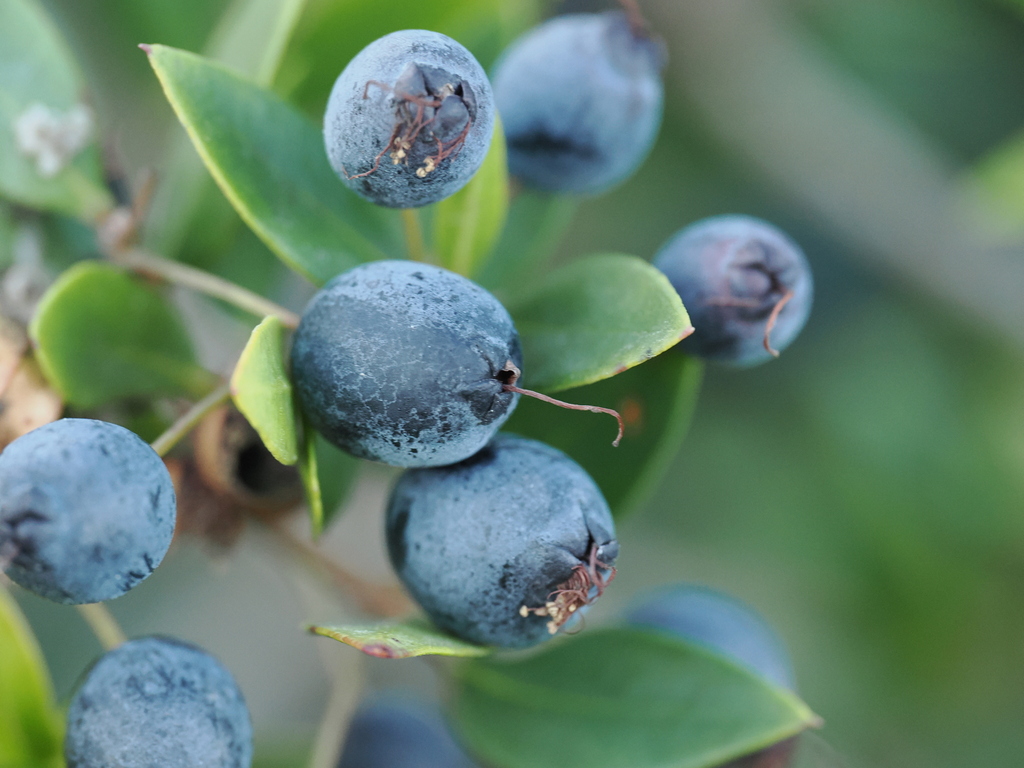
Myrtus communis, commonly known as the common myrtle, is an evergreen shrub or small tree that belongs to the Myrtaceae family. Native to the Mediterranean region, it thrives in various habitats such as rocky hillsides, woodlands, and coastal areas. The plant can grow up to 5 meters tall and features a dense, bushy form with glossy green leaves that emit a pleasant aroma when crushed.
In summer, the common myrtle produces small white or pink flowers, which are followed by blue-black berries. Although the berries are edible, they are not commonly consumed. The plant has been prized for centuries for its medicinal properties, particularly its antiseptic and astringent qualities. Additionally, ancient Greeks and Romans used myrtle for wreaths during weddings and other celebrations.
Apart from its medicinal uses, Myrtus communis is also cultivated as an ornamental plant due to its attractive foliage and flowers. It can be grown in containers or directly in well-drained soil with full sun exposure.
In the Jewish faith, the common myrtle holds significant symbolic value. It is an important element of the Sukkot Festival, as its use is prescribed in the Torah. During the festival, a branch of common myrtle is woven together with the fruit of the citron tree, a willow branch, and a date palm branch. These four species are then waved together as part of a ceremonial service to God. FUN FACT · FROM THE LIBRARY
Overall, Myrtus communis is a versatile plant that offers both practical benefits for medicine-making and aesthetic value, making it an excellent addition to any garden for those seeking beauty and functionality.
Common Myrtle refers to the plants belonging to the Myrtus genus, commonly known as Myrtle. This plant is one of the four species used by Jewish people during religious ceremonies at the Sukkot Festival. Because it is widely planted in various regions, it is often referred to as Common Myrtle.
Common myrtle shows strong resistance to disease and is typically not vulnerable to illnesses. In terms of upkeep, this plant is fairly low-maintenance. When grown outdoors it needs only occasional watering, and larger plants usually do not require pruning; smaller plants, however, should be pruned after they have finished blooming. Common myrtlet is appropriate for anyone with outdoor space, such as a garden or a deck, and does not demand much horticultural experience.
How to keep Myrtus Communis.
Light
Common myrtle needs plenty of light and does best when the sun shines on it for most of the day. It can tolerate milder light conditions, but if light is too limited it may show poor growth and pale foliage. Conversely, too much sun can scorch the leaves.
Water
The common myrtle is native to the Mediterranean region and grows best in well-drained soil with moderate moisture. It should be watered every 1 to 2 weeks, allowing the soil to dry out slightly between waterings. As an evergreen plant, the common myrtle needs consistent moisture to thrive, especially outdoors where it can benefit from natural rainfall.
Humidity
This plant will thrive in moderate humidity, which is probably the level in your home. However, misting it a few times a week can be very beneficial. Make sure the room has good ventilation.
Temperature
The native temperature habitat of common myrtle varies, but it typically prefers temperatures between 59 and 95 ℉ (15 and 35 ℃). In colder climates it may require protection from frost during the winter months. In summer it can tolerate higher temperatures if provided with adequate water.
Fertilizer
Fertilize your Common myrtle in early spring to encourage healthy growth. Regular fertilization improves overall health, leading to vigorous growth, greater resilience to harsh conditions, and increased resistance to pests and diseases. Keep a consistent fertilization schedule for your Common myrtle to maintain vibrant, deeply colored, and lush foliage.
Pruning
To ensure common myrtle grows well, it should be pruned regularly, ideally in early spring before new growth starts. Trim back one-third of the plant to encourage a bushier appearance and remove any dead branches. This practice improves the plant's shape, air circulation, and light penetration, leading to healthier growth.
Pot & Repot
Select a pot 1–2 inches (2.5–5.1 cm) larger with ample drainage. Use a well-draining potting mix. Repot in spring or fall, making sure the root ball sits slightly below the rim of the pot. Water thoroughly after repotting and place in a warm spot with indirect sunlight.
Botanical profile.
- Plant Type
- Shrub
- Life Cycle
- Perennial
- Genus
- Myrtus
- Family
- Myrtaceae
- Hardiness Zone
- 8-9
- Mature Height
- 4.88 m
- Mature Spread
- 2.44 m to 3.66 m
- Leaf Color
- Green
- Leaf Type
- Evergreen
- Flower Color
- White
- Flower Size
- 1.02 cm to 3.05 cm
- Bloom Time
- Early summer, Mid summer
- Planting Time
- Spring, Autumn
- Harvest Time
- Mid summer, Late summer, Fall
- Native Area
- Mediterranean
Other names.
Reader questions.
When Should I Water My Common Myrtle?
Watering your common myrtle is vital for its growth, flower production, and disease resistance. To determine the right time to water, observe the soil dryness; the top 1 to 2 inches of soil should be dry to the touch. Also, look out for the condition of the leaves; wilted or discolored leaves can indicate the need for water. During the pre-flowering stage, ensure the plant is adequately watered to avoid bud drop. In seasons with warm temperatures and high sunlight exposure, common myrtle's water needs increase. Avoid watering too early or too late to prevent root rot or dehydration, respectively. Understanding these signs will help you maintain an optimal watering schedule.
Why should I add fertilizer to my Common myrtle?
No matter which type of Common myrtle you have, fertilizing regularly will promote the plant's overall health. Providing the proper nutrients will result in stronger growth and enhance its ability to withstand harsh conditions and combat diseases and pests. The beautiful foliage of the Common myrtle is a key feature, so it's important to maintain it. To achieve this, establish and follow a fertilization schedule tailored to your specific Common myrtle. This will encourage the development of vibrant, lush leaves.
What are the sunlight requirements for Common myrtle?
Common myrtle requires full sun exposure to thrive, generally defined as above 6 hours of direct sunlight per day. It can also grow in partial sun, which means about 3-6 hours of sunlight daily. It's essential to carefully observe how sunlight moves through your garden to provide your plants with the ideal balance of light and shade, ensuring they remain healthy and happy.
What is the ideal temperature range for common myrtle?
The ideal temperature habitat for common myrtle ranges from 59 to 95°F (15 to 35°C). In regions where the temperature falls below this range, especially in colder climates, common myrtle requires protection against frost during the winter months. Nonetheless, it is capable of enduring hotter temperatures during summer, provided it receives sufficient water to keep it hydrated.
How Should I Water My Common Myrtle?
For watering common myrtle effectively, adopt a deep but infrequent watering approach, ensuring water drains out of the pot's bottom before the next watering session. This technique encourages healthy root growth and prevents root rot. Use a watering can with a rose-like nozzle to deliver a gentle and even flow at the plant's base, avoiding the leaves. This method helps in preventing disease and ensures the plant receives the right amount of hydration without the risk of overwatering.
When should I fertilize my Common myrtle?
To ensure healthy growth, it is recommended to fertilize your Common myrtle for the first time in late winter or early spring. This provides the necessary nutrients for the plant to thrive once the weather warms up. If you live in a warm climate region, it can be beneficial to give your Common myrtle an additional fertilizer feeding in early fall. This will provide extra nutrients for the upcoming growing season and help the plant withstand the winter cold without suffering foliage damage. Early fertilization will also allow new branches to grow strong enough to endure the cold winter.
What should I consider about sunlight when growing Common myrtle?
When growing Common myrtle, it's crucial to ensure the plant gets ample light exposure for the majority of the day. Too little sunlight may result in poor growth and faded foliage, while too much exposure can cause foliage burn. During less sunny conditions or in winter, artificial lighting such as LED lights can be used to supplement natural sunlight, ensuring your plant continues to grow healthy. For full sun plants, use 30-50W/sq ft of artificial light, for partial sun plants 20-30W/sq ft, and for full shade plants 10-20W/sq ft. Adjust the light source's distance and duration to mimic natural sunlight as closely as possible.
How should common myrtle be protected in cold weather?
Common myrtle possesses some degree of cold tolerance, and no special precautions are necessary if temperatures do not drop below its tolerable growing minimum. However, if colder weather is anticipated, which might lower temperatures beyond its tolerance, it is advisable to wrap the plant in protective materials such as plastic film, fabric, or other suitable covers. These protections should be removed once the temperature rises, to avoid any potential harm to the plant.
How Much Water Does Common Myrtle Really Need?
Common myrtle adapts well to dry conditions, thanks to its Mediterranean origin. The amount of water it needs varies with factors like pot size, root depth, and plant size. Generally, around 2 liters of water per session is recommended, ensuring thorough soil saturation without waterlogging. Signs of adequate hydration include vibrant and healthy leaves, even soil moisture, and regular growth and blooming. Overwatering and underwatering can lead to yellowing leaves, root rot, or wilted leaves respectively. Always allow the soil to dry slightly between watering sessions and adjust the amount based on your plant's specific needs, considering climate and environmental conditions.
When is it a bad idea to fertilize my Common myrtle?
There are a few times during the year when you should avoid fertilizing your Common myrtle. Firstly, during the early and mid-winter months when the plant is dormant and doesn't require feeding. Additionally, it is not advisable to fertilize this plant during late spring and summer, as the weather is typically hotter and drier, which can negatively affect the plant's response to fertilization. To prevent these issues, it is recommended to stick to a fertilization schedule that includes feeding only in early spring and early fall.
What are signs of insufficient sunlight in Common myrtle?
Symptoms of insufficient sunlight in Common myrtle include smaller new leaves, leggy or sparse growth, faster leaf drop, slower or stopped new growth, and lighter-colored or chlorotic leaves. If your Common myrtle is exposed to too much sunlight, it may experience symptoms like sunscald, leaf curling, wilting, leaf scorching, and reduced overall health. These symptoms indicate that the plant is struggling with the current light conditions.
What are the symptoms of common myrtle experiencing low temperatures?
Common myrtle shows a moderate tolerance to low temperatures, thriving best when kept above its suitable growth minimum temperature. During the winter, it is essential to maintain the temperature above its tolerable growing minimum. If temperatures fall below this plant's growth limit, the leaves may droop. Although they can recover from mild exposure, severe cold may result in wilted leaves that eventually fall off.