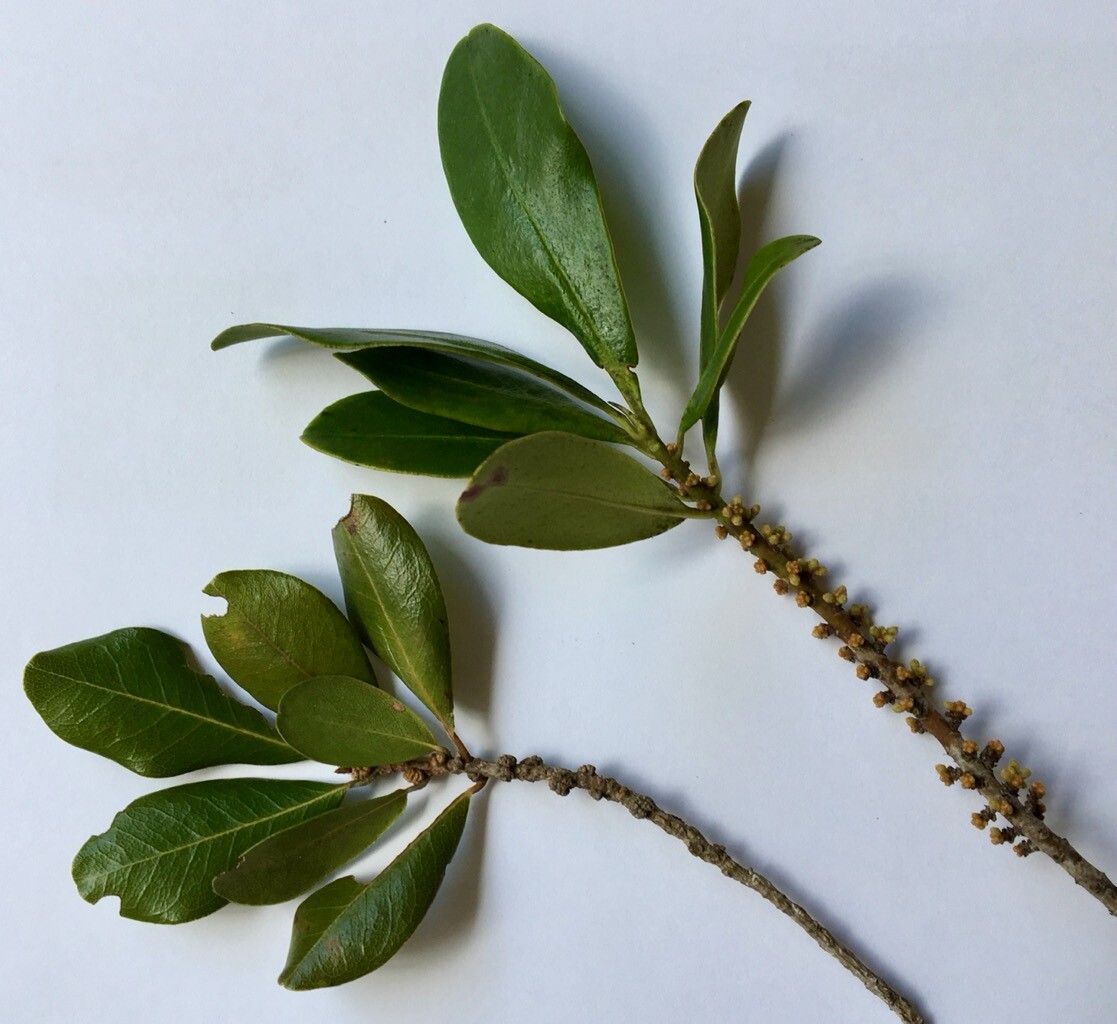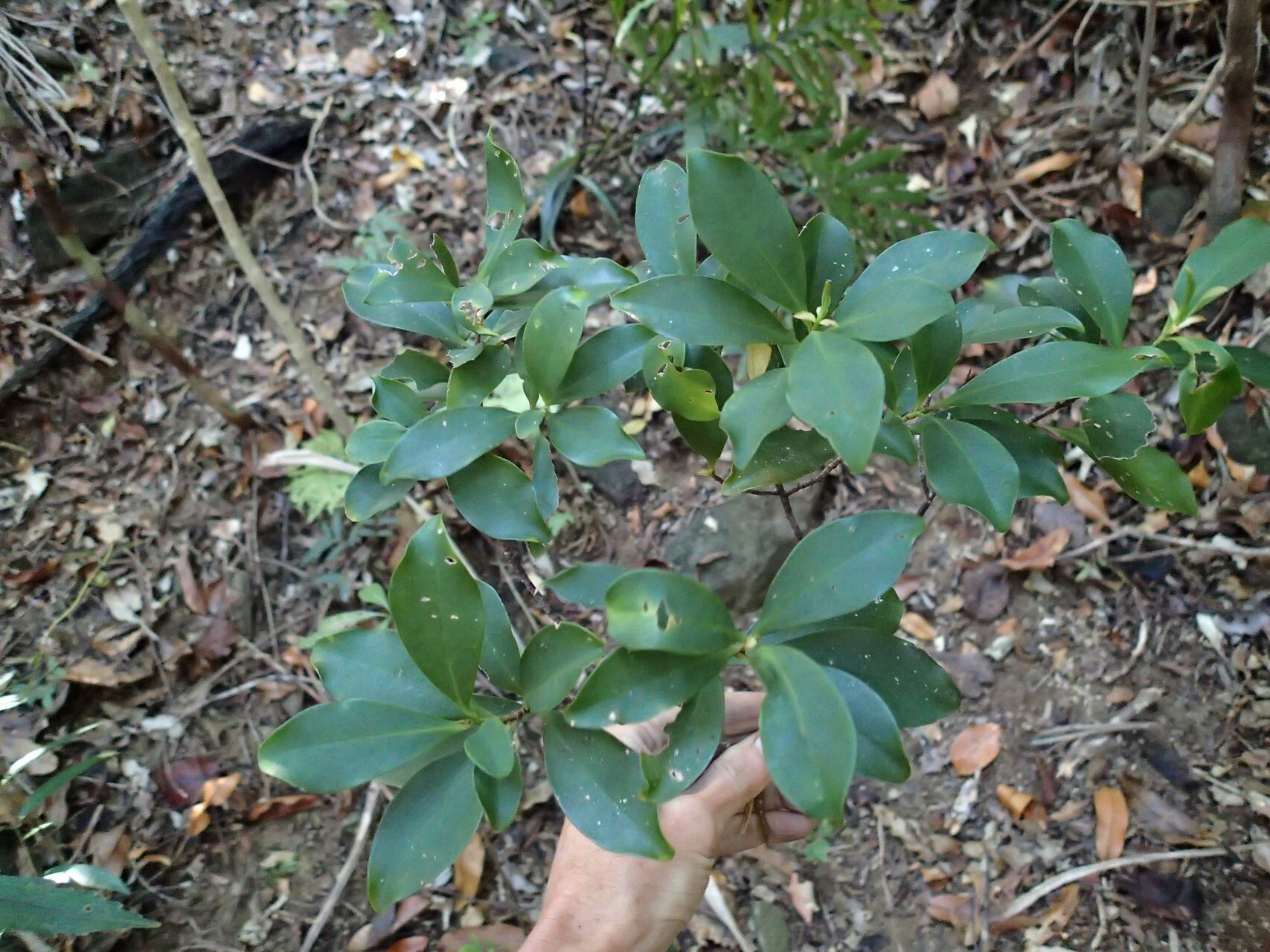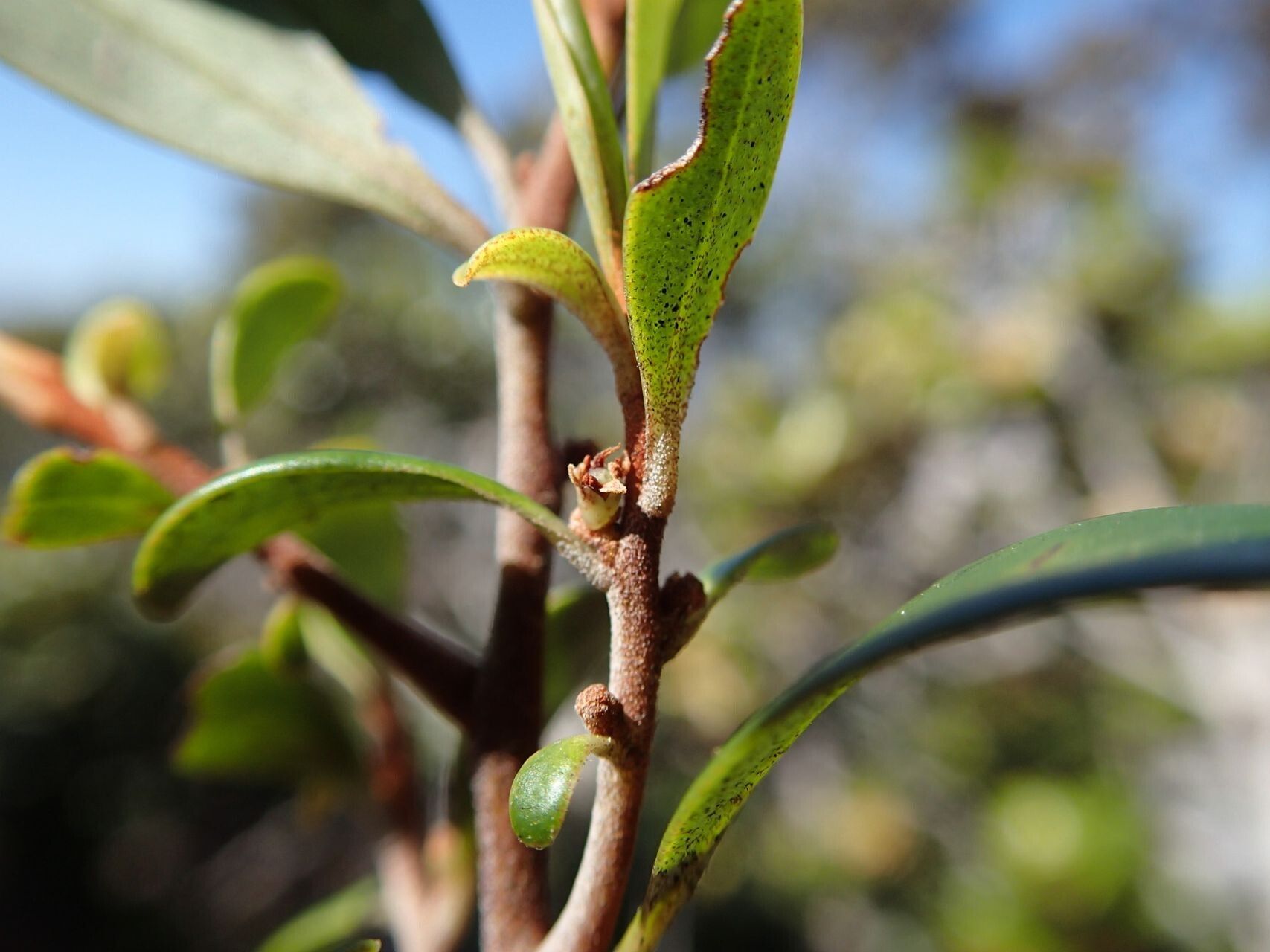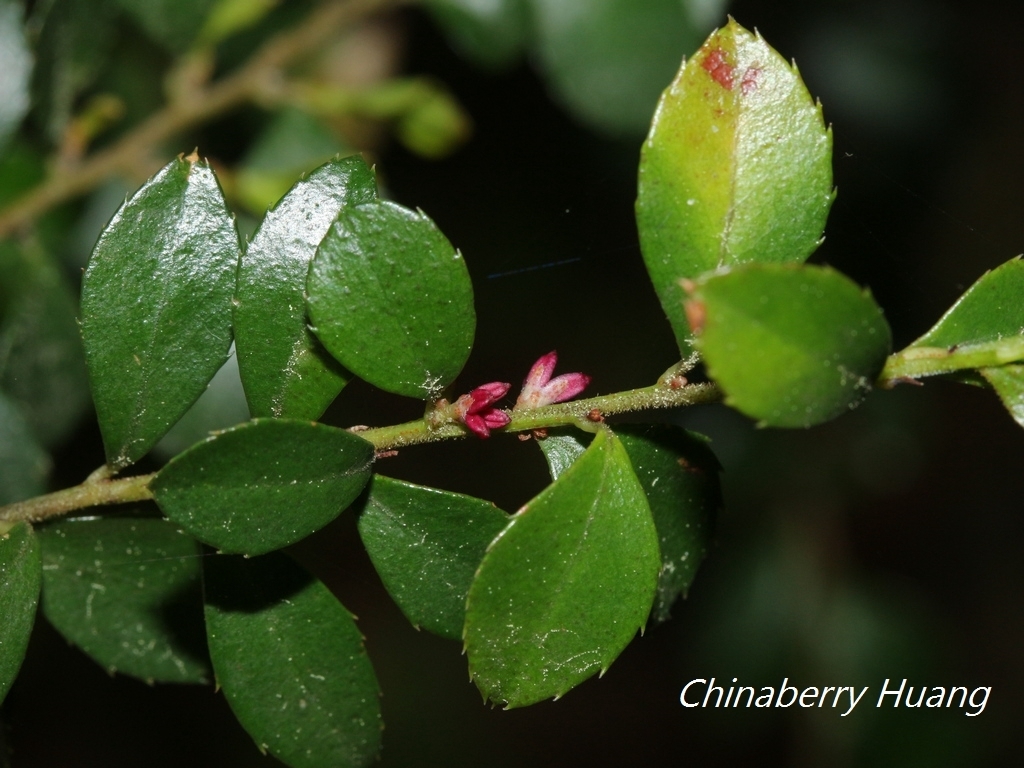
Myrsine africana, commonly known as African boxwood or Cape myrtle, is a small evergreen shrub belonging to the family Primulaceae. Native to Africa, it thrives in diverse habitats such as forests, woodlands, and rocky areas. The plant features a dense growth habit with glossy, dark green, oval-shaped leaves that have a leathery texture. These leaves are alternately arranged on the stem and are accompanied by small white or pinkish flowers that bloom in clusters during the spring.
African boxwood is highly valued for its ornamental appeal, making it an excellent choice for hedges or topiary gardens. It can grow up to 2 meters tall but can be pruned into various shapes based on the desired design.
Besides its ornamental value, Myrsine africana possesses medicinal properties useful in traditional medicine for treating ailments like coughs, colds, fever, and stomach problems, among others.
The plant prefers well-drained soils with moderate moisture levels but can tolerate drought conditions once established. It thrives best under full sun exposure but can also tolerate partial shade.
In conclusion, Myrsine africana is an attractive evergreen shrub with glossy, dark green foliage, making it ideal for hedges or topiary gardens. Additionally, it has medicinal properties that contribute to its use in traditional medicine practices across Africa.
Cape myrtle is fairly resistant to disease and typically isn't susceptible to many ailments. Regarding upkeep, this plant is quite low-maintenance. When grown outdoors it needs only light watering, and larger specimens usually don't have to be pruned. Smaller plants, however, ought to be pruned after they finish flowering. Cape myrtlet is appropriate for anyone with an outdoor area, such as a garden or a deck, and does not demand extensive caretaking experience.
How to keep Myrsine Africana.
Light
The cape myrtle prospers when it gets a substantial amount of sunlight during the day. An inhabitant of sun-rich environments, it grows best under those conditions. However, excessive sunlight can impede its development and cause damage, while too little light can lead to slower growth and diminished vigor.
Water
Cape myrtle, which originates from regions with different moisture levels, is moderately drought-tolerant and prefers that the soil dry out slightly between waterings, typically every two weeks. As an evergreen, it requires consistent moisture and thrives best outdoors, where natural rainfall can meet its needs.
Temperature
Cape myrtle originates from temperate regions and therefore prefers a moderate temperature range of 59 to 100.4 °F (15 to 38 ℃). In colder seasons, it's advisable to keep indoor heat near the plant's lower temperature limit.
Fertilizer
Proper timing is important for fertilizing Cape myrtle. Apply fertilizer in early spring and continue once a month through early summer. Fertilizer encourages lovely blooms and supplies energy during both dormant periods and times of active growth.
Pruning
Cape myrtle boasts dense, evergreen foliage and fragrant flowers. For optimal growth, prune it regularly in the winter when the plant is dormant. Focus on removing dead branches and any crowded areas to improve airflow. This practice encourages vigorous growth in the spring, helps prevent pests, and maintains the plant's aesthetic appeal.
Botanical profile.
- Plant Type
- Shrub
- Life Cycle
- Perennial
- Genus
- Myrsine
- Family
- Primulaceae
- Hardiness Zone
- 8-11
- Mature Height
- 2.13 m
- Mature Spread
- 76 cm
- Leaf Color
- Dark Green
- Leaf Type
- Evergreen
- Flower Color
- Pink, White
- Flower Size
- 0.25 cm to 0.51 cm
- Bloom Time
- Early spring, Mid spring
- Planting Time
- Spring, Summer, Autumn
- Harvest Time
- Late summer, Early fall, Mid fall
- Native Area
- Nepal, Saudi Arabia, Malawi, Somalia, Lesotho, India, Angola, South Africa, Zambia, Sudan, Eritrea, Pakistan, Yemen, Kenya, Uganda, Tanzania, Zimbabwe, China, Afghanistan, Mozambique, Eswatini, Ethiopia, Congo (DRC)
Other names.
Reader questions.
How should I water my Cape myrtle plant?
Your Cape myrtle doesn't have specific requirements for watering, so you can use any common watering tool. Whether it's a watering can, a hose, or even a cup, it will work perfectly fine. The important thing is to water the soil directly and make sure all areas of the soil are evenly moistened. Using filtered water can be helpful as tap water might have harmful particles. It's also best to use water that is at or slightly above room temperature, as very cold or hot water can shock the Cape myrtle. However, generally, the Cape myrtle is adaptable and responds well to any water you provide.
Why should I put fertilizer on my Cape myrtle?
To ensure your Cape myrtle's health and attractiveness, regular fertilization is key. By providing the proper nutrients, you can promote vigorous growth and resilience against difficult growing conditions and pests. Paying attention to the foliage, which is a standout feature, is crucial. Maintaining a consistent fertilization schedule specific to your Cape myrtle will result in vibrant and lush leaves.
What are the sunlight requirements for Cape Myrtle?
Cape Myrtle thrives in full sun, which means it needs above 6 hours of sunlight daily to achieve ideal growth. It can also grow in partial sun, receiving about 3-6 hours of sunlight. However, it's crucial to observe the movement of sunlight through your garden to ensure your Cape Myrtle gets the perfect balance of light and shade. Too much sunlight can damage the plant, while too little can stunt its growth and vitality.
What is the native climate of Cape Myrtle?
Cape myrtle is native to temperate regions, thriving in a moderate temperature range of 59 to 100.4 °F (15 to 38 °C). This plant enjoys conditions that mimic its native habitat, with a preference for maintaining indoor heat near its lower temperature limit during colder seasons. Cape myrtle's ability to tolerate some cold makes it adaptable, not needing special cold protection measures if temperatures stay above -5°C.
What should I do if I give too much or too little water to my Cape myrtle plant?
Outdoor plants, especially newly planted ones or plant seedlings, can suffer from lack of watering. It is important to water them regularly for the first few months until their roots are established. Cape myrtle, in particular, can rely on rain once its roots are well-developed. When it comes to Cape myrtles planted in pots, overwatering is a common issue. If you accidentally overwater your plant, take immediate action to minimize the damage. Stop watering it right away and check the roots by removing the plant from its pot. If no root rot is found, you can return the plant to its container. However, if root rot is present, trim the affected roots and consider applying a fungicide. Repot the Cape myrtle using well-draining soil. In the case of underwatering, simply water the Cape myrtle more frequently. It is usually an easy problem to fix. If underwatered, the plant's leaves will droop, dry out, and fall off. However, they will bounce back quickly with sufficient watering. Be sure to adjust your watering frequency as soon as you notice signs of underwatering.
When should I fertilize my Cape myrtle?
To ensure healthy growth, it is recommended to fertilize your Cape myrtle for the first time in late winter or early spring. This provides the necessary nutrients for the plant to thrive once the weather warms up. If you live in a warm climate region, it can be beneficial to give your Cape myrtle an additional fertilizer feeding in early fall. This not only adds nutrients for the following growing season but also helps the plant withstand winter cold and avoid foliage damage. Fertilizing earlier in the fall ensures that the new branches have enough time to grow and withstand the cold winter.
How does artificial lighting support Cape Myrtle's growth?
Artificial lighting can be vital for Cape Myrtle's growth when natural sunlight is insufficient, especially in winter or in less sunny spaces. LED lights are recommended for their ability to provide specific wavelengths needed by plants. For full sun plants like Cape Myrtle, 30-50W/sq ft of artificial light is needed. The light source should be placed 12-36 inches above the plant to mimic natural sunlight, and the plant should be exposed to 8-12 hours of light per day to promote faster and healthier growth.
What should I do to protect Cape Myrtle from very cold temperatures?
Cape myrtle has some cold tolerance but requires protection when temperatures are expected to drop below -5°C. During such extremely cold weather, it's necessary to temporarily shield the plant. Wrapping it in plastic film, fabric, or other suitable materials can provide the needed insulation. Once the temperature increases, these protective measures should be removed promptly to prevent any potential damage from overheating or restricted ventilation.
How often do I need to water my Cape myrtle plant?
If you live in an area with regular rainfall, most outdoor plants can grow naturally without additional watering. However, if your area lacks rainfall, it's important to provide your plants with adequate watering every 2 weeks in the spring and fall, and more frequently during the summer. In the winter, when plant growth slows down and water needs decrease, water sparingly or not at all. For young or newly planted Cape myrtle plants, more frequent watering is necessary to help them establish and grow to be adaptable and drought-tolerant. When it comes to potted plants, there are two main approaches to determining watering frequency for Cape myrtle. The first is to follow a fixed watering schedule, ideally once a week or every other week. However, this approach may not always be effective as it doesn't consider the unique conditions of your growing environment. Instead, you can gauge watering frequency based on soil moisture. It's generally best to wait until the top two to four inches of soil, about ⅓ to ½ depth of the pots, have completely dried out before watering again. This method allows you to adjust the watering frequency according to the plant's needs, especially during the summer when water needs are highest.
When is it best to not fertilize my Cape myrtle?
There are a few times of the year when you should avoid fertilizing your Cape myrtle. The first is during the early and mid-winter months when the plant is dormant and doesn't need any nutrients. It's also not recommended to fertilize during late spring and summer because the hot and dry weather can have a negative impact on the plant's response to fertilization. To avoid any problems, it's best to stick to a fertilization schedule that includes feeding only during early spring and early fall.
What symptoms indicate Cape Myrtle is receiving inadequate light?
Symptoms of light deficiency in Cape Myrtle include smaller new leaves, leggy or sparse growth with elongated spaces between leaves or stems, early leaf drop, slowed or ceased growth, pale or irregularly colored new leaves, and conditions like chlorosis, sunscald, leaf curling, wilting, and leaf scorching. These symptoms can arise from both too little and too much sunlight exposure, highlighting the importance of balancing the plant's light requirements.
How does Cape Myrtle react to temperatures below its tolerance?
Cape myrtle can moderately tolerate low temperatures and prefers conditions above 15°C. During winter, keeping it above -5°C is crucial. If temperatures fall below -10°C, you may notice the leaves drooping. While mild exposure can lead to recoverable stress, severe cold will cause the leaves to wilt and eventually fall off. To assist recovery and protection from further cold damage, trimming off frost-damaged parts and implementing protective measures like wrapping the plant and constructing a wind barrier is advisable.