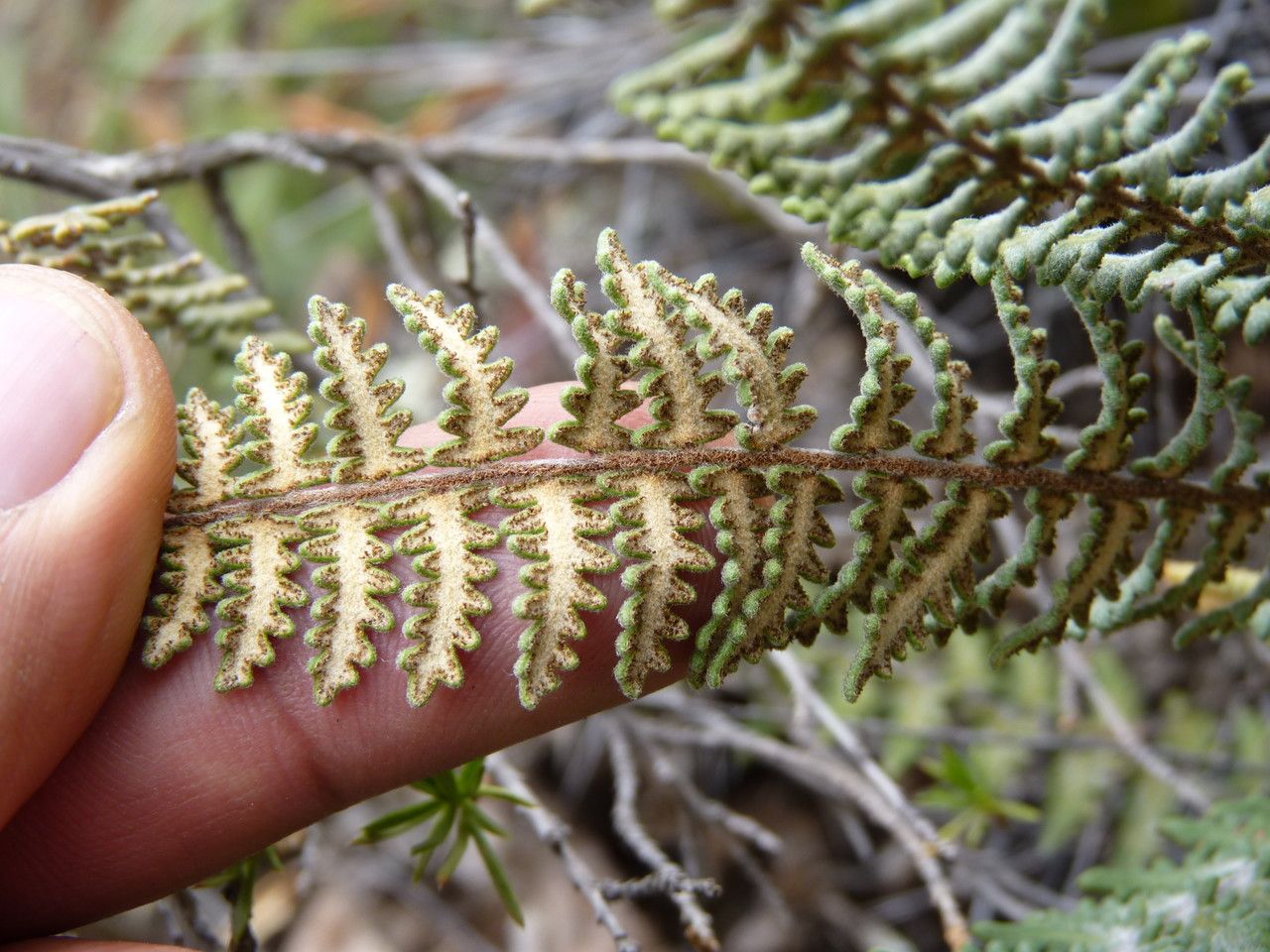
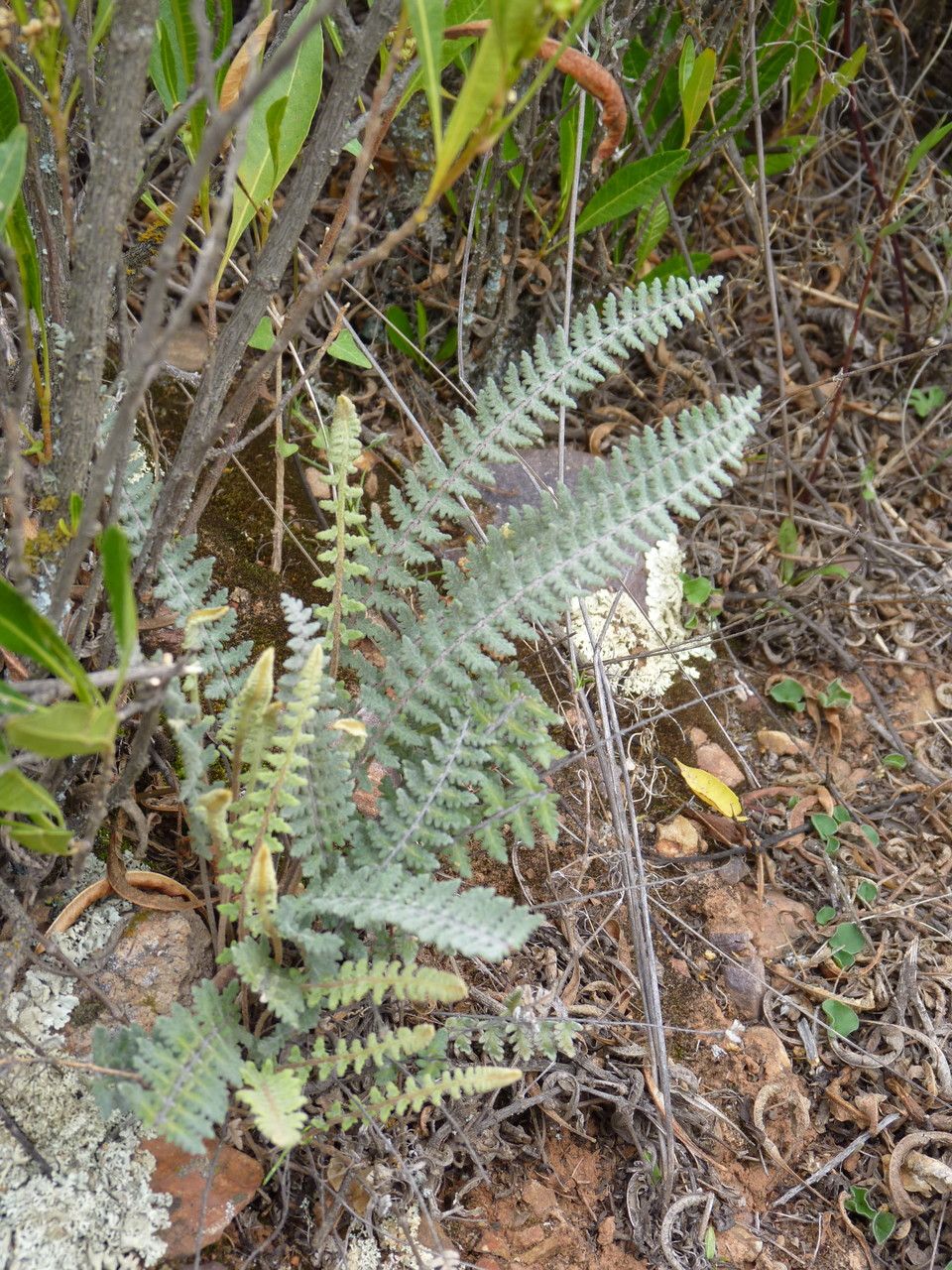
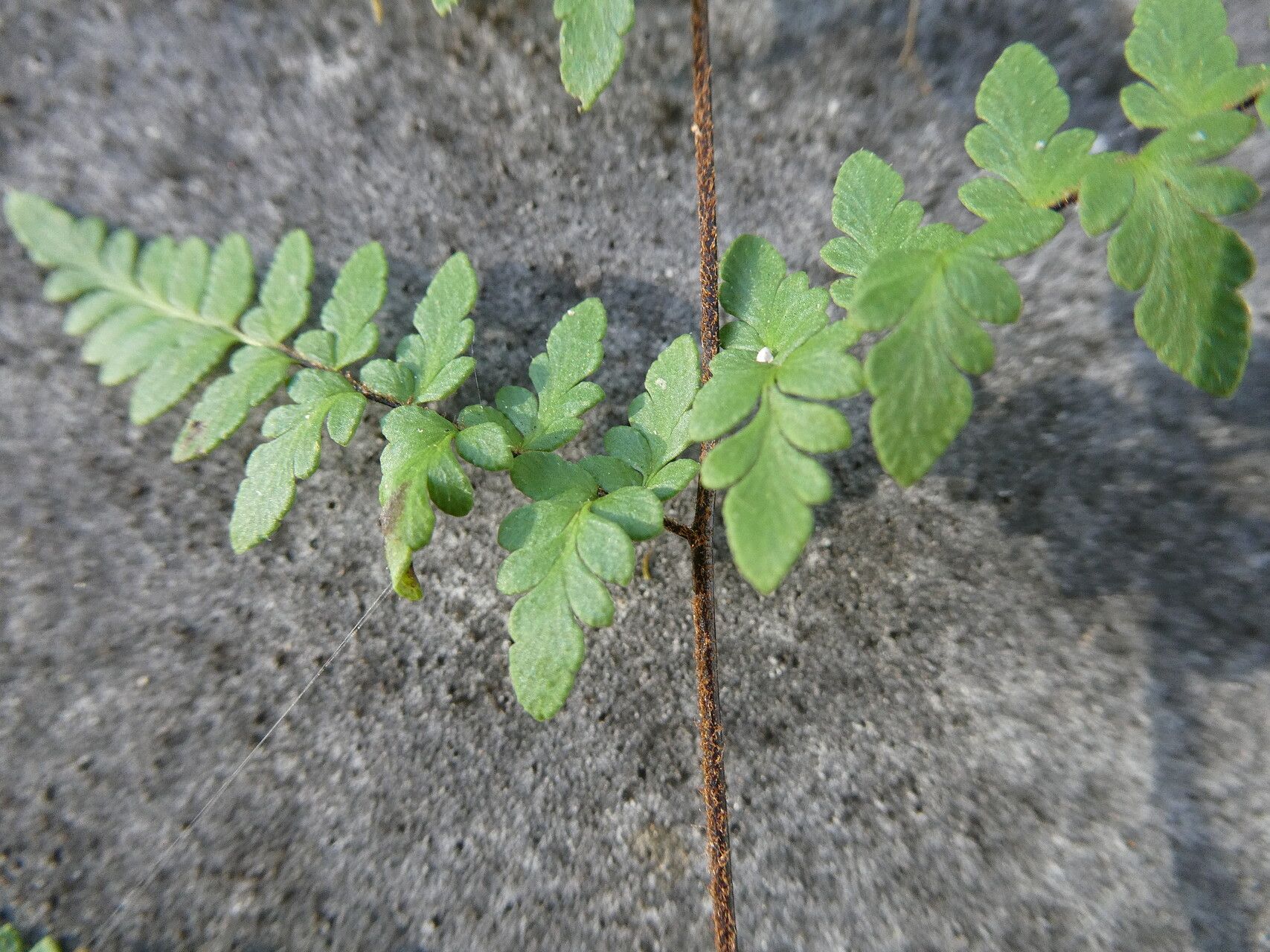
Myriopteris aurea, the golden lip fern or Bonaire lip fern, is a moderately-sized fern native to the Americas, a member of the family Pteridaceae. Unlike many members of its genus, its leaf is only modestly dissected into lobed leaflets (pinnae), which are hairy both above and below. One of the cheilanthoid ferns, until 2013 it was classified in the genus Cheilanthes as Cheilanthes bonariensis, when the genus Myriopteris was again recognized as separate from Cheilanthes. It typically grows on dry, rocky slopes, and ranges from Mexico, where it is common and widespread, and the southwestern United States south and east through Central and South America as far as Chile and Argentina.
The Golden cloak fern is fairly disease-resistant and typically does not suffer from illnesses. However, it can be vulnerable to pests and diseases present in its environment. Such infections are generally mild. Care-wise, the plant requires moderate maintenance. It should be pruned regularly to preserve an attractive appearance and promote healthy growth. Fertilizing can also encourage flowering. The Golden cloak fern is suitable for people with outdoor spaces, such as a garden or patio, and does not demand much care experience. It may need extra care when grown indoors.
How to keep Myriopteris Aurea.
Light
Golden cloak fern originates from habitats such as forest understories or rocky areas, where it receives natural shade. It favors partial sun but can adjust to full sun or full shade, showing that it is versatile and hardy.
Water
The golden cloak fern flourishes in rocky environments, favoring consistent humidity but can endure short periods of dryness. To maintain its evergreen fronds, water the fern weekly to provide a steady supply of moisture throughout the year. This is particularly important in winter when indoor heating tends to lower humidity levels.
Temperature
Golden cloak fern can tolerate a wide range of temperatures, but its distribution may still be restricted by various combinations of moisture and heat. It does best in warm summer climates with adequate rainfall or watering. Extended periods of cloudy, rainy weather, as well as prolonged high temperatures, can raise the likelihood of the Golden cloak fern dying. In winter, proper protection from cold can increase the plant's chances of survival.
Fertilizer
One fertilizer application in spring is generally enough for Golden cloak fern, though repeated feedings can maximize growth. Feed every month to a month and a half. Fertilizing improves the leaves’ appearance and function, encouraging even color and a healthy texture. It also promotes root growth and nutrient absorption, supporting the plant’s long-term health.
Pruning
The Golden Cloak Fern is a delicate plant, admired for its beautiful golden fronds. To encourage new growth, prune any damaged fronds from early to late spring using sharp, clean shears. Regular pruning helps prevent overcrowding, improves airflow, and aligns with the fern's natural growth cycle, thereby enhancing its health and ornamental value.
Botanical profile.
- Plant Type
- Herb
- Life Cycle
- Perennial
- Genus
- Myriopteris
- Family
- Pteridaceae
- Hardiness Zone
- 5-9
- Mature Height
- 10 cm to 61 cm
- Mature Spread
- 15 cm to 25 cm
- Leaf Color
- Green Yellow, Gold
- Leaf Type
- Evergreen
- Planting Time
- Spring, Autumn
- Native Area
- Colombia, Honduras, Mexico, Guatemala, Bolivia, Venezuela, Peru, Nicaragua, Ecuador, Costa Rica, Panama, Jamaica
Other names.
Reader questions.
What are the sunlight requirements for Golden Cloak Fern?
Golden Cloak Fern thrives in partial sun, requiring about 3-6 hours of sunlight daily. It is crucial to observe the movement of sunlight in your garden to find the ideal balance of light and shade for the plant, ensuring its growth and wellness. This plant is versatile and can also tolerate full shade, indicating its adaptability to less sunny environments like forest understories or rocky areas.
What should I do if natural sunlight is insufficient for my indoor Golden Cloak Fern?
When natural sunlight is insufficient, particularly for indoor plants like the Golden Cloak Fern during winter or in less sunny spaces, artificial lighting can be an effective solution. It's recommended to select the right type of artificial light, such as LED lights, which can be tailored to meet the specific light wavelength needs of plants. The intensity of the artificial light should range between 10-50W/sq ft depending on whether the plant requires full shade, partial sun, or full sun. Additionally, the artificial light source should be placed 12-36 inches above the plant and remain on for 8-12 hours per day to mimic natural daylight conditions.
What are the symptoms of insufficient light in Golden Cloak Fern?
Symptoms of insufficient light in Golden Cloak Fern include smaller new leaves, leggy or sparse growth, faster leaf drop, slower or halted growth, and lighter-colored new leaves, which indicate a lack of chlorophyll and essential nutrients. Other symptoms can include chlorosis, sunscald, leaf curling, wilting, and leaf scorching. These symptoms range from growth delays to visible damage, indicating the plant's struggle to adapt to its lighting conditions.
How can I address insufficient or excessive sunlight exposure for my Golden Cloak Fern?
To address insufficient sunlight, gradually acclimate the plant to more sunlight by moving it to sunnier spots each week until it receives the optimal 3-6 hours of direct sunlight daily. If moving the plant is not feasible, consider using artificial light sources like desk or ceiling lamps, or investing in professional plant grow lights, ensuring they're on for at least 8 hours a day. For outdoor plants, moving them gradually to sunnier locations can prevent sunburn. It's also advised to reduce obstructions that block sunlight, such as by pruning trees, or for smaller plants, consider transplanting them during their dormant period to a location with ample sunlight and good drainage. Note that parts of the plant previously affected by inadequate sunlight may not recover, but new growth should be healthy following these adjustments.