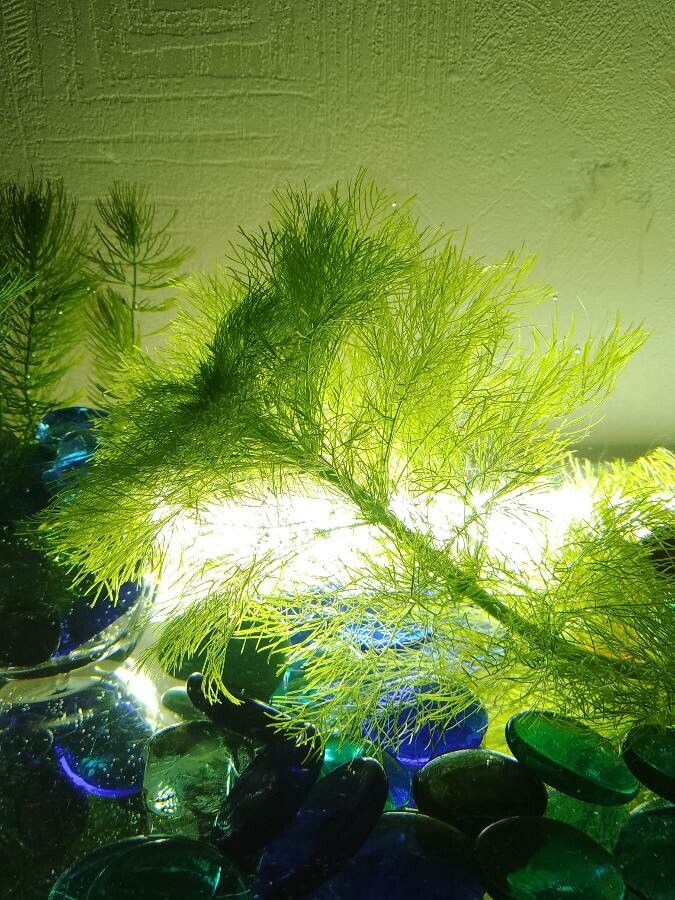
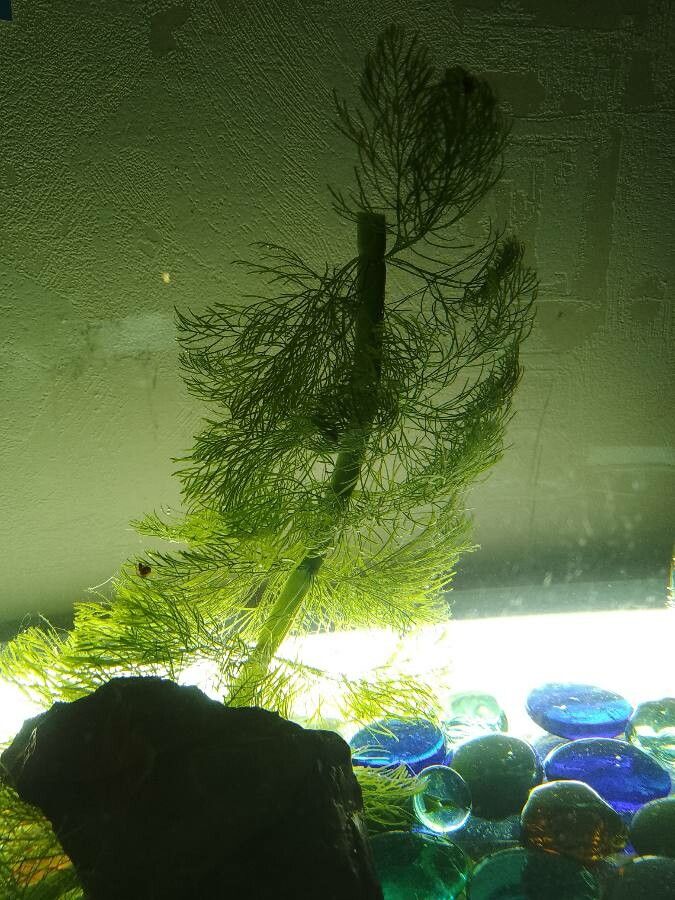
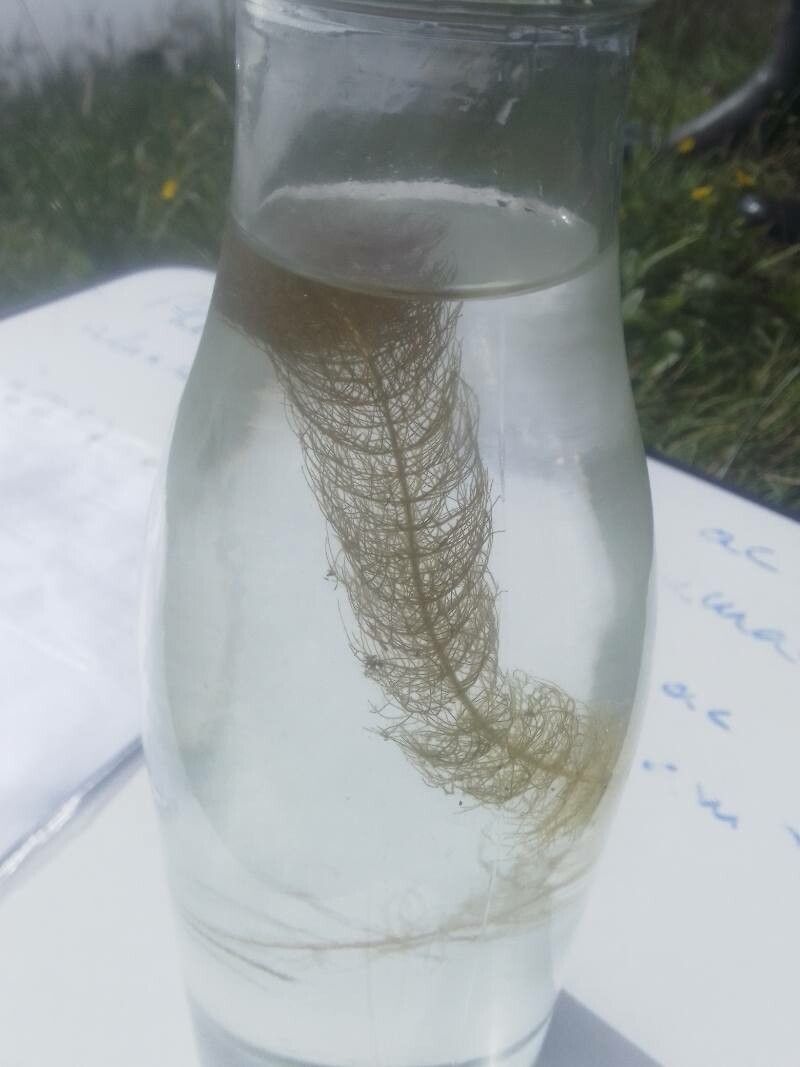
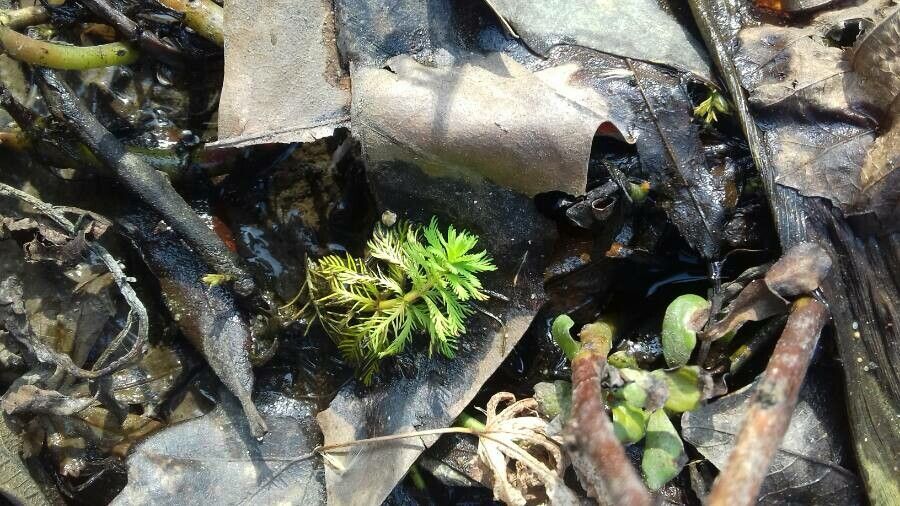
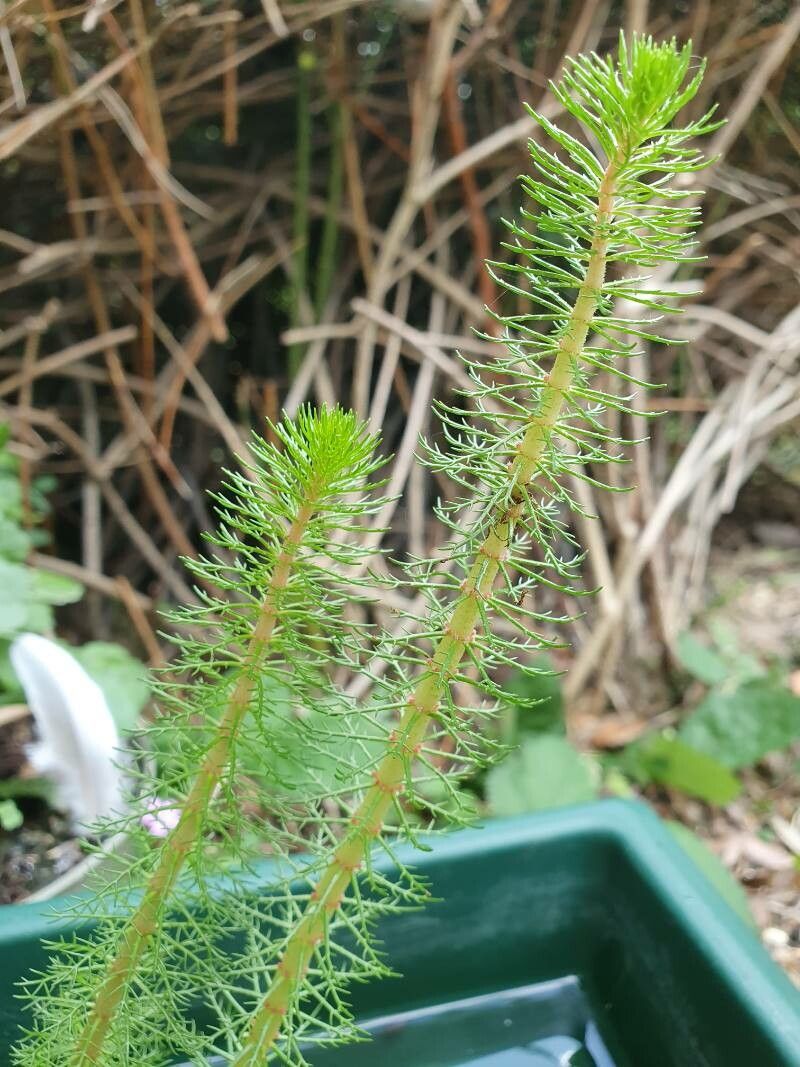
Myriophyllum sibiricum is a species of water milfoil known by the common names shortspike watermilfoil, northern watermilfoil, and Siberian water-milfoil. It is native to Russia, China, and much of North America, where it grows in aquatic habitat such as ponds and streams. It generally grows over a meter long, its green stem drying white. It is lined with whorls of fanlike green leaves divided into many narrow, feathery lobes.
Shortspike watermilfoil shows strong resistance to disease and is typically not vulnerable to illnesses. Still, it can be affected by pests and diseases present in its environment. Such infections tend to be mild. Regarding upkeep, this species needs a moderate amount of care. It should be trimmed regularly to preserve its appearance and encourage healthy growth. Applying fertilizer can also aid in boosting flowering. Shortspike watermilfoil is appropriate for anyone with outdoor areas like a garden or patio and does not demand extensive experience in plant care. It may, however, require increased attention if cultivated indoors.
How to keep Myriophyllum Sibiricum.
Light
Shortspike watermilfoil is native to habitats with abundant sunlight, such as the shallow margins of ponds and lakes. It prefers full sun but can also tolerate partial sun.
Water
Shortspike watermilfoil thrives in aquatic environments where it receives consistent moisture and weekly watering. It prefers stable water conditions but can tolerate minor fluctuations. Commonly found in outdoor water gardens and ponds, this plant benefits the ecosystem by oxygenating the water and providing a habitat for aquatic life.
Temperature
Shortspike watermilfoil can tolerate a broad range of temperatures, though its range may still be constrained by particular combinations of water and heat conditions. It performs best in warm summer climates with sufficient rainfall or watering. Extended stretches of cloudy, rainy weather, as well as prolonged high temperatures, can raise the probability of Shortspike watermilfoil dying. In winter, shielding the plant from cold can enhance its chances of survival.
Pruning
Pruning shortspike watermilfoil from early to late spring is essential for healthy growth. To effectively manage its spread, enhance water circulation, and decrease the risk of decay, trim up to one-third of the plant, concentrating on the older stems. Using proper pruning techniques not only supports regrowth but also improves the plant's overall health.
Botanical profile.
- Plant Type
- Herb
- Life Cycle
- Perennial
- Genus
- Myriophyllum
- Family
- Haloragaceae
- Hardiness Zone
- 3-9
- Mature Height
- 0.3 m to 1.52 m
- Mature Spread
- 20 cm to 49 cm
- Leaf Color
- Olive Drab, Dark Green
- Leaf Type
- Deciduous
- Flower Color
- White, Yellow, Green
- Flower Size
- 0.20 cm to 0.25 cm
- Bloom Time
- Summer
- Planting Time
- Spring, Autumn
- Harvest Time
- Late summer, Early fall, Mid fall
- Native Area
- Russia, Denmark, China, Kyrgyzstan
Other names.