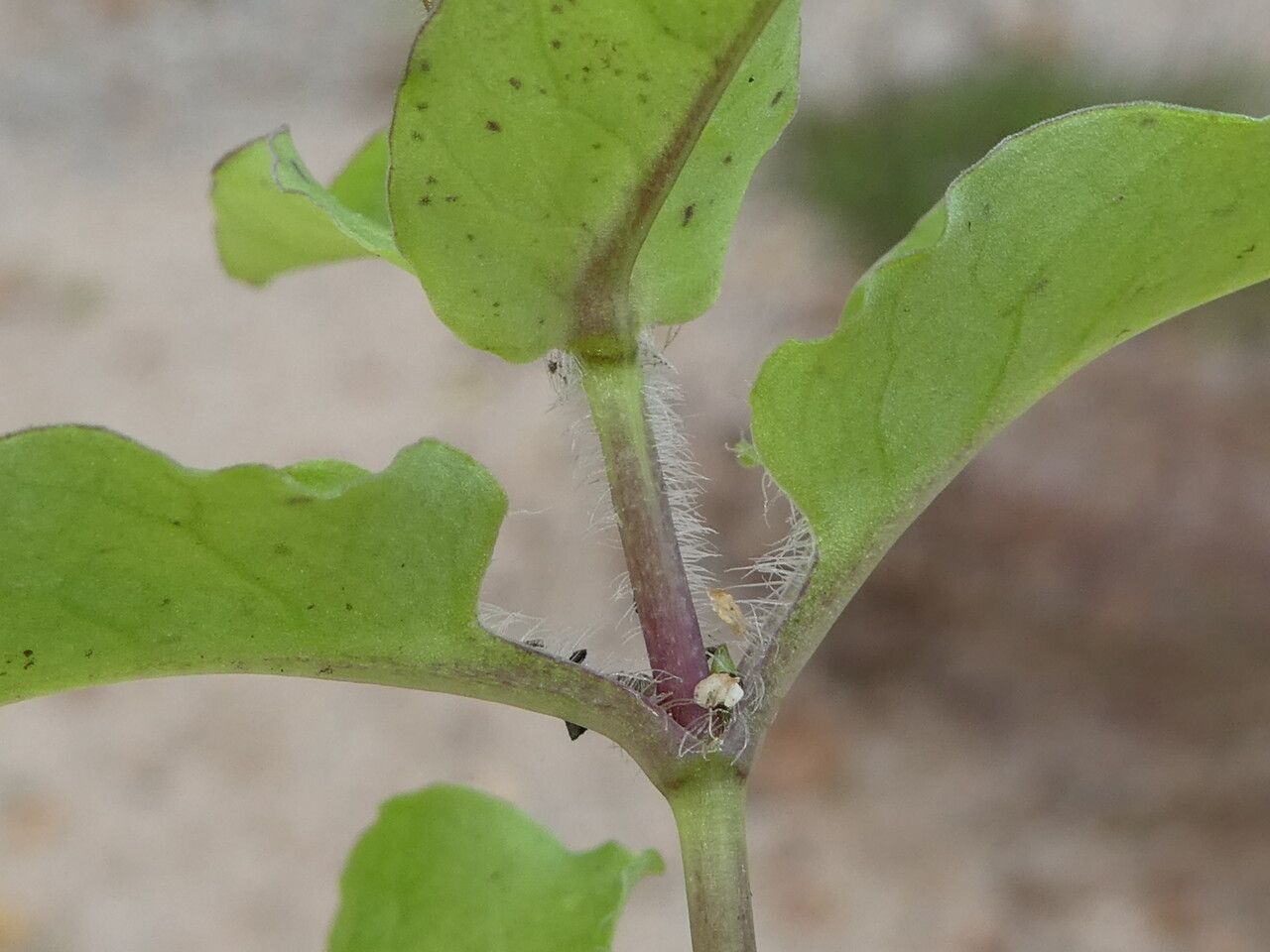
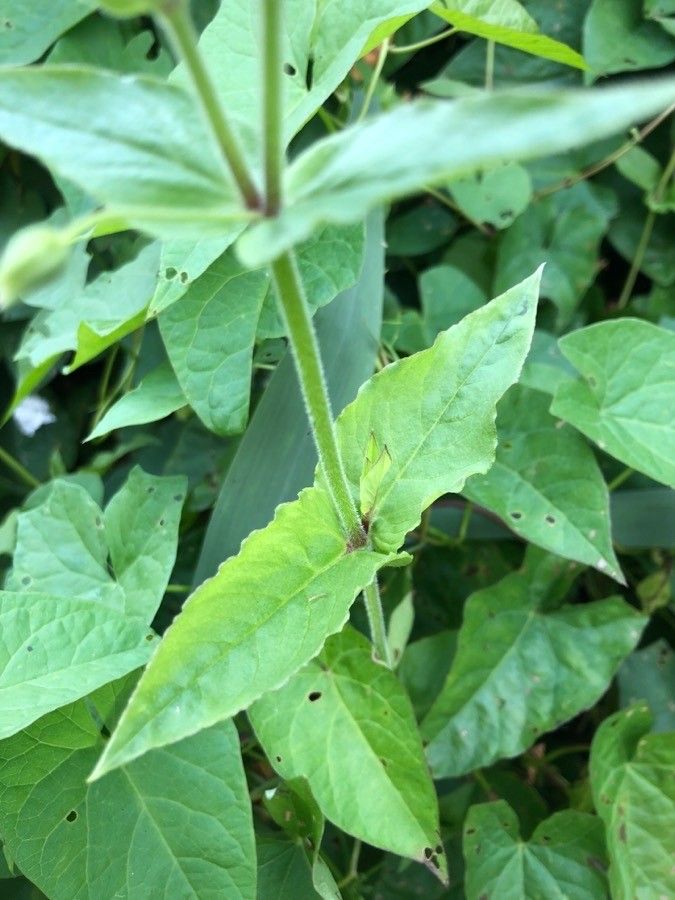
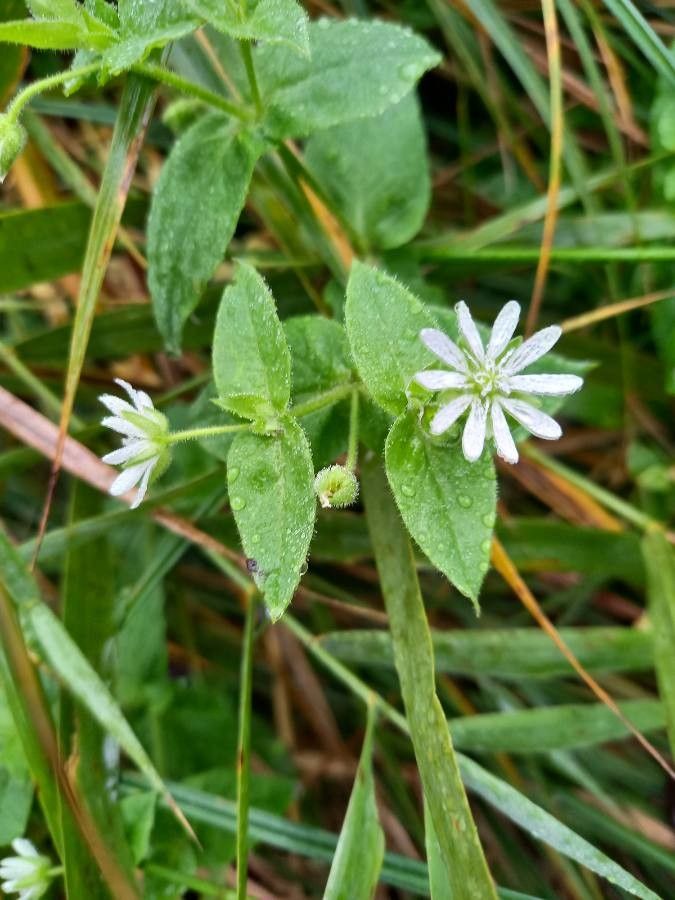
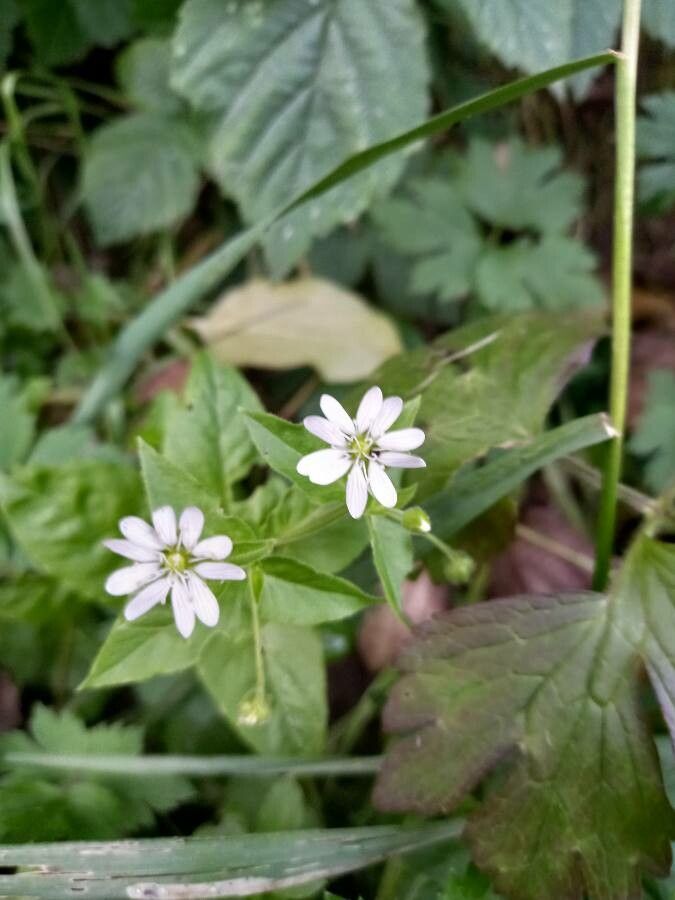
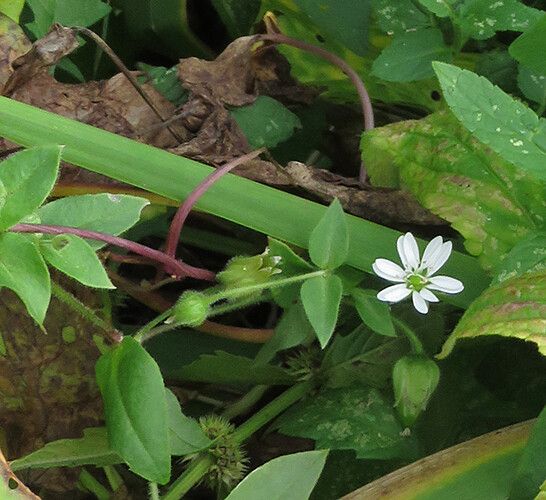
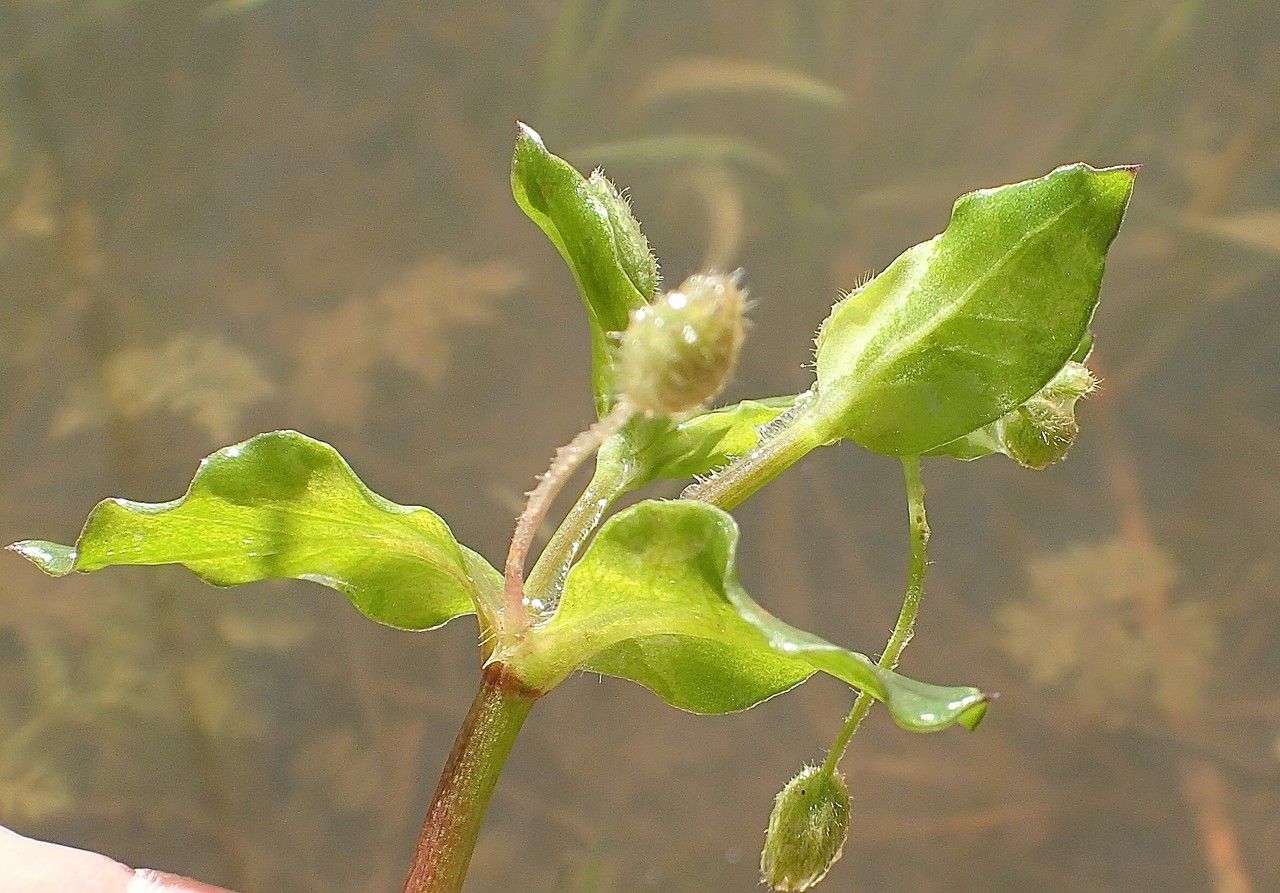
Myosoton aquaticum, commonly known as water chickweed or water starwort, is a perennial herbaceous plant that belongs to the Caryophyllaceae family. Native to Europe and Asia, it has also been introduced and naturalized in North America. This plant thrives in shallow water or moist soil near streams, ponds, and ditches. It features a creeping stem that can extend up to 60 cm in length. The opposite leaves are either ovate or lanceolate in shape, with pointed tips and smooth edges, and can grow up to 4 cm long. The flowers of Myosoton aquaticum are small, about 5 mm in diameter, and have five white petals that form a star shape when fully open. They bloom from May through September. Myosoton aquaticum serves as an important food source for various animals, including ducks, geese, swans, muskrats, and beavers, which feed on its leaves and stems. In traditional European and Asian medicine, Myosoton aquaticum was used to treat ailments such as coughs and colds due to its anti-inflammatory properties. Overall, this plant plays a significant ecological role by providing food for wildlife and has a history of medicinal use by humans. Its interesting characteristics make it a species worthy of study and conservation efforts where appropriate.
Giant chickweed is fairly resistant to disease and usually not prone to illnesses. However, it can be vulnerable to pests and diseases present in its environment. These issues are typically mild. For care, the plant requires moderate maintenance. It should be pruned regularly to preserve its appearance and support healthy growth. Fertilizing can also encourage flowering. Giant chickweed is suitable for people with outdoor spaces like a garden or patio and does not demand extensive care experience. It may need more attention when grown indoors.
How to keep Myosoton Aquaticum.
Light
Giant chickweed naturally thrives with plentiful sunlight, which supports healthy growth. It is also hardy enough to grow where sun exposure is only moderate. However, too much sun can be harmful, while too little can impede its development. Its original habitat is rich in sunlight.
Water
Giant chickweed flourishes in damp environments and requires regular watering to grow lushly, but it's important to avoid overwatering. Watering once a week works well, and using rainwater can boost the plant's nutrient absorption during the growing season, which is essential for maintaining its health.
Temperature
Giant chickweed naturally grows in habitats with a preferred temperature range of 68 to 95 °F (20 to 35 ℃). It’s important to modify the plant’s environment to match those conditions, particularly during seasonal shifts.
Fertilizer
One fertilizer application in spring is generally enough for Giant chickweed, but repeated feedings can optimize growth. Feed it every month to every month and a half. Fertilizing improves leaf appearance and function, maintaining uniform color and a healthy texture. It also promotes root development and nutrient uptake for long-term plant health.
Botanical profile.
- Plant Type
- Herb
- Life Cycle
- Perennial, Annual
- Genus
- Myosoton
- Family
- Caryophyllaceae
- Hardiness Zone
- 7-10
- Mature Height
- 15 cm to 40 cm
- Mature Spread
- 20 cm to 40 cm
- Leaf Color
- Light Green, Green
- Leaf Type
- Deciduous
- Flower Color
- White
- Flower Size
- 1.27 cm
- Bloom Time
- Late spring, Early summer, Mid summer
- Planting Time
- Spring, Summer
- Harvest Time
- Early summer, Mid summer
Other names.
Reader questions.
How should I water my Giant chickweed?
To properly water the Giant chickweed, it is recommended to use filtered water at room temperature. Tap water can contain harmful particles, so filtered water is preferable. The temperature of the water is important because the Giant chickweed is accustomed to warm environments and cold water can be detrimental. Avoid overhead watering as it may cause foliage issues. Instead, focus on thoroughly soaking the soil with the filtered room temperature water. This helps to nourish the roots and promote the spread of nutrients throughout the soil.
What are the sun requirements for Giant chickweed (Myosoton aquaticum)?
Giant chickweed (Myosoton aquaticum) thrives best under full sun conditions, requiring above 6 hours of sunlight daily for optimum growth. It can also grow in partial sun, which means it can bear about 3-6 hours of sunlight. However, the perfect balance of light and shade in your garden is crucial for ensuring the happiness and health of your plants. Watching how sunlight moves through your garden will help in choosing the best spots for planting.
What is the preferred temperature range for Giant Chickweed (Myosoton aquaticum)?
Giant Chickweed thrives in environments with a temperature range of 68 to 95°F (20 to 35°C). To ensure the plant's health, it's crucial to adjust its environment to mirror these conditions, especially during seasonal changes. This adjustment helps in maintaining the optimal growth conditions for the plant.
What should I do if I give too much or too little water to my Giant chickweed?
Overwatering is a common issue that can harm the health of your Giant chickweed. When it receives too much water, the stems and leaves wilt and turn yellow. Overwatering for a prolonged period can also lead to diseases like root rot, mold, and mildew, which can be fatal to your plant. Underwatering is less common for Giant chickweed because it can tolerate drought. However, it can still happen, resulting in brittle and brown leaves. It's important to recognize the signs of overwatering early and take action. Some diseases caused by overwatering, like root rot, may be irreversible if not addressed promptly. Reduce your watering schedule if you see early signs of overwatering and check if the soil drains well. Replace poorly draining soil with a loose, well-draining potting mix. If your Giant chickweed is not getting enough water, simply water it more regularly until the signs improve.
How does sunlight affect the growth of Giant chickweed?
Sunlight plays a significant role in the growth and development of Giant chickweed. It thrives under ample solar illumination, which is crucial for its healthy growth. This plant is resilient enough to grow in moderate solar exposure conditions. However, excessive sunlight can be harmful, while insufficient sunlight could hinder its development. Giant chickweed's natural habitat is abundant in sunlight, indicating its preference for well-lit environments.
Does Giant Chickweed need special frost protection during winter?
Giant Chickweed has strong cold resistance, so special frost protection measures are not usually necessary. However, if winter temperatures are expected to drop below -15°C, it's important to provide cold protection by covering the plant with soil or straw. Additionally, watering the plant abundantly before the first freeze in autumn, ensuring the soil remains moist and enters a frozen state, helps prevent drought and water scarcity during winter and early spring.
How frequently do I need to water my Giant chickweed?
If your Giant chickweed is in a pot, you can check if it needs water by sticking your finger into the soil. If the top two to three inches of soil are dry, it's time to water it. Similarly, if you have planted it in the ground, you can use the same method to test the soil. When the top few inches are dried out, you should water the plant. Usually, in spring and early fall, watering once a week is sufficient. However, in extremely hot weather, you may need to water it two or more times a week. It's important to note that mature, well-established Giant chickweed can handle drought quite well.
What should I consider when using artificial lighting for indoor plants?
When using artificial lighting for indoor plants, including Giant chickweed, consider the following: Firstly, choose the right type of light; LED lights are recommended because they can be customized to provide specific wavelengths of light needed for plant growth. Full sun plants need 30-50W/sq ft, partial sun plants require 20-30W/sq ft, and full shade plants need 10-20W/sq ft of artificial light. Secondly, determine the appropriate distance by placing the light source 12-36 inches above the plant to mimic natural sunlight. Finally, ensure the duration mimics natural daylight hours, as most plants need 8-12 hours of light per day.
What should be done if Giant Chickweed experiences temperatures below -15°C?
If Giant Chickweed is exposed to temperatures below -15°C, there might not be noticeable changes during winter, but there could be a decrease in sprouting or even no sprouting during spring. The solution in spring is to remove any parts of the plant that have failed to sprout, helping to encourage new growth and maintain plant health.
How much water does my big chickweed need?
To properly water your Giant chickweed, don't hold back on the amount of water you provide. When the top two to three inches of soil are dry, it's best to give the plant a thorough watering. Make sure to water enough to saturate the soil completely. The water you add should cause any excess to flow out through the drainage holes at the bottom of the pot. If you don't see this happening, it means you have not watered enough. However, be cautious of allowing water to accumulate inside the soil, as it can harm the plant. On the other hand, if water is not draining properly from the pot, it could indicate that the soil is not draining well, which is not good for the health of the plant. If the plant is kept outdoors, 1 inch of rain per week should be sufficient.
What symptoms indicate Giant chickweed is not receiving enough light?
Symptoms of inadequate lighting in Giant chickweed include smaller new leaves, leggy or sparse growth, faster leaf drop, slower or no new growth, lighter-colored new leaves indicating a lack of chlorophyll and nutrients, and chlorosis, where leaves turn yellow. Excessive sunlight can also negatively affect the plant, causing symptoms like sunscald, leaf curling, wilting, and leaf scorching. These indicate the plant's struggle with overexposure or underexposure to sunlight.
How does high temperature affect Giant Chickweed and what are the solutions?
During summer, it's important to keep Giant Chickweed's temperature below 35°C. Temperatures exceeding 41°C can cause the leaves to lighten in color, curl, become prone to sunburn, and in severe cases, the entire plant may wilt and become dry. To mitigate these effects, trim away sunburned and dried-up parts of the plant. Moving the plant to a location with shade from the midday and afternoon sun or using a shade cloth can provide protection. Additionally, watering the plant in the morning and evening helps keep the soil moist and supports plant health.