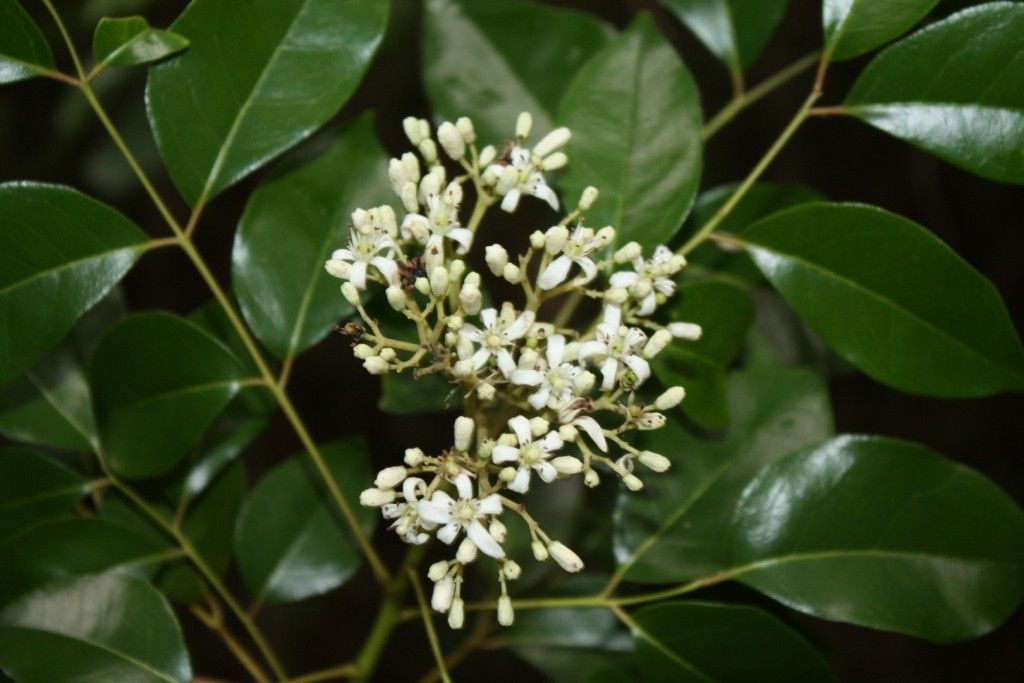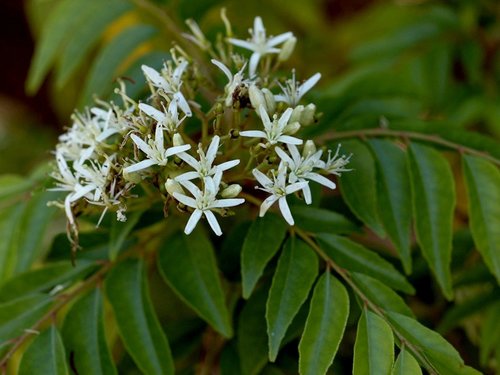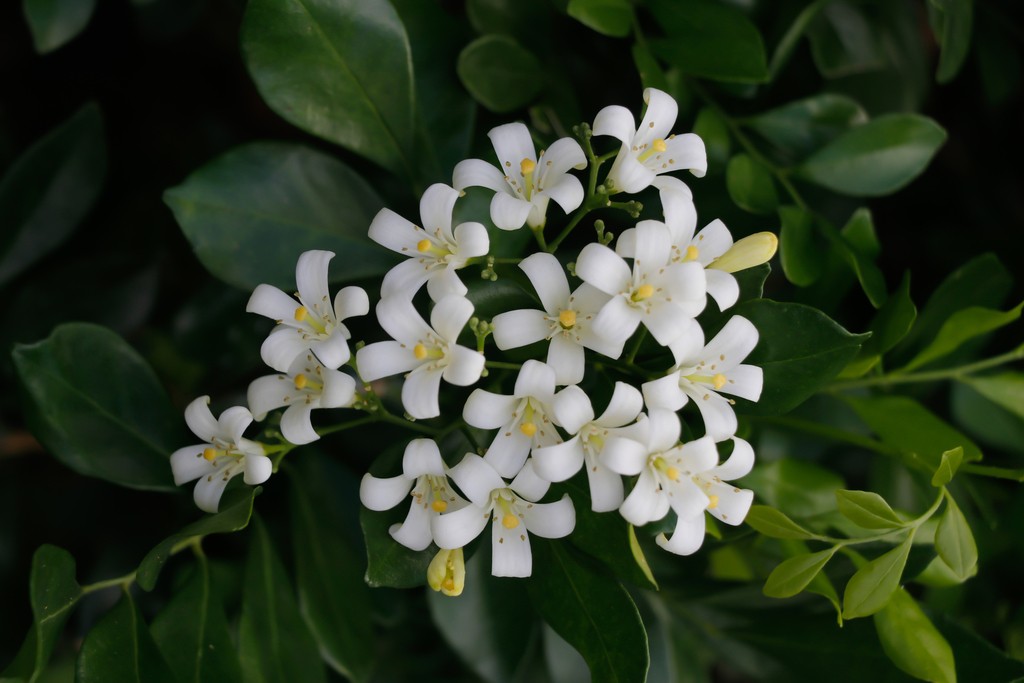
Murraya paniculata, commonly known as orange jasmine, orange jessamine, china box or mock orange, is a species of shrub or small tree in the family Rutaceae and is native to South Asia, Southeast Asia and Australia. It has smooth bark, pinnate leaves with up to seven egg-shaped to elliptical leaflets, fragrant white or cream-coloured flowers and oval, orange-red berries containing hairy seeds.
Murraya paniculata, commonly known as Orange jasmine, Mock orange, or Mock lime, produces fragrant white flowers with a citrus-like scent reminiscent of oranges or limes. These appealing characteristics give the plant its various common names. Many fragrant plants are also named after jasmine, one of the most renowned fragrant flowers. Like many plants in the Buxus genus, Murraya paniculata is frequently used as a garden hedge. Additionally, its wood is valued for making tool handles.
Orange jasmine possesses a fairly high level of disease resistance and is generally not susceptible to illnesses. Still, if grown in poor conditions it can become more vulnerable to disease. It also suffers from relatively few insect pests. Its care needs are moderate. Providing ample sunlight is important, because with inadequate light the plant can become prone to disease and develop thin, sparse growth. Since it is frequently grown indoors, it may need to be relocated regularly to a bright spot. It does not need frequent watering. All in all, Orange jasmine is appropriate for most people, though it performs best for those who can offer strong light conditions.
How to keep Murraya Paniculata.
Light
Orange jasmine grows best when it receives abundant sunlight for most of the day, although it can cope with a somewhat reduced level of light. In its natural habitat it is usually found under open skies. Excessive shade or inadequate sun exposure can negatively affect its growth and vigor.
Water
Orange jasmine, a plant native to tropical regions, thrives in high humidity and consistent moisture. Although it is drought-tolerant, it grows best in well-drained, moist soil. Watering should be moderate, about every two weeks, and you'll notice enhanced growth during rainy seasons. Typically, orange jasmine is cultivated outdoors in warm climates.
Humidity
This plant will thrive in moderate humidity, which is probably the level in your home. However, misting it a few times a week can be very beneficial. Make sure the room has good ventilation.
Temperature
The orange jasmine thrives in temperatures between 68 and 100 ℉ (20 to 38 ℃). Being a tropical plant, it needs warm conditions to prosper, which makes it especially suited to USDA Zones 9 through 11. In winter, keep the plant in a warm room with temperatures above 60 ℉ (15.6 ℃) to prevent leaf drop.
Fertilizer
Fertilizing is essential for Orange jasmine care. Regular feeding during the growing season maintains the energy for its showy leaves and supports overall growth. Ignoring fertilization can lead to unhealthy leaves, reduced ornamental appeal, and stunted or weak growth that is prone to breaking.
Pruning
The orange jasmine is a fast-growing plant that is easy to shape. It requires only light pruning once or twice a year to maintain its appearance. To encourage better blooms in the following spring, it's important to remove any dead or damaged branches and prune lightly after flowering.
Pot & Repot
When repotting Orange jasmine, select a pot 1–2 inches (2.5–5.1 cm) larger with ample drainage. Use a well-draining potting mix. Repot in spring or fall, making sure the root ball is slightly lower than the rim of the flower pot. Water thoroughly after repotting and place in a warm spot with indirect sunlight.
Toxicity
Orange jasmine plants are non-toxic to people and pets. Although it belongs to the same family as citrus, and it won’t harm you, the fruits are not exactly palatable.
Further reading →
The toxicity and danger assessments provided are for reference only. We do not assure their accuracy, so it's crucial not to depend on them. Seek professional advice when necessary for accurate guidance.
Botanical profile.
- Plant Type
- Shrub
- Life Cycle
- Perennial
- Genus
- Murraya
- Family
- Rutaceae
- Hardiness Zone
- 10-12
- Mature Height
- 11.89 m
- Mature Spread
- 3.35 m
- Leaf Color
- Green
- Leaf Type
- Evergreen
- Flower Color
- White
- Flower Size
- 2.03 cm
- Bloom Time
- Late spring, Summer, Early fall
- Planting Time
- Spring, Autumn
- Harvest Time
- Mid summer, Late summer, Fall
- Native Area
- Nepal, Sri Lanka, Solomon Islands, India, Malaysia, Indonesia, Honduras, Cambodia, Vietnam, Myanmar, Japan, Philippines, Bhutan, Bangladesh, Pakistan, Laos, Thailand
Other names.
Reader questions.
How should I water my Orange jasmine?
Watering your Orange jasmine is not a difficult task. You have various options for watering tools, such as watering cans, hoses, or even cups. Regardless of the tool you choose, it is important to water the plant directly at the soil level. Be sure to evenly moisten all areas of the soil to ensure that the entire root system receives sufficient water. It is advisable to use filtered water to avoid harmful particles that may be present in tap water. Additionally, using water that is at or slightly above room temperature is ideal, as water that is too cold or hot can shock the plant. However, the Orange jasmine is generally tolerant of different water sources.
Why should I add fertilizer to my Orange jasmine?
Orange jasmine requires regular fertilization because it has showy leaves that need a lot of energy for production and maintenance. It needs to allocate energy to keep its leaves healthy and support the growth of its stems, branches, roots, and other vital structures. Neglecting fertilization can lead to two outcomes. Firstly, the leaves may lose their natural color and texture, looking unhealthy and diminishing its ornamental appeal. Secondly, the overall growth of the Orange jasmine may slow down or produce weak growth that is susceptible to breakage.
What are the sunlight requirements for orange jasmine?
Orange jasmine, or Murraya paniculata, flourishes best when it receives more than 6 hours of sunlight daily, categorized as full sun exposure. It can also adapt to conditions of partial sun, defined as about 3-6 hours of sunlight. However, it is crucial to observe the movement of sunlight through your garden carefully and select locations that offer the ideal mix of light and shade to assure your plants' wellbeing.
What temperatures are ideal for orange jasmine to thrive?
Orange jasmine thrives in temperatures ranging from 68 to 100°F (20 to 38°C), making it well-suited for USDA Zones 9 through 11. It is a tropical plant that loves warm temperatures. To prevent leaf drop during winter, it's important to keep orange jasmine in a warm room where temperatures stay above 60°F (15.6°C). Heat is essential for the plant’s growth, hence maintaining temperatures above 20°C during the colder months is beneficial, while exposure to temperatures near or below 5°C can be harmful.
What should I do if I give my Orange jasmine too much water or too little water?
Outdoor plants, especially newly planted ones or seedlings, are prone to lack of watering. To ensure their growth, it's important to water them enough for a few months, particularly when they are small or just planted. Once the roots are established, Orange jasmine can rely on rain for most of its water needs. When you have your Orange jasmine planted in pots, overwatering is more likely to occur. If you accidentally overwater, it's crucial to take immediate action to address the situation. First, stop watering the plant right away to minimize the effects of overwatering. Then, carefully remove the Orange jasmine from its pot to inspect the roots. If no root rot is present, it may be safe to return the plant to its container. However, if there are signs of root rot, trim away any affected roots and consider applying a fungicide to prevent further damage. Finally, repot the Orange jasmine in well-draining soil. On the other hand, if your Orange jasmine is underwatered, it's a relatively easy fix. When the plant lacks water, its leaves will droop, dry out, and fall off. However, once it receives sufficient watering, the leaves will quickly regain their fullness. Therefore, correct your watering frequency as soon as you notice signs of underwatering.
When should I fertilize my Orange jasmine?
To ensure that your Orange jasmine thrives, it is best to feed it occasionally rather than following a rigid schedule. One simple method is to fertilize the plant whenever you water it. Additionally, your Orange jasmine will require an adequate amount of water during the growing season. To promote continuous growth, it is recommended to feed the plant every two to three weeks.
Can orange jasmine grow in artificial lighting?
Yes, orange jasmine can grow under artificial lighting, which becomes particularly beneficial in scenarios where natural sunlight is not sufficient, like during winter or in less sunny areas indoors. Optimal growth can be achieved with the use of artificial lights such as LED, which can be adjusted to provide necessary wavelengths. Full sun plants require 30-50W/sq ft, partial sun plants need 20-30W/sq ft, and full shade plants need 10-20W/sq ft of artificial light. The light source should be placed 12-36 inches above the plant, ensuring it receives 8-12 hours of light per day to mimic natural daylight hours.
What should I do if my orange jasmine is exposed to low temperatures?
If your orange jasmine is exposed to low temperatures, where it's not tolerant and may exhibit symptoms like color lightening in leaves below 1°C, browning or blackening of leaves after frost damage, wilting, and drooping, you should immediately trim off the frost-damaged parts. Move the plant indoors to a warm environment for protection against the cold. Placing it near a south-facing window ensures ample sunlight, but make sure it's kept away from heaters or air conditioning vents, as these can cause the air to become excessively dry.
How frequently should I water my Orange jasmine?
Most plants grow well with natural rainfall, but if your area doesn't get much rain, you'll need to water your plants regularly. In the spring and fall, watering every two weeks should be enough. During the hot summer months, you'll need to water more often. In the winter, when plants grow more slowly and need less water, you can water less frequently or not at all. If your Orange jasmine plant is young or newly planted, it will need more frequent watering to help it establish and grow. For potted Orange jasmine plants, there are two main ways to determine how often to water. You can set a schedule to water once a week or every other week, but this may not always be accurate based on your specific growing conditions. Another approach is to check the soil moisture. Wait until the top two to four inches of soil in the pots have completely dried out before watering again. This method takes into account the plant's specific water needs throughout the seasons.
When is it best to not put fertilizer on my Orange jasmine plant?
For most of the year, you can follow a regular fertilization schedule for your Orange jasmine. This means fertilizing it during the active growing season of spring, summer, and early fall. However, in winter, you should not give it any fertilizer. During this season, the Orange jasmine enters a dormant phase with little to no new growth. Since the plant is not actively growing, it requires less energy and therefore does not need fertilizer during this time.
What are the symptoms of insufficient light for orange jasmine?
When orange jasmine receives inadequate light, especially indoors during winter, several symptoms can manifest, including faster leaf drop, lighter-colored new leaves, leggy or sparse growth, and symptoms like chlorosis, sunscald, leaf curling, wilting, and leaf scorching. These symptoms indicate a lack of chlorophyll, essential nutrients, and increased stress due to improper sunlight exposure, negatively impacting the plant's health and growth.
How can I protect my orange jasmine from high temperatures?
During summer, it's important to keep orange jasmine below 38°C to prevent damage. High temperatures exceeding 43°C can cause the leaves to lighten and increase susceptibility to sunburn. If your orange jasmine suffers from sunburn, trim away the affected parts and move the plant to a location that provides shade, especially during the midday and afternoon sun. Additionally, watering the plant both in the morning and the evening will help keep the soil moist, protecting the plant from heat stress.