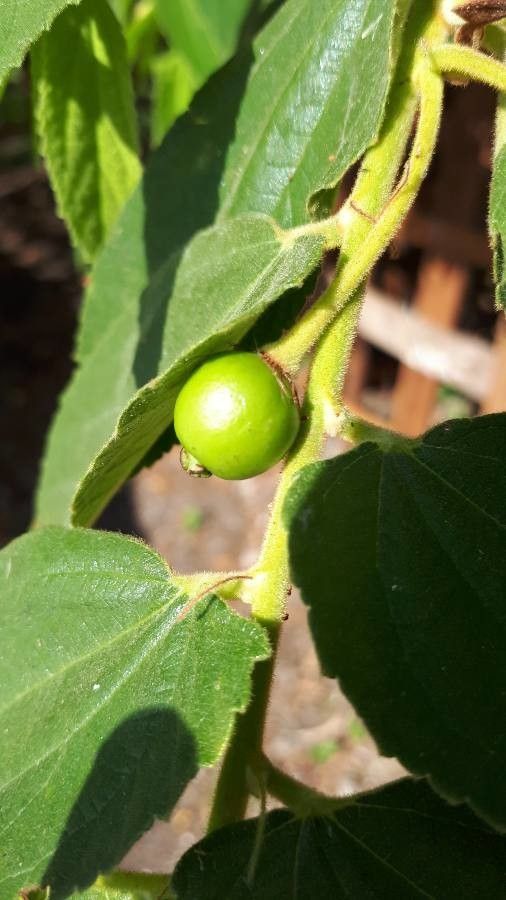
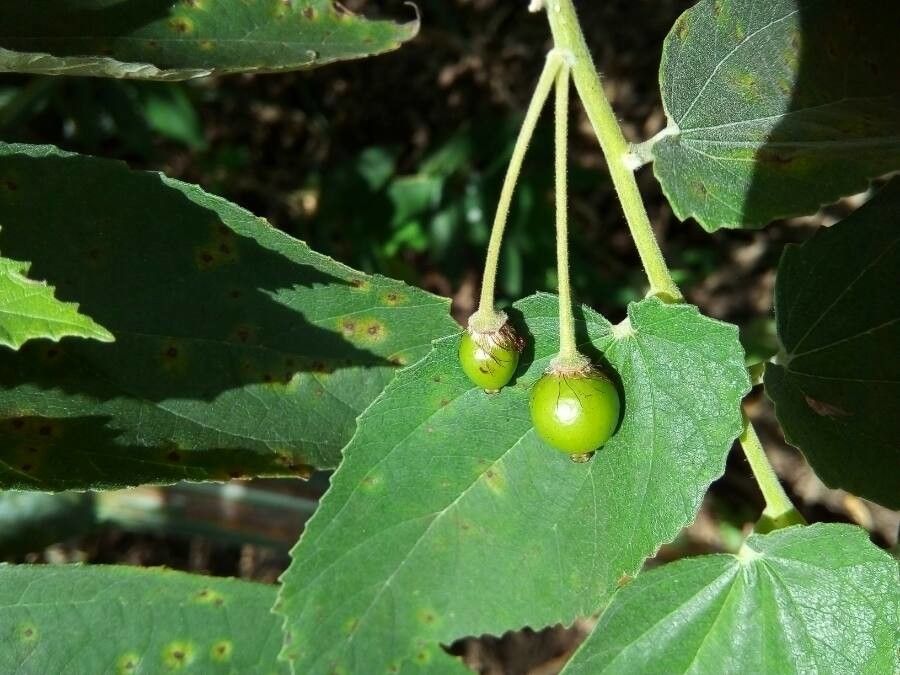
Muntingia calabura, commonly known as the Jamaican cherry or strawberry tree, is a fast-growing evergreen that belongs to the family Muntingiaceae. Native to Central and South America, it has been introduced and naturalized across many tropical regions worldwide.
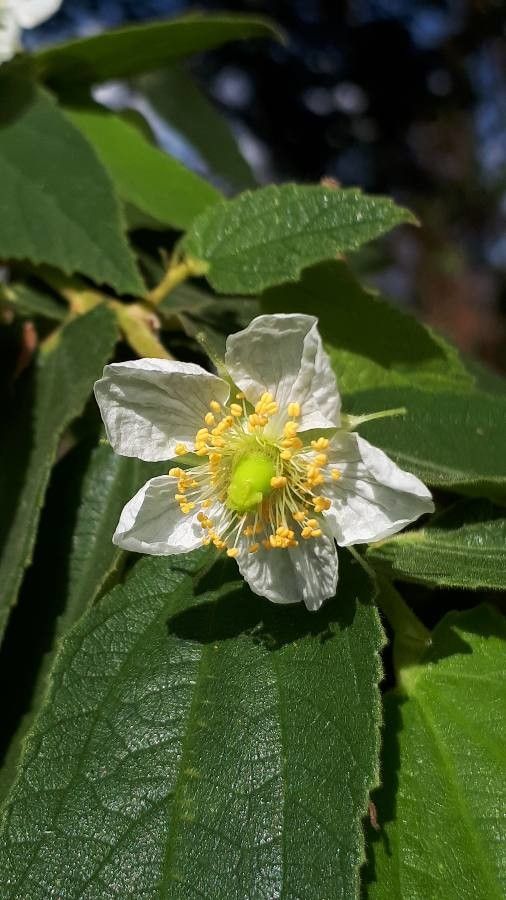
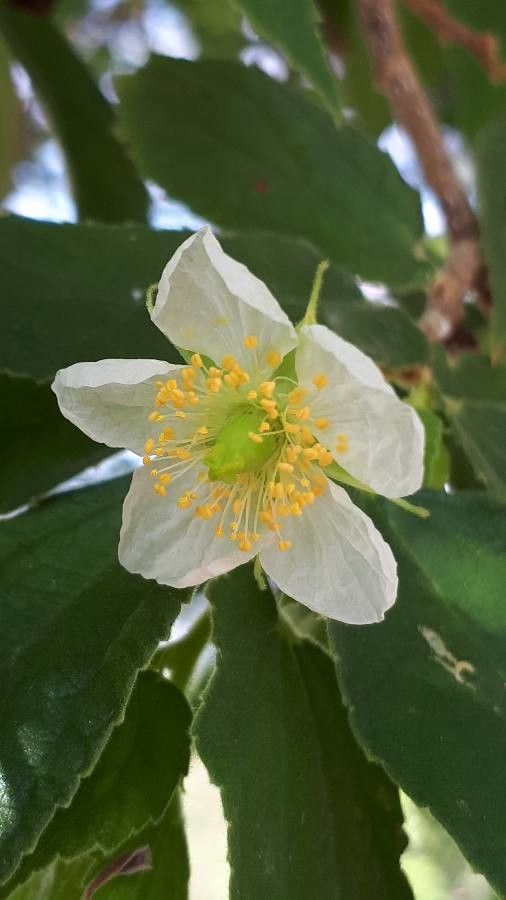
The Jamaican cherry tree can reach heights of 10-15 meters with a spread of 5-10 meters. It features a slender trunk with smooth gray bark and produces small white flowers that are followed by small, cherry- or strawberry-like red or yellow fruits. These fruits are edible, sweet, and rich in vitamin C.
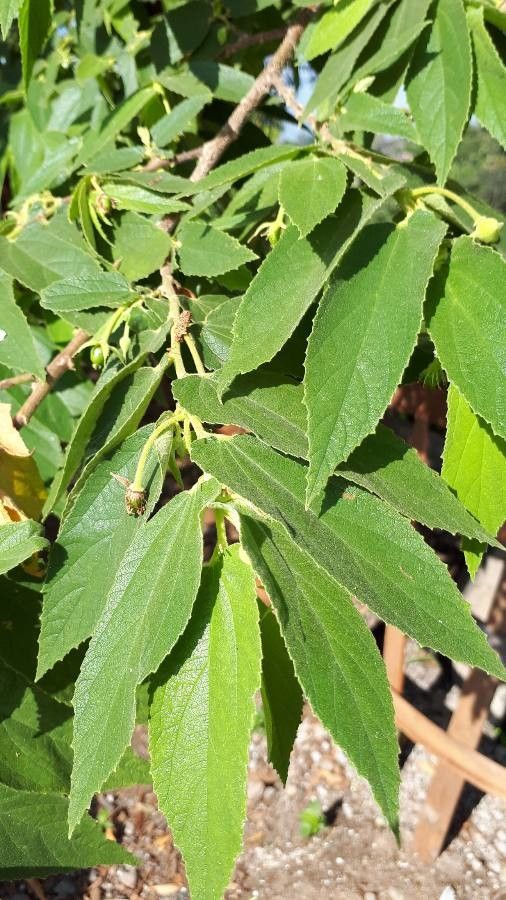
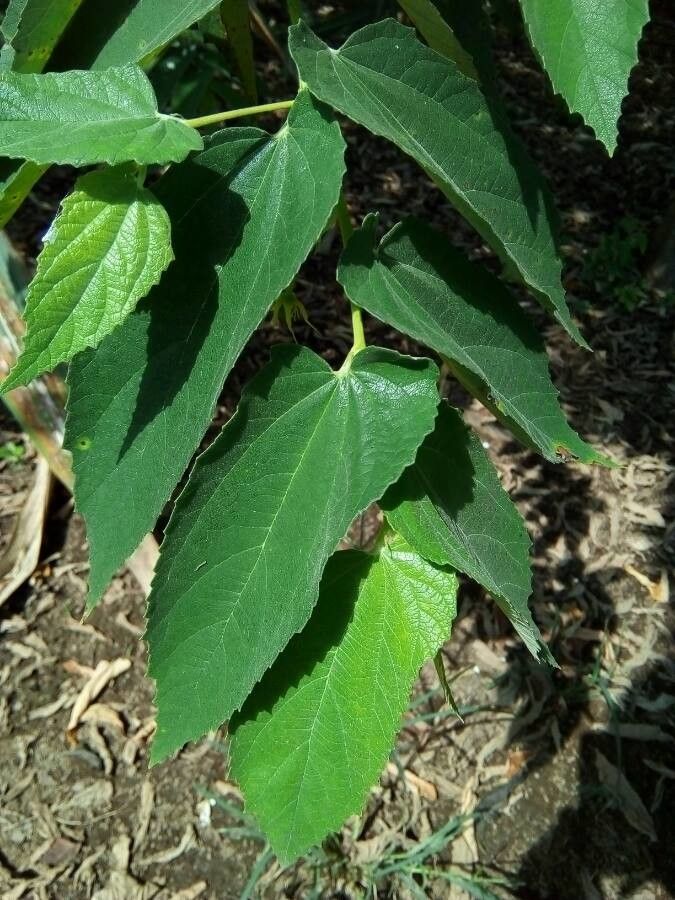
The leaves of Muntingia calabura are simple and alternate, with an ovate shape, serrated edges, and a glossy green color on top, while the underside is paler.
This plant prefers full sun but can tolerate partial shade and various soil types, including sandy soils, making it ideal for coastal areas.
Muntingia calabura has various uses, including medicinal purposes; it can treat diarrhea, and its leaves possess antibacterial properties useful for treating wounds. Additionally, the fruit serves as food for birds, making this tree a great choice for bird enthusiasts who want to attract avian visitors to their gardens.
Overall, Muntingia calabura is easy to grow, making it an excellent choice for gardeners seeking low-maintenance plants. It provides ornamental value, edible fruits, and benefits for wildlife conservation by attracting birds that feed on its fruits.
Jamaica Cherry shows good resistance to disease and is generally not prone to illnesses. As for care, this plant is fairly low maintenance. When grown outdoors it needs only minimal watering, and larger specimens typically do not require pruning. Smaller plants, however, should be pruned after they finish blooming. Jamaica Cherryt is suitable for anyone with an outdoor area, such as a garden or deck, and does not demand much gardening experience.
How to keep Muntingia Calabura.
Light
The Jamaica Cherry prefers abundant sunlight, similar to its native habitat that is sunlit for most of the year. It can tolerate limited light, but this results in slower growth and less vibrant foliage. Plenty of sun promotes healthy development, while inadequate light can stunt growth and cause leaves to become faded.
Water
Originating from tropical regions, the Jamaica Cherry thrives in high humidity and consistently moist soil, although it can withstand brief periods of dryness. To avoid overwatering, ensure you water the plant every two weeks. Typically grown outdoors, the Jamaica Cherry flourishes in areas with abundant rainfall, which supports its growth cycles by providing the necessary water availability.
Temperature
Jamaica Cherry is native to areas with temperatures between 68 and 100.4 °F (20 to 38 ℃). It grows well in warm climates and favors that same 20 to 38 ℃ temperature range. Seasonal adjustments may be necessary, particularly in cooler regions.
Fertilizer
Choose organic fertilizers (for example, fish emulsion or compost) rather than chemical ones for Jamaica cherry. Supply young plants with higher nitrogen and phosphorus in spring. Mix compost or fertilizer into the soil either before or after planting. For mature plants, add in spring a balanced fertilizer or one targeted to a specific nutrient deficiency. Nutrient deficiency results in small leaves, short branches, yellow or bronze foliage, acidic fruits, premature fruit drop, and splitting.
Botanical profile.
- Plant Type
- Shrub
- Life Cycle
- Perennial
- Genus
- Muntingia
- Family
- Muntingiaceae
- Hardiness Zone
- 10-12
- Mature Height
- 11.89 m
- Mature Spread
- 4.88 m to 6.1 m
- Leaf Color
- Green, Blue
- Leaf Type
- Evergreen
- Flower Color
- White
- Flower Size
- 2.54 cm
- Bloom Time
- All year round
- Planting Time
- Spring, Summer, Autumn
- Harvest Time
- All year round
- Native Area
- Belize, Honduras, Mexico, Guatemala, Peru, Dominican Republic, Trinidad and Tobago, Panama, Jamaica, Colombia, Bahamas, Cuba, Argentina, Haiti, Bolivia, Venezuela, Brazil, Guyana, El Salvador, Nicaragua, Ecuador, Costa Rica
Other names.
Reader questions.
How should I water my Jamaica Cherry plant?
Your Jamaica Cherry is not particular about how you water it, so you can use any common watering tool like watering cans, hoses, or cups. It's important to apply the water directly to the soil and make sure all areas of the soil are evenly moistened to provide water to all parts of the root system. Using filtered water is recommended to avoid harmful particles from tap water. It is also beneficial to use water at or slightly above room temperature as extremely hot or cold water can be a shock to the Jamaica Cherry. However, the plant usually responds well to any kind of water you give it.
Why is it necessary to add fertilizer to my Jamaica Cherry plant?
Jamaica Cherry plants require regular fertilization primarily because their showy leaves require a significant amount of energy to be produced and maintained. The challenge lies in the fact that in addition to providing enough energy for the leaves, the plant must also allocate sufficient energy for the growth of its stems, branches, roots, and other essential structures. Neglecting fertilization can lead to two likely outcomes. Firstly, the leaves of the Jamaica Cherry will start losing their natural color and texture, resulting in an overall unhealthy appearance that significantly diminishes its ornamental appeal. Secondly, the plant's growth will slow down or produce weak growth that is more susceptible to breakage.
What are the sunlight requirements for Jamaica Cherry plants?
Jamaica Cherry plants thrive in conditions that mirror their natural habitat, which is abundant in sunlight throughout the year. They require full sun, defined as over 6 hours of sunlight per day, to grow healthily. However, they can also tolerate partial sun, about 3-6 hours of sunlight per day. It's important to observe the movement of sunlight in your garden to ensure your plants receive the ideal balance of light and shade, promoting their well-being. Despite being adaptable to limited sunlight, insufficient exposure leads to compromised growth, less vibrant foliage, and overall reduced plant vigor.
What is the indigenous temperature range for Jamaica Cherry?
Jamaica Cherry, known botanically as Muntingia calabura, is indigenous to regions with temperatures ranging from 68 to 100.4 °F (20 to 38 °C). It flourishes in warm climates within this temperature range. In cooler regions, seasonal adjustments may be necessary to maintain its ideal temperature conditions. Particularly, in autumn, it is advisable to move Jamaica Cherry plants that are grown outdoors indoors, placing them near a bright window while keeping them away from heaters to avoid excessive warmth. During winter, it's beneficial for the plant's growth to maintain temperatures above 20°C, as temperatures approaching 5°C or lower can be detrimental.
What should I do if I give my Jamaica Cherry plant too much or too little water?
Outdoor plants, especially newly planted ones or seedlings, can easily suffer from lack of watering. It is important to make sure that you water them enough for the first few months, especially while they are still small or newly planted. Once the roots are established, the Jamaica Cherry plant can usually rely on rain for its water needs. When the Jamaica Cherry is planted in pots, overwatering becomes more common. If you accidentally overwater your plant, you should take immediate action to resolve the issue. Firstly, stop watering the plant right away to minimize the negative effects of overwatering. Then, carefully remove the Jamaica Cherry from its pot and examine its roots. If you find that the roots are not affected by root rot, it should be safe to return the plant to its container. However, if you notice signs of root rot, trim away the affected roots and consider applying a fungicide to prevent further damage. Finally, repot the Jamaica Cherry using well-draining soil. In the case of underwatering, simply water the plant more frequently. It is usually easy to fix underwatering, as the leaves of the plant will droop, dry out, and fall off. Once the plant is properly watered, the leaves will quickly return to their fullness. To avoid this issue, make sure to correct your watering frequency as soon as you notice signs of underwatering.
When should I fertilize my Jamaica Cherry tree?
Jamaica Cherry plants can benefit from occasional feedings, so there is no need to establish a fixed feeding schedule when planting them. One easy way to fertilize your Jamaica Cherry is to apply fertilizer while watering the plant occasionally. For the duration of the growing season, it is also important to provide an adequate amount of water to your Jamaica Cherry. You can feed the plant once every two to three weeks, maintaining this rate throughout its period of new growth.
How do artificial lighting conditions affect Jamaica Cherry plants?
Indoor Jamaica Cherry plants benefit significantly from adequate lighting, especially when natural sunlight is scarce, such as during winter or in less sunny indoor locations. Artificial lighting can be a crucial solution in these scenarios, supporting faster and healthier growth. LED lights, which can be customized to provide specific light wavelengths, are recommended. The intensity of artificial lighting should be adjusted based on the plant's needs: 30-50W/sq ft for full sun plants, 20-30W/sq ft for partial sun plants, and 10-20W/sq ft for full shade plants. The artificial light should be placed 12-36 inches above the plant to mimic natural sunlight and kept on for 8-12 hours per day to simulate the length of natural daylight hours.
How does low temperature affect Jamaica Cherry, and what are the solutions?
Jamaica Cherry is not tolerant of low temperatures and thrives best when the temperature remains above 20°C. It is crucial to keep it above 5°C during the winter months. Exposure to temperatures below 1°C can cause the leaves to lighten in color. Following frost damage, the leaves may gradually turn brown or black, exhibiting symptoms like wilting and drooping. The solution involves trimming off the frost-damaged parts and moving the plant to a warm indoor environment for cold protection. It is best to place the plant near a south-facing window to ensure it receives ample sunlight, while also avoiding placement near heaters or air conditioning vents to prevent the air from becoming excessively dry.
How often should I give water to my Jamaica Cherry plant?
Most plants can rely on natural rainfall for growth outdoors. However, if your area lacks rainfall, here's what you can do
When is the best time to not use fertilizer for my Jamaica Cherry tree?
For most of the year, you can fertilize your Jamaica Cherry on a regular schedule. This is especially important during the active growing season, which takes place in spring, summer, and early fall. However, it's crucial to note that during the winter season, you should avoid fertilizing your plant altogether. This is because the Jamaica Cherry enters a dormant growth phase during winter, during which it either produces little to no new growth. Since the plant requires less energy during this phase, there is no need for fertilization.
What are the common symptoms of insufficient lighting in Jamaica Cherry plants?
When Jamaica Cherry plants do not receive adequate light, they exhibit various symptoms indicative of light deficiency. These include smaller new leaves, leggy or sparse growth, faster leaf drop, slower or no new growth, and lighter-colored new leaves. Excessive sunlight can cause chlorosis, where leaves lose their green color and turn yellow, sunscald resulting in damaged plant tissues, leaf curling as a defense against too much light, wilting from excessive water loss, and leaf scorching characterized by brown, dry, and crispy leaf edges. These symptoms highlight the importance of providing Jamaica Cherry plants with optimal lighting conditions.
How does high temperature affect Jamaica Cherry, and what are the solutions?
During the summer, it is important to keep Jamaica Cherry below 38°C to prevent stress from high temperatures. When exposed to temperatures exceeding 43°C, the leaves may lighten in color, and the plant becomes more susceptible to sunburn. To mitigate this, trim away the sunburned and dried parts of the plant. Move the plant to a shaded location that is protected from the harsh midday and afternoon sun. Additionally, watering the plant in the morning and evening will help keep the soil moist, aiding in the plant's recovery from heat stress.