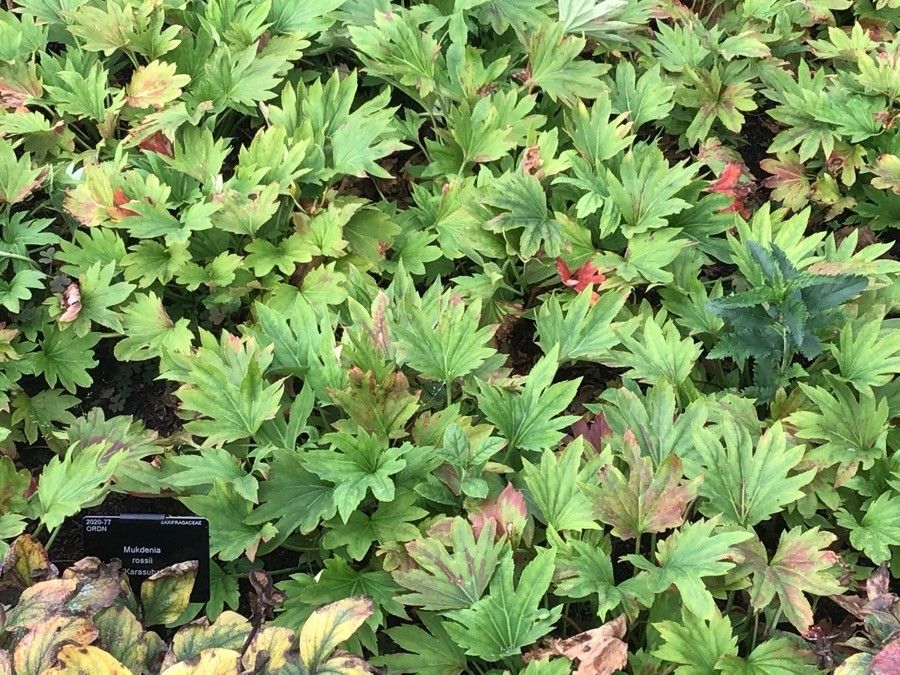
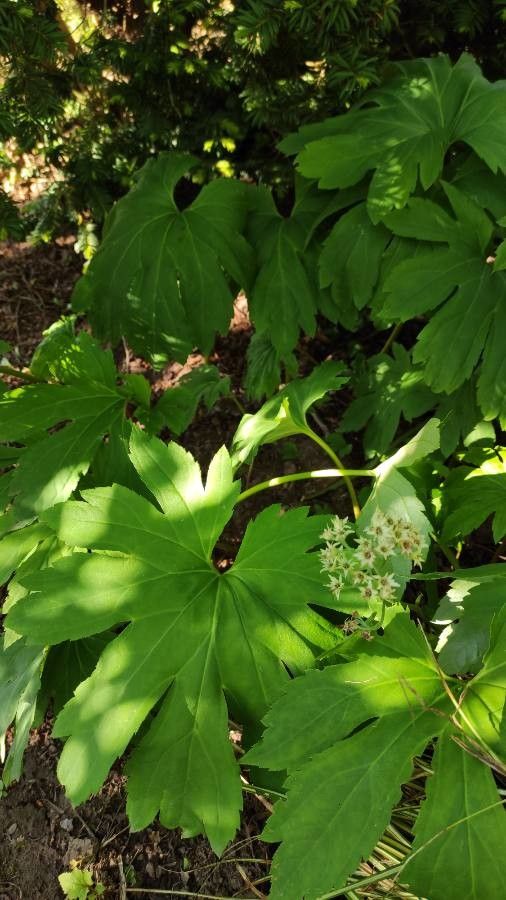
Mukdenia rossii is a perennial plant belonging to the Saxifragaceae family. Native to the forests and rocky regions of China, Korea, and Japan, this plant grows up to 30 cm in height and spreads with attractive foliage that changes color throughout the seasons.
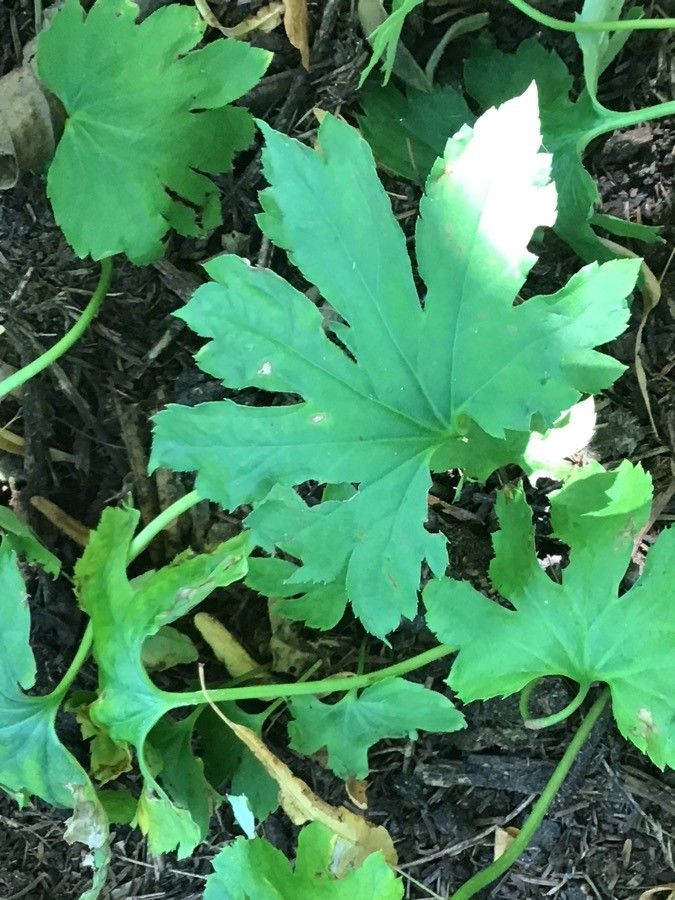
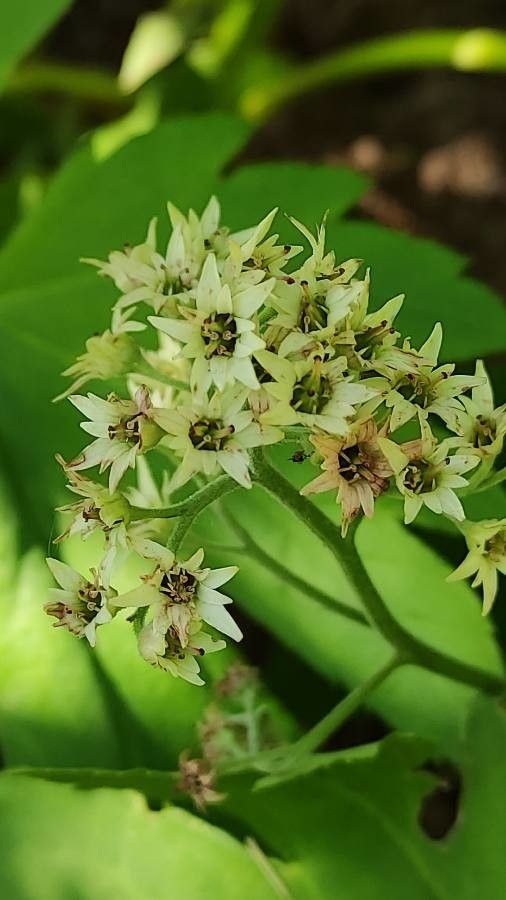
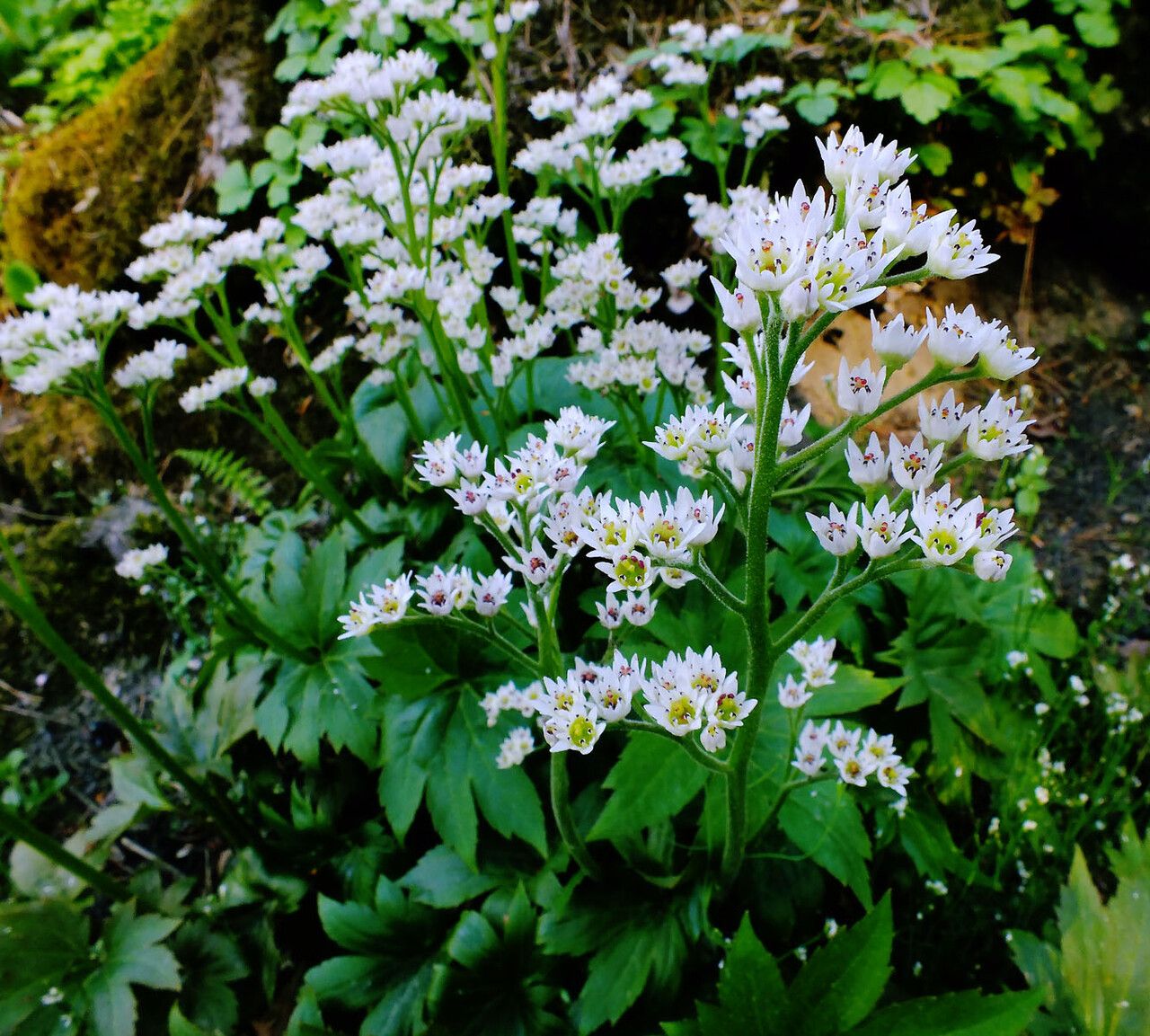
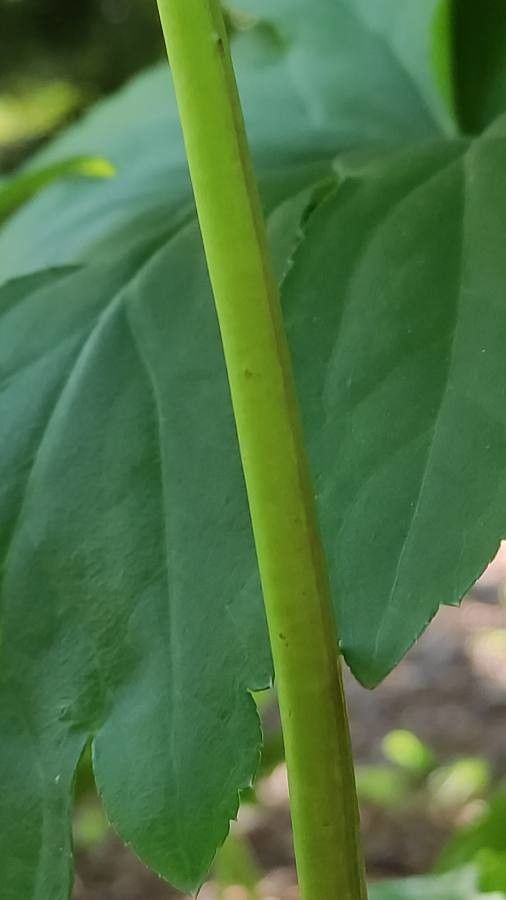
In spring, Mukdenia rossii produces small, pinkish-white flowers on tall stems above its foliage. The leaves are deeply lobed with toothed edges and have a glossy texture. They transition from green in spring to bronze-red in autumn, providing seasonal interest.
Mukdenia rossii thrives in moist, well-drained soil with partial shade or full sun exposure. Its spreading habit makes it an excellent choice for rock gardens or as ground cover.
The plant requires minimal maintenance but benefits from regular watering during dry spells. Propagation is easily done through the division of clumps in early spring or autumn.
Overall, Mukdenia rossii is an attractive perennial that adds color and texture throughout the seasons with minimal care, making it an excellent addition for any garden enthusiast seeking low-maintenance plants with year-round interest.
Perennial fan hands is fairly disease-resistant and typically does not suffer from illnesses. However, it can be vulnerable to pests and diseases present in its environment. Such infections are usually mild. Regarding care, this plant needs moderate upkeep. It should be pruned regularly to preserve a neat appearance and promote healthy growth. Applying fertilizer can also encourage flowering. Perennial fan hands is well-suited to people with outdoor areas, such as a garden or patio, and does not demand extensive care experience. It may need extra attention when grown indoors.
How to keep Mukdenia Rossii.
Light
Perennial fan hands performs best when given a moderate amount of sunlight. Native to environments with plenty of shade, it is able to tolerate reduced light levels. Although sunlight is important for its growth, excessive exposure can stress the plant and lead to discolored leaves. Conversely, very little sun may limit its overall development.
Water
The perennial fan plant originates from East Asia and flourishes in moist, well-drained soil. It thrives with consistent moisture and can tolerate short periods of dryness, ideally needing watered once a week. When grown indoors, higher humidity levels are beneficial, as they mimic the plant's natural woodland habitat.
Temperature
Perennial fan hands is a hardy plant native to cool-temperate regions and grows best in temperatures between 41 and 89.6 °F (5 to 32 ℃). In colder weather it may need adaptations, particularly protection during frosts.
Fertilizer
For Perennial fan hands, the primary time to fertilize is in early spring as flowers begin to form. The appropriate fertilizer promotes better blooms and helps Perennial fan hands produce attractive flowers. Fertilizing in early spring guarantees strong flowers throughout the season and supplies energy for dormant growth phases.
Pruning
Pruning perennial fan hands in the spring, whether early or late, helps maintain their shape and health. By removing dead foliage and spent flower stems, you can enhance the plant's appearance and encourage new growth. Regular pruning also prevents disease and improves air circulation, ensuring the plant remains strong and visually appealing throughout the growing season.
Pot & Repot
Repot perennial fan plants every 2-3 years in early spring. Use a wide, shallow container for best results. Water moderately, making sure the soil doesn't become soggy, and place the plant in indirect light. Keep an eye on the color of the leaves as it can indicate the plant's health or whether it needs additional care.
Botanical profile.
- Plant Type
- Herb
- Life Cycle
- Perennial
- Genus
- Mukdenia
- Family
- Saxifragaceae
- Hardiness Zone
- 4-8
- Mature Height
- 23 cm to 46 cm
- Mature Spread
- 61 cm
- Leaf Color
- Green, Red
- Leaf Type
- Deciduous
- Flower Color
- White
- Flower Size
- 0.10 cm
- Bloom Time
- Mid spring, Late spring
- Planting Time
- Spring
- Harvest Time
- Early summer, Mid summer
- Native Area
- Koppen, South Korea, China
Other names.
Reader questions.
How should I water my Perennial fan plants?
To properly water the Perennial fan hands, it's important to follow a few guidelines. Firstly, it's best to use filtered water that is at room temperature. Tap water may contain harmful particles that can adversely affect the plant's health. Secondly, consider the plant's natural environment and use water that is not too cold, as the Perennial fan hands originates from warm climates and may be sensitive to temperature changes. Additionally, avoid overhead watering to prevent any complications with the foliage. Instead, focus on saturating the soil with filtered, room temperature water. This helps to promote root hydration and allows them to spread throughout the soil and absorb necessary nutrients.
Why should I put fertilizer on my Perennial fan hands?
Fertilization is important for Perennial fan hands and other plants because it provides essential nutrients for growth. Although Perennial fan hands have relatively low fertilization needs, annual fertilization is beneficial for their survival and can lead to better, longer-lasting flowers. To ensure your Perennial fan hands looks its best, regular fertilization is recommended.
What are the sunlight requirements for Perennial fan hands?
Perennial fan hands thrives in environments that offer moderate amounts of sunlight, ideally originating from habitats with ample shade but capable of adapting to lesser sunlight conditions. It's important to ensure the plant receives a balanced amount of light, as too much sun can lead to leaf discoloration, and too little may inhibit its growth. For optimal growth, the plant should be exposed to about 3-6 hours of sunlight, falling under partial sun conditions, while full shade implies less than 3 hours of sunlight. Monitoring the movement of sunlight through your garden will help in choosing the best spots for your plants, taking care to avoid places with excessive exposure to prevent distress.
What is the ideal temperature range for Perennial fan hands?
Perennial fan hands, botanically known as Mukdenia rossii, thrives best in cool temperate regions with temperatures ranging from 41 to 89.6 °F (5 to 32 °C). This hardy plant has strong cold resistance and usually does not require special frost protection measures. However, it is important to ensure that the plant is protected if winter temperatures are expected to drop below -30°C.
What should I do if I give my Perennial fan hands too much water or too little water?
Overwatering is a more common issue and can harm the health of your Perennial fan hands. When this species receives too much water, its stems and leaves may wilt and turn yellow. Over time, overwatering can lead to diseases like root rot, mold, and mildew, which can kill your plant. Underwatering is less common for Perennial fan hands, as it is drought-tolerant. However, it can still happen, causing brittle and brown leaves. It's important to recognize overwatering signs quickly. Some diseases caused by overwatering, like root rot, are difficult to correct if you delay action. Reduce your watering schedule immediately if you notice early signs. Consider replacing poorly draining soil with a loose, well-draining potting mix. If you see signs of underwatering, simply water more regularly until the signs disappear.
When should I put fertilizer on my Perennial fan hands?
The best time to fertilize a Perennial fan hands is in late winter to early spring. This is when the plant is coming out of dormancy and starting to grow. Fertilizing at this time will promote healthy growth and set the plant up for a successful season. While early spring is the most beneficial time to fertilize, it is also possible to fertilize in the fall. However, it is not recommended to fertilize in the summer or winter.
How can artificial lighting be used for Perennial fan hands grown indoors?
Indoor Perennial fan hands plants require adequate lighting to complement their growth, especially when natural sunlight is insufficient. Using artificial lights can be a significant solution, especially during winter or in spaces with less sun exposure. LED lights are recommended due to their customizability to suit specific plant needs. Full sun plants should receive 30-50W/sq ft of artificial light, partial sun plants 20-30W/sq ft, and full shade plants 10-20W/sq ft. The light source should be placed 12-36 inches above the plant to mimic the sun's natural light, ensuring the plants receive around 8-12 hours of light per day.
How can I protect Perennial fan hands during extremely cold weather?
In anticipation of extremely cold weather, especially if temperatures are expected to drop below -30°C, it is important to provide Perennial fan hands with cold protection to prevent frost damage. This can be achieved by covering the plant with insulating materials such as soil or straw. Additionally, watering the plant abundantly before the first freeze in autumn helps the soil to remain moist and enter a frozen state, mitigating drought and water scarcity for the plant during winter and early spring.
How frequently should I water my perennial fan hands?
If your Perennial fan hands plant is in a pot, the most precise way to determine if it needs water is by checking the soil. Simply insert your finger into the soil and if the top two to three inches feel dry, it's time to water it. If you have your Perennial fan hands planted outdoors in the ground, you can use the same method to test the soil. When the first few inches of soil have dried out, it's time to water. During spring and early fall, you'll typically need to water this plant around once a week using this method. However, during extremely hot weather, you may need to increase watering to about twice a week or even more. It's worth noting that mature, well-established Perennial fan hands plants have an impressive ability to survive without water.
When is it best to not use fertilizer on my Perennial fan palms?
To properly care for your Perennial fan hands, it is important to only fertilize them during late winter and early spring. These plants have low fertilization requirements, so a single annual feeding during this time will be sufficient. It is crucial to avoid fertilizing them throughout spring, summer, and fall to prevent overfertilization and any associated problems. However, an exception can be made if you did not fertilize in spring, allowing you to feed the plant in fall. Additionally, there is no need to fertilize during the winter as the plant will be in a dormant growth phase and won't experience new growth. Therefore, fertilization during most of the winter should be avoided.
What are the symptoms of light deficiency in Perennial fan hands?
Symptoms of light deficiency in Perennial fan hands may include smaller new leaves, leggy or sparse growth, faster leaf drop, and slower or halted new growth. The plant might exhibit lighter-colored new leaves or chlorosis, where leaves lose their green color and turn yellow, indicating a lack of chlorophyll and essential nutrients. Sunscald, leaf curling, wilting, and leaf scorching are also common issues associated with incorrect light exposure. These symptoms suggest the need for adjusting the plant's light environment to promote healthier growth.
What should I do if Perennial fan hands experiences low temperatures below -25°C?
Perennial fan hands is cold-tolerant and prefers temperatures above 5°C during winter. If the temperature falls below -25°C, the plant may not show noticeable changes during winter, but there might be a decrease in sprouting or even the absence of sprouting in spring. If this occurs, it is recommended to remove any parts of the plant that have failed to sprout once spring arrives.