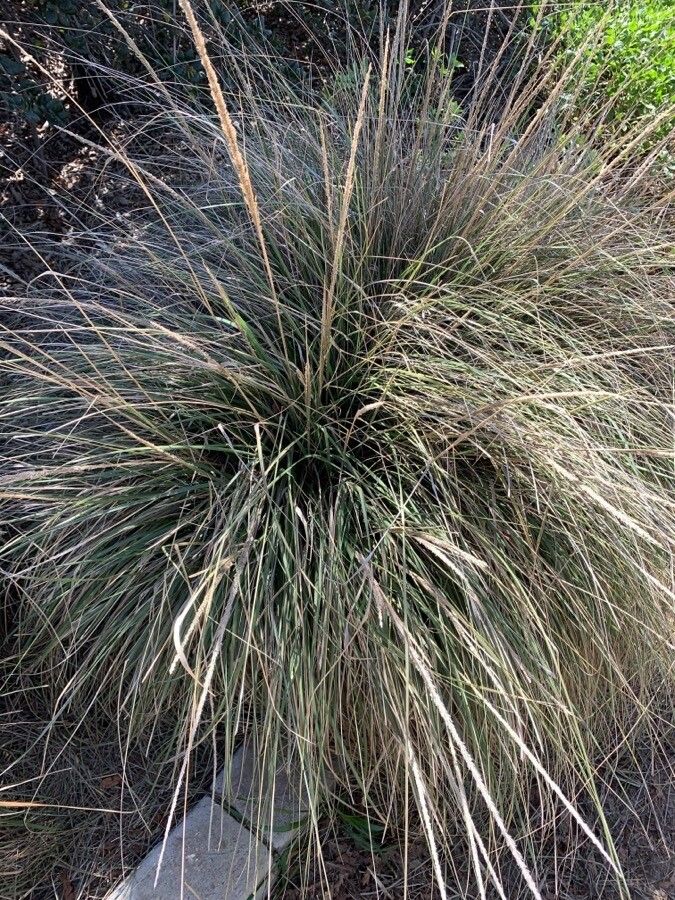
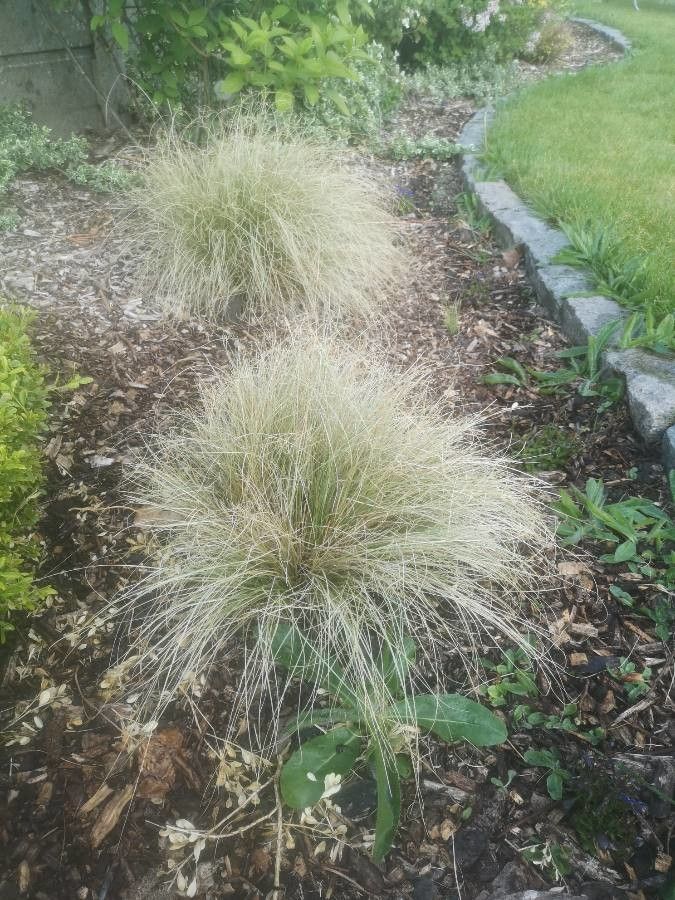
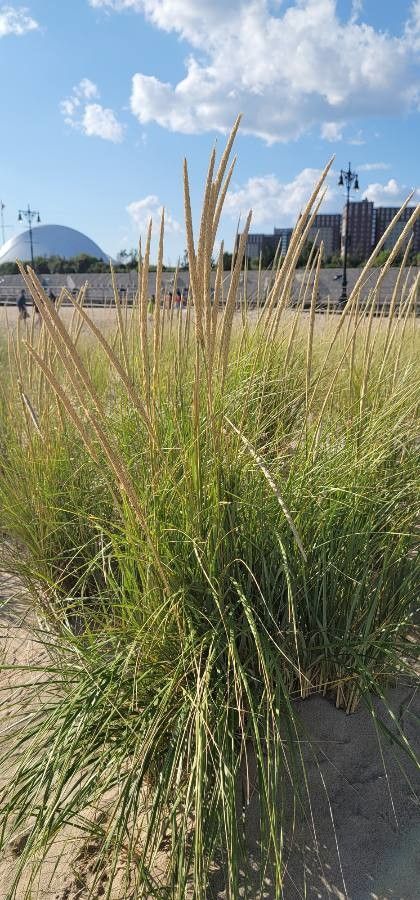
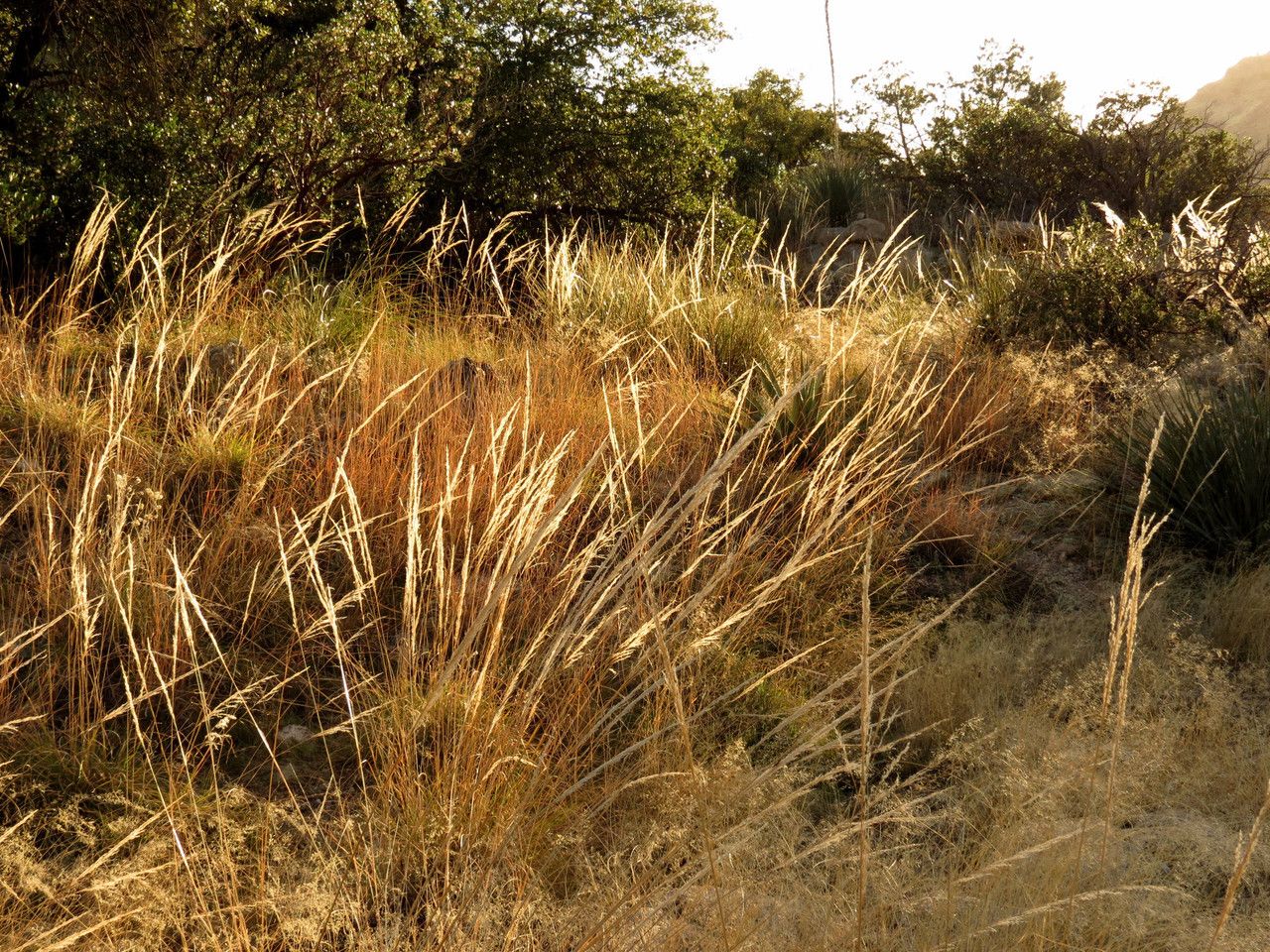
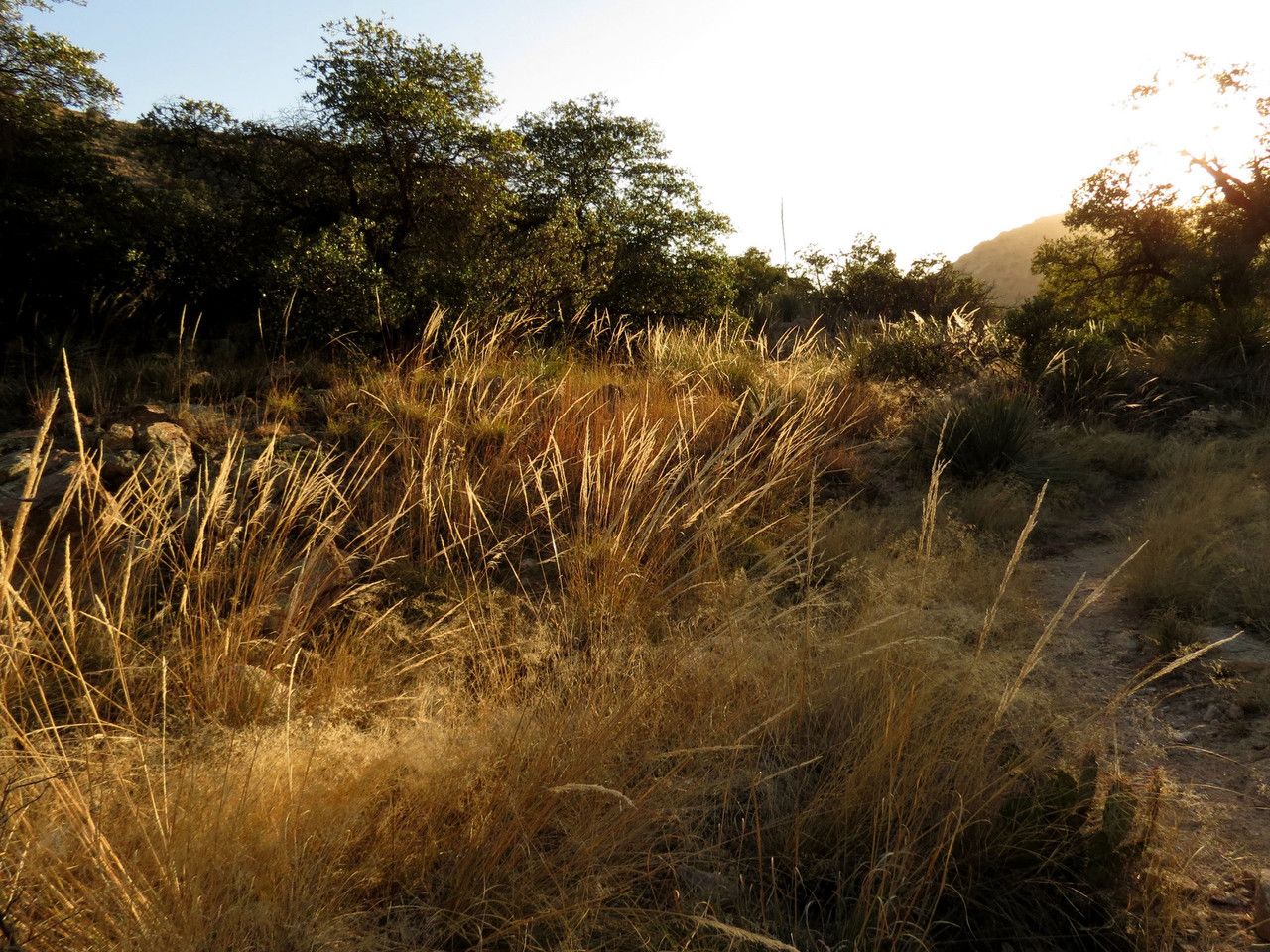
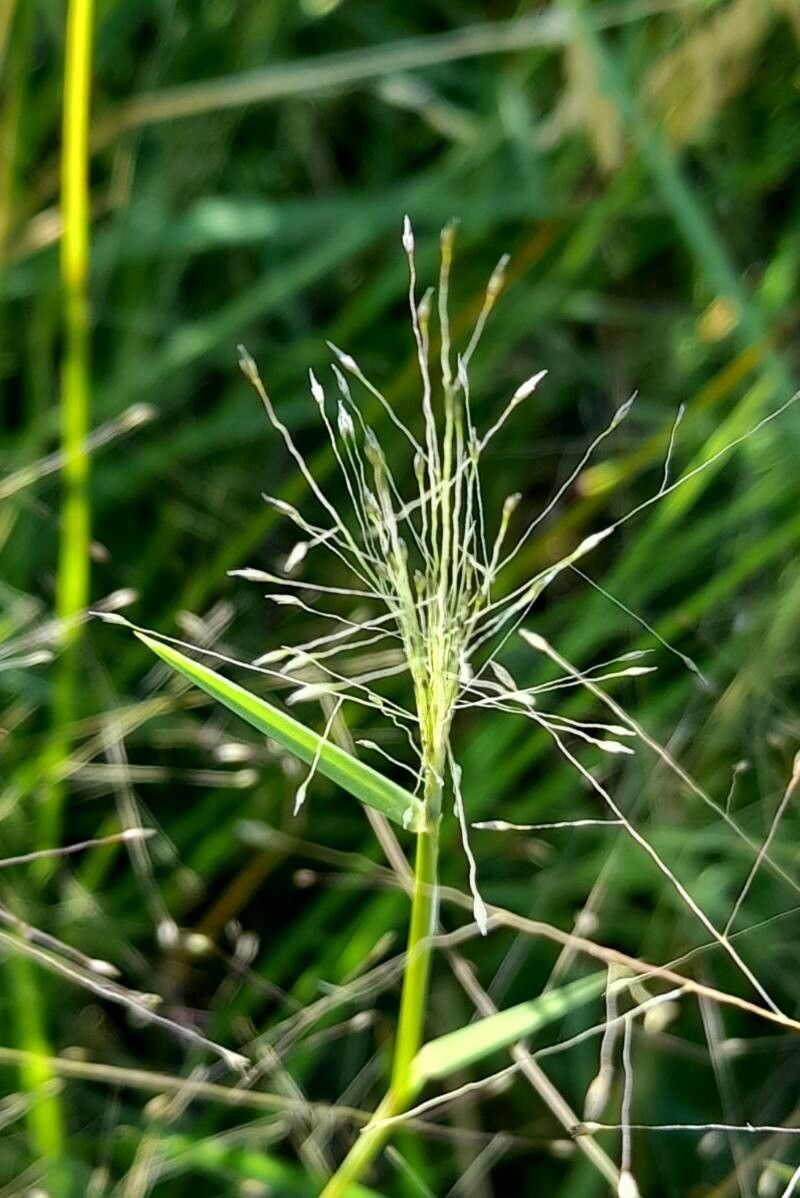
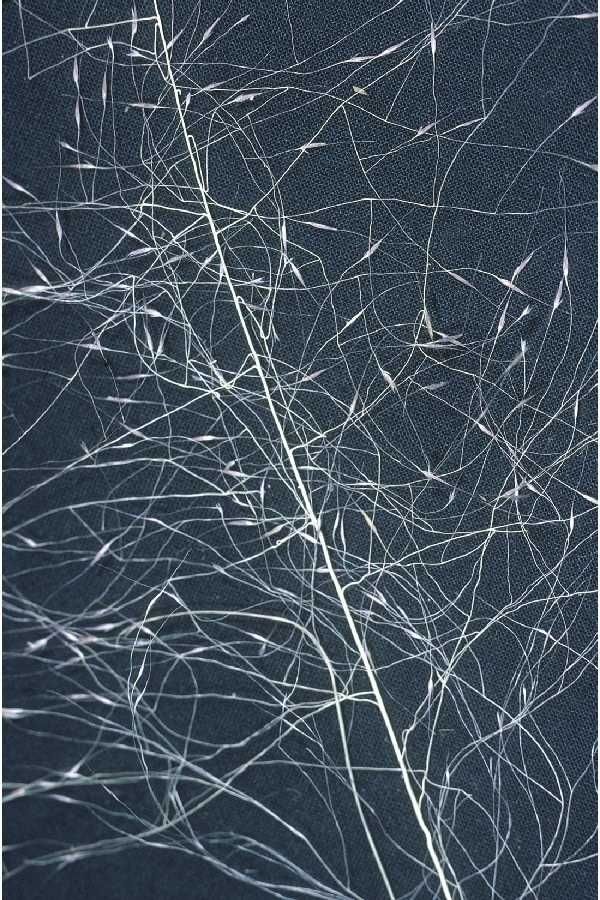
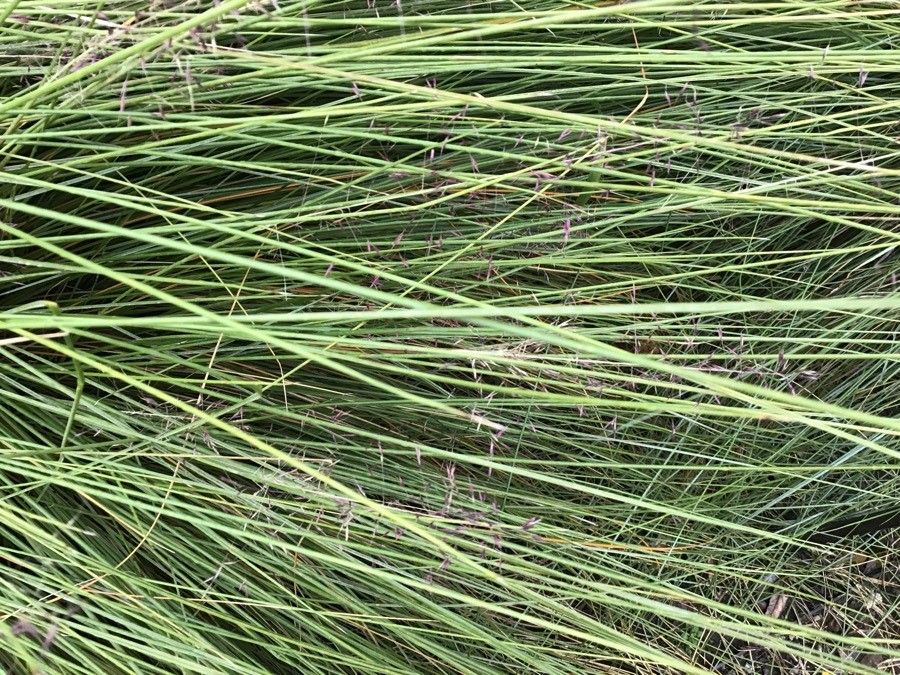
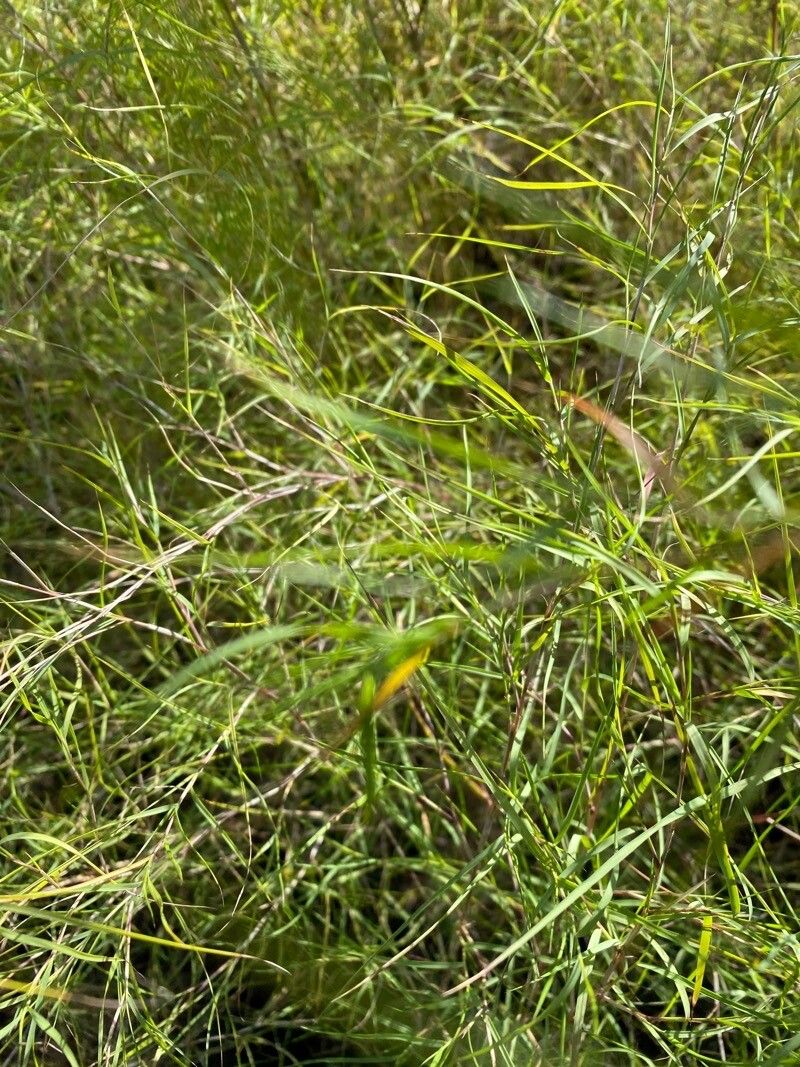
Muhlenbergia rigens, commonly known as deergrass, is a perennial grass native to the southwestern United States and northern Mexico. This ornamental grass is popular for its attractive appearance and low maintenance needs. Deergrass typically grows in clumps up to 3 feet tall and wide, featuring narrow green leaves that turn golden brown in the fall. From late summer through fall, it produces tall spikes of feathery flowers that sway gracefully in the wind. Once established, deergrass is drought-tolerant and thrives in full sun or partial shade with well-drained soil. Additionally, it is important for wildlife, offering cover for small animals and birds and serving as a food source for grazing animals such as deer and elk.
Deergrass shows strong resistance to disease and is usually not susceptible to illnesses. Regarding care, this plant is fairly low-maintenance. When planted outdoors it needs little watering, and larger plants typically do not require pruning. Smaller plants, however, should be pruned after they have finished blooming. Deergrass is suitable for anyone with outdoor space, such as a garden or deck, and does not demand extensive plant-care experience.
How to keep Muhlenbergia Rigens.
Light
Deergrass primarily does well in places that get abundant sunlight throughout the day, though it can tolerate spots with somewhat reduced light. Its native habitat provides those conditions. Too much sun typically does not harm the plant; however, insufficient light can hinder its optimal growth and health.
Water
Deergrass is well-suited to dry habitats, where it demonstrates excellent drought tolerance and requires very little moisture. Watering it twice a week mimics the conditions of its natural environment. Commonly found in xeriscaped gardens, deergrass efficiently stores water in its foliage during the growing season, highlighting its resilience.
Temperature
Deergrass does best in temperatures of 59 to 95 ℉ (15 to 35 ℃). It naturally occurs in regions with warm, dry summers and cooler winter conditions. In winter it can tolerate lows of 23 to 14 ℉ (-5 to -10 ℃) with only minimal damage. To ensure optimal growth, some frost protection is recommended during the winter months.
Fertilizer
Deergrass needs extra nutrients to encourage healthy new growth. In spring, spreading compost around the plant’s base can effectively supply the nutrition it requires. Fertilizing supports vigorous growth and helps the plant withstand diseases and pests.
Pruning
Deergrass is a semi-evergreen grass that thrives with pruning from late winter to early spring. To promote new growth, trim back the dead leaves using hedge trimmers or sharp scissors, cutting the foliage to about 1 to 2 inches (2.5-5 cm) above the ground.
Pot & Repot
When repotting Deergrass, select a pot 1-2 inches (2.5–5.1 cm) larger with ample drainage. Use a well-draining potting mix. Repot in spring or fall, making sure the root ball sits slightly below the rim of the flower pot. Water thoroughly after repotting and place the pot in a warm spot with indirect sunlight.
Botanical profile.
- Plant Type
- Grass
- Life Cycle
- Perennial
- Genus
- Muhlenbergia
- Family
- Poaceae
- Hardiness Zone
- 7-10
- Mature Height
- 0.49 m to 1.52 m
- Mature Spread
- 0.91 m to 1.22 m
- Leaf Color
- Green, Gray
- Leaf Type
- Evergreen
- Flower Color
- Tan
- Flower Size
- 0.51 cm to 1.27 cm
- Bloom Time
- Summer
- Planting Time
- Summer
- Harvest Time
- Late summer, Early fall, Mid fall
- Native Area
- Mexico
Other names.
Reader questions.
What are the sunlight requirements for deergrass?
Deergrass flourishes best in areas that receive full sun, which means it needs more than 6 hours of sunlight per day. However, it can also tolerate partial sun conditions, receiving about 3-6 hours of sunlight. It's important to observe how sunlight moves through your garden to choose spots offering a good balance of light and shade, which is crucial for the optimal growth of deergrass.
What is the preferred temperature range for Deergrass?
Deergrass thrives best in a temperature range of 59 to 95°F (15 to 35°C). This range suits its native growth environment, which typically includes warm, dry summers and cooler winter months. The plant is capable of surviving temperatures as low as 23 to 14°F (-5 to -10°C) during winter with minimal damage, although it benefits from some frost protection when temperatures are expected to fall below these levels.
How does sunlight exposure affect deergrass growth?
Deergrass primarily thrives in environments where it can enjoy abundant sunlight throughout the day, aligning with its natural habitat conditions. While it can survive in places with slightly less sunlight, insufficient light exposure may hinder its growth and overall health. In contrast, deergrass is generally resilient to overexposure to sunlight.
How can Deergrass be protected during extremely cold winters?
Although Deergrass has strong cold resistance and doesn't usually require special frost protection measures during winter, it's important to offer additional protection if temperatures are expected to drop below -15°C. This can involve covering the plant with soil or straw. Additionally, ensuring the plant is well-watered before the first freeze of autumn helps the soil stay moist and prevents drought and water scarcity during the winter and early spring.
Can artificial lighting be used for deergrass and how?
Yes, artificial lighting can be a pivotal solution for deergrass care, especially when natural sunlight is insufficient, like in winter or less sunny spaces. Optimal growth can be achieved by using artificial lights, such as LEDs, which can be customized to provide specific light wavelengths needed by the plant. For full sun plants, 30-50W/sq ft is recommended; for partial sun, 20-30W/sq ft; and for full shade, 10-20W/sq ft. The light should be placed 12-36 inches above the plant to mimic natural sunlight and should be on for 8-12 hours per day, depending on the plant's need.
What are the symptoms of Deergrass exposed to low and high temperatures, and what solutions exist?
For low temperatures, Deergrass should remain above -10°C during winter, as temperatures below -15°C might not show immediate damage but can lead to decreased or no sprouting in spring. The solution is to remove any parts that failed to sprout in spring. For high temperatures, during summer, Deergrass should stay below 35°C. Exceeding 41°C can cause the leaves to lighten in color, curl, and become prone to sunburn, potentially leading to the plant wilting and drying out. Solutions include trimming sunburned and dry parts, moving the plant to a shaded area, or using a shade cloth, along with watering the plant in the morning and evening.
What are the signs of insufficient light exposure in deergrass?
When deergrass doesn't receive enough light, several symptoms may emerge, including smaller new leaves, leggy or sparse growth, faster leaf drop, slowed or halted growth, and leaves becoming lighter in color or yellow (chlorosis). Excessive sunlight, on the other hand, may cause symptoms like sunscald, leaf curling, wilting, and leaf scorching, indicating damage from too much sun exposure.
What is the botanical name of Deergrass?
The botanical name of Deergrass is Muhlenbergia rigens.
What solutions can remedy insufficient sunlight exposure for deergrass?
To address insufficient sunlight exposure for deergrass, gradually move the plants to a location where they receive at least 6 hours of direct sunlight daily, using a south-facing window for indoor plants. For plants that cannot be moved easily, consider using artificial light, like a desk lamp or professional grow lights, for at least 8 hours a day. Outdoors, it's crucial to move plants gradually to sunnier spots to prevent sunburn. If trees block sunlight, prune them to let more light through. For small, easily movable plants, consider transplanting them during their dormant period to a location with more sunlight and good drainage.