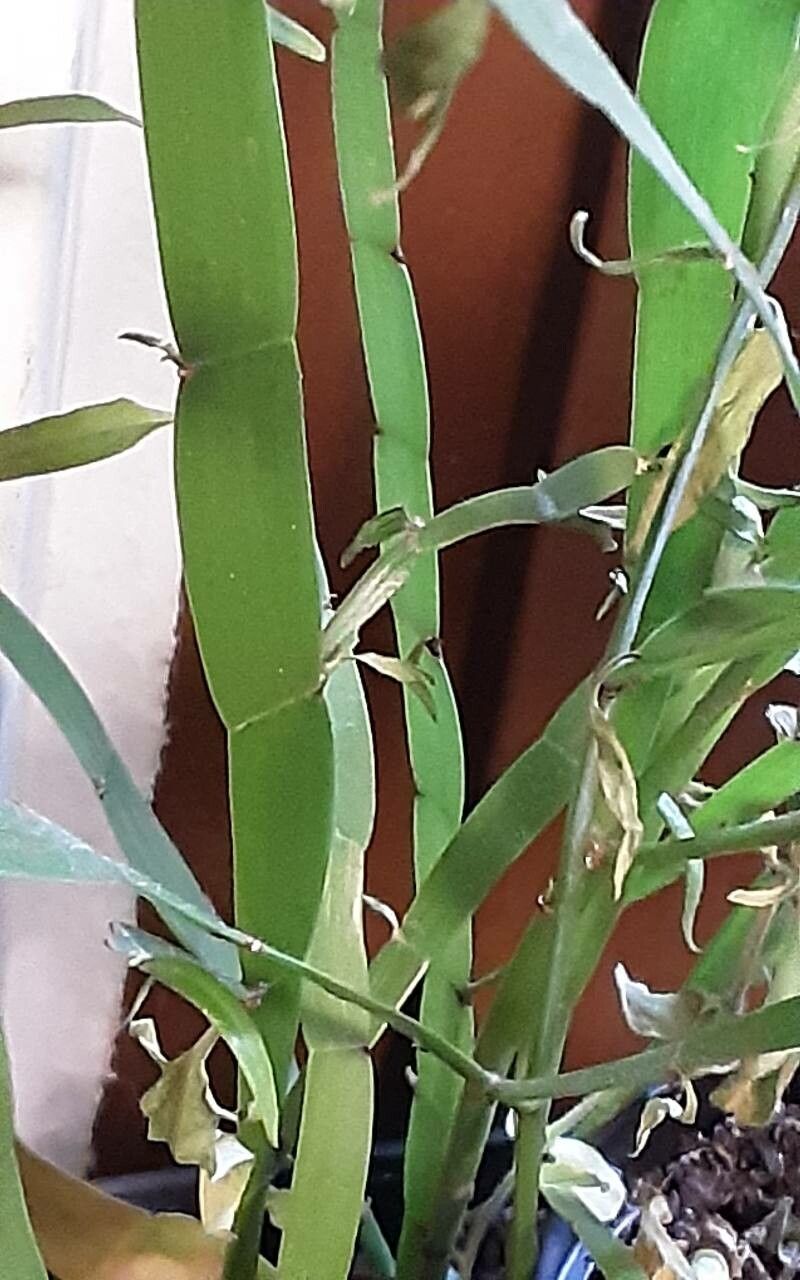
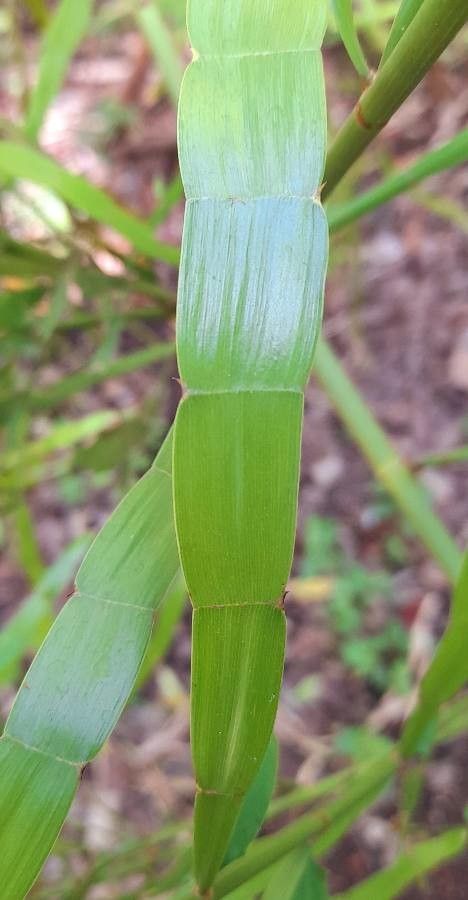
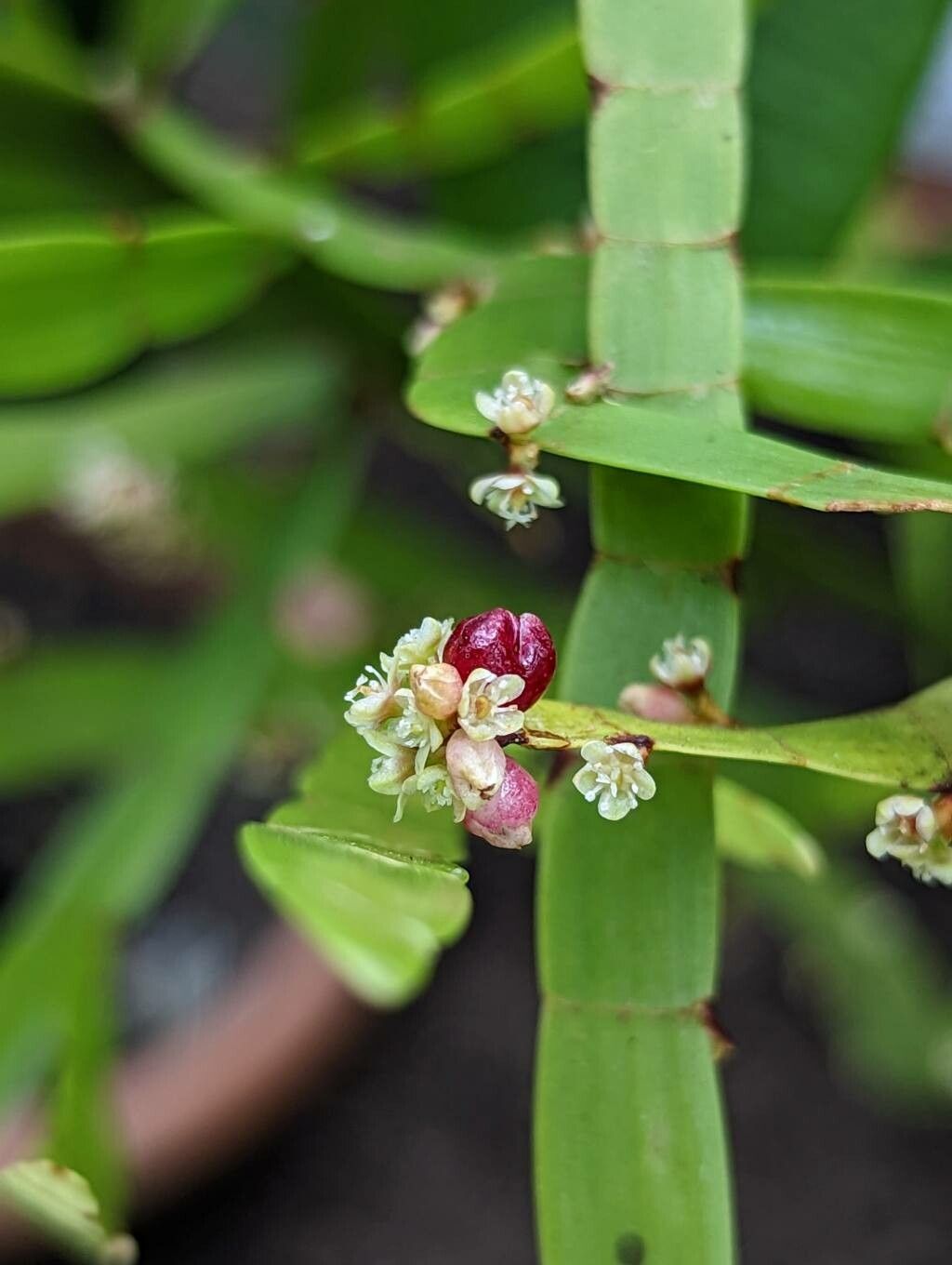
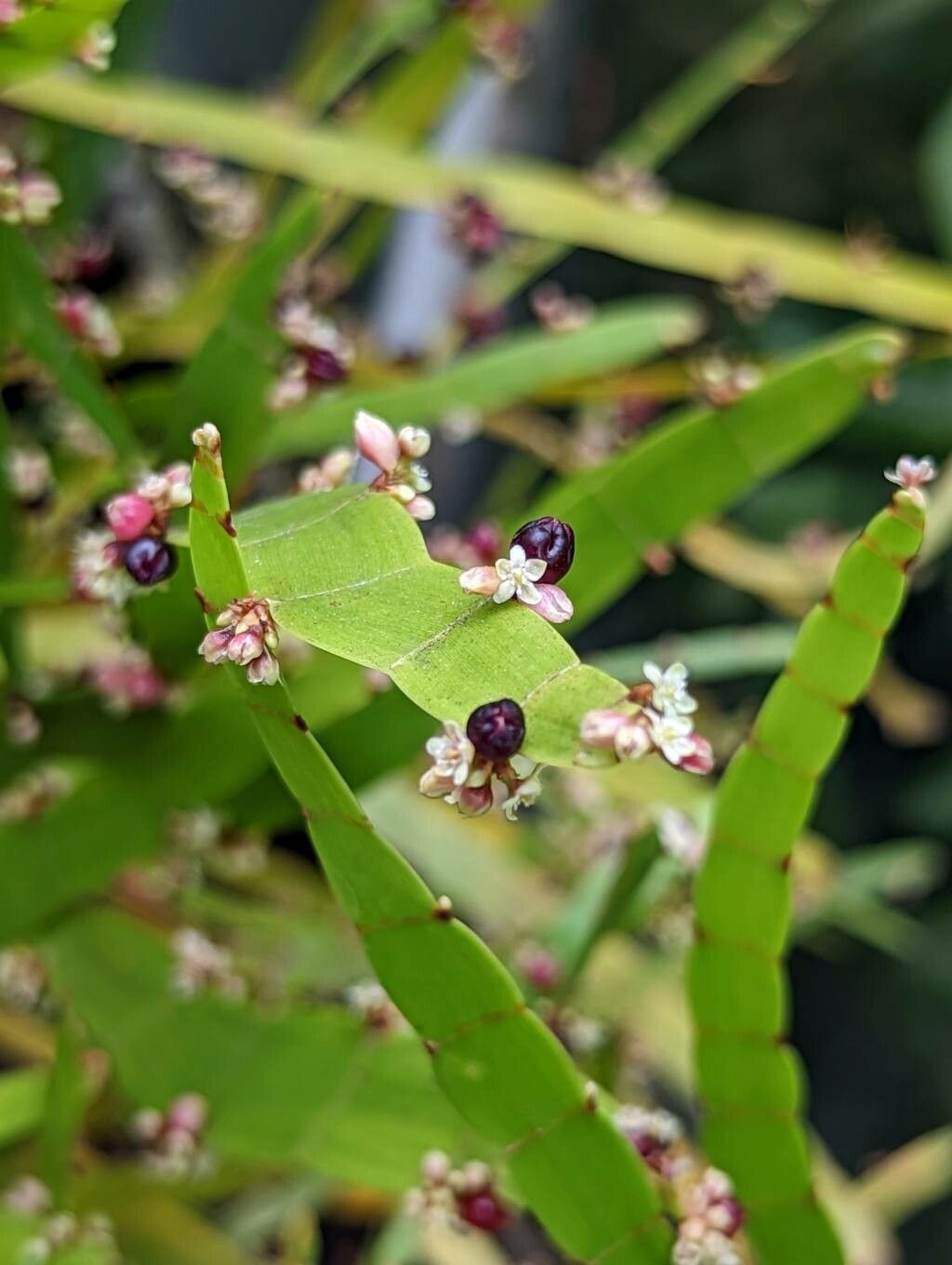
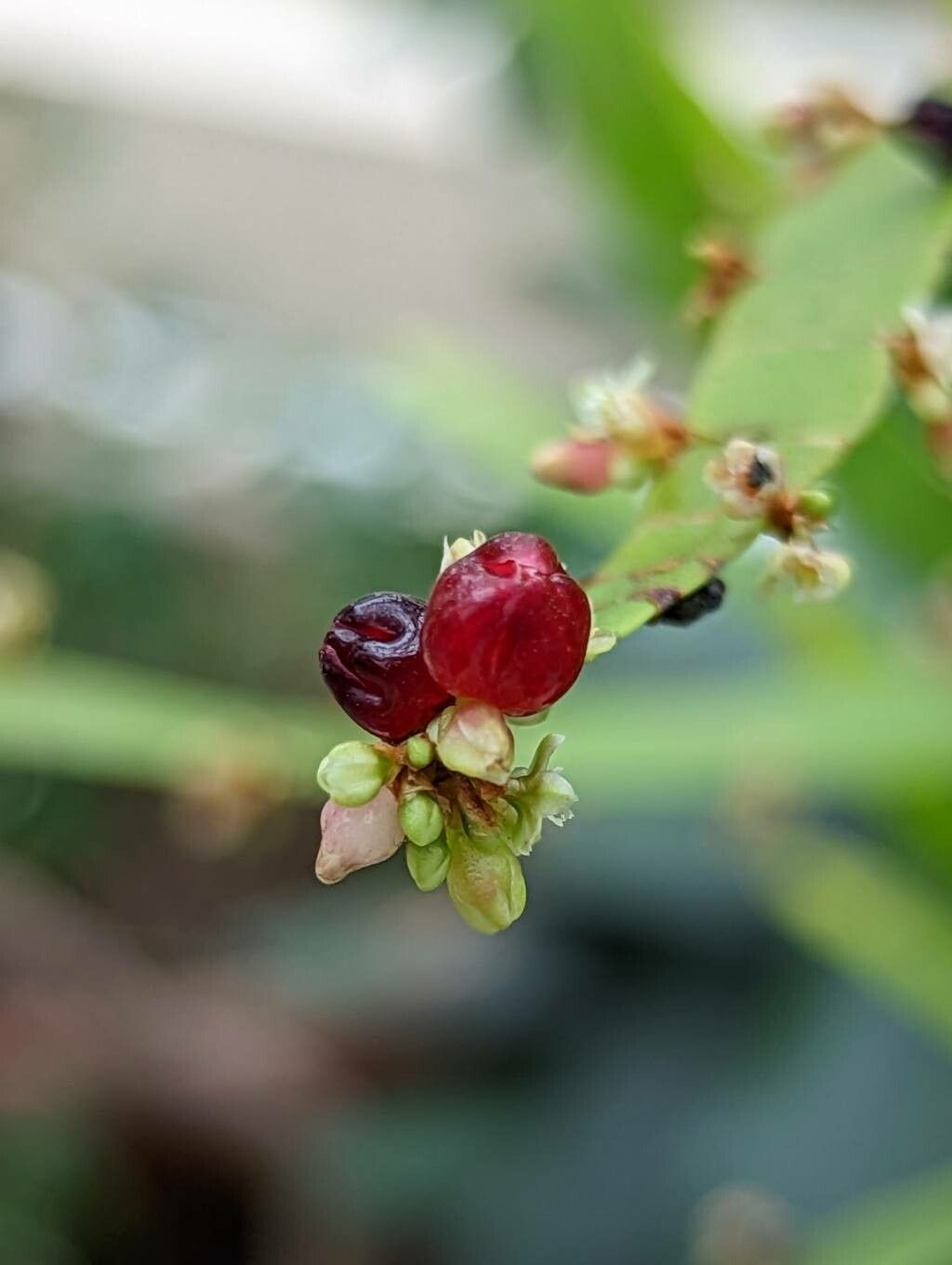
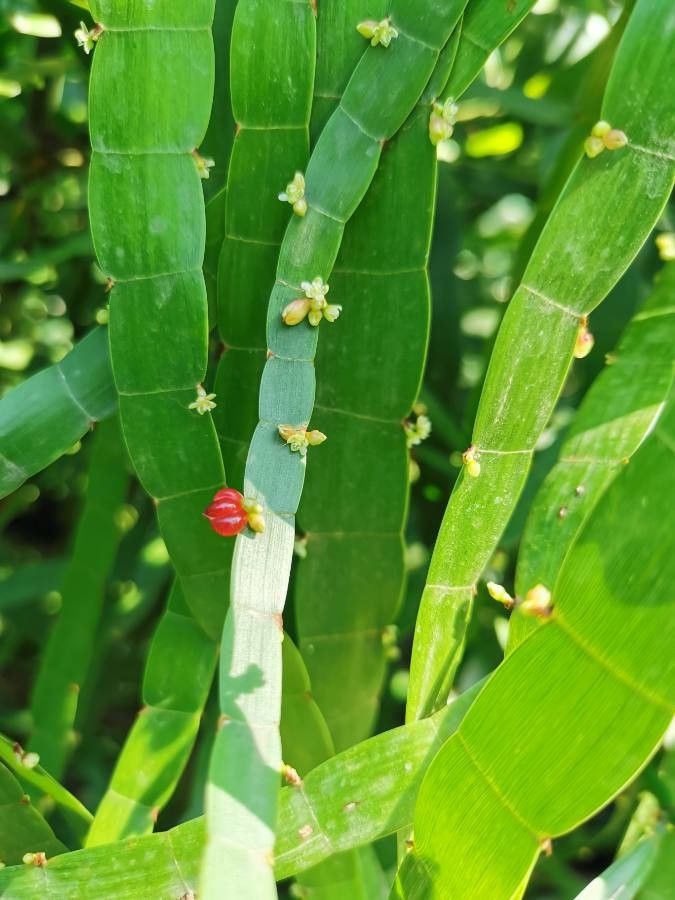
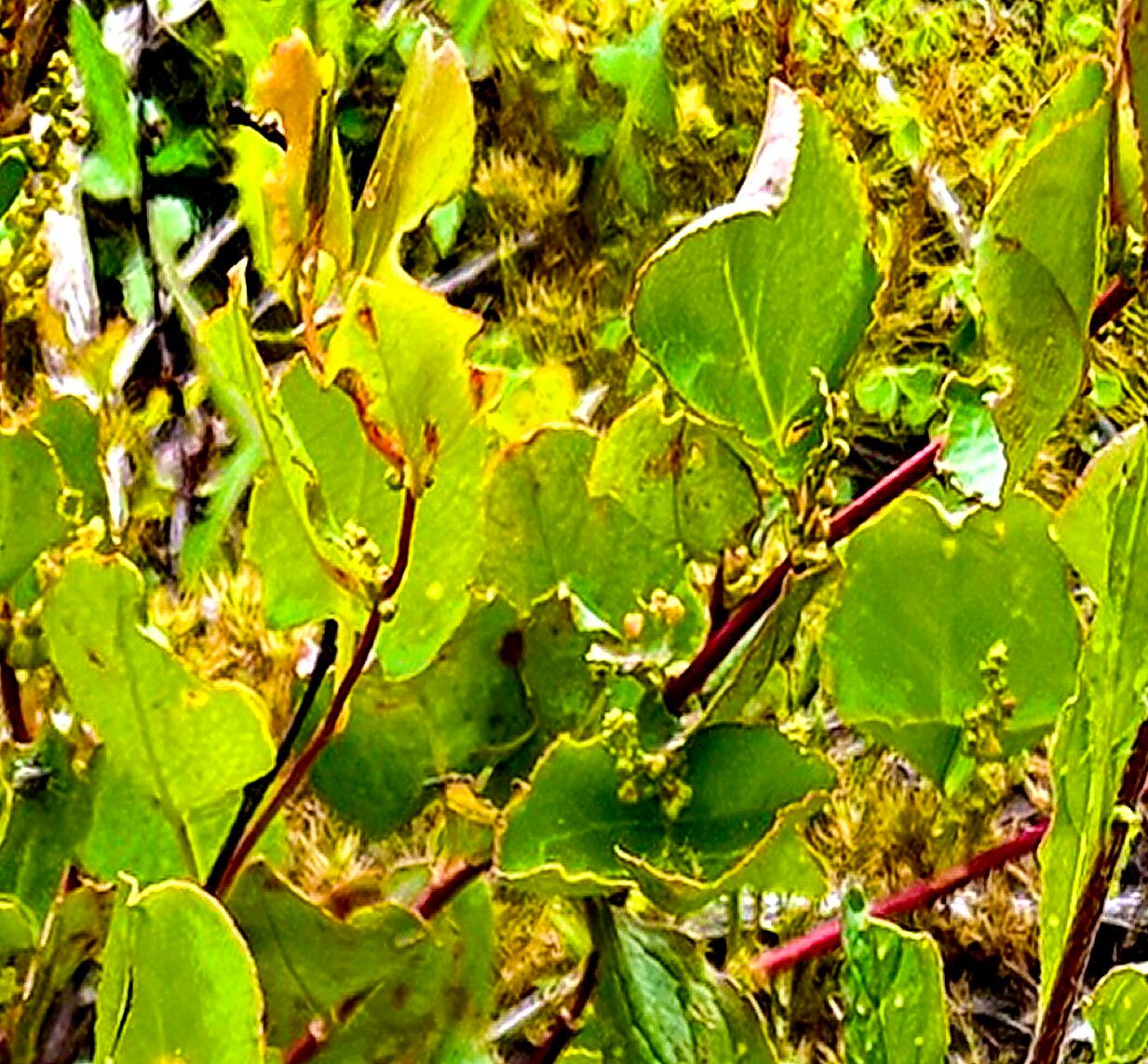
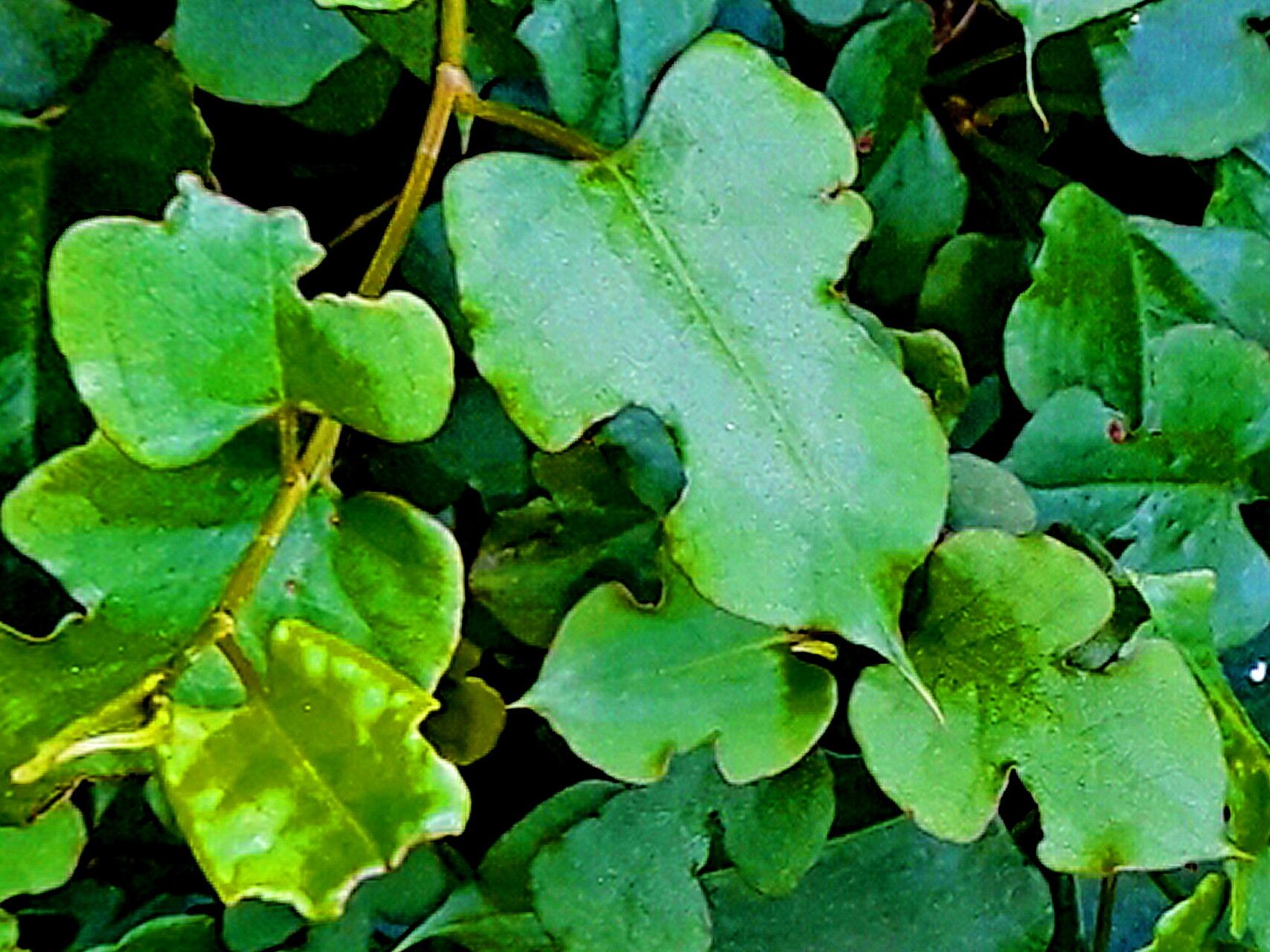
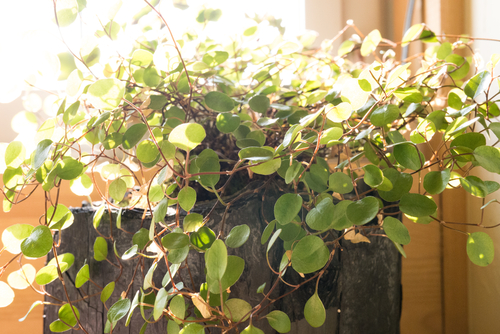
Homalocladium platycladum, or Muehlenbeckia platyclade, is an evergreen shrub native to New Guinea and the Solomon Islands. This shrub has several common names including Ribbon Plant, Tapeworm Plant, and Centipede Plant. Given these names because of its appearance, this plant features almost leafless foliage. Instead, it has green segmented stems. In the autumn to winter months this plant blooms small white to light pink flowers and small red fruits. Although the fruits of this plant are edible, they do not have a very desirable taste.
Tapeworm plant has strong resistance to disease and is usually not susceptible to illnesses. Regarding maintenance, this plant is fairly easy to care for. When grown outdoors it needs only minimal watering, and larger specimens generally do not require pruning. Smaller specimens, however, should be pruned after they finish blooming. Tapeworm plantt is appropriate for anyone with outdoor space, like a garden or a deck, and does not demand extensive care experience.
How to keep Muehlenbeckia Platyclada.
Light
The tapeworm plant flourishes best when it receives ample sunlight, ensuring maximum growth. It can also survive in partially sunny conditions. As a species that naturally evolved in sunny habitats, too much light could damage the plant, while insufficient light might impede its growth.
Water
The tapeworm plant thrives in dry conditions with irregular rainfall and shows moderate drought tolerance. Water it every 2-3 weeks, allowing the soil to become slightly dry between waterings. As an evergreen, the tapeworm plant benefits from consistent moisture but can withstand short dry spells without significant harm.
Temperature
The tapeworm plant hails from regions with a tropical climate, which is marked by warmth and high humidity levels. Consequently, it has adapted to thrive under high heat and humidity conditions. The plant doesn't fare well with abrupt shifts in temperature and prefers a consistent thermal setting. It's crucial to maintain a steady indoor temperature to avoid any fluctuations. Generally, the plant cannot withstand chilly temperatures and needs a warmer environment for its growth. Its growth may halt, or it may even perish if the surrounding temperature goes excessively low.
Fertilizer
Caring for a Tapeworm plant necessitates proper fertilization. Consistent feeding throughout the growth period provides the necessary energy to generate vibrant leaves and promote comprehensive development. Failure to fertilize can lead to sickly leaves, a loss in decorative charm, and inhibited, fragile growth susceptible to snapping.
Pruning
The tapeworm plant has thin, ribbon-like stems and needs pruning from early to late winter. To encourage bushiness and better air circulation, focus on trimming any leggy growth. Regular maintenance helps reduce the risk of pests and diseases, keeping the tapeworm plant vibrant and healthy.
Toxicity
This plant is not considered to be toxic to humans or pets.
Further reading →
The toxicity and danger assessments provided are for reference only. We do not assure their accuracy, so it's crucial not to depend on them. Seek professional advice when necessary for accurate guidance.
Botanical profile.
- Plant Type
- Shrub
- Life Cycle
- Perennial
- Genus
- Muehlenbeckia
- Family
- Polygonaceae
- Hardiness Zone
- 9-11
- Mature Height
- 1.22 m to 2.44 m
- Mature Spread
- 91 cm
- Leaf Color
- Dark Green
- Leaf Type
- Evergreen
- Flower Color
- White
- Flower Size
- 0.20 cm to 0.25 cm
- Bloom Time
- Mid summer, Late summer, Early fall, Mid fall
- Planting Time
- Spring, Summer, Autumn
- Harvest Time
- Fall, Early winter
- Native Area
- New Guinea and the Solomon Islands
Other names.