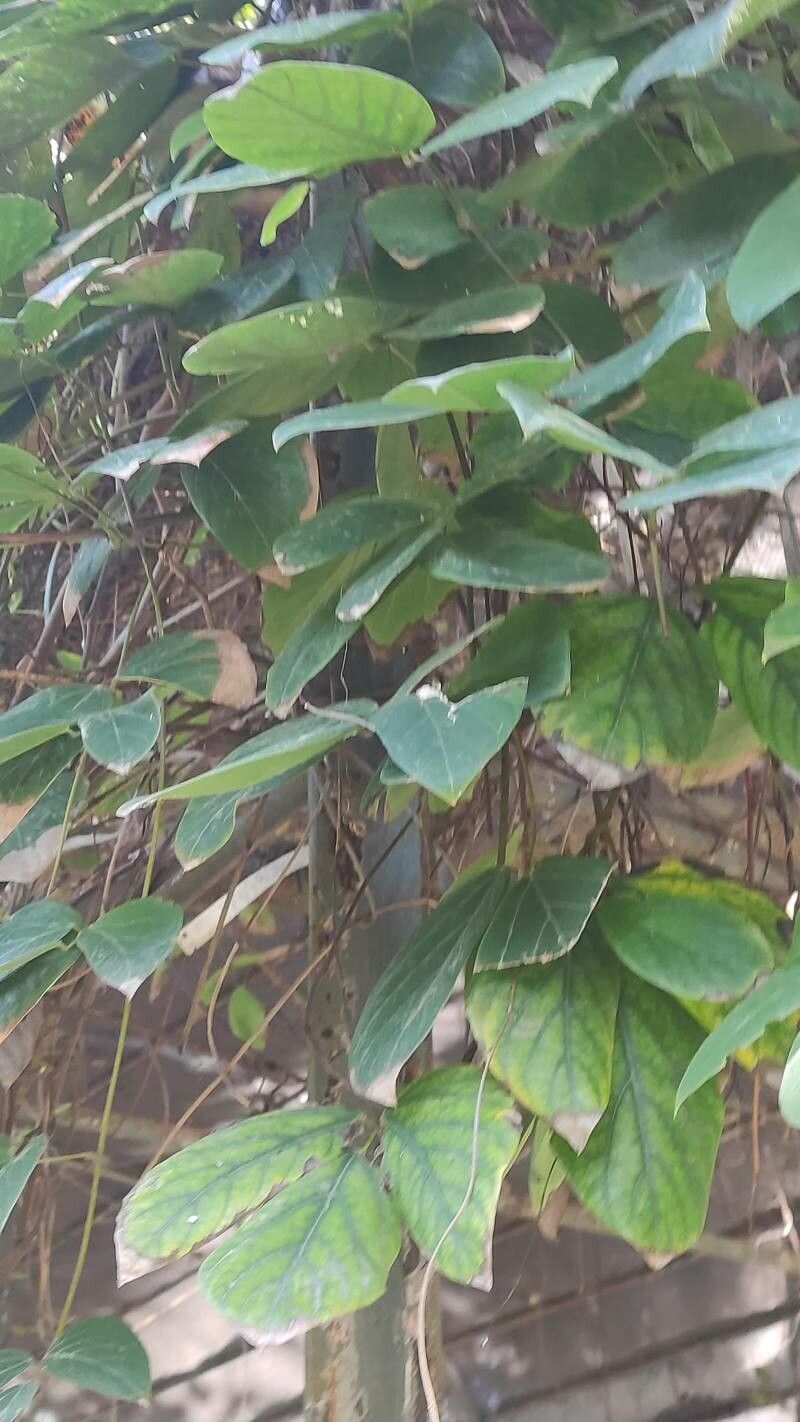
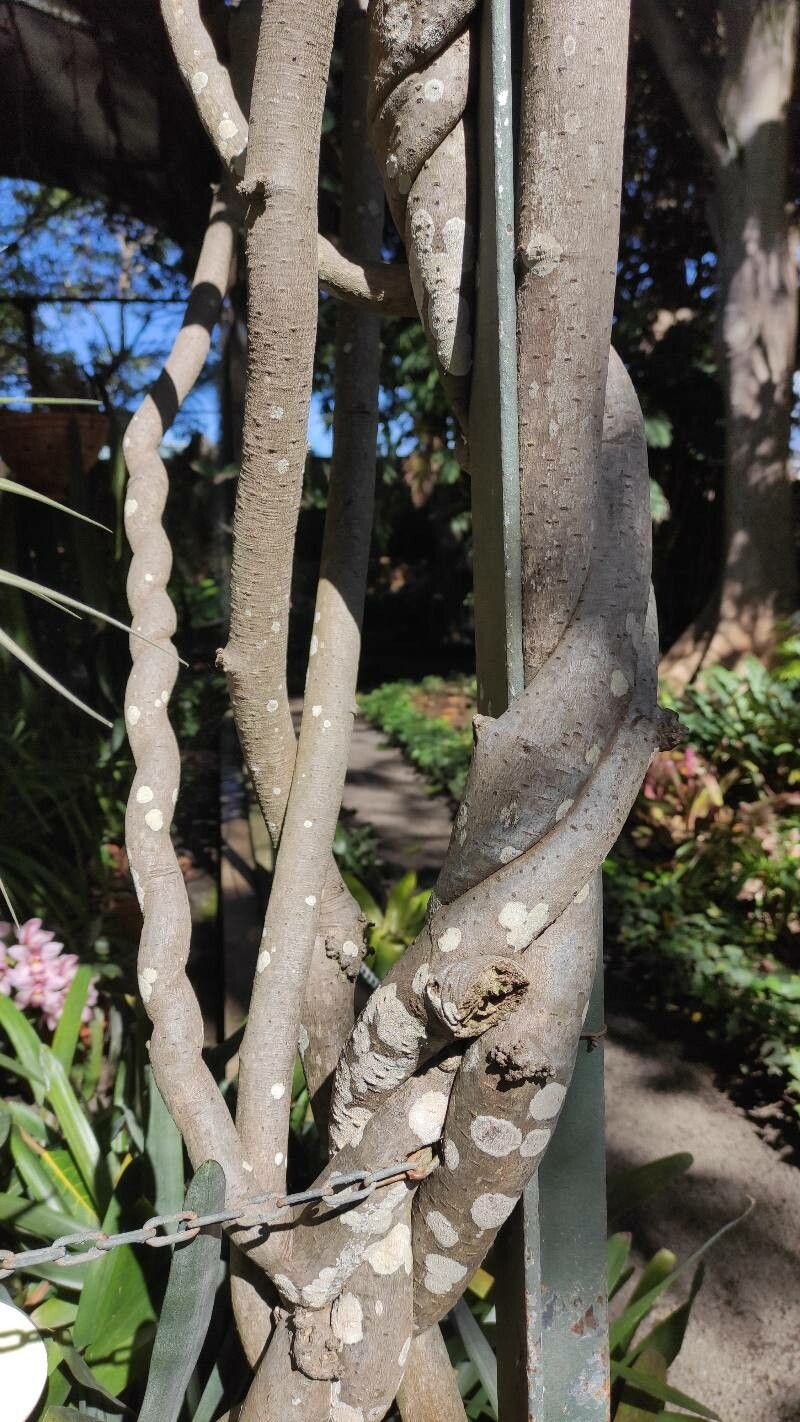
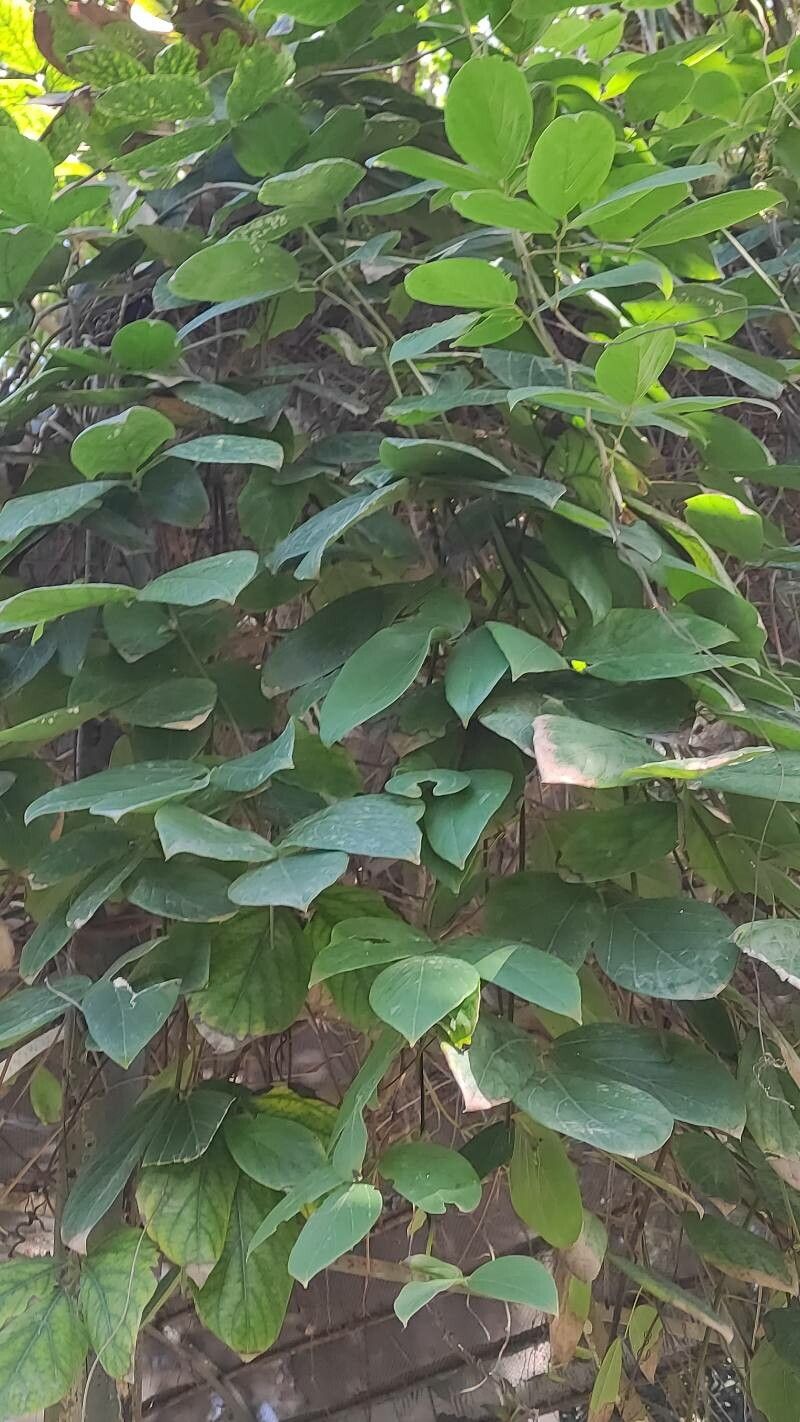
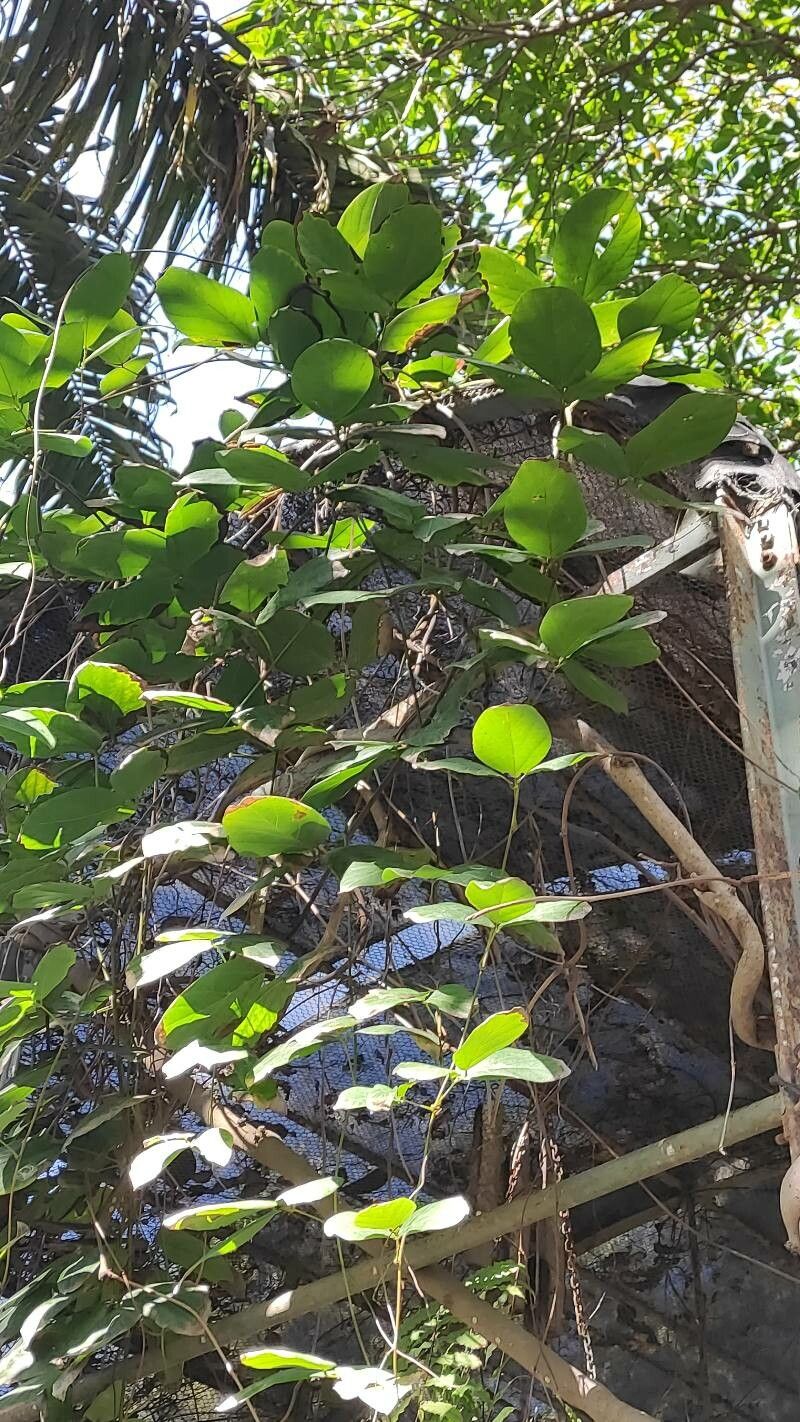
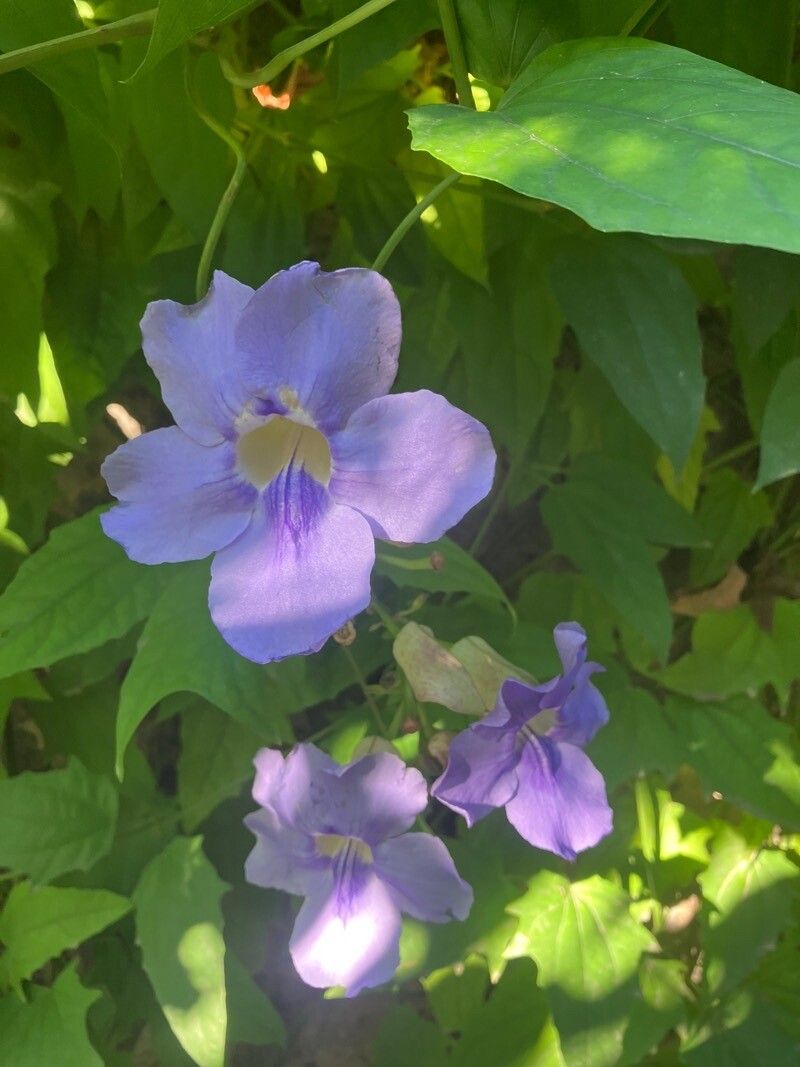
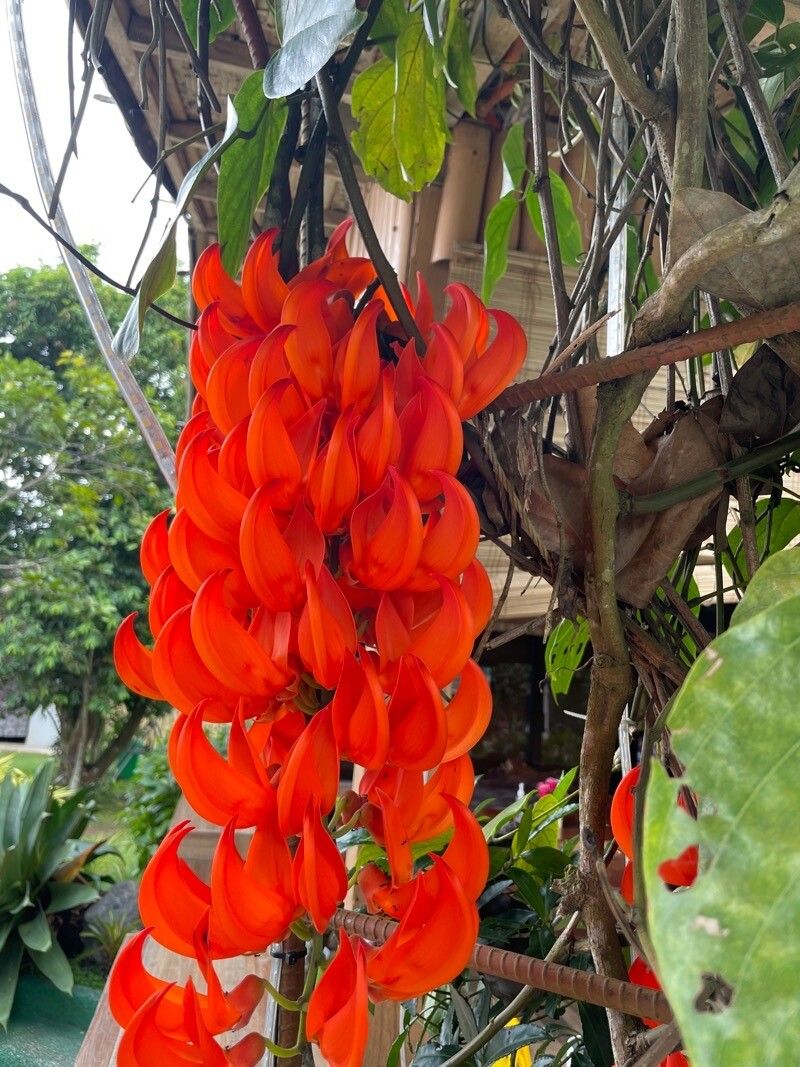
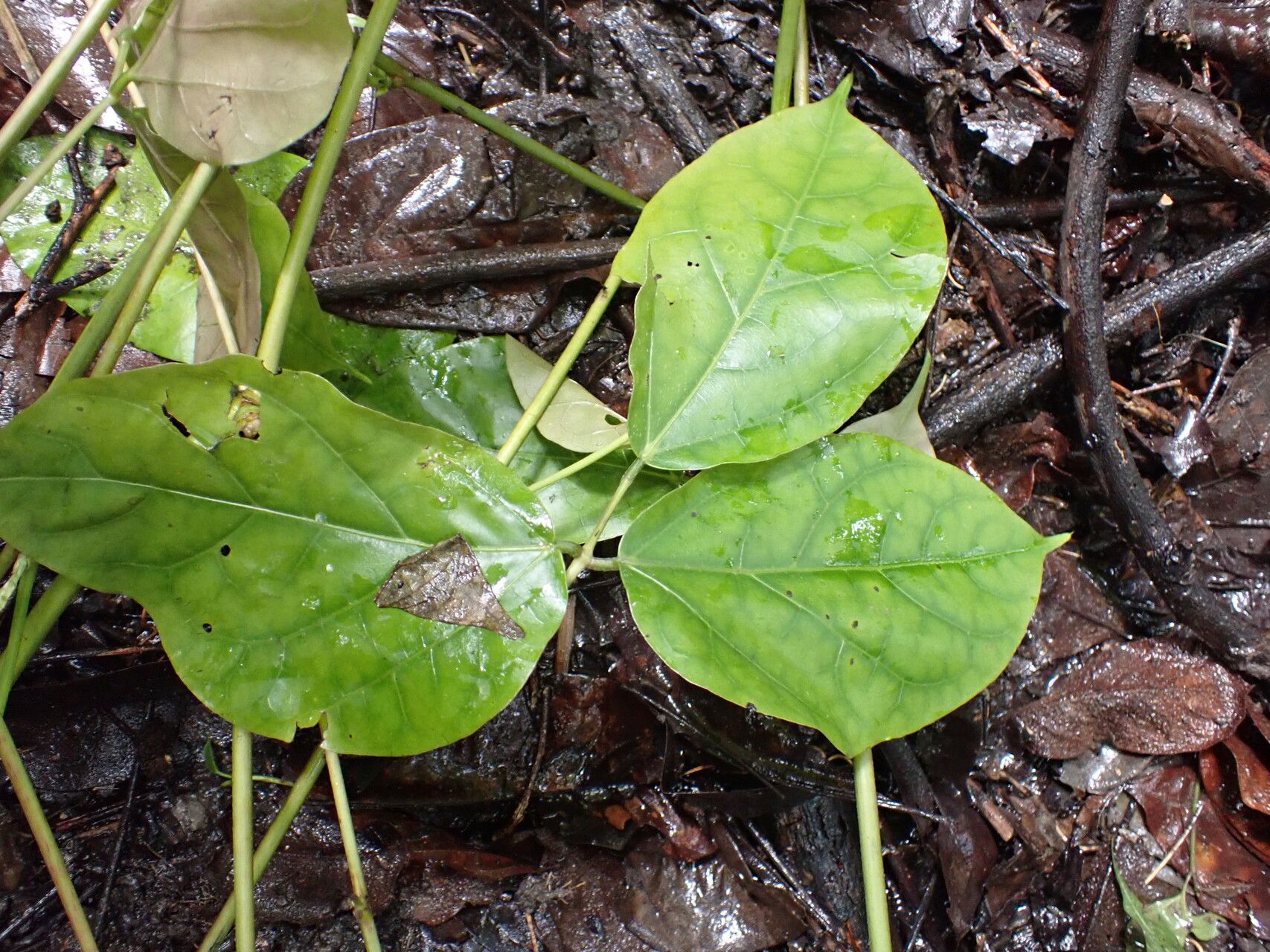
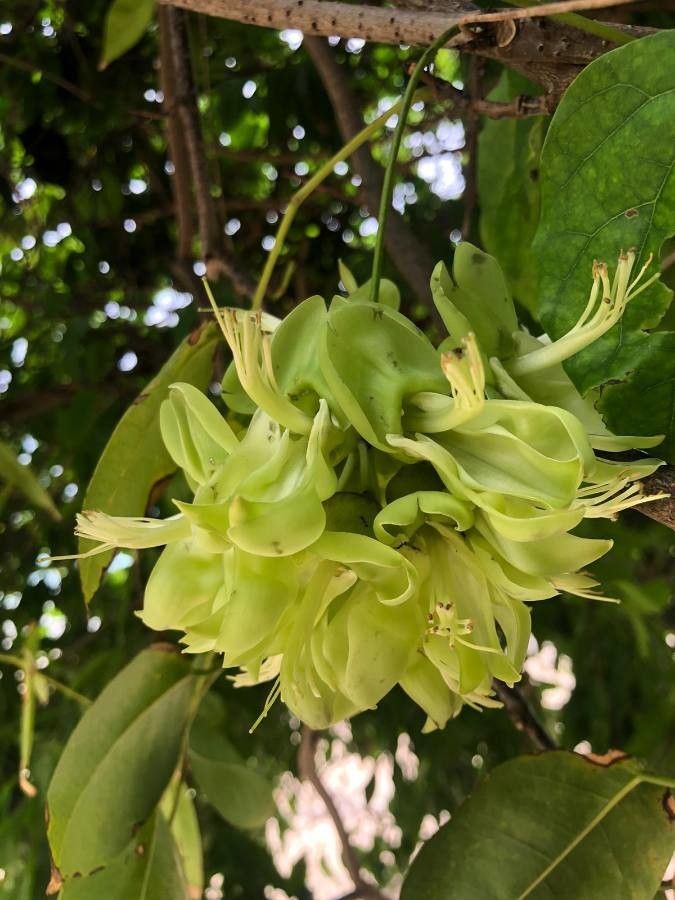
Rusty-leaf muuna has strong resistance to disease and is generally unlikely to suffer from illnesses. In terms of care, this plant is fairly low-maintenance. When grown outdoors, it needs minimal watering, and larger plants typically do not require pruning. Smaller plants, however, should be pruned after they have finished blooming. Rusty-leaf muunat are suitable for anyone with an outdoor area, such as a garden or deck, and do not demand much prior plant-care experience.
How to keep Mucuna Macrocarpa.
Light
Rusty-leaf muuna comes from the understory of tropical forests, where it receives dappled light. It flourishes in partial sun but can also tolerate full sun, adjusting well to different light levels.
Water
The rusty-leaf muuna thrives in humid, tropical environments. It prefers consistent moisture but can tolerate short periods of drought. Watering should be done every 2-3 weeks, allowing the soil to dry out slightly between waterings. Its growth cycle is synchronized with the rainy season, which replenishes water supplies and supports its development.
Temperature
Rusty-leaf muuna originates from habitats with temperatures between 68 and 100.4 °F (20 to 38 °C). This woody plant prefers warmer climates. You may need to adjust its environment seasonally to keep temperatures within its preferred range for growth.
Fertilizer
The best time to fertilize a Rusty-leaf muuna is in early spring, when it comes out of dormancy. Doing so supports overall growth and the development of flowers. Fertilization improves the foliage, stems, and branches, and encourages flowers that are larger, more vibrant, and longer-lasting. It also helps move nutrients from the roots to the flowers and enhances the plant’s health and resistance to disease.
Pruning
The Rusty-leaf Muuna, known for its rust-colored foliage, benefits from pruning in early spring before new growth begins. Essential practices include removing dead branches and thinning out dense areas to improve air circulation. It is important to use sharp tools and to avoid heavy pruning during periods of active growth. Consistent maintenance helps prevent pests and diseases.
Botanical profile.
- Plant Type
- Shrub
- Life Cycle
- Perennial
- Genus
- Mucuna
- Family
- Fabaceae
- Hardiness Zone
- 9-11
- Mature Height
- 14.94 m
- Mature Spread
- 4.88 m to 7.92 m
- Leaf Color
- Green, Dark Green
- Leaf Type
- Deciduous
- Flower Color
- Purple
- Flower Size
- 5.08 cm to 22.86 cm
- Bloom Time
- Late spring, Early summer
- Planting Time
- Spring, Summer, Autumn
- Harvest Time
- Mid summer, Late summer, Early fall
- Native Area
- Nepal, India, Vietnam, Myanmar, Japan, Bhutan, Laos, Thailand, China
Reader questions.
What is the native environment for Rusty-leaf muuna?
The Rusty-leaf muuna, botanically known as Mucuna macrocarpa, thrives naturally in environments where temperatures range between 68 to 100.4 °F (20 to 38 °C). This woody plant has a strong preference for warmer climates, indicating its need for a habitat that remains consistently warm throughout the year. Given its sensitivity to temperature changes, it may be necessary to adjust its environment seasonally to keep the conditions within its preferred temperature range, especially to protect it from colder temperatures that could be detrimental to its growth.
How should Rusty-leaf muuna be cared for in colder temperatures?
Rusty-leaf muuna, being extremely sensitive to cold, requires careful management during the cooler months. It is recommended to bring outdoor-grown Rusty-leaf muuna indoors in the autumn to protect it from the cold. The ideal spot would be near a bright window, providing ample light without direct exposure to heaters, which could adversely affect the plant's humidity and temperature conditions. Maintaining an indoor temperature above 20°C during winter is crucial to its health. Exposure to temperatures approaching 0°C or lower can harm the plant, potentially causing frost damage.
What are the symptoms and solutions for Rusty-leaf muuna experiencing low temperatures?
Rusty-leaf muuna shows clear distress when exposed to temperatures below its comfort zone. Symptoms of cold stress include a lightening of leaf color when temperatures dip below -5°C, progressing to browning or blackening and signs of wilting or drooping after frost damage. To rescue a cold-stressed Rusty-leaf muuna, it's important to firstly trim off the frost-damaged sections. Then, relocate the plant to a warmer indoor setting, preferably near a south-facing window to ensure it receives enough sunlight. Avoid placing the plant too close to heaters or air conditioning vents as these can create overly dry conditions that are not favorable for the plant's recovery.
What should be done if Rusty-leaf muuna is exposed to high temperatures?
Despite its preference for warmth, Rusty-leaf muuna has limits to the heat it can endure. During the summer, it's crucial to ensure the plant's environment does not exceed 38°C. Exposure to temperatures above 43°C can lead to a lightening of the leaves and increase the risk of sunburn. If such symptoms occur, it is advisable to prune away the sunburned or dried portions of the plant. Then, move the Rusty-leaf muuna to a spot where it can be shielded from the intense midday and afternoon sun. Regular watering, particularly in the mornings and evenings, will help keep the soil moist and aid in the plant's recovery from heat stress.