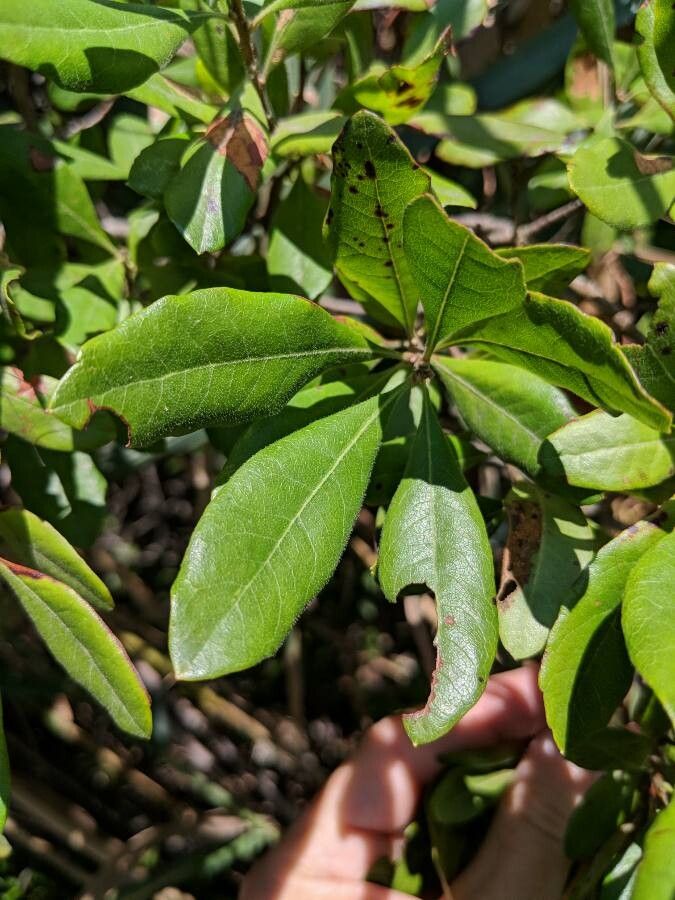
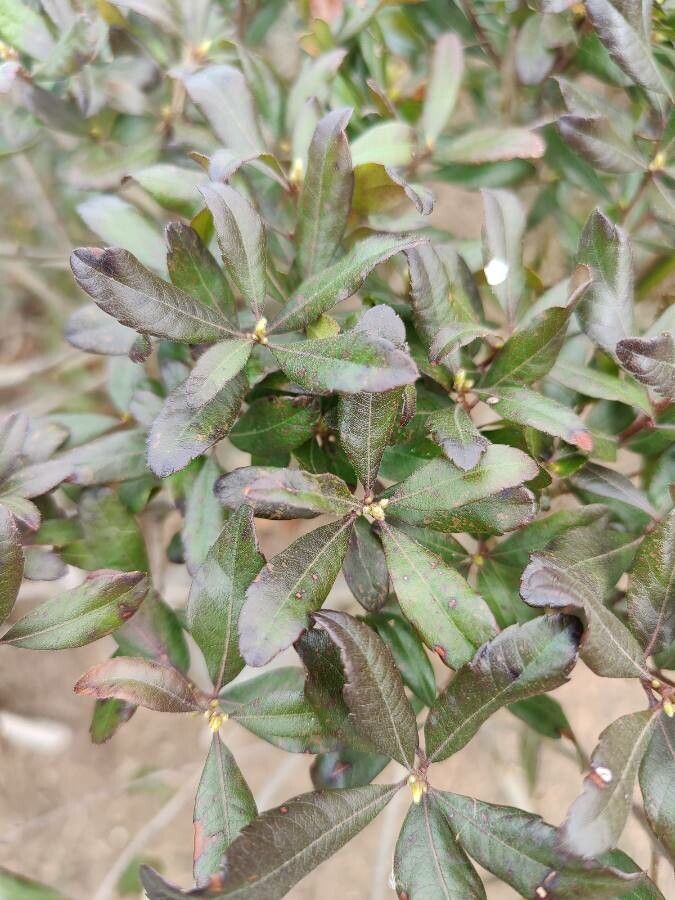
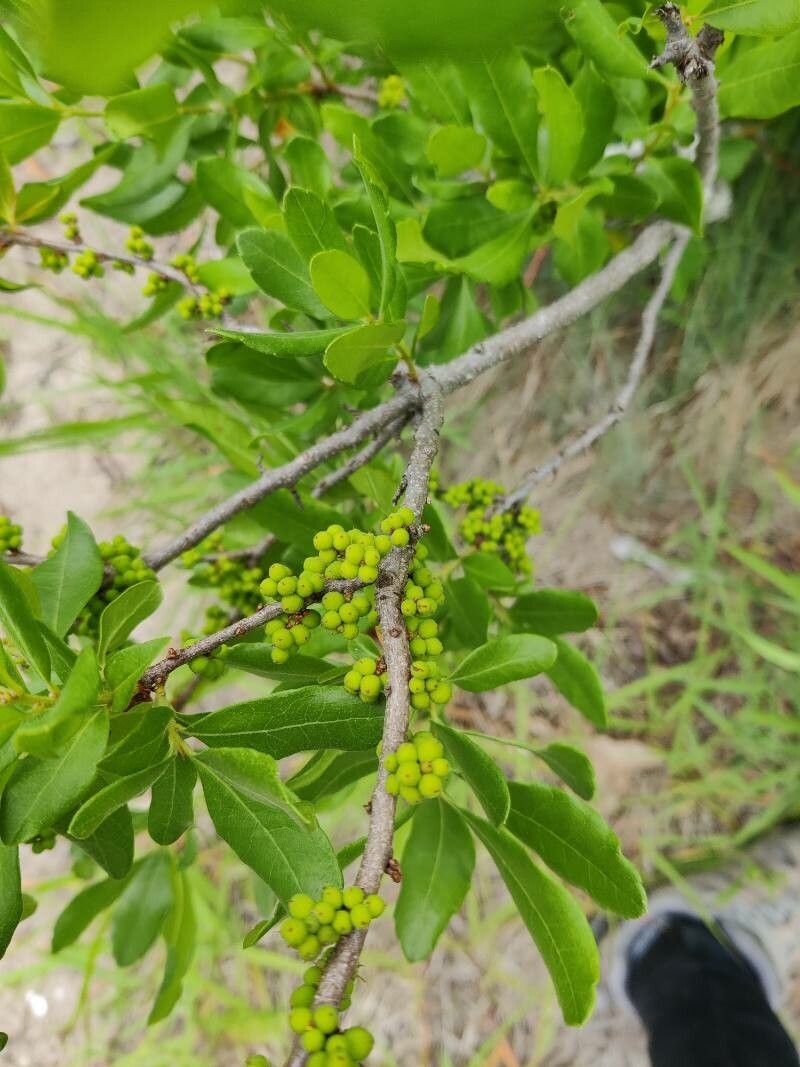
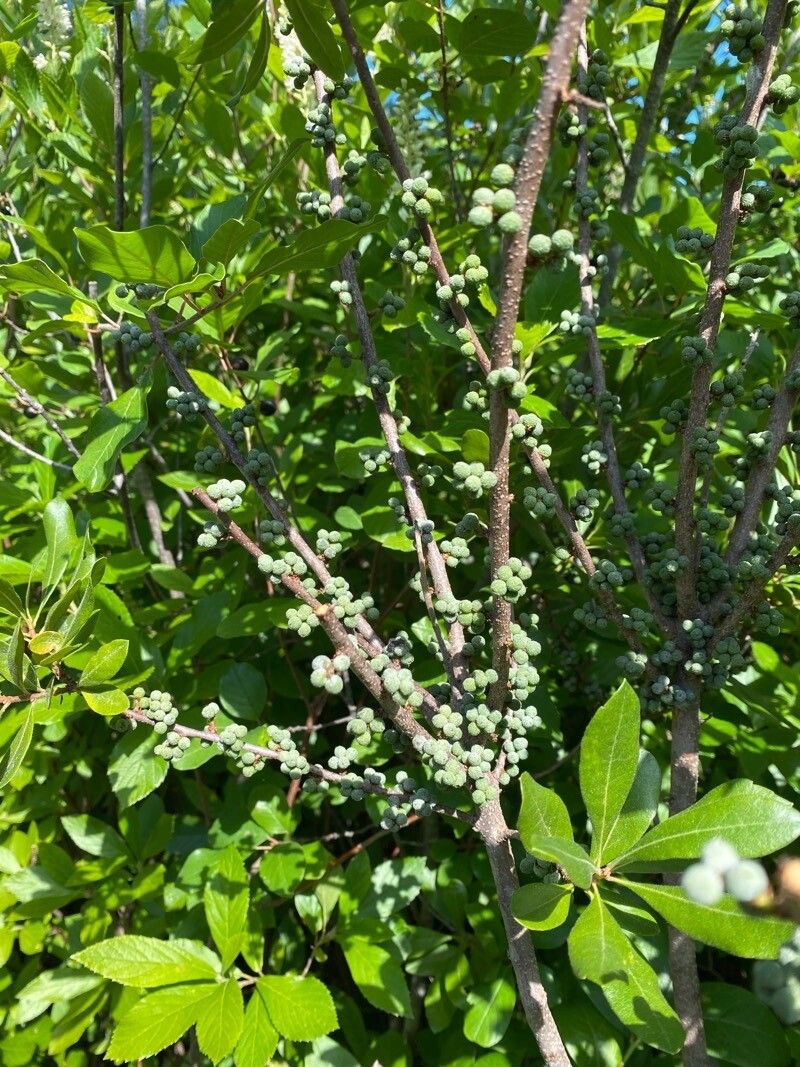
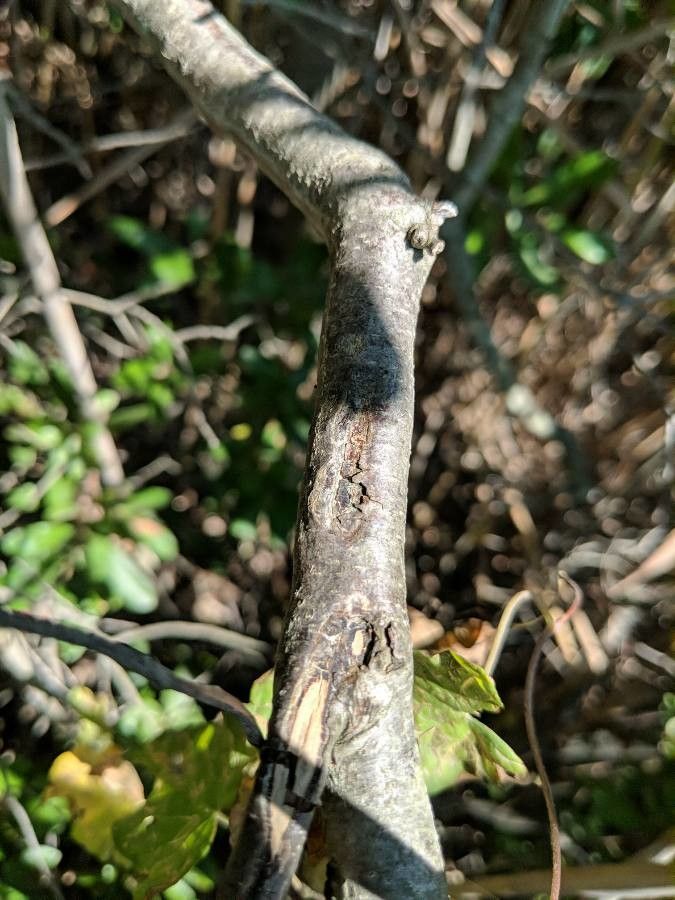
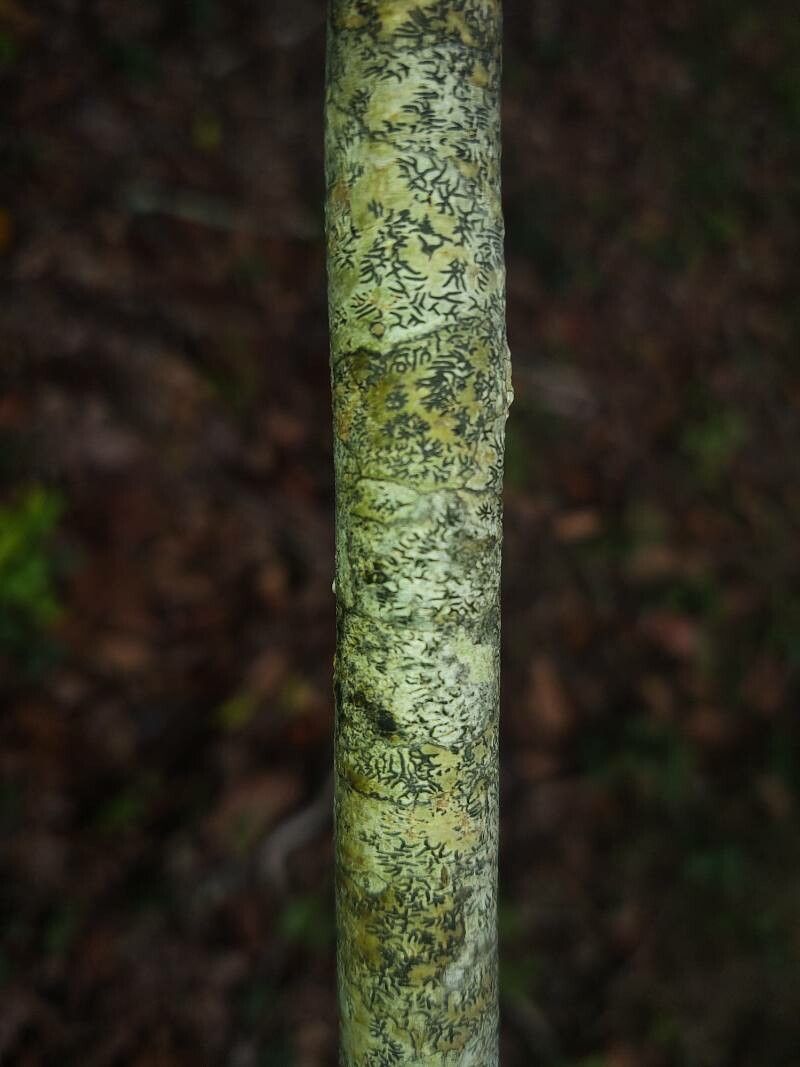
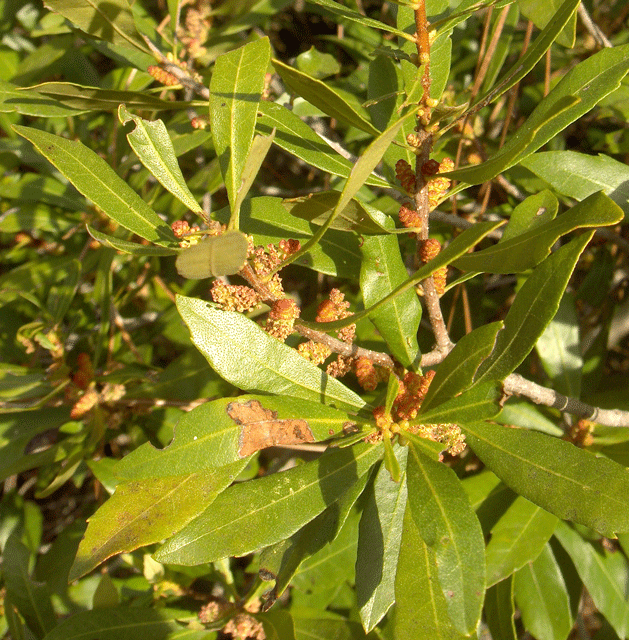
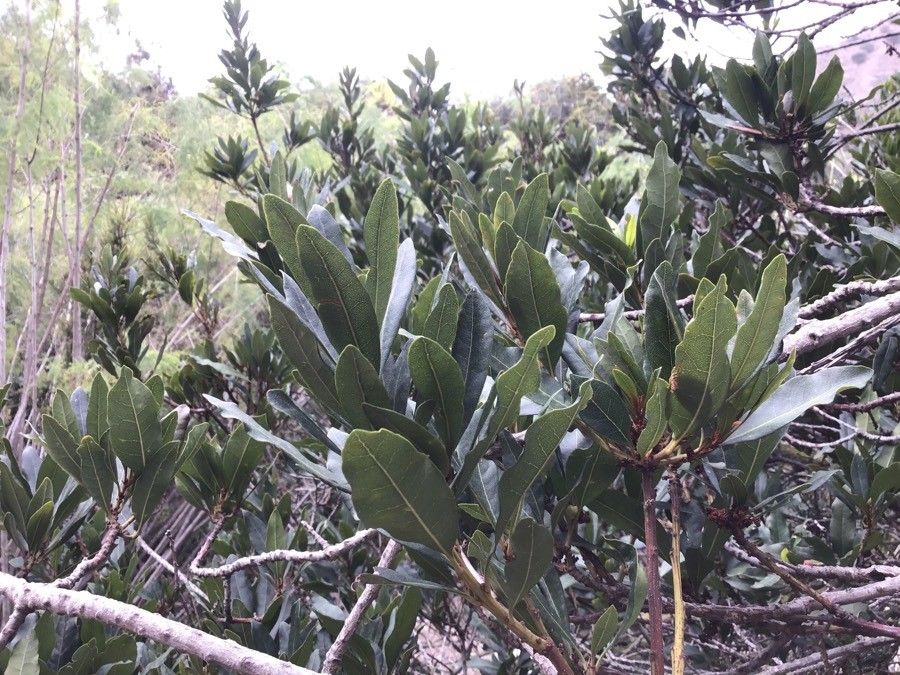
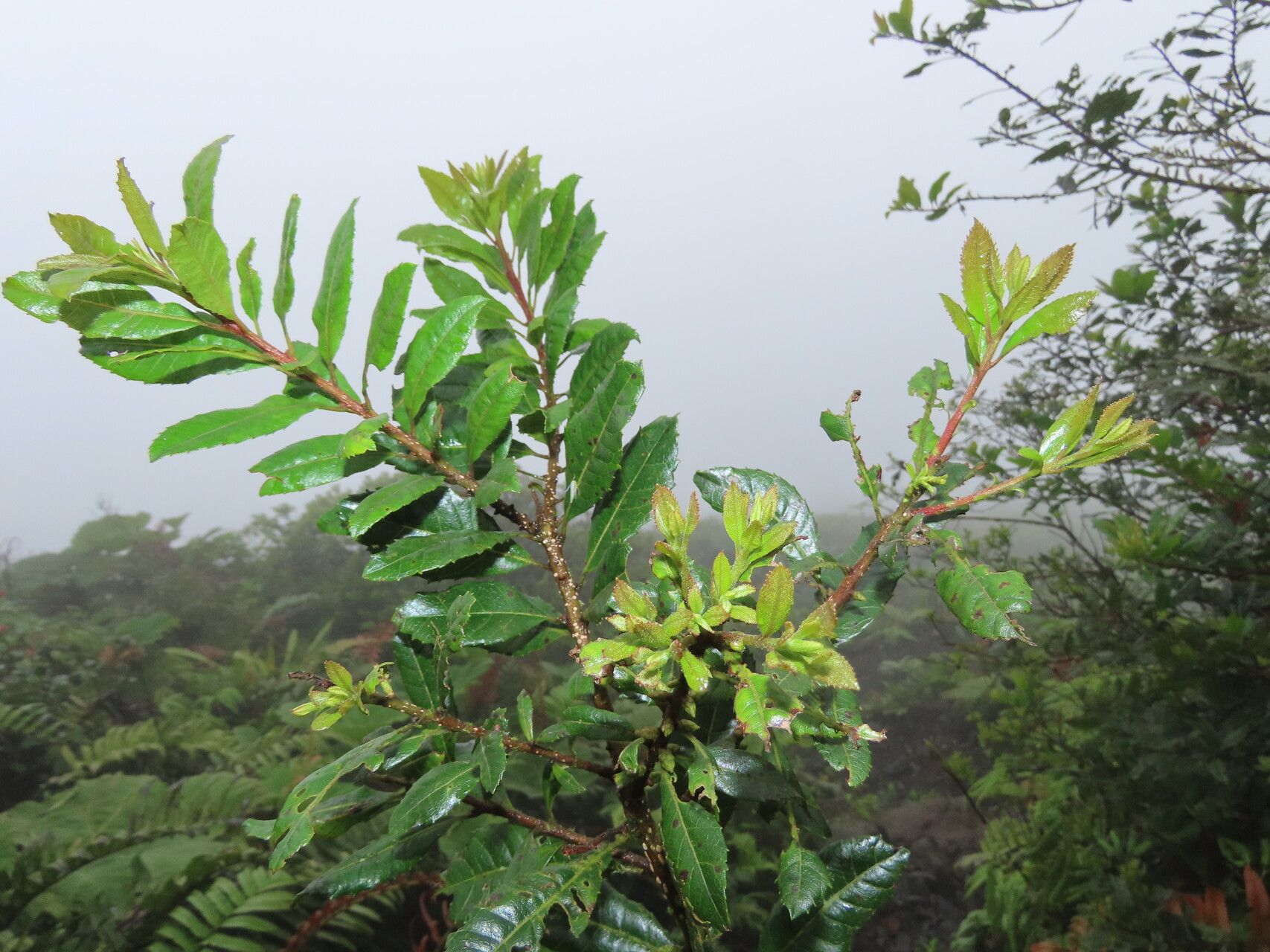
Myrica pensylvanica, the northern bayberry, is a species of Myrica native to eastern North America, from Newfoundland west to Ontario and Ohio, and south to North Carolina. It is also classified as Morella pensylvanica. Myrica pensylvanica is a deciduous shrub growing to 4.5 m tall. The leaves are 2.5–7 cm long and 1.5-2.7 cm broad, broadest near the leaf apex, serrate, and sticky with a spicy scent when crushed. The flowers are borne in catkins 3–18 mm long, in range of colors from green to red. The fruit is a wrinkled berry 3–5.5 mm diameter, with a pale blue-purple waxy coating; they are an important food for yellow-rumped warblers. This species has root nodules containing nitrogen-fixing microorganisms, allowing it to grow in relatively poor soils.
Northern bayberry is fairly disease-resistant and typically does not get sick. For care, this plant is fairly low-maintenance. When grown outdoors it needs little water, and larger specimens usually do not require pruning. Smaller plants, however, should be trimmed after they finish blooming. Northern bayberryt is appropriate for anyone with an outdoor area, like a garden or deck, and does not demand much prior care experience.
How to keep Morella Pensylvanica.
Light
For optimal growth, northern bayberry mainly needs full sun, though it can tolerate moderately shady conditions. Native to sunny habitats, its developing fruits thrive in those conditions. Excessive shade can hinder growth, whereas too much sun does not cause damage.
Water
Northern bayberry originates from environments with varying moisture levels, making it moderately drought-tolerant. It thrives when the soil is allowed to dry slightly between waterings, usually every 1-2 weeks. When grown outdoors in temperate regions, applying mulch helps retain moisture and protects the roots during the growing season.
Temperature
Northern bayberry grows best in temperate climates and prefers temperatures from 41 to 95 ℉ (5 to 35 ℃). It comes from areas with a range of temperature patterns but generally favors cooler conditions during its growing season. In hot summer periods, it is advisable to provide shade and generous watering to prevent the plant from drying out.
Fertilizer
Apply fertilizer to your Northern bayberry in early spring to encourage healthy growth. Consistent fertilization improves overall health, producing robust growth, greater tolerance of adverse conditions, and enhanced resistance to pests and diseases. Follow a regular fertilizing routine for your Northern bayberry to maintain vibrant, deeply colored foliage and a lush appearance.
Pruning
Northern bayberry is known for its dense, aromatic foliage and berries that attract wildlife. To maintain its health and appearance, prune the plant in early spring. Focus on removing any dead or crowded branches to improve air circulation. Every 2-3 years, perform rejuvenation pruning to promote new growth. Make sure to make clean cuts at a 45-degree angle to help control the plant's size, encourage berry production, and enhance its ornamental appeal.
Pot & Repot
When repotting Northern bayberry, choose a pot 1-2 inches (2.5-5.0 cm) larger with ample drainage. Use a well-draining potting mix. Repot in spring or fall, ensuring that the root ball sits slightly lower than the rim of the flower pot. Water thoroughly after repotting and place it in a warm spot with indirect sunlight.
Botanical profile.
- Plant Type
- Shrub
- Life Cycle
- Perennial
- Genus
- Morella
- Family
- Myricaceae
- Hardiness Zone
- 5-9
- Mature Height
- 4.57 m
- Mature Spread
- 2.44 m to 4.57 m
- Leaf Color
- Green, Blue
- Leaf Type
- Semi-evergreen, Deciduous
- Flower Color
- Yellow, Green, Orange
- Flower Size
- 0.25 cm to 1.78 cm
- Bloom Time
- Mid spring, Late spring
- Planting Time
- Spring, Autumn
- Harvest Time
- Early spring, Mid spring, Mid summer, Late summer, Fall, Winter
Other names.
Reader questions.
What are the sunlight requirements for Northern Bayberry?
Northern Bayberry requires full sun exposure, which means it needs more than 6 hours of sunlight daily for ideal growth. However, it can also tolerate partial sun, receiving about 3-6 hours of sunlight. It's essential to monitor the movement of sunlight in your garden to find spots providing the perfect balance for your plants. Too much shade might hinder the plant's growth, but an excess of sun typically doesn't cause damage.
What is the preferred temperature range for Northern Bayberry?
Northern Bayberry thrives in temperate climates, with a preferred temperature range of 41 to 95°F (5 to 35°C). It is well-suited to regions that generally experience cooler temperatures during its growing season. To support its growth during the hot summer months, it's beneficial to provide the plant with shade and ample watering to prevent it from drying out.
How can artificial lighting support Northern Bayberry's growth indoors?
Indoor Northern Bayberry plants require adequate lighting to thrive, especially when natural sunlight is insufficient, like in winter or less sunny spaces. Artificial lights, especially LED lights, are beneficial as they can be adjusted to provide specific wavelengths of light. Full sun plants need 30-50W/sq ft, partial sun plants 20-30W/sq ft, and full shade plants 10-20W/sq ft of artificial light. The light source should be placed 12-36 inches above the plant, mimicking natural sunlight conditions for 8-12 hours per day to promote healthier growth.
Does Northern Bayberry need frost protection in winter?
Northern Bayberry exhibits strong cold resistance, meaning special frost protection measures are not typically required during winter. However, if winter temperatures are expected to fall below -25°C, it's important to take steps to protect the plant from the cold. Wrapping the trunk and branches with non-woven fabric or cloth, and ensuring the soil is moist and frozen by watering abundantly before the first freeze in autumn, can help protect the plant from drought and water scarcity in winter and early spring.
What are the signs of insufficient lighting in Northern Bayberry?
Insufficient lighting can cause several symptoms in Northern Bayberry, including smaller new leaves, leggy or sparse growth, faster leaf drop, slower or no new growth, and lighter-colored or yellow leaves indicating chlorosis. Excessive sunlight might lead to leaf curling, wilting, leaf scorching, and sunscald, damaging the plant's tissue and health. Identifying these symptoms early can help in taking corrective actions to improve the plant's exposure to light.
How does Northern Bayberry react to low temperatures?
Northern Bayberry is quite cold-tolerant, thriving best when temperatures are above 5°C. While it should ideally be kept above -20°C during winter, temperatures falling below -25°C might not show immediate damage, but can lead to branches becoming brittle and dry by spring. This results in no new shoots emerging. To combat this, dead branches that fail to produce new leaves in the spring should be pruned away.
What solutions can help improve Northern Bayberry's light exposure?
To optimize Northern Bayberry's growth, gradually introduce the plant to sunnier locations, increasing exposure to at least 6 hours of direct sunlight for indoor plants. Using south-facing windows or artificial grow lights for at least 8 hours daily can also provide additional light. Outdoors, move plants gradually to sunnier spots, avoiding sudden light intensity changes to prevent sunburn. Minimizing obstructions and transplanting to sunlight-rich locations with good drainage can significantly benefit the plant's health and growth.
What should be done if Northern Bayberry experiences high temperatures?
In the summer, Northern Bayberry should be kept below 35°C to avoid heat stress. When temperatures exceed 38°C, the plant's leaves may lighten in color, and the tips can dry out and wither, making the plant more susceptible to sunburn. The solution includes trimming away sunburned and dried-up parts of the plant, providing shade during the midday and afternoon sun, or using a shade cloth. Additionally, watering the plant in the morning and evening helps keep the soil moist, aiding in its overall health during high temperature periods.