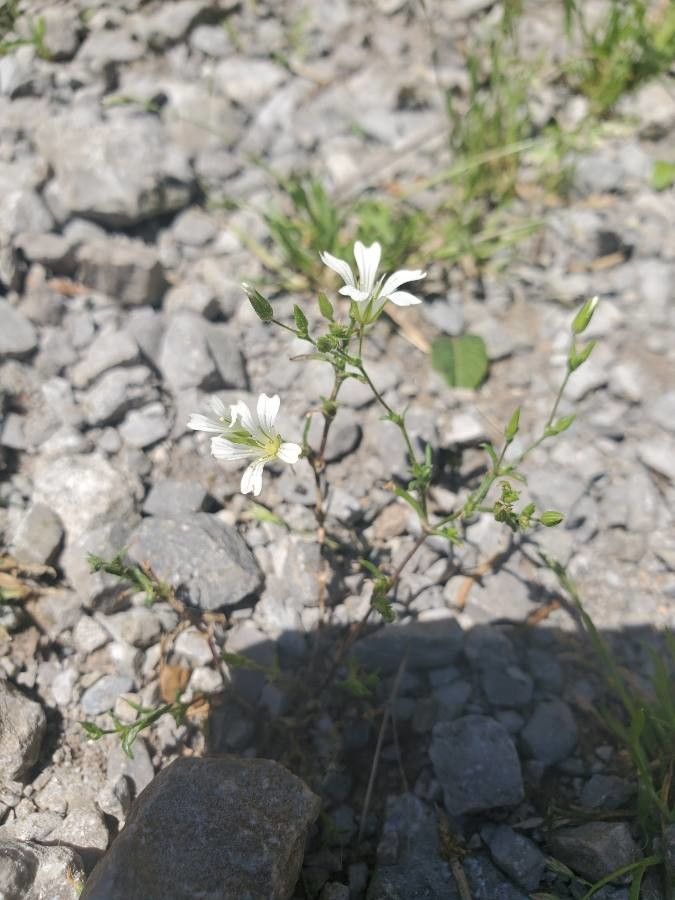
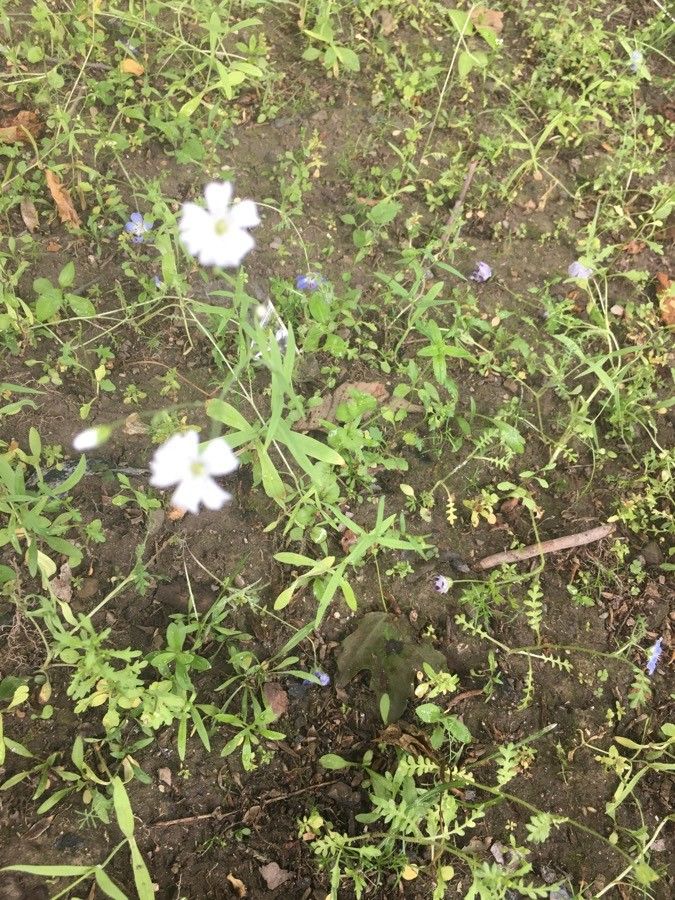
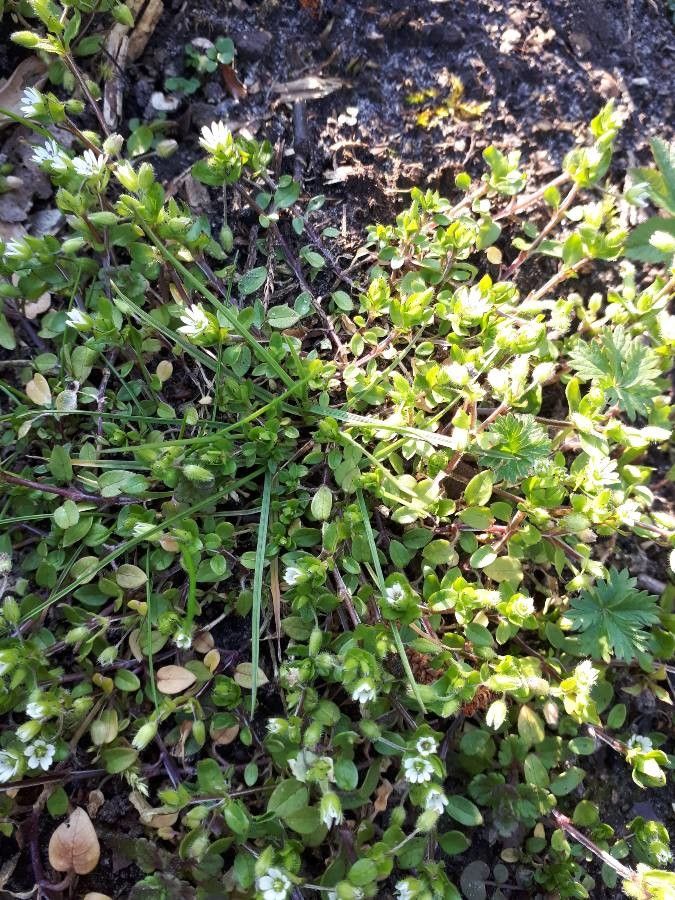
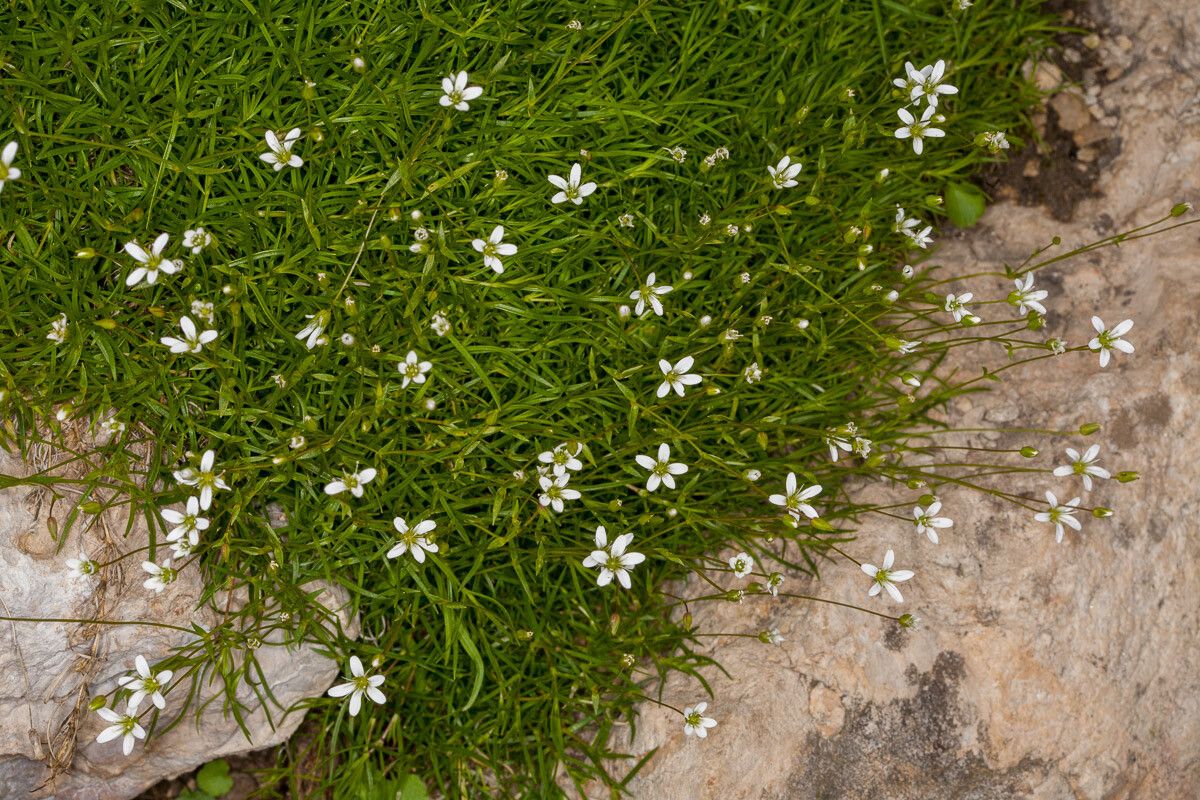
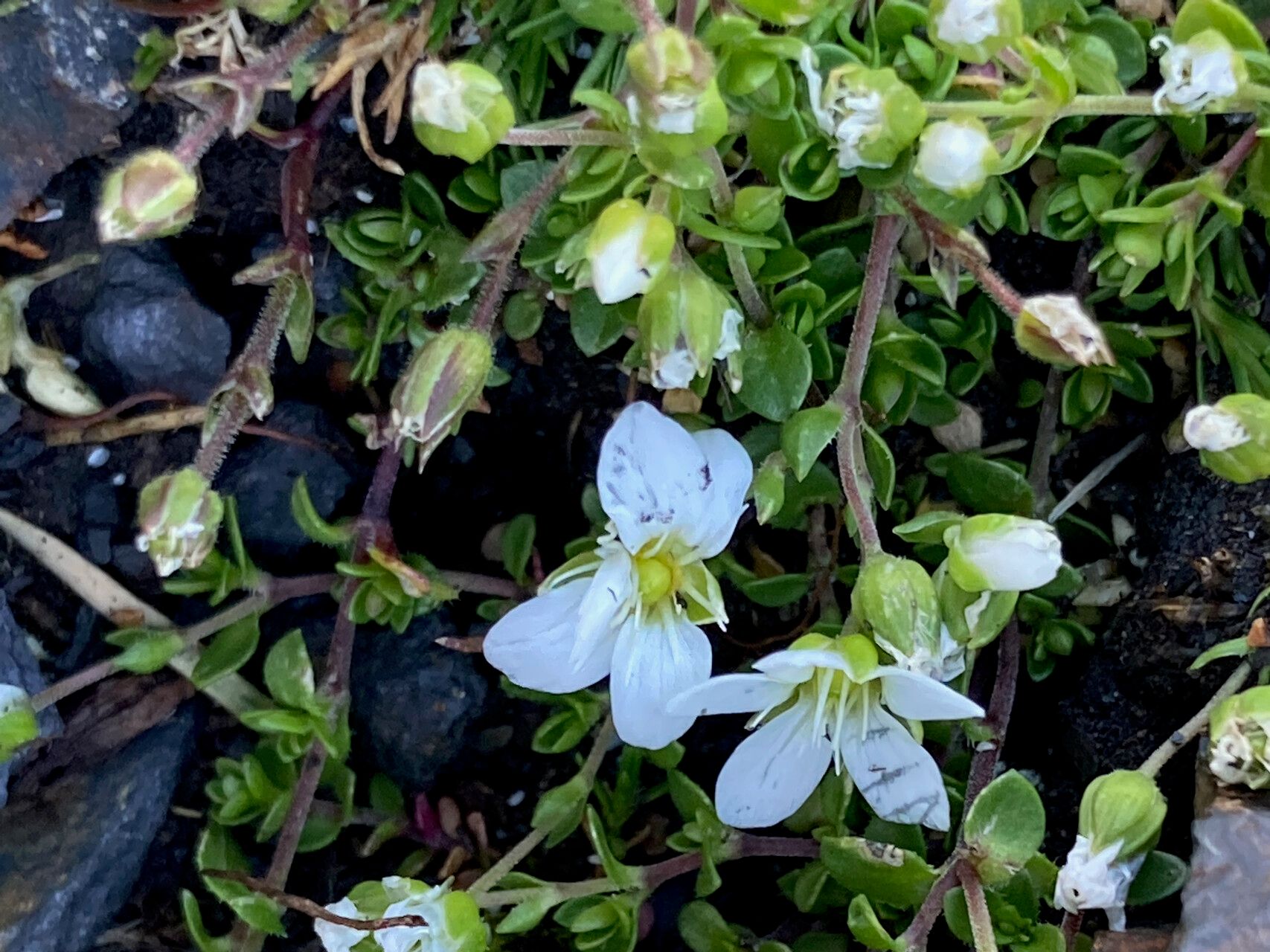
Minuartia patula, common names pitcher's stitchwort or lime-barren sandwort, is an annual plant in the family Caryophyllaceae. It is native to sections of the eastern and central United States, primarily the lower Mississippi Valley, the southern Great Plains, and the Tennessee Valley, with additional scattered populations in Georgia, Virginia, Pennsylvania, and the southern Great Lakes region.Minuartia patula is found on limestone outcrops and in rocky barrens and glades. It is a small, delicate annual species with thin red stems up to 30 centimetres (1 ft) long, erect (upright) or ascending (trailing along the ground at first, then curving upwards). It very often has numerous stems crossing each other so as to form a clump of many stems. Leaves are in pairs, narrow and rarely more than 20 millimetres (0.8 in) long. Flowers are white, forming in the spring then quickly wilting.Minuartia patula is highly variable throughout its range, and multiple varieties have been named, though none of these is widely accepted today.
Pitcher's Stitchwort is fairly disease-resistant and generally not prone to illness. However, it can be vulnerable to pests and diseases present in its surroundings. These infections are typically not severe. Regarding care, this plant requires moderate maintenance. It needs regular pruning to keep a good appearance and support healthy growth. Fertilizing can also help encourage flowering. Pitcher's Stitchwort is suitable for anyone with outdoor space, like a garden or patio, and does not need extensive care experience. It may need more attention when grown indoors.
How to keep Minuartia Patula.
Light
Pitcher's Stitchwort comes from sunny, open habitats and does best in full sun. It can tolerate partial sun but prefers direct sunlight for optimal growth. This plant, which may be annual or biennial, is known for its sun-loving nature.
Temperature
Pitcher's Stitchwort can tolerate a wide range of temperatures, but its distribution may still be restricted by various combinations of moisture and heat. It performs best in warm summer conditions when it receives sufficient rainfall or watering. Extended spells of cloudy, rainy weather or prolonged high temperatures can raise the likelihood of Pitcher's Stitchwort dying. In winter, protecting it from cold can increase its chances of survival.
Fertilizer
Pitcher's Stitchwort does well with regular, light applications of fertilizer to encourage healthy leaf development. Fertilize about once a month during the summer. Nitrogen is essential for foliage, and providing nitrogen-rich sources helps Pitcher's Stitchwort thrive.
Botanical profile.
- Plant Type
- Herb
- Life Cycle
- Annual
- Genus
- Minuartia
- Family
- Caryophyllaceae
- Hardiness Zone
- 5-9
- Mature Height
- 0 cm to 30 cm
- Mature Spread
- 10 cm to 30 cm
- Leaf Color
- Green
- Leaf Type
- Semi-evergreen
- Flower Color
- White
- Flower Size
- 0.51 cm to 1.02 cm
- Bloom Time
- Mid spring, Late spring
- Planting Time
- Spring, Summer
- Harvest Time
- Early summer, Mid summer
- Native Area
- Mexico
Other names.