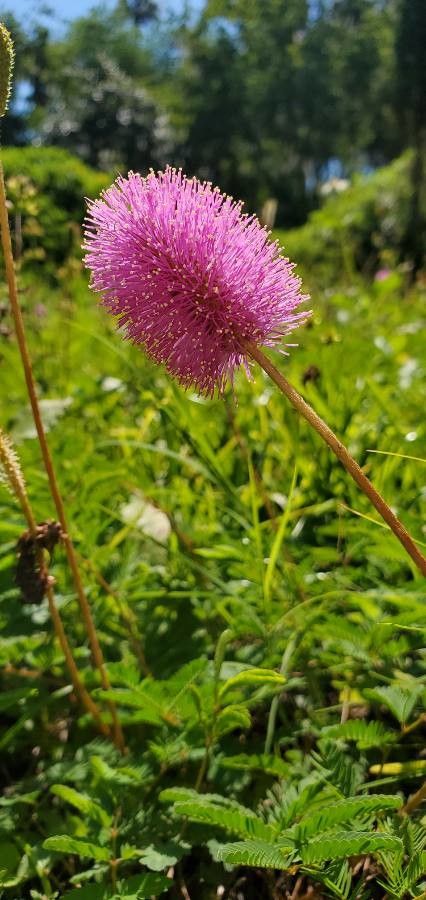
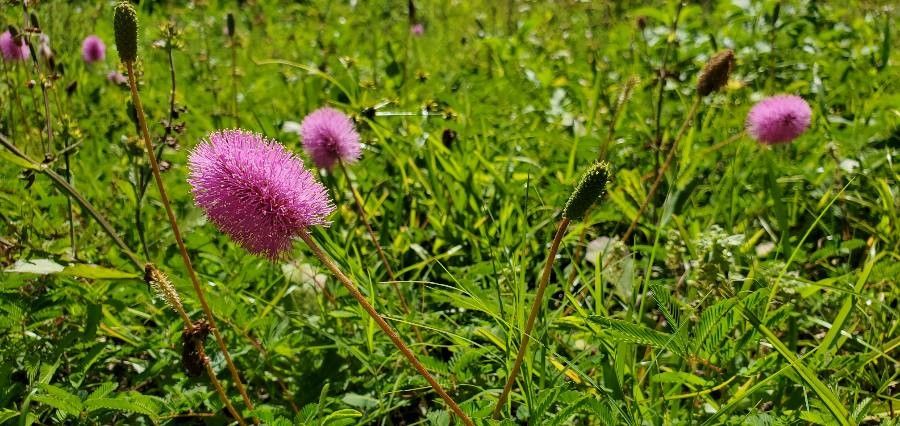
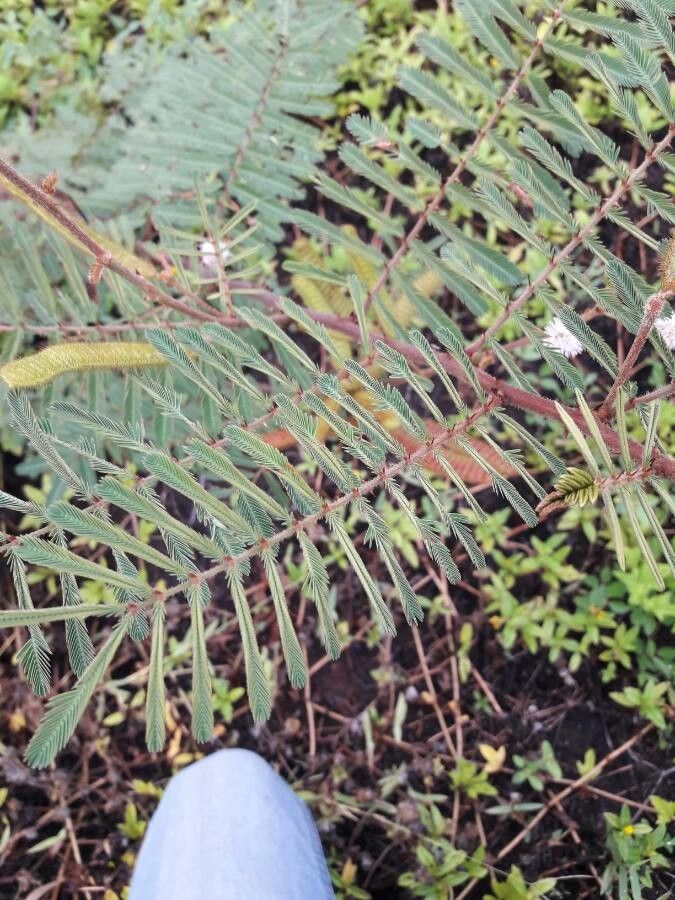
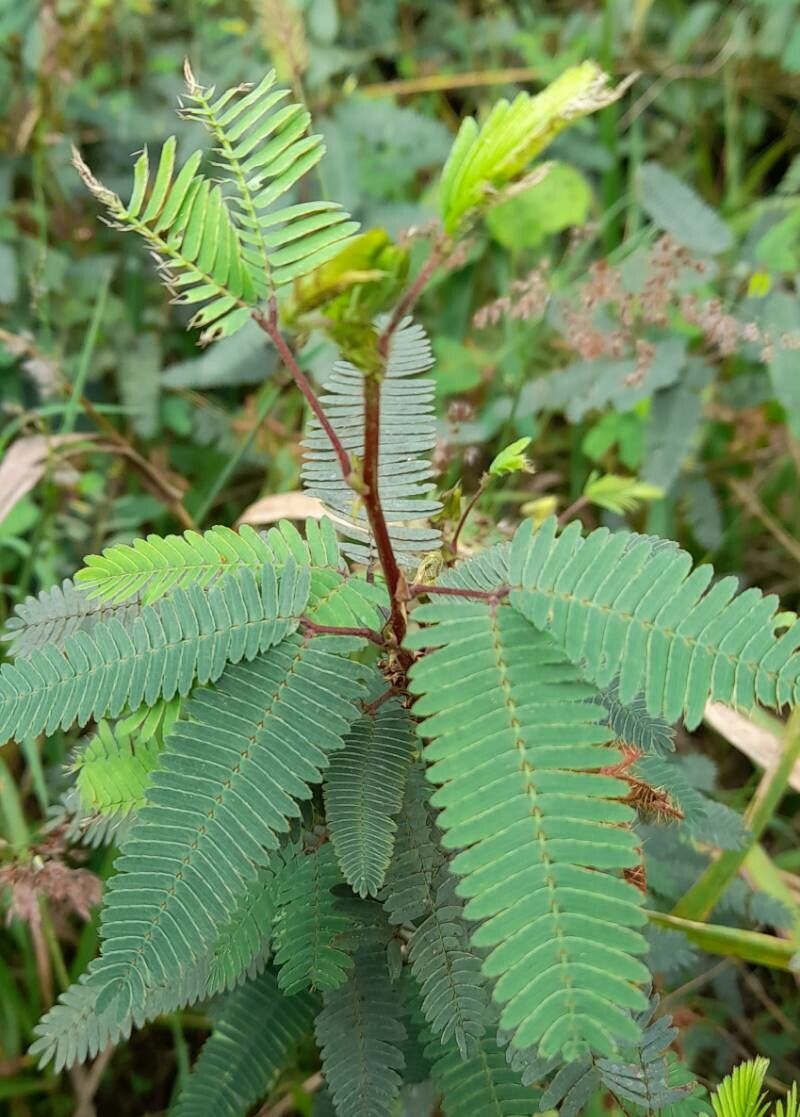
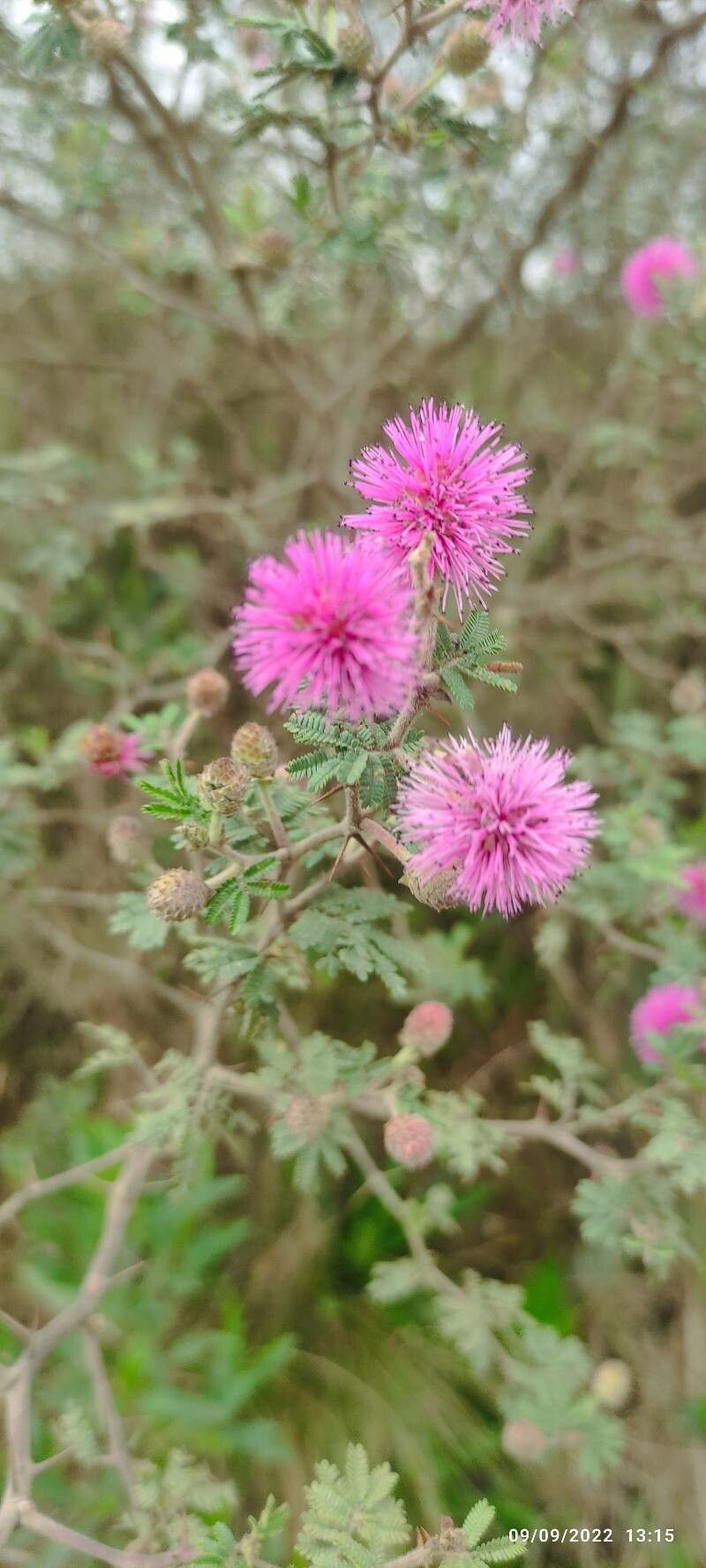
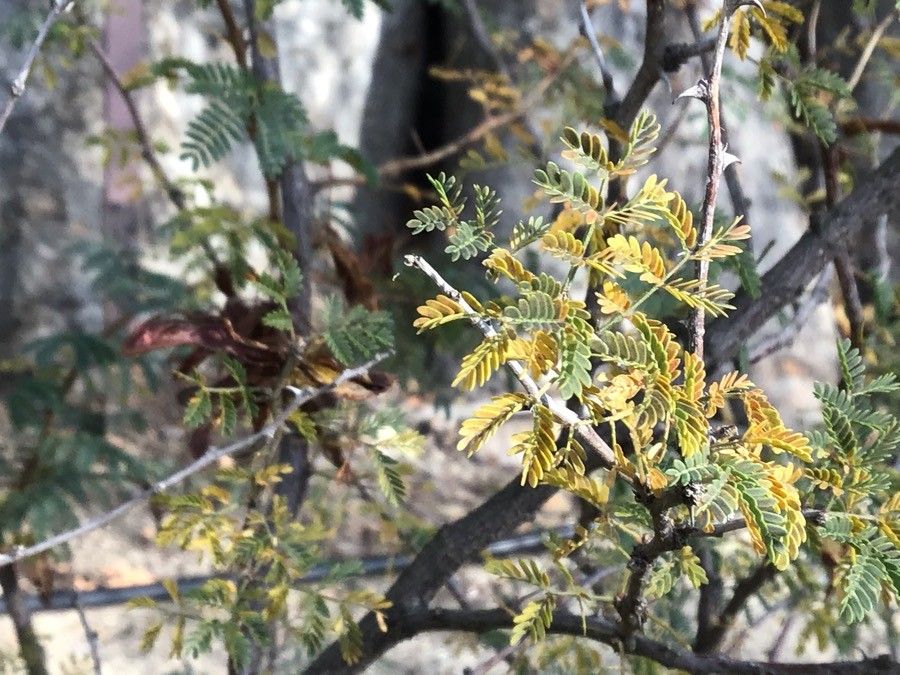
Mimosa strigillosa, also known as sunshine mimosa and powderpuff, is a perennial ground cover in the family Fabaceae that is native to nearly all US states bordering the Gulf of Mexico and grows north into Georgia and Arkansas as well. The name powderpuff refers to the small spherical flowers that rise above the plant's creeping vines. Like related species in the genus Mimosa, sunshine mimosa has sensitive leaves that can fold in a matter of seconds after being disturbed.Because of sunshine mimosa's mat forming nature, drought tolerance, and because like many legumes it is capable of nitrogen fixation and thus doesn't need fertilizer it has become recommended as a replacement for turf grasses for the purposes of xeriscaping and lowering environmental impact. The plant is also recommended as a turfgrass replacement because of its ability to withstand some foot traffic and mowing, It is capable of spreading rapidly and as few as four or five pots may cover 300 square feet in a single growing season. Some may find it problematic that the plant is a host for the larva of little sulphur (Eurema lisa) butterflies. Because of sunshine mimosa's general usefulness as a landscaping plant it was named one of the 2008 plants of the year by the Florida Nursery, Growers & Landscape Association.
The sensitive plant has strong disease resistance and is generally not prone to illnesses. However, it can be vulnerable to pests and diseases present in its environment. These infections are usually not severe. In terms of care, this plant requires a moderate level of maintenance. It should be pruned regularly to keep a neat appearance and support healthy growth. Fertilizing can also help encourage flowering. The sensitive plant is suitable for anyone with outdoor space, such as a garden or patio, and does not demand extensive gardening experience. It may require more attention when grown indoors.
How to keep Mimosa Strigillosa.
Light
The sensitive plant prefers abundant light and can also tolerate moderate exposure, reflecting the openness of its native habitat. Excessive light can slow healthy growth, while insufficient light can cause damage. Its sunlight requirements remain consistent throughout all stages of growth.
Water
In tropical habitats, the sensitive plant flourishes due to the frequent rainfall and high humidity. While it can withstand moderate drought, it prefers moist conditions and benefits from weekly watering. Typically grown outdoors in warm climates, the sensitive plant displays rapid leaf movements as a sign of its hydration levels.
Temperature
Sensitive plant adapts well to temperature, tolerating high heat and considerable temperature fluctuations. In hot weather, care should be taken with watering and providing suitable shade to avoid sunburn. By contrast, Sensitive plant is less resistant to low temperatures. Although it can endure some cold, very low temperatures may cause frost damage.
Fertilizer
The best time to fertilize a Sensitive plant is in early spring, as it comes out of dormancy and begins active growth. Fertilizing supplies essential nutrients for healthy growth. Although the Sensitive plant has relatively low fertilizer needs, feeding it once a year can improve its survival and encourage better, longer-lasting flowers.
Pruning
To ensure the sensitive plant thrives, prune from early spring to late winter. Focus on removing dead stems to maintain the plant's shape and encourage denser growth. It's crucial to sterilize your tools to prevent the spread of diseases. Pruning also improves air circulation, which reduces the risk of fungal issues. For optimal plant health, make your cuts just above a leaf node.
Botanical profile.
- Plant Type
- Herb
- Life Cycle
- Perennial
- Genus
- Mimosa
- Family
- Fabaceae
- Hardiness Zone
- 8-11
- Mature Height
- 0 cm to 30 cm
- Mature Spread
- 49 cm
- Leaf Color
- Green, White, Red, Purple
- Leaf Type
- Evergreen
- Flower Color
- Pink, Purple
- Flower Size
- 2.54 cm to 5.08 cm
- Bloom Time
- Late spring, Summer
- Planting Time
- Spring, Summer, Autumn, Winter
- Harvest Time
- Summer, Early fall
- Native Area
- Mexico
Other names.
Reader questions.
What are the sunlight requirements for a Sensitive plant?
The Sensitive plant, Mimosa strigillosa, thrives in full sunlight, requiring above 6 hours of sunlight daily for optimal growth. It can also grow in partial sun conditions, which means about 3-6 hours of sunlight. It's crucial to observe how sunlight moves through your garden to choose spots that provide the perfect balance of light and shade, ensuring your plants' happiness and health.
How important is light for the growth of Sensitive plants?
Light is essential for the growth of Sensitive plants, reflecting their natural open habitat's condition. They immerse themselves in abundant light but can also manage moderate exposure. The right amount of light is crucial throughout their growth stages, as too much or too little light can adversely affect their health. In conditions where natural sunlight is insufficient, especially in winter or less sunny spaces, artificial lighting such as LED lights can be used to promote optimal growth, requiring specific wattages based on the plant’s natural sunlight needs.
What symptoms indicate a Sensitive plant is receiving inadequate light?
Symptoms of inadequate light for a Sensitive plant include smaller new leaves, leggy or sparse growth, faster leaf drop, slower or no new growth, lighter-colored new leaves, and several conditions like chlorosis, sunscald, leaf curling, wilting, and leaf scorching. These signs help identify when the plant is not receiving enough light or is exposed to excessive sunlight, which can hinder its ability to photosynthesize and maintain overall health.
What solutions can help Sensitive plants with light issues?
To address light issues in Sensitive plants, gradually move them to sunnier locations to ensure they receive at least 6 hours of direct sunlight daily. Use south-facing windows and keep curtains open during the day for natural light. For additional lighting, consider artificial lights if the plant is large or not easily movable. Outdoors, avoid drastic changes in light to prevent sunburn. If sunlight is obstructed, reduce obstructions or consider transplanting smaller plants to sunnier locations. Note that parts of the plant affected by insufficient light may not recover, but new growth after increasing light exposure will be healthy.