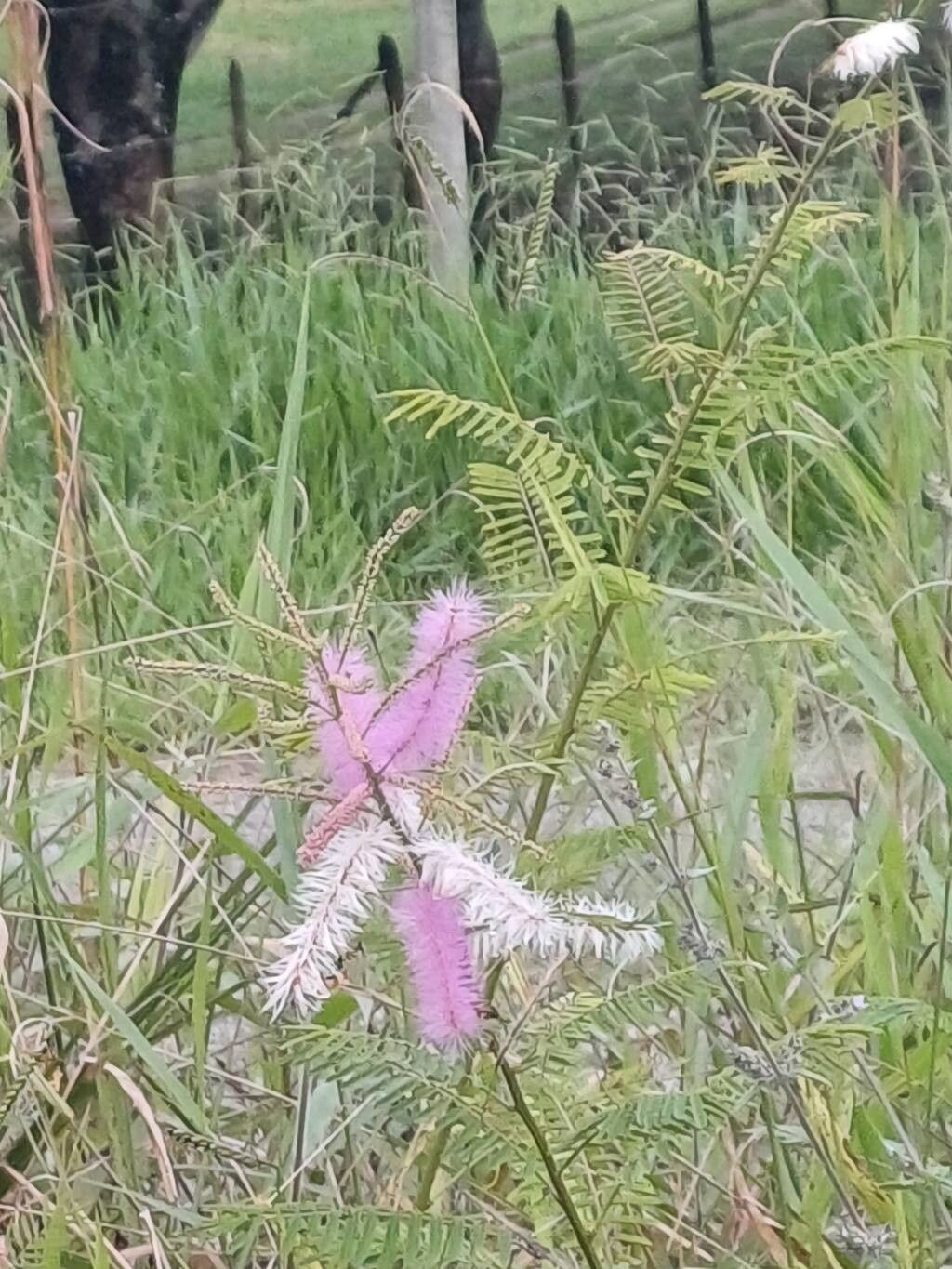
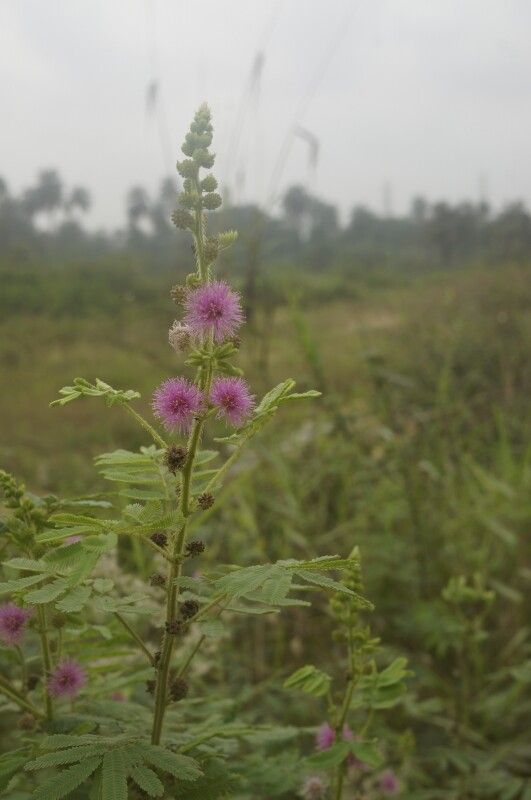
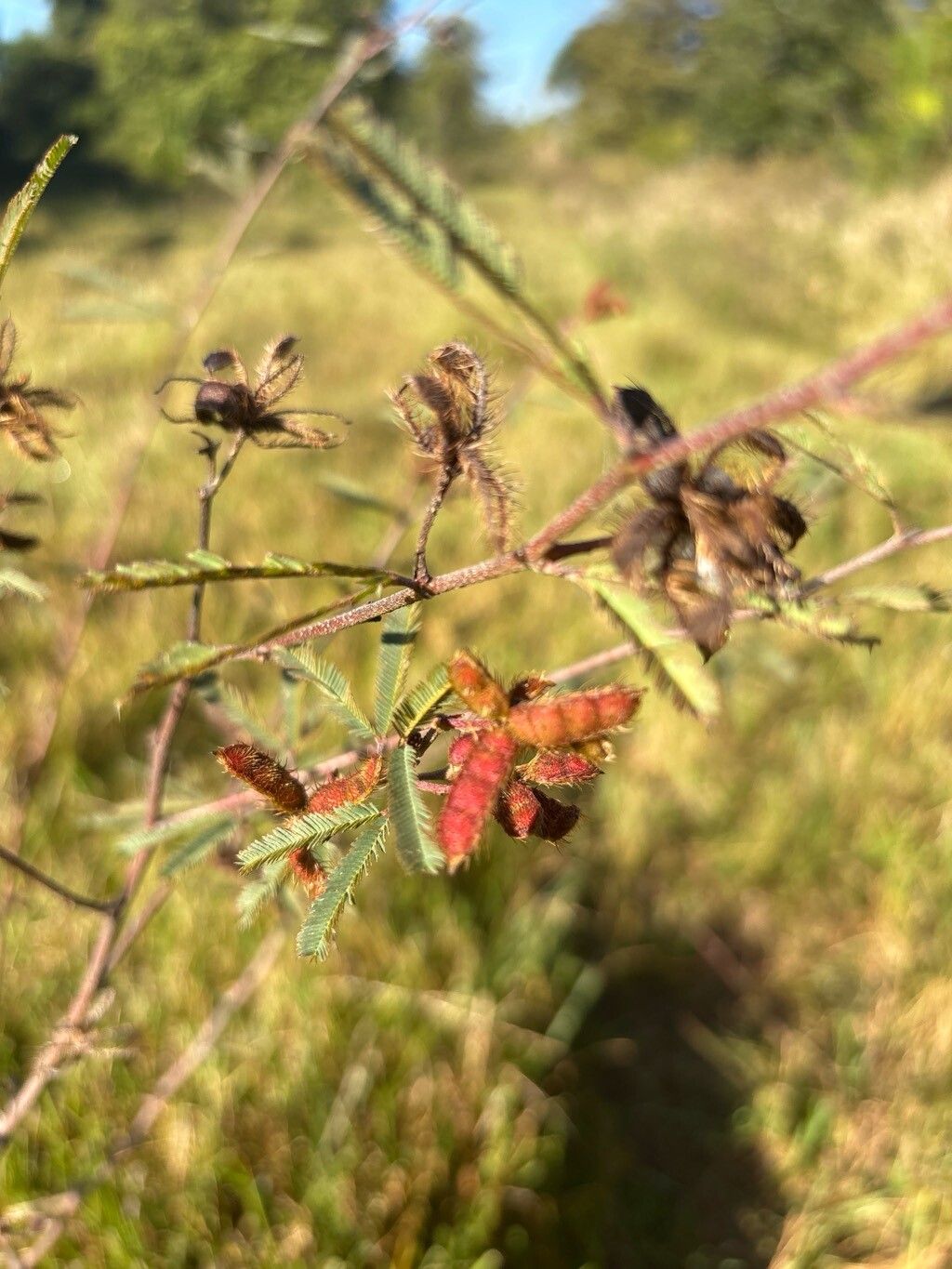
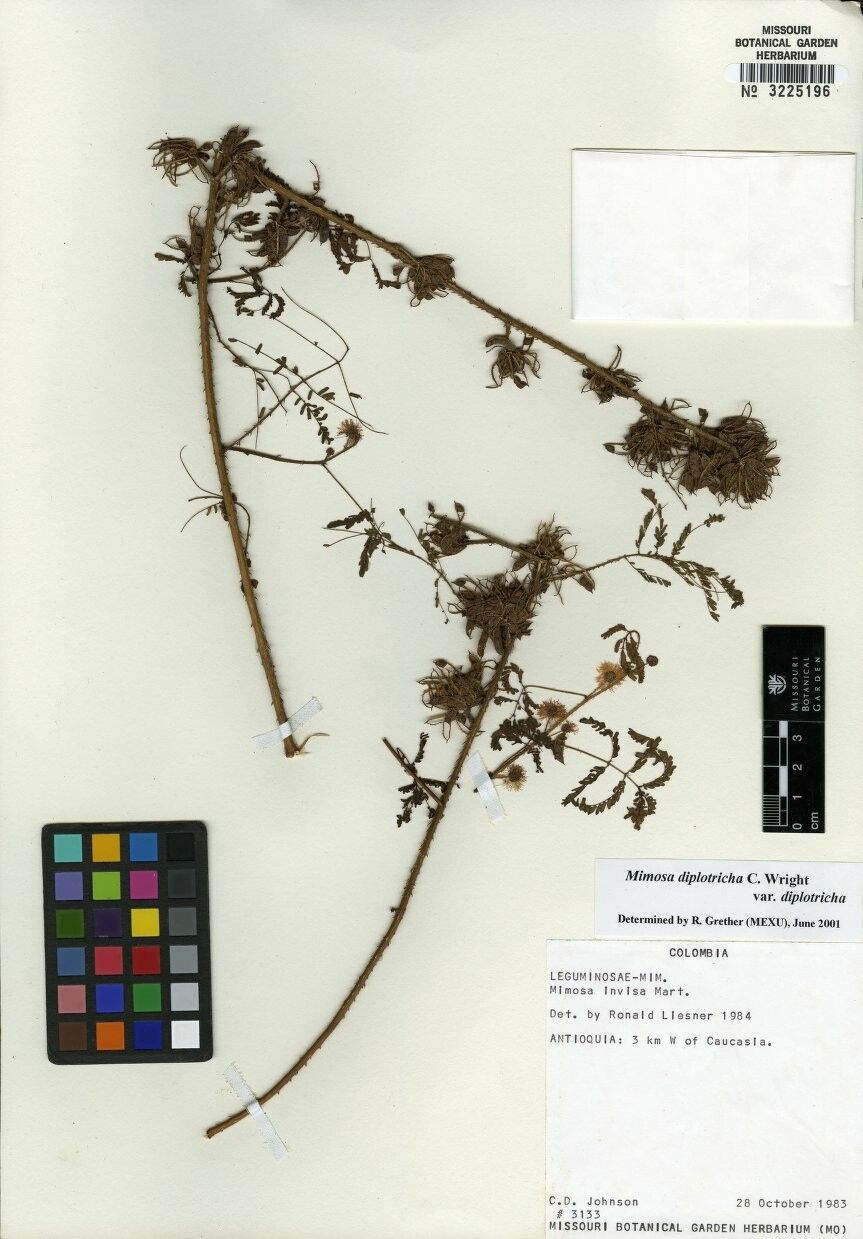
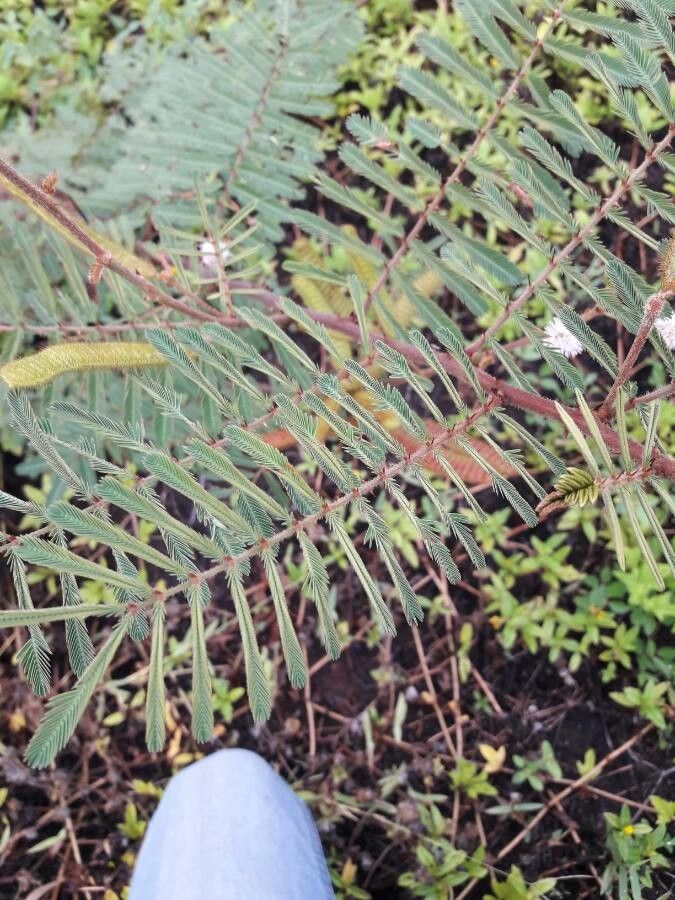
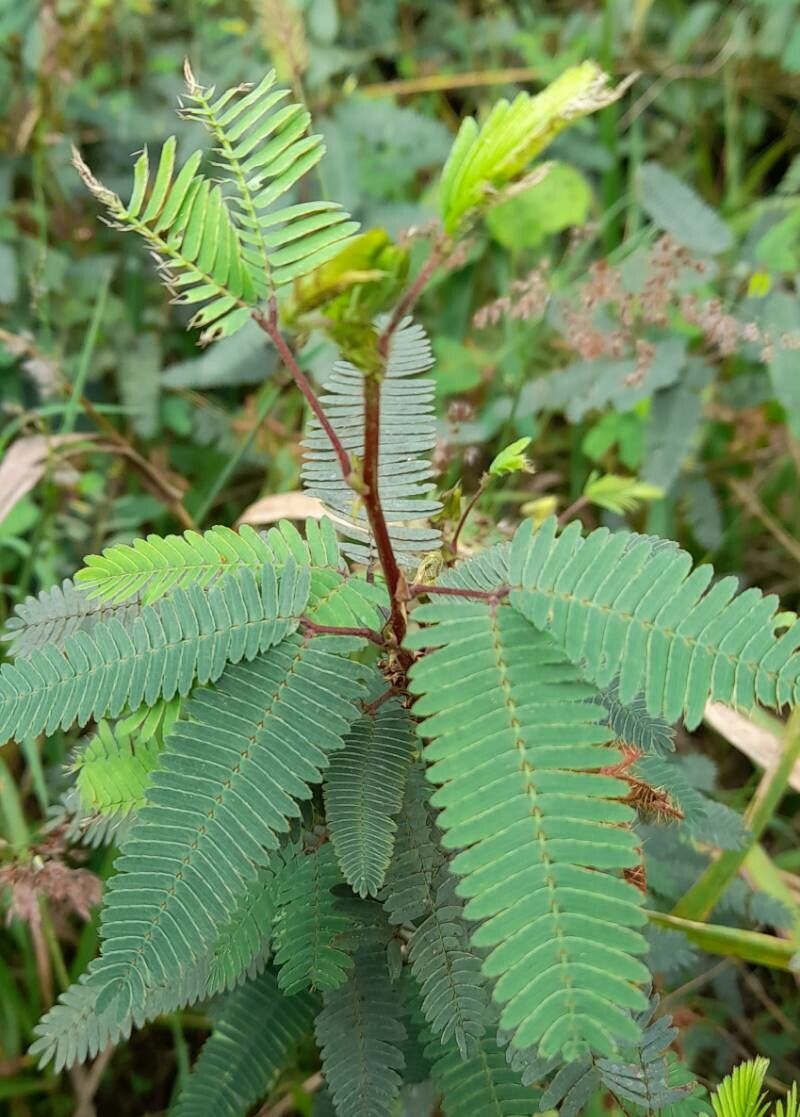
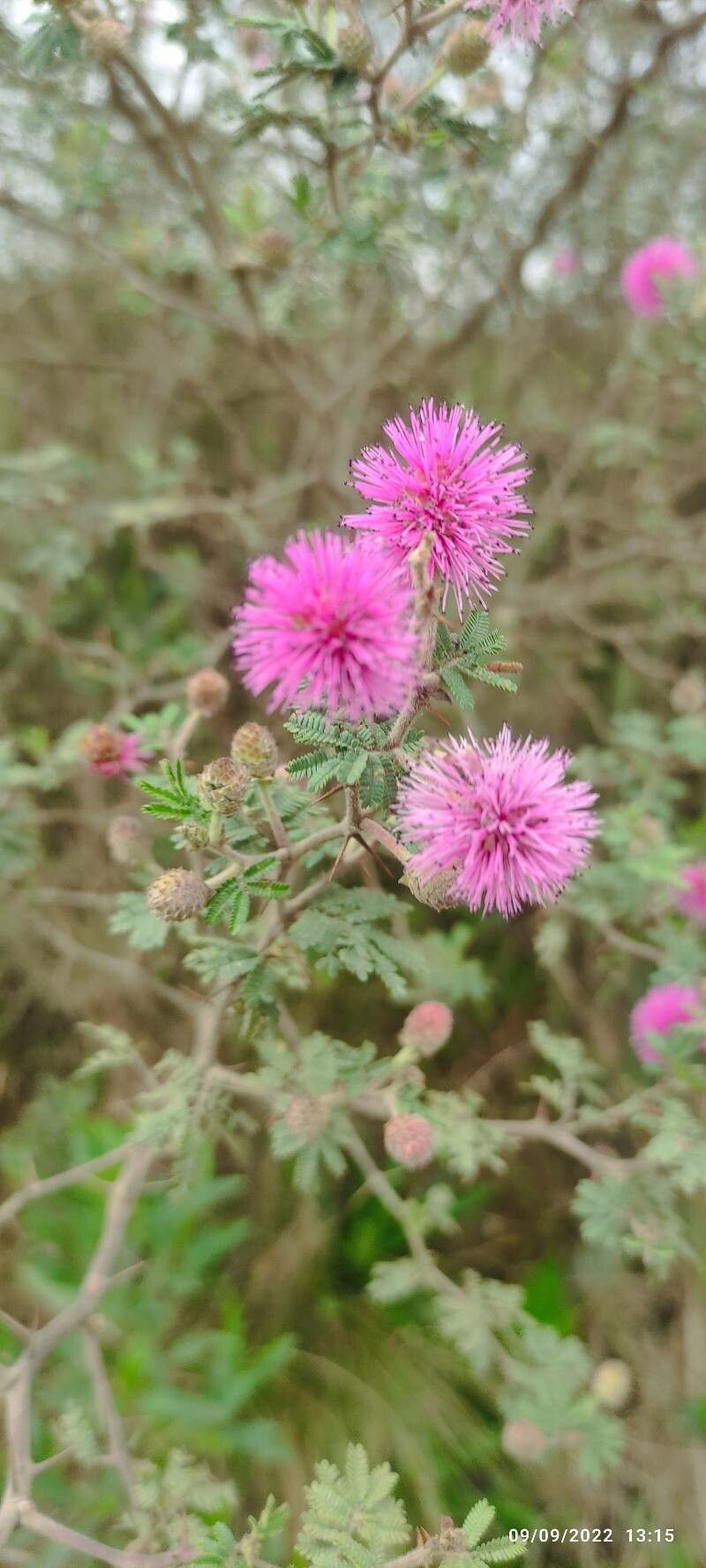
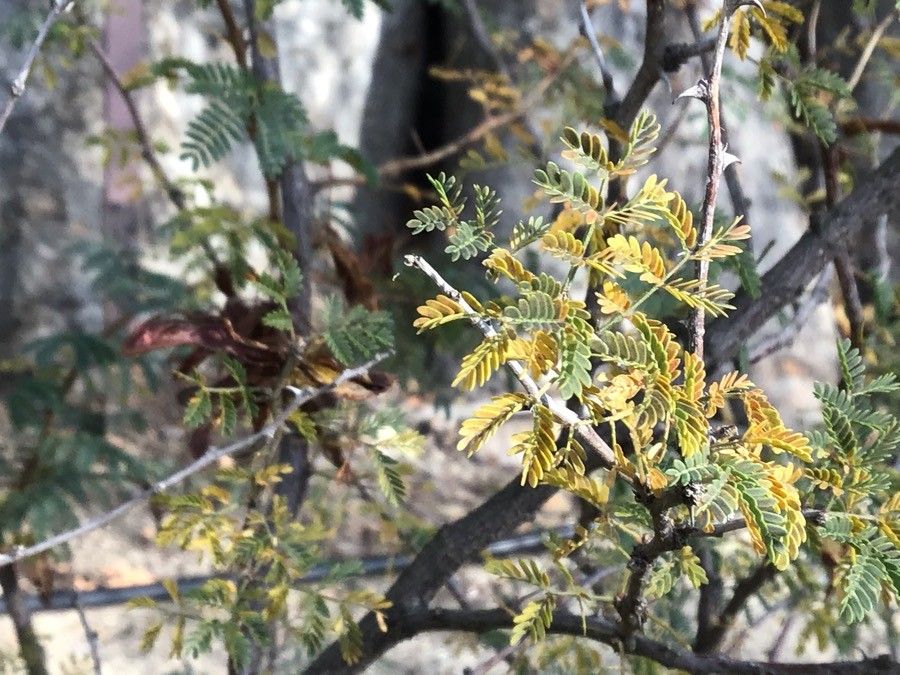
Mimosa invisa is a species of leguminous woody shrub or vine native to South America. Mimosa invisa includes two subspecies, each with two varieties: The species is considered to be noxious and invasive in much of the United States.Mimosa invisa Martius ex CollaMimosa invisa invisa Barneby Mimosa invisa invisa var. invisa Barneby - native to Brazil and Paraguay Mimosa invisa invisa var. macrostachya (Bentham) Barneby - native to Brazil and Paraguay Mimosa invisa spiciflora (Karsten) Barneby Mimosa invisa spiciflora var. spiciflora Barneby - native to northern South America Mimosa invisa spiciflora var. tovarensis (Bentham) Barneby - native to Venezuela
Giant sensitive plant is fairly resistant to disease and is typically not susceptible to illnesses. As for care, this plant is relatively low-maintenance. When grown outdoors it needs little watering, and larger specimens usually do not require pruning. Smaller plants, however, should be trimmed after they finish blooming. Giant sensitive plant is suitable for anyone who has an outdoor area, such as a garden or deck, and does not demand much gardening experience.
How to keep Mimosa Invisa.
Light
The giant sensitive plant originates in open habitats, like sunny meadows and forest edges, which supply abundant light. It performs best in Full Sun but can also tolerate Partial Sun, adapting well to various sunlight conditions.
Water
The giant false sensitive plant originates from tropical rainforests and thrives in high-humidity environments with a need for balanced watering. To mimic its natural conditions, it should be watered every 2-3 weeks. When grown outdoors, the plant flourishes during the rainy season, as the increased water availability supports its peak growth.
Temperature
The enormous sensitive plant has its roots in the tropics, an area known for its hot, moist climate. Consequently, it is acclimatized to thrive in settings with high temperature and humidity. It doesn't favor abrupt shifts in temperature and is partial to a consistent thermal environment. Therefore, it's essential to evade temperature variations indoors. The plant generally can't withstand freezing temperatures and needs higher temperatures to grow. If the temperature in its surroundings falls excessively, the plant's growth might halt, or it might even perish.
Fertilizer
Fertilization is essential to caring for the Giant sensitive plant. Regular feeding during the growing season maintains the energy needed for its showy leaves and supports overall growth. Failing to fertilize can lead to unhealthy leaves, reduced ornamental value, and stunted or weak growth that is prone to breaking.
Pruning
To help your giant false sensitive plant thrive, it's important to prune it in early spring. Focus on removing dead or diseased branches and thinning out crowded areas to improve light and airflow. Be careful not to over-prune, as this can stress the plant. When pruning is aligned with the plant's natural growth cycle, it promotes healthy growth and enhances flowering.
Botanical profile.
- Plant Type
- Vine, Shrub
- Life Cycle
- Perennial
- Genus
- Mimosa
- Family
- Fabaceae
- Hardiness Zone
- 9-11
- Mature Height
- 3.05 m
- Mature Spread
- 0.91 m to 3.05 m
- Leaf Color
- Green, Dark Green
- Leaf Type
- Semi-evergreen
- Flower Color
- Pink
- Flower Size
- 1.27 cm
- Bloom Time
- Late spring, Summer, Early fall, Mid fall
- Planting Time
- Spring, Summer, Autumn
- Harvest Time
- Mid summer, Late summer, Fall, Early winter
- Native Area
- Mexico, Guatemala, Dominican Republic, Jamaica, Cuba, Paraguay, Argentina, Haiti, Venezuela, Brazil, Suriname, Honduras, Peru, Panama, Colombia, Bolivia, Guyana, El Salvador, Nicaragua, Ecuador, Costa Rica
Other names.