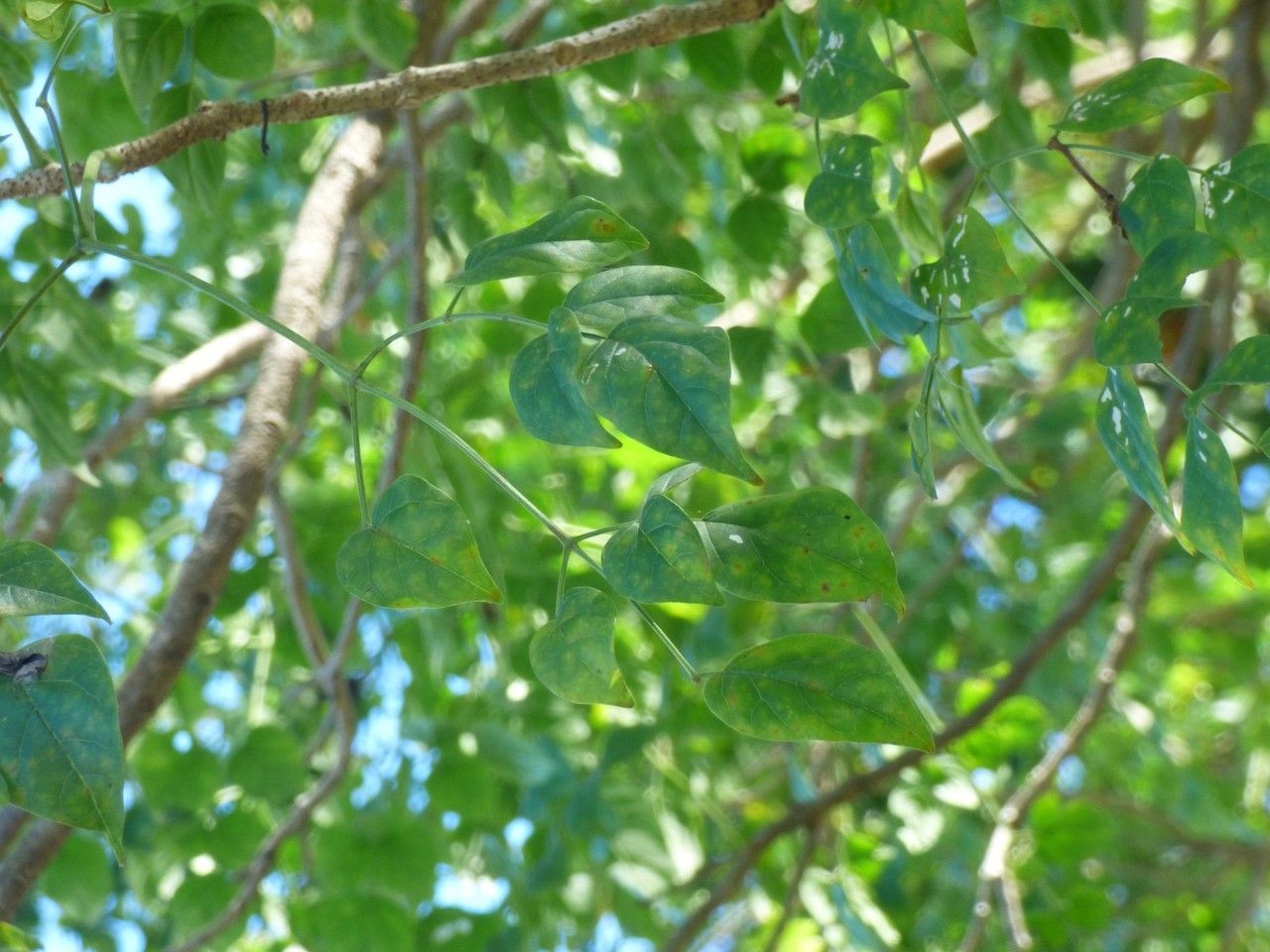
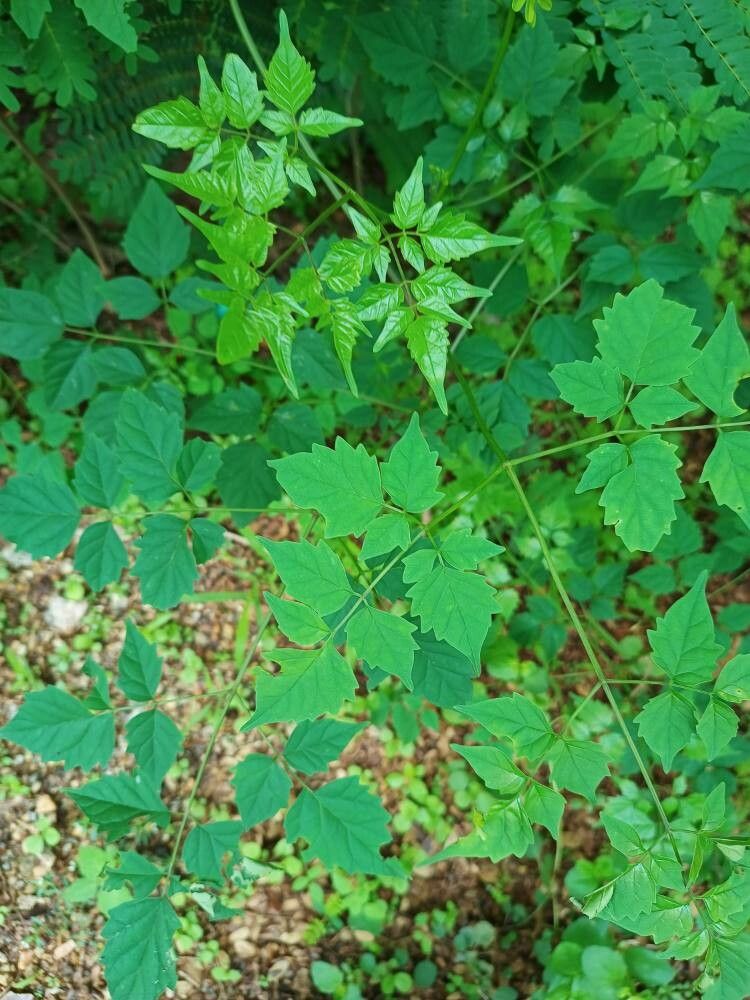
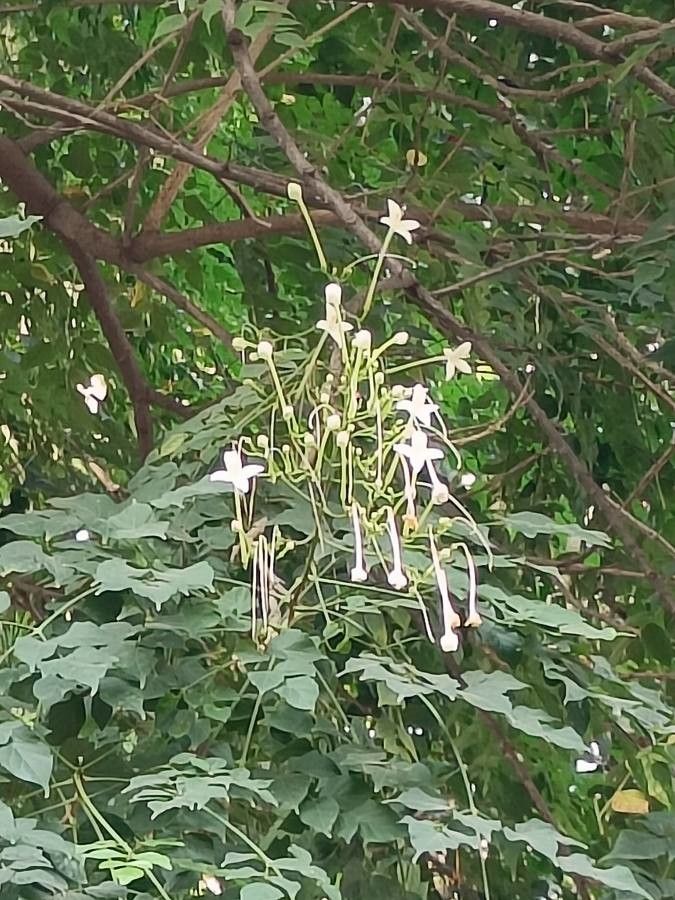
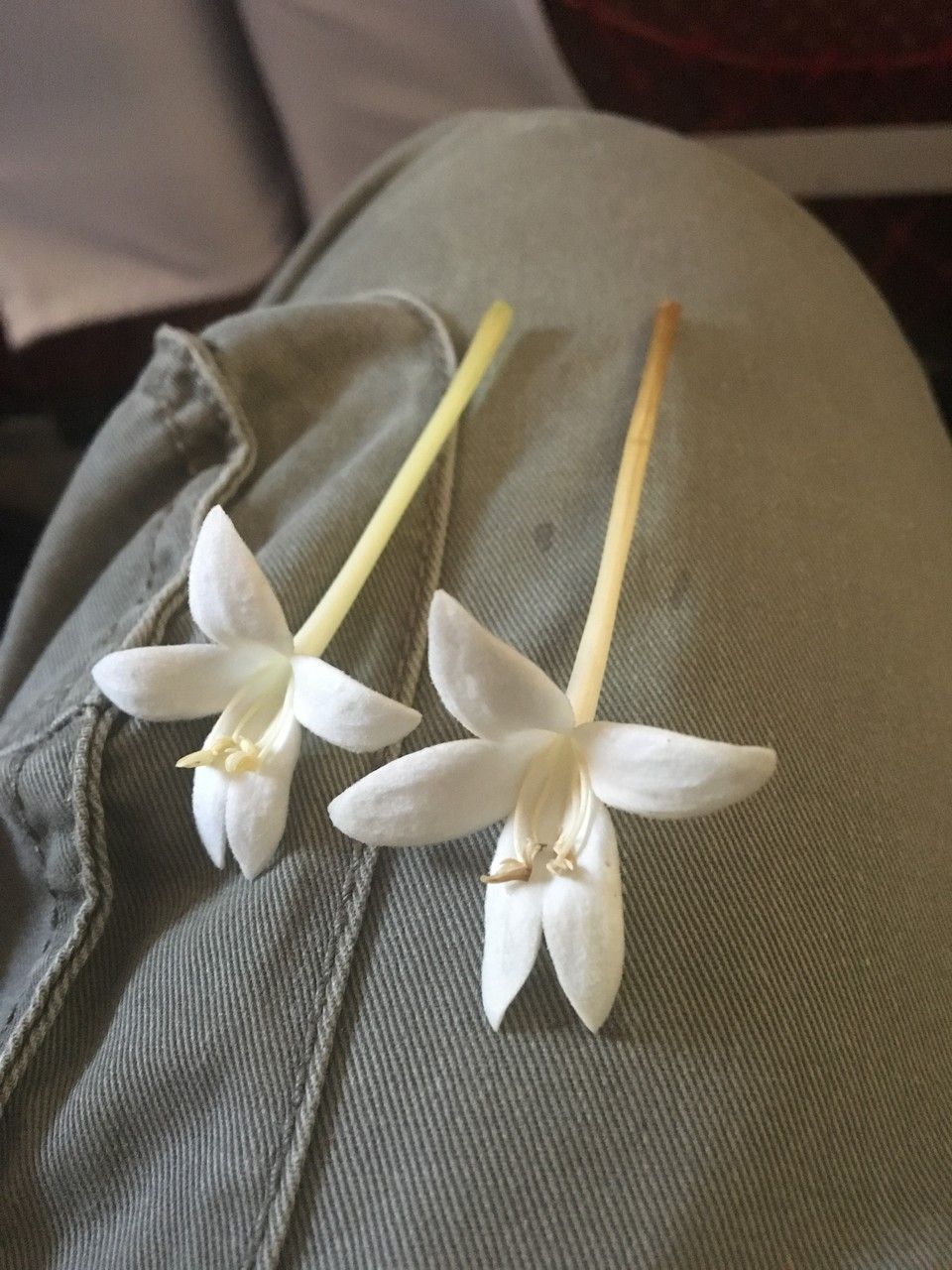
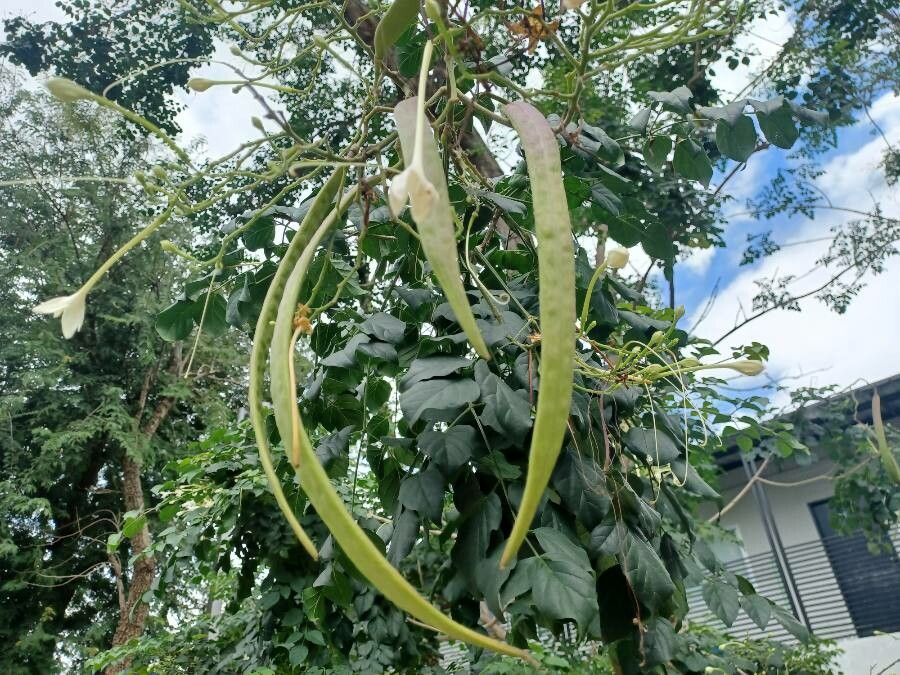
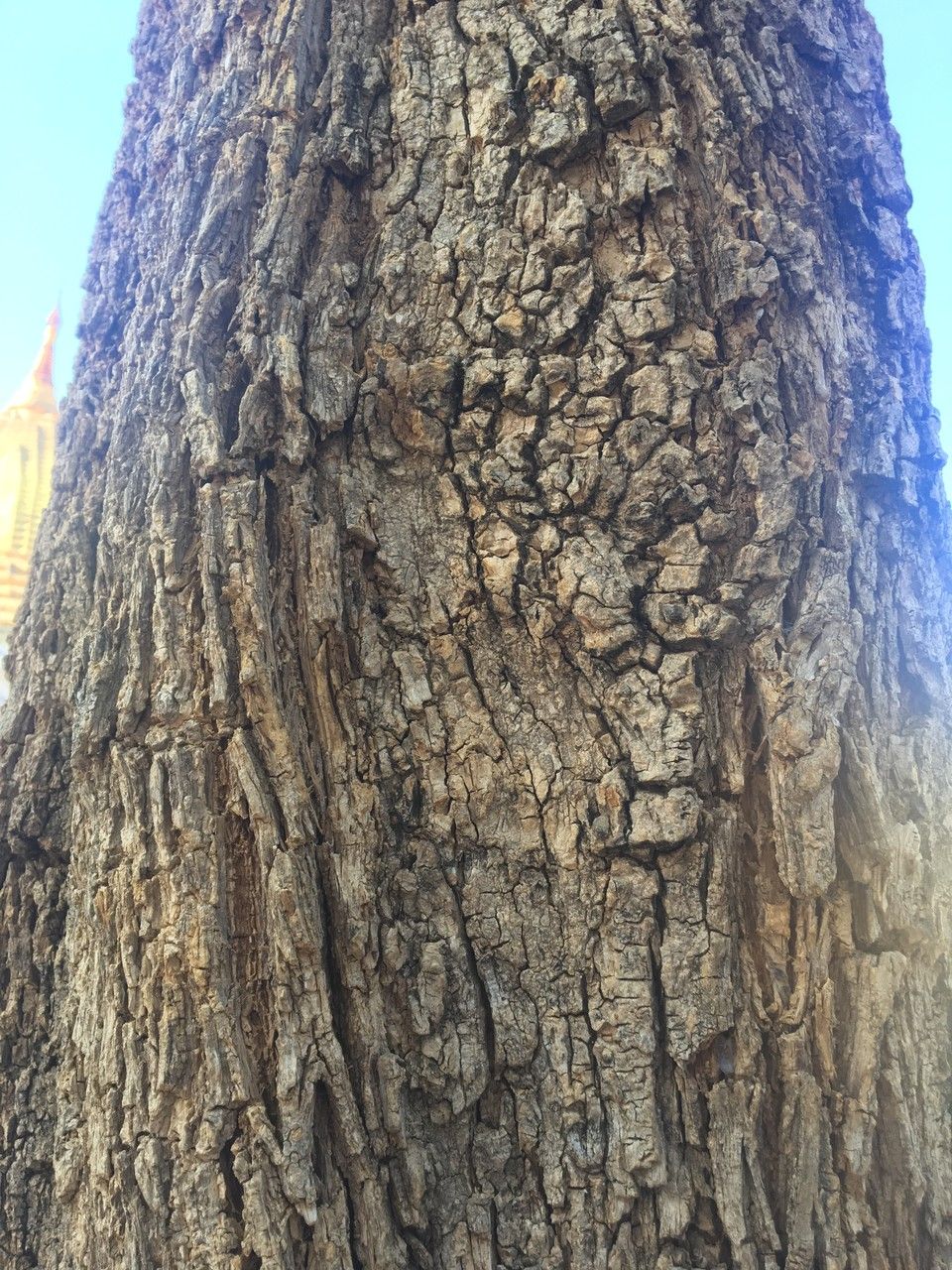
Millingtonia hortensis, the tree jasmine or Indian cork tree, is the sole species in the genus Millingtonia, a tree native to South Asia and South East Asia. In the name Millingtonia hortensis, Millingtonia is named for Sir Thomas Millington who was an inspiration to Carl Linnaeus the Younger who first described the genus. The specific epithet 'hortensia' derives from 'hortensis' and 'hortus' which in Latin is related to garden. In its synonym, Bignonia suberosa, 'suberosa' derives from 'suberos' which means 'corky' in Latin.Millingtonia Avenue in Lucknow is named after Millingtonia hortensis.
The Indian cork tree is resistant to disease and is generally not prone to illnesses. In terms of care, this plant is fairly low-maintenance. When grown outdoors it needs only minimal watering, and larger specimens usually do not require pruning. Smaller specimens, however, should be pruned after they have finished blooming. The Indian cork tree is appropriate for anyone with outdoor space, such as a garden or deck, and does not demand much gardening experience.
How to keep Millingtonia Hortensis.
Light
Indian cork tree thrives in conditions with abundant light for healthy development. Its native habitat is well lit, and it flourishes there. With sufficient light exposure, its growth is vigorous. It can tolerate lower light levels, but that can negatively affect its overall health and growth rate.
Water
The Indian cork tree flourishes when it receives consistent moisture, but it can also endure periods of moderate drought. It's best to water the tree every 1 to 2 weeks, making slight adjustments as necessary. During its active growth season, aim to maintain soil moisture levels that reflect the tree's tropical origins, being careful not to overwater, especially in warmer climates.
Temperature
The Indian cork tree is native to regions with temperatures between 68 and 95 °F (20 to 35 ℃). It favors mild, warm conditions and requires careful adjustment during seasonal extremes to fulfill its temperature needs.
Fertilizer
The best time to fertilize an Indian cork tree is in early spring as it comes out of dormancy. This supports overall growth and the development of flowers. Fertilizing improves foliage, stems, and branches, and encourages large, vibrant, long-lasting blooms. It helps move nutrients from the roots to the flowers and enhances the plant’s health and resistance to disease.
Pruning
The Indian Cork Tree is a fast-growing deciduous tree known for its fragrant white flowers and cork-like bark. To maintain its health and shape, it's best to prune the tree in early winter. Focus on removing any dead or crossing branches. Thinning the tree will help improve airflow and light penetration, which encourages re-flowering and helps prevent structural issues, promoting robust growth.
Botanical profile.
- Plant Type
- Tree
- Life Cycle
- Perennial
- Genus
- Millingtonia
- Family
- Bignoniaceae
- Hardiness Zone
- 10
- Mature Height
- 15.24 m
- Mature Spread
- 6.1 m
- Leaf Color
- Green
- Leaf Type
- Evergreen
- Flower Color
- White
- Flower Size
- 5.08 cm to 7.62 cm
- Bloom Time
- Mid fall, Late fall, Early winter, Mid winter
- Planting Time
- Spring, Summer, Autumn
- Harvest Time
- Late winter, Spring
- Native Area
- Indonesia, Cambodia, Vietnam, Myanmar, Bangladesh, Laos, Thailand, China
Other names.
Reader questions.
How should I water my Indian cork tree?
When watering your Indian cork tree, you have several options for tools. Common watering tools like watering cans, hoses, or even cups will all work fine. Just make sure to water the soil directly and evenly to ensure all parts of the root system receive enough water. Using filtered water is recommended to avoid harmful particles, and it's best to use water that is around room temperature to avoid shocking the tree. However, the Indian cork tree is typically not too picky and will respond well to any kind of water.
Why should I add fertilizers to my Indian cork tree?
Providing the right nutrients and energy is crucial for the overall well-being of an Indian cork tree. By ensuring an adequate supply, you can expect the tree to have healthy foliage, sturdy stems, and branches. While the flowers of the Indian cork tree hold significant value for gardeners, they greatly benefit from fertilization as well. Fertilization enhances the production of large, vibrant, and long-lasting flowers by facilitating the transfer of fuel from the roots to the stems and ultimately, to the flowers. Furthermore, proper fertilization promotes the tree's general health and strengthens its ability to resist diseases.
What are the sunlight requirements for the Indian cork tree?
The Indian cork tree requires full sun exposure of above 6 hours of sunlight daily to thrive optimally. It can also grow in partial sun conditions, where it receives about 3-6 hours of sunlight each day. However, for the best growth and health of the plant, ensuring it gets the right balance of light and shade is crucial, as highlighted by the advice to observe how sunlight moves through your garden to find the perfect spots for your plants.
What is the ideal temperature range for an Indian cork tree?
The Indian cork tree thrives in climates with temperature ranges of 68 to 95 °F (20 to 35 °C). It prefers mild and warm temperatures, and requires adjustments in cases of seasonal extremes to ensure its temperature needs are met. The tree is very heat-loving and adverse to cold temperatures. During winter, it's beneficial to keep the temperature above 20°C to promote growth, but any exposure to temperatures nearing 5°C can be harmful to the plant.
What do I do if I give too much or too little water to my Indian cork tree?
For outdoor plants, particularly newly planted ones or seedlings, it is common for them to lack sufficient watering. It is important to remember to water them consistently for a few months when they are small or recently planted. Once the roots are established, Indian cork trees can typically rely on rainwater. When you have an Indian cork tree planted in a pot, overwatering is more likely to occur. If you accidentally overwater your Indian cork tree, it is necessary to address the situation promptly. Firstly, stop watering the plant immediately to minimize the effects of overwatering. Next, remove the Indian cork tree from its pot to inspect the roots. If there are no signs of root rot, it should be fine to return the plant to its container. However, if there are signs of root rot, trim away any affected roots and consider applying a fungicide to prevent further damage. Finally, repot the Indian cork tree in well-draining soil. In the case of an underwatered Indian cork tree, simply water it more frequently. Underwatering is usually an easy issue to fix. If the plant is underwatered, its leaves may droop, dry out, and fall off. However, with sufficient watering, the leaves will quickly regain fullness. It is important to correct your watering frequency as soon as you notice underwatering occurring.
What is the ideal time to fertilize my Indian cork tree?
To successfully fertilize an Indian cork tree, focus on two key periods: early spring and fall. During early spring, when the plant is emerging from its dormant phase and preparing to bloom, providing fertilizer will promote growth and flower development. This is the optimal time to give the tree a generous amount of nutrients. However, a second feeding during the fall months can also be beneficial, although it doesn't need to be as substantial as the first one. Some gardeners choose to fertilize the Indian cork tree during planting, but this step is not always necessary.
How important is light for the growth of Indian cork tree, and can artificial lighting be used?
Light is essential for the healthy growth of the Indian cork tree, which flourishes in well-illuminated environments. Adequate exposure to light promotes profuse growth, while insufficient light can harm its health and growth rate. For indoor plants or those in less sunny spaces, artificial lighting is a viable solution to ensure optimal growth, especially during winter. Choosing the right type of artificial light, such as LED lights, is crucial, and these should provide 30-50W/sq ft for full sun plants, 20-30W/sq ft for partial sun plants, and 10-20W/sq ft for full shade plants. The artificial light source should be placed 12-36 inches above the plant and be on for 8-12 hours per day to mimic natural daylight hours.
What should I do with my Indian cork tree during the autumn and winter?
In the autumn, it is advisable to bring outdoor-grown Indian cork trees indoors to protect them from the cold. Positioning them near a bright window will ensure they get enough natural light; however, they should be kept away from heaters to avoid overly dry air that may harm them. Maintaining a room temperature above 20°C during the winter months is crucial for sustaining healthy plant growth, helping the tree thrive in less ideal conditions.
How frequently should I water my Indian cork tree?
Most plants grow well with natural rainfall. But if your area doesn't get enough rain, you'll need to water your plants every 2 weeks in spring and fall, and more often in summer. During the slower growth of winter, you can water less, and sometimes not at all. If your Indian cork tree is young or newly planted, it will need more frequent watering to help it establish and grow. For potted plants, there are two main approaches to watering your Indian cork tree. One is to follow a set schedule, such as watering once a week or every other week. However, this may not always be effective because it doesn't consider the specific conditions of your tree's environment. Another option is to base your watering on the moisture level of the soil. It's generally best to wait until the top two to four inches of soil, about ⅓ to ½ of the pot's depth, have completely dried out before watering again.
When is it best for me not to use fertilizer on my Indian cork tree?
During the winter, Indian cork trees do not need to be fertilized because they are in a dormant phase and do not require much energy from the soil for growth. Fertilizing during this time increases the risk of overfertilization and its negative effects. The best times to feed an Indian cork tree are in early spring and fall, so during most of spring and summer, fertilizer is not necessary. Additionally, it is advisable to avoid feeding the tree in excessively hot or dry conditions.
What are common symptoms of insufficient lighting in Indian cork trees?
Symptoms of insufficient lighting in Indian cork trees include small new leaves, leggy or sparse growth, faster leaf drop, slower or no new growth, lighter-colored new leaves, chlorosis, sunscald, leaf curling, wilting, and leaf scorching. These symptoms arise when the plant is not receiving enough sunlight, impacting its ability to grow and maintain its health effectively.
How does low temperature affect the Indian cork tree, and what are the remedies?
The Indian cork tree is susceptible to low temperatures. It flourishes when the temperature is above 20°C and must be kept above 5°C during the winter. If the temperature falls below 1°C, its leaves may begin to lighten, turning brown or black after frost damage, and showing signs like wilting and drooping. To remedy frost damage, trim off the damaged parts and move the plant to a warmer indoor environment immediately. A south-facing window is ideal for sufficient sunlight, but ensure the plant is kept away from heaters or air conditioners to avoid air dryness.