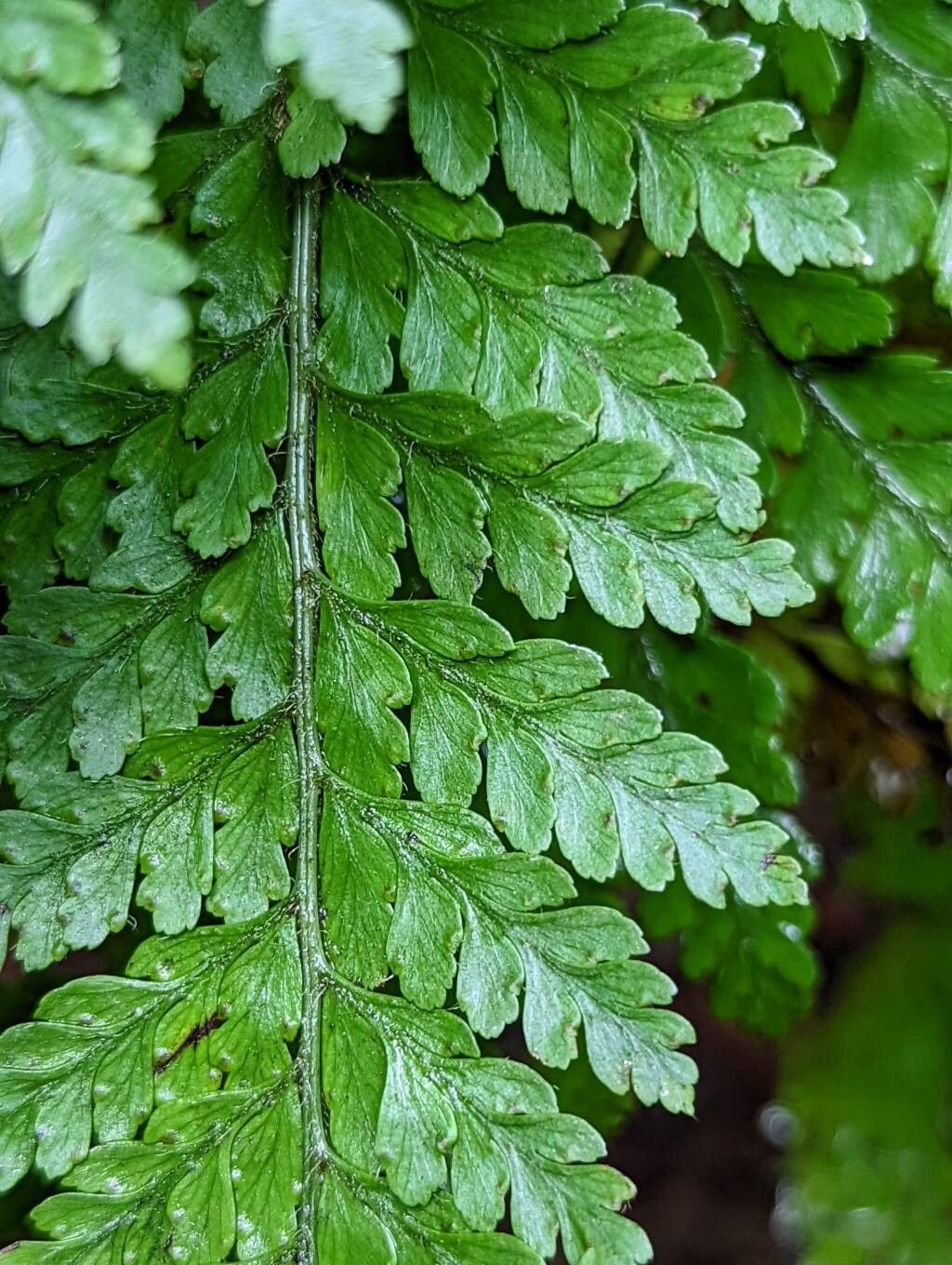
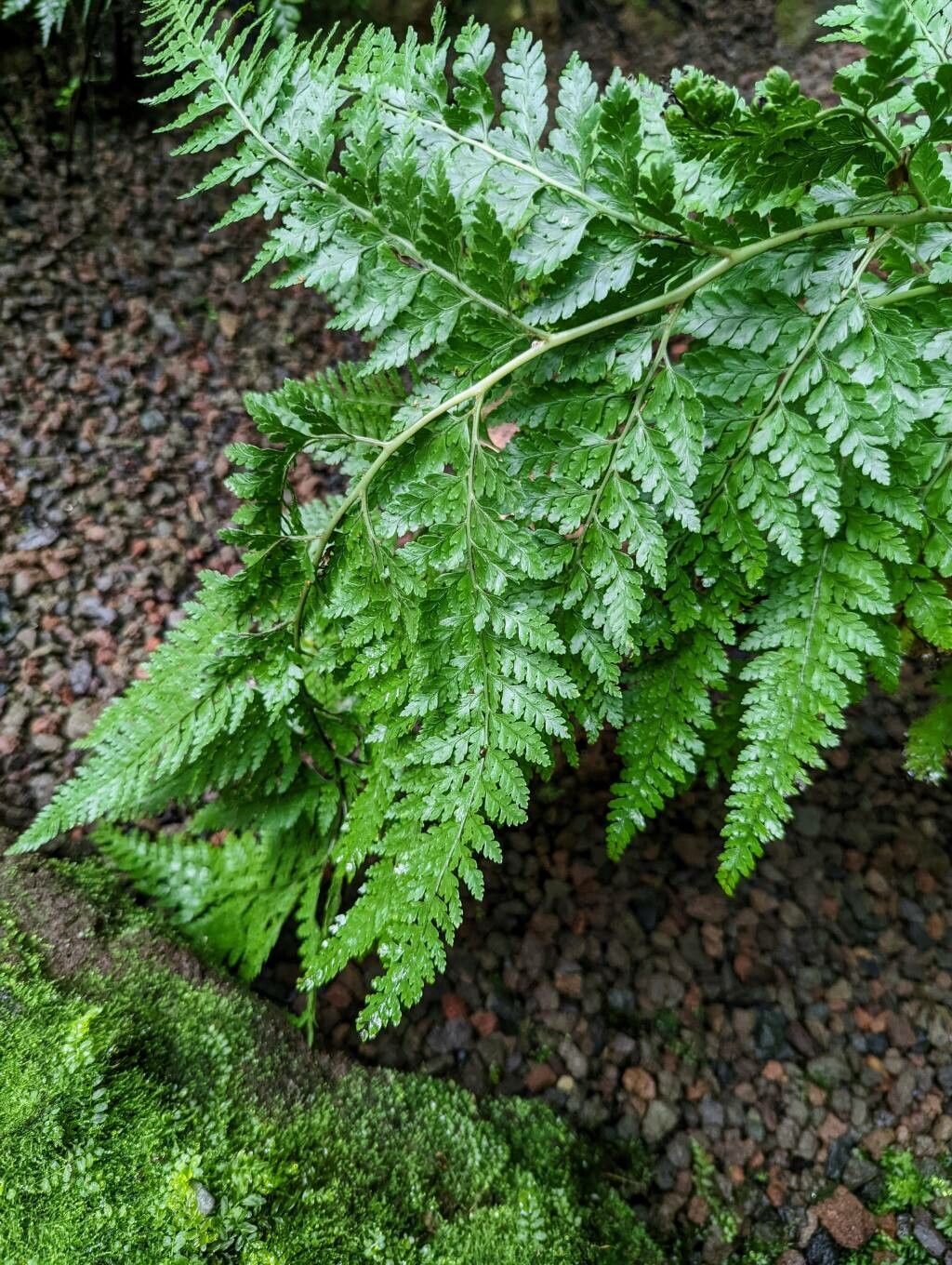
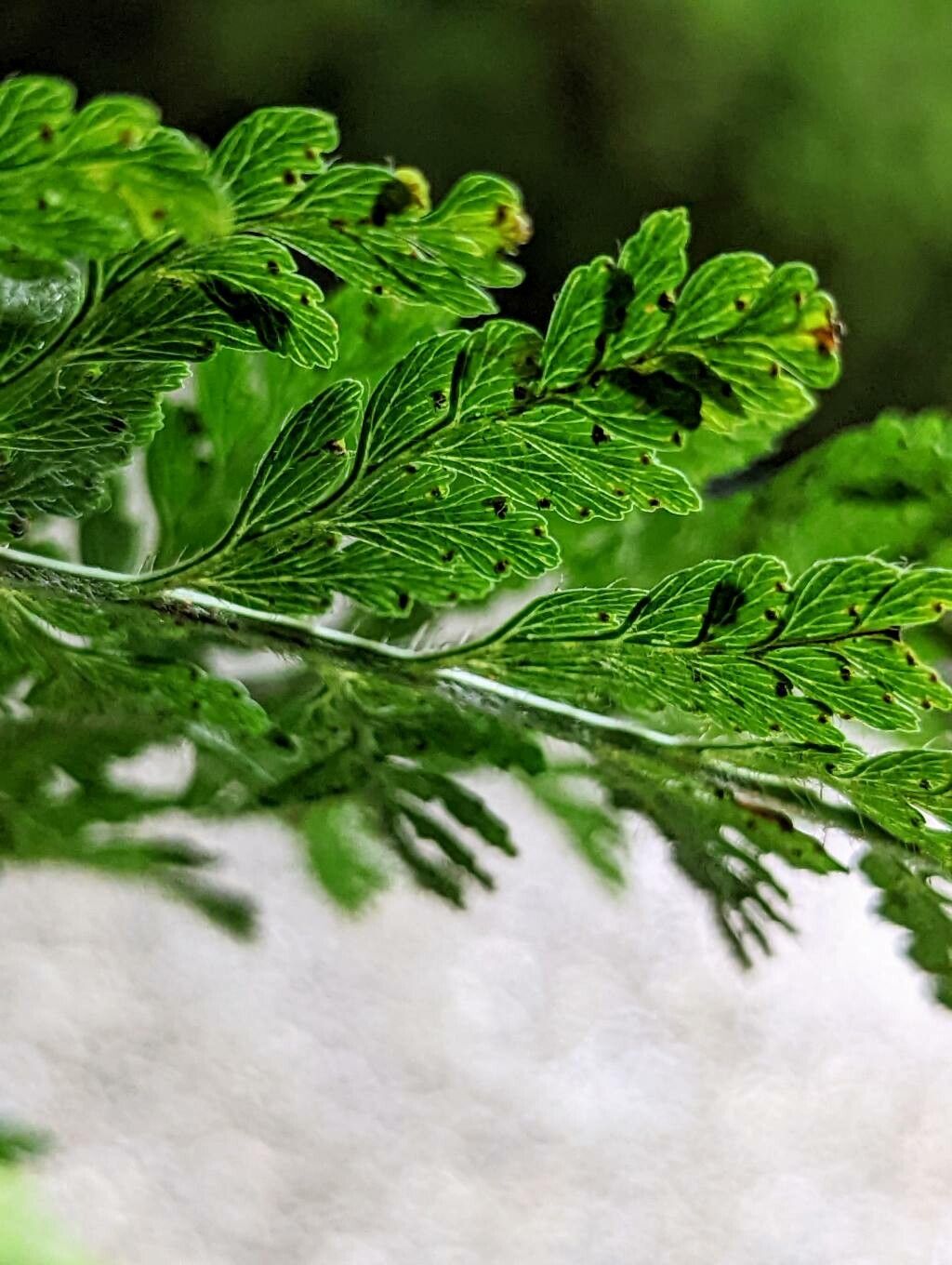
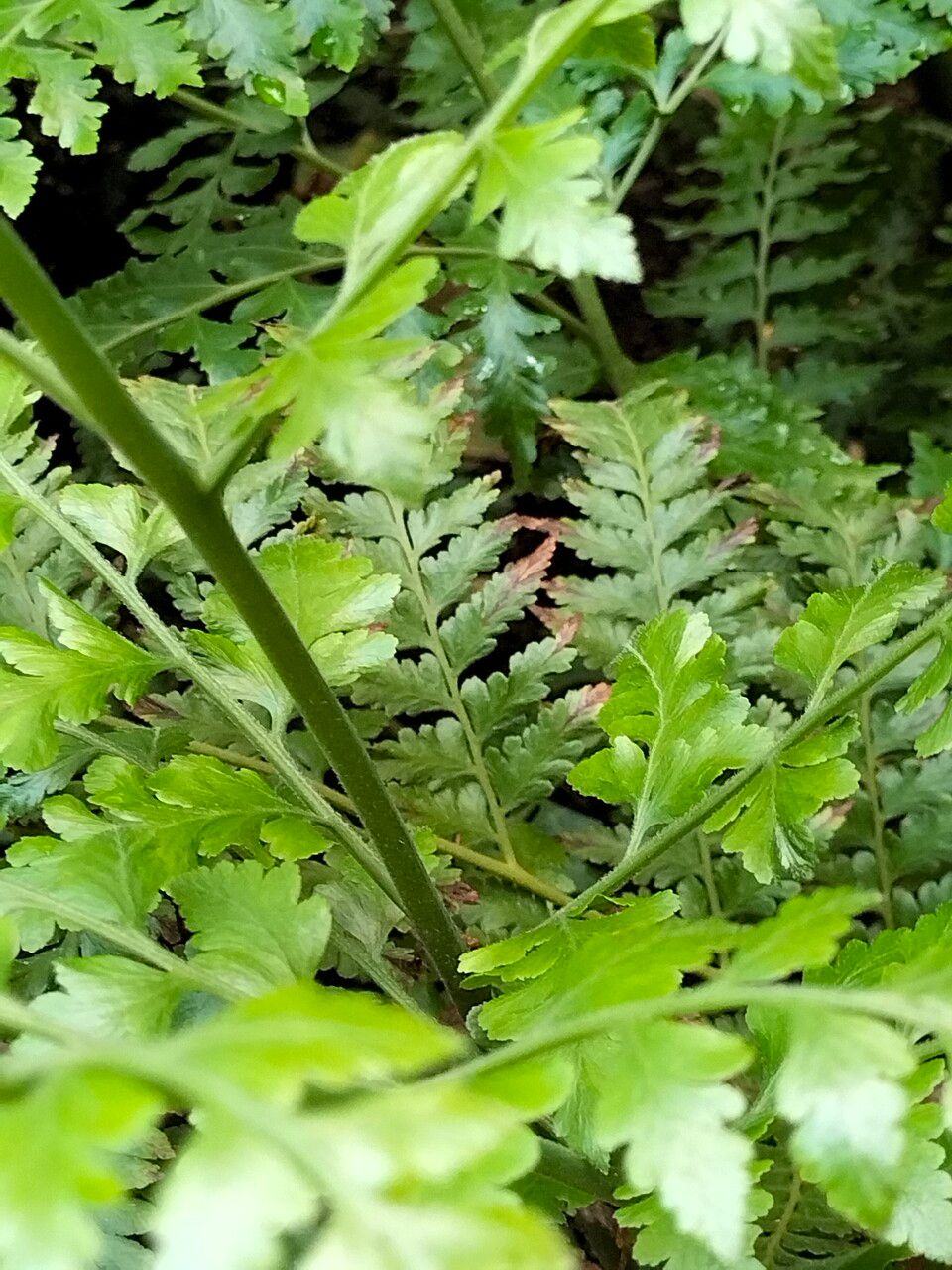
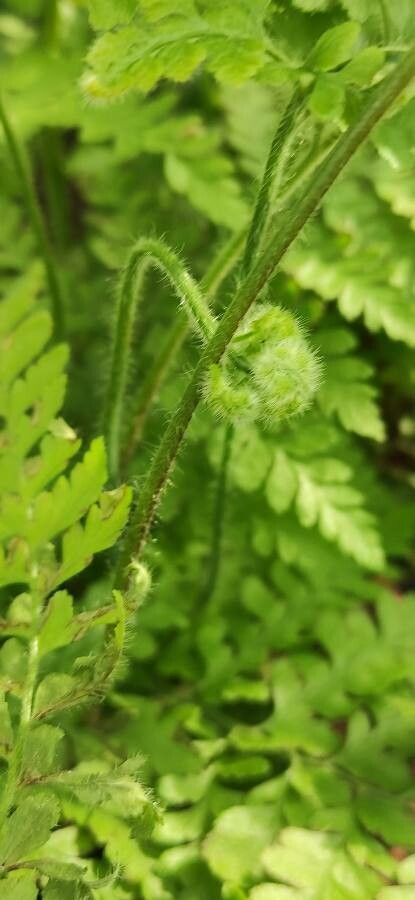
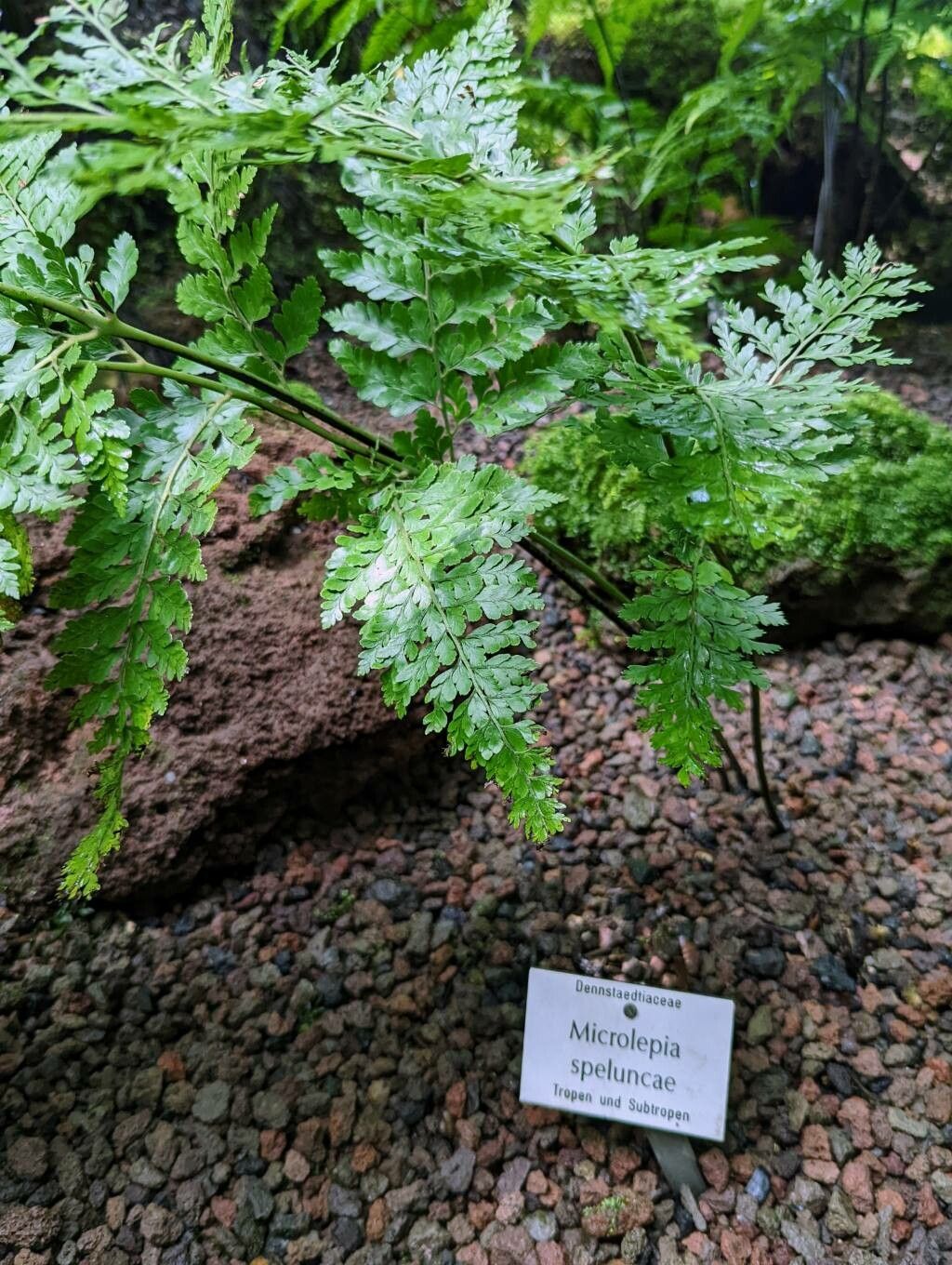
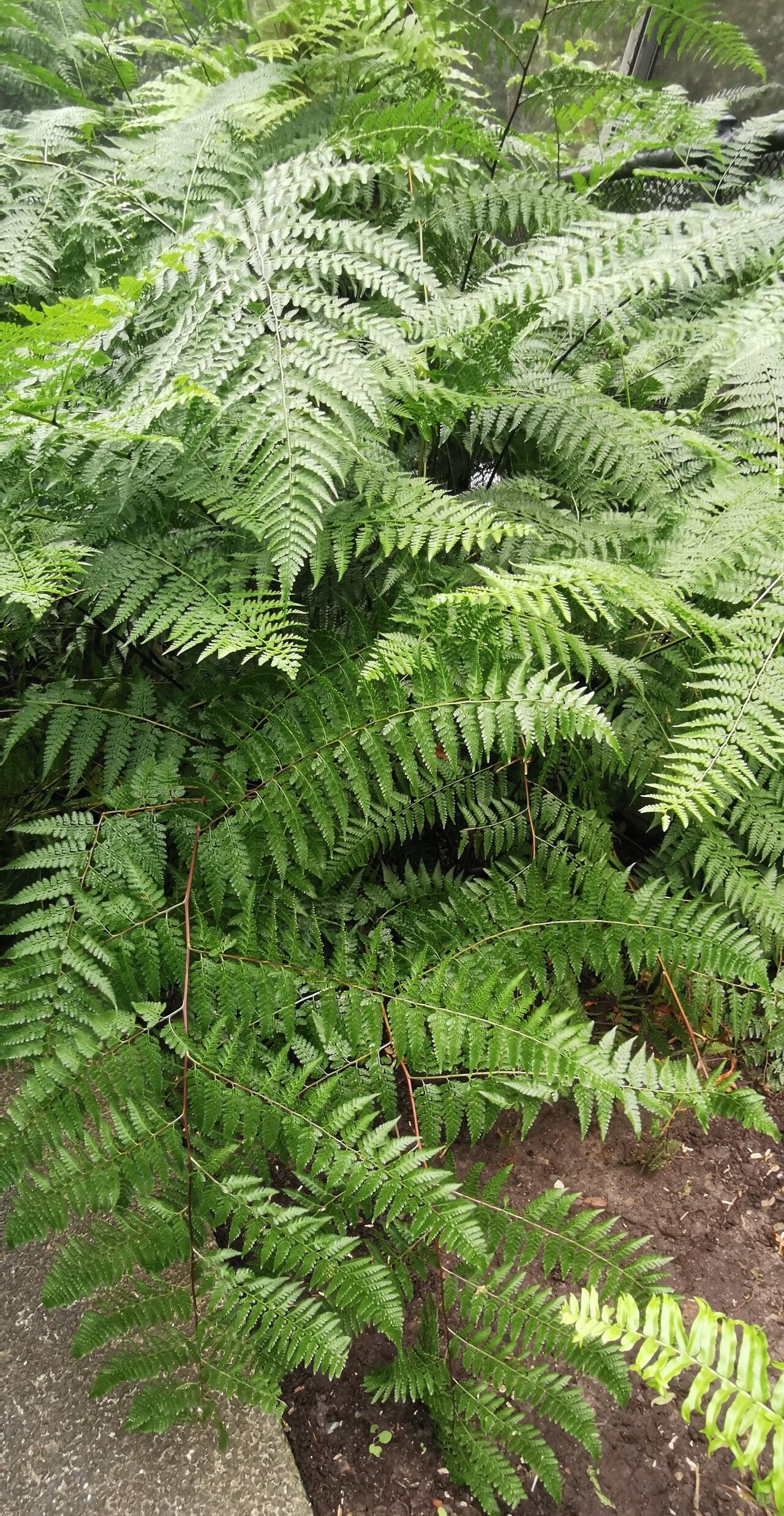
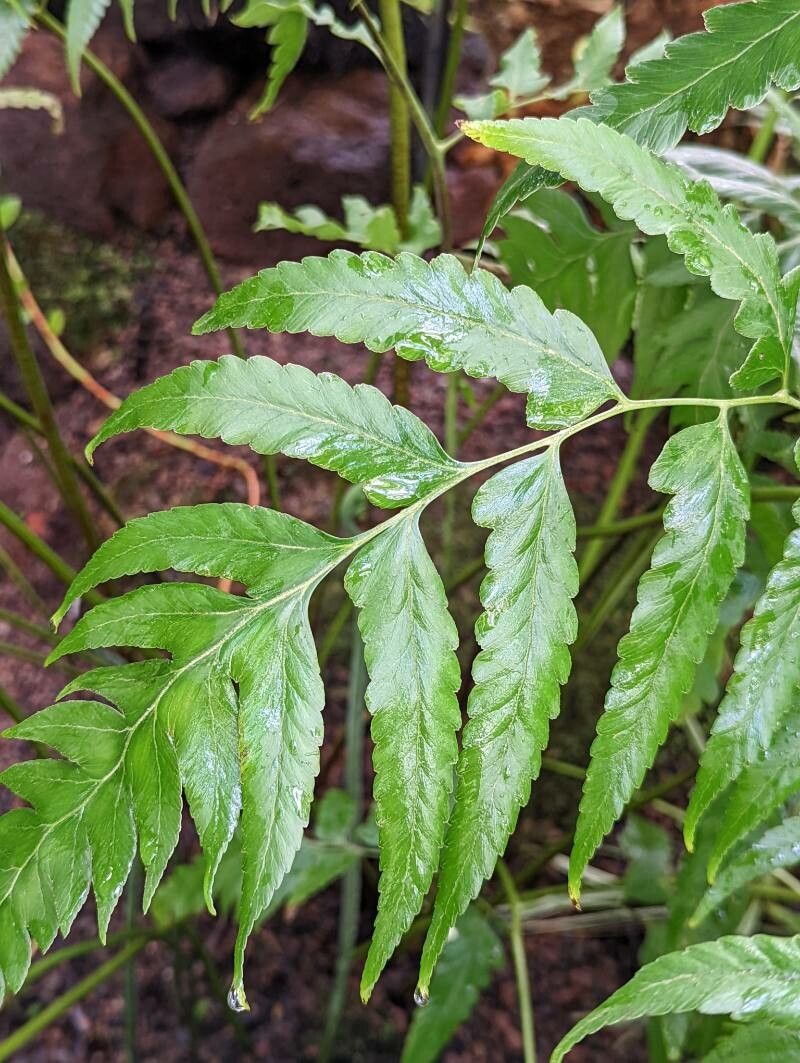
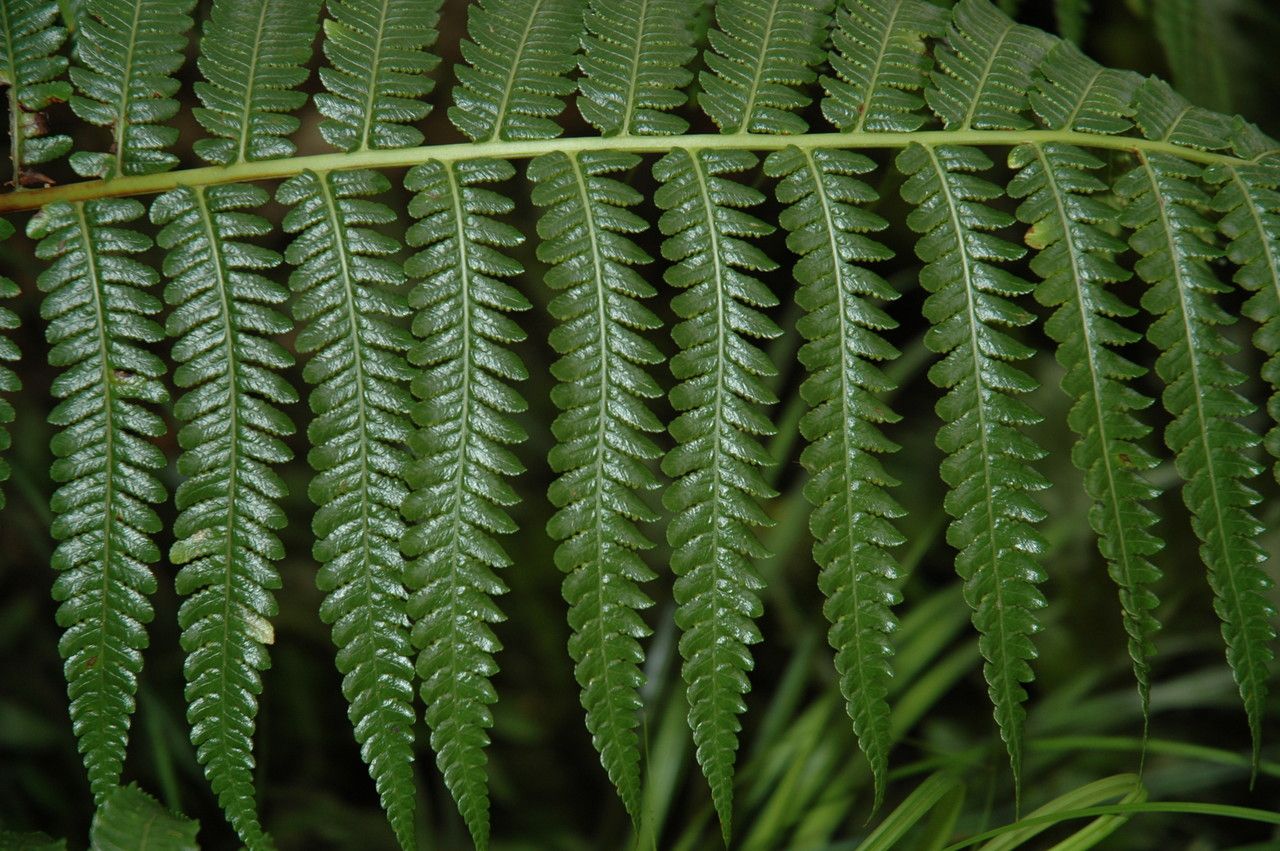
Microlepia speluncae, commonly known as the Cave Fern or the Limestone Fern, is a fern species belonging to the family Polypodiaceae. It is indigenous to tropical and subtropical regions across Asia, Africa, Australia, and Oceania. This plant thrives in rocky crevices and limestone cliffs within moist environments such as caves or near waterfalls. The Cave Fern features distinctive long fronds that can reach up to 1 meter in length. These dark green fronds have a glossy texture and are divided into smaller leaflets with serrated edges. The plant reproduces through spores produced on the underside of its leaves. In traditional medicine, Microlepia speluncae has been used to treat various ailments such as fevers, coughs, and respiratory issues, owing to its anti-inflammatory properties. Additionally, this fern is popular among horticulturists for its ornamental value. Its unique appearance makes it an attractive addition to gardens or indoor spaces with high humidity levels. Overall, Microlepia speluncae is a fascinating fern species that thrives in moist environments while also offering medicinal benefits. It is both aesthetically pleasing and practically useful.
Limpleaf fern is fairly disease-resistant and generally not prone to illness. However, it can be vulnerable to pests and diseases present in its environment. These infections are typically not serious. For care, this plant requires a moderate level of maintenance. It needs regular pruning to keep a good appearance and to support healthy growth. Fertilizing can also help encourage flowering. Limpleaf fern is suitable for anyone with outdoor space, such as a garden or patio, and does not demand extensive care experience. It may need more attention when grown indoors.
How to keep Microlepia Speluncae.
Light
Limpleaf fern is native to habitats like forest understories and rocky areas, where it grows under natural shade. It prefers partial sun but can tolerate full sun or full shade, showing its versatile and hardy nature.
Water
The limpleaf fern originates from the understories of tropical forests and thrives in consistently moist, humid conditions. While it prefers to be watered weekly, it can tolerate brief periods of dryness. Often grown indoors, this evergreen plant requires stable moisture levels throughout the year to maintain its lush foliage.
Humidity
This plant needs special care because it loves high humidity levels of 60-80% or more. The best way to achieve this is by placing a humidifier near the plant. Daily misting is also essential! Make sure the room has good ventilation.
Temperature
Limpleaf fern comes from tropical areas where the climate is generally warm and humid. As a result, it is well suited to high temperatures and humidity. It does not tolerate sudden temperature changes and prefers a stable thermal environment, so it is important to avoid temperature fluctuations indoors. It usually cannot withstand cold temperatures and requires warmer conditions for growth. If the environmental temperature falls too low, the plant may stop growing or even die.
Fertilizer
The Limpleaf fern needs the most fertilizer during its active growth period, which occurs mainly in spring, summer, and early fall. Fertilizing supplies essential nutrients the soil may lack, supporting healthy root and stem development and promoting the attractive foliage that is a principal characteristic of this plant.
Pruning
The Limpleaf fern has delicate fronds and thrives in shaded, humid environments. It's best to prune the plant between early and late spring to remove any dead fronds. This will promote growth and improve air circulation. Be careful not to over-prune, as this can stress the plant. Pruning at the right time encourages natural growth, resulting in healthy and attractive foliage.
Botanical profile.
- Plant Type
- Herb
- Life Cycle
- Perennial
- Genus
- Microlepia
- Family
- Dennstaedtiaceae
- Hardiness Zone
- 10-13
- Mature Height
- 2.13 m
- Mature Spread
- 1.22 m to 1.83 m
- Leaf Color
- Green
- Leaf Type
- Evergreen
- Planting Time
- Spring, Summer, Autumn
- Native Area
- Sri Lanka, India, Malaysia, Angola, Vanuatu, Namibia, Madagascar, Rwanda, Nigeria, Kenya, Uganda, Tanzania, Zimbabwe, Jamaica, Fiji, Benin, Cuba, Sierra Leone, Indonesia, Cambodia, Equatorial Guinea, Liberia, Mozambique, Cameroon, Burundi, Brazil, Ghana, Ethiopia, Botswana, Congo, Nepal, Malawi, Central African Republic, South Africa, Zambia, Sudan, Philippines, Laos, Bangladesh, Guinea, China, Bolivia, Vietnam, Myanmar, Japan, Togo, Bhutan, Senegal, Eswatini, Singapore, Ecuador, Côte d'Ivoire, Congo (DRC), Thailand, Gabon
Other names.
Reader questions.
What are the sunlight requirements for plants?
Plants require varying amounts of sunlight to thrive. Partial sun plants need about 3-6 hours of sunlight daily, while full sun plants require more than 6 hours of sunlight. It's essential to observe the movement of sunlight through your garden to choose the ideal spots that offer a harmonious balance of light and shade, ensuring your plants' health and happiness.
What is the Limpleaf fern?
The Limpleaf fern, known botanically as Microlepia speluncae, is a type of fern. Unfortunately, there is no further information provided on its details, such as its essential characteristics, symptoms of its condition, or any additional information.
What are the essential growing conditions for a Limpleaf fern?
The Limpleaf fern, a perennial herbaceous plant, naturally grows in shaded areas such as forest understories or rocky landscapes. It thrives in partial sun but can also adapt to full shade. This versatility makes it an excellent choice for various garden spots or indoor settings. When natural light is insufficient, especially during winter or in less sunny spaces, using artificial lighting can be beneficial. Suitable artificial lights should mimic natural sunlight, with LED lights being a popular choice due to their ability to provide specific light wavelengths needed by plants. Full sun plants generally require 30-50W/sq ft of artificial light, partial sun plants need 20-30W/sq ft, and full shade plants need 10-20W/sq ft. Positioning the light source 12-36 inches above the plant and providing 8-12 hours of light per day can promote healthy growth.
What are the symptoms of inadequate light exposure in a Limpleaf fern?
Insufficient light can lead to several growth issues in a Limpleaf fern. These symptoms include small, underdeveloped leaves, leggy or sparse growth with long spaces between leaves or stems, faster leaf drop as older leaves are shed to conserve resources, slower or halted new growth, paler new leaves indicating a lack of chlorophyll, and chlorosis, where leaves lose their green color and turn yellow due to excessive light, which hampers photosynthesis. Sunscald, leaf curling, wilting, and leaf scorching are also signs of light-related stress. These symptoms help identify when the fern is struggling due to either too little or too much sunlight.
How can I address light-related growth issues in my Limpleaf fern?
To resolve light-related growth issues in a Limpleaf fern, whether growing it indoors, outdoors, or in the ground, a gradual adaptation to changing light conditions is crucial. For indoor plants, shifting them to progressively sunnier spots each week until they achieve 3-6 hours of sunlight daily, or using artificial lighting like desk or ceiling lamps for a minimum of 8 hours or investing in plant grow lights can help. Outdoors, move your plants to sunnier locations incrementally each week to avoid sunburn. If necessary, modifying the environment to reduce obstructions, such as pruning branches that block sunlight or relocating smaller plants, should be done during their dormant period for the best results. It's important to note that parts of the plant previously affected by inadequate light may not recover, but new growth should be healthy with improved light exposure.